sql
17 TopicsMicrosoft Defender for Cloud Customer Newsletter
*This will be the last monthly MDC newsletter. To keep up with the latest, please visit: What's new in MDC What's new in Defender for Cloud? Multiple container security features are now Generally Available: Container-level misconfiguration recommendations for Kubernetes, Upgrade AKS version recommendations, VA for runtime-discovered container images on EKS and GKE, Kubernetes notes VA for EKS and GKE, scanning support for Docker hardened container images. For more information, see this page here. Database-level recommendations for SQL VA now GA The SQL vulnerability assessment recommendations created as part of the transition from grouped to individual recommendations are now generally available. Each SQL vulnerability assessment rule is surfaced as its own recommendation, reported directly on the affected SQL database resource. For more details, please refer to this documentation . Blogs of the month In July, our team published the following blog posts we would like to share: 1. Built to Protect: The Architecture Behind Codename MDASH Customer journey Discover how other organizations successfully use Microsoft Defender for Cloud to protect their cloud workloads. This month we are featuring NTT Data. NTT Data, a top global IT services provider, leverages Azure, OpenAI and Microsoft Defender to launch their AI agents, adopting secure by design principles, to help enhance, competitiveness organization change and data usage. Defender for AI, and Defender CSPM, as part of the Defender family, address the emerging risks and threats like prompt injection and data poisoning that come with generative AI. Join our community! We offer several customer connection programs within our private communities. By signing up, you can help us shape our products through activities such as reviewing product roadmaps, participating in co-design, previewing features, and staying up-to-date with announcements. Sign up at aka.ms/JoinCCP. We greatly value your input on the types of content that enhance your understanding of our security products. Your insights are crucial in guiding the development of our future public content. We aim to deliver material that not only educates but also resonates with your daily security challenges. Whether it’s through in-depth live webinars, real-world case studies, comprehensive best practice guides through blogs, or the latest product updates, we want to ensure our content meets your needs. Please submit your feedback on which of these formats do you find most beneficial and are there any specific topics you’re interested in https://aka.ms/PublicContentFeedback. Note: If you want to stay current with Defender for Cloud and receive updates in your inbox, please consider subscribing to our monthly newsletter: https://aka.ms/MDCNewsSubscribeModern Database Protection: From Visibility to Threat Detection with Microsoft Defender for Cloud
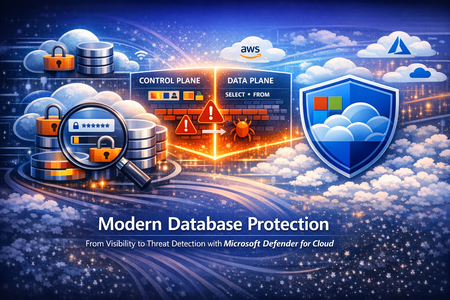
Databases sit at the heart of modern businesses. They support everyday apps, reports and AI tools. For example, any time you engage a site that requires a username and password, there is a database at the back end that stores your login information. As organizations adopt multi-cloud and hybrid architectures, databases are generated all the time, creating database sprawl. As a result, tracking and managing every database, catching misconfigurations and vulnerabilities, knowing where sensitive information lives, all becomes increasingly difficult leaving a huge security gap. And because companies store their most valuable data, like your login information, credit card and social security numbers, in databases, databases are the main target for threat actors. Securing databases is no longer optional, yet getting started can feel daunting. Database security needs to address the gaps mentioned above – help organizations see their databases to help them monitor for misconfigurations and vulnerabilities, sensitive information and any suspicious activities that occur within the database that are indicative of an attack. Further, database security must meet customers where they are – in multi-cloud and hybrid environments. This five part blog series will introduce and explore database-specific security needs and how Defender for Cloud addresses the gaps through its deep visibility into your database estate, detection of misconfiguration, vulnerabilities and sensitive information, threat protection with alerts and Integrated security platform to manage it all. This blog, part one, will begin with an overview of today’s database infrastructure security needs. Then we will introduce Microsoft Defender for Cloud’s unique database protection capabilities to help address this gap. Modern Database Architectures and Their Security Implications Modern databases can be deployed in two main ways: on your own infrastructure or as a cloud service. In an on-premises or IaaS (Infrastructure as a Service) setup, you manage the underlying server or virtual machine. For example, running a SQL Server on a self-managed Windows server—whether in your data center or on a cloud VM in Azure or AWS—is an IaaS deployment (Microsoft Defender for Cloud refers to these as “SQL servers on machines”) that require server maintenance. The other approach is PaaS (Platform as a Service), where a cloud provider manages the host server for you. In a PaaS scenario, you simply use a hosted database service (such as Azure SQL Database, Azure SQL Managed Instance, Azure Database for PostgreSQL, or Amazon RDS) without worrying about the operating system or server maintenance. In either case, you need to secure both the database host (the server or VM) and the database itself (the data and database engine). It’s also important to distinguish between a database’s control plane and data plane. The control plane includes the external settings that govern your database environment—like network firewall rules or who can access the system. The data plane involves information and queries inside the database. An attacker might exploit a weak firewall setting on the control plane or use stolen credentials to run malicious queries on the data plane. To fully protect a database, you need visibility into both planes to catch suspicious behavior. Effective database protection must span both IaaS and PaaS environments and monitor both the control plane and data plane because they are common targets for threat actors. Security teams can then detect suspicious activity such as SQL injections, brute-force attempts, and lateral movement through your environment. A Unified Approach to Database Protection Built for Multicloud Modern database environments are fragmented across deployment models, database ownership, and teams. Databases run across IaaS and PaaS, span control and data planes, and in multiple clouds, yet protection is often pieced together from disconnected point solutions Microsoft Defender for Cloud is a cloud native application protection platform (CNAPP) solution that provides a unified, cloud-native approach to database protection—bringing together discovery, posture management, and threat detection across SQL (Iaas and Paas), open-source relational databases (OSS), and Cosmos DB databases. Defender for Cloud’s database protection uses both agent-based and agentless solutions to protect database resources on-premises, hybrid, multi-cloud and Azure. A lightweight agent-based solution is used for SQL servers on Azure virtual machines or virtual machines hosted outside Azure and allows for deeper inspection, while an agentless approach for managed databases stored in Azure or AWS RDS resources provide protection with seamless integration. Additionally, Defender for Cloud brings in other signals from the cloud environment, surfacing a secure score for security posture, an asset inventory, regulatory compliance, governance capabilities, and a cloud security graph that allows for proactive risk exploration. The value of database security in Defender for Cloud starts with pre and post breach visibility. Vulnerability assessment and data security posture management helps security admins understand their database security posture and, by following Defender for Cloud’s recommendations, security admins can harden their environment proactively. Vulnerability assessments scans surface remediation steps for configurations that do not follow industry’s best practices. These recommendations may include enabling encryption when data is at rest where applicable or database server should restrict public access ranges. Data security posture management in Defender for Cloud automatically helps security admins prioritize the riskiest databases by discovering sensitive data and surfacing related exposure and risk. When databases are associated with certain risks, Defender for Cloud will provide its findings in three ways: risk-based security recommendations, attack path analysis with Defender CSPM and the data and AI dashboard. The risk level is determined by other context related to the resource like, internet exposure or sensitive information. This way, Security admins will have a solid understanding of their database environment pre-breach and will have a prioritized list of resources to remediate based on risk or posture level. While we can do our best to harden the environment, breaches can still happen. Timely post-breach response is just as important. Threat detection capabilities within Defender for Cloud will identify anomalous activity in near real time so SOC analytes can take action to contain the attack immediately. Defender for Cloud monitors both the control and the data plane for any anomalous activity that indicates a threat, from brute force attack detections to access and query anomalies. To provide a unified security experience, Defender for Cloud natively integrates with the Microsoft Defender Portal. The Defender portal brings signals from Defender for Cloud to provide a single cloud-agnostic security experience, equipping security teams with tools like secure score for security posture, attack paths, and incidents and alerts. When anomalous activities occur in the environment, time is of the essence. Security teams must have context and tools to investigate a database resource, both in the control plan and the data plane, to remediate and mitigate future attacks quickly. Defender for Cloud and the Defender portal brings together a security ecosystem that allows SOC analysts to investigate, correlate activities and incidents with alerts, contain and respond accordingly. Take Action: Close the Database Blind Spot Today Modern database environments demand more than isolated controls or point solutions. As databases span hybrid and multiple clouds, security teams need a unified approach that delivers visibility, context, and actionable protection where the data lives. Microsoft Defender for Cloud provides organizations the visibility into all of your databases in a centralized Defender portal using its unique control and data plane findings so that security teams can identify misconfigurations. prioritize them based on cloud-context risk-based recommendations or proactively identify other attack scenarios using the attack path analysis while SOC analysts can investigate alerts and act quickly. Follow this story for part two. We’ll go into Defender for Cloud’s unique visibility into database resources to find misconfiguration gaps, sensitive information exposure, and contextual risks that may exist in your environment. Resources: Get started with Defender for Databases. Learn more about SQL vulnerability assessment. Learn more about Data Security Posture Management Learn more about Advanced Threat Protection Reviewers: YuriDiogenes, lisetteranga, talberdahMicrosoft Defender for Cloud Customer Newsletter
Check out monthly news for the rest of the MTP suite here! What's new in Defender for Cloud? Now in public preview, Defender for Cloud provides threat protection for AI agents built with Foundry, as part of the Defender for AI Services plan. Learn more about this in our documentation. Defender for Cloud’s Defender for SQL on machines plan provides a simulated alert feature to help validate deployment and test prepared security team for detection, response and automation workflows. For more details, please refer to this documentation. Check out other updates from last month here. Blogs of the month In February, our team published the following blog post we would like to share: Extending Defender's AI Threat Protection to Microsoft Foundry Agents Defender for Cloud in the field Revisit the announcement on the new Secure Score model and the enhancements available in the Defender Portal. New Secure Score model and Defender portal enhancements GitHub Community Module 12 in Defender for Cloud’s lab has been updated to include alert simulation! Database protection lab - module 12 Customer journey Discover how other organizations successfully use Microsoft Defender for Cloud to protect their cloud workloads. This month we are featuring ContraForce. ContraForce, a cybersecurity startup, built its platform on Microsoft’s robust security and AI ecosystem. Contraforce, while participating in Microsoft for Startup Pegasus program, addressed the issue of traditional, complex, and siloed security stacks by leveraging Microsoft Sentinel, Defender XDR, Entra ID and Microsoft Foundry. ContraForce was able to deliver enterprise-grade protection at scale, without the enterprise-level overhead. As a result, measured key outcomes like 90%+ incident automation, 93% reduced cost per incident, and 60x faster incident response. Join our community! We offer several customer connection programs within our private communities. By signing up, you can help us shape our products through activities such as reviewing product roadmaps, participating in co-design, previewing features, and staying up-to-date with announcements. Sign up at aka.ms/JoinCCP. We greatly value your input on the types of content that enhance your understanding of our security products. Your insights are crucial in guiding the development of our future public content. We aim to deliver material that not only educates but also resonates with your daily security challenges. Whether it’s through in-depth live webinars, real-world case studies, comprehensive best practice guides through blogs, or the latest product updates, we want to ensure our content meets your needs. Please submit your feedback on which of these formats do you find most beneficial and are there any specific topics you’re interested in https://aka.ms/PublicContentFeedback. Note: If you want to stay current with Defender for Cloud and receive updates in your inbox, please consider subscribing to our monthly newsletter: https://aka.ms/MDCNewsSubscribe
Enhancements for protecting hosted SQL servers across clouds and hybrid environments
Introduction We are releasing an architecture upgrade for the Defender for SQL Servers on Machines plan. This upgrade is designed to simplify the onboarding experience and improve protection coverage. In this blog post, we will discuss details about the architecture upgrade and the key steps customers using the Defender for SQL Servers on Machine plan should take to adopt an optimal protection strategy following this update. Overview of Defender for Cloud database security and the Defender for SQL Servers on Machines plan Databases are an essential part of building modern applications. Microsoft Defender for Cloud, a Cloud Native Application Protection Platform (CNAPP), provides comprehensive database security capabilities to assist security and infrastructure administrators in identifying and mitigating security posture risks, and help Security Operation Center (SOC) analysts detect and respond to database cyberattacks. As organizations advance their digital transformation, a comprehensive database security strategy that covers hybrid and multicloud scenarios is essential. The Defender for SQL Servers on Machines plan delivers this by protecting SQL Server instances hosted on Azure, AWS, GCP, and on-premises machines. It provides database security posture management capabilities and threat protection capabilities to help you start secure and stay secure when building applications. More specifically, it helps to: Centralize discovery of managed and shadow databases across clouds and hybrid environments. Reduce database risks using risk-based recommendations and attack path analysis. Detect and respond to database threats including SQL injections, access anomaly, and suspicious queries. SOC teams can also detect and investigate attacks on databases using built-in integration with Microsoft Defender XDR. Benefits of the agent upgrade for the Defender for SQL Servers on Machine plan Starting from April 28, 2025, we began a gradual rollout of an upgraded agent architecture for the Defender for SQL Servers on Machines plan. This upgraded architecture is designed to simplify the onboarding process and improve protection coverage. This upgrade will eliminate the Azure Monitor framework dependency and replace it with a proven, native SQL extension infrastructure. Azure SQL VMs and Azure Arc-enabled SQL Servers will automatically migrate to the updated architecture. Actions required after the upgrade Although the agent architecture upgrade will be automatic, customers the have enabled the Defender for SQL Servers on Machines plan before April 28th, will need to take action to ensure they adopt optimal plan configurations to help detect and protect unregistered SQL Servers. 1) Update the Defender for SQL Servers on Machines plan configuration for optimal protection coverage To automatically discover unregistered SQL Servers, customers are required to update the plan configurations using this guide. This will ensure Defender for SQL Servers on Machines plan can detect and protect all SQL Server instances. Click the Enable button to update the agent configuration setting: 2) Verify the protection status of SQL virtual machines or Arc-enabled SQL servers Defender for Cloud provides a recommendation titled "The status of Microsoft SQL Servers on Machines should be protected” to help customers assess the protection status of all registered SQL Servers hosted on Azure, AWS, GCP, and on-premises machines within a specified Azure subscription and presents the protection status of each SQL Server instance. Technical context on the architecture upgrade Historically, the Defender for SQL Servers on Machines plan relied on the Azure Monitor agent framework (MMA/AMA) to deliver its capabilities. However, this architecture has proven to be sensitive to diverse customer environmental factors, often introducing friction during agent installation and configuration. To address these challenges, we are introducing an upgraded agent architecture designed to reduce complexity, improve reliability, and streamline onboarding across varied infrastructures. Simplifying enablement with a new agent architecture The SQL extension is a management tool that is available on all Azure SQL virtual machines and SQL servers connected through Azure Arc. It plays a key role in helping simplify the migration process to Azure, enabling large-scale management of your SQL environments and enhancing the security posture of your databases. With the new agent architecture, Defender for SQL utilizes the SQL extension as a backchannel to streamline the data from SQL server instances to the Defender for Cloud portal. Product performance implications Our assessments confirm that the new architecture does not negatively impact performance. For more information, please refer to Common Questions - Defender for Databases. Learn more To learn more about the Defender for SQL Servers on Machines architecture upgrade designed to simplify the onboarding experience and enhance protection coverage, please visit our documentation and review the actions needed to adopt optimal plan configurations after the agent upgrade.1.1KViews0likes0CommentsMicrosoft Defender for Open-Source Relational Databases Now Supports Multicloud (AWS RDS)
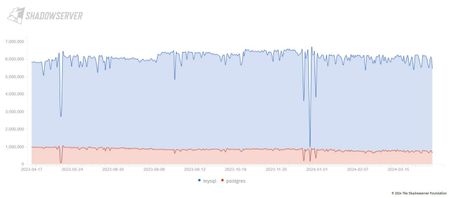
Introduction: Many organizations use multiple cloud providers today, which makes security misconfigurations more likely due to the solution scale and complexity. Moreover, different practices and concepts among each cloud provider’s implementation create bigger internal knowledge gaps. No matter how many cloud providers an organization uses, a database is the core of each application, storing the organization’s most valuable data: PII, financial and payment information, medical information, and other sensitive data. This makes databases the most attractive attack target for any threat actor – from inside or outside. Even though there is more awareness of exposure misconfigurations (thanks to cybersecurity education and posture management products that reveal these issues), public datasets show that the most risky database misconfiguration - exposing databases to the internet is not going down. This fact emphasizes the importance of threat protection that will act as a last line of defense and help detect, in near real-time, attacks that endanger databases and the critical data they contain. Internet exposed databases count through time. (Source: Time series · General statistics · The Shadowserver Foundation) Announcement: Microsoft Defender for open-source relational databases have been long focusing on providing comprehensive protection for Azure databases. Today, we're excited to announce another significant milestone in our cloud database security journey: Microsoft Defender for open-source relational databases plans now extend their protection to multicloud environments, starting with Amazon RDS on AWS. The workloads supported in AWS RDS are: Aurora PostgreSQL Aurora MySQL PostgreSQL MySQL MariaDB This release includes full parity with the alert types of support for managed Azure OSS databases: Anomalous database access and query patterns - For example, a logon from a suspicious location or from a domain not seen in the past 60 days. Suspicious database activities - For example, a user accessing a database service from a breached computer which communicated with a crypto-mining C&C server. Brute-force attacks – With the ability to separate simple brute force attempt from a successful brute force. Under public preview, you can turn on the Defender for open-source relational databases plan for AWS RDS at no cost. This marks a pivotal moment in our commitment to securing your business-critical data across cloud environments. This announcement makes Microsoft the sole major security provider offering multicloud database protection, a significant step forward in building an end-to-end multicloud & Cloud native application protection platform (CNAPP). Defender for Cloud stands out with its comprehensive approach, covering a diverse range of databases and leveraging Microsoft's dual role as a cloud and security provider. This integration enables us to provide unparalleled scanning depth and real-time threat detection capabilities, enhancing security across multicloud environments. This multicloud database protection announcement is part of Microsoft's commitment to build a comprehensive Cloud Native Application Protection Platform (CNAPP). CNAPP integrates advanced data threat intelligence, , and data threat protection to provide in depth cloud data security insight and breadth of data security protection across various cloud platforms. Microsoft's CNAPP infographic Features You will now have full flexibility to mix and match the protection on your multicloud databases: Protection layers for multicloud database protection Foundational CSPM – Free out of the box (OOTB) control plane recommendations are generated once you connect your account to Microsoft Defender for Cloud. Recommendations are evaluated and generated OOTB for all connected cloud environments. Advanced posture management with Defender CSPM (DCSPM) - Discovers your databases, what types of sensitive data they contain and assesses risk to that data based on context gathered across all the clouds in the customer’s scope. Misconfigurations and sensitive data are discovered and displayed as part of an attack path Advanced threat protection with Defender for open-source relational databases – Provides threat protection by generating near real-time alerts based on suspicious and anomalous access patterns to your databases. Attack path also highlights active attack on the vulnerable resources MDC lists the alert history on the resource we can see brute force attacks, connections from harmful applications and more Brute force attack detected from an IP that was reported as a Tor exit node Finally, Microsoft Defender for Cloud offers seamless integration with Defender XDR, which offers enhanced threat detection and response capabilities. It's crucial for organizations to adopt both Defender for Cloud and Defender XDR personas to effectively manage and mitigate security risks across their multicloud environments. Defender XDR identified an incident where the same IP tried to brute force cloud databases in AWS and Azure Sensitive data discovery is built-in! Defender for open-source databases on AWS will be the first database threat protection plan to bundle sensitive data discovery as part of its core value, without depending on other plans (such as DCSPM) or incur additional costs. Once the plan is enabled the discovery process will be scheduled weekly and you will be able to consume the findings in all the main MDC experiences: Alerts - filter alerts by resources with findings, alert page enrichment Inventory – filter resources with findings Resource health – enrichment with findings Security explorer (new!) – You will also be able to query the findings using security explorer even without enabling DCSPM. Only findings’ data will be queryable – other pieces of context require enabling DCSPM. Conclusion In conclusion, Microsoft Defender for open-source relational databases now support multicloud database protections in AWS RDS environments. This change signifies a pivotal advancement in cloud security. Through its holistic approach embodied by CNAPP, Microsoft empowers organizations to safeguard their critical data assets consistently across diverse cloud platforms. Resources: To learn more about Defender for Cloud, click here. Read about Defender for open-source relational databases documentation here. Read about sensitive data discovery. Defender for open-source relational databases alerts reference. Start free trial here.3.9KViews2likes0Comments
Unleashing the Power of Microsoft Defender for Cloud – Unique Capabilities for Robust Protection
So you have implemented a non-native Cloud Security Posture Management solution but there are security gaps that you might not have considered. How Defender for Cloud is uniquely positioned to secure your cloud attack surface.