siem
107 Topics
Introducing a Unified Security Operations Platform with Microsoft Sentinel and Defender XDR
Read about our announcement of an exciting private preview that represents the next step in the SOC protection and efficiency journey by bringing together the power of Microsoft Sentinel, Microsoft Defender XDR and Microsoft Security Copilot into a unified security operations platform.83KViews17likes12CommentsWhat's new: Earn your Microsoft Sentinel Black Belt Digital Badge!
Our Cloud Security Private Community Digital Badge program has introduced a new L5 Microsoft Sentinel Black Belt Digital Badge for you to earn and display proudly to show your prowess as a Microsoft recognized expert.20KViews12likes10CommentsWhat's New: SOC Process Framework is Now Live in Content Hub!
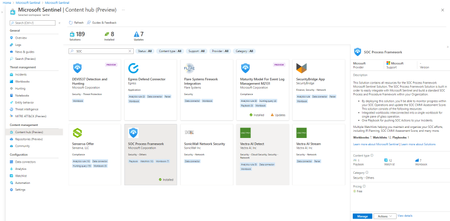
I am excited to announce that the SOC Process Framework has been updated and moved into Sentinel's Content Hub for installation across multiple workbooks, watchlists, and the amazing Get-SOCActions Playbook for analyst actions to be taken during Triage and Investigation. When you click on the SOC Process Framework Tile in Content Hub, you will see the Description details, as well as the content associated with the Framework, i.e. (7) Workbooks, (12) Watchlists, (1) Playbook. By clicking on the "Install" button, you will be prompted to follow the on-screen instructions. This Content Hub Solution contains all resources for the SOC Process Framework Microsoft Sentinel Solution. The SOC Process Framework Solution is built in order to easily integrate with Microsoft Sentinel and build a standard SOC Process and Procedure Framework within your Organization. By deploying this solution, you'll be able to monitor progress within your SOC Operations and update the SOC CMMI Assessment Score. This solution consists of the following resources: Integrated workbooks interconnected into a single workbook for single pane of glass operation. One Playbook for pushing SOC Actions to your Incidents. Multiple Watchlists helping you maintain and organize your SOC efforts, including IR Planning, SOC CMMI Assessment Score, and many more. Workbooks The workbooks contained in this solution have visualizations about the SOC Progress, Procedures, and Activity and provides an overview of the overall SOC Maturity. These workbooks and their dependances are deployed for you through this solution. NOTE: Be aware that after you have installed the workbooks, you must save the workbooks and edit the Watchlist Queries and run them, so they initialize for the framework to leverage the applied watchlists. Please use the steps below to initialize the Watchlist Queries. Save Workbook's and Edit Watchlist Queries Step 1. Save and Open the Workbook, "Update SOC Maturity Score". Step 2. Edit Workbook and click the Edit button to open the pills. Step 3. Click the box next to Watchlist. Step 4. Click the pencil icon to open the Settings Context Pane. Step 5. Click the "Run Query" button to execute the query and initialize the link between the workbook and the watchlists. Step 6. Click the "Save" Icon to save these settings. Step 7. Click Done Editing in the Workbook. Step 8. Click the "Save" Icon in the Workbook to save the Workbook. Step 9. Repeat Steps for the Workbooks called out below. Repeat this process for the following Workbooks: Workbook: Update SOC IR Planning Workbook: SOC Process Framework Watchlists The watchlists contained within this solution have information that pertain to Incident Response Planning, the SOC Maturity (CMMI) Scoring, Recommended SOC Actions, and more... All of these watchlists give the customer ease of access to updating pertinent information regarding their SOC Operations and more. Playbooks Currently the only Playbook in this solution is the Get-SOCActions Playbook for delivering custom Analyst Actions to take per Incident. This allows Organizations the ability to create/add their own scripted actions they want an Analyst to take. After deploying this Solution, please see the Post-Deployment Instructions before executing the Playbook. Post-Deployment Instructions After deploying this Solution and its associated playbook, you must authorize the connections leveraged within the Playbook before running. Visit the playbook resource. Under "Development Tools" (located on the left), click "API Connections". Ensure each connection has been authorized. Note: If you've deployed the [SOC Process Framework Playbook](https://raw.githubusercontent.com/Azure/Azure-Sentinel/master/Solutions/SOC Process Framework/Playbooks/Get-SOCActions/azuredeploy.json) playbook, you will only need to authorize the Microsoft Sentinel connection. Now that I have covered the installation of this framework, let's get to the content updates that have been made to this solution as a whole that I know you will be excited to learn more about! This solution contains a large number of updates: 4 new workbooks outlining the growth path along the SOC Journey and best practices regarding building a SOC Team. 2 new workbooks that outline both Incident Response Planning and SOC Maturity. 12 new Watchlists from SOC Contacts to IR Planning as well as ~800 questions regarding your SOC Maturity Score. New Content in the SOC Process Framework: SOC Capability Maturity Model Integration Incident response planning SOC RaMP (Rapid Modernization Plan) SOC Part-Time Staff SOC Small Staff SOC Medium Staff SOC Large Staff SOC Framework for Microsoft 365 Defender Planning Readiness Catalog of Services Roles Develop & Test SOC Tasks Investigations Phishing Incident Automation with Shifts for Teams Additional Tools in the SOC Tools and Resources Content API Call outs to update Watchlists without leaving the Framework SOC Maturity Update SOC Incident Response Planning This solution is supported by Microsoft Support and will be updated regularly with new content. We hope you enjoy the new version of the SOC Process Framework and that it will help you to mature your businesses SOC Operations!16KViews10likes12CommentsWhat’s new in Microsoft Sentinel: RSAC 2026
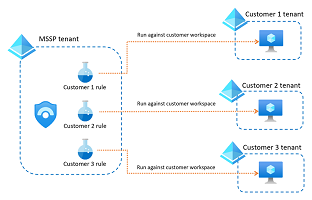
Security is entering a new era, one defined by explosive data growth, increasingly sophisticated threats, and the rise of AI-enabled operations. To keep pace, security teams need an AI-powered approach to collect, reason over, and act on security data at scale. At RSA Conference 2026 (RSAC), we’re unveiling the next wave of Sentinel innovations designed to help organizations move faster, see deeper, and defend smarter with AI-ready tools. These updates include AI-driven playbooks that accelerate SOC automation, Granular Delegated Admin Privileges (GDAP) and granular role-based access controls (RBAC) that let you scale your SOC, accelerated data onboarding through new connectors, and data federation that enables analysis in place without duplication. Together, they give teams greater clarity, control, and speed. Come see us at RSAC to view these innovations in action. Hear from Sentinel leaders during our exclusive Microsoft Pre-Day, then visit Microsoft booth #5744 for demos, theater sessions, and conversations with Sentinel experts. Read on to explore what’s new. See you at RSAC! Sentinel feature innovations: Sentinel SIEM Sentinel data lake Sentinel graph Sentinel MCP Threat Intelligence Microsoft Security Store Sentinel promotions Sentinel SIEM Playbook generator [Now in public preview] The Sentinel playbook generator delivers a new era of automation capabilities. You can vibe code complex automations, integrate with different tools to ensure timely and compliant workflows throughout your SOC and feel confident in the results with built in testing and documentation. Customers and partners are already seeing benefit from this innovation. “The playbook generator gives security engineers the flexibility and speed of AI-assisted coding while delivering the deterministic outcomes that enterprise security operations require. It's the best of both worlds, and it lives natively in Defender where the engineers already work.” – Jaime Guimera Coll | Security and AI Architect | BlueVoyant Learn more about playbook generator. SIEM migration experience [General availability now] The Sentinel SIEM migration experience helps you plan and execute SIEM migrations through a guided, in-product workflow. You can upload Splunk or QRadar exports to generate recommendations for best‑fit Sentinel analytics rules and required data connectors, then assess migration scope, validate detection coverage, and migrate from Splunk or QRadar to Sentinel in phases while tracking progress. “The tool helps turn a Splunk to Sentinel migration into a practical decision process. It gives clear visibility into which detections are relevant, how they align to real security use cases, and where it makes sense to enable or prioritize coverage—especially with cost and data sources in mind.” – Deniz Mutlu | Director | Swiss Post Cybersecurity Ltd Learn more about SIEM migration experience. GDAP, unified RBAC, and row-level RBAC for Sentinel [Public preview, April 1] As Sentinel environments grow for enterprises, MSSPs, hyperscalers, and partners operating across shared or multiple environments, the challenge becomes managing access control efficiently and consistently at scale. Sentinel’s expanded permissions and access capabilities are designed to meet these needs. Granular Delegated Admin Privileges (GDAP) lets you streamline management across multiple governed tenants using your primary account, based on existing GDAP relationships. Unified RBAC allows you to opt in to managing permissions for Sentinel workspaces through a single pane of glass, configuring and enforcing access across Sentinel experiences in the analytics tier and data lake in the Defender portal. This simplifies administration and improves operational efficiency by reducing the number of permission models you need to manage. Row-level RBAC scoping within tables enables precise, scoped access to data in the Sentinel data lake. Multiple SOC teams can operate independently within a shared Sentinel environment, querying only the data they are authorized to see, without separating workspaces or introducing complex data flow changes. Consistent, reusable scope definitions ensure permissions are applied uniformly across tables and experiences, while maintaining strong security boundaries. To learn more, read our technical deep dives on RBAC and GDAP. Sentinel data lake Sentinel data federation [Public preview, April 1] Sentinel data federation lets you analyze security data in place without copying or duplicating your data. Powered by Microsoft Fabric, you can now federate data from Fabric, Azure Data Lake Storage (ADLS), and Azure Databricks into Sentinel data lake. Federated data appears alongside native Sentinel data, so you can use familiar tools like KQL hunting, notebooks, and custom graphs to correlate signals and investigate across your entire digital estate, all while preserving governance and compliance. You can start analyzing data in place and progressively ingest data into Sentinel for deeper security insights, advanced automation, and AI-powered defense at scale. You are billed only when you run analytics on federated data using existing Sentinel data lake query and advanced insights meters. les for unified investigation and hunting Sentinel cost estimation tool [Public Preview, April 9] The new Sentinel cost estimation tool offers all Microsoft customers and partners a guided, meter-level cost estimation experience that makes pricing transparent and predictable. A built-in three-year cost projection lets you model data growth and ramp-up over time, anticipate spend, and avoid surprises. Get transparent estimates into spend as you scale your security operations. All other customers can continue to use the Azure calculator for Sentinel pricing estimates. See the Sentinel pricing page for more information. Sentinel data connectors A365 connector [Public preview, May 5] Bring AI agent telemetry into the Sentinel data lake to investigate agent behavior, tool usage, prompts, reasoning and execution using hunting, graph, and MCP workflows. GitHub audit log connector using API polling [General availability, March 6] Ingest GitHub enterprise audit logs into Sentinel to monitor user and administrator activity, detect risky changes, and investigate security events across your development environment. Google Kubernetes Engine (GKE) connector [General availability, March 6] Collect Google Kubernetes Engine (GKE) audit and workload logs in Sentinel to monitor cluster activity, analyze workload behavior, and detect security threats across Kubernetes environments. Microsoft Entra and Azure Resource Graph (ARG) connector enhancements [Public preview, April 15] Enable new Entra assets (EntraDevices, EntraOrgContacts) and ARG assets (ARGRoleDefinitions) in existing asset connectors, expanding inventory coverage and powering richer, built‑in graph experiences for greater visibility. With over 350 Sentinel data connectors, customers achieve broad visibility into complex digital environments and can expand their security operations effectively. “Microsoft Sentinel data lake forms the core of our agentic SOC. By unifying large volumes of Microsoft and third-party data, enabling graph-based analysis, and supporting MCP-driven workflows, it allows us to investigate faster, at lower cost, and with greater confidence.” – Øyvind Bergerud | Head of Security Operations | Storebrand Learn more about Sentinel data connectors. Sentinel connector builder agent using Sentinel Visual Studio Code extension [Public preview, March 31] Build Sentinel data connectors in minutes instead of weeks using the AI‑assisted Connector Builder agent in Visual Studio Code. This low‑code experience guides developers and ISVs end-to-end, automatically generating schemas, deployment assets, connector UI, secure secret handling, and polling logic. Built‑in validation surfaces issues early, so you can validate event logs before deployment and ingestion. Example prompt in GitHub Copilot Chat: @sentinel-connector-builder Create a new connector for OpenAI audit logs using https://api.openai.com/v1/organization/audit_logs Get started with custom connectors and learn more in our blog. Data filtering and splitting [Public preview, March 30] As security teams ingest more data, the challenge shifts from scale to relevance. With filtering and splitting now built into the Defender portal, teams can shape data before it lands in Sentinel, without switching tools or managing custom JSON files. Define simple KQL‑based transformations directly in the UI to filter low‑value events and intelligently route data, making ingestion optimization faster, more intuitive, and easier to manage at scale. Filtering at ingest time allows you to remove low-value or benign events to reduce noise, cut unnecessary processing, and ensure that high-signal data drives detections and investigations. Splitting enables intelligent routing of data between the analytics tier and the data lake tier based on relevance and usage. Together, these two capabilities help you balance cost and performance while scaling data ingestion sustainably as your digital estate grows. Create workbook reports directly from the data lake [Public preview, April 1] Sentinel workbooks can now directly run on the data lake using KQL, enabling you to visualize and monitor security data straight from the data lake. By selecting the data lake as the workbook data source, you can now create trend analysis and executive reporting. Sentinel graph Custom graphs [Public preview, April 1] Custom graphs let you build tailored security graphs tuned to your unique security scenarios using data from Sentinel data lake as well as non-Microsoft sources. With custom graph, powered by Fabric, you can build, query, and visualize connected data, uncover hidden patterns and attack paths, and help surface risks that are hard to detect when data is analyzed in isolation. These graphs provide the knowledge context that enables AI-powered agent experiences to work more effectively, speeding investigations, revealing blast radius, and helping you move from noisy, disconnected alerts to confident decisions at scale. In the words of our preview customers: “We ingested our Databricks management-plane telemetry into the Sentinel data lake and built a custom security graph. Without writing a single detection rule, the graph surfaced unusual patterns of activity and overprivileged access that we escalated for investigation. We didn't know what we were looking for, the graph surfaced the risk for us by revealing anomalous activity patterns and unusual access combinations driven by relationships, not alerts.” – SVP, Security Solutions | Financial Services organization Custom graph API usage for creating graph and querying graph will be billed starting April 1, 2026, according to the Sentinel graph meter. Creating custom graph Using the Sentinel VS Code extension, you can generate graphs to validate hunting hypotheses, such as understanding attack paths and blast radius of a phishing campaign, reconstructing multi‑step attack chains, and identifying structurally unusual or high‑risk behavior, making it accessible to your team and AI agents. Once persisted via a schedule job, you can access these custom graphs from the ready-to-use section in the graph experience in the Defender portal. Graphs experience in the Microsoft Defender portal After creating your custom graphs, you can access them in the graphs section of the Defender portal under Sentinel. From there, you’ll be able to perform interactive graph-based investigations, such as using a graph built for phishing analysis to help you quickly evaluate the impact of a recent incident, profile the attacker, and trace its paths across Microsoft telemetry and third-party data. The new graph experience lets you run Graph Query Language (GQL) queries, view the graph schema, visualize the graph, view graph results in tabular format, and interactively travers the graph to the next hop with a simple click. Sentinel MCP Sentinel MCP entity analyzer [General availability, April 1] Entity analyzer provides reasoned, out-of-the-box risk assessments that help you quickly understand whether a URL or user identity represents potential malicious activity. The capability analyzes data across modalities including threat intelligence, prevalence, and organizational context to generate clear, explainable verdicts you can trust. Entity analyzer integrates easily with your agents through Sentinel MCP server connections to first-party and third-party AI runtime platforms, or with your SOAR workflows through Logic Apps. The entity analyzer is also a trusted foundation for the Defender Triage Agent and delivers more accurate alert classifications and deeper investigative reasoning. This removes the need to manually engineer evaluation logic and creates trust for analysts and AI agents to act with higher accuracy and confidence. Learn more about entity analyzer and in our blog here. Entity analyzer will be billed starting April 1, 2026, based on Security Compute Units (SCU) consumption. Learn more about MCP billing. Sentinel MCP graph tool collection [Public preview, May 20] Graph tool collection helps you visualize and explore relationships between identities and device assets, threats and activities signals ingested by data connectors and alerted by analytic rules. The tool provides a clear graph view that highlights dependencies and configuration gaps, which makes it easier to understand how content interacts across your environment. This helps security teams assess coverage, optimize content deployment, and identify areas that may need tuning or additional data sources, all from a single, interactive workspace. Executing graph queries via the MCP tools will trigger the graph meter. Claude MCP connector [Public preview, April 1] Anthropic Claude can connect to Sentinel through a custom MCP connector, giving you AI-assisted analysis across your Sentinel environment. Microsoft provides step-by-step guidance for configuring a custom connector in Claude that securely connects to a Sentinel MCP server. With this connection you can summarize incidents, investigate alerts, and reason over security signals while keeping data inside Microsoft's security boundary. Access to large language models (LLMs) is managed through Microsoft authentication and role-based controls, supporting faster triage and investigation workflows while maintaining compliance and visibility. Threat Intelligence CVEs of interest in the Threat Intelligence Briefing Agent [Public preview in April] The Threat Intelligence Briefing Agent delivers curated intelligence based on your organization’s configuration, preferences, and unique industry and geographic needs. CVEs of interest which highlights vulnerabilities actively discussed across the security landscape and assesses their potential impact on your environment, delivering more timely threat intelligence insights. The agent automatically incorporates internet exposure data powered by the Sentinel platform to surface threats targeting technologies exposed in your organization. Together, these enhancements help you focus faster on the threats that matter most, without manual investigation. Microsoft Security Store Security Store embedded in Entra [General availability, March 23] As identity environments grow more complex, teams need to move faster and extend Entra with trusted third‑party capabilities that address operational, compliance, and risk challenges. The Security Store embedded directly into Entra lets you discover and adopt Entra‑ready agents and solutions in your workflow. You can extend Entra with identity‑focused agents that surface privileged access risk, identity posture gaps, network access insights, and overall identity health, turning identity data into clear recommendations and reports teams can use immediately. You can also enhance Entra with Verified ID and External ID integrations that strengthen identity verification, streamline account recovery, and reduce fraud across workforce, consumer, and external identities. Security Store embedded in Microsoft Purview [General availability, March 31] Extending data security across the digital estate requires visibility and enforcement into new data sources and risk surfaces, often requiring a partnered approach. The Security Store embedded directly into Purview lets you discover and evaluate integrated solutions inside your data security workflows. Relevant partner capabilities surface alongside context, making it easier to strengthen data protection, address regulatory requirements, and respond to risk without disrupting existing processes. You can quickly assess which solutions align to data security scenarios, especially with respect to securing AI use, and how they can leverage established classifiers, policies, and investigation workflows in Purview. Keeping integration discovery in‑flow and purchases centralized through the Security Store means you move faster from evaluation to deployment, reducing friction and maintaining a secure, consistent transaction experience. Security Store Advisor [General availability, March 23] Security teams today face growing complexity and choice. Teams often know the security outcome they need, whether that's strengthening identity protection, improving ransomware resilience, or reducing insider risk, but lack a clear, efficient way to determine which solutions will help them get there. Security Store Advisor provides a guided, natural-language discovery experience that shifts security evaluation from product‑centric browsing to outcome‑driven decision‑making. You can describe your goal in plain language, and the Advisor surfaces the most relevant Microsoft and partner agents, solutions, and services available in the Security Store, without requiring deep product knowledge. This approach simplifies discovery, reduces time spent navigating catalogs and documentation, and helps you understand how individual capabilities fit together to deliver meaningful security outcomes. Sentinel promotions Extending signups for promotional 50 GB commitment tier [Through June 2026] The Sentinel promotional 50 GB commitment tier offers small and mid-sized organizations a cost-effective entry point into Sentinel. Sign up for the 50 GB commitment tier until June 30, 2026, and maintain the promotional rate until March 31, 2027. This promotion is available globally with regional variations in pricing and accessible through EA, CSP, and Direct channels. Visit the Sentinel pricing page for details and to get started. Sentinel RSAC 2026 sessions All week – Sentinel product demos, Microsoft Booth #5744 Mon Mar 23, 3:55 PM – RSAC 2026 main stage Keynote with CVP Vasu Jakkal [KEY-M10W] Ambient and autonomous security: Building trust in the agentic AI era Tue Mar 24, 10:30 AM – Live Q&A session, Microsoft booth #5744 and online Ask me anything with Microsoft Security SMEs and real practitioners Tue Mar 24, 11 AM – Sentinel data lake theater session, Microsoft booth #5744 From signals to insights: How Microsoft Sentinel data lake powers modern security operations Tue Mar 24, 2 PM – Sentinel SIEM theater session, Microsoft booth #5744 Vibe-coding SecOps automations with the Sentinel playbook generator Wed Mar 25, 12 PM – Executive event at Palace Hotel with Threat Protection GM Scott Woodgate The AI risk equation: Visibility, control, and threat acceleration Wed Mar 25, 1:30 PM – Sentinel graph theater session, Microsoft booth #5744 Bringing knowledge-driven context to security with Microsoft Sentinel graph Wed Mar 25, 5 PM – MISA theater session, Microsoft booth #5744 Cut SIEM costs without reducing protection: A Sentinel data lake case study Thu Mar 26, 1 PM – Security Store theater session, Microsoft booth #5744 What's next for Security Store: Expanding in portal and smarter discovery All week – 1:1 meetings with Microsoft security experts Meet with Microsoft Defender and Sentinel SIEM and Defender Security Operations Additional resources Sentinel data lake video playlist Explore the full capabilities of Sentinel data lake as a unified, AI-ready security platform that is deeply integrated into the Defender portal Sentinel data lake FAQ blog Get answers to many of the questions we’ve heard from our customers and partners on Sentinel data lake and billing AI‑powered SIEM migration experience ninja training Walk through the SIEM migration experience, see how it maps detections, surfaces connector requirements, and supports phased migration decisions SIEM migration experience documentation Learn how the SIEM migration experience analyzes your exports, maps detections and connectors, and recommends prioritized coverage Accenture collaborates with Microsoft to bring agentic security and business resilience to the front lines of cyber defense Stay connected Check back each month for the latest innovations, updates, and events to ensure you’re getting the most out of Sentinel. We’ll see you in the next edition!12KViews6likes0CommentsMicrosoft Sentinel’s AI-driven UEBA ushers in the next era of behavioral analytics
Co-author - Ashwin Patil Security teams today face an overwhelming challenge: every data point is now a potential security signal and SOCs are drowning in complex logs, trying to find the needle in the haystack. Microsoft Sentinel User and Entity Behavior Analytics (UEBA) brings the power of AI to automatically surface anomalous behaviors, helping analysts cut through the noise, save time, and focus on what truly matters. Microsoft Sentinel UEBA has already helped SOCs uncover insider threats, detect compromised accounts, and reveal subtle attack signals that traditional rule-based methods often miss. These capabilities were previously powered by a core set of high-value data sources - such as sign-in activity, audit logs, and identity signals - that consistently delivered rich context and accurate detections. Today, we’re excited to announce a major expansion: Sentinel UEBA now supports six new data sources including Microsoft first- and third-party platforms like Azure, AWS, GCP, and Okta, bringing deeper visibility, broader context, and more powerful anomaly detection tailored to your environment. This isn’t just about ingesting more logs. It’s about transforming how SOCs understand behavior, detect threats, and prioritize response. With this evolution, analysts gain a unified, cross-platform view of user and entity behavior, enabling them to correlate signals, uncover hidden risks, and act faster with greater confidence. Newly supported data sources are built for real-world security use cases: Authentication activities MDE DeviceLogonEvents – Ideal for spotting lateral movement and unusual access. AADManagedIdentitySignInLogs – Critical for spotting stealthy abuse of non - human identities. AADServicePrincipalSignInLogs - Identifying anomalies in service principal usage such as token theft or over - privileged automation. Cloud platforms & identity management AWS CloudTrail Login Events - Surfaces risky AWS account activity based on AWS CloudTrail ConsoleLogin events and logon related attributes. GCP Audit Logs - Failed IAM Access, Captures denied access attempts indicating reconnaissance, brute force, or privilege misuse in GCP. Okta MFA & Auth Security Change Events – Flags MFA challenges, resets, and policy modifications that may reveal MFA fatigue, session hijacking, or policy tampering. Currently supports the Okta_CL table (unified Okta connector support coming soon). These sources feed directly into UEBA’s entity profiles and baselines - enriching users, devices, and service identities with behavioral context and anomalies that would otherwise be fragmented across platforms. This will complement our existing supported log sources - monitoring Entra ID sign-in logs, Azure Activity logs and Windows Security Events. Due to the unified schema available across data sources, UEBA enables feature-rich investigation and the capability to correlate across data sources, cross platform identities or devices insights, anomalies, and more. AI-powered UEBA that understands your environment Microsoft Sentinel UEBA goes beyond simple log collection - it continuously learns from your environment. By applying AI models trained on your organization’s behavioral data, UEBA builds dynamic baselines and peer groups, enabling it to spot truly anomalous activity. UBEA builds baselines from 10 days (for uncommon activities) to 6 months, both for the user and their dynamically calculated peers. Then, insights are surfaced on the activities and logs - such as an uncommon activity or first-time activity - not only for the user but among peers. Those insights are used by an advanced AI model to identify high confidence anomalies. So, if a user signs in for the first time from an uncommon location, a common pattern in the environment due to reliance on global vendors, for example, then this will not be identified as an anomaly, keeping the noise down. However, in a tightly controlled environment, this same behavior can be an indication of an attack and will surface in the Anomalies table. Including those signals in custom detections can help affect the severity of an alert. So, while logic is maintained, the SOC is focused on the right priorities. How to use UEBA for maximum impact Security teams can leverage UEBA in several key ways. All the examples below leverage UEBA’s dynamic behavioral baselines looking back up to 6 months. Teams can also leverage the hunting queries from the "UEBA essentials" solution in Microsoft Sentinel's Content Hub. Behavior Analytics: Detect unusual logon times, MFA fatigue, or service principal misuse across hybrid environments. Get visibility into geo-location of events and Threat Intelligence insights. Here’s an example of how you can easily discover Accounts authenticating without MFA and from uncommonly connected countries using UEBA behaviorAnalytics table: BehaviorAnalytics | where TimeGenerated > ago(7d) | where EventSource == "AwsConsoleSignIn" | where ActionType == "ConsoleLogin" and ActivityType == "signin.amazonaws.com" | where ActivityInsights.IsMfaUsed == "No" | where ActivityInsights.CountryUncommonlyConnectedFromInTenant == True | evaluate bag_unpack(UsersInsights, "AWS_") | where InvestigationPriority > 0 // Filter noise - uncomment if you want to see low fidelity noise | project TimeGenerated, _WorkspaceId, ActionType, ActivityType, InvestigationPriority, SourceIPAddress, SourceIPLocation, AWS_UserIdentityType, AWS_UserIdentityAccountId, AWS_UserIdentityArn Anomaly detection Identify lateral movement, dormant account reactivation, or brute-force attempts, even when they span cloud platforms. Below are examples of how to discover UEBA Anomalous AwsCloudTrail anomalies via various UEBA activity insights or device insights attributes: Anomalies | where AnomalyTemplateName in ( "UEBA Anomalous Logon in AwsCloudTrail", // AWS ClousTrail anomalies "UEBA Anomalous MFA Failures in Okta_CL", "UEBA Anomalous Activity in Okta_CL", // Okta Anomalies "UEBA Anomalous Activity in GCP Audit Logs", // GCP Failed IAM access anomalies "UEBA Anomalous Authentication" // For Authentication related anomalies ) | project TimeGenerated, _WorkspaceId, AnomalyTemplateName, AnomalyScore, Description, AnomalyDetails, ActivityInsights, DeviceInsights, UserInsights, Tactics, Techniques Alert optimization Use UEBA signals to dynamically adjust alert severity in custom detections—turning noisy alerts into high-fidelity detections. The example below shows all the users with anomalous sign in patterns based on UEBA. Joining the results with any of the AWS alerts with same AWS identity will increase fidelity. BehaviorAnalytics | where TimeGenerated > ago(7d) | where EventSource == "AwsConsoleSignIn" | where ActionType == "ConsoleLogin" and ActivityType == "signin.amazonaws.com" | where ActivityInsights.FirstTimeConnectionViaISPInTenant == True or ActivityInsights.FirstTimeUserConnectedFromCountry == True | evaluate bag_unpack(UsersInsights, "AWS_") | where InvestigationPriority > 0 // Filter noise - uncomment if you want to see low fidelity noise | project TimeGenerated, _WorkspaceId, ActionType, ActivityType, InvestigationPriority, SourceIPAddress, SourceIPLocation, AWS_UserIdentityType, AWS_UserIdentityAccountId, AWS_UserIdentityArn, ActivityInsights | evaluate bag_unpack(ActivityInsights) Another example shows anomalous key vault access from service principal with uncommon source country location. Joining this activity with other alerts from the same service principle increases fidelity of the alerts. You can also join the anomaly UEBA Anomalous Authentication with other alerts from the same identity to bring the full power of UEBA into your detections. BehaviorAnalytics | where TimeGenerated > ago(1d) | where EventSource == "Authentication" and SourceSystem == "AAD" | evaluate bag_unpack(ActivityInsights) | where LogonMethod == "Service Principal" and Resource == "Azure Key Vault" | where ActionUncommonlyPerformedByUser == "True" and CountryUncommonlyConnectedFromByUser == "True" | where InvestigationPriority > 0 Final thoughts This release marks a new chapter for Sentinel UEBA—bringing together AI, behavioral analytics, and cross-cloud and identity management visibility to help defenders stay ahead of threats. If you haven’t explored UEBA yet, now’s the time. Enable it in your workspace settings and don’t forget to enable anomalies as well (in Anomalies settings). And if you’re already using it, these new sources will help you unlock even more value. Stay tuned for our upcoming Ninja show and webinar (register at aka.ms/secwebinars), where we’ll dive deeper into use cases. Until then, explore the new sources, use the UEBA workbook, update your watchlists, and let UEBA do the heavy lifting. UEBA onboarding and setting documentation Identify threats using UEBA UEBA enrichments and insights reference UEBA anomalies reference6.9KViews6likes6CommentsIntroducing the new Microsoft Sentinel simplified pricing.
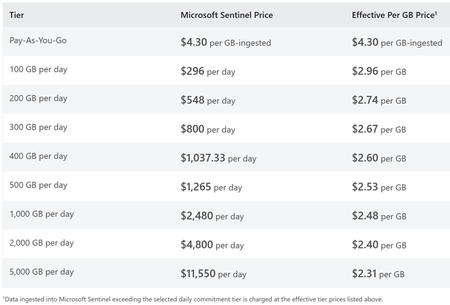
Learn about the new Microsoft Sentinel simplified price that combines the Azure Monitor Log Analytics and Microsoft Sentinel pricing tiers to a single combined tier - simplifying budgeting, billing, and cost management.54KViews6likes11Comments