python
73 TopicsGet Started with GitHub Copilot with VSCode and Python Extension
GitHub Copilot uses the OpenAI Codex. AI natural language is used to code in over a dozen programming languages in real time. OpenAI Codex is based on the GPT-3 deep learning language model.The neural network in Codex was trained on both text and hundreds of millions of public code repositories hosted on GitHub.49KViews2likes1Comment
What is GitHub Codespaces and how can Students access it for free?
GitHub Codespaces is a new service that is free for anyone to develop with powerful environments using Visual Studio Code. In this post, we'll cover how you can make use of this new technology and take advantage of its most powerful features.48KViews5likes6CommentsFine-Tune and Integrate Custom Phi-3 Models with Prompt Flow: Step-by-Step Guide
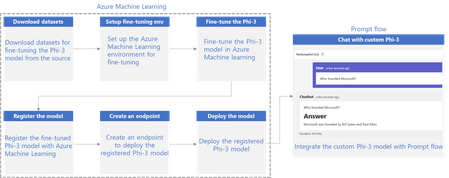
In this tutorial, you will learn how to fine-tune the Phi-3 model and integrate it with Prompt Flow. By leveraging Azure Machine Learning, and Prompt flow you will establish a workflow for deploying and utilizing custom AI models.32KViews2likes1CommentLevel up your Python + AI skills with our complete series
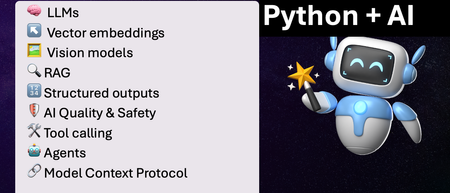
We've just wrapped up our live series on Python + AI, a comprehensive nine-part journey diving deep into how to use generative AI models from Python. The series introduced multiple types of models, including LLMs, embedding models, and vision models. We dug into popular techniques like RAG, tool calling, and structured outputs. We assessed AI quality and safety using automated evaluations and red-teaming. Finally, we developed AI agents using popular Python agents frameworks and explored the new Model Context Protocol (MCP). To help you apply what you've learned, all of our code examples work with GitHub Models, a service that provides free models to every GitHub account holder for experimentation and education. Even if you missed the live series, you can still access all the material using the links below! If you're an instructor, feel free to use the slides and code examples in your own classes. If you're a Spanish speaker, check out the Spanish version of the series. Python + AI: Large Language Models 📺 Watch recording In this session, we explore Large Language Models (LLMs), the models that power ChatGPT and GitHub Copilot. We use Python to interact with LLMs using popular packages like the OpenAI SDK and LangChain. We experiment with prompt engineering and few-shot examples to improve outputs. We also demonstrate how to build a full-stack app powered by LLMs and explain the importance of concurrency and streaming for user-facing AI apps. Slides for this session Code repository with examples: python-openai-demos Python + AI: Vector embeddings 📺 Watch recording In our second session, we dive into a different type of model: the vector embedding model. A vector embedding is a way to encode text or images as an array of floating-point numbers. Vector embeddings enable similarity search across many types of content. In this session, we explore different vector embedding models, such as the OpenAI text-embedding-3 series, through both visualizations and Python code. We compare distance metrics, use quantization to reduce vector size, and experiment with multimodal embedding models. Slides for this session Code repository with examples: vector-embedding-demos Python + AI: Retrieval Augmented Generation 📺 Watch recording In our third session, we explore one of the most popular techniques used with LLMs: Retrieval Augmented Generation. RAG is an approach that provides context to the LLM, enabling it to deliver well-grounded answers for a particular domain. The RAG approach works with many types of data sources, including CSVs, webpages, documents, and databases. In this session, we walk through RAG flows in Python, starting with a simple flow and culminating in a full-stack RAG application based on Azure AI Search. Slides for this session Code repository with examples: python-openai-demos Python + AI: Vision models 📺 Watch recording Our fourth session is all about vision models! Vision models are LLMs that can accept both text and images, such as GPT-4o and GPT-4o mini. You can use these models for image captioning, data extraction, question answering, classification, and more! We use Python to send images to vision models, build a basic chat-with-images app, and create a multimodal search engine. Slides for this session Code repository with examples: openai-chat-vision-quickstart Python + AI: Structured outputs 📺 Watch recording In our fifth session, we discover how to get LLMs to output structured responses that adhere to a schema. In Python, all you need to do is define a Pydantic BaseModel to get validated output that perfectly meets your needs. We focus on the structured outputs mode available in OpenAI models, but you can use similar techniques with other model providers. Our examples demonstrate the many ways you can use structured responses, such as entity extraction, classification, and agentic workflows. Slides for this session Code repository with examples: python-openai-demos Python + AI: Quality and safety 📺 Watch recording This session covers a crucial topic: how to use AI safely and how to evaluate the quality of AI outputs. There are multiple mitigation layers when working with LLMs: the model itself, a safety system on top, the prompting and context, and the application user experience. We focus on Azure tools that make it easier to deploy safe AI systems into production. We demonstrate how to configure the Azure AI Content Safety system when working with Azure AI models and how to handle errors in Python code. Then we use the Azure AI Evaluation SDK to evaluate the safety and quality of output from your LLM. Slides for this session Code repository with examples: ai-quality-safety-demos Python + AI: Tool calling 📺 Watch recording In the final part of the series, we focus on the technologies needed to build AI agents, starting with the foundation: tool calling (also known as function calling). We define tool call specifications using both JSON schema and Python function definitions, then send these definitions to the LLM. We demonstrate how to properly handle tool call responses from LLMs, enable parallel tool calling, and iterate over multiple tool calls. Understanding tool calling is absolutely essential before diving into agents, so don't skip over this foundational session. Slides for this session Code repository with examples: python-openai-demos Python + AI: Agents 📺 Watch recording In the penultimate session, we build AI agents! We use Python AI agent frameworks such as the new agent-framework from Microsoft and the popular LangGraph framework. Our agents start simple and then increase in complexity, demonstrating different architectures such as multiple tools, supervisor patterns, graphs, and human-in-the-loop workflows. Slides for this session Code repository with examples: python-ai-agent-frameworks-demos Python + AI: Model Context Protocol 📺 Watch recording In the final session, we dive into the hottest technology of 2025: MCP (Model Context Protocol). This open protocol makes it easy to extend AI agents and chatbots with custom functionality, making them more powerful and flexible. We demonstrate how to use the Python FastMCP SDK to build an MCP server running locally and consume that server from chatbots like GitHub Copilot. Then we build our own MCP client to consume the server. Finally, we discover how easy it is to connect AI agent frameworks like LangGraph and Microsoft agent-framework to MCP servers. With great power comes great responsibility, so we briefly discuss the security risks that come with MCP, both as a user and as a developer. Slides for this session Code repository with examples: python-mcp-demo11KViews6likes0CommentsJump Start your Developer Skills with Visual Studio Code Coding Packs
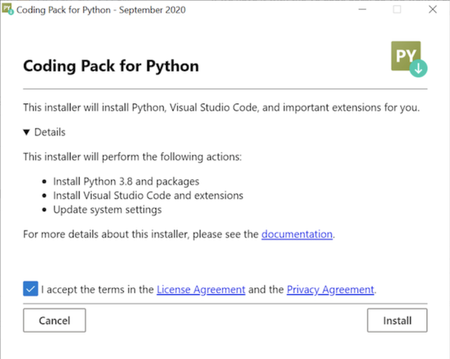
Coding Packs are specialized installs of VS Code that are pre-configured for specific coding environments. They are designed to help students and educators ramp up on VS Code quicker by automating editor and environment configuration. Coding Packs are a single download that performs the following when installed. Learn how to use them to jump start your development! This article was written by Sana Ajani, Program Manager at Microsoft10KViews5likes1CommentHow to Convert Audio to .WAV for Speech Service Using MoviePy
Did you know? Azure Speech Service offers robust speech recognition, translation, text-to-speech and many more capabilities, providing developers with powerful tools to integrate voice-based interactions into their applications. In this blog, learn how to convert your audio file to .wav for speech service using MoviePy.10KViews2likes1CommentHow to implement the backpropagation using Python and NumPy
First published on MSDN on Jul 04, 2017 I was recently speaking to a University Academic and we got into the discussion of practical assessments for Data Science Students, One of the key principles students learn is how to implement the back-propagation neural network training algorithm.9.2KViews0likes0CommentsUsing a Python Flask application with an Azure ML generated API endpoint
Using Azure and cloud tools working together helped me build something very resilient in a very quick span of time. The project helped me get a good understanding of HL7 data used in the medical industry. It was very enlightening writing python scripts to extract data from the documents. The data is stored in documents and is non-relational. 9KViews0likes0Comments