prompt flow
27 TopicsHow Do We Know AI Isn’t Lying? The Art of Evaluating LLMs in RAG Systems
🔍 1. Why Evaluating LLM Responses is Hard In classical programming, correctness is binary. Input Expected Result 2 + 2 4 ✔ Correct 2 + 2 5 ✘ Wrong Software is deterministic — same input → same output. LLMs are probabilistic. They generate one of many valid word combinations, like forming sentences from multiple possible synonyms and sentence structures. Example: Prompt: "Explain gravity like I'm 10" Possible responses: Response A Response B Gravity is a force that pulls everything to Earth. Gravity bends space-time causing objects to attract. Both are correct. Which is better? Depends on audience. So evaluation needs to look beyond text similarity. We must check: ✔ Is the answer meaningful? ✔ Is it correct? ✔ Is it easy to understand? ✔ Does it follow prompt intent? Testing LLMs is like grading essays — not checking numeric outputs. 🧠 2. Why RAG Evaluation is Even Harder RAG introduces an additional layer — retrieval. The model no longer answers from memory; it must first read context, then summarise it. Evaluation now has multi-dimensions: Evaluation Layer What we must verify Retrieval Did we fetch the right documents? Understanding Did the model interpret context correctly? Grounding Is the answer based on retrieved data? Generation Quality Is final response complete & clear? A simple story makes this intuitive: Teacher asks student to explain Photosynthesis. Student goes to library → selects a book → reads → writes explanation. We must evaluate: Did they pick the right book? → Retrieval Did they understand the topic? → Reasoning Did they copy facts correctly without inventing? → Faithfulness Is written explanation clear enough for another child to learn from? → Answer Quality One failure → total failure. 🧩 3. Two Types of Evaluation 🔹 Intrinsic Evaluation — Quality of the Response Itself Here we judge the answer, ignoring real-world impact. We check: ✔ Grammar & coherence ✔ Completeness of explanation ✔ No hallucination ✔ Logic flow & clarity ✔ Semantic correctness This is similar to checking how well the essay is written. Even if the result did not solve the real problem, the answer could still look good — that’s why intrinsic alone is not enough. 🔹 Extrinsic Evaluation — Did It Achieve the Goal? This measures task success. If a customer support bot writes a beautifully worded paragraph, but the user still doesn’t get their refund — it failed extrinsically. Examples: System Type Extrinsic Goal Banking RAG Bot Did user get correct KYC procedure? Medical RAG Was advice safe & factual? Legal search assistant Did it return the right section of the law? Technical summariser Did summary capture key meaning? Intrinsic = writing quality. Extrinsic = impact quality. A production-grade RAG system must satisfy both. 📏 4. Core RAG Evaluation Metrics (Explained with Very Simple Analogies) Metric Meaning Analogy Relevance Does answer match question? Ask who invented C++? → model talks about Java ❌ Faithfulness No invented facts Book says started 2004, response says 1990 ❌ Groundedness Answer traceable to sources Claims facts that don’t exist in context ❌ Completeness Covers all parts of question User asks Windows vs Linux → only explains Windows Context Recall / Precision Correct docs retrieved & used Student opens wrong chapter Hallucination Rate Degree of made-up info “Taj Mahal is in London” 😱 Semantic Similarity Meaning-level match “Engine died” = “Car stopped running” 💡 Good evaluation doesn’t check exact wording. It checks meaning + truth + usefulness. 🛠 5. Tools for RAG Evaluation 🔹 1. RAGAS — Foundation for RAG Scoring RAGAS evaluates responses based on: ✔ Faithfulness ✔ Relevance ✔ Context recall ✔ Answer similarity Think of RAGAS as a teacher grading with a rubric. It reads both answer + source documents, then scores based on truthfulness & alignment. 🔹 2. LangChain Evaluators LangChain offers multiple evaluation types: Type What it checks String or regex Basic keyword presence Embedding based Meaning similarity, not text match LLM-as-a-Judge AI evaluates AI (deep reasoning) LangChain = testing toolbox RAGAS = grading framework Together they form a complete QA ecosystem. 🔹 3. PyTest + CI for Automated LLM Testing Instead of manually validating outputs, we automate: Feed preset questions to RAG Capture answers Run RAGAS/LangChain scoring Fail test if hallucination > threshold This brings AI closer to software-engineering discipline. RAG systems stop being experiments — they become testable, trackable, production-grade products. 🚀 6. The Future: LLM-as-a-Judge The future of evaluation is simple: LLMs will evaluate other LLMs. One model writes an answer. Another model checks: ✔ Was it truthful? ✔ Was it relevant? ✔ Did it follow context? This enables: Benefit Why it matters Scalable evaluation No humans needed for every query Continuous improvement Model learns from mistakes Real-time scoring Detect errors before user sees them This is like autopilot for AI systems — not only navigating, but self-correcting mid-flight. And that is where enterprise AI is headed. 🎯 Final Summary Evaluating LLM responses is not checking if strings match. It is checking if the machine: ✔ Understood the question ✔ Retrieved relevant knowledge ✔ Avoided hallucination ✔ Provided complete, meaningful reasoning ✔ Grounded answer in real source text RAG evaluation demands multi-layer validation — retrieval, reasoning, grounding, semantics, safety. Frameworks like RAGAS + LangChain evaluators + PyTest pipelines are shaping the discipline of measurable, reliable AI — pushing LLM-powered RAG from cool demo → trustworthy enterprise intelligence. Useful Resources What is Retrieval-Augmented Generation (RAG) : https://azure.microsoft.com/en-in/resources/cloud-computing-dictionary/what-is-retrieval-augmented-generation-rag/ Retrieval-Augmented Generation concepts (Azure AI) : https://learn.microsoft.com/en-us/azure/ai-services/content-understanding/concepts/retrieval-augmented-generation RAG with Azure AI Search – Overview : https://learn.microsoft.com/en-us/azure/search/retrieval-augmented-generation-overview Evaluate Generative AI Applications (Microsoft Learn – Learning Path) : https://learn.microsoft.com/en-us/training/paths/evaluate-generative-ai-apps/ Evaluate Generative AI Models in Microsoft Foundry Portal : https://learn.microsoft.com/en-us/training/modules/evaluate-models-azure-ai-studio/ RAG Evaluation Metrics (Relevance, Groundedness, Faithfulness) : https://learn.microsoft.com/en-us/azure/ai-foundry/concepts/evaluation-evaluators/rag-evaluators RAGAS – Evaluation Framework for RAG Systems : https://docs.ragas.io/698Views0likes0CommentsBeyond the Model: Empower your AI with Data Grounding and Model Training
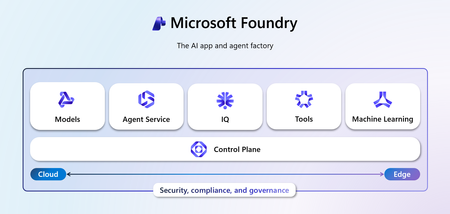
Discover how Microsoft Foundry goes beyond foundational models to deliver enterprise-grade AI solutions. Learn how data grounding, model tuning, and agentic orchestration unlock faster time-to-value, improved accuracy, and scalable workflows across industries.1.2KViews6likes4Comments
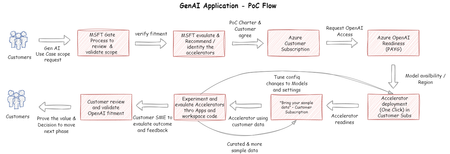
The Evolution of GenAI Application Deployment Strategy: Building Custom Copilot (PoC)
The article discusses the use of Azure OpenAI in developing a custom Copilot, a tool that can assist with a wide range of activities. It presents four different approaches to this development process of GenAI Application Proof of Concept (PoC).2.8KViews0likes0CommentsThe Future of AI: The Model is Key, but the App is the Doorway
This post explores the real-world impact of GPT-5 beyond benchmark scores, focusing on how application design shapes user experience. It highlights early developer feedback, common integration challenges, and practical strategies for adapting apps to leverage the advanced capabilities of GPT-5 in Foundry Models. From prompt refinement to fine-tuning to new API controls, learn how to make the most of this powerful model.826Views4likes0CommentsThe Future of AI: The paradigm shifts in Generative AI Operations
Dive into the transformative world of Generative AI Operations (GenAIOps) with Microsoft Azure. Discover how businesses are overcoming the challenges of deploying and scaling generative AI applications. Learn about the innovative tools and services Azure AI offers, and how they empower developers to create high-quality, scalable AI solutions. Explore the paradigm shift from MLOps to GenAIOps and see how continuous improvement practices ensure your AI applications remain cutting-edge. Join us on this journey to harness the full potential of generative AI and drive operational excellence.7.8KViews1like1CommentThe Future of AI: Developing Lacuna - an agent for Revealing Quiet Assumptions in Product Design
A conversational agent named Lacuna is helping product teams uncover hidden assumptions embedded in design decisions. Built with Copilot Studio and powered by Azure AI Foundry, Lacuna analyzes product documents to identify speculative beliefs and assess their risk using design analysis lenses: impact, confidence, and reversibility. By surfacing cognitive biases and prompting reflection, Lacuna encourages teams to validate assumptions through lightweight evidence-gathering methods. This experiment in human-AI collaboration explores how agents can foster epistemic humility and transform static documents into dynamic conversations.745Views1like1CommentThe Future of AI: Creating a Web Application with Vibe Coding
Discover how vibe coding with GPT-5 in Azure AI Foundry transforms web development. This post walks through building a Translator API-powered web app using natural language instructions in Visual Studio Code. Learn how adaptive translation, tone and gender customization, and Copilot agent collaboration redefine the developer experience.1.5KViews0likes0CommentsThe Future of AI: Vibe Code with Adaptive Custom Translation
This blog explores how vibe coding—a conversational, flow-based development approach—was used to build the AdaptCT playground in Azure AI Foundry. It walks through setting up a productive coding environment with GitHub Copilot in Visual Studio Code, configuring the Copilot agent, and building a translation playground using Adaptive Custom Translation (AdaptCT). The post includes real-world code examples, architectural insights, and advanced UI patterns. It also highlights how AdaptCT fine-tunes LLM outputs using domain-specific reference sentence pairs, enabling more accurate and context-aware translations. The blog concludes with best practices for vibe coding teams and a forward-looking view of AI-augmented development paradigms.1KViews0likes0CommentsAnnouncing a new Azure AI Translator API (Public Preview)
Microsoft has launched the Azure AI Translator API (Public Preview), offering flexible translation options using either neural machine translation (NMT) or generative AI models like GPT-4o. The API supports tone, gender, and adaptive custom translation, allowing enterprises to tailor output for real-time or human-reviewed workflows. Customers can mix models in a single request and authenticate via resource key or Entra ID. LLM features require deployment in Azure AI Foundry. Pricing is based on characters (NMT) or tokens (LLMs).2KViews0likes0Comments