mvp’s favorite content
73 TopicsThe Network That Outlived Him: How MVP Min-gyu Ju's Community Keeps His Legacy Alive
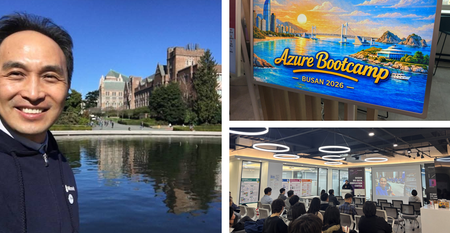
By guest blogger YoungWook Kim In the Microsoft MVP community, technology is more than just a tool; it is a bridge that connects people. The late Min-gyu Ju—founder of Recursive Soft and a preeminent expert in the IoT field—was a master at building these bridges with both strength and warmth. He looked beyond cold hardware and lines of code to find the human heart within. Although he has passed, his spirit remains vibrant through the colleagues who have gathered to hold an annual memorial seminar in his honor for the fourth consecutive year. This is a tribute to his technical legacy and the true meaning of being a "devoted expert." Highlights from the 4th Memorial Seminar: Around 50 community members including fellow MVPs came together to voluntarily raise funds in honor of MVP Min-Gyu Ju, culminating in a meaningful scholarship presentation to his son. Min-gyu’s Story Min-gyu Ju was a pioneer who navigated the IoT ecosystem with technical brilliance. However, the community remembers him for much more than his engineering feats. He was a selfless leader who dedicated his life to revitalizing the IT ecosystem in regional areas. To ensure that geographical distance did not lead to technical alienation, he frequently invited MVPs from across Korea, organizing high-quality technical sessions and networking opportunities. Through these efforts, he redefined the title "MVP" for many. To his community, an MVP became someone who isn't just a skilled professional, but a devoted expert who gives back without hesitation. He loved bringing people together to talk shop and build networks. With a rare combination of top-tier technical skill and profound empathy, he was always a steady, humorous, and comforting presence for his colleagues facing difficult challenges. His passion was so infectious that it didn't fade when he left us; instead, it sparked a tradition. For four years now, we have continued to hold a memorial seminar to share knowledge and connect, exactly the way he loved to do. Impact and Insights This year’s memorial seminar was particularly moving. Min-gyu’s eldest son recently completed his military service and is returning to his studies. Following in his father’s footsteps, he is pursuing a degree in Computer Science. To support his journey, fellow MVPs, longtime friends, and even those who only recently learned of Min-gyu’s story came together to provide a high-performance laptop and a scholarship. As we presented these gifts, we shared a message that resonated deeply with everyone present: “Your father left behind much more than you might think.” It was a reminder that while technology evolves and eventually becomes obsolete, the trust, reputation, and human connections a person builds are a permanent legacy. This experience reaffirmed that an MVP’s true value is measured by the positive change they ignite in the lives of others. The network Min-gyu built continues to solve problems and inspire innovation today. Every year, the Korea Azure Tech Group hosts a memorial tech seminar in Busan—the hometown of MVP Min-Gyu Ju —to honor his legacy. This year marks the 4th anniversary of the event. Closing Plans are already underway for next year’s memorial seminar. We aim to invite even more incredible speakers and prepare an even richer program to honor the values of technology and networking that Min-gyu held dear. Losing a precious colleague is a profound sorrow, but the fact that our time with him continues to bear fruit is a testament to the amazing MVP colleagues who walk this path with me. I encourage you to lean into your community—because when we share our knowledge and support one another, our impact lives on forever. Author Bio YoungWook Kim CEO of Hello AI | Microsoft Regional Director & AI MVP, A longtime colleague who shared Min-gyu Ju’s vision of making the world a warmer place through technology.302Views4likes0CommentsMVPs Global Student Innovation: Sprint to Imagine Cup 2026
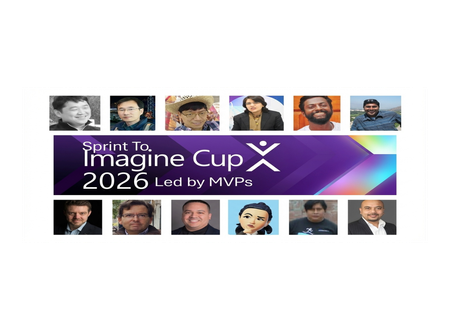
Introduction Microsoft MVPs played a pivotal role in igniting student creativity through Sprint to Imagine Cup 2026 engagements. These community-driven sessions brought Agentic AI, Azure AI, and Copilot Studio directly to universities and developer communities across Asia, Africa, Europe, and Latin America. In many regions with limited access to advanced AI technologies, MVPs bridged the gap through mentorship, hands-on learning, and inspiring demonstrations. What began as local sprints evolved into a global movement democratizing innovation and empowering thousands of students to build their first AI-powered solutions. Story This year’s Sprint to Imagine Cup journey reached diverse countries and communities—including India, Nepal, Pakistan, South Korea, South Africa, Denmark, Spain, Peru, and participants from around the world joining virtually. Every location brought forward inspiring stories of resilience, curiosity, and transformation. In India, MVP Augustine Correa led a 1,000 km tour from Mumbai to Mangaluru. Remote colleges without air conditioning, long travel distances, and high heat did not stop students from attending. Live coding errors became teachable moments as Augustine used AI Agents to collaborate with students, debug code, and accelerate project velocity. Many students left with working prototypes and their first GitHub pull requests. During the Mumbai session at the Microsoft office, student Ajinkya Furange reflected: “Thrilled to share that I successfully took on the first big challenge of my AI journey… This hands‑on workshop boosted my confidence to build impactful AI-driven solutions.” Another participant, Mitansh Jadhav, added: “One of the most eye‑opening concepts was seeing the AI Agent’s decision-making loop in action… We were challenged to solve five labs using Copilot, perfectly simulating real-world problem solving.” In Bangalore and Chennai, MVP Mohamed Azarudeen hosted two Sprint sessions with 250 and 120 participants. Students refined ideas, clarified Imagine Cup pathways, and built early-stage AI projects. Students frequently shared how the sprint turned “I have an idea” into “I know how to move forward.” Across Pakistan and Nepal, MVPs delivered AI workshops on Azure AI, Foundry, Copilot Studio, and Responsible AI—often serving as students’ first exposure to advanced AI technologies. MVP Gulnaz Mushtaq in Pakistan hosted ten Sprint events across major university hubs including Peshawar, Lahore, Islamabad, Karachi, and Rawalpindi. Nepal’s innovation culture continued as MVP Pradeep Kandel led the Kathmandu Ideathon, engaging 150–200 students from 70 universities. The event strengthened idea development, mentorship pairing, and preparation for Imagine Cup 2026. Also, MVPs Heo Soek, Inhee Lee and Jaeseok Lee in Korea led a successful Sprint at Microsoft Office Seoul allowing students to explore AI startup concepts. A student participant from Korea shared: “In this fast-changing AI era, I was unsure about my direction… but this event helped me understand what kind of talent I should become and find clarity.” Another female student team from a regional Korean university said: “We will prepare for Imagine Cup together—thank you for giving us this opportunity.” A Korean attendee added: “Even though the workshop lasted more than six hours, it was never boring—well‑timed hands‑on labs and activities kept it both fun and meaningful.” In Europe, MVP Thomas Martinsen (Denmark) and MVP Roberto Corella (Spain) expanded the movement with sessions on Copilot extensibility and AI for Business Central. Latin American MVPs Jorge Castaneda, Meerali Naseet and Juan Rafael delivered cybersecurity and Spanish-language AI workshops supporting students across Peru and Costa Rica. Impact Insights Global impact from Sprint to Imagine Cup 2026 has been broad and profound. A total of 70 worldwide events reached an estimated 4,200–5,000 students globally. More than 3,300–4,000 learners engaged directly with Microsoft AI tools such as Azure AI Services, Copilot Studio, and Foundry Agents. Across all regions, 65% of participants attended in-person while 35% joined through online or hybrid formats, including Spanish-language virtual events in Latin America. Social media amplified momentum as students shared prototypes, learnings, and excitement on LinkedIn and X using hashtags such as #SprintToImagineCup, #ImagineCup, #MumTechUp, and #HMNOV25. Many students shared sentiments similar to: “The meeting was very informative and inspiring. I learned a lot about the competition and technologies involved, and I’m excited to begin this journey.” and “Thank you so much… your explanation made everything easier to understand. Looking forward to attending more sessions!” Call to Action / Closing The global Sprint to Imagine Cup movement demonstrates that innovation thrives when community leaders uplift new creators. MVPs are equipping students with the skills, confidence, and AI fluency needed to build solutions for the future. As the Imagine Cup 2026 season continues, now is the perfect time for MVPs and community leaders to host sessions, mentor teams, and amplify student stories—helping shape the next generation of AI innovators. Resources Microsoft Learn – Azure AI: https://learn.microsoft.com/azure/ai Microsoft Copilot Studio: https://learn.microsoft.com/microsoft-copilot-studio GitHub Agentic AI Samples: https://github.com/microsoft Imagine Cup Official Site: https://imaginecup.microsoft.com627Views4likes6CommentsFrom Visibility to Impact: Building Your Personal Brand with Smart, Cost-Effective Tools
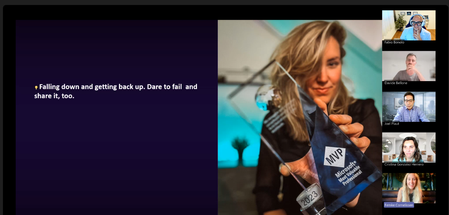
Beyond mastering technology, MVPs are passionate about helping others grow, supporting both technical and soft-skills development, and creating opportunities for learning and collaboration. They actively share their discoveries, experiences, and lessons learned while engaging in valuable exchanges with fellow community leaders and influencers. In this spirit of continuous learning and knowledge sharing, building a personal brand becomes a powerful way to amplify your voice, expand your reach, and increase the impact you can have on the communities you serve. Recently, the global MVP community came together for a discussion on creating a personal brand, best practices, tips and effective tools that can be leveraged to raise your social media reach. The session titled “From Visibility to Impact: Building Your Personal Brand with Smart, Cost-Effective Tools,” featured insights from Femke Cornelissen, Microsoft 365 and Copilot MVP from the Netherlands, and Fabio Bonolo, Microsoft 365 Copilot MVP from Switzerland. Together, they explored one of the most valuable skills for today's community leaders and technology advocates: building a personal brand that creates meaningful impact while staying authentic and accessible. Through personal experiences, practical examples, and demonstrations of cost-effective tools, they showed MVPs how visibility can become a catalyst for community growth, professional opportunities, and wider knowledge sharing. Personal Branding Starts with Authenticity Opening the session, Femke Cornelissen shared her personal journey to becoming an MVP and the lessons learned along the way. One of her strongest messages was clear: authenticity matters more than following a formula. Rather than trying to replicate someone else's success, Femke encouraged attendees to identify their own passions and areas of expertise. Whether sharing insights on Microsoft technologies, community initiatives, innovation, or personal experiences, the most effective personal brands are built around genuine interests and perspectives. She highlighted how consistent visibility on platforms such as LinkedIn can create unexpected opportunities—from speaking engagements and community leadership roles to customer conversations and valuable professional connections. Yet success does not happen overnight. Building recognition requires showing up consistently, sharing valuable insights, and developing trust over time. LinkedIn as a Community Platform While many professionals still view LinkedIn primarily as a digital résumé, Femke explained how the platform has evolved into a powerful space for thought leadership, networking, and community engagement. She encouraged MVPs to think beyond job titles and focus on creating content that demonstrates their expertise and unique perspective. Personal stories, lessons learned, event experiences, and practical guidance often resonate more strongly than purely promotional content. According to Femke, people connect with people—not corporate messaging. Several practical recommendations emerged from her presentation: Develop a consistent presence rather than posting sporadically. Share insights in your own voice. Engage actively with other community members through comments and conversations. Support and elevate the work of others. Focus on meaningful engagement rather than follower counts. She also emphasized the importance of balancing personal, community, and professional content to maintain authenticity while still supporting employers, projects, and initiatives that align with personal goals. AI as a Productivity Multiplier The session also explored how AI can help content creators work more efficiently without losing their human voice. Femke demonstrated how she uses AI-powered workflows to monitor industry trends, draft content ideas, analyse performance per post, and manage large volumes of community interactions. Rather than replacing authentic communication, she views AI as a tool that enables her to spend more time building relationships and less time managing repetitive tasks. One particularly important takeaway was her approach to maintaining authenticity. While AI helps create first drafts and analyse data, final content should always reflect an individual's own perspective, experiences, and tone of voice. Community members follow people for their unique insights, not automatically generated content. Designing a Recognisable Personal Brand Building on Femke's focus on authenticity, Fabio Bonolo explored the visual and strategic side of personal branding. His presentation introduced a structured framework built around four key pillars: Identity, Content, Reach and Consistency. Fabio explained how visual identity contributes to recognition and memorability. Colours, logos, typography, imagery, and design choices all communicate aspects of a person's personality and expertise. By maintaining consistent visual elements across websites, presentations, blogs, videos, and social media channels, community leaders can create a stronger and more recognisable presence. He demonstrated how even simple visual standards can make content instantly recognisable while reinforcing credibility and professionalism. Powerful Tools Without Enterprise Budgets One of the most popular parts of the session was Fabio's walkthrough of affordable tools that MVPs can use to professionalise their online presence. Among the tools showcased were MojoMox for logo creation, colour palettes, and brand design systems, PowerPoint as a surprisingly powerful design tool for creating thumbnails, graphics, and consistent visual assets, AuthoredUp for enhancing LinkedIn content creation and analytics, Wix for website management, blogging, and email marketing, Clipchamp for video creation and editing as well as Riverside and StreamYard for podcasting, live streaming, and content recording. A recurring theme throughout Fabio's presentation was that impactful personal branding does not require expensive software or large marketing budgets. By combining a clear strategy with carefully selected tools, MVPs can create professional-quality content for a relatively small investment. Community Remains the Force Multiplier Despite the extensive discussion about tools, automation, AI, and branding strategies, both presenters arrived at the same conclusion: community is the most important element. Femke described personal branding, AI, and community as three interconnected forces that create impact when combined effectively. Visibility alone is not the goal; meaningful relationships, knowledge sharing, and helping others succeed are what ultimately build a lasting reputation. Fabio reinforced this message by encouraging attendees to stay true to their identity, create content that delivers value, and remain consistent across the channels where they engage their audiences. Key Takeaways for MVPs The session concluded with several practical lessons for anyone looking to expand their impact: Be authentic and share your unique perspective. Focus on helping others rather than chasing metrics. Develop a consistent personal brand across your channels. Use AI to enhance productivity, not replace authenticity. Invest in relationships and community engagement. Start with simple, affordable tools and scale over time. Stay consistent, visibility is built through sustained effort. As the MVP community continues to grow and evolve, sessions like this demonstrate that the most powerful brands are not built through marketing alone—they are built through expertise, generosity, authenticity, and community. Thank you to Femke Cornelissen and Fabio Bonolo for sharing their experiences and practical guidance, and to all MVPs who participated in the discussion and contributed their own insights throughout the session. Want to Learn More About the MVP Program? To find an MVP and learn more about the MVP Program visit the MVP Communities website and follow our updates on LinkedIn or #mvpbuzz. Join us for a future live session through the Microsoft Reactor where we walk through what the MVP program is about, what we look for, and how nominations work. These sessions are designed to help you connect the dots between the work you’re already doing and the impact the MVP Program recognizes - with time for questions, examples, and real conversations.Refactoring a Career Through Consistency: TodayCode’s Joeun Park’s MVP Story
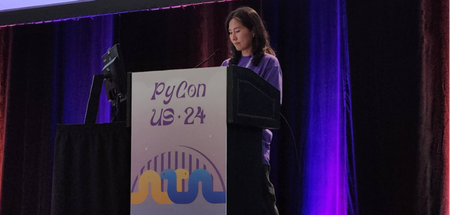
Joeun Park’s MVP story is not defined by a single breakthrough, but by decades of steady, intentional progress. With more than 20 years of experience as a developer, she began coding long before developer communities and content platforms became mainstream. Over time, she navigated shifting technologies, industries, and life stages, continuously reshaping her role. After many years as a backend engineer, a major life transition prompted her to expand into data science, content creation, education, and community leadership—ultimately leading to her work as the founder of TodayCode and as a Microsoft MVP. Park’s journey into software development began early. She wrote her first programs in elementary school using GW-BASIC, exploring computers out of pure curiosity rather than career ambition. In middle and high school, she became deeply involved in PC communication communities, where people built things together, shared knowledge, and learned collaboratively. Many of the connections she formed during that time remain active today, with peers still working as developers. She studied Information and Communications Engineering at university and later pursued a master’s degree in Information and Computer Education, originally intending to become a teacher. However, abrupt policy changes drastically reduced hiring for computer teachers nationwide. Faced with a closing door, Park pivoted back to industry—a decision that came with significant challenges. At a time when discriminatory interview questions were commonplace, she reportedly submitted nearly 3,000 applications before securing her first role at an IT company in Korea. From there, her career gained momentum. Over the next decade, she worked as a backend developer across diverse domains, including gaming and advertising. Each transition brought new business contexts and new technical stacks—ASP, PHP, Django, Ruby on Rails—often outside what was considered “mainstream.” Park viewed these shifts not as disadvantages, but as training. She believed that once the core principles of software engineering were understood, adapting to new languages and frameworks was possible. Working in smaller teams, she often took on overlapping roles as a backend engineer, data analyst, and data engineer—experience that would later support her transition into data science. Python Korea User Group for over ten years. These long-term community roles strengthened her belief that sustainable growth happens faster when people learn together. Community involvement was another central pillar of her growth. Park has been active in the Python Korea User Group for over ten years, consistently contributing through knowledge sharing and community engagement. She has also participated in PyCon Korea both as a speaker and as an organizer, helping shape the conference from behind the scenes as well as from the stage. These long-term community roles strengthened her belief that sustainable growth happens faster—and more meaningfully—when people learn together. A major turning point came after two years of parental leave. Upon attempting to return to work, Park faced pressure to resign. While formal processes allowed her to return on paper, there was no longer a team or role prepared for her. Eventually, she chose to leave the company. Rather than viewing this period as a pause, she treated it as preparation. She committed to a personal rule: do something every day. Her “one commit a day” practice—sometimes no more than a single line of text or a comment—became a way to maintain continuity, confidence, and momentum. In 2017, she launched a YouTube channel called TodayCode, meaning “share what you learned today” and “write code today.” What started as a personal learning log quickly evolved into a platform. Her early content focused on hands-on, practical topics such as Kaggle, public data analysis, and applied data workflows—addressing a gap she saw in overly theoretical materials. As the audience grew, so did invitations to teach, consult, and collaborate. TodayCode became a company, and Park’s professional identity expanded to include data scientist, creator, educator, mentor, and community organizer. Her sustained contributions were eventually recognized with her selection as a Microsoft MVP. Park’s impact lies in demonstrating that small, consistent actions can fundamentally reshape a career—especially when setbacks occur. Her daily commit habit is not about visibility or metrics; it is about continuity. Even on days when progress feels minimal, continuing to act builds confidence and keeps learning active. Over time, those small actions compound into real skills, tangible outcomes, and new opportunities. She defines a successful developer as someone who helps others grow. Through YouTube, teaching, mentoring, and long-term community involvement, she has worked to create environments where beginners and non-traditional learners can progress sustainably. Her decade-long engagement with the Python Korea User Group and her contributions to PyCon Korea exemplify this philosophy in practice: knowledge grows when shared, and communities accelerate individual growth. By openly sharing her experiences around parental leave and career disruption, she has also contributed to broader conversations about fairness and sustainability in tech. Her work as an MVP reflects not just technical expertise, but long-term community building. Joeun Park’s story is a reminder that careers can be refactored—sometimes by choice, sometimes by circumstance—but rarely without consistency. If you are questioning your direction or navigating change, start smaller than you think you need to. Make one commit. Write one note. Share one thing you learned. Those actions add up. And if possible, step into a community. Learning and growing together often changes not just the speed of progress, but its meaning. Resources Todaycode YouTube https://www.youtube.com/todaycode Microsoft MVP Profile https://mvp.microsoft.com/en-us/MVP/profile/6e97d5d1-396f-ed11-81ab-000d3a5600fa Book (Co-author): Korean Text Analysis with Python github https://github.com/corazzon https://www.linkedin.com/in/todaycode/637Views3likes0CommentsAI Genius Season 2: MVP Speakers Power Asia’s AI Tour—Build Smarter, Faster, and Hands-On
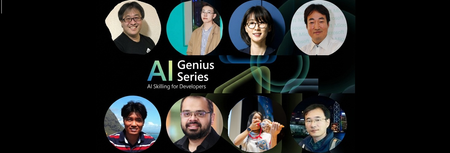
Introduction The Microsoft AI Genius Season 2 is here, bringing together the Asia Pacific’s top MVP speakers and developer leaders for a technical deep dive into the future of AI. Inspired by the success of last year’s series, the new season of videos on-demand is designed for developers and dev managers eager to master the tools behind GitHub Copilot, AI Foundry, Microsoft Fabric, and Azure Databricks. With a focus on hands-on learning and real-world impact, AI Genius Season 2 is your gateway to building smarter, faster, and with greater confidence than ever before. The program features three in-depth episodes designed to empower participants. Season 2 Highlights Episode 1: Elevate Your Agents with Model Context Protocol (MCP) Episode 2: Unified Data & AI Workflows with Fabric, Databricks & AI Foundry Episode 3: Supercharge Your DevOps with Copilot in Azure & GitHub Copilot Registration & On-Demand Access: AI Genius English (India, ANZ, ASEAN, HK) AI Genius Season 2 (China) Japan Korea Youngwook Kim, Jaeseok Lee, Mi Jeong Jeon from Korea, Jingun Jung, Tomohiro Suzuki, Maki Nagase from Japan, Kasam Shaikh from India, Qi Li from China The sessions are more than just presentations—they’re interactive experiences. Developers get hands-on with the exact tools and architecture featured in the AI Tour workshops, learning directly from MVPs who have implemented these solutions in real-world scenarios. The impact is clear: in Q1 alone, 87,500 developers engaged with the series, with 20,000 joining through a gated experience and 55% of the Managed Account List reached. China saw a 200% increase in views, while Japan and Korea also achieved significant growth. MVP speakers, Youngwook Kim, Jaeseok Lee, Mi Jeong Jeon from Korea, Jingun Jung, Tomohiro Suzuki, Maki Nagase from Japan, Kasam Shaikh from India, Qi Li from China, shared their expertise, delivering live demos, answering questions, and inspiring the next generation of AI innovators. Their dedication and passion have helped shape a vibrant, inclusive community where learning and collaboration thrive. Season 3: What’s Next for AI Genius? Building on the momentum of Season 2, AI Genius Season 3 is set to take developer skilling to the next level. This new season will feature advanced topics and hands-on workshops designed to help you: Prototype multimodal AI agents with Microsoft Foundry and the AI Toolkit in Visual Studio Code Orchestrate advanced multi-agent systems using SWE Agents and the Microsoft Agent Framework Bring Model Context Protocol (MCP) tools into production with Azure Functions and enterprise-ready AI patterns Whether you’re looking to deepen your expertise or explore the latest in agentic AI, Season 3 offers practical guidance and real-world demos from MVPs and Microsoft experts. Sessions are available in English, Korean, and Japanese, ensuring accessibility for all developers across Asia. Explore and register for Season 3: https://msft.it/6045sLrND Impact and Insights The AI Genius Series has become a catalyst for developer growth and innovation across Asia. By delivering localized content in English, Korean, and Japanese, the program ensures accessibility and relevance for all participants. The MVP speakers’ real-world insights and hands-on guidance have empowered thousands to move beyond experimentation and into enterprise-grade AI development. Key outcomes include: Over 87,000 developers engaged across Asia Significant growth in on-demand participation, especially in China and Japan High demand for immersive, digital hands-on experiences—driving new solutions for future events The ripple effect of MVP leadership is evident: as more developers gain confidence and skills, they, in turn, inspire others to join the journey. The AI Genius Expert Group continues to grow, welcoming new members who are passionate about advancing AI in their communities. Ready to become an AI Genius? Join the movement—register now for the latest episodes, available in English, Korean, and Japanese. Get hands-on with the tools, connect with experts, and earn your AI Genius badge. Whether you’re a developer, manager, or community advocate, there’s a place for you in this vibrant network. Let’s build the future of AI together! 👉 https://msft.it/6045sLrND Resources Season 2 Highlights Episode 1: Elevate Your Agents with Model Context Protocol (MCP) Episode 2: Unified Data & AI Workflows with Fabric, Databricks & AI Foundry Episode 3: Supercharge Your DevOps with Copilot in Azure & GitHub Copilot Registration & On-Demand Access: AI Genius English (India, ANZ, ASEAN, HK) AI Genius Season 2 (China) Japan Korea501Views3likes0Comments