multicloud
97 Topics
Introducing Azure Copilot for Azure Local: AI-powered operations for distributed infrastructure
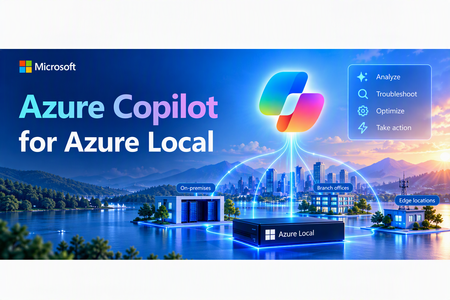
Managing distributed infrastructure can be complex. When an issue occurs, operators may need to navigate multiple tools, review health signals and diagnostics, interpret logs, and determine the right troubleshooting steps before they can move toward resolution. Azure Copilot for Azure Local helps bring an AI-powered, agentic experience to Azure Local operations, designed to make managing and troubleshooting infrastructure simpler and more intuitive. With Azure Copilot for Azure Local, operators can start with a natural-language question, such as: “Why is my Azure Local cluster disconnected?” “Is this node healthy?” “Why did my deployment fail?” “Is my environment ready for an update?” “Check my network configuration” Azure Copilot for Azure Local translates the operator’s intent into a troubleshooting workflow, bringing together infrastructure context, diagnostics, and relevant troubleshooting knowledge to help operators understand what is happening and determine the appropriate next steps for their infrastructure. Start troubleshooting with natural language Infrastructure problems rarely begin with a clearly identified root cause. An administrator may simply know that an update failed, a node is unhealthy, connectivity was lost, or a deployment cannot continue. Azure Copilot for Azure Local provides a natural language starting point for these investigations. Rather than first determining which command to run, which diagnostic tool to open, or which troubleshooting guide to follow, operators can describe the problem they are trying to understand. Copilot can help gather relevant information, analyze the results, explain findings, and guide the operator toward potential next steps. This provides operators with a more intuitive troubleshooting experience that helps bridge the gap between observing a problem and knowing what to investigate next. Guided, multi-step troubleshooting Azure Copilot for Azure Local is designed to go beyond simply answering questions. For supported scenarios, the experience can orchestrate multiple steps of an investigation, using infrastructure context, diagnostic capabilities, and troubleshooting knowledge to help operators work through a problem. The troubleshooting journey becomes: Ask a question → Gather context → Run diagnostics → Analyse findings → Recommend next steps The operator remains in control while Copilot helps with the investigative work required to understand the issue and identify a path forward. Designed for real Azure Local operational scenarios Azure Copilot for Azure Local can assist operators across common infrastructure management and troubleshooting scenarios, including: Infrastructure health Understand the health of an Azure Local system or individual node and identify areas that may require further investigation. Connectivity troubleshooting Investigate why an Azure Local system or machine is disconnected and surface information that can help narrow down the issue. Network configuration Investigate network-related conditions and help identify configuration issues affecting the environment. Deployment troubleshooting Investigate failed deployments and help operators understand potential blockers and next steps. Update readiness Evaluate the environment before an update and identify conditions that may require attention. Diagnostics and log collection Guide diagnostic collection when deeper troubleshooting or additional evidence is required. Helping operators move from questions to outcomes Troubleshooting infrastructure often involves connecting information spread across configuration, health signals, diagnostics, logs, and troubleshooting documentation. Azure Copilot for Azure Local is evolving toward an operator-focused experience where AI agents can help connect these pieces as part of a guided investigation. The goal is simple: reduce the effort required to understand what is happening and help operators get to the right next step faster. By combining natural-language interaction with agentic troubleshooting workflows, Azure Copilot for Azure Local can help make complex diagnostic information easier to understand and help operators navigate investigations while keeping them in control of applicable actions. Public preview planned for early 2027 Azure Copilot for Azure Local is planned to enter public preview in early 2027. Once available, customers can explore the agentic experience in their Azure Local environments, evaluate real operational scenarios, and provide feedback that helps shape future capabilities. For more details, reach out to us at AzureLocalCopilotTeam@microsoft.com39Views0likes0Comments
Azure Local Storage: Choose the Architecture That Fits Your Business
Organizations modernize infrastructure in different ways. Some prioritize a simple, integrated platform; others need to preserve SAN investments, scale storage independently, or support workloads with different storage requirements. In this post, we'll explore the storage options available in Azure Local, when to use each one, and the business benefits they unlock. One Platform, Multiple Storage Architectures Azure Local brings multiple storage choices into a consistent, cloud-connected platform experience. Hyperconverged Infrastructure (Storage Spaces Direct) Storage Spaces Direct (S2D) provides a hyperconverged architecture where compute and storage are integrated into the same cluster. This model is ideal for customers looking for streamlined deployment experience, with infrastructure managed as a single platform and fewer organizational dependencies. Disaggregated Architecture (SAN Only) Azure Local supports validated external storage arrays connected through Fibre Channel or iSCSI. This architecture enables organizations to leverage existing storage investments and advanced storage services while independently scaling compute to support higher-capacity requirements. This gives customers the flexibility to work with supported storage vendors—including Dell, HPE, Hitachi, Lenovo, NetApp, and Everpure—while using the Fibre Channel or iSCSI connectivity already supported by Azure Local. Hybrid Architecture (Storage Spaces Direct + SAN) Customers can also combine Storage Spaces Direct and external storage to support different workload requirements within the same environment. This approach offers maximum flexibility, allowing organizations to align storage choices with application needs. Which Storage Option Should You Choose? If your goal is... Consider Simple integrated infrastructure Hyperconverged Expand an existing Azure Local cluster storage capacity Hybrid Reuse existing storage investments Hybrid or Disaggregated Independent compute and storage scaling Disaggregated Consolidate storage across workloads Disaggregated Advanced storage efficiency capabilities Disaggregated Flexible workload placement Hybrid Traditional three-tier architecture modernization Disaggregated Minimize infrastructure replacement Disaggregated Higher-scale compute clusters with more than 16 nodes Disaggregated Ready to size your solution? Use ODIN for Azure Local to translate workload, resiliency, growth, compute, and storage requirements into an example solution design. Use ODIN as a planning aid and validate the proposed configuration against official Azure Local documentation and with your preferred hardware and storage partners. Before finalizing your design, review External storage support for Azure Local for supported architectures and protocols, and Supported SAN solutions on Azure Local for validated storage partners and configurations. Use the comparison above to identify the most suitable architecture, then use ODIN, official Azure Local documentation, and partner guidance to validate workload sizing, supported configurations, and operational requirements. Modern Infrastructure Demands More Storage Flexibility Storage architecture decisions increasingly depend on more than capacity and performance. Organizations must also account for operational processes, maintenance planning, existing infrastructure, efficiency services, resiliency, and expected growth. These priorities influence whether an organization chooses an integrated, disaggregated, or hybrid architecture—and which benefits matter most in its environment. The following benefits explain where external storage can add value within that decision. Benefits of External Storage with Azure Local Protect Existing Investments Many organizations already operate enterprise storage platforms that support critical business applications. Azure Local enables customers to modernize compute infrastructure while continuing to leverage existing storage investments, operational expertise, backup strategies, and storage management processes. Get More Value from Every Terabyte Storage efficiency is becoming increasingly important as organizations scale virtualized environments, desktop infrastructure, databases, and application workloads. Many enterprise storage platforms offer advanced services such as compression, deduplication, thin provisioning, and capacity optimization. Organizations can leverage these capabilities while maintaining consistent Azure Local management experience. Spend Less Time Maintaining Infrastructure Operational efficiency is often just as important as infrastructure capabilities. Because compute and storage are separated in SAN-based architectures, organizations can independently manage storage and compute infrastructure. This can help simplify maintenance planning and reduce storage-related operational activities during maintenance events. Customers frequently cite more predictable maintenance windows, simplified update planning, mature storage monitoring practices, and reduced operational complexity. Scale on Your Terms One of the primary reasons organizations adopt external storage is flexibility. In hyperconverged environments, compute and storage typically scale together. With disaggregated storage, organizations can expand storage capacity independently from compute resources. This can be particularly valuable when storage growth outpaces CPU or memory requirements. Designed for Enterprise Resiliency Azure Local pairs cloud-connected infrastructure with the storage maturity Windows Server has refined over many generations. For external storage, that means working with the same well-understood technologies you already rely on—Fibre Channel and iSCSI connectivity, MPIO, dual fabrics, redundant controllers, and Cluster Shared Volumes—applied to the Azure Local platform. Because these are proven, standard building blocks, you have the flexibility to design highly available storage that fits your existing SAN investments and operational practices, rather than adapt to an unfamiliar model. For implementation requirements and configuration steps—including Fibre Channel, iSCSI, MPIO, array-side configuration, and presenting SAN-backed volumes as Cluster Shared Volumes see : Connect an external storage array to Azure Local. Real-World Scenarios Streamlined Infrastructure for Distributed Locations Retail stores, branch offices, and back-office environments can use a hyperconverged architecture to run applications on an integrated compute and storage platform. This approach simplifies deployment and day-to-day operations for locations that need consistent infrastructure without dedicated storage teams. Flexible Workload Placement Manufacturing and healthcare organizations can use a hybrid architecture when some workloads are best served by integrated Storage Spaces Direct and others require external SAN capacity or established storage services. This allows application teams to place workloads on the storage option that best meets their performance, resiliency, and operational requirements. Modernizing while Preserving SAN Investments A manufacturing organization, financial institution, or enterprise datacenter with established SAN platforms and processes can use a disaggregated architecture to modernize compute without redesigning storage operations, retraining teams, or immediately replacing proven infrastructure. Scaling Storage as Data Needs Grow Data-intensive environments—including manufacturing, fintech, and enterprise datacenters—may find that storage capacity grows faster than compute demand. A disaggregated architecture allows them to scale storage and compute independently, helping optimize infrastructure investments over time. Cost and Licensing Considerations Azure Local uses a monthly service fee based on the deployment configuration: Hyperconverged deployments (S2D only): Compute and storage are integrated in the same cluster using Storage Spaces Direct, with no external SAN storage. A monthly service fee of $10 per physical core/month applies. Disaggregated (SAN only), and hybrid storage configurations (S2D with SAN): Disaggregated deployments use external SAN storage instead of Storage Spaces Direct, while hybrid deployments with external storage combine Storage Spaces Direct with external SAN storage. Using external SAN storage has a monthly service fee of $20.1 per physical core/month applies. Prices are subjected to change. For current pricing details and applicable terms, visit Azure Local Pricing | Microsoft Azure. Choosing the Right Fit for Your Business Start with the operating model and workload requirements you need to support, then choose the architecture that best fits them. Azure Local provides a consistent platform experience across hyperconverged, disaggregated, and hybrid deployments. That consistency lets organizations modernize without treating storage architecture as a one-time, irreversible choice. The right storage strategy is the one that fits your workloads, operations, and growth plans. Learn more: Storage Spaces Direct overview; External storage support for Azure Local; Supported SAN solutions on Azure Local; Connect an external storage array to Azure Local; Azure Local pricing; and Azure Hybrid Benefit for Azure Local.613Views2likes3Comments
Workload Orchestration in the Azure portal is now available: Deploy in minutes, scale with ease
Edge deployments rarely stay simple for long. What begins as an application running on a single Kubernetes cluster can quickly expand across stores, factories, branches, or other distributed locations, each having different configuration needs. That is exactly where workload orchestration for Azure Arc comes in. Workload orchestration helps teams manage that complexity by providing a centralized approach to consistently define, configure, and deploy applications across distributed cloud, on-premises, and edge environments, all while catering to custom configuration needs of individual sites and deployment targets. See the experience in action Evaluating a new deployment approach often starts slowly: study the documentation, package an application, complete the setup, and only then decide whether it fits. The Azure portal reverses that order with its jumpstart onboarding experience. Bring your Azure Arc-enabled Kubernetes cluster and deploy a pre-packaged application in minutes. Whether you are validating a proof of concept or introducing the product to your broader team, the new portal onboarding experience turns the end-to-end workflow into something you can quickly try on your own cluster. Scale from first deployment to production Once you have validated the first deployment, you can evolve the same approach for production. Onboard your infrastructure into workload orchestration, organize your deployment sites into hierarchies, and define shared configurations for all deployments – all without leaving the portal. This lets you expand from one cluster to a distributed fleet while retaining centralized governance, repeatability, and site-level flexibility. Ready to try it? Try now by deploying your first application with workload orchestration in the Azure portal. Explore the product documentation for the complete set of capabilities.461Views0likes0CommentsEpisode 1: Onboarding Azure Arc at Scale | The Azure Arc Check-In
Once a month the Azure Arc team will release an episode covering a variety of topics. To request a topic or view additional episodes please visit: aka.ms/the-azure-arc-check-in Episode 1: Onboarding Azure Arc at Scale Scenario: Imagine your organization has 1,000 Windows and Linux servers spread across multiple locations. You want them all in Azure Arc, but first you need to deploy the Azure Connected Machine agent at scale. Try now in Azure aka.ms/aaci-episode1 Why onboarding strategy matters Interactive sign-in works well for testing and proof-of-concepts, but it quickly becomes impractical when you’re onboarding large server estates. At scale, organizations need a deployment model that can: Automate onboarding across many machines Align with existing management tooling Apply consistent configuration and governance from day one Minimize manual effort and human error This episode focuses on using non-interactive authentication and automation to onboard large server fleets efficiently. One of the key recommendations is to use a dedicated authentication mechanism designed for scale rather than relying on interactive administrator sign-ins. Onboard a Linux fleet with Ansible The Ansible deployment begins with an Ansible node that is already connected to Azure Arc. The deployment uses the credential on the Ansible node to deploy the Azure Connected Machine agent to the Linux fleet. To enable this, the managed identity of the Ansible node has the Azure Connected Machine Onboarding role in Azure assigned. Below are the steps for role assignment in the Azure portal: Open the resource group where the servers will be deployed. In Access control, add a role assignment. Select the Azure Connected Machine Onboarding role. Choose managed identities, select Machine - Azure Arc, and find the Ansible node. Review and assign the role. Configure the Ansible playbook With the permissions in place, the deployment uses three files: inventory.ini: Represents the machines configured by the playbook. arc-vars.yml: Contains non-secret configuration, including the resource group name, subscription and tenant IDs, location, and tags. arc-onboard.yml: References arc-vars.yml and configures the playbook to use managed identity, or MSI, for authentication. After the playbook runs, Ansible deploys the Azure Connected Machine agent to the Linux fleet. You can return to the resource group, refresh the view, and verify that your Linux machines appear as Azure Arc connected servers. Onboard Windows machines with Group Policy For Windows Server environments joined to Active Directory, Group Policy remains one of the simplest and most scalable deployment mechanisms. The process includes: Creating the required onboarding identity Preparing a shared location for deployment assets Downloading the Azure Arc GPO deployment package Generating a Group Policy Object with the required settings Linking that GPO to the appropriate organizational unit (OU) Allowing targeted servers to automatically onboard during policy refresh cycles For organizations that already manage Windows Server through Active Directory, this approach enables onboarding at scale without introducing additional management infrastructure. FAQs What is the best way to onboard servers to Azure Arc at scale? For large Windows and Linux server environments, use automated deployment with non-interactive authentication rather than signing in interactively on each machine. This approach lets you deploy the Azure Connected Machine agent consistently across many servers while reducing manual effort and human error. Azure Connected Machine Agent Deployment Options - Azure Arc Can I use Ansible to onboard Linux servers to Azure Arc? Yes. You can use an Azure Arc-enabled Ansible node to deploy the Azure Connected Machine agent across a Linux server fleet. In the approach demonstrated here, the Ansible node uses its managed identity, which is assigned the Azure Connected Machine Onboarding role, to authenticate the deployment. Connect machines to Azure Arc at scale using Ansible - Azure Arc Can I use Group Policy to onboard Windows servers to Azure Arc? Yes. Group Policy can automate Azure Arc onboarding for Windows Server machines that are joined to Active Directory. The process uses a Group Policy Object linked to the appropriate organizational unit, allowing targeted servers to onboard automatically during Group Policy refresh cycles. Connect machines at scale using Group Policy with a PowerShell script - Azure Arc What files are needed to onboard Linux servers to Azure Arc with Ansible? The Ansible deployment shown in this episode uses three files: inventory.ini to identify the target machines, arc-vars.yml to store non-secret configuration such as subscription, tenant, resource group, location, and tags, and arc-onboard.yml to run the onboarding playbook using managed identity authentication. Should I use Ansible or Group Policy for Azure Arc onboarding? Use Ansible when onboarding Linux servers in an environment that already uses Ansible playbooks and automation. Use Group Policy when onboarding domain-joined Windows servers managed through Active Directory. Both approaches help organizations automate Azure Connected Machine agent deployment by using tools already present in their server-management environment. Additional options are available for onboarding servers at scale. See Azure Connected Machine Agent deployment options.689Views1like0CommentsAzure Arc Server June Forum
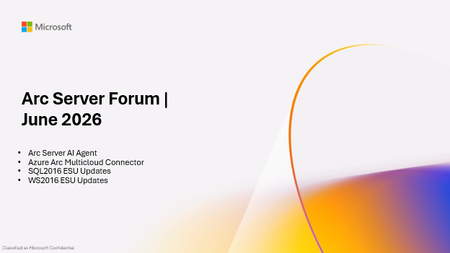
Please find the recording for the monthly Azure Arc Server Forum on YouTube! During the June 2026 Azure Arc Server Forum, we discussed: Arc Server AI Agent assists with onboarding and troubleshooting through an integrated LLM with plans for surfacing the experience through Azure Copilot and in Azure Portal. Azure Arc Multicloud Connector Updates focused on both the Public Preview of the Google Cloud Platform (GCP) Connector and Public Preview of Azure Arc-enablement of detected EKS Clusters. WS 2016 ESU Updates with planned changes versus WS 2012 ESUs and expected timelines anticipating the WS 2016 end-of-support date of January 2027. Note, WS 2012 ESUs will end in October 2026. SQL 2016 ESU Updates discussed enrollment processes, licensing basics, and overall guidance with end-of-support in July 2026. To sign up for the Azure Arc Server Forum and newsletter, please register with contact details at https://aka.ms/arcserverforumsignup/. For the latest agent release notes, check out What's new with Azure Connected Machine agent - Azure Arc | Microsoft Learn. We are skipping July and August, and will resume after summer holidays with the September forum to be held on Thursday, September 17 at 9:30 AM PST / 12:30 PM EST. Finally, I wanted to thank everyone for the attendance and community over the last few years, I will no longer be leading the community calls. Please stay in touch, and Mason Torres, Yunis Hussein, and Meagan McCrory from the Arc PM team will be taking the community forward. We look forward to you joining us, thank you!381Views1like0CommentsAnsible + Azure Arc: Use Ansible modules to deploy and manage Azure Arc machine extensions at scale
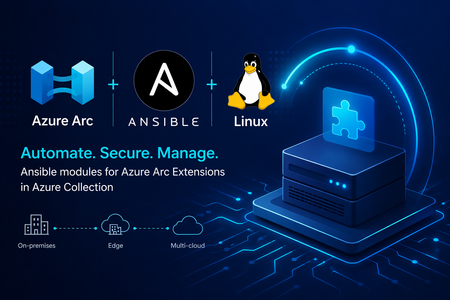
We are making Azure Arc extensible and increasing the flexibility of the tooling you can use to operate your machines using Azure’s control plane. We are excited to announce new modules in Ansible Galaxy that make it easier to manage Azure Arc machine extensions at scale. With the latest updates to the azure.azcollection on Ansible Galaxy, you no longer need to switch between existing tools. You can now deploy and manage Azure Arc extensions using familiar, declarative Ansible workflows. These new modules include: Azure Arc machine extensions module Azure Arc extensions info module Together, they enable infrastructure and platform teams to automate extension lifecycle management across their hybrid estate—bringing consistency, security, and efficiency to Azure Arc-enabled servers. Why this matters Azure Arc machine extensions power critical scenarios such as security, monitoring, update management, configuration and compliance. Until now, managing these Azure Arc extensions across hybrid estates often required Azure CLI scripts, ARM templates, or manual operations. With these new Ansible modules, you can: Integrate Azure Arc extension management into existing Ansible playbooks Enforce consistent configuration across hybrid servers Reduce operational overhead through declarative automation Align extension deployment with broader configuration management workflows What’s included azure_rm_arcmachineextensions This module allows you to manage the full lifecycle of Azure Arc machine extensions, including: Creating and deploying extensions Updating extension settings Removing extensions when no longer needed You can define extension state declaratively, ensuring consistent enforcement across your Azure Arc-enabled servers. azure_rm_arcmachineextensions_info This module provides visibility into extension state by retrieving: Installed extensions on Azure Arc-enabled machines Provisioning status and configuration details Extension metadata for reporting and validation This is useful for compliance validation, auditing, and conditional automation in playbooks. Scenario: Enforcing identity-based SSH access across a hybrid fleet Consider a regulated enterprise that must ensure all Linux servers—whether on-premises or in a multicloud environment—use Microsoft Entra ID for SSH access. The organization wants to: Eliminate local SSH credentials Enforce centralized identity and access controls Audit access consistently across all environments By combining Azure Arc with Ansible, the organization can deploy the Microsoft Entra SSH for Linux extension across all Azure Arc-enabled servers as part of a standardized playbook, ensuring compliance and reducing operational overhead. Example: Deploy Microsoft Entra SSH for Linux extension Below is an example of using Ansible to deploy the Microsoft Entra SSH extension to an Azure Arc-enabled server: - name: Deploy Entra SSH extension to Arc server hosts: localhost connection: local tasks: - name: Install Entra SSH extension for Linux azure_rm_arcmachineextensions: resource_group: myResourceGroup machine_name: myArcServer name: AADSSHLoginForLinux publisher: Microsoft.Azure.ActiveDirectory type: AADSSHLoginForLinux type_handler_version: "1.0" settings: {} state: present Example: Retrieve extension information Below is an example of using Ansible to retrieve details about your Azure Arc extensions: - name: Get Arc machine extension details hosts: localhost connection: local tasks: - name: Fetch extensions azure_rm_arcmachineextensions_info: resource_group: myResourceGroup machine_name: myArcServer Integrating with existing Ansible workflows If you’re already using Ansible for: OS configuration Patch and update management Application deployment You can now extend those workflows to include Azure Arc extension management—without introducing new tools or processes. This allows you to manage on-premises servers, Edge infrastructure and multicloud environments through a unified automation approach powered by Azure Arc and Ansible. Read more at Enable VM Extensions Using Red Hat Ansible - Azure Arc | Microsoft Learn What’s next These modules are part of our continued investment in making Azure Arc a first-class platform for managing Windows and Linux machines in hybrid and multicloud infrastructure. By bringing extension lifecycle management into Ansible, we’re enabling teams to enforce security, compliance, and operational consistency at scale—using the tools they already trust. Stay connected Join the Azure Arc Monthly Forum here: aka.ms/ArcServerForumSignup Let us know what you’d like to see next in the comments!841Views1like0CommentsUnlock On-Prem Productivity with Agentic Retrieval in Foundry Local
In today’s connected world, customers expect instant, context-rich interactions, even in environments where cloud connectivity isn’t guaranteed. That’s where Retrieval-Augmented Generation at the edge comes in. Since we launched into public preview, we’ve watched teams across regulated, disconnected, and mission-critical environments push this technology into places cloud GenAI simply couldn’t reach. What we heard back shaped everything in this release: customers don’t just want retrieval. They want reasoning, they want agency, and they want an end-user experience that feels as natural as the one they already use in the cloud. Today at Build 2026, we're excited to introduce Agentic Retrieval, the next evolution of our on-prem RAG platform, enabled by Azure Arc and powered by Foundry language models. Agentic Retrieval is part of Microsoft's Adaptive Cloud approach, which extends Azure capabilities to wherever customer data and workloads actually live, with Edge AI focused on bringing reasoning and grounding to on-prem, distributed, and disconnected environments. Together with Foundry Local, Agentic Retrieval continues to shape Microsoft's Foundry Anywhere commitment: flexibility, resilience, and intelligence wherever customers operate. What’s new at Build 2026 This release introduces three major pillars that work independently or together: Agentic Retrieval engine: a first-party orchestration runtime for planning, reasoning, conversation state, and tool calls over your local data Knowledge: a dedicated layer for organizing, curating, and governing your grounding data, exposed via MCP and connectable to any agentic retrieval layer Chat UI: a production-ready, polished conversational experience that ships as the default UX for Agentic Retrieval and can also be deployed standalone Alongside, we’re delivering the platform upgrades customers asked for: flexible deployment modes (Agentic-only, Knowledge-only, or Combined), BYOM with pluggable backends, Foundry Local model catalog integration, Entra ID support, disconnected-ready, and hybrid search combined with agentic retrieval. Agentic Retrieval: From Answering to Reasoning Classic RAG retrieves, then generates. Agentic Retrieval plans, reasons, and acts, running multi-step retrieval and tool invocation under a first-party orchestration runtime, entirely on your infrastructure. Under the hood it manages query planning, iterative multi-hop retrieval, tool calls via MCP, conversation state, and mandatory grounding with citations and audit logging built in. What customers can achieve: Compliance, policy, and permit workflows for public sector, regulators, and defense operations, with data never leaving sovereign infrastructure Multi-document synthesis across standards, technical manuals, contracts, and field procedures for industrial operators An agentic chat experience for regulated and operational teams (engineers, inspectors, analysts) that reasons like a subject-matter expert Auditable AI for sovereign and mission-critical environments, with every answer traceable to its source Knowledge: A First-Class, Governed Data Layer Great answers start with great knowledge. Knowledge is now a standalone component customers can deploy on its own or alongside Agentic Retrieval, exposed through an MCP wrapper so it can connect to any agentic retrieval layer, ours or yours. This release brings Collections (segmented groups of indexed knowledge with granular access permissions), multi-source ingestion across documents, tables, images, and SharePoint (indexed source moving to public preview), high-fidelity parsing for complex enterprise content, Bring Your Own MCP to connect customer-owned data sources directly into Agentic Retrieval and the chat experience, and governance enforced at the data layer itself. ent view - collections, sources, and permission scopes What customers can achieve: Scope knowledge access to different slices of the same corpus, by plant, site, classification, or jurisdiction Enforce data sovereignty, residency, and regulatory compliance at the knowledge layer itself Ground both first-party Agentic Retrieval and BYO orchestration through a single governed source of truth across distributed sites Keep classified, proprietary, and operational data fully on-prem while delivering premium chat experiences Chat UI: Production-Ready Conversational Experience Agentic Retrieval now ships with a polished, production-ready Chat UI as its default experience, and the same component can be deployed standalone for customers building their own stack on Foundry Local. Highlights include Entra ID authentication (MSAL login, Bearer tokens, user identity display), pluggable backends across AI Foundry, BYOM, or mock mode with zero code changes, Chain-of-Thought visibility and inline citations that make grounding transparent to end users, standalone frontend deployment via Helm chart and container image, and disconnected-ready operation for air-gapped environments. What customers can achieve: Deliver a polished end-user experience to operators, inspectors, and analysts without building UI from scratch Build trust in regulated and industrial workflows through transparent, inspectable reasoning and grounding Run the same UI across air-gapped facilities, sovereign clouds, and connected industrial sites Accelerate rollout across public sector, defense, manufacturing, and other mission-critical environments Why This Release Matters Every update to our on-prem RAG platform has moved us toward a simple conviction: GenAI should be useful wherever customers operate, whether regulated or open, connected or disconnected, centralized or distributed. With Agentic Retrieval, Knowledge, and Chat UI coming together, backed by Foundry on Arc, BYOM, and fully disconnected support, this is no longer “cloud RAG, but local.” It’s an agentic knowledge platform purpose-built for the realities of enterprise data: on-prem, governed, and increasingly autonomous. Learn More Explore Agentic retrieval documentation Read Foundry Local on Azure Local model inferencing blog post For more information reach out to the team at FoundryLocalOnAzure@microsoft.com793Views0likes0Comments
Simplified access to Hotpatching enabled by Azure Arc for Windows Server 2025
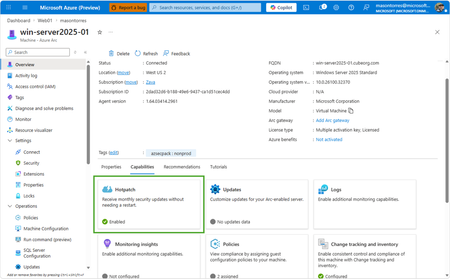
With Windows Server 2025, we introduced hotpatch enabled by Azure Arc, delivering security updates to Windows Server across hybrid and multicloud environments – minimizing downtime (no reboot), accelerating protection, and unifying patch management. We know that keeping your servers updated with the latest patches is one of the critical tasks that IT teams perform day-to-day. We want to make it simpler to install the latest operating system (OS) updates without rebooting machines after every installation. The resounding feedback we have received from you underscored the criticality of this feature in the lifecycle management and security of your infrastructure. We are now taking it one step further to reduce the friction to deploying these critical updates: hotpatch enabled by Azure Arc is now available at no additional cost for Windows Server 2025. Which machines are eligible for this offer? To use hotpatch for Windows Servers running on-premises or in multicloud environments, you must be using Windows Server 2025 Standard or Datacenter, and your server must be connected to Azure Arc. With this announcement, enabling and usage of the hotpatching service is available at no additional charge. Please take note that there are no charges for customers running on Azure IaaS, or Azure Local, wherein hotpatching is available as part of the functionality of Windows Server Datacenter: Azure Edition. This feature is already included both with Windows Server 2022 Datacenter: Azure Edition and Windows Server 2025 Datacenter: Azure Edition. How do I manage hotpatches enabled by Azure Arc for Windows Server 2025? If your Windows Server 2025 machines aren't already connected to Azure Arc, install the Azure Connected Machine agent — it takes just a few minutes per server and supports at-scale rollout via Group Policy, service principal, or Terraform. Once connected, enable Hotpatch from the Azure portal, Azure PowerShell, Azure CLI, or the REST API — just confirm Virtualization-based security (VBS is enabled) first. From there, use Azure Update Manager to schedule and monitor rollouts at scale. For instructions on how to enable hotpatch for Azure Arc-enabled machines using group policy or scripts, learn more here: https://aka.ms/ws-hotpatch For patch orchestration at scale, you can use Azure Update Manager to deliver hotpatches enabled by Azure Arc for Windows server 2025 machines. This enables greater uptime with fewer reboots and faster deployment of updates with easy patch orchestration. Alternatively, you can use APIs or other management tools to manage hotpatches. Centralized management of hotpatch updates across hybrid and multicloud environments enabled by Azure Arc Once your machines are connected to Azure Arc, you can also use the cloud-native services from Azure to manage your windows machines running on-prem. Azure Arc enables you to standardize security and governance across a wide range of resources so you can easily organize, govern and secure Windows, Linux, SQL servers, and Kubernetes clusters running across data centers, edge, and multi-cloud environments – using Azure services such as Azure Policy, Azure Monitor, Microsoft Defender and more. At no additional cost for machines attached to Azure Arc Basic inventory across on-prem and multi-cloud Tag your resources, organize them into resource groups, subscriptions, and management groups, and query at scale with Azure Resource Graph to unify your environments. Infra as Code (Bicep, Terraform) Infra as code for provisioning and management of resources. VM Self Service Perform lifecycle management such as (create, resize, update and delete) and power cycle operations such as (start, stop, and restart on VMware vCenter and System Center Virtual Machine Manager Virtual Machines. Hotpatch for Windows Server 2025 NEW Windows Server hot patching enables you to apply security updates without rebooting, keeping systems secure while maintaining continuous uptime. VM Management Administrate your servers anywhere using SSH for Azure Arc, Run Command, and Custom Script Extension. Mgmt. Services included for no additional costs with Windows Server Software Assurance or Extended Security Updates Azure Update Manager Provides a unified, centralized service to monitor, orchestrate, and automate patching across Azure, on‑prem, and multi‑cloud environments ensuring security, compliance, and minimal downtime at scale. Azure Machine Configuration (Policy) Policy‑driven auditing and enforcement of OS and application settings as code across Azure and hybrid machines—ensuring consistent, compliant state at scale. Including compliance policies like CIS Benchmark and WinRE Change Tracking & Inventory Real‑time visibility into configuration changes and system state across your fleet enabling faster troubleshooting, improved security, and continuous compliance at scale. VM insights from Azure Monitor Delivers a unified, pre‑built observability experience that provides real‑time performance, health, and dependency visibility across VMs—enabling faster troubleshooting, optimization, and capacity planning at scale. Windows Admin Center Unified, browser‑based management plane to securely manage Windows servers, VMs, and hybrid infrastructure from anywhere—simplifying operations and improving efficiency at scale. Best Practices Assessment Continuously evaluation your server configurations against Microsoft-recommended standards to proactively identify risks and provide actionable remediation guidance—improving security, performance, and operational health at scale. Frequently Asked Questions What are hotpatch updates? Hotpatch updates are monthly security updates that take effect without requiring you to restart the device. They contain a full set of security updates equivalent to the standard updates released the same day. What is the hotpatch update cycle? All eligible Windows Server 2025 machines enrolled in hotpatch are offered up to 8 monthly hotpatch updates in a calendar year in a quarterly cycle: Baseline month: In January, April, July, and October, devices install the monthly cumulative security update and must restart for the update to take effect. This update includes the latest security fixes, cumulative new features, and enhancements since the last baseline. Subsequent two months: Devices receive hotpatch updates, which only include security updates and don't require a restart for the update to take effect. These devices will catch up on features and enhancements with the next cumulative baseline month (quarterly). Will billing be stopped for existing enrolled machines? Yes, as of 15 th May 2026 all billing for hotpatch has been stopped for all existing machines enrolled in hotpatch. What action do we need to take if we have machines enrolled in hotpatch already? There is no additional action needed for machines that are currently enrolled in hotpatch. These machines will remain enrolled in hotpatch and receive hotpatch updates when available. I want all my Windows Server 2025 machines to get hotpatches. How do I do it? If you have Windows Server 2025 machines on-premises or on cloud (other than Azure) then you can enable hotpatch on them. To do so, ensure these machines have Virtualization Based Security enabled and are connected to Azure Arc and then you can use Azure Arc portal, Azure Update manager or APIs to enable hotpatch. Learn more: https://aka.ms/ws-hotpatch Is anything changing for Hotpatching on Azure? Hotpatch continues to be available on Azure for your Windows Server 2022 and Windows Server 2025 VMs when using Azure Edition. There is no fee associated with Hotpatching on Azure. Learn more here. Is there a community forum for Arc? Yes, you can join the Azure Arc Monthly Forum here: aka.ms/ArcServerForumSignup6.7KViews10likes5CommentsAzure Arc Server April 2026 Forum
Please find the recording for the monthly Azure Arc Server Forum on YouTube! During the April 2026 Azure Arc Server Forum, we discussed: Public Preview of Essential Machine Management, learn more at aka.ms/EMM-blog and sign up at aka.ms/EMM-feedback Engage with product group on exploration of AI on bring your own Kubernetes by signing up at aka.ms/arc-ai-survey Product group is investing in extending the Multi-cloud Connector provide customers the ability to connect their MECM environments to Azure for inventory, monitoring, and management To sign up for the Azure Arc Server Forum and newsletter, please register with contact details at https://aka.ms/arcserverforumsignup/. For the latest agent release notes, check out What's new with Azure Connected Machine agent - Azure Arc | Microsoft Learn. Our May 2026 forum will be held on Thursday, May 21 at 9:30 AM PST / 12:30 PM EST. We look forward to you joining us, thank you!390Views1like0CommentsWhat partners need to know before Microsoft’s new fiscal year
At Ultimate Partner LIVE Bellevue, May 11–13, a lineup of senior Microsoft executives will take the mainstage to share what is shifting, what it means for your business, and how the most aligned partners are responding. Here is who to know. Stephen Boyle, CVP, Enterprise Partner Solutions Stephen leads Microsoft’s enterprise partner sales organization and brings a direct view of how the ecosystem is performing at the highest levels. In his fireside with Vince Menzione, he will share what the most successful partners are doing differently as AI moves from a conversation to a core business motion. For any partner navigating co-sell, enterprise alignment, or ecosystem positioning heading into FY27, this is the session that sets the frame. Alex Zagury, CVP, Global Channel Sales Alex brings a perspective most Microsoft leaders do not have, more than a decade at Cisco where she built a $9B+ partner-managed business and led the integration of the $28B Splunk acquisition. She joined Microsoft to apply that experience to the indirect channel. Her session covers FY27 channel priorities: where Microsoft is investing, what the most successful CSP and indirect partners are doing right now with AI and Copilot, and why the partners who have moved to an outcomes-based model are already seeing compounding growth. Jose Gomez Cueto, General Manager, Americas SMB The $777B SMB opportunity is Microsoft’s largest addressable market, and Jose leads it across the Americas. His session addresses what it means for an SMB customer to become a Frontier Firm, and why MSPs are the critical link in making that happen. He will also share how Microsoft moved faster to bring SMB-specific AI products to market than it ever has before, and what that signals for the rest of FY27. Cyril Belikoff, VP, Microsoft Azure and Industry Clouds Cyril has been at the center of some of the most significant structural changes Microsoft has made to how partners transact. He helped architect the unified Microsoft Marketplace and launched the Resale Enabled Offer, which enables channel partners to bundle ISV solutions and transact against Azure commit. His session addresses where the AI-driven marketplace motion is heading and what partners need to do now to capture their share of the revenue flowing through it. More Microsoft on the Agenda Microsoft leaders Greg Goldkamp, Monica French, Erwin Visser, Mira Ayad, and others will deliver practical, execution-focused content across co-sell, distribution, the SMB channel, and AI strategy throughout both days. This is not a product showcase or a keynote built for an audience of thousands. It is a room of 250+ senior partner executives, 2 days of mainstage and spotlight sessions, and direct access to the Microsoft leaders whose priorities will shape the next 12 months. 📅 UP LIVE Bellevue · May 11–13, 2026 InterContinental Hotel, Bellevue, WA 🌟 Exclusive discount for Microsoft partners Use code ULTIMATEVIP50 at checkout for a special discount reserved for Microsoft partners. 👉 Register for UP LIVE Bellevue Ultimate Partner® is the premier independent platform for technology partnership leaders, uniting the hyperscaler ecosystem to achieve their greatest results through partnering. An official Microsoft GPS recognized community.313Views0likes0Comments