microsoftcommunity
7 Topics
Tuesday Prompt Day 🚀 | 6W + E Practical Experiment #2
In our previous practical experiment, we took a simple Copilot request and transformed it using the Six W + E framework. Today, let's focus on the part that can make the biggest difference: E = EVALUATE A common assumption is: Prompt → Copilot → Answer But in real-world enterprise work, I believe the process should be: Prompt → Output → Evaluate → Refine → Better Output Let's continue with the same scenario. 🔹 BASIC PROMPT "Create a summary of our cloud migration project." The response may be reasonable. But before accepting it, let's evaluate it. 🔹 EVALUATE Ask yourself: Did Copilot understand the intended audience? Did it focus on the business objective? Did it distinguish facts from assumptions? Did it surface the risks that actually matter? Can the intended audience act on the result? Suppose the answer is: "Mostly good, but the risks are too generic and the executive summary contains too much technical detail." That feedback is valuable. We now know what needs to change. 🔹 REFINE Instead of starting over, we refine the instruction: "Refine the previous response for senior business and IT leadership. Reduce technical implementation details. Prioritize the most significant business risks. For each risk, provide: Risk • Business impact • Current mitigation • Decision or action required Keep the executive summary concise. Do not introduce information that is not supported by the source material. Clearly identify any information that is unavailable." Now the interaction has changed. We are no longer simply asking Copilot for an answer. We are using the first answer to improve the next instruction. 🔹 IMPROVED OUTPUT The objective is not necessarily to make the prompt longer. The objective is to make the next interaction more precise. That distinction matters. A good prompt can produce a useful first response. But a good evaluation process helps us systematically improve the result. This is why I see EVALUATE as an important part of Six W + E. It creates a feedback loop: Think → Prompt → Output → Evaluate → Refine And this raises an interesting question for enterprise AI adoption: Should we teach people only how to write better prompts? Or should we teach them how to evaluate AI output and refine their interaction with AI? I believe the second capability is just as important. 💡 YOUR TURN Take one prompt you use with Copilot. Run it once. Then evaluate the response before rewriting the prompt. Share: What you originally asked What was missing or incorrect in the response What you changed in your prompt Whether the second result was actually better Please avoid sharing confidential or sensitive information. I'm particularly interested in examples where the first Copilot response looked correct but wasn't actually useful for the business problem. Those are often the most interesting examples. 🔗 This discussion continues our Six W + E journey. Start with the original framework discussion and then explore the practical experiment series from there. I'll use the strongest examples from this series to explore how Six W + E can evolve from a prompting framework into a practical method for working with AI.13Views0likes0CommentsThursday Architecture Lesson #1
Azure Compute: VM, App Service, Container Apps or AKS? Don't memorize the services. Remember this: V → VM Need maximum control or have a legacy workload. A → App Service Want managed hosting for web apps or APIs. C → Container Apps Want containers without taking on Kubernetes complexity. K → AKS You genuinely need Kubernetes capabilities. 🧠 The Architect's Rule: “Don't choose AKS because you can. Choose AKS because you need it.” The right architecture isn't the one with the most powerful technology. It's the one that gives the business the right balance of: Capability • Cost • Security • Scalability • Operational complexity For example, if a simple web application can run effectively on App Service, introducing Kubernetes may add complexity without adding meaningful business value. The best architects don't ask: “What is the most advanced technology we can use?” They ask: “What is the simplest architecture that meets the requirements?” 💬 Your turn: If you were modernizing a traditional 3-tier application today, which would you choose first — VM, App Service, Container Apps or AKS? And most importantly, why?39Views0likes0CommentsTuesday Prompt Day 🚀 | 6W + E — Practical Experiment #1
Last Tuesday, I introduced a simple principle I’ve been developing for better AI prompting: WHY → WHAT → WHO → WITH → WAY → WIN → EVALUATE 6W + E. 🔗 If you missed the original discussion: https://techcommunity.microsoft.com/discussions/6b6b9aaa-f41d-42fa-b90a-e1bb1d97a954/is-your-ai-prompt-missing-the-real-problem--introducing-the-6w--e-framework/4546006 Today, I don't want to explain the framework again. I want to test it. Let’s take a common Copilot request: “Create a summary of our cloud migration project.” Seems simple. But before asking Copilot to produce the answer, let's think about the problem. WHY are we creating the summary? WHAT exactly should it communicate? WHO will read it? WITH what information should Copilot work? WAY should the information be presented? WIN — what would make the result successful? And finally: EVALUATE — did Copilot actually give us what we needed? Now compare that with a more intentional prompt: “You are an enterprise cloud solution architect preparing an executive update. Create a concise summary of our cloud migration project for senior business and IT leadership. The objective is to communicate progress, business impact, key risks and the next priorities. Focus on the current quarter. Structure the response into: Executive summary • Business impact • Key achievements • Current risks • Next priorities • Decisions required from leadership Keep the language business-friendly and avoid unnecessary technical detail. Where information is missing, clearly identify the gap rather than inventing details.” The interesting part isn't simply that the second prompt is longer. The interesting part is that we have given Copilot a clearer way to understand the problem. And this brings us back to the final part of 6W + E: E = EVALUATE. I don't believe good prompting ends when Copilot gives us an answer. The real cycle is: Think → Prompt → Evaluate → Refine Sometimes the first response is good. Sometimes it isn't. Sometimes the problem isn't the AI's capability. Sometimes we haven't given AI enough direction to solve the right problem. So, here's today's community challenge 👇 Take ONE prompt you regularly use with Copilot. Don't share anything confidential. Share: Your original prompt What you wanted Copilot to achieve Which part of 6W + E was missing How you would improve the prompt Let's see whether we can improve real-world Copilot interactions together. I'll use the best examples from this discussion as we continue developing the 6W + E learning series. And this is only Experiment #1. Next, we'll look at what happens when we deliberately use EVALUATE to improve the first response. What has been your experience? Do you usually refine your Copilot response, or accept the first answer? #MicrosoftCopilot #GenerativeAI #PromptEngineering #MicrosoftCommunity #EnterpriseAI #AITransformation38Views0likes0CommentsAnnouncing the Microsoft 365 Community Conference 2026
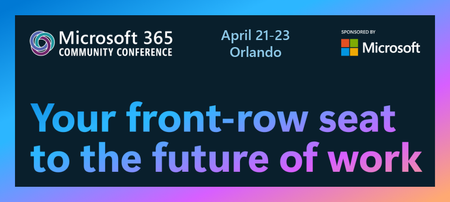
Your front row seat to the future of intelligent work The Microsoft 365 Community Conference is back April 21–23, 2026, at Loews Sapphire Falls and Loews Royal Pacific Resort in Orlando, Florida. This year’s theme — a beacon for builders, innovators, and icons of intelligent work — reflects the momentum across Microsoft 365 and Copilot as we enter a new era of AI‑powered productivity. Across three days, attendees will gain access to 200+ sessions, 21 workshops, and 200+ Microsoft experts and engineers, making this one of the largest and most comprehensive Microsoft 365 learning events in the world. Whether you're deploying Copilot, modernizing your intranet, securing your environment, elevating communications, or building next-generation apps and automations, there’s content tailored for every role and organization. Learn From the Product Leaders Expect big announcements, deep dives, and roadmap insights from leaders including Jeff Teper, Vasu Jakkal, Charles Lamanna, Rohan Kumar, and Jaime Teevan along with additional guests. Their keynotes will explore the future of collaboration, AI, security, and the Microsoft 365 platform — and how organizations can turn innovation into impact. Hands-On Experiences Attendees can get up close with the latest product capabilities inside the Innovation Hub — our Microsoft booth experience featuring live demos, Copilot workshops, and a full lineup of Lightning Talks throughout the week. The show floor also hosts community spotlights, podcasts, interviews, and creator activations. We’re also celebrating a major milestone: SharePoint’s 25th anniversary, including a special celebration and premiere moment that brings the community together to honor 25 years of innovation. Community at the Center Onsite programming includes the Women in Tech & Allies Luncheon, MVP meetups, NDA roundtables, community led meet & greets, and one on one opportunities to connect with Microsoft product teams. Plus, don’t miss the attendee party at Universal Islands of Adventure — always a highlight of the conference experience! Deep-Dive Workshops Those looking for hands-on, immersive learning can join pre and post-day workshops on April 19, 20 & 24, covering everything from Copilot rollout to Teams Rooms, SharePoint, Viva, security, governance, development, and more. The workshop program is designed to help organizations accelerate adoption and build real world capability fast. Join Us in Orlando Registration is officially live. Save your seat and be part of the worldwide Microsoft 365 community as we explore what’s new, what’s possible, and what’s next. 👉 Register now: https://aka.ms/M365Con26 💸Customer discount available: $150 off with code SAVE150 📅 April 21–23, 2026 📍 Orlando, Florida3.2KViews0likes0CommentsCelebrating Community Manager Appreciation Day - January 26
Today is Community Manager Appreciation Day, and I want to take a moment to shine a bright, well‑deserved spotlight on the people who ensure our communities feel supported, informed, inspired, and connected: our Community Managers. In the Microsoft ecosystem, community managers do far more than answer questions or keep conversations flowing. They are the bridge between customers and product teams. They elevate voices. They create belonging. They help people feel seen. And they make sure that every meetup, every online exchange, every post, every question; adds value, builds trust, and strengthens the fabric of our global community. Community Managers are the ones who: Champion our users and amplify their successes Foster safe, inclusive spaces where everyone can learn and contribute Translate feedback into action, advocacy, and product impact Support speakers, MVPs, new creators, and first‑time contributors Celebrate the wins, guide through challenges, and keep momentum alive Bring humanity, empathy, and heart to everything we build Their work is often behind the scenes, yet absolutely essential to the health and growth of our technical communities, user groups, community events, and product ecosystems. Why It Matters Communities don’t just “happen.” They are nurtured. They are cultivated. They are cared for. When people feel welcome, supported, and empowered, innovation accelerates. Community Managers make that possible. So, this week, let’s celebrate them loudly. Give Your Community Manager a Shoutout Shout out your - Community Manager. The ones who run your programs, initiatives and experiences! Microsoft Most Valuable Professionals (MVPs), Regional Leads, user group leads, forum moderators, Discord admins, event organizers, event producers or anyone who helps keep your community experience strong, if they have made a difference for you, let them know. Drop a shoutout in the comments. Tag them. Tell us what they’ve done that mattered. These acknowledgments mean more than you know. To every Community Manager across the Microsoft ecosystem and beyond: Thank you. Thank you for the care, the passion, the hours, the creativity, the resilience, and the heart you bring to this work every single day. You are the reason communities thrive. You create belonging and empathy and opportunities! You are AWESOME! Happy Community Manager Appreciation Day! 💙245Views0likes0CommentsLet’s talk about event amplification! 🎉 | MGCI General Session AM Call
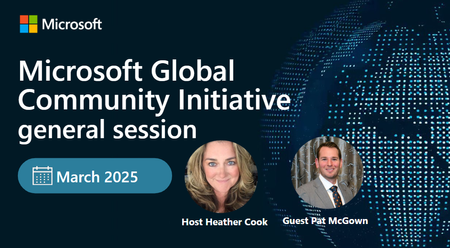
Learning how to amplify an event online involves leveraging social media, email campaigns, and digital partnerships to maximize reach. Understanding audience engagement strategies and utilizing trending content can significantly boost visibility and participation. Join Pat McGown and Heather Cook for our Monthly Microsoft Global Community Initiative (#MGCI) General session – and we'd love for you to join the conversation! All are welcome! Agenda: Program updates Subcommittee updates from MGCI Board Members Guest Speaker Topic: Event Amplification Host: Heather Cook, Principal PM, Microsoft Customer Advocacy Group, Microsoft Guest Speaker: Pat McGown, Microsoft MVP, CEO at Cloudwell, Regional Leader for MGCI 📅 March 18 ⏰ 8:10 AM PT https://aka.ms/MGCIMtgAM Bring your own ideas too! Let’s share, learn, and capture best practices for producing events. Learn more about the Microsoft Global Community Initiative: https://aka.ms/MGCI325Views2likes1CommentLet’s talk about event amplification! 🎉 | MGCI General Session PM Call
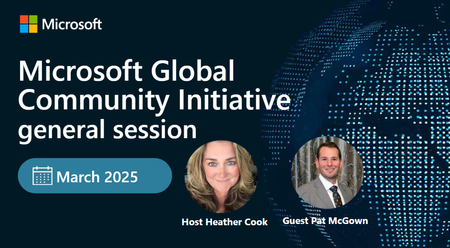
Learning how to amplify an event online involves leveraging social media, email campaigns, and digital partnerships to maximize reach. Understanding audience engagement strategies and utilizing trending content can significantly boost visibility and participation. Join Pat McGown and Heather Cook for our Monthly Microsoft Global Community Initiative (#MGCI) General session – and we'd love for you to join the conversation! All are welcome! Agenda: Program updates Subcommittee updates from MGCI Board Members Guest Speaker Topic: Event Amplification Host: Heather Cook, Principal PM, Microsoft Customer Advocacy Group, Microsoft Guest Speaker: Pat McGown, Microsoft MVP, CEO at Cloudwell, Regional Leader for MGCI 📅 March 18 ⏰ 5:10 PM PT https://aka.ms/MGCIMtgPM Bring your own ideas too! Let’s share, learn, and capture best practices for producing events. Learn more about the Microsoft Global Community Initiative: https://aka.ms/MGCI99Views0likes0Comments