microsoft entra
12 Topics
How to Configure Temporary Access Pass (TAP) to Prevent Lockouts
As organizations move toward passwordless authentication and stronger identity protection, having a reliable fallback mechanism becomes essential. That’s where Temporary Access Pass (TAP) comes in. TAP provides a time-limited passcode that users can use to register passwordless methods—such as Passkeys (FIDO2), Microsoft Authenticator, or certificate-based authentication—without requiring their existing password or MFA methods. For nonprofits and mission-driven organizations, TAP helps reduce account lockouts, simplifies onboarding, and strengthens security. What Is Temporary Access Pass (TAP)? Temporary Access Pass is a secure, limited-duration authentication method that allows: Secure onboarding of new users Recovery when users lose access to authentication methods Registration of passwordless sign-in methods Key characteristics: Time-limited Single-use or multi-use Assigned to specific users or groups Automatically expires and cannot be reused ✅ Licensing requirement: Microsoft Entra ID P1 or higher (included in Microsoft 365 Business Premium). Why TAP Prevents Lockouts TAP addresses common access issues: Lost MFA device: Users can reconfigure authentication methods Forgotten password: Users can move directly to passwordless sign-in New user setup: No need to share passwords insecurely Recovery scenarios: Provides an alternate path when normal sign-in fails Step 1: Enable TAP in Microsoft Entra Admin Center Open the Microsoft Entra admin center Navigate to: Entra ID → Authentication methods → Policies Select Temporary Access Pass Set Enable → On Assign to selected users or groups Start with a pilot group before broader rollout. Step 2: Configure TAP Policy Settings Lifetime settings Default: 1 hour Maximum: up to 8 hours (or more, if required) (Although Microsoft allows longer durations, shorter lifetimes increase security.) Usage Type One-time (recommended): Admin recovery Sensitive or privileged access Multi-use: Bulk onboarding Temporary workforce Assignments Recommended groups: Administrators Helpdesk staff (trained) New user onboarding groups Avoid assigning to all users without proper controls. Step 3: Create a TAP for a User Go to Entra ID → Users Select the user Choose Authentication methods Click Add authentication method Select Temporary Access Pass Configure: Lifetime One-time or multi-use Start time Select Add Security note: Deliver the TAP securely—never via email or unsecured messaging. Step 4: Use TAP for Secure Registration or Recovery Users redeem TAP at: https://aka.ms/mysecurityinfo This portal allows users to do the following by simplifying adding a sign-in method: Register passkeys (FIDO2) Set up Microsoft Authenticator Configure Windows Hello Recover access if MFA is unavailable TAP enables users to sign in without needing their existing password or MFA methods, providing a secure, time-limited path for onboarding and account recovery. Best Practices for Nonprofits Using TAP 1. Restrict who can issue TAP Limit to: Global/Admin roles Security or helpdesk staff 2. Use Just-In-Time generation Create TAP only when needed Never store or reuse codes 3. Enforce expiration discipline Keep lifetimes short Avoid long-lived passes 4. Monitor all usage Review sign-in logs Monitor authentication method activity 5. Align with Conditional Access Use TAP during Report-only testing Ensure policies allow TAP as a valid authentication method Conclusion Temporary Access Pass is one of the most effective tools organizations can use to: Prevent account lockouts Simplify onboarding Accelerate passwordless adoption Strengthen identity security When combined with Conditional Access and emergency access accounts, TAP becomes a key part of a resilient identity strategy. To learn how to fully configure Temporary Access Pass (TAP), refer to the official Microsoft documentation: Configure a Temporary Access Pass in Microsoft Entra ID to register passwordless authentication methods - Microsoft Entra ID | Microsoft Learn312Views0likes0CommentsThe Safest Way for Nonprofits to Validate Conditional Access Policies Before Enforcing Them
Nonprofits rely on secure, reliable access to Microsoft 365 to serve communities, support staff and volunteers, and protect sensitive data. Conditional Access (CA) in Microsoft Entra ID is one of the strongest tools available to safeguard identities—but a misconfigured policy can unintentionally block staff, volunteers, donors, or even your entire organization. That’s why Report‑Only Mode is essential. It allows nonprofits to test Conditional Access policies safely, without risking lockouts or disrupting mission‑critical work. What Is Report‑Only Mode? Report‑Only Mode lets you create and run Conditional Access policies in evaluation mode. When enabled: The policy does not enforce access The policy’s expected outcome is logged You can analyze real‑world sign‑in impact Users experience zero disruption You can validate whether the policy is behaving as intended It’s a safe, low‑risk way for nonprofits to strengthen security without interrupting services. Why Report‑Only Mode Matter for Nonprofits 1. Prevents Accidental Lockouts That Could Impact Services Nonprofits often operate with small IT teams and limited redundancy. A single misconfigured CA policy can: Block all admins Prevent staff from accessing emails or files Interrupt donor portal access Stop volunteers from signing in during events. Lock out emergency access accounts Report‑Only Mode exposes these risks before they affect your mission 2. Critical for Passwordless and Passkey Rollouts Passwordless methods—Passkeys (FIDO2), TAP, Microsoft Authenticator, Windows Hello—reduce support burden and improve security. Report‑Only Mode confirms: Users can register new methods Security info setup isn’t blocked Authentication Strengths apply correctly This prevents enrollment issues that could overwhelm small IT teams. 3. Provides Real‑Time Insights Using Logs and Workbooks Report‑Only evaluations appear in: Sign‑in logs (“Report‑only: Allowed/Blocked”) Conditional Access Insights workbook (apps, users, locations, platforms) These insights help refine policies before enforcing them. 4. Supports Safer Change Management Many nonprofits have limited IT teams. A production lockout could be catastrophic. Report‑Only Mode: Reduces risk Eliminates surprise outages Allows collaborative review across teams Ensures leadership confidence Helps with staged rollout plans This is critical for organizations that depend on uninterrupted access to Microsoft 365 apps. 5. Minimizes Disruption for Staff, Donors, and Volunteers In mission-driven organizations, security must enhance operations—not interrupt them. Testing in Report‑Only Mode ensures: Volunteers can sign in during events Donors can access giving platforms Staff can work without friction Once validated, policies can be enabled confidently When Should You Use Report‑Only Mode? Use Report‑Only Mode whenever you: Create a new Conditional Access policy Modify an existing policy Add new authentication methods (Passkeys, TAP, WHfB) Deploy new device policies Enable Authentication Strengths Roll out Zero Trust security requirements Implement identity protection conditions Migrate from legacy authentication In short: use it before turning any policy on. How to Enable Report‑Only Mode 1. Go to Microsoft Entra Admin Center 2. Navigate to Conditional Access → Policies 3. Create a policy 4. Under New Policy, select Report‑Only 5. Save your changes 6. Monitor impact for 48–72 hours 7. Adjust as needed 8. Switch to On only after validation Best Practices for Using Report‑Only Mode Test policies with a pilot group first Include emergency access accounts in exclusions Monitor sign‑in logs daily during testing Review “Report‑Only” block events carefully Document any expected vs. unexpected outcomes Turn on policies only after full validation Conclusion Report‑Only Mode is one of the safest and most effective tools for nonprofits using Microsoft Entra ID. It strengthens identity protection while keeping staff, volunteers, and donors productive. For nonprofits, it: Reduces risk Improves policy accuracy Supports passwordless adoption Enables smooth Zero Trust transitions If your nonprofit wants stronger security without disrupting your mission, Report‑Only Mode should be your starting point for every Conditional Access policy. What’s Next: Don’t Get Locked Out If you’re strengthening Conditional Access, the next essential step is protecting your organization from accidental lockouts. Our upcoming blog, “Don’t Get Locked Out: Why Every Organization Needs Emergency Access Accounts,” walks you through how to build resilient, secure break‑glass accounts in Microsoft Entra ID—so your nonprofit can recover quickly when something goes wrong. Stay tuned to learn how to configure, secure, and maintain these critical accounts with nonprofit‑ready best practices.142Views1like0CommentsBeyond Visibility: Hybrid Identity Protection with Microsoft Entra & Defender for Identity
In a previous blog, we explored how Microsoft Entra and Defender for Identity form a powerful duo for hybrid identity protection. But visibility alone isn’t enough. To truly defend your organization, you need to operationalize that visibility—turning insights into action, and strategy into security outcomes. Let’s explore how to take your hybrid identity protection to the next level. From Detection to Response: Building a Unified Identity SOC Security teams often struggle with fragmented signals across cloud and on-prem environments. Defender for Identity and Entra solve this by feeding identity-based alerts into Microsoft 365 Defender and Microsoft Sentinel, enabling: Centralized incident response: Investigate identity threats alongside endpoint, email, and cloud signals. Automated playbooks: Trigger actions like disabling accounts or enforcing stricter access policies. Advanced hunting: Use KQL queries to uncover stealthy attacks like domain dominance or golden ticket abuse. This unified approach transforms your SOC from reactive to proactive. Strengthening Identity Posture with Entra ID Protection Once threats are detected, Entra ID Protection helps you contain and prevent them: Risk-based Conditional Access: Automatically block or challenge risky sign-ins based on Defender for Identity signals. User risk remediation: Force password resets or MFA enrollment for compromised accounts. Policy tuning: Use insights from past incidents to refine access controls and reduce false positives. This adaptive security model ensures that your defenses evolve with the threat landscape. To learn more about these and additional policy-driven security mechanisms, please visit: Risk policies - Microsoft Entra ID Protection | Microsoft Learn Least Privilege at Scale with Entra ID Governance Identity protection isn’t just about stopping attacks—it’s about minimizing the blast radius. Entra ID Governance helps enforce least privilege by: Automating access reviews: Regularly audit who has access to sensitive resources. Just-in-time access: Grant temporary permissions only when needed. Entitlement management: Control access to apps and groups with policy-based workflows. By reducing unnecessary access, you make lateral movement harder for attackers—and easier for auditors. To learn more about least privilege, please visit: Understanding least privilege with Microsoft Entra ID Governance | Microsoft Learn Real-Time Insights with Microsoft Sentinel Sentinel supercharges your hybrid identity protection with: Custom dashboards: Visualize risky users, sign-in anomalies, and privilege escalations. Threat intelligence fusion: Correlate identity signals with external threat feeds. Data connectors: Stream Entra and Defender for Identity logs for deep analysis and long-term retention. This gives you the clarity to spot patterns and the context to act decisively. To learn more about Microsoft Sentinel, please visit: What is Microsoft Sentinel SIEM? | Microsoft Learn Next Steps: Operationalize Your Identity Strategy To move from visibility to action: Deploy Defender for Identity sensors across all domain controllers. Integrate with Microsoft 365 Defender and Sentinel for unified threat detection. Enable risk-based Conditional Access in Entra to respond to identity threats in real time. Implement least privilege policies using Entra ID Governance. Use Sentinel for advanced hunting and analytics to stay ahead of attackers. Final Thoughts Hybrid identity protection isn’t a checkbox—it’s a continuous journey. By operationalizing the integration between Microsoft Entra and Defender for Identity, you empower your security teams to detect, respond, and prevent identity threats with precision and speed.782Views1like0CommentsFrom Strategy to Execution: Operationalizing Microsoft Entra for Real-World Impact
In a previous blog, we explored how Microsoft Entra is redefining identity and access management in a borderless digital world. Now, let’s take the next step: turning strategy into action. How can organizations harness the full power of Microsoft Entra to drive security, agility, and compliance at scale? The answer lies in operationalizing Entra’s capabilities across your identity lifecycle, access policies, and multicloud environments—while aligning with your Zero Trust journey. Identity in Action: Real-World Scenarios with Microsoft Entra 1. Onboarding and Offboarding at Scale With Entra ID Governance, HR-driven provisioning and automated access reviews ensure that employees, contractors, and partners receive the right access on Day 1—and lose it on Day Last. This reduces risk and administrative overhead. Example: A global manufacturing firm significantly accelerated user provisioning and successfully eliminated orphaned accounts by integrating Microsoft Entra with Workday and ServiceNow. 2. Securing Multicloud Workloads Microsoft Entra’s identity protection extends beyond Microsoft environments. Organizations can enforce Conditional Access and MFA across their entire digital estate, including on-premises and third-party applications. Example: A fintech company used Entra Internet Access to apply identity-aware web filtering across cloud-native and legacy apps—without a VPN. 3. Empowering External Collaboration With Entra External ID, organizations can securely collaborate with customers, vendors, and partners—without creating friction. Personalized sign-in experiences and granular access controls keep data safe and user journeys smooth. Example: A healthcare provider enabled secure access for 20,000+ external researchers while maintaining HIPAA compliance. Integrating Entra Across the Microsoft Ecosystem Microsoft Entra doesn’t operate in a silo. It integrates seamlessly with: Microsoft Defender for Identity: Detect identity-based threats like lateral movement and credential theft. Microsoft Sentinel: Correlate identity signals with broader threat intelligence for proactive response. Microsoft Purview: Enforce data access policies based on identity and risk. Together, these tools form a unified security fabric that protects identities, data, and infrastructure. Measuring Success: KPIs That Matter To ensure your Entra deployment is delivering value, track metrics like: Access Review Completion Rates Time to Provision/Deprovision MFA Adoption Rates Reduction in Risky Sign-ins Compliance Audit Pass Rates These KPIs help quantify the impact of identity governance and Zero Trust enforcement. What's Next: Future-Proofing with Entra As identity becomes the new perimeter, Microsoft Entra is evolving to meet tomorrow’s challenges: AI-powered access insights to detect anomalies and recommend policy changes Decentralized identity models for privacy-preserving authentication Continuous access evaluation to adapt in real time to changing risk signals Conclusion Microsoft Entra is more than a suite of tools—it’s a strategic enabler for secure digital transformation. By operationalizing its capabilities across your organization, you can build a resilient identity foundation that scales with your business and adapts to an ever-changing threat landscape. Identity is no longer just an IT concern—it’s a business imperative. And with Microsoft Entra, you’re ready for what’s next.300Views0likes0CommentsMicrosoft Entra: Building Trust in a Borderless Digital World
As nonprofits embrace hybrid work, multi-cloud environments, and digital transformation to better serve their missions, the need for secure, intelligent access has never been greater. Traditional identity solutions often fall short in protecting diverse user groups like staff, volunteers, donors, and partners. Microsoft Entra offers a unified family of identity and network access products designed to verify every identity, validate every access request, and secure every connection—helping nonprofits stay resilient, compliant, and mission-focused. What Is Microsoft Entra? Microsoft Entra offers a unified family of identity and network access products designed to verify every identity, validate every access request, and secure every connection—helping nonprofits stay resilient, compliant, and mission-focused. The suite includes: Microsoft Entra ID (formerly Azure Active Directory): A cloud-based identity and access management service that supports Single Sign-On (SSO), Multifactor Authentication (MFA), and Conditional Access policies to protect users, apps, and resources. Microsoft Entra ID Governance: Automates identity lifecycle management, ensuring users have the right access at the right time—and nothing more. It supports access reviews, role-based access control, and policy enforcement. Microsoft Entra External ID: Manages secure access for external users like customers, partners, and vendors. It enables personalized, secure experiences without compromising internal systems. Microsoft Entra Private Access: Provides secure, VPN-less access to private apps and resources across hybrid and multi-cloud environments. It’s ideal for remote work scenarios and legacy app support. Microsoft Entra Internet Access: Offers secure web access with identity-aware controls, helping protect users from malicious sites and enforcing compliance policies. Why Microsoft Entra Matters for Nonprofits Unified Identity Protection: Secures access for any identity—human or workload—to any resource, from anywhere. Zero Trust Enablement: Verifies every access request based on identity, device health, location, and risk level. Multi-cloud and Hybrid Ready: Works across Microsoft 365, Azure, AWS, Google Cloud, and on-premises environments. Compliance and Governance: Supports nonprofit regulatory needs with automated access reviews, audit trails, and policy enforcement. Getting Started with Microsoft Entra Assess your security posture through Microsoft Secure Score – Helps nonprofits monitor and improve identity, device, and app security posture. Building Conditional Access policies in Microsoft Entra – Create policies to protect users and data based on risk, location, and device health. Create a lifecycle workflow – Automate onboarding, role changes, and offboarding for staff, volunteers, and contractors. Microsoft Entra External ID documentation – Manage secure access for donors, partners, and community members. Real-World Impact A global nonprofit recently used Microsoft Entra to streamline access for volunteers, staff, and external partners. By automating identity governance and enabling secure access to cloud apps, they reduced administrative overhead and improved security posture—without sacrificing user experience. Conclusion Microsoft Entra empowers nonprofits to modernize identity and access management with a unified, secure, and intelligent approach. Whether you're enabling remote work, collaborating with external partners, or safeguarding sensitive donor data, Entra provides the tools to build trust, enforce least privilege, and stay compliant. By adopting Entra, nonprofits can focus more on their mission and less on managing risk—ensuring that every connection is secure, every identity is verified, and every access is governed.370Views0likes2CommentsComprehensive Identity Protection—Across Cloud and On-Premises
Hybrid IT environments, identity is the new perimeter—and protecting it requires visibility across both cloud and on-premises systems. While Microsoft Entra secures cloud identities with intelligent access controls, Microsoft Defender for Identity brings deep insight into your on-premises Active Directory. Together, they form a powerful duo for comprehensive identity protection. Why Hybrid Identity Protection Matters Most organizations haven’t fully moved to the cloud. Legacy systems, on-prem applications, and hybrid user scenarios are still common, and attackers know it. They exploit these gaps using techniques like: Pass-the-Hash and Pass-the-Ticket attacks Credential stuffing and brute-force logins Privilege escalation and lateral movement Without visibility into on-prem identity activity, these threats can go undetected. That’s where Defender for Identity steps in. What Is Microsoft Defender for Identity? Defender for Identity is part of Microsoft Defender XDR—a cloud-based solution that monitors on-premises Active Directory for suspicious behavior. It uses behavioral analytics and threat intelligence to detect identity-based attacks in real time. Key capabilities: Detects compromised accounts and insider threats Monitors lateral movement and privilege escalation Surfaces risky users and abnormal access patterns Integrates with Microsoft 365 Defender and Sentinel for unified response Why It Pairs Perfectly with Microsoft Entra Microsoft Entra (formerly Azure AD) protects cloud identities with features like Conditional Access, Multifactor Authentication, and Identity Governance. But Entra alone can’t see what’s happening in your on-prem AD. By combining Entra and Defender for Identity, you get: End-to-end visibility across cloud and on-prem environments Real-time threat detection for suspicious activities like lateral movement, privilege escalation, and domain dominance Behavioral analytics to identify compromised accounts and insider threats Integrated response capabilities to contain threats quickly and minimize impact Actionable insights that help strengthen your identity posture and reduce risk Together, they deliver comprehensive identity protection—giving you the clarity, control, and confidence to defend against modern threats. Real-World Impact Imagine a scenario where an attacker gains access to a legacy on-prem account and begins moving laterally across systems. Defender for Identity detects the unusual behavior and flags the account as risky. Entra then blocks cloud access based on Conditional Access policies tied to that risk signal—stopping the attack before it spreads. Getting Started Deploy Defender for Identity sensors on your domain controllers Install a sensor - step-by-step instructions to install Defender for Identity sensors on your domain controllers to begin monitoring on-premises identity activity. Activate the sensor on a domain controller - Guidance on activating the installed sensor to ensure it starts collecting and analyzing data. Deployment overview - A high-level walkthrough of the Defender for Identity deployment process, including prerequisites and architecture. Connect Defender for Identity to Microsoft 365 Defender Integration in the Microsoft Defender portal - Learn how to connect Defender for Identity to Microsoft 365 Defender for centralized threat detection and response. Pilot and deploy Defender for Identity - Best practices for piloting Defender for Identity in your environment before full-scale deployment. Enable risk-based Conditional Access in Entra Configure risk policies in Entra ID Protection - Instructions for setting up risk-based policies that respond to identity threats in real time. Risk-based access policies overview - An overview of how Conditional Access uses risk signals to enforce adaptive access controls. Use Entra ID Governance to enforce least privilege Understanding least privilege with Entra ID Governance - Explains how to apply least privilege principles using Entra’s governance tools. Best practices for secure deployment - Recommendations for securely deploying Entra ID Governance to minimize identity-related risks. Integrate both with Microsoft Sentinel for advanced hunting Microsoft Defender XDR integration with Sentinel - How to connect Defender for Identity and other Defender components to Microsoft Sentinel for unified security operations. Send Entra ID data to Sentinel - Instructions for streaming Entra ID logs and signals into Sentinel for deeper analysis. Microsoft Sentinel data connectors - A catalog of available data connectors, including those for Entra and Defender for Identity, to expand your threat detection capabilities. Final Thoughts It's the perfect time to evaluate your identity protection strategy. By pairing Microsoft Entra with Defender for Identity, you gain full visibility across your hybrid environment—so you can detect threats early, respond quickly, and protect every identity with confidence. Ready to strengthen your identity perimeter? Start by deploying Defender for Identity and configuring Entra policies today.811Views1like0CommentsCybersecurity Starts Here: Strong Passwords for Nonprofits
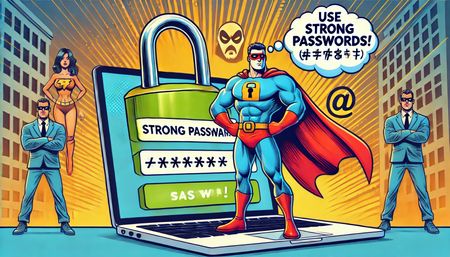
In the nonprofit world, trust is everything. Whether you're protecting donor data, safeguarding beneficiary information, or managing internal systems, your digital security matters. One of the simplest—and most powerful—ways to protect your organization is by using strong passwords. These tools form the first line of defense against cyber threats and help ensure your mission stays on track. Why Strong Passwords Matter Weak passwords are like unlocked doors—they invite trouble. Cybercriminals often exploit simple or reused passwords to gain unauthorized access, impersonate staff, steal sensitive data, or disrupt operations. A strong password acts as a digital lock: hard to guess, harder to crack. Characteristics of a strong password: At least 12 characters long A mix of uppercase, lowercase, numbers, and symbols Unique for every account Not based on personal info (no pet names, birthdays, or favorite sports teams!) Microsoft Tools That Help You Stay Secure Microsoft offers nonprofit-friendly tools to help enforce strong password policies and protect user identities: Microsoft Entra ID (formerly Azure Active Directory) Centralized identity and access management Multi-factor authentication (MFA) to prevent unauthorized logins Conditional access policies and role-based access control Microsoft 365 Security Center Monitor password-related alerts and suspicious sign-ins Enforce password expiration and complexity policies View security recommendations tailored to your organization Microsoft Defender for Endpoint Detects brute-force password attacks and credential theft Protects devices from malware and phishing attempts Integrates with Microsoft 365 for unified threat response Tips for Nonprofit Teams Building a culture of cybersecurity starts with small, consistent actions: Make it policy: Require strong passwords use across your organization Train your team: Host a lunch-and-learn or share a how-to guide on password safety Enable MFA: Add multi-factor authentication for all accounts Audit regularly: Review access and update credentials when staff roles change Clean up old accounts: Remove unused logins and shared credentials Your Mission Deserves Protection Cybersecurity isn’t just an IT issue—it’s a mission-critical priority. By adopting strong password practices, you’re taking a proactive step to protect your people, your data, and your impact. Microsoft’s ecosystem offers scalable, nonprofit-friendly tools to help you build a secure foundation—so you can focus on what matters most: serving your community.204Views0likes0CommentsCybersecurity 101: Protecting Your Nonprofit with Microsoft Tools
Cybersecurity isn’t just an IT concern—it’s a mission-critical priority. For nonprofits, safeguarding sensitive data, maintaining donor trust, and ensuring operational continuity are foundational to achieving impact. In an increasingly digital world, cyber threats are evolving rapidly, and nonprofits—often operating with limited resources—can be especially vulnerable. The good news? Microsoft offers a suite of powerful, easy-to-use tools designed to help nonprofits build a resilient security posture without needing a full-time IT department. What Is Cybersecurity? Cybersecurity is the practice of protecting systems, networks, and data from unauthorized access, attacks, or damage. For nonprofits, this means defending the integrity of: Donor and beneficiary information: Personal data that must be protected to maintain trust and comply with privacy laws. Financial records: From grant funding to payroll, financial data is a prime target for cybercriminals. Internal communications: Sensitive discussions around strategy, staffing, and partnerships. Program data and impact reports: Valuable insights that drive funding and stakeholder engagement. A breach in any of these areas can lead to reputational damage, legal consequences, and disruption of services—making cybersecurity a strategic imperative. Microsoft Tools That Help You Stay Secure Microsoft’s ecosystem is designed to meet nonprofits where they are—whether you're just starting your digital journey or managing complex operations across borders. Microsoft Defender Built-in protection against viruses, malware, ransomware, and phishing attacks Available across Windows devices and Microsoft 365 environments Real-time threat detection, automatic updates, and endpoint protection Microsoft Entra ID (formerly Azure Active Directory) Centralized identity and access management Multi-factor authentication (MFA) to prevent unauthorized logins Role-based access control to ensure staff and volunteers only access what they need Microsoft Purview Advanced data governance and compliance tools Helps classify, label, and protect sensitive information Supports regulatory compliance (e.g., HIPAA, GDPR) for nonprofits handling health or financial data Microsoft Outlook + Exchange Online Protection Filters out spam, phishing attempts, and malicious attachments Encryption options for secure email communication Safe Links and Safe Attachments features to prevent accidental clicks on harmful content Microsoft 365 Security Center Unified dashboard to monitor and manage security across your organization Actionable alerts and recommendations tailored to your environment Designed for ease-of-use, even for teams without dedicated IT staff Cybersecurity Best Practices for Nonprofits Technology alone isn’t enough—building a culture of security is key. Here are essential practices every nonprofit should adopt: Use strong, unique passwords and consider a password manager for staff Enable MFA on all accounts to add an extra layer of protection Educate your team on phishing, social engineering, and safe online behavior Keep software and systems updated to patch known vulnerabilities Limit access to sensitive data based on roles and responsibilities Back up data regularly using secure, encrypted methods Your Mission Deserves Protection Whether you're a small grassroots organization or a global NGO, your mission depends on trust, continuity, and resilience. Cybersecurity isn’t a luxury—it’s a necessity. Microsoft’s tools are designed to be scalable, affordable, and accessible, helping nonprofits protect what matters most: their people, their data, and their impact. By investing in cybersecurity today, you’re not just protecting your organization—you’re strengthening your ability to serve tomorrow.245Views0likes0CommentsContinuing with Microsoft Entra: Advanced Identity Management
In the previous blog Microsoft Entra Admin Center - Secure, Protect, & Manage, we explored the capabilities of the Microsoft Entra Admin Center, focusing on how it helps secure, protect, and manage your organization's identities and access. Building on that foundation, let's dive deeper into the advanced features and functionalities of Microsoft Entra ID, formerly known as Azure Active Directory, to further enhance your identity and access management strategy. Advanced Identity Management with Microsoft Entra ID Microsoft Entra ID offers a comprehensive suite of tools designed to streamline identity management in the cloud. Here are some key features that can help you take your organization's security to the next level: Conditional Access Policies Conditional access is a pivotal feature that allows you to enforce access controls based on specific conditions. By setting policies that consider user location, device state, and risk level, you can ensure that only authorized users gain access to sensitive resources. To learn more about Conditional Access click here: What is Conditional Access in Microsoft Entra ID? - Microsoft Entra ID | Microsoft Learn Identity Protection With the P2 plan, Microsoft Entra ID provides advanced identity protection capabilities. This includes risk-based conditional access, which assesses the likelihood of a user being compromised and adjusts access policies accordingly. It also offers tools to detect and remediate identity-based risks. To learn more about Identity Protection click here: What is Microsoft Entra ID Protection? - Microsoft Entra ID Protection | Microsoft Learn Privileged Identity Management (PIM) PIM helps you manage, control, and monitor access to important resources within your organization. By providing just-in-time privileged access and requiring approval for elevated roles, PIM reduces the risk of security breaches. To learn more about PIM click here: What is Privileged Identity Management? - Microsoft Entra ID Governance | Microsoft Learn Seamless Integration with Cloud Applications Microsoft Entra ID integrates seamlessly with a wide range of cloud applications, providing single sign-on (SSO) capabilities. This not only enhances user experience by reducing the number of login prompts but also improves security by centralizing authentication. To learn more about SSO click here: Microsoft Entra Connect: Seamless single sign-on - Microsoft Entra ID | Microsoft Learn Extending On-Premises Directories to the Cloud For organizations with existing on-premises Active Directory environments, Microsoft Entra Domain Services offers a bridge to the cloud. This service provides managed domain services such as domain join, group policy, and LDAP, enabling you to extend your on-premises directory to Azure without the need to manage domain controllers. To learn more about Microsoft Entra Domain Services click here: Overview of Microsoft Entra Domain Services - Microsoft Entra ID | Microsoft Learn Comparing Microsoft Entra ID Plans Understanding the differences between the P1 and P2 plans is crucial for selecting the right solution for your organization: P1 Plan: Ideal for organizations that need basic identity and access management features, including conditional access and self-service password reset. P2 Plan: Suited for organizations requiring advanced security features such as identity protection and privileged identity management. Optimizing Permissions Management Permissions management is crucial for maintaining a secure and efficient IT environment. Microsoft Entra provides tools to optimize permissions: Permission Insights: Gain visibility into who has access to what resources and identify any unnecessary permissions. Automated Permission Management: Automatically adjust permissions based on user roles and activities, ensuring that users only have access to what they need. Audit Logs: Keep track of all permission changes and access requests to maintain a clear audit trail. To learn more about Microsoft Entra Permissions Management click here: What is Microsoft Entra Permissions Management - Training | Microsoft Learn Ensuring Global Secure Access In today's remote work environment, secure access to resources is more important than ever. Microsoft Entra's Global Secure Access features include: Secure Remote Access: Set up secure connections for remote users, ensuring they can access the necessary resources without compromising security. Application Management: Manage and secure access to both cloud and on-premises applications. Network Security: Implement network security measures to protect your organization's data and resources from external threats. To learn more about Global Secure Access click here: What is Global Secure Access? - Global Secure Access | Microsoft Learn Conclusion Microsoft Entra ID is a powerful tool that provides robust identity and access management capabilities for both cloud and hybrid environments. By leveraging its advanced features, you can enhance your organization's security posture and streamline access management processes. For more information on this topic and to expand your knowledge, please check out Understand Microsoft Entra ID - Training | Microsoft Learn.2.6KViews0likes0CommentsEnabling Self-Service Password Reset for Your Organization
What Is SSPR? It is a frigid February morning. The time is approximately 6:30 AM. Your morning cup of joe is interrupted by an urgent call from your system administrator Jonathan. He informs you about a suspicious email incident over the weekend that potentially impacted numerous employees. He suggests resetting all passwords to reduce any potential impact after handling most of the preliminary measures. Jonathan is thinking about enabling Self-Service Password Reset (SSPR) to maximize time and efficiency. SSPR allows organizations to members to reset their own password. In this blog we will cover a useful feature that can be enabled in your Microsoft Entra Admin Center. Naturally, this blog assumes that you have not enabled this feature as you are just getting started. However, I do suggest looking into the links below for a deeper dive. Navigating to Microsoft Entra Admin Center First, before beginning to enable this feature, make sure to have your admin credentials handy. You must have the appropriate administrative role and access. Lastly, if you want to enable this policy for on-premises integration. You will need to set up a sync engine to be connected to your account. Please see the following link to learn more: Enable Microsoft Entra password writeback - Microsoft Entra ID | Microsoft Learn. Let us continue to the login page. Sign In Navigate to the following website https://entra.microsoft.com. Using your administrative credentials type in your “Username and Password.” If you have forgotten your password, click on “Forgot my password” then follow the prompts accordingly. You will be prompted to authenticate using your phone via the “Microsoft Authentication app.” After you sign in, you'll arrive at the Microsoft Entra Admin Center Home directory. From there, we'll guide you through the process of enabling the feature, one step at a time. Enabling SSPR In the home screen, select the “Protection” tab in the left-hand menu, then click “Password reset.” The first menu item is “Properties” on the right side you will see “Self-service password reset enabled.” Select between three options: None: No users within the organization selected for reset (this is selected by default if never enabled). Selected: Select the Microsoft groups within your organization to apply for self-reset. All: Apply for all users within the organizations for self-reset. Select one then click the “Save” button. Now that SSPR is enabled, you will see “Forgot my password” based on the option you selected. If all options were chosen, all members would see it; otherwise, it will be visible according to the groups you specified. This allows the Systems admin to send just one email to reset their passwords. Conclusion Moving forward, this policy aims to enhance self-sufficiency and improve security measures. By enabling Self-Service Password Reset (SSPR), organizations can streamline password management, lighten IT support loads, and boost security. Users can reset their passwords quickly and securely keeps productivity high and mitigates risks associated with forgotten credentials. Monitor its effectiveness and adjust settings as needed to meet your organization's unique needs and security standards. Hyperlinks License self-service password reset - Microsoft Entra ID | Microsoft Learn Enable Microsoft Entra password writeback - Microsoft Entra ID | Microsoft Learn Self-service password reset deep dive - Microsoft Entra ID | Microsoft Learn Microsoft Entra Admin Center - Secure, Protect, & Manage | Microsoft Community Hub1KViews1like0Comments