hugging face
9 Topics
Where should LLM weights live on AKS? Three options for GPU cold starts, measured
Summary When you self-host an open-weight large language model (LLM) on Azure Kubernetes Service (AKS), each new replica needs two payloads before it can answer a request: the container image that holds the inference runtime, and the model weights. That wait is the cold start. On CPU services it is usually a minor nuisance; on GPU services it can decide whether autoscaling keeps up with demand, because keeping GPU nodes warm around the clock is costly. We ran a controlled experiment on AKS designed to change one variable: where the weights live and how they reach the GPU. The model, the inference engine (vLLM), the GPU (one NVIDIA A100 80 GB) and the method (scale from zero onto a fresh node) were held constant. We compared three weight-delivery methods: downloading the weights from Hugging Face Hub to local disk at start-up, streaming them from Azure Blob Storage with the Run:ai Model Streamer, and baking them into the container image. Option Where the weights live Image size Cold start (new node) 1. Download from Hub Hugging Face Hub, copied to local disk at start 9.11 GB 15:45 2. Stream from Blob Azure Blob Storage, streamed to the GPU 9.32 GB 13:35 3. Bake into the image Inside a single container image in Azure Container Registry 39.6 GB 20:12 Three findings stand out in our test environment. First, baking the weights into the image was the slowest option on a new node, 6 minutes 37 seconds behind streaming, and it requires an image rebuild for every model revision. Second, streaming from Azure Blob Storage gave the fastest weight transfer in our runs (80 s, roughly 450 MB/s), although the overall gap to the download-to-disk option was small enough that we treat it as directional. Third, the weights are only part of the story: about 65% of the streamed cold start was node provisioning and engine initialisation, which the weight-delivery choice does not change. These are single runs per option, so read them as a direction to test, not a benchmark. Your results will vary with the model, VM size, region, storage configuration and software versions. Why cold starts matter more on GPUs For a typical CPU microservice, keeping a few replicas warm costs relatively little, so cold starts are usually rare. GPU nodes change that arithmetic. At Azure list prices at the time of testing (Linux, pay-as-you-go, Switzerland North, November 2026), a general-purpose D4s v5 node cost $0.253 per hour, while a Standard_NC24ads_A100_v4 node with one A100 GPU cost $5.252 per hour, roughly 21 times as much. Running that GPU node 24×7 comes to about $3,834 per month, against about $185 for the CPU node. Prices vary by region, offer and agreement and change over time; see the Azure Virtual Machines pricing page for current prices. Node Hourly list price Running 24×7 (730 h) CPU: D4s v5, 4 vCPU $0.253 ~$185 per month GPU: NC24ads A100 v4, 1× A100 80 GB $5.252 ~$3,834 per month Because idle GPU nodes are still billed, many teams scale GPU pools on demand, often down to zero. That puts the cold start on the critical path: scale-outs during a traffic spike, Spot VM evictions, rolling updates and model swaps all wait for a new replica to load. The direct cost of one cold start is small on a single A100 (between $1.19 and $1.77 at list price in our runs), and it grows with the node: on an ND96isr H100 v5 node (8× H100) at a list price of $98.32 per hour, a 225.57-second default load works out to about $6.16, against about $1.01 for a 37.14-second streamed load. The larger cost is capacity that arrives late. While the new replica loads, the running replicas carry the traffic, queues can grow, and requests can start to time out at the gateway. Figure 1. Why GPU cold starts matter: the hourly price gap, the cost of keeping a GPU node warm, and the GPU time billed during one cold start in each option. Azure list prices at the time of testing; illustrative. Open weights are two things: a runtime and the weights An open-weight model is a set of files anyone can download. To serve it, you pair those files with a runtime. The two parts differ enough in size and change rate that how you package and deliver them is a genuine architectural decision. Runtime Weights What it contains vLLM engine, PyTorch and CUDA, base OS and Python, packaged as container image layers config.json, tokenizer files and *.safetensors shards, which hold almost all the bytes Typical size Around 9 GB (our images: 9.11 to 9.32 GB) Tens to hundreds of GB (our test model: ~36 GB) Update rhythm Often: frequent vLLM releases, plus CUDA and security patches Rarely: only when you adopt a new model revision Where it lives Azure Container Registry (ACR), pinned by digest Hugging Face Hub, Azure Blob Storage, or baked into the image A useful rule of thumb is that weight size is roughly the parameter count multiplied by the bytes per parameter. A 35-billion-parameter model stored in FP8 (one byte per parameter) is about 35 GB; the same model in BF16 (two bytes) is about 70 GB. The three options in this paper are three ways of combining these two parts and getting the weights onto the GPU. How a model replica starts on AKS In our setup the model runs in a vLLM pod on a GPU node pool. Each node is an Azure VM, Standard_NC24ads_A100_v4, with 24 vCPUs, 220 GiB of system memory and one NVIDIA A100 with 80 GB of GPU memory. With fully managed GPU node pools, AKS installs and maintains the NVIDIA driver, the device plugin and the DCGM metrics exporter. The device plugin advertises the GPU to the scheduler, and the vLLM pod requests nvidia.com/gpu: 1 to receive the whole GPU. The weights and the KV cache must both fit in the 80 GB of GPU memory. A cold start from zero is not one number but eight phases: Phase What happens Depends on where weights live? M0 Trigger: the pod cannot be scheduled No M1 The cluster autoscaler adds a GPU node No M2 The device plugin registers the GPU No M3 The kubelet pulls the container image Yes M4 The server fetches the weights Yes M5 The engine loads and compiles No M6 The startup probe succeeds and the endpoint is ready No M7 The first token goes out No Only two of the eight phases, the image pull and the weight transfer, depend on the weight-delivery option. Node provisioning and engine initialisation should cost about the same whichever option you choose, which is why the experiment reports phases rather than a single total. The three options Figure 2. The three weight-delivery paths compared in the experiment. Option 1: download from Hugging Face Hub The runtime image (9.11 GB) is pulled from Azure Container Registry (ACR), and at start-up the weights (~36 GB) are downloaded from Hugging Face Hub over the public internet into an emptyDir volume on the node’s local disk. vLLM then reads them back from disk into GPU memory. That is two serial copies on every start, and the GPU waits through both. The approach needs nothing staged in advance, which makes it convenient for development and testing, but each start depends on the availability of the external source and on internet bandwidth. Option 2: stream from Azure Blob Storage The weights are staged once per model revision into Azure Blob Storage under an immutable path such as az://models/<key>/<rev>/. The runtime image (9.32 GB, from ACR) starts vLLM with the Run:ai Model Streamer as its loader. The streamer reads tensors from Blob concurrently into a CPU memory buffer and copies each tensor to the GPU while the next ones are still being read, so there is no local-disk hop. A new model revision is just a new path; no image rebuild is needed. The trade-off is that you store and pay for your own copy of the weights. Option 3: bake the weights into the image The weights are downloaded at build time and written into a layer of a single container image, 39.6 GB in total, pushed to ACR. On start-up the kubelet pulls the full image to the node, and vLLM loads the weights from the image’s local /models path. Loading from local disk is fast, but in our setup each new node had to pull the entire image, and each model revision means a rebuild (about 40 minutes in our pipeline), a push and a redeploy, because runtime and weights are versioned together. Experiment setup Held constant Value Model Qwen3.6-35B-A3B-FP8 (~36 GB of weights) Inference engine vLLM GPU node Standard_NC24ads_A100_v4, 1× NVIDIA A100 80 GB Platform AKS, Switzerland North Start condition Scale from zero onto a fresh node: no image cache, no warm GPU Runs One run per option For each run we recorded timestamps for the phases above, from the trigger to the endpoint becoming ready. Time to the first token (M7) and GPU registration (M2) were not timed separately. Results Phase (seconds) Option 1: Hub Option 2: Blob Option 3: Baked Node provisioning 405 343 388 Image pull (M3) 111 147 564 Weight transfer (M4) 171 80 19 Engine initialisation 195 184 257 Unattributed 63 61 none Cold start, total 945 (15:45) 815 (13:35) 1,212 (20:12) Warm restart, image cached 441 338 271 Figure 3. Cold-start phases per option, single run each on a fresh node. “Unattributed” is the time to ready minus the sum of the measured phases. For Option 3 the measured phases add up to 16 s more than the total, so no unattributed time is shown. What the results mean Figure 4. Who wins which race. Streaming from Blob won both fresh-node races; the baked image won only the warm restart, once its image was cached. Single run per option. Keep the weights out of the image. Baking was the slowest option on a new node in our test, 6:37 (397 s) behind streaming. Of that gap, 356 s came from the image pull and weight phases, while node provisioning differed by only 45 s. Container image pulls ran at roughly 63 to 82 MB/s in our runs, so a 39.6 GB image took minutes to arrive on each new node, and each model revision adds a rebuild on top. Streaming gave the fastest weight transfer. The Blob stream delivered ~36 GB in 80 s, about 450 MB/s, against 171 s for the download-to-disk path. The total difference between Options 1 and 2 was 2:10, but only 55 s of it comes from the weight phases and about 60 s in each run is unattributed, so this comparison is directional rather than proven. It reflects the delivery method and network path in our environment, not the performance of Hugging Face Hub as a service. Streaming also brings an operational benefit that the clock does not show: each revision is a new immutable path, with no rebuild. Baking helps only nodes that survive. With the image already cached, the baked option restarted in 271 s, 67 s ahead of Blob. That advantage applies only to a pod restarting on a node that keeps its image cache; in a scale-from-zero setup, a scale-out typically lands on a new node and pays the full pull. The next lever is not the weights. About 65% of the streamed cold start (527 of 815 s) was node provisioning and engine initialisation, which the weight choice does not change. Our 80 s weight transfer is also not the ceiling: the AKS engineering team reported streaming about 29 GB in about 10 s on the same VM size using Premium block blob storage. Where the first caller cannot wait, keeping one warm replica remains the most direct answer. How the Run:ai Model Streamer makes streaming work vLLM’s default loader is a two-step relay: download every weight file to the node’s local disk, then read them back into GPU memory. Nothing reaches the GPU until the last byte has landed on disk, and the network sits idle while the disk-to-GPU load runs. The Run:ai Model Streamer replaces both steps with one overlapped stream. Many threads read tensors from storage into a CPU memory buffer at once, and each tensor is copied to GPU memory as soon as it arrives while others are still being read. The streamer is built into vLLM behind a single flag, --load-format runai_streamer, and reads from Azure Blob (az://), other object stores and file systems. Azure Blob Storage support is available from vLLM v0.18.0 and runai-model-streamer v0.15.6. Authentication uses the Azure default credential chain, so on AKS a pod can read from Azure Blob Storage with Microsoft Entra Workload ID instead of a storage account key. export AZURE_STORAGE_ACCOUNT_NAME=<storage-account> vllm serve az://<container>/<model-path> \ --load-format runai_streamer \ --model-loader-extra-config '{"concurrency":16}' Before adopting it, note that the streamer reads safetensors files only (weights in .bin or GGUF must be converted), and that its concurrency (default 8) and memory limit are worth tuning for your VM and storage account. Two public Microsoft measurements show what the streamer can do with well-provisioned storage. The AKS Engineering Blog timed microsoft/phi-4 (about 29 GB) on one Standard_NC24ads_A100_v4 node with vLLM v0.23.0: the default path took about 113 s to download and about 74 s to load, roughly 187 s in total, while streaming from Premium block blob loaded the weights in about 10 s. The Azure SDK Blog compared the default loader with the streamer on an ND96isr H100 v5 node (8× H100) with Premium block blob in the same region, averaging five runs: Model Size Default loader Run:ai streamer Speed-up Llama-3.1-8B 14.99 GiB 15.48 s 3.61 s ~4.3× GPT-OSS-120B 60.8 GiB 42.29 s 12.76 s ~3.3× Qwen3.5-122B-A10B 232.8 GiB 225.57 s 37.14 s ~6.1× Figure 5. Model load time, default vLLM loader versus Run:ai Model Streamer. Source: Azure SDK Blog, May 2026 (ND96isr H100 v5, Premium block blob, mean of five runs). In that benchmark the default path’s network throughput peaked at about 40 Gbps and fell to about 10 Gbps, while the streamer held a steady ~80 Gbps for the whole load. The largest model in that test, at 232.8 GiB, saw the largest speed-up, about 6.1×. Choosing an option Situation Recommended option Why GPU pools that scale from zero; large or frequently updated models Stream from Blob Fastest weight transfer in our test, small runtime image, a new revision is a new path A runtime that needs files on local disk, such as Hugging Face Text Embeddings Inference (TEI) Copy to local disk (for example with an init container) The runtime cannot stream, so stage the files once per start A small model on an always-on node with frequent pod restarts Bake into the image Fastest warm restart in our test, once the image is cached Whichever option you choose, a few practices carry over. Version the runtime and the weights separately and release the combination: a release is a weight revision, an image digest and a serving configuration, pinned together. Write each weight revision to an immutable path and verify file hashes before promoting it. Pin runtime images by digest rather than tag. Use Microsoft Entra Workload ID rather than storage account keys. And size startup probes from measured phase times rather than guesses. Limitations and next steps These results come from one run per option, so they are directional rather than statistical. In Option 2 the pod authenticated with a storage account key rather than Microsoft Entra Workload ID. The test model was a 36 GB FP8 model; a larger BF16 model (about 55.6 GB) will shift the balance further toward the weight phases. The A100 has no native FP8 compute, so vLLM ran the FP8 checkpoint as weight-only quantisation. GPU registration and time to first token were not measured, and the prices quoted are list prices for one region at one point in time, and they will change. The next round of measurements will repeat each option several times and report p50 and p95, use Microsoft Entra Workload ID end to end, test the larger BF16 model, and record the vLLM version, storage tier and streamer settings for every run. Disclaimer The results in this article come from a single test environment and are provided for information only. Results in other environments will vary with the model, VM size, region, storage configuration and software versions. Prices are Azure list prices for one region at the time of testing; they are shown as an illustration and are subject to change. This document is provided “as-is.” Information and views expressed in this document, including URL and other internet website references, may change without notice. You bear the risk of using it. This document does not provide you with any legal rights to any intellectual property in any Microsoft product. You may copy and use this document for your internal, reference purposes. References Microsoft Learn: Use GPUs for compute-intensive workloads on AKS. https://learn.microsoft.com/azure/aks/use-nvidia-gpu Microsoft Learn: Use Microsoft Entra Workload ID with AKS. https://learn.microsoft.com/azure/aks/workload-identity-overview Azure Virtual Machines pricing (Linux, pay-as-you-go). https://azure.microsoft.com/pricing/details/virtual-machines/linux/ vLLM documentation: Loading models with Run:ai Model Streamer (v0.23.0). https://docs.vllm.ai/en/v0.23.0/models/extensions/runai_model_streamer/Model Mondays S2E13: Open Source Models (Hugging Face)
1. Weekly Highlights 1. Weekly Highlights Here are the key updates we covered in the Season 2 finale: O1 Mini Reinforcement Fine-Tuning (GA): Fine-tune models with as few as ~100 samples using built-in Python code graders. Azure Live Interpreter API (Preview): Real-time speech-to-speech translation supporting 76 input languages and 143 locales with near human-level latency. Agent Factory – Part 5: Connecting agents using open standards like MCP (Model Context Protocol) and A2A (Agent-to-Agent protocol). Ask Ralph by Ralph Lauren: A retail example of agentic AI for conversational styling assistance, built on Azure OpenAI and Foundry’s agentic toolset. VS Code August Release: Brings auto-model selection, stronger safety guards for sensitive edits, and improved agent workflows through new agents.md support. 2. Spotlight – Open Source Models in Azure AI Foundry Guest: Jeff Boudier, VP of Product at Hugging Face Jeff showcased the deep integration between the Hugging Face community and Azure AI Foundry, where developers can access over 10 000 open-source models across multiple modalities—LLMs, speech recognition, computer vision, and even specialized domains like protein modeling and robotics. Demo Highlights Discover models through Azure AI Foundry’s task-based catalog filters. Deploy directly from Hugging Face Hub to Azure with one-click deployment. Explore Use Cases such as multilingual speech recognition and vision-language-action models for robotics. Jeff also highlighted notable models, including: SmoLM3 – a 3 B-parameter model with hybrid reasoning capabilities Qwen 3 Coder – a mixture-of-experts model optimized for coding tasks Parakeet ASR – multilingual speech recognition Microsoft Research protein-modeling collection MAGMA – a vision-language-action model for robotics Integration extends beyond deployment to programmatic access through the Azure CLI and Python SDKs, plus local development via new VS Code extensions. 3. Customer Story – DraftWise (BUILD 2025 Segment) The finale featured a customer spotlight on DraftWise, where CEO James Ding shared how the company accelerates contract drafting with Azure AI Foundry. Problem Legal contract drafting is time-consuming and error-prone. Solution DraftWise uses Azure AI Foundry to fine-tune Hugging Face language models on legal data, generating contract drafts and redline suggestions. Impact Faster drafting cycles and higher consistency Easy model management and deployment with Foundry’s secure workflows Transparent evaluation for legal compliance 4. Community Story – Hugging Face & Microsoft The episode also celebrated the ongoing collaboration between Hugging Face and Microsoft and the impact of open-source AI on the global developer ecosystem. Community Benefits Access to State-of-the-Art Models without licensing barriers Transparent Performance through public leaderboards and benchmarks Rapid Innovation as improvements and bug fixes spread quickly Education & Empowerment via tutorials, docs, and active forums Responsible AI Practices encouraged through community oversight 5. Key Takeaways Open Source AI Is Here to Stay Azure AI Foundry and Hugging Face make deploying, fine-tuning, and benchmarking open models easier than ever. Community Drives Innovation: Collaboration accelerates progress, improves transparency, and makes AI accessible to everyone. Responsible AI and Transparency: Open-source models come with clear documentation, licensing, and community-driven best practices. Easy Deployment & Customization: Azure AI Foundry lets you deploy, automate, and customize open models from a single, unified platform. Learn, Build, Share: The open-model ecosystem is a great place for students, developers, and researchers to learn, build, and share their work. Sharda's Tips: How I Wrote This Blog For this final recap, I focused on capturing the energy of the open source AI movement and the practical impact of Hugging Face and Azure AI Foundry collaboration. I watched the livestream, took notes on the demos and interviews, and linked directly to official resources for models, docs, and community sites. Here’s my Copilot prompt for this episode: "Generate a technical blog post for Model Mondays S2E13 based on the transcript and episode details. Focus on open source models, Hugging Face, Azure AI Foundry, and community workflows. Include practical links and actionable insights for developers and students! Learn & Connect Explore Open Models in Azure AI Foundry Hugging Face Leaderboard Responsible AI in Azure Machine Learning Llama-3 by Meta Hugging Face Community Azure AI Documentation About Model Mondays Model Mondays is your weekly Azure AI learning series: 5-Minute Highlights: Latest AI news and product updates 15-Minute Spotlight: Demos and deep dives with product teams 30-Minute AMA Fridays: Ask anything in Discord or the forum Start building: Watch Past Replays Register For AMA Recap Past AMAs Join The Community Don’t build alone! The Azure AI Developer Community is here for real-time chats, events, and support: Join the Discord Explore the Forum About Me I'm Sharda, a Gold Microsoft Learn Student Ambassador focused on cloud and AI. Find me on GitHub, Dev.to, Tech Community, and LinkedIn. In this blog series, I share takeaways from each week’s Model Mondays livestream.542Views0likes0CommentsAzure Skilling at Microsoft Ignite 2025
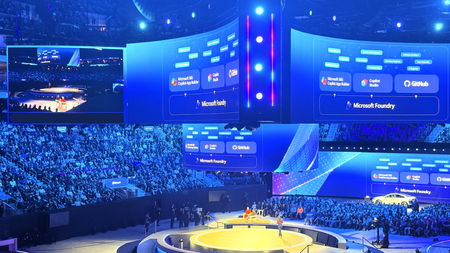
The energy at Microsoft Ignite was unmistakable. Developers, architects, and technical decision-makers converged in San Francisco to explore the latest innovations in cloud technology, AI applications, and data platforms. Beyond the keynotes and product announcements was something even more valuable: an integrated skilling ecosystem designed to transform how you build with Azure. This year Azure Skilling at Microsoft Ignite 2025 brought together distinct learning experiences, over 150+ hands-on labs, and multiple pathways to industry-recognized credentials—all designed to help you master skills that matter most in today's AI-driven cloud landscape. Just Launched at Ignite Microsoft Ignite 2025 offered an exceptional array of learning opportunities, each designed to meet developers anywhere on the skilling journey. Whether you joined us in-person or on-demand in the virtual experience, multiple touchpoints are available to deepen your Azure expertise. Ignite 2025 is in the books, but you can still engage with the latest Microsoft skilling opportunities, including: The Azure Skills Challenge provides a gamified learning experience that lets you compete while completing task-based achievements across Azure's most critical technologies. These challenges aren't just about badges and bragging rights—they're carefully designed to help you advance technical skills and prepare for Microsoft role-based certifications. The competitive element adds urgency and motivation, turning learning into an engaging race against the clock and your peers. For those seeking structured guidance, Plans on Learn offer curated sets of content designed to help you achieve specific learning outcomes. These carefully assembled learning journeys include built-in milestones, progress tracking, and optional email reminders to keep you on track. Each plan represents 12-15 hours of focused learning, taking you from concept to capability in areas like AI application development, data platform modernization, or infrastructure optimization. The Microsoft Reactor Azure Skilling Series, running December 3-11, brings skilling to life through engaging video content, mixing regular programming with special Ignite-specific episodes. This series will deliver technical readiness and programming guidance in a livestream presentation that's more digestible than traditional documentation. Whether you're catching episodes live with interactive Q&A or watching on-demand later, you’ll get world-class instruction that makes complex topics approachable. Beyond Ignite: Your Continuous Learning Journey Here's the critical insight that separates Ignite attendees who transform their careers from those who simply collect swag: the real learning begins after the event ends. Microsoft Ignite is your launchpad, not your destination. Every module you start, every lab you complete, and every challenge you tackle connects to a comprehensive learning ecosystem on Microsoft Learn that's available 24/7, 365 days a year. Think of Ignite as your intensive immersion experience—the moment when you gain context, build momentum, and identify the skills that will have the biggest impact on your work. What you do in the weeks and months following determines whether that momentum compounds into career-defining expertise or dissipates into business as usual. For those targeting career advancement through formal credentials, Microsoft Certifications, Applied Skills and AI Skills Navigator, provide globally recognized validation of your expertise. Applied Skills focus on scenario-based competencies, demonstrating that you can build and deploy solutions, not simply answer theoretical questions. Certifications cover role-based scenarios for developers, data engineers, AI engineers, and solution architects. The assessment experiences include performance-based testing in dedicated Azure tenants where you complete real configuration and development tasks. And finally, the NEW AI Skills Navigator is an agentic learning space, bringing together AI-powered skilling experiences and credentials in a single, unified experience with Microsoft, LinkedIn Learning and GitHub – all in one spot Why This Matters: The Competitive Context The cloud skills race is intensifying. While our competitors offer robust training and content, Microsoft's differentiation comes not from having more content—though our 1.4 million module completions last fiscal year and 35,000+ certifications awarded speak to scale—but from integration of services to orchestrate workflows. Only Microsoft offers a truly unified ecosystem where GitHub Copilot accelerates your development, Azure AI services power your applications, and Azure platform services deploy and scale your solutions—all backed by integrated skilling content that teaches you to maximize this connected experience. When you continue your learning journey after Ignite, you're not just accumulating technical knowledge. You're developing fluency in an integrated development environment that no competitor can replicate. You're learning to leverage AI-powered development tools, cloud-native architectures, and enterprise-grade security in ways that compound each other's value. This unified expertise is what transforms individual developers into force-multipliers for their organizations. Start Now, Build Momentum, Never Stop Microsoft Ignite 2025 offered the chance to compress months of learning into days of intensive, hands-on experience, but you can still take part through the on-demand videos, the Global Ignite Skills Challenge, visiting the GitHub repos for the /Ignite25 labs, the Reactor Azure Skilling Series, and the curated Plans on Learn provide multiple entry points regardless of your current skill level or preferred learning style. But remember: the developers who extract the most value from Ignite are those who treat the event as the beginning, not the culmination, of their learning journey. They join hackathons, contribute to GitHub repositories, and engage with the Azure community on Discord and technical forums. The question isn't whether you'll learn something valuable from Microsoft Ignite 2025-that's guaranteed. The question is whether you'll convert that learning into sustained momentum that compounds over months and years into career-defining expertise. The ecosystem is here. The content is ready. Your skilling journey doesn't end when Ignite does—it accelerates.4.1KViews0likes0CommentsJoin Us for a Technical Deep Dive and Q&A on Foundry Local - LLMs on device
Join us for an Ask Me Anything with the Foundry Local team on October 14th, 2025! Discover how Foundry Local is redefining edge AI with powerful features like on-device inference, enabling you to run models directly on your hardware, cutting costs and keeping your data secure. Whether you're customizing models to fit unique use cases or integrating seamlessly via SDKs, APIs, or CLI, Foundry Local offers scalable pathways to Azure AI Foundry as your needs evolve. It's the perfect solution for environments with limited connectivity, sensitive data requirements, low-latency demands, or early-stage experimentation before cloud deployment. If you're building smarter, leaner, and more private AI workflows, this AMA is your chance to dive deep with the team behind it all. What is Foundry Local? Foundry Local is a set of development tools designed to help you build and evaluate LLM applications on your local machine. It provides a curated collection of production-quality tools, including evaluation and prompt engineering capabilities, that are fully compatible with Azure AI. This allows for a seamless transition of your work from your local environment to the cloud. Don't miss this opportunity to connect with our experts and enhance your understanding of local LLM development. Foundry Local is an on-device AI inference solution offering performance, privacy, customization, and cost advantages. It integrates seamlessly into your existing workflows and applications through an intuitive CLI, SDK, and REST API. Key features On-Device Inference: Run models locally on your own hardware, reducing your costs while keeping all your data on your device. Model Customization: Select from preset models or use your own to meet specific requirements and use cases. Cost Efficiency: Eliminate recurring cloud service costs by using your existing hardware, making AI more accessible. Seamless Integration: Connect with your applications through an SDK, API endpoints, or the CLI, with easy scaling to Azure AI Foundry as your needs grow. How to Join: Register to Join the Azure AI Foundry Discord Community Event 14th Oct 2025 9am Pacific Time UTC−08:00 Unlock Accelerated Local LLM Development Discover how Foundry Local can enhance your development process and explore the possibilities for building robust LLM applications. Whether you're a seasoned AI developer or just getting started, this session is your chance to get hands-on insights into the innovative world of Azure AI Foundry. Event Highlights: An in-depth overview of the Foundry Local CLI and SDK. Interactive demo with step-by-step examples. Best practices for local AI Inference and models Transitioning your local development to cloud solutions or vice-versa Why Attend? Gain expert insights into Foundry Local, and ask questions about using Foundry Local Network with fellow AI professionals and developers in the Azure AI Foundry community. Enhance your AI development skills with practical examples. Stay at the forefront of LLM application development. Speakers Product Manager Foundry Local Maanav Dalal Product Manager |Foundry Local Microsoft Maanav Dalal is a PM on the AI Frameworks team. He's super inquisitive about the ways you use AI in daily life, so be encouraged to strike up a conversation with him about that. LinkedIn ProfileWeek 2 . Microsoft Agents Hack Online Events and Readiness Resources
https://aka.ms/agentshack 2025 is the year of AI agents! But what exactly is an agent, and how can you build one? Whether you're a seasoned developer or just starting out, this FREE three-week virtual hackathon is your chance to dive deep into AI agent development. Register Now: https://aka.ms/agentshack 🔥 Learn from expert-led sessions streamed live on YouTube, covering top frameworks like Semantic Kernel, Autogen, the new Azure AI Agents SDK and the Microsoft 365 Agents SDK. Week 2 Events: April 14th-18th Day/Time Topic Track 4/14 08:00 AM PT Building custom engine agents with Azure AI Foundry and Visual Studio Code Copilots 4/15 07:00 AM PT Your first AI Agent in JS with Azure AI Agent Service JS 4/15 09:00 AM PT Building Agentic Applications with AutoGen v0.4 Python 4/15 12:00 PM PT AI Agents + .NET Aspire C# 4/15 03:00 PM PT Prototyping AI Agents with GitHub Models Python 4/16 04:00 AM PT Multi-agent AI apps with Semantic Kernel and Azure Cosmos DB C# 4/16 06:00 AM PT Building declarative agents with Microsoft Copilot Studio & Teams Toolkit Copilots 4/16 07:00 AM PT Prompting is the New Scripting: Meet GenAIScript JS 4/16 09:00 AM PT Building agents with an army of models from the Azure AI model catalog Python 4/16 12:00 PM PT Multi-Agent API with LangGraph and Azure Cosmos DB Python 4/16 03:00 PM PT Mastering Agentic RAG Python 4/17 06:00 AM PT Build your own agent with OpenAI, .NET, and Copilot Studio C# 4/17 09:00 AM PT Building smarter Python AI agents with code interpreters Python 4/17 12:00 PM PT Building Java AI Agents using LangChain4j and Dynamic Sessions Java 4/17 03:00 PM PT Agentic Voice Mode Unplugged Python1.8KViews0likes0CommentsGetting Started - Generative AI with Phi-3-mini: A Guide to Inference and Deployment
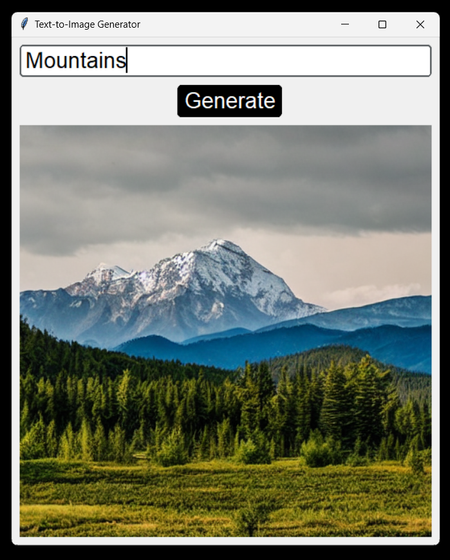
Getting started with Microsoft Phi-3-mini - Inference Phi-3-mini models, Discover how Phi-3-mini, a new series of models from Microsoft, enables deployment of Large Language Models (LLMs) on edge devices and IoT devices. Learn how to use Semantic Kernel, Ollama/LlamaEdge, and ONNX Runtime to access and infer phi3-mini models, and explore the possibilities of generative AI in various application scenarios52KViews4likes13CommentsJourney Series for Generative AI Application Architecture - Fine-tune SLM with Microsoft Olive
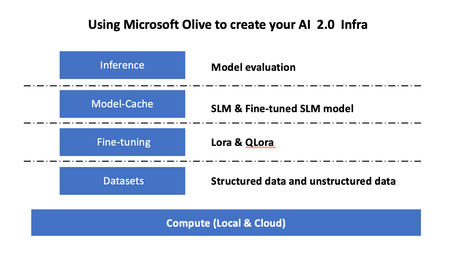
For some industries and traditional enterprises, they prefer to train their own industry models based on their own underlying structures or applications combined with their own data.9.1KViews1like0CommentsUnderstanding the Difference in Using Different Large Language Models: Step-by-Step Guide
Unlock the secrets of deploying Large Language Models on Azure with our comprehensive guide! Learn step-by-step integration techniques for models like GPT-2, Llama 2, and Dolly v1 in your Web Applications or Power Apps. Explore detailed instructions, ready-made code, and expert tips. Join us for a live session on November 2nd, 2023, to harness the power of AI and Microsoft tools. Become an entrepreneur with Microsoft Founders Hub, offering up to $2,500 OpenAI credits and $1,000 Azure credits. Dive into the world of tech solutions and creative writing ideas today!14KViews3likes1Comment