devops
110 TopicsContext Engineering Lessons from Building Azure SRE Agent
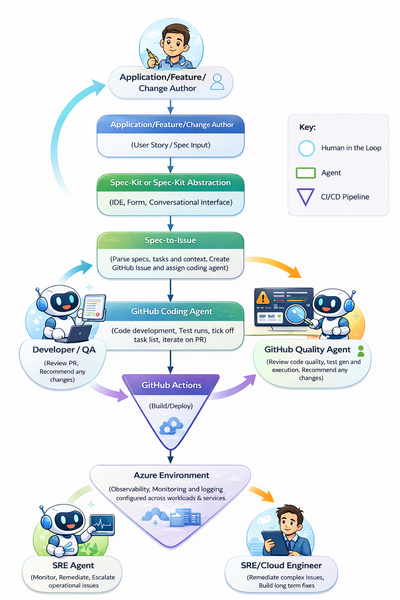
We started with 100+ tools and 50+ specialized agents. We ended with 5 core tools and a handful of generalists. The agent got more reliable, not less. Every context decision is a tradeoff: latency vs autonomy, evidence-building vs speed, oversight - and the cost of being wrong. This post is a practical map of those knobs and how we adjusted them for SRE Agent.15KViews22likes2CommentsAn AI led SDLC: Building an End-to-End Agentic Software Development Lifecycle with Azure and GitHub.
This is due to the inevitable move towards fully agentic, end-to-end SDLCs. We may not yet be at a point where software engineers are managing fleets of agents creating the billion-dollar AI abstraction layer, but (as I will evidence in this article) we are certainly on the precipice of such a world. Before we dive into the reality of agentic development today, let me examine two very different modules from university and their relevance in an AI-first development environment. Manual Requirements Translation. At university I dedicated two whole years to a unit called “Systems Design”. This was one of my favourite units, primarily focused on requirements translation. Often, I would receive a scenario between “The Proprietor” and “The Proprietor’s wife”, who seemed to be in a never-ending cycle of new product ideas. These tasks would be analysed, broken down, manually refined, and then mapped to some kind of early-stage application architecture (potentially some pseudo-code and a UML diagram or two). The big intellectual effort in this exercise was taking human intention and turning it into something tangible to build from (BA’s). Today, by the time I have opened Notepad and started to decipher requirements, an agent can already have created a comprehensive list, a service blueprint, and a code scaffold to start the process (*cough* spec-kit *cough*). Manual debugging. Need I say any more? Old-school debugging with print()’s and breakpoints is dead. I spent countless hours learning to debug in a classroom and then later with my own software, stepping through execution line by line, reading through logs, and understanding what to look for; where correlation did and didn’t mean causation. I think back to my year at IBM as a fresh-faced intern in a cloud engineering team, where around 50% of my time was debugging different issues until it was sufficiently “narrowed down”, and then reading countless Stack Overflow posts figuring out the actual change I would need to make to a PowerShell script or Jenkins pipeline. Already in Azure, with the emergence of SRE agents, that debug process looks entirely different. The debug process for software even more so… #terminallastcommand WHY IS THIS NOT RUNNING? #terminallastcommand Review these logs and surface errors relating to XYZ. As I said: breakpoints are dead, for now at least. Caveat – Is this a good thing? One more deviation from the main core of the article if you would be so kind (if you are not as kind skip to the implementation walkthrough below). Is this actually a good thing? Is a software engineering degree now worthless? What if I love printf()? I don’t know is my answer today, at the start of 2026. Two things worry me: one theoretical and one very real. To start with the theoretical: today AI takes a significant amount of the “donkey work” away from developers. How does this impact cognitive load at both ends of the spectrum? The list that “donkey work” encapsulates is certainly growing. As a result, on one end of the spectrum humans are left with the complicated parts yet to be within an agent’s remit. This could have quite an impact on our ability to perform tasks. If we are constantly dealing with the complex and advanced, when do we have time to re-root ourselves in the foundations? Will we see an increase in developer burnout? How do technical people perform without the mundane or routine tasks? I often hear people who have been in the industry for years discuss how simple infrastructure, computing, development, etc. were 20 years ago, almost with a longing to return to a world where today’s zero trust, globally replicated architectures are a twinkle in an architect’s eye. Is constantly working on only the most complex problems a good thing? At the other end of the spectrum, what if the performance of AI tooling and agents outperforms our wildest expectations? Suddenly, AI tools and agents are picking up more and more of today’s complicated and advanced tasks. Will developers, architects, and organisations lose some ability to innovate? Fundamentally, we are not talking about artificial general intelligence when we say AI; we are talking about incredibly complex predictive models that can augment the existing ideas they are built upon but are not, in themselves, innovators. Put simply, in the words of Scott Hanselman: “Spicy auto-complete”. Does increased reliance on these agents in more and more of our business processes remove the opportunity for innovative ideas? For example, if agents were football managers, would we ever have graduated from Neil Warnock and Mick McCarthy football to Pep? Would every agent just augment a ‘lump it long and hope’ approach? We hear about learning loops, but can these learning loops evolve into “innovation loops?” Past the theoretical and the game of 20 questions, the very real concern I have is off the back of some data shared recently on Stack Overflow traffic. We can see in the diagram below that Stack Overflow traffic has dipped significantly since the release of GitHub Copilot in October 2021, and as the product has matured that trend has only accelerated. Data from 12 months ago suggests that Stack Overflow has lost 77% of new questions compared to 2022… Stack Overflow democratises access to problem-solving (I have to be careful not to talk in past tense here), but I will admit I cannot remember the last time I was reviewing Stack Overflow or furiously searching through solutions that are vaguely similar to my own issue. This causes some concern over the data available in the future to train models. Today, models can be grounded in real, tested scenarios built by developers in anger. What happens with this question drop when API schemas change, when the technology built for today is old and deprecated, and the dataset is stale and never returning to its peak? How do we mitigate this impact? There is potential for some closed-loop type continuous improvement in the future, but do we think this is a scalable solution? I am unsure. So, back to the question: “Is this a good thing?”. It’s great today; the long-term impacts are yet to be seen. If we think that AGI may never be achieved, or is at least a very distant horizon, then understanding the foundations of your technical discipline is still incredibly important. Developers will not only be the managers of their fleet of agents, but also the janitors mopping up the mess when there is an accident (albeit likely mopping with AI-augmented tooling). An AI First SDLC Today – The Reality Enough reflection and nostalgia (I don’t think that’s why you clicked the article), let’s start building something. For the rest of this article I will be building an AI-led, agent-powered software development lifecycle. The example I will be building is an AI-generated weather dashboard. It’s a simple example, but if agents can generate, test, deploy, observe, and evolve this application, it proves that today, and into the future, the process can likely scale to more complex domains. Let’s start with the entry point. The problem statement that we will build from. “As a user I want to view real time weather data for my city so that I can plan my day.” We will use this as the single input for our AI led SDLC. This is what we will pass to promptkit and watch our app and subsequent features built in front of our eyes. The goal is that we will: - Spec-kit to get going and move from textual idea to requirements and scaffold. - Use a coding agent to implement our plan. - A Quality agent to assess the output and quality of the code. - GitHub Actions that not only host the agents (Abstracted) but also handle the build and deployment. - An SRE agent proactively monitoring and opening issues automatically. The end to end flow that we will review through this article is the following: Step 1: Spec-driven development - Spec First, Code Second A big piece of realising an AI-led SDLC today relies on spec-driven development (SDD). One of the best summaries for SDD that I have seen is: “Version control for your thinking”. Instead of huge specs that are stale and buried in a knowledge repository somewhere, SDD looks to make them a first-class citizen within the SDLC. Architectural decisions, business logic, and intent can be captured and versioned as a product evolves; an executable artefact that evolves with the project. In 2025, GitHub released the open-source Spec Kit: a tool that enables the goal of placing a specification at the centre of the engineering process. Specs drive the implementation, checklists, and task breakdowns, steering an agent towards the end goal. This article from GitHub does a great job explaining the basics, so if you’d like to learn more it’s a great place to start (https://github.blog/ai-and-ml/generative-ai/spec-driven-development-with-ai-get-started-with-a-new-open-source-toolkit/). In short, Spec Kit generates requirements, a plan, and tasks to guide a coding agent through an iterative, structured development process. Through the Spec Kit constitution, organisational standards and tech-stack preferences are adhered to throughout each change. I did notice one (likely intentional) gap in functionality that would cement Spec Kit’s role in an autonomous SDLC. That gap is that the implement stage is designed to run within an IDE or client coding agent. You can now, in the IDE, toggle between task implementation locally or with an agent in the cloud. That is great but again it still requires you to drive through the IDE. Thinking about this in the context of an AI-led SDLC (where we are pushing tasks from Spec Kit to a coding agent outside of my own desktop), it was clear that a bridge was needed. As a result, I used Spec Kit to create the Spec-to-issue tool. This allows us to take the tasks and plan generated by Spec Kit, parse the important parts, and automatically create a GitHub issue, with the option to auto-assign the coding agent. From the perspective of an autonomous AI-led SDLC, Speckit really is the entry point that triggers the flow. How Speckit is surfaced to users will vary depending on the organisation and the context of the users. For the rest of this demo I use Spec Kit to create a weather app calling out to the OpenWeather API, and then add additional features with new specs. With one simple prompt of “/promptkit.specify “Application feature/idea/change” I suddenly had a really clear breakdown of the tasks and plan required to get to my desired end state while respecting the context and preferences I had previously set in my Spec Kit constitution. I had mentioned a desire for test driven development, that I required certain coverage and that all solutions were to be Azure Native. The real benefit here compared to prompting directly into the coding agent is that the breakdown of one large task into individual measurable small components that are clear and methodical improves the coding agents ability to perform them by a considerable degree. We can see an example below of not just creating a whole application but another spec to iterate on an existing application and add a feature. We can see the result of the spec creation, the issue in our github repo and most importantly for the next step, our coding agent, GitHub CoPilot has been assigned automatically. Step 2: GitHub Coding Agent - Iterative, autonomous software creation Talking of coding agents, GitHub Copilot’s coding agent is an autonom ous agent in GitHub that can take a scoped development task and work on it in the background using the repository’s context. It can make code changes and produce concrete outputs like commits and pull requests for a developer to review. The developer stays in control by reviewing, requesting changes, or taking over at any point. This does the heavy lifting in our AI-led SDLC. We have already seen great success with customers who have adopted the coding agent when it comes to carrying out menial tasks to save developers time. These coding agents can work in parallel to human developers and with each other. In our example we see that the coding agent creates a new branch for its changes, and creates a PR which it starts working on as it ticks off the various tasks generated in our spec. One huge positive of the coding agent that sets it apart from other similar solutions is the transparency in decision-making and actions taken. The monitoring and observability built directly into the feature means that the agent’s “thinking” is easily visible: the iterations and steps being taken can be viewed in full sequence in the Agents tab. Furthermore, the action that the agent is running is also transparently available to view in the Actions tab, meaning problems can be assessed very quickly. Once the coding agent is finished, it has run the required tests and, even in the case of a UI change, goes as far as calling the Playwright MCP server and screenshotting the change to showcase in the PR. We are then asked to review the change. In this demo, I also created a GitHub Action that is triggered when a PR review is requested: it creates the required resources in Azure and surfaces the (in this case) Azure Container Apps revision URL, making it even smoother for the human in the loop to evaluate the changes. Just like any normal PR, if changes are required comments can be left; when they are, the coding agent can pick them up and action what is needed. It’s also worth noting that for any manual intervention here, use of GitHub Codespaces would work very well to make minor changes or perform testing on an agent’s branch. We can even see the unit tests that have been specified in our spec how been executed by our coding agent. The pattern used here (Spec Kit -> coding agent) overcomes one of the biggest challenges we see with the coding agent. Unlike an IDE-based coding agent, the GitHub.com coding agent is left to its own iterations and implementation without input until the PR review. This can lead to subpar performance, especially compared to IDE agents which have constant input and interruption. The concise and considered breakdown generated from Spec Kit provides the structure and foundation for the agent to execute on; very little is left to interpretation for the coding agent. Step 3: GitHub Code Quality Review (Human in the loop with agent assistance.) GitHub Code Quality is a feature (currently in preview) that proactively identifies code quality risks and opportunities for enhancement both in PRs and through repository scans. These are surfaced within a PR and also in repo-level scoreboards. This means that PRs can now extend existing static code analysis: Copilot can action CodeQL, PMD, and ESLint scanning on top of the new, in-context code quality findings and autofixes. Furthermore, we receive a summary of the actual changes made. This can be used to assist the human in the loop in understanding what changes have been made and whether enhancements or improvements are required. Thinking about this in the context of review coverage, one of the challenges sometimes in already-lean development teams is the time to give proper credence to PRs. Now, with AI-assisted quality scanning, we can be more confident in our overall evaluation and test coverage. I would expect that use of these tools alongside existing human review processes would increase repository code quality and reduce uncaught errors. The data points support this too. The Qodo 2025 AI Code Quality report showed that usage of AI code reviews increased quality improvements to 81% (from 55%). A similar study from Atlassian RovoDev 2026 study showed that 38.7% of comments left by AI agents in code reviews lead to additional code fixes. LLM’s in their current form are never going to achieve 100% accuracy however these are still considerable, significant gains in one of the most important (and often neglected) parts of the SDLC. With a significant number of software supply chain attacks recently it is also not a stretch to imagine that that many projects could benefit from "independently" (use this term loosely) reviewed and summarised PR's and commits. This in the future could potentially by a specialist/sub agent during a PR or merge to focus on identifying malicious code that may be hidden within otherwise normal contributions, case in point being the "near-miss" XZ Utils attack. Step 4: GitHub Actions for build and deploy - No agents here, just deterministic automation. This step will be our briefest, as the idea of CI/CD and automation needs no introduction. It is worth noting that while I am sure there are additional opportunities for using agents within a build and deploy pipeline, I have not investigated them. I often speak with customers about deterministic and non-deterministic business process automation, and the importance of distinguishing between the two. Some processes were created to be deterministic because that is all that was available at the time; the number of conditions required to deal with N possible flows just did not scale. However, now those processes can be non-deterministic. Good examples include IVR decision trees in customer service or hard-coded sales routines to retain a customer regardless of context; these would benefit from less determinism in their execution. However, some processes remain best as deterministic flows: financial transactions, policy engines, document ingestion. While all these flows may be part of an AI solution in the future (possibly as a tool an agent calls, or as part of a larger agent-based orchestration), the processes themselves are deterministic for a reason. Just because we could have dynamic decision-making doesn’t mean we should. Infrastructure deployment and CI/CD pipelines are one good example of this, in my opinion. We could have an agent decide what service best fits our codebase and which region we should deploy to, but do we really want to, and do the benefits outweigh the potential negatives? In this process flow we use a deterministic GitHub action to deploy our weather application into our “development” environment and then promote through the environments until we reach production and we want to now ensure that the application is running smoothly. We also use an action as mentioned above to deploy and surface our agents changes. In Azure Container Apps we can do this in a secure sandbox environment called a “Dynamic Session” to ensure strong isolation of what is essentially “untrusted code”. Often enterprises can view the building and development of AI applications as something that requires a completely new process to take to production, while certain additional processes are new, evaluation, model deployment etc many of our traditional SDLC principles are just as relevant as ever before, CI/CD pipelines being a great example of that. Checked in code that is predictably deployed alongside required services to run tests or promote through environments. Whether you are deploying a java calculator app or a multi agent customer service bot, CI/CD even in this new world is a non-negotiable. We can see that our geolocation feature is running on our Azure Container Apps revision and we can begin to evaluate if we agree with CoPilot that all the feature requirements have been met. In this case they have. If they hadn't we'd just jump into the PR and add a new comment with "@copilot" requesting our changes. Step 5: SRE Agent - Proactive agentic day two operations. The SRE agent service on Azure is an operations-focused agent that continuously watches a running service using telemetry such as logs, metrics, and traces. When it detects incidents or reliability risks, it can investigate signals, correlate likely causes, and propose or initiate response actions such as opening issues, creating runbook-guided fixes, or escalating to an on-call engineer. It effectively automates parts of day two operations while keeping humans in control of approval and remediation. It can be run in two different permission models: one with a reader role that can temporarily take user permissions for approved actions when identified. The other model is a privileged level that allows it to autonomously take approved actions on resources and resource types within the resource groups it is monitoring. In our example, our SRE agent could take actions to ensure our container app runs as intended: restarting pods, changing traffic allocations, and alerting for secret expiry. The SRE agent can also perform detailed debugging to save human SREs time, summarising the issue, fixes tried so far, and narrowing down potential root causes to reduce time to resolution, even across the most complex issues. My initial concern with these types of autonomous fixes (be it VPA on Kubernetes or an SRE agent across your infrastructure) is always that they can very quickly mask problems, or become an anti-pattern where you have drift between your IaC and what is actually running in Azure. One of my favourite features of SRE agents is sub-agents. Sub-agents can be created to handle very specific tasks that the primary SRE agent can leverage. Examples include alerting, report generation, and potentially other third-party integrations or tooling that require a more concise context. In my example, I created a GitHub sub-agent to be called by the primary agent after every issue that is resolved. When called, the GitHub sub-agent creates an issue summarising the origin, context, and resolution. This really brings us full circle. We can then potentially assign this to our coding agent to implement the fix before we proceed with the rest of the cycle; for example, a change where a port is incorrect in some Bicep, or min scale has been adjusted because of latency observed by the SRE agent. These are quick fixes that can be easily implemented by a coding agent, subsequently creating an autonomous feedback loop with human review. Conclusion: The journey through this AI-led SDLC demonstrates that it is possible, with today’s tooling, to improve any existing SDLC with AI assistance, evolving from simply using a chat interface in an IDE. By combining Speckit, spec-driven development, autonomous coding agents, AI-augmented quality checks, deterministic CI/CD pipelines, and proactive SRE agents, we see an emerging ecosystem where human creativity and oversight guide an increasingly capable fleet of collaborative agents. As with all AI solutions we design today, I remind myself that “this is as bad as it gets”. If the last two years are anything to go by, the rate of change in this space means this article may look very different in 12 months. I imagine Spec-to-issue will no longer be required as a bridge, as native solutions evolve to make this process even smoother. There are also some areas of an AI-led SDLC that are not included in this post, things like reviewing the inner-loop process or the use of existing enterprise patterns and blueprints. I also did not review use of third-party plugins or tools available through GitHub. These would make for an interesting expansion of the demo. We also did not look at the creation of custom coding agents, which could be hosted in Microsoft Foundry; this is especially pertinent with the recent announcement of Anthropic models now being available to deploy in Foundry. Does today’s tooling mean that developers, QAs, and engineers are no longer required? Absolutely not (and if I am honest, I can’t see that changing any time soon). However, it is evidently clear that in the next 12 months, enterprises who reshape their SDLC (and any other business process) to become one augmented by agents will innovate faster, learn faster, and deliver faster, leaving organisations who resist this shift struggling to keep up.59KViews9likes2CommentsThe Agent that investigates itself
Azure SRE Agent handles tens of thousands of incident investigations each week for internal Microsoft services and external teams running it for their own systems. Last month, one of those incidents was about the agent itself. Our KV cache hit rate alert started firing. Cached token percentage was dropping across the fleet. We didn't open dashboards. We simply asked the agent. It spawned parallel subagents, searched logs, read through its own source code, and produced the analysis. First finding: Claude Haiku at 0% cache hits. The agent checked the input distribution and found that the average call was ~180 tokens, well below Anthropic’s 4,096-token minimum for Haiku prompt caching. Structurally, these requests could never be cached. They were false positives. The real regression was in Claude Opus: cache hit rate fell from ~70% to ~48% over a week. The agent correlated the drop against the deployment history and traced it to a single PR that restructured prompt ordering, breaking the common prefix that caching relies on. It submitted two fixes: one to exclude all uncacheable requests from the alert, and the other to restore prefix stability in the prompt pipeline. That investigation is how we develop now. We rarely start with dashboards or manual log queries. We start by asking the agent. Three months earlier, it could not have done any of this. The breakthrough was not building better playbooks. It was harness engineering: enabling the agent to discover context as the investigation unfolded. This post is about the architecture decisions that made it possible. Where we started In our last post, Context Engineering for Reliable AI Agents: Lessons from Building Azure SRE Agent, we described how moving to a single generalist agent unlocked more complex investigations. The resolution rates were climbing, and for many internal teams, the agent could now autonomously investigate and mitigate roughly 50% of incidents. We were moving in the right direction. But the scores weren't uniform, and when we dug into why, the pattern was uncomfortable. The high-performing scenarios shared a trait: they'd been built with heavy human scaffolding. They relied on custom response plans for specific incident types, hand-built subagents for known failure modes, and pre-written log queries exposed as opaque tools. We weren’t measuring the agent’s reasoning – we were measuring how much engineering had gone into the scenario beforehand. On anything new, the agent had nowhere to start. We found these gaps through manual review. Every week, engineers read through lower-scored investigation threads and pushed fixes: tighten a prompt, fix a tool schema, add a guardrail. Each fix was real. But we could only review fifty threads a week. The agent was handling ten thousand. We were debugging at human speed. The gap between those two numbers was where our blind spots lived. We needed an agent powerful enough to take this toil off us. An agent which could investigate itself. Dogfooding wasn't a philosophy - it was the only way to scale. The Inversion: Three bets The problem we faced was structural - and the KV cache investigation shows it clearly. The cache rate drop was visible in telemetry, but the cause was not. The agent had to correlate telemetry with deployment history, inspect the relevant code, and reason over the diff that broke prefix stability. We kept hitting the same gap in different forms: logs pointing in multiple directions, failure modes in uninstrumented paths, regressions that only made sense at the commit level. Telemetry showed symptoms, but not what actually changed. We'd been building the agent to reason over telemetry. We needed it to reason over the system itself. The instinct when agents fail is to restrict them: pre-write the queries, pre-fetch the context, pre-curate the tools. It feels like control. In practice, it creates a ceiling. The agent can only handle what engineers anticipated in advance. The answer is an agent that can discover what it needs as the investigation unfolds. In the KV cache incident, each step, from metric anomaly to deployment history to a specific diff, followed from what the previous step revealed. It was not a pre-scripted path. Navigating towards the right context with progressive discovery is key to creating deep agents which can handle novel scenarios. Three architectural decisions made this possible – and each one compounded on the last. Bet 1: The Filesystem as the Agent's World Our first bet was to give the agent a filesystem as its workspace instead of a custom API layer. Everything it reasons over – source code, runbooks, query schemas, past investigation notes – is exposed as files. It interacts with that world using read_file, grep, find, and shell. No SearchCodebase API. No RetrieveMemory endpoint. This is an old Unix idea: reduce heterogeneous resources to a single interface. Coding agents already work this way. It turns out the same pattern works for an SRE agent. Frontier models are trained on developer workflows: navigating repositories, grepping logs, patching files, running commands. The filesystem is not an abstraction layered on top of that prior. It matches it. When we materialized the agent’s world as a repo-like workspace, our human "Intent Met" score - whether the agent's investigation addressed the actual root cause as judged by the on-call engineer - rose from 45% to 75% on novel incidents. But interface design is only half the story. The other half is what you put inside it. Code Repositories: the highest-leverage context Teams had prewritten log queries because they did not trust the agent to generate correct ones. That distrust was justified. Models hallucinate table names, guess column schemas, and write queries against the wrong cluster. But the answer was not tighter restriction. It was better grounding. The repo is the schema. Everything else is derived from it. When the agent reads the code that produces the logs, query construction stops being guesswork. It knows the exact exceptions thrown, and the conditions under which each path executes. Stack traces start making sense, and logs become legible. But beyond query grounding, code access unlocked three new capabilities that telemetry alone could not provide: Ground truth over documentation. Docs drift and dashboards show symptoms. The code is what the service actually does. In practice, most investigations only made sense when logs were read alongside implementation. Point-in-time investigation. The agent checks out the exact commit at incident time, not current HEAD, so it can correlate the failure against the actual diffs. That's what cracked the KV cache investigation: a PR broke prefix stability, and the diff was the only place this was visible. Without commit history, you can't distinguish a code regression from external factors. Reasoning even where telemetry is absent. Some code paths are not well instrumented. The agent can still trace logic through source and explain behavior even when logs do not exist. This is especially valuable in novel failure modes – the ones most likely to be missed precisely because no one thought to instrument them. Memory as a filesystem, not a vector store Our first memory system used RAG over past session learnings. It had a circular dependency: a limited agent learned from limited sessions and produced limited knowledge. Garbage in, garbage out. But the deeper problem was retrieval. In SRE Context, embedding similarity is a weak proxy for relevance. “KV cache regression” and “prompt prefix instability” may be distant in embedding space yet still describe the same causal chain. We tried re-ranking, query expansion, and hybrid search. None fixed the core mismatch between semantic similarity and diagnostic relevance. We replaced RAG with structured Markdown files that the agent reads and writes through its standard tool interface. The model names each file semantically: overview.md for a service summary, team.md for ownership and escalation paths, logs.md for cluster access and query patterns, debugging.md for failure modes and prior learnings. Each carry just enough context to orient the agent, with links to deeper files when needed. The key design choice was to let the model navigate memory, not retrieve it through query matching. The agent starts from a structured entry point and follows the evidence toward what matters. RAG assumes you know the right query before you know what you need. File traversal lets relevance emerge as context accumulates. This removed chunking, overlap tuning, and re-ranking entirely. It also proved more accurate, because frontier models are better at following context than embeddings are at guessing relevance. As a side benefit, memory state can be snapshotted periodically. One problem remains unsolved: staleness. When two sessions write conflicting patterns to debugging.md, the model must reconcile them. When a service changes behavior, old entries can become misleading. We rely on timestamps and explicit deprecation notes, but we do not have a systemic solution yet. This is an active area of work, and anyone building memory at scale will run into it. The sandbox as epistemic boundary The filesystem also defines what the agent can see. If something is not in the sandbox, the agent cannot reason about it. We treat that as a feature, not a limitation. Security boundaries and epistemic boundaries are enforced by the same mechanism. Inside that boundary, the agent has full execution: arbitrary bash, python, jq, and package installs through pip or apt. That scope unlocks capabilities we never would have built as custom tools. It opens PRs with gh cli, like the prompt-ordering fix from KV cache incident. It pushes Grafana dashboards, like a cache-hit-rate dashboard we now track by model. It installs domain-specific CLI tools mid-investigation when needed. No bespoke integration required, just a shell. The recurring lesson was simple: a generally capable agent in the right execution environment outperforms a specialized agent with bespoke tooling. Custom tools accumulate maintenance costs. Shell commands compose for free. Bet 2: Context Layering Code access tells the agent what a service does. It does not tell the agent what it can access, which resources its tools are scoped to, or where an investigation should begin. This gap surfaced immediately. Users would ask "which team do you handle incidents for?" and the agent had no answer. Tools alone are not enough. An integration also needs ambient context so the model knows what exists, how it is configured, and when to use it. We fixed this with context hooks: structured context injected at prompt construction time to orient the agent before it takes action. Connectors - what can I access? A manifest of wired systems such as Log Analytics, Outlook, and Grafana, along with their configuration. Repositories - what does this system do? Serialized repo trees, plus files like AGENTS.md, Copilot.md, and CLAUDE.md with team-specific instructions. Knowledge map - what have I learned before? A two-tier memory index with a top-level file linking to deeper scenario-specific files, so the model can drill down only when needed. Azure resource topology - where do things live? A serialized map of relationships across subscriptions, resource groups, and regions, so investigations start in the right scope. Together, these context hooks turn a cold start into an informed one. That matters because a bad early choice does not just waste tokens. It sends the investigation down the wrong trajectory. A capable agent still needs to know what exists, what matters, and where to start. Bet 3: Frugal Context Management Layered context creates a new problem: budget. Serialized repo trees, resource topology, connector manifests, and a memory index fill context fast. Once the agent starts reading source files and logs, complex incidents hit context limits. We needed our context usage to be deliberately frugal. Tool result compression via the filesystem Large tool outputs are expensive because they consume context before the agent has extracted any value from them. In many cases, only a small slice or a derived summary of that output is actually useful. Our framework exposes these results as files to the agent. The agent can then use tools like grep, jq, or python to process them outside the model interface, so that only the final result enters context. The filesystem isn't just a capability abstraction - it's also a budget management primitive. Context Pruning and Auto Compact Long investigations accumulate dead weight. As hypotheses narrow, earlier context becomes noise. We handle this with two compaction strategies. Context Pruning runs mid-session. When context usage crosses a threshold, we trim or drop stale tool calls and outputs - keeping the window focused on what still matters. Auto-Compact kicks in when a session approaches its context limit. The framework summarizes findings and working hypotheses, then resumes from that summary. From the user's perspective, there's no visible limit. Long investigations just work. Parallel subagents The KV cache investigation required reasoning along two independent hypotheses: whether the alert definition was sound, and whether cache behavior had actually regressed. The agent spawned parallel subagents for each task, each operating in its own context window. Once both finished, it merged their conclusions. This pattern generalizes to any task with independent components. It speeds up the search, keeps intermediate work from consuming the main context window, and prevents one hypothesis from biasing another. The Feedback loop These architectural bets have enabled us to close the original scaling gap. Instead of debugging the agent at human speed, we could finally start using it to fix itself. As an example, we were hitting various LLM errors: timeouts, 429s (too many requests), failures in the middle of response streaming, 400s from code bugs that produced malformed payloads. These paper cuts would cause investigations to stall midway and some conversations broke entirely. So, we set up a daily monitoring task for these failures. The agent searches for the last 24 hours of errors, clusters the top hitters, traces each to its root cause in the codebase, and submits a PR. We review it manually before merging. Over two weeks, the errors were reduced by more than 80%. Over the last month, we have successfully used our agent across a wide range of scenarios: Analyzed our user churn rate and built dashboards we now review weekly. Correlated which builds needed the most hotfixes, surfacing flaky areas of the codebase. Ran security analysis and found vulnerabilities in the read path. Helped fill out parts of its own Responsible AI review, with strict human review. Handles customer-reported issues and LiveSite alerts end to end. Whenever it gets stuck, we talk to it and teach it, ask it to update its memory, and it doesn't fail that class of problem again. The title of this post is literal. The agent investigating itself is not a metaphor. It is a real workflow, driven by scheduled tasks, incident triggers, and direct conversations with users. What We Learned We spent months building scaffolding to compensate for what the agent could not do. The breakthrough was removing it. Every prewritten query was a place we told the model not to think. Every curated tool was a decision made on its behalf. Every pre-fetched context was a guess about what would matter before we understood the problem. The inversion was simple but hard to accept: stop pre-computing the answer space. Give the model a structured starting point, a filesystem it knows how to navigate, context hooks that tell it what it can access, and budget management that keeps it sharp through long investigations. The agent that investigates itself is both the proof and the product of this approach. It finds its own bugs, traces them to root causes in its own code, and submits its own fixes. Not because we designed it to. Because we designed it to reason over systems, and it happens to be one. We are still learning. Staleness is unsolved, budget tuning remains largely empirical, and we regularly discover assumptions baked into context that quietly constrain the agent. But we have crossed a new threshold: from an agent that follows your playbook to one that writes the next one. Thanks to visagarwal for co-authoring this post.14KViews7likes0CommentsExtend the capabilities of your AKS deployments with Kubernetes Apps on Azure Marketplace
We’re excited to announce that Kubernetes Apps in the Azure Marketplace is now Generally Available. Azure Kubernetes Service (AKS) provides a robust and scalable managed Kubernetes platform for organizations running their most mission-critical applications on Azure. With Kubernetes Apps, teams can further extend the capabilities of their AKS deployments with a vibrant ecosystem of tested and transactable third-party solutions from industry-leading partners and popular open-source offerings.12KViews7likes0CommentsDisciplined Guardrail Development in enterprise application with GitHub Copilot
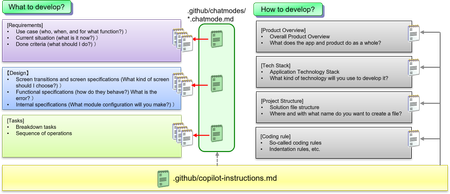
What Is Disciplined Guardrail-Based Development? In AI-assisted software development, approaches like Vibe Coding—which prioritize momentum and intuition—often fail to ensure code quality and maintainability. To address this, Disciplined Guardrail-Based Development introduces structured rules ("guardrails") that guide AI systems during coding and maintenance tasks, ensuring consistent quality and reliability. To get AI (LLMs) to generate appropriate code, developers must provide clear and specific instructions. Two key elements are essential: What to build – Clarifying requirements and breaking down tasks How to build it – Defining the application architecture The way these two elements are handled depends on the development methodology or process being used. Here are examples as follows. How to Set Up Disciplined Guardrails in GitHub Copilot To implement disciplined guardrail-based development with GitHub Copilot, two key configuration features are used: 1. Custom Instructions (.github/copilot-instructions.md): This file allows you to define persistent instructions that GitHub Copilot will always refer to when generating code. Purpose: Establish coding standards, architectural rules, naming conventions, and other quality guidelines. Best Practice: Instead of placing all instructions in a single file, split them into multiple modular files and reference them accordingly. This improves maintainability and clarity. Example Use: You might define rules like using camelCase for variables, enforcing error boundaries in React, or requiring TypeScript for all new code. https://docs.github.com/en/copilot/how-tos/configure-custom-instructions/add-repository-instructions 2. Chat Modes (.github/chatmodes/*.chatmode.md): These files define specialized chat modes tailored to specific tasks or workflows. Purpose: Customize Copilot’s behavior for different development contexts (e.g., debugging, writing tests, refactoring). Structure: Each .chatmode.md file includes metadata and instructions that guide Copilot’s responses in that mode. Example Use: A debug.chatmode.md might instruct Copilot to focus on identifying and resolving runtime errors, while a test.chatmode.md could prioritize generating unit tests with specific frameworks. https://code.visualstudio.com/docs/copilot/customization/custom-chat-modes The files to be created and their relationships are as follows. Next, there are introductions for the specific creation method. #1: Custom Instructions With custom instructions, you can define commands that are always provided to GitHub Copilot. The prepared files are always referenced during chat sessions and passed to the LLM (this can also be confirmed from the chat history). An important note is to split the content into several files and include links to those files within the .github/copilot-instructions.md file. Because it can become too long if everything is written in a single file. There are mainly two types of content that should be described in custom instructions: A: Development Process (≒ outcome + Creation Method) What documents or code will be created: requirements specification, design documents, task breakdown tables, implementation code, etc. In what order and by whom they will be created: for example, proceed in the order of requirements definition → design → task breakdown → coding. B: Application Architecture How will the outcome be defined in A be created? What technology stack and component structure will be used? A concrete example of copilot-instructions.md is shown below. # Development Rules ## Architecture - When performing design and coding tasks, always refer to the following architecture documents and strictly follow them as rules. ### Product Overview - Document the product overview in `.github/architecture/product.md` ### Technology Stack - Document the technologies used in `.github/architecture/techstack.md` ### Coding Standards - Document coding standards in `.github/architecture/codingrule.md` ### Project Structure - Document the project directory structure in `.github/architecture/structure.md` ### Glossary (Japanese-English) - Document the list of terms used in the project in `.github/architecture/dictionary.md` ## Development Flow - Follow a disciplined development flow and execute the following four stages in order (proceed to the next stage only after completing the current one): 1. Requirement Definition 2. Design 3. Task Breakdown 4. Coding ### 1. Requirement Definition - Document requirements in `docs/[subsystem_name]/[business_name]/requirement.md` - Use `requirement.chatmode.md` to define requirements - Focus on clarifying objectives, understanding the current situation, and setting success criteria - Once requirements are defined, obtain user confirmation before proceeding to the next stage ### 2. Design - Document design in `docs/[subsystem_name]/[business_name]/design.md` - Use `design.chatmode.md` to define the design - Define UI, module structure, and interface design - Once the design is complete, obtain user confirmation before proceeding to the next stage ### 3. Task Breakdown - Document tasks in `docs/[subsystem_name]/[business_name]/tasks.md` - Use `tasks.chatmode.md` to define tasks - Break down tasks into executable units and set priorities - Once task breakdown is complete, obtain user confirmation before proceeding to the next stage ### 4. Coding - Implement code under `src/[subsystem_name]/[business_name]/` - Perform coding task by task - Update progress in `docs/[subsystem_name]/[business_name]/tasks.md` - Report to the user upon completion of each task Note: The only file that is always sent to the LLM is `copilot-instructions.md`. Documents linked from there (such as `product.md` or `techstack.md`) are not guaranteed to be read by the LLM. That said, a reasonably capable LLM will usually review these files before proceeding with the work. If the LLM does not properly reference each file, you may explicitly add these architecture documents to the context. Another approach is to instruct the LLM to review these files in the **chat mode settings**, which will be described later. There are various “schools of thought” regarding application architecture, and it is still an ongoing challenge to determine exactly what should be defined and what documents should be created. The choice of architecture depends on factors such as the business context, development scale, and team structure, so it is difficult to prescribe a one-size-fits-all approach. That said, as a general guideline, it is desirable to summarize the following: Product Overview: Overview of the product, service, or business, including its overall characteristics Technology Stack: What technologies will be used to develop the application? Project Structure: How will folders and directories be organized during development? Module Structure: How will the application be divided into modules? Coding Rules: Rules for handling exceptions, naming conventions, and other coding practices Writing all of this from scratch can be challenging. A practical approach is to create template information with the help of Copilot and then refine it. Specifically, you can: Use tools like M365 Copilot Researcher to create content based on general principles Analyze a prototype application and have the architecture information summarized (using Ask mode or Edit mode, feed the solution files to a capable LLM for analysis) However, in most cases, the output cannot be used as-is. The structure may not be analyzed correctly (hallucinations may occur) Project-specific practices and rules may not be captured Use the generated content as a starting point, and then refine it to create architecture documentation tailored to your own project. When creating architecture documents for enterprise-scale application development, a useful approach is to distinguish between the foundational parts and the individual application parts. Discipline-based guardrail development is particularly effective when building multiple applications in a “cookie-cutter” style on top of a common foundation. A cler example of this is Data-Oriented Architecture (DOA). In DOA, individual business applications are built on top of a shared database that serves as the overall common foundation. In this case, the foundational parts (the database layer) should not be modified arbitrarily by individual developers. Instead, focus on how to standardize the development of the individual application parts (the blue-framed sections) while ensuring consistency. Architecture documentation should be organized with this distinction in mind, emphasizing the uniformity of application-level development built upon the stable foundation. #2 Chat Mode By default, GitHub Copilot provides three chat modes: Ask, Edit, and Agent. However, by creating files under .github/chatmodes/*.chatmode.md, you can customize the Agent mode to create chat modes tailored for specific tasks. Specifically, you can configure the following three aspects. Functionally, this allows you to perform a specific task without having to manually change the model or tools, or write detailed instructions each time: model: Specify the default LLM to use (Note: The user can still manually switch to another LLM if desired) tools: Restrict which tools can be used (Note: The user can still manually select other tools if desired) custom instructions: Provide custom instructions specific to this chat mode A concrete example of .github/chatmodes/*.chatmode.md is shown below. description: This mode is used for requirement definition tasks. model: Claude Sonnet 4 tools: ['changes', 'codebase', 'editFiles', 'fetch', 'findTestFiles', 'githubRepo', 'new', 'openSimpleBrowser', 'runCommands', 'search', 'searchResults', 'terminalLastCommand', 'terminalSelection', 'usages', 'vscodeAPI', 'mssql_connect', 'mssql_disconnect', 'mssql_list_servers', 'mssql_show_schema'] --- # Requirement Definition Mode In this mode, requirement definition tasks are performed. Specifically, the project requirements are clarified, and necessary functions and specifications are defined. Based on instructions or interviews with the user, document the requirements according to the format below. If any specifications are ambiguous or unclear, Copilot should ask the user questions to clarify them. ## File Storage Location Save the requirement definition file in the following location: - Save as `requirement.md` under the directory `docs/[subsystem_name]/[business_name]/` ## Requirement Definition Format While interviewing the user, document the following items in the Markdown file: - **Subsystem Name**: The name of the subsystem to which this business belongs - **Business Name**: The name of the business - **Overview**: A summary of the business - **Use Cases**: Clarify who uses this business, when/under what circumstances, and for what purpose, using the following structure: - **Who (Persona)**: User or system roles - **When/Under What Circumstances (Scenario)**: Timing when the business is executed - **Purpose (Goal)**: Objectives or expected outcomes of the business - **Importance**: The importance of the business (e.g., High, Medium, Low) - **Acceptance Criteria**: Conditions that must be satisfied for the requirement to be considered met - **Status**: Current state of the requirement (e.g., In Progress, Completed) ## After Completion - Once requirement definition is complete, obtain user confirmation and proceed to the next stage (Design). Tips for Creating Chat Modes Here are some tips for creating custom chat modes: Align with the development process: Create chat modes based on the workflow and the deliverables. Instruct the LLM to ask the user when unsure: Direct the LLM to request clarification from the user if any information is missing. Clarify what deliverables to create and where to save them: Make it explicit which outputs are expected and their storage locations. The second point is particularly important. Many AI (LLMs) tend to respond to user prompts in a sycophantic manner (known as sycophancy). As a result, they may fill in unspecified requirements or perform tasks that were not requested, often with the intention of being helpful. The key difference between Ask/Edit modes and Agent mode is that Agent mode allows the LLM to proactively ask questions and engage in dialogue with the user. However, unless the user explicitly includes a prompt such as “ask if you don’t know,” the AI rarely initiates questions on its own. By creating a custom chat mode and instructing the LLM to “ask the user when unsure,” you can fully leverage the benefits of Agent mode. About Tools You can easily check tool names from the list of available tools in the command palette. Alternatively, as shown in the diagram below, it can be convenient to open the custom chat mode file and specify the tool configuration. You can specify not only the MCP server functionality but also built-in tools and Copilot Extensions. Example of Actual Operation An example interaction when using this chat mode is as follows: The LLM behaves according to the custom instructions defined in the chat mode. When you answer questions from GHC, the LLM uses that information to reason and proceed with the task. However, the output is not guaranteed to be correct (hallucinations may occur) → A human should review the output and make any necessary corrections before committing. The basic approach to disciplined guardrail-based development has been covered above. In actual business application development, it is also helpful to understand the following two points: Referencing the database schema Integrated management of design documents and implementation code (Important) Reading the Database Schema In business application development, requirements definition and functional design are often based on the schema information of entities. There are two main ways to allow the system to read schema information: Dynamically read the schema from a development/test DB server using MCP or similar tools. Include a file containing schema information within the project and read from it. A development/test database can be prepared, and schema information can be read via the MCP server or Copilot Extensions. For SQL Server or Azure SQL Database, an MCP Server is available, but its setup can be cumbersome. Therefore, using Copilot Extensions is often easier and recommended. This approach is often seen online, but it is not recommended for the following reasons: Setting up MCP Server or Copilot Extensions can be cumbersome (installation, connection string management, etc.) It is time-consuming (the LLM needs schema information → reads the schema → writes code based on it) Connecting to a DB server via MCP or similar tools is useful for scenarios such as “querying a database in natural language” for non-engineers performing data analysis. However, if the goal is simply to obtain the schema information of entities needed for business application development, the method described below is much simpler. Storing Schema Information Within the Project Place a file containing the schema information inside the project. Any of the following formats is recommended. Write custom instructions so that development refers to this file: DDL (full CREATE DATABASE scripts) O/R mapper files (e.g., Entity Framework context files) Text files documenting schema information, etc. DDL files are difficult for humans to read, but AI (LLMs) can easily read and accurately understand them. In .NET + SQL development, it is recommended to include both the DDL and EF O/R mapper files. Additionally, if you include links to these files in your architecture documents and chat mode instructions, the LLM can generate code while understanding the schema with high accuracy. Integrated Management of Design Documents and Implementation Code Disciplined guardrail-based development with LLMs has made it practical to synchronize and manage design documents and implementation code together—something that was traditionally very difficult. In long-standing systems, it is common for old design documents to become largely useless. During maintenance, code changes are often prioritized. As a result, updating and maintaining design documents tends to be neglected, leading to a significant divergence between design documents and the actual code. For these reasons, the following have been considered best practices (though often not followed in reality): Limit requirements and external design documents to the minimum necessary. Do not create internal design documents; instead, document within the code itself. Always update design documents before making changes to the implementation code. When using LLMs, guardrail-based development makes it easier to enforce a “write the documentation first” workflow. Following the flow of defining specifications, updating the documents, and then writing code also helps the LLM generate appropriate code more reliably. Even if code is written first, LLM-assisted code analysis can significantly reduce the effort required to update the documentation afterward. However, the following points should be noted when doing this: Create and manage design documents as text files, not Word, Excel, or PowerPoint. Use text-based technologies like Mermaid for diagrams. Clearly define how design documents correspond to the code. The last point is especially important. It is crucial to align the structure of requirements and design documents with the structure of the implementation code. For example: Place design documents directly alongside the implementation code. Align folder structures, e.g., /doc and /src. Information about grouping methods and folder mapping should be explicitly included in the custom instructions. Conclusion of Disciplined Guardrail-Based Development with GHC Formalizing and Applying Guardrails Define the development flow and architecture documents in .github/copilot-instructions.md using split references. Prepare .github/chatmodes/* for each development phase, enforcing “ask the AI if anything is unclear.” Synchronization of Documents and Implementation Code Update docs first → use the diff as the basis for implementation (Doc-first). Keep docs in text format (Markdown/Mermaid). Fix folder correspondence between /docs and /src. Handling Schemas Store DDL/O-R mapper files (e.g., EF) in the repository and have the LLM reference them. Minimize dynamic DB connections, prioritizing speed, reproducibility, and security. This disciplined guardrail-based development technique is an AI-assisted approach that significantly improves the quality, maintainability, and team efficiency of enterprise business application development. Adapt it appropriately to each project to maximize productivity in application development.3.5KViews6likes0CommentsAnnouncing Advanced Kubernetes Troubleshooting Agent Capabilities (preview) in Azure Copilot
What’s new? Today, we're announcing Kubernetes troubleshooting agent capabilities in Azure Copilot, offering an intuitive, guided agentic experience that helps users detect, triage, and resolve common Kubernetes issues in their AKS clusters. The agent can provide root cause analysis for Kubernetes clusters and resources and is triggered by Kubernetes-specific keywords. It can detect problems like resource failures and scaling bottlenecks and intelligently correlates signals across metrics and events using `kubectl` commands when reasoning and provides actionable solutions. By simplifying complex diagnostics and offering clear next steps, the agent empowers users to troubleshoot independently. How it works With Kubernetes troubleshooting agent, Azure Copilot automatically investigates issues in your cluster by running targeted `kubectl` commands and analyzing your cluster’s configuration and current state. For instance, it identifies failing or pending pods, cluster events, resource utilization metrics, and configuration details to build a complete picture of what’s causing the issue. Azure Copilot then determines the most effective mitigation steps for your specific environment. It provides clear, step-by-step guidance, and in many cases, offers a one-click fix to resolve the issue automatically. If Azure Copilot can’t fully resolve the problem, it can generate a pre-populated support request with all the diagnostic details Microsoft Support needs. You’ll be able to review and confirm everything before the request is submitted. This agent is available via Azure Copilot in the Azure Portal. Learn more about how Azure Copilot works. How to Get Started To start using agents, your global administrator must request access to the agents preview at the tenant level in the Azure Copilot admin center. This confirms your interest in the preview and allows us to enable access. Once approved, users will see the Agent mode toggle in Azure Copilot chat and can then start using Copilot agents. Capacity is limited, so sign up early for the best chance to participate. Additionally, if you are interested in helping shape the future of agentic cloud ops and the role Copilot will play in it, please join our customer feedback program by filling up this form. Agents (preview) in Azure Copilot | Microsoft Learn Troubleshooting sample prompts From an AKS cluster resource, click Kubernetes troubleshooting with Copilot to automatically open Azure Copilot in context of the resource you want to troubleshoot: Try These Prompts to Get Started: Here are a few examples of the kinds of prompts you can use. If you're not already working in the context of a resource, you may need to provide the specific resource that you want to troubleshoot. "My pod keeps restarting can you help me figure out why" "Pods are stuck pending what is blocking them from being scheduled" "I am getting ImagePullBackOff how do I fix this" "One of my nodes is NotReady what is causing it" "My service cannot reach the backend pod what should I check" Note: When using these kinds of prompts, be sure agent mode is enabled by selecting the icon in the chat window: Learn More Troubleshooting agent capabilities in Agents (preview) in Azure Copilot | Microsoft Learn Announcing the CLI Agent for AKS: Agentic AI-powered operations and diagnostics at your fingertips - AKS Engineering Blog Microsoft Copilot in Azure Series - Kubectl | Microsoft Community Hub805Views4likes0CommentsWho Created This Azure Resource? Here's How to Find Out
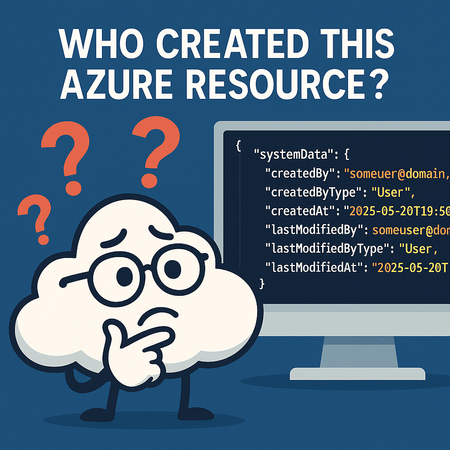
One of the most common questions Azure customers and administrators ask is: “How do I know who created this resource?” If you’ve ever been in charge of managing a large subscription with dozens (or even thousands) of resources, you know how important it is to answer this question quickly. Whether it’s for troubleshooting, governance, or compliance, tracking the origin of a resource can save time and reduce confusion. The good news: Azure makes this information available. You just need to know where to look. Step 1: Open the Resource Overview Navigate to the Overview page of the resource in question. This gives you the usual metadata like resource group, subscription, location, login server, and provisioning state. At first glance, however, you won’t see who created the resource. That information isn’t shown in the overview fields. Step 2: Switch to JSON View On the Overview page, look for the link labeled “JSON View” in the top right corner. Clicking this opens the full resource definition in JSON format. Step 3: Scroll to the systemData Section Within the JSON, scroll until you find the systemData object. This is where Azure tracks metadata about the resource lifecycle. Here’s what you’ll find: "systemData": { "createdBy": "someuser@domain.com", "createdByType": "User", "createdAt": "2025–05–20T19:50:33.1511397Z", "lastModifiedBy": "someuser@domain.com", "lastModifiedByType": "User", "lastModifiedAt": "2025–05–20T19:50:33.1511397Z" } What This Tells You createdBy → The user or service principal that created the resource. createdByType → Whether it was created by a human user, managed identity, or another Azure service. createdAt → The exact timestamp of creation (UTC). lastModifiedBy, lastModifiedByType, and lastModifiedAt → Useful if the resource was updated after creation. This metadata gives you clear visibility into who provisioned the resource and when. Why It Matters Governance — Understand ownership and responsibility. Troubleshooting — Track down configuration changes. Compliance & Auditing — Satisfy requirements for accountability in your cloud environment. By making the systemData object part of your standard investigation checklist, you’ll save yourself the guesswork the next time you’re wondering, “Who created this resource?”6.1KViews4likes7CommentsUnlocking Application Modernisation with GitHub Copilot
AI-driven modernisation is unlocking new opportunities you may not have even considered yet. It's also allowing organisations to re-evaluate previously discarded modernisation attempts that were considered too hard, complex or simply didn't have the skills or time to do. During Microsoft Build 2025, we were introduced to the concept of Agentic AI modernisation and this post from Ikenna Okeke does a great job of summarising the topic - Reimagining App Modernisation for the Era of AI | Microsoft Community Hub. This blog post however, explores the modernisation opportunities that you may not even have thought of yet, the business benefits, how to start preparing your organisation, empowering your teams, and identifying where GitHub Copilot can help. I’ve spent the last 8 months working with customers exploring usage of GitHub Copilot, and want to share what my team members and I have discovered in terms of new opportunities to modernise, transform your applications, bringing some fun back into those migrations! Let’s delve into how GitHub Copilot is helping teams update old systems, move processes to the cloud, and achieve results faster than ever before. Background: The Modernisation Challenge (Then vs Now) Modernising legacy software has always been hard. In the past, teams faced steep challenges: brittle codebases full of technical debt, outdated languages (think decades-old COBOL or VB6), sparse documentation, and original developers long gone. Integrating old systems with modern cloud services often requiring specialised skills that were in short supply – for example, check out this fantastic post from Arvi LiVigni (@arilivigni ) which talks about migrating from COBOL “the number of developers who can read and write COBOL isn’t what it used to be,” making those systems much harder to update". Common pain points included compatibility issues, data migrations, high costs, security vulnerabilities, and the constant risk that any change could break critical business functions. It’s no wonder many modernisation projects stalled or were “put off” due to their complexity and risk. So, what’s different now (circa 2025) compared to two years ago? In a word: Intelligent AI assistance. Tools like GitHub Copilot have emerged as AI pair programmers that dramatically lower the barriers to modernisation. Arvi’s post talks about how only a couple of years ago, developers had to comb through documentation and Stack Overflow for clues when deciphering old code or upgrading frameworks. Today, GitHub Copilot can act like an expert co-developer inside your IDE, ready to explain mysterious code, suggest updates, and even rewrite legacy code in modern languages. This means less time fighting old code and more time implementing improvements. As Arvi says “nine times out of 10 it gives me the right answer… That speed – and not having to break out of my flow – is really what’s so impactful.” In short, AI coding assistants have evolved from novel experiments to indispensable tools, reimagining how we approach software updates and cloud adoption. I’d also add from my own experience – the models we were using 12 months ago have already been superseded by far superior models with ability to ingest larger context and tackle even further complexity. It's easier to experiment, and fail, bringing more robust outcomes – with such speed to create those proof of concepts, experimentation and failing faster, this has also unlocked the ability to test out multiple hypothesis’ and get you to the most confident outcome in a much shorter space of time. Modernisation is easier now because AI reduces the heavy lifting. Instead of reading the 10,000-line legacy program alone, a developer can ask Copilot to explain what the code does or even propose a refactored version. Rather than manually researching how to replace an outdated library, they can get instant recommendations for modern equivalents. These advancements mean that tasks which once took weeks or months can now be done in days or hours – with more confidence and less drudgery - more fun! The following sections will dive into specific opportunities unlocked by GitHub Copilot across the modernisation journey which you may not even have thought of. Modernisation Opportunities Unlocked by Copilot Modernising an application isn’t just about updating code – it involves bringing everyone and everything up to speed with cloud-era practices. Below are several scenarios and how GitHub Copilot adds value, with the specific benefits highlighted: 1. AI-Assisted Legacy Code Refactoring and Upgrades Instant Code Comprehension: GitHub Copilot can explain complex legacy code in plain English, helping developers quickly understand decades-old logic without scouring scarce documentation. For example, you can highlight a cryptic COBOL or C++ function and ask Copilot to describe what it does – an invaluable first step before making any changes. This saves hours and reduces errors when starting a modernisation effort. Automated Refactoring Suggestions: The AI suggests modern replacements for outdated patterns and APIs, and can even translate code between languages. For instance, Copilot can help convert a COBOL program into JavaScript or C# by recognising equivalent constructs. It also uses transformation tools (like OpenRewrite for Java/.NET) to systematically apply code updates – e.g. replacing all legacy HTTP calls with a modern library in one sweep. Developers remain in control, but GitHub Copilot handles the tedious bulk edits. Bulk Code Upgrades with AI: GitHub Copilot’s App Modernisation capabilities can analyse an entire codebase and generate a detailed upgrade plan, then execute many of the code changes automatically. It can upgrade framework versions (say from .NET Framework 4.x to .NET 6, or Java 8 to Java 17) by applying known fix patterns and even fixing compilation errors after the upgrade. Teams can finally tackle those hundreds of thousand-line enterprise applications – a task that could take multiple years with GitHub Copilot handling the repetitive changes. Technical Debt Reduction: By cleaning up old code and enforcing modern best practices, GitHub Copilot helps chip away at years of technical debt. The modernised codebase is more maintainable and stable, which lowers the long-term risk hanging over critical business systems. Notably, the tool can even scan for known security vulnerabilities during refactoring as it updates your code. In short, each legacy component refreshed with GitHub Copilot comes out safer and easier to work on, instead of remaining a brittle black box. 2. Accelerating Cloud Migration and Azure Modernisation Guided Azure Migration Planning: GitHub Copilot can assess a legacy application’s cloud readiness and recommend target Azure services for each component. For instance, it might suggest migrating an on-premises database to Azure SQL, moving file storage to Azure Blob Storage, and converting background jobs to Azure Functions. This provides a clear blueprint to confidently move an app from servers to Azure PaaS. One-Click Cloud Transformations: GitHub Copilot comes with predefined migration tasksthat automate the code changes required for cloud adoption. With one click, you can have the AI apply dozens of modifications across your codebase. For example: File storage: Replace local file read/writes with Azure Blob Storage SDK calls. Email/Comms: Swap out SMTP email code for Azure Communication Services or SendGrid. Identity: Migrate authentication from Windows AD to Azure AD (Entra ID) libraries. Configuration: Remove hard-coded configurations and use Azure App Configuration or Key Vault for secrets. GitHub Copilot performs these transformations consistently, following best practices (like using connection strings from Azure settings). After applying the changes, it even fixes any compile errors automatically, so you’re not left with broken builds. What used to require reading countless Azure migration guides is now handled in minutes. Automated Validation & Deployment: Modernisation doesn’t stop at code changes. GitHub Copilot can also generate unit tests to validate that the application still behaves correctly after the migration. It helps ensure that your modernised, cloud-ready app passes all its checks before going live. When you’re ready to deploy, GitHub Copilot can produce the necessary Infrastructure-as-Code templates (e.g. Azure Resource Manager Bicep files or Terraform configs) and even set up CI/CD pipeline scripts for you. In other words, the AI can configure the Azure environment and deployment process end-to-end. This dramatically reduces manual effort and error, getting your app to the cloud faster and with greater confidence. Integrations: GitHub Copilot also helps tackle larger migration scenarios that were previously considered too complex. For example, many enterprises want to retire expensive proprietary integration platforms like MuleSoft or Apigee and use Azure-native services instead, but rewriting hundreds of integration workflows was daunting. Now, GitHub Copilot can assist in translating those workflows: for instance, converting an Apigee API proxy into an Azure API Management policy, or a MuleSoft integration into an Azure Logic App. Multi-Cloud Migrations: if you plan to consolidate from other clouds into Azure, GitHub Copilot can suggest equivalent Azure services and SDK calls to replace AWS or GCP-specific code. These AI-assisted conversions significantly cut down the time needed to reimplement functionality on Azure. The business impact can be substantial. By lowering the effort of such migrations, GitHub Copilot makes it feasible to pursue opportunities that deliver big cost savings and simplification. 3. Boosting Developer Productivity and Quality Instant Unit Tests (TDD Made Easy): Writing tests for old code can be tedious, but GitHub Copilot can generate unit test cases on the fly. Developers can highlight an existing function and ask Copilot to create tests; it will produce meaningful test methods covering typical and edge scenarios. This makes it practical to apply test-driven development practices even to legacy systems – you can quickly build a safety net of tests before refactoring. By catching bugs early through these AI-generated tests, teams gain confidence to modernise code without breaking things. It essentially injects quality into the process from the start, which is crucial for successful modernisation. DevOps Automation: GitHub Copilot helps modernise your build and deployment process as well. It can draft CI/CD pipeline configurations, Dockerfiles, Kubernetes manifests, and other DevOps scripts by leveraging its knowledge of common patterns. For example, when setting up a GitHub Actions workflow to deploy your app, GitHub Copilot will autocomplete significant parts (like build steps, test runs, deployment jobs) based on the project structure. This not only saves time but also ensures best practices (proper caching, dependency installation, etc.) are followed by default. Microsoft even provides an extension where you can describe your Azure infrastructure needs in plain language and have GitHub Copilot generate the corresponding templates and pipeline YAML. By automating these pieces, teams can move to cloud-based, automated deployments much faster. Behaviour-Driven Development Support: Teams practicing BDD write human-readable scenarios (e.g. using Gherkin syntax) describing application behaviour. GitHub Copilot’s AI is adept at interpreting such descriptions and suggesting step definition code or test implementations to match. For instance, given a scenario “When a user with no items checks out, then an error message is shown,” GitHub Copilot can draft the code for that condition or the test steps required. This helps bridge the gap between non-technical specifications and actual code. It makes BDD more efficient and accessible, because even if team members aren’t strong coders, the AI can translate their intent into working code that developers can refine. Quality and Consistency: By using AI to handle boilerplate and repetitive tasks, developers can focus more on high-value improvements. GitHub Copilot’s suggestions are based on a vast corpus of code, which often means it surfaces well-structured, idiomatic patterns. Starting from these suggestions, developers are less likely to introduce errors or reinvent the wheel, which leads to more consistent code quality across the project. The AI also often reminds you of edge cases (for example, suggesting input validation or error handling code that might be missed), contributing to a more robust application. In practice, many teams find that adopting GitHub Copilot results in fewer bugs and quicker code reviews, as the code is cleaner on the first pass. It’s like having an extra set of eyes on every pull request, ensuring standards are met. Business Benefits of AI-Powered Modernisation Bringing together the technical advantages above, what’s the payoff for the business and stakeholders? Modernising with GitHub Copilot can yield multiple tangible and intangible benefits: Accelerated Time-to-Market: Modernisation projects that might have taken a year can potentially be completed in a few months, or an upgrade that took weeks can be done in days. This speed means you can deliver new features to customers sooner and respond faster to market changes. It also reduces downtime or disruption since migrations happen more swiftly. Cost Savings: By automating repetitive work and reducing the effort required from highly paid senior engineers, GitHub Copilot can trim development costs. Faster project completion also means lower overall project cost. Additionally, running modernised apps on cloud infrastructure (with updated code) often lowers operational costs due to more efficient resource usage and easier maintenance. There’s also an opportunity cost benefit: developers freed up by Copilot can work on other value-adding projects in parallel. Improved Quality & Reliability: GitHub Copilot’s contributions to testing, bug-fixing, and even security (like patching known vulnerabilities during upgrades) result in more robust applications. Modernised systems have fewer outages and security incidents than shaky legacy ones. Stakeholders will appreciate that with GitHub Copilot, modernisation doesn’t mean “trading one set of bugs for another” – instead, you can increase quality as you modernise (GitHub’s research noted higher code quality when using Copilot, as developers are less likely to introduce errors or skip tests). Business Agility: A modernised application (especially one refactored for cloud) is typically more scalable and adaptable. New integrations or features can be added much faster once the platform is up-to-date. GitHub Copilot helps clear the modernisation hurdle, after which the business can innovate on a solid, flexible foundation (for example, once a monolith is broken into microservices or moved to Azure PaaS, you can iterate on it much faster in the future). AI-assisted modernisation thus unlocks future opportunities (like easier expansion, integrations, AI features, etc.) that were impractical on the legacy stack. Employee Satisfaction and Innovation: Developer happiness is a subtle but important benefit. When tedious work is handled by AI, developers can spend more time on creative tasks – designing new features, improving user experience, exploring new technologies. This can foster a culture of innovation. Moreover, being seen as a company that leverages modern tools (like AI Copilot) helps attract and retain top tech talent. Teams that successfully modernise critical systems with Copilot will gain confidence to tackle other ambitious projects, creating a positive feedback loop of improvement. To sum up, GitHub Copilot acts as a force-multiplier for application modernisation. It enables organisations to do more with less: convert legacy “boat anchors” into modern, cloud-enabled assets rapidly, while improving quality and developer morale. This aligns IT goals with business goals – faster delivery, greater efficiency, and readiness for the future. Call to Action: Embrace the Future of Modernisation GitHub Copilot has proven to be a catalyst for transforming how we approach legacy systems and cloud adoption. If you’re excited about the possibilities, here are next steps and what to watch for: Start Experimenting: If you haven’t already, try GitHub Copilot on a sample of your code. Use Copilot or Copilot Chat to explain a piece of old code or generate a unit test. Seeing it in action on your own project can build confidence and spark ideas for where to apply it. Identify a Pilot Project: Look at your application portfolio for a candidate that’s ripe for modernisation – maybe a small legacy service that could be moved to Azure, or a module that needs a refactor. Use GitHub Copilot to assess and estimate the effort. Often, you’ll find tasks once deemed “too hard” might now be feasible. Early successes will help win support for larger initiatives. Stay Tuned for Our Upcoming Blog Series: This post is just the beginning. In forthcoming posts, we’ll dive deeper into: Setting Up Your Organisation for Copilot Adoption: Practical tips on preparing your enterprise environment – from licensing and security considerations to training programs. We’ll discuss best practices (like running internal awareness campaigns, defining success metrics, and creating Copilot champions in your teams) to ensure a smooth rollout. Empowering Your Colleagues: How to foster a culture that embraces AI assistance. This includes enabling continuous learning, sharing prompt techniques and knowledge bases, and addressing any scepticism. We’ll cover strategies to support developers in using Copilot effectively, so that everyone from new hires to veteran engineers can amplify their productivity. Identifying High-Impact Modernisation Areas: Guidance on spotting where GitHub Copilot can add the most value. We’ll look at different domains – code, cloud, tests, data – and how to evaluate opportunities (for example, using telemetry or feedback to find repetitive tasks suited for AI, or legacy components with high ROI if modernised). Engage and Share: As you start leveraging Copilot for modernisation, share your experiences and results. Success stories (even small wins like “GitHub Copilot helped reduce our code review times” or “we migrated a component to Azure in 1 sprint”) can build momentum within your organisation and the broader community. We invite you to discuss and ask questions in the comments or in our tech community forums. Take a look at the new App Modernisation Guidance—a comprehensive, step-by-step playbook designed to help organisations: Understand what to modernise and why Migrate and rebuild apps with AI-first design Continuously optimise with built-in governance and observability Modernisation is a journey, and AI is the new compass and Copilot to guide the way. By embracing tools like GitHub Copilot, you position your organisation to break through modernisation barriers that once seemed insurmountable. The result is not just updated software, but a more agile, cloud-ready business and a happier, more productive development team. Now is the time to take that step. Empower your team with Copilot, and unlock the full potential of your applications and your developers. Stay tuned for more insights in our next posts, and let’s modernise what’s possible together!2.3KViews4likes1Comment