customer
16 TopicsFrom discovery to decision: A connected way to buy in Microsoft Marketplace
When I talk with customers about technology decisions, one thing is clear: finding a promising solution is only the beginning. The real work is deciding whether that solution solves the business need. Can I understand my options quickly? How does one solution compare with another? Can my team try it before making a decision? And when we’re ready to move forward, can the purchase reflect the way our organization actually needs to buy? Those questions become even more important as organizations bring cloud and AI solutions into more workflows and evaluate a growing range of options. That’s why I’m excited about the latest enhancements to Microsoft Marketplace. They help customers to find, evaluate, and choose the cloud solutions, AI apps, and agents that best fit their needs. Start with what you’re trying to accomplish Technology searches don’t always begin with a product name. Often, you know the business outcome or technical scenario you’re trying to address, but you don’t yet know which solution will get you there. You may be looking for an agent that supports a particular workflow, a solution for an industry scenario, or simply a better way to explore the options available to you. This is where intelligent discovery changes the starting point. With smart search in Microsoft Marketplace, you can describe what you’re looking for in natural language. Marketplace uses that input to refine the search and help identify relevant solutions. I think about this as moving from “What should I search for?” toward “Here’s what I’m trying to do.” Once you begin finding potential solutions, the evaluation becomes more specific. You can compare up to three offerings side by side and add your own criteria to the comparison. That matters because every organization evaluates technology differently. The questions that matter to your developers may be different from the questions procurement or business leaders need answered. Interactive chat extends that approach to individual product pages. You can ask questions in natural language about the solution you’re viewing, giving you another way to find the information relevant to your evaluation without relying solely on navigating through each section of the listing. Together, these experiences create a more natural progression: start with your need, explore possible solutions, compare your options, and dig deeper where it matters. Evaluation becomes more meaningful when you can try the solution There’s a point in many technology decisions when research needs to become hands-on evaluation. You’ve learned about the solution. You’ve compared the options. Now you want to understand what it could mean for your organization. Free trials in Microsoft Marketplace help bring that evaluation into the same journey. Solutions with free trials are easy to identify through search, filters, and free trial badges. You can search for free trials or use the Free trial pricing filter to focus on solutions that offer one. Once a trial is underway, you can track its status and see the number of days remaining in the trial period through Azure portal or the Microsoft 365 admin portal, depending on where the solution is managed. If the evaluation confirms that the solution is right for you, you can move to a paid subscription at public pricing at any point during the trial without reinstalling the solution. If it isn’t the right fit, you can cancel before the trial ends. This is one of the changes I find especially useful because a trial becomes part of the evaluation journey itself. You can move from discovering and researching a solution into actually trying it, while retaining visibility into where you are in the trial. The right solution also needs the right commercial structure Technical fit is important, but it isn’t the only consideration. Once a team decides that a solution meets its requirements, the conversation often shifts. How long do we need it? How should the agreement be structured? Does a standard term fit the project we’re planning? This is where we’ve expanded the flexibility available through private offers in Microsoft Marketplace. Custom contract lengths can range from one month to 10 years for supported private offer scenarios. That means an agreement can be structured around a six-month requirement, an 18-month engagement, a multiyear deployment, or another duration appropriate to the customer and partner agreement. There is flexibility in billing as well, including monthly or one-time payment options and annual billing when the term is annual. Custom contract duration is available for SaaS and professional services through private offers. I see this as an important connection between technical planning and purchasing. A proof of concept doesn’t necessarily have the same commercial requirements as a long-term deployment. Providing more flexibility in contract duration can help the commercial agreement better reflect the scenario being planned. Sometimes the next step is simply starting a conversation Not every purchase can be represented by a standard offer. A customer may want to discuss customized pricing, different terms, or specific solution requirements with the publisher. Rather than treating that conversation completely separate from discovery, customers can now initiate it from supported Marketplace listings. With the ability to request a private offer, customers can share their contact information and details about what they’re looking for directly from the listing. The request is delivered to the publisher as a Marketplace lead, creating a clear starting point for the customer and partner to discuss the opportunity. Requesting a private offer is available for SaaS and professional services offers, as well as compute offers including virtual machines, Azure applications, and containers. It’s a relatively simple step, but I think it represents something bigger about the purchasing journey. Discovering a solution, evaluating it, and discussing how to buy it don’t need to feel like unrelated activities. Think of evaluation as a journey, not a search That’s my biggest takeaway from these updates. Searching is one moment in a much broader decision process. You are able to start by describing what you need using Smart Search. From there, you can narrow your options, compare up to three offerings, and ask more detailed questions about an individual solution. When a free trial is available, you can move from researching the solution to experiencing it. And once you’re ready to discuss purchasing, private offers can provide additional flexibility around commercial requirements. For me, the common thread is decision-making with more context at each step. As you evaluate your next solution, I’d keep a few questions in mind: What problem or technical scenario am I actually trying to address? What criteria matters most to the people who will build with, manage, or use this solution? Is a free trial available if we want to validate the fit? What contract duration and purchasing structure are available to reflect the way we plan to use it? Do we need to start a private offer conversation with the publisher? You don’t have to answer all of those questions at once. But thinking about them as parts of one journey can help connect technical evaluation with the eventual purchasing decision. Watch the Microsoft Marketplace customer office hour There’s more to explore than I can cover in a single post. In our Microsoft Marketplace customer office hour, we demonstrate intelligent discovery, smart search, solution comparison, interactive chat, free trials, custom contract lengths, and the ability to request a private offer. We also answer questions about moving from trials to paid subscriptions, finding trial offerings, comparing solutions, and working with private offers. If you’re evaluating cloud and AI solutions, I encourage you to watch the full session on demand at aka.ms/MarketplaceCustomerOfficeHours. And I’d love for the conversation to continue here in the Microsoft Marketplace Community. What are you evaluating today? What would help you make your next technology decision with greater confidence? Share your questions and scenarios with us. They can help shape the conversations we have in future customer office hours.95Views0likes0CommentsCustomer review: Earth Knowledge enables compliance and prioritized action for a changing climate.
Earth Knowledge's Integrated Planetary Intelligence, a cloud-native platform published to Microsoft Marketplace, models climate and natural impacts for government and private sector organizations.467Views2likes0Comments
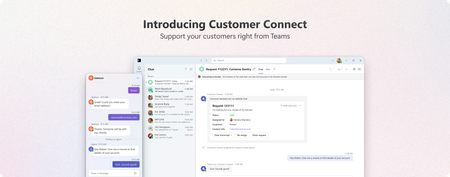
Teams Customer Connect: Now available globally in 26 languages
We're excited to announce that Customer Connect web chat in Microsoft Teams (previously called Live Chat) is now available globally, supporting 26 languages and bringing seamless customer engagement to businesses worldwide. For small and medium-sized businesses, every customer interaction matters. Whether someone discovers your business through a Google search, a social media post, or a friend's recommendation, the moment they land on your website is critical. With Customer Connect in Teams, you can now connect with these potential customers instantly no matter where your business is based in the world. A better way to connect with customers Your website is often the first-place potential customers interact with your business. When they have questions, waiting hours or days for an email response isn't ideal – neither for them nor for you. Customer Connect let you respond instantly to website visitors directly within Teams. No more switching tools. What's new with global availability With support for 26 languages, businesses can now provide customer support no matter where you operate. Whether you are based in Tokyo, São Paulo, or Berlin, you can set up Customer Connect to interact with customers in your preferred language. Supported languages Czech, Danish, German, English (Canada), English (United Kingdom), English (United States), Spanish (Chile), Spanish (Spain), Spanish (Mexico), French (Canada), French (France), Hungarian, Indonesian, Italian, Japanese, Korean, Norwegian Bokmål, Dutch, Polish, Portuguese (Brazil), Portuguese (Portugal), Swedish, Thai, Vietnamese, Chinese Simplified (China), Chinese Traditional (Taiwan) Key capabilities Simple setup Add the Customer Connect chat widget to your website in minutes. Configure your welcome message, set your availability, and you're ready to start conversations. Native Teams integration Chats appear alongside your regular Teams conversations. All customer interactions are automatically tracked and organized in Teams channels and Microsoft Lists, giving your team full visibility into every conversation. Customers can also book appointments directly with members of your team, making it easy to schedule follow-ups or provide high touch support. Getting started If you're already using Microsoft 365 Business, Customer Connect is included - no additional licensing required. To enable Customer Connect: Open the Admin app in Teams Configure your Customer Connect chat widget settings Add the chat widget to your website Start receiving and responding to customer chats in Teams Learn more Set up Customer Connect for your business Start a discussion with us Microsoft Teams - Small Business CommunityAI agents on Microsoft Fabric for faster retail merchandising decisions
For our latest in the Partner Spotlight series, we’re highlighting a partner building business-ready AI agents on Microsoft Fabric, so organizations can turn governed enterprise data into faster decisions and automated workflows. I connected with the team at Lucid Data Hub to learn how Lucid Agents Hub brings agentic experiences directly to customers’ data in OneLake, helping retail teams move beyond manual reporting and into repeatable, insight-driven action. About Venu Amancha, Founder & CEO, Lucid Data Hub builds business-ready AI agents that run directly on enterprise data within Microsoft Fabric. Our platform, Lucid Agents Hub, enables organizations to move beyond reporting and into automated, insight-driven workflows without moving data outside their existing security boundaries. _______________________________________________________________________________________________________________________________________________________________ [JR] Who is your solution designed for, and what does it help them do? [VA] Lucid Agents Hub is designed for teams who need to make frequent, high-impact decisions from large volumes of operational data especially merchandising teams, buyers, and store operations leaders in retail. Instead of spending hours assembling recaps and interpreting dashboards, they can receive agent-generated insights and clear, actionable recommendations on a predictable cadence. The AI agent eliminated that manual cycle entirely. It now surfaces those insights automatically, every week, in minutes. One example is our Retail Sales Performance AI Agent, which automates the weekly sales insights cycle for merchandising teams and buyers by analyzing millions of rows of weekly sales, item, and store data across banners and store clusters. [JR] Can you give an example of how the Retail Sales Performance AI Agent solved a customer’s problem? [VA] At Heritage Grocers Group, merchandising teams spent 5+ hours every week manually building sales recaps. They could see what happened—but not why. Buyers lacked a clear view of category trends, item-level performance, quantity shifts, and store-cluster patterns. The Retail Sales Performance AI Agent eliminated that manual cycle. It now surfaces those insights automatically every week in minutes detecting item-level declines, identifying fast-moving margin-positive SKUs, flagging underperforming items by store cluster, and delivering recommendations directly to buyers and store managers. [JR] Which Microsoft technologies or services are foundational to what you’re building? [VA] The solution runs natively on Microsoft Fabric, using OneLake as the unified data layer. Our agents operate directly on enterprise data and inherit existing governance and access controls without additional configuration. Outputs flow into the dashboards, collaboration platforms, and reporting workflows customers already use, so insights show up where decisions get made. Microsoft Fabric was a deliberate choice, not just a default. Our enterprise customers especially in retail already have their critical data living in the Microsoft ecosystem. OneLake means there’s a single, governed copy of that data. No duplication, no movement, no additional risk surface. Our agents read directly from that layer, which means the security and compliance boundaries that customers have already invested in carry over automatically. The value of building on Fabric goes beyond the technical architecture. It fundamentally changes how enterprise buyers evaluate and procure a solution like ours. When IT and security teams see that agents operate entirely within their existing Fabric environment with role-based access controls, workspace permissions, and audit logs they already control. It removes the largest barrier to enterprise adoption: trust. Procurement conversations that used to require months of security review cycles are now dramatically faster. What we didn’t fully anticipate was how much Fabric’s native integration capabilities would simplify end-to-end delivery. Going in, we expected to spend significant engineering time on data pipeline infrastructure. What we found instead was that Fabric’s data ingestion, lakehouse, and compute layers fit together in a way that let our team focus almost entirely on agent logic and business outcomes, not infrastructure plumbing. That shift in where we spend our effort has meaningfully accelerated how quickly we can deploy for new customers and extend to new use cases. [JR] How are you using AI today in Lucid Agents Hub, and what business outcomes have customers seen? [VA] We use Microsoft Azure AI Foundry for core AI and language model capabilities, and Microsoft Fabric Copilot (Fabric IQ) as the data and compute backbone. Together, they power agents that analyze weekly sales data across banners and store clusters, generate narrative-quality insights at the category and SKU level, and deliver clear recommendations without human intervention in the analysis cycle. 5+ hours of weekly manual effort eliminated Item-level sales declines and fast-moving margin-positive SKUs surfaced automatically Top-growth categories and underperforming items identified by store cluster Recommendations delivered directly to buyers and store managers weekly This all leads to faster decisions, stronger merchandising actions, and measurable improvements in product mix, availability, and overall sales performance. [JR] Any architectural decisions or best practices you’d recommend to other partners building agents? How did you approach building securely? [VA] We designed the solution as a coordinated set of specialized agents one for data ingestion, one for validation, and one for insight generation and delivery. Each agent owns a focused task, and together they run as a connected, end-to-end workflow. This makes the system easier to maintain, consistent in its logic, and straightforward to extend to new banners, categories, or use cases. Agents run entirely within the customer’s Microsoft Fabric environment data never leaves the customer’s security perimeter. All access controls, role-based permissions, and governance policies are inherited directly from Fabric. [JR] What motivated you to publish on Microsoft Marketplace? And did you use any Microsoft tools or benefits to support your publishing process? [VA] Publishing on Microsoft Marketplace was a straightforward decision. It gives enterprise customers immediate confidence that they’re procuring from a trusted, Microsoft-validated source instead of navigating a separate vendor relationship. It also simplifies procurement transactions run through an established Microsoft channel; so, customers can move faster than in traditional sales cycles. And it expands our reach to buyers already operating in the Microsoft ecosystem who actively look to Marketplace for solutions. We actively use Marketplace Rewards, which has been valuable for amplifying go-to-market efforts and accessing Microsoft co-marketing resources. We also leverage AI-enabled Marketplace Listing Optimization and related Marketplace content guidance provided through Marketplace Rewards. We used this support primarily to improve our marketplace messaging, positioning, and listing content so it would better resonate with enterprise buyers evaluating solutions within the Microsoft ecosystem. [JR] What key takeaways would you share with other partners building and publishing agents? Any unexpected wins or challenges along the way? [VA] Building and publishing agents can be a complicated endeavor. To other partners, we’d say, start with workflows that are repetitive and directly tied to decisions weekly merchandising recaps are a perfect example. Think end-to-end, not task by task. And build on governed enterprise data from the start, because that’s what drives trust and adoption. An unexpected win was how quickly merchandising teams adapted. Receiving plain-language summaries broken down by banner, store cluster, category, and SKU was more accessible than navigating dashboards. Teams made faster, more confident decisions without needing to interpret raw data themselves. _______________________________________________________________________________________________________________________________________________________________ Closing reflection Lucid Data Hub shows how agents built on Microsoft Fabric can turn governed enterprise data into repeatable, decision-ready insight helping teams act faster while keeping security boundaries and access controls intact.280Views0likes0CommentsReal-World Success Stories with PostgreSQL on Azure
Organizations rarely leap into cloud migrations or AI-powered systems overnight. They progress in deliberate stages, establishing a reliable data foundation, optimizing for performance, and then accelerating innovation. Across healthcare, financial services, and AI startups, companies are navigating this journey on Azure Database for PostgreSQL: a fully managed, enterprise-ready PostgreSQL environment with 58% lower total cost of ownership (TCO) compared to on-premises deployments. This post walks through real customer stories that span the full arc, from lift-and-shift migration to production-grade AI agent development, illustrating how Azure Database for PostgreSQL supports scalability, performance, security, and AI-readiness at every stage. Migrating with Confidence: Apollo Hospitals & August AI Apollo Hospitals operates a network of more than 74 hospitals and needed to move beyond a legacy on-premises Oracle system that had become difficult to manage and couldn't keep pace with growing data volumes. IT teams were spending their time on maintenance rather than innovation. Apollo migrated its core hospital information system backend to Azure Database for PostgreSQL. Working with partner Quadrant Technologies, the team lifted and shifted critical applications while using Azure DevOps to orchestrate CI/CD pipelines and Azure Application Insights for telemetry and observability. The results: 99.95% availability across hospital systems Database transactions executing within 5 seconds 40% reduction in deployment times via modern CI/CD pipelines Decreased operational overhead, freeing IT staff for higher-value work With a stable, scalable PostgreSQL backend in place, Apollo is now exploring real-time analytics and AI-enabled tools like Microsoft 365 Copilot to advance patient care. "We saw Azure Database for PostgreSQL as the right foundation for the future. It's open, cost-effective, and capable of supporting the hospital information system we built in-house." — Shankar Krishna A., General Manager of IT, Apollo Hospitals Apollo's experience is not unique. August AI, a healthcare-tech startup offering an AI-driven medical companion, migrated its entire stack to Azure—with Azure Database for PostgreSQL storing mission-critical patient data while meeting strict compliance requirements such as HIPAA. The result: scaling from roughly 500,000 users to 3.5 million+ users worldwide, with zero downtime during the cutover, completed in just three months. As Founder and CEO Anuruddh Mishra noted: "We receive a log of queries that are not performing optimally, and within a couple of minutes we can optimize that query with PostgreSQL on Azure and move on". Modernizing at Scale: Nasdaq Migration is often the first step. Nasdaq demonstrates what becomes possible when organizations modernize their architecture on a scalable data foundation. To improve its Nasdaq Boardvantage platform—used by corporate boards to collaborate on governance documents—Nasdaq re-architected on Azure. The team containerized services with Azure Kubernetes Service (AKS) and adopted Azure Database for PostgreSQL alongside Azure Database for MySQL as persistent data stores for governance workloads. This architecture provided the flexibility, performance, and security required for a multitenant platform handling sensitive board materials. With the data layer in place, Nasdaq integrated Microsoft Foundry and Azure OpenAI to deliver AI-powered summarization and workflow automation. The measurable outcomes: 60% reduction in reading time through AI-powered document summarization 25% decrease in administrative preparation time across board workflows Up to 97% accuracy in AI-generated summaries and meeting minutes A reusable AI framework established for future extensibility "Both Azure Database for PostgreSQL and Azure Database for MySQL gave us the right balance of performance, security, and control. The governance workloads we handle are unique, so we needed something that could meet those isolation and encryption requirements." — Scott Ellison, Vice President of Technology, Nasdaq Building Intelligent Applications: SubgenAI and OpenAI Azure Database for PostgreSQL now supports native vector search via pgvector, high-performance DiskANN indexing, semantic operators and AI model management, and integrated graph capabilities for relationship reasoning—making it a production-ready foundation for intelligent applications. SubgenAI, a European generative AI company, built its flagship platform Serenity Star on Azure Database for PostgreSQL and Microsoft Foundry to transform AI agent development from a code-heavy, fragmented process into a streamlined, no-code experience. A core technical requirement: the platform's retrieval-augmented generation (RAG) system needs efficient vector search against embedded content while maintaining enterprise-grade reliability. After evaluating several database options, SubgenAI chose Azure Database for PostgreSQL with pgvector for its accurate and scalable vector similarity search. Serenity Star customers can now: Launch AI agents in as little as 15 minutes Cut coding and development time by 50% Resolve most AI agent queries in under 60 seconds [ "With Microsoft and Azure Database for PostgreSQL we have total control and an environment that is truly dynamic and can adapt to the evolution we're looking for." — Julia Schröder Langhaeuser, VP of Product Serenity Star, SubgenAI At the extreme end of scale, OpenAI runs PostgreSQL on Azure to support production systems behind ChatGPT. As write scalability limits emerged on an initially unsharded single primary instance, OpenAI offloaded write-heavy operations to other systems and optimized read workloads using PgBouncer for connection pooling. The Azure Database for PostgreSQL team responded by developing the elastic clusters feature, enabling horizontal scaling through row-based and schema-based sharding. The team reduced connection latency from approximately 50 ms to under 5 ms, scaled reads horizontally with multiple replicas, and improved reliability by prioritizing critical requests—all achieved by a small team making systematic optimizations on open-source PostgreSQL. "After all the optimization we did, we are super happy with Postgres right now for our read-heavy workloads. It's really scalable and reliable." — Bohan Zhang, Member of the Technical Staff, OpenAI Meeting You Where You Are Beyond these stories, organizations like BMW Group (cloud-native applications at global scale), Ahold Delhaize (highly available retail applications), Mott MacDonald (an AI agent accelerating onboarding and spreading best practices across 220,000 employees), and Multitude (scaling responsibly in regulated environments) all run on Azure Database for PostgreSQL. The service offers 99.99% availability with automatic failover and SLA, independent compute and storage scaling, and intelligent performance recommendations, available across 60+ Azure regions. Developer tooling including the PostgreSQL extension for Visual Studio Code with GitHub Copilot further accelerates productivity. Whether you are planning your first migration or building production AI agents, these stories share a clear signal: Azure Database for PostgreSQL delivers a scalable, secure, AI-ready data foundation at every stage of growth. Explore full customer stories in depth in the eBook: Customer Success Stories with Azure Database for PostgreSQL.425Views2likes0CommentsOptimizing Azure spend with Microsoft Marketplace
As someone deeply involved with Microsoft Marketplace product marketing team, I was excited to host our recent customer office hour session with Trunal Bhanse, CEO of Clazar. Our conversation focused on using Microsoft Marketplace to optimize Azure spend. The session explored how organizations can leverage Marketplace as a strategic procurement engine and maximize their cloud investments. Setting the stage: Marketplace as a growth engine Every organization today is striving to become a frontier firm—enriching employee experiences, reinventing customer engagement, and reshaping business processes. With AI at the center of transformation, the question often arises: should we build or buy AI solutions? If buying, how do we procure them efficiently and securely? That’s where Microsoft Marketplace comes in. It’s your trusted source for cloud solutions, AI apps, and agents, offering the largest catalog in the industry. Marketplace is fully integrated with Microsoft Cloud, providing a seamless experience from discovery to deployment. Whether you need standard contracts, private offers, or multi-year agreements, Marketplace adapts to your procurement needs and ensures your transactions are visible in the Azure cost management portal. Azure spend optimization: The power of Microsoft Azure Consumption Commitment (MACC) A major focus of our session was the Microsoft Azure Consumption Commitment (MACC). This agreement allows organizations to commit to a certain level of Azure consumption in exchange for discounted rates. The beauty of MACC is that eligible Marketplace transactions decrement your commitment dollar-for-dollar. That means when you purchase MACC-eligible solutions through Marketplace, you’re directly funding your cloud investments and maximizing your discounts. Our conversation covered how to identify MACC-eligible solutions using tools like Azure Marketplace Compass, the Azure portal, and Marketplace storefront. With over 4,000 eligible solutions available, most organizations can find the software they need and align it with their MACC commitments. This approach is especially valuable at fiscal year-end or when budgets are tight, allowing you to leverage your commitment for critical investments. Operationalizing Marketplace procurement To truly optimize spend companies should start with an inventory of all solutions currently deployed or planned for procurement across their organization. By mapping this inventory against MACC-eligible offers, they can ensure every purchase maximizes commitment and discounts. Security and governance are also paramount. Marketplace enables role-based access controls and private marketplaces, so only authorized employees can procure approved applications. This walled-garden approach gives administrators full control over what’s available for procurement. Partner solutions and automation To bring the MACC optimization process to life, Clazar provided a live demonstration of their platform which specializes in automation of this process. Their solution enables organizations to seamlessly match their software inventory against MACC-eligible offers, giving procurement and finance teams consolidated visibility into spend and streamlining the entire procurement workflow. With robust integrations for single sign-on-systems and automated dashboards, Clazar empowers customers to instantly identify eligible applications and make faster, more informed decisions about their Azure Marketplace investments Microsoft Marketplace is more than a procurement platform—it’s a strategic lever for optimizing Azure spend, accelerating innovation, and simplifying operations. By aligning purchases with MACC commitments, organizations unlock savings, streamline processes, and gain unparalleled visibility into their cloud investments. To learn more, watch the full recording of our conversation here: Using Microsoft Marketplace to optimize Azure spend - Microsoft Marketplace Community Resources Microsoft Marketplace: Microsoft Marketplace | cloud solutions, AI apps, and agents Azure Consumption Commitment (MACC) benefit: Azure Consumption Commitment Benefit - Marketplace customer documentation | Microsoft Learn Cost management for Microsoft Marketplace purchases: Cost management for Microsoft Marketplace purchases - Marketplace customer documentation | Microsoft Learn270Views0likes0Comments
Unlocking hard data estates: How Cloudera on Microsoft Marketplace brings AI to regulated industries
In this guest blog post, Alex Wagman, Global Cloud Alliance Manager at Cloudera, considers the data challenges of regulated industries and how Cloudera enables governed hybrid data and AI.239Views3likes0CommentsMicrosoft Marketplace 101: Insights from high performing software development company sellers
Microsoft Marketplace is probably the one topic that can give 'AI' a run for its money in terms of the number of mentions on LinkedIn, on cloud hyperscaler blogs, and in Partner Ecosystem presentations. But ask the average SaaS seller what a marketplace is, and you’ll probably get a different answer every time. That’s because marketplaces have become more than just a listing catalog, it’s now a pervasive commerce platform across the entire B2B Software purchase process. Jay McBain @ Omdia described Cloud Marketplaces as the "epicenter of partnerships, co-selling and co-innovation” and we see that play out at Microsoft. The combination of Microsoft's co-sell model and Microsoft Marketplace has created the platform for modern procurement and modern partnerships. Today, Microsoft Marketplace: Impacts all personas and incentives – from customers commercial incentives, to software company program sale incentives, channel partner benefits, and hyperscaler seller compensation models Enhances B2B purchase processes for customers – Streamlining supplier onboarding, to internal FinOps, to governance and guardrails on purchasing Brings agility to the sales process for software companies and channel partners – from pricing and quoting, budget allocation, billing & payments, right through to co-selling and go-to-market. With this level of impact, it’s not surprising that Microsoft Marketplace represents a significant growth opportunity for software companies. Customers are increasingly transacting through Marketplace as they align Azure commitments with third-party software purchases and adopt a more “marketplace-first” procurement approach. Research shows 69% of partners report larger deals and 75% close deals faster (Omdia), reinforcing the role of Marketplace as a strategic channel for enterprise software procurement. So, if you are a seller at a Microsoft SaaS software company and you want to take advantage of this opportunity, here are my five top learnings for high performance software sellers! This article assumes you are running your SaaS software platform on Microsoft Azure and you are already transactable in Marketplace. If you aren't, there are plenty of great resources for software companies to help get you there, and I have summarized them here: New Software Company Partner Guide. LEARNING 1 - Understand the customer benefits of Microsoft Marketplace and weave it into your customer proposal: This is about understanding the bigger picture of Marketplace for Microsoft customers, as the benefits go way beyond an individual transaction. The average enterprise is managing over 600 applications (Source - Zylo) and >60% of these applications being purchased outside of IT. Marketplace is a great way for customers to scale and bring efficiency across their B2B Software estate, giving them: Rapid access (find, try, buy) to software and AI innovation they need to run their business, Governance and guardrails for each purchase – so you are never compromising control and compliance. Streamlined procurement – onboarding suppliers in minutes using their Microsoft Agreement, invoicing and payment terms, Improved cloud economics – aligning the cloud consumption with your software company spend can unlock additional P&L impacting benefits, If you need to get up to speed on these aspects, check out: Microsoft Marketplace 101 - Top Customer Questions. LEARNING 2 - Understand how Microsoft partners can help you scale and close customer opportunities: Microsoft has always been a partner led organization. Today we have 500,000 partners globally ranging from a small start-up in a garage, to the largest Global Systems Integrator. These partners play different roles in our customers helping them transform and compete in the AI era through Microsoft Cloud & AI technologies. The great news for you is that we have empowered Microsoft channel partners and sales partners to sell Marketplace solutions. So, think about how you can use channel partners to (i). expand your reach, (ii). drive new opportunities or (iii). accelerate deal closure. We have a range of different models to support your channel led motions in our customers, including: Multi-party private offers (MPO) - Partner led sales agents for individual transactions. Resale enabled offers (REO) - Nominated and enabled partner representative by geo. Cloud solution provider (CSP) resellers - to scale into SMB/Corporate Accounts via a managed service provider For each opportunity, understand who the incumbent Microsoft partner is, and how you can use these mechanisms to accelerate your deal. Or better still, if you are looking to explore a more proactive partnership, check out the 1000s of Partners that are building Marketplace practices to support customers and software companies. Examples include Bytes, Softcat, CDW, Trustmarque, Crayon, Computacenter etc. LEARNING 3 - Accelerate your deal closure by including Microsoft programs and incentives into your customer proposal: Here are the most commonly used accelerators used by software company sellers to close deals: If you are marketplace transactable: Marketplace Rewards - Azure Sponsorship Credits - A performance related benefit that provides up to $400k in Azure Sponsorship Credits. These credits can be used as a deal sweetener with your Marketplace transaction and passed on to the customer for consumption. Up to 40% of transactions involve these credits today. If you are IP co-sell ready: Azure Benefit Eligible - This enables customers to decrement their Microsoft Azure Consumption Commitments (MACC) with eligible Marketplace purchases. By aligning their cloud consumption with their software company spend, it can unlock additional P&L impacting benefits. More than 85% of MACC customers buy via Marketplace. Microsoft IP co-sell incentive - This enables Microsoft sellers to get paid on the license value sold via Microsoft Marketplace. It also allows eligible Marketplace transactions to contribute to retiring Microsoft seller quota, helping accelerate deal alignment between partners and Microsoft field teams. If you have a Certified Software Designation (CSD): Marketplace Rewards - Azure Sponsorship Credits - If you come CSD Certified, Microsoft extends this benefit to $1M. These credits can be used as a deal sweetener with your Marketplace transaction and passed on to the customer for consumption. Customer Migrate & Modernize Incentive - This partner incentive is used to drive migrations to Microsoft Azure. Cash incentives vary based project size, but Microsoft will pay up to $200k per opportunity for NEW customer migrations to Microsoft Azure. High-performing software companies and sellers will combine these incentives into their proposals to help drive customer acquisition success. LEARNING 4 - Know your Microsoft customer Three things I urge every software company Seller to do as part of their Marketplace and co-sell conversations: Know your customer 1 - Understand the customer's Marketplace Propensity Score to help prioritize your opportunities Marketplace Propensity Scoring (combined with your co-Sell conversations) has proven a powerful tool for prioritizing pipeline and accelerating sales cycles. Offered as a Marketplace Rewards benefit, propensity scoring provides you with a score that ranks your pipeline prospects by their likelihood (0 to 100) to transact through Marketplace. The score is based on a number of factors including their commercials, existing spend and transaction volumes, relationship metrics etc. Access the benefit at: Microsoft Marketplace Rewards Know your customer 2 - Enable more tailored offers for customers by updating your MEDDIC, MEDDPICC or BANT qualification questions with these Marketplace qualifiers: Are they a Microsoft customer? This means they have agreed Microsoft terms and conditions to enable Marketplace transactions. Are they a Managed Microsoft Customer? This opens up the possibility of selling with Microsoft. What Microsoft segment/industry are they in? This opens up sales play alignment, industry go-to-market etc. How do they buy Microsoft Azure today? This helps navigate potential commercials, incentives and programs, purchase routes and the role of channel partners. Does the customer have a Microsoft Azure Consumption Commitment (MACC)? This could unlock the MACC benefit of Azure Benefit Eligible which allows customers to decrement marketplace purchases. What is the status of their Microsoft Azure Consumption Commitment (MACC)? Are they ahead or behind of their consumption commitment? Is it coming up for renewal? This is all about getting access to planned Azure budgets at the right time. Is there an incumbent Microsoft partner in the customer and what role do they play? It is forecasted that 60% of ALL marketplace sales will involve a channel partner, so get them involved early in the process. Know Your Customer 3 - Use the Partner Center referral process to engage incentivized Microsoft sellers and gain customer intelligence: Submitting your referrals via Partner Center will enable you to engage incentivized Microsoft sellers directly. For most Microsoft sellers, Microsoft Marketplace and co-sell deals are critical for how they will make their Azure quota. Help could include: Navigate and increase your visibility with the customer's buyers Gain insights on the customer's Azure commitments, Understand the partner landscape in the customer Potentially find ways to combine sales motions to drive bigger/better outcomes for all. Build this discipline with every opportunity is a key characteristic of a high-performance software company seller. LEARNING 5 - Celebrate and amplify Microsoft co-sell/Marketplace success The best Microsoft Marketplace and co-sell partners treat Microsoft as a customer. They market to the Microsoft sales and go-to-market teams the success they are driving, which in turn is driving further engagement and activity. Work with your aligned Microsoft Partner Development Manager to create a regular drumbeat of communication or use your Marketplace Rewards GTM benefits to amplify your success with the Microsoft sales teams. Need more help? Speak to your Partner Development Manager or aligned engagement manager Check out App Advisor for a guided experience on the journey for software development companies. Let me know your feedback or if you have any additional recommendations. Thanks Lee Corbett - EMEA ISV Recruit & Grow Lead304Views0likes0Comments