cloud database
37 TopicsGetting started with Azure Cosmos Database (A Deep Dive)
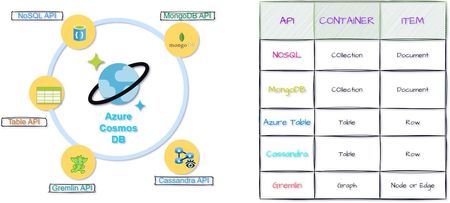
A deep dive into Azure Cosmos DB - a globally distributed, real-time NoSQL and relational database that scales effortlessly and delivers seamless performance at every level. Topics to be covered NoSQL Vs Relational Databases What is Azure Cosmos DB Azure cosmos DB Architecture Azure Cosmos Db Components Multi-model (APIs) Partitions Request Units Azure cosmos DB Access Methods Scenario: Event Database Creating Resources using Azure cosmos DB for NoSQL6.2KViews1like0CommentsApril 2025 Recap: Azure Database for PostgreSQL Flexible Server
Hello Azure Community, April has brought powerful capabilities to Azure Database for PostgreSQL flexible server, On-Demand backups are now Generally Available, a new Terraform version for our latest REST API has been released, the Public Preview of the MCP Server is now live, and there are also a few other updates that we are excited to share in this blog. Stay tuned as we dive into the details of these new features and how they can benefit you! Feature Highlights General Availability of On-Demand Backups Public Preview of Model Context Protocol (MCP) Server Additional Tuning Parameters in PG 17 Terraform resource released for latest REST API version General Availability of pg_cron extension in PG 17 General Availability of On-Demand Backups We are excited to announce General Availability of On-Demand backups for Azure Database for PostgreSQL flexible server. With this it becomes easier to streamline the process of backup management, including automated, scheduled storage volume snapshots encompassing the entire database instance and all associated transaction logs. On-demand backups provide you with the flexibility to initiate backups at any time, supplementing the existing scheduled backups. This capability is useful for scenarios such as application upgrades, schema modifications, or major version upgrades. For instance, before making schema changes, you can take a database backup, in an unlikely case, if you run into any issues, you can quickly restore (PITR) database back to a point before the schema changes were initiated. Similarly, during major version upgrades, on-demand backups provide a safety net, allowing you to revert to a previous state if anything goes wrong. In the absence of on-demand backup, the PITR could take much longer as it would need to take the last snapshot which could be 24 hours earlier and then replay the WAL. Azure Database for PostgreSQL flexible server already does on-demand backup behind the scenes for you and then deletes it when the upgrade is successful. Key Benefits: Immediate Backup Creation: Trigger full backups instantly. Cost Control: Delete on-demand backups when no longer needed. Improved Safety: Safeguard data before major changes or refreshes. Easy Access: Use via Azure Portal, CLI, ARM templates, or REST APIs. For more details and on how to get started, check out this announcement blog post. Create your first on-demand backup using the Azure portal or Azure CLI. Public Preview of Model Context Protocol (MCP) Server Model Context Protocol (MCP) is a new and emerging open protocol designed to integrate AI models with the environments where your data and tools reside in a scalable, standardized, and secure manner. We are excited to introduce the Public Preview of MCP Server for Azure Database for PostgreSQL flexible server which enables your AI applications and models to talk to your data hosted in Azure Database for PostgreSQL flexible servers according to the MCP standard. The MCP Server exposes a suite of tools including listing databases, tables, and schema information, reading and writing data, creating and dropping tables, listing Azure Database for PostgreSQL configurations, retrieving server parameter values, and more. You can either build custom AI apps and agents with MCP clients to invoke these capabilities or use AI tools like Claude Desktop and GitHub Copilot in Visual Studio Code to interact with your Azure PostgreSQL data simply by asking questions in plain English. For more details and demos on how to get started, check out this announcement blog post. Additional Tuning Parameters in PG17 We have now provided an expanded set of configuration parameters in Azure Database for PostgreSQL flexible server (V17) that allows you to modify and have greater control to optimize your database performance for unique workloads. You can now tune internal buffer settings like commit timestamp, multixact member and offset, notify, serializable, subtransaction, and transaction buffers, allowing you to better manage memory and concurrency in high-throughput environments. Additionally, you can also configure parallel append, plan cache mode, and event triggers that opens powerful optimization and automation opportunities for analytical workloads and custom logic execution. This gives you more control for memory intensive and high-concurrency applications, increased control over execution plans and allowing parallel execution of queries. To get started, all newly modifiable parameters are available now through the Azure portal, Azure CLI, and ARM templates, just like any other server configuration setting. To learn more, visit our Server Parameter Documentation. Terraform resource released for latest REST API version A new version of the Terraform resource for Azure Databases for PostgreSQL flexible server is now available, this brings several key improvements including the ability to easily revive dropped databases with geo-redundancy and customer-managed keys (Geo + CMK - Revive Dropped), seamless switchover of read replicas to a new site (Read Replicas - Switchover), improved connectivity through virtual endpoints for read replicas, and using on-demand backups for your servers. To get started with Terraform support, please follow this link: Deploy Azure Database for PostgreSQL flexible server with Terraform General Availability of pg_cron extension in PG 17 We’re excited to announce that the pg_cron extension is now supported in Azure Database for PostgreSQL flexible server major versions including PostgreSQL 17. This extension enables simple, time-based job scheduling directly within your database, making maintenance and automation tasks easier than ever. You can get started today by enabling the extension through the Azure portal or CLI. To learn more, please refer Azure Database for PostgreSQL flexible server list of extensions. Azure Postgres Learning Bytes 🎓 Setting up alerts for Azure Database PostgreSQL flexible server using Terraform Monitoring metrics and setting up alerts for your Azure Database for PostgreSQL flexible server instance is crucial for maintaining optimal performance and troubleshooting workload issues. By configuring alerts, you can track key metrics like CPU usage and storage etc. and receive notifications by creating an action group for your alert metrics. This guide will walk you through the process of setting up alerts using Terraform. First, create an instance of Azure Database for PostgreSQL flexible server (if not already created) Next, create a Terraform File and add these resources 'azurerm_monitor_action_group', 'azurerm_monitor_metric_alert' as shown below. resource "azurerm_monitor_action_group" "example" { name = "<action-group-name>" resource_group_name = "<rg-name>" short_name = "<short-name>" email_receiver { name = "sendalerts" email_address = "<youremail>" use_common_alert_schema = true } } resource "azurerm_monitor_metric_alert" "example" { name = "<alert-name>" resource_group_name = "<rg-name>" scopes = [data.azurerm_postgresql_flexible_server.demo.id] description = "Alert when CPU usage is high" severity = 3 frequency = "PT5M" window_size = "PT5M" enabled = true criteria { metric_namespace = "Microsoft.DBforPostgreSQL/flexibleServers" metric_name = "cpu_percent" aggregation = "Average" operator = "GreaterThan" threshold = 80 } action { action_group_id = azurerm_monitor_action_group.example.id } } 3. Run the terraform initialize, plan and apply commands to create an action group and attach a metric to the Azure Database for PostgreSQL flexible server instance. terraform init -upgrade terraform plan -out <file-name> terraform apply <file-name>.tfplan Note: This script assumes you have already created an Azure Database for PostgreSQL flexible server instance. To verify your alert, check the Azure portal under Monitoring -> Alerts -> Alert Rules tab. Conclusion That's a wrap for the April 2025 feature updates! Stay tuned for our Build announcements, as we have a lot of exciting updates and enhancements for Azure Database for PostgreSQL flexible server coming up this month. We’ve also published our Yearly Recap Blog, highlighting many improvements and announcements we’ve delivered over the past year. Take a look at our yearly recap blog here: What's new with Postgres at Microsoft, 2025 edition We are always dedicated to improving our service with new array of features, if you have any feedback or suggestions we would love to hear from you. 📢 Share your thoughts here: aka.ms/pgfeedback Thanks for being part of our growing Azure Postgres community.1.4KViews3likes0CommentsEnhance Cost Optimization in Azure Cosmos DB Without Compromising Service
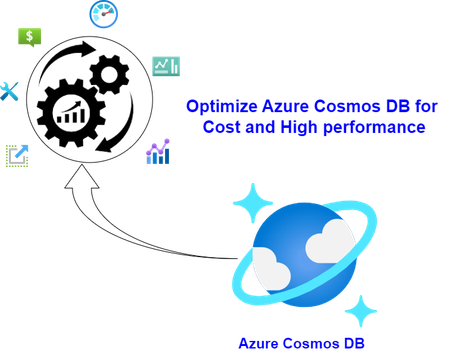
Optimizing Azure cosmos DB involves using strategies and best practices to reduce the overall spending on the service while maintaining and improving performance and availability. In this blog, I’ll explore actionable strategies and tools for reducing your Azure Cosmos DB costs without sacrificing the speed, scalability, or reliability of your database. Whether you're managing large-scale applications or developing on a budget, these insights will help you make the most out of Azure Cosmos DB. The main sub-topics we shall dive into includes: Pricing model Free development Plan for Optimization1.3KViews2likes0CommentsAugust 2025 Recap: Azure Database for PostgreSQL
Hello Azure Community, August was an exciting month for Azure Database for PostgreSQL! We have introduced updates that make your experience smarter and more secure. From simplified Entra ID group login to integrations with LangChain and LangGraph, these updates help with improving access control and seamless integration for your AI agents and applications. Stay tuned as we dive deeper into each of these feature updates. Feature Highlights Enhanced Performance recommendations for Azure Advisor - Generally Available Entra-ID group login using user credentials - Public Preview New Region Buildout: Austria East LangChain and LangGraph connector Active-Active Replication Guide Enhanced Performance recommendations for Azure Advisor - Generally Available Azure Advisor now offers enhanced recommendations to further optimize PostgreSQL server performance, security, and resource management. These key updates are as follows: Index Scan Insights: Detection and recommendations for disabled index and index-only scans to improve query efficiency. Audit Logging Review: Identification of excessive logging via the pgaudit.log parameter, with guidance to reduce overhead. Statistics Monitoring: Alerts on server statistics resets and suggestions to restore accurate performance tracking. Storage Optimization: Analysis of storage usage with recommendations to enable the Storage Autogrow feature for seamless scaling. Connection Management: Evaluation of workloads for short-lived connections and frequent connectivity errors, with recommendations to implement PgBouncer for efficient connection pooling. These enhancements aim to provide deeper operational insights and support proactive performance tuning for PostgreSQL workloads. For more details read the Performance recommendations documentation. Entra-ID group login using user credentials - Public Preview The public preview for Entra-ID group login using user credentials is now available. This feature simplifies user management and improves security within the Azure Database for PostgreSQL. This allows administrators and users to benefit from a more streamlined process like: Changes in Entra-ID group memberships are synchronized on a periodic 30min basis. This scheduled syncing ensures that access controls are kept up to date, simplifying user management and maintaining current permissions. Users can log in with their own credentials, streamlining authentication, and improving auditing and access management for PostgreSQL environments. As organizations continue to adopt cloud-native identity solutions, this update represents a major improvement in operational efficiency and security for PostgreSQL database environments. For more details read the documentation on Entra-ID group login. New Region Buildout: Austria East New region rollout! Azure Database for PostgreSQL flexible server is now available in Austria East, giving customers in and around the region lower latency and data residency options. This continues our mission to bring Azure PostgreSQL closer to where you build and run your apps. For the full list of regions visit: Azure Database for PostgreSQL Regions. LangChain and LangGraph connector We are excited to announce that native LangChain & LangGraph support is now available for Azure Database for PostgreSQL! This integration brings native support for Azure Database for PostgreSQL into LangChain or LangGraph workflows, enabling developers to use Azure PostgreSQL as a secure and high-performance vector store and memory store for their AI agents and applications. Specifically, this package adds support for: Microsoft Entra ID (formerly Azure AD) authentication when connecting to your Azure Database for PostgreSQL instances, and, DiskANN indexing algorithm when indexing your (semantic) vectors. This package makes it easy to connect LangChain to your Azure-hosted PostgreSQL instances whether you're building intelligent agents, semantic search, or retrieval-augmented generation (RAG) systems. Read more at https://aka.ms/azpg-agent-frameworks Active-Active Replication Guide We have published a new blog article that guides you through setting up active-active replication in Azure Database for PostgreSQL using the pglogical extension. This walkthrough covers the fundamentals of active-active replication, key prerequisites for enabling bi-directional replication, and step-by-step demo scripts for the setup. It also compares native and pglogical approaches helping you choose the right strategy for high availability, and multi-region resilience in production environments. Read more about the active-active replication guide on this blog. Azure Postgres Learning Bytes 🎓 Enabling Zone-Redundant High Availability for Azure Database for PostgreSQL Flexible Server Using APIs. High availability (HA) is essential for ensuring business continuity and minimizing downtime in production workloads. With Zone-Redundant HA, Azure Database for PostgreSQL Flexible Server automatically provisions a standby replica in a different availability zone, providing stronger fault tolerance against zone-level failures. This section will guide you on how to enable Zone-Redundant HA using REST APIs. Using REST APIs gives you clear visibility into the exact requests and responses, making it easier to debug issues and validate configurations as you go. You can use any REST API client tool of your choice to perform these operations including Postman, Thunder Client (VS Code extension), curl, etc. to send requests and inspect the results directly. Before enabling Zone-Redundant HA, make sure your server is on the General Purpose or Memory Optimized tier and deployed in a region that supports it. If your server is currently using Same-Zone HA, you must first disable it before switching to Zone-Redundant. Steps to Enable Zone-Redundant HA: Get an ARM Bearer token: Run this in a terminal where Azure CLI is signed in (or use Azure Cloud Shell) az account get-access-token --resource https://management.azure.com --query accessToken -o tsv Paste token in your API client tool Authorization: `Bearer <token>` </token> Inspect the server (GET) using the following URL: https://management.azure.com/subscriptions/{{subscriptionId}}/resourceGroups/{{resourceGroup}}/providers/Microsoft.DBforPostgreSQL/flexibleServers/{{serverName}}?api-version={{apiVersion}} In the JSON response, note: sku.tier → must be 'GeneralPurpose' or 'MemoryOptimized' properties.availabilityZone → '1' or '2' or '3' (depends which availability zone that was specified while creating the primary server, it will be selected by system if the availability zone is not specified) properties.highAvailability.mode → 'Disabled', 'SameZone', or 'ZoneRedundant' properties.highAvailability.state → e.g. 'NotEnabled','CreatingStandby', 'Healthy' If HA is currently SameZone, disable it first (PATCH) using API. Use the same URL in Step 3, in the Body header insert: { "properties": { "highAvailability": { "mode": "Disabled" } } } Enable Zone Redundant HA (PATCH) using API: Use the same URL in Step 3, in the Body header insert: { "properties": { "highAvailability": { "mode": "ZoneRedundant" } } } Monitor until HA is Healthy: Re-run the GET from Step 3 every 30-60 seconds until you see: "highAvailability": { "mode": "ZoneRedundant", "state": "Healthy" } Conclusion That’s all for our August 2025 feature updates! We’re committed to making Azure Database for PostgreSQL better with every release, and your feedback plays a key role in shaping what’s next. 💬 Have ideas, questions, or suggestions? Share them with us: https://aka.ms/pgfeedback 📢 Want to stay informed about the latest features and best practices? Follow us here for the latest announcements, feature releases, and best practices: Azure Database for PostgreSQL Blog More exciting improvements are on the way—stay tuned for what’s coming next!1.2KViews2likes0Comments