bits & bytes
36 TopicsMVP Mentoring Rings: Where Community Becomes a Catalyst
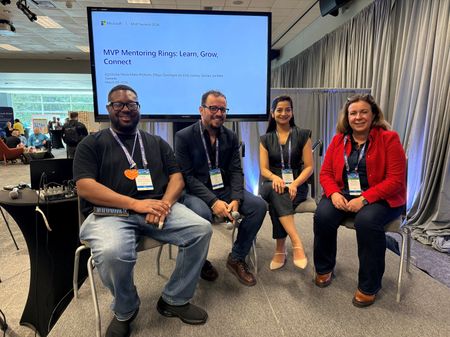
What if mentoring did not start with matching one expert to one learner, but with bringing a small circle of community leaders together to learn out loud? That is the idea behind MVP Mentoring Rings: small, community-led groups where Microsoft Most Valuable Professionals (MVPs) share experience, ask honest questions, and help one another grow. Unlike traditional one-to-one mentoring, Mentoring Rings are built around collective learning. The result is a model that feels both practical and deeply human - especially in a global community where connection across regions, languages, and experiences matters. Across the MVP community, Mentoring Rings have created space for something powerful: technologists showing up not just to teach, but to listen, encourage, and lead alongside one another. In a fast-moving industry, that kind of peer support can make all the difference. More than mentoring: a circle of shared momentum MVP Mentoring Rings were created to address a real need: even in a vibrant technical community, people can still feel isolated. The ring model offers a different path forward. Each group is intentionally small, guided by MVP Mentor Leads, and designed for recurring conversations rather than one-off advice. MVPs learn from one another through shared experiences, practical problem-solving, and accountability that grows over time. Why did MVPs participate? For many, it was about finding community as much as guidance. Some joined to better understand how to contribute in ways that felt authentic. Others wanted a space to navigate visibility, leadership, or the challenge of translating deep technical expertise into content, talks, demos, and impact for others. MVP Mentor Leads participated for another reason too: to give back in a way that scales generosity and multiplies belonging. When MVPs show up, others rise The most inspiring part of Mentoring Rings is how MVPs showed up for each other. They did not arrive as polished experts with all the answers. They came ready to be open, practical, and encouraging. MVP Christine Flora, who led a Women in the MVP Program Ring, described the experience this way: “Leading a Women in the MVP Program Ring reinforced how important representation, examples of someone like yourself, and showing up as your authentic self is for confidence and connection - especially when battling imposter syndrome.” That theme surfaced again and again: confidence grows when people feel seen. In Christine’s ring, one meaningful shift was helping participants move beyond the idea that they had to contribute exactly like someone else. As she shared, a major win was watching members realize “there are many, many ways to contribute and give to the community that fit their styles and personality types.” That is a powerful message for aspiring contributors and current MVPs alike: community leadership is not about copying a formula. It is about discovering your own voice and using it to help others. Confidence grows in spaces built for trust For MVP Sucheta Gawade, the value of the ring was rooted in psychological safety and clarity. She reflected that leading a ring reinforced the importance of “a psychologically safe, technical peer space” where MVPs from different domains could turn uncertainty into action. In her experience, mentoring became more than encouragement; it became a structured way to help people transform expertise into community-ready contributions such as talks, blogs, demos, and frameworks. That same sense of safety came through in MVP Agnieszka Mietz-Blijleven’s experience as a mentee. What surprised her most was how quickly trust and openness formed, even among people who had never met before. In that environment, she said, “real experience mattered more than titles” and honest reflection began to feel natural. Sucheta also saw quiet hesitation turn into confident engagement. One of her proudest wins as a Mentoring Ring Lead was helping her group move from “I am not sure what counts as technical contributions” to a clear, trackable plan for how they could participate. That kind of progress matters because it changes how people see themselves - not just as community members, but as future speakers, writers, mentors, and leaders. Agnieszka described a similar shift from the mentee side. The ring helped her recognize that she could support others not only through empathy, but through the strength of her own experience and skills. As she put it, the experience moved her mindset from wondering whether she was doing enough to recognizing that she already brought value - and could build on it with intention. Belonging sounds different in every language One of the strongest lessons from Mentoring Rings is that accessibility is not only about time zones or format. It is also about language, representation, and whether people feel safe enough to participate fully. MVP Ivana Tilca, who led a New to the MVP Program ring and a Women in Tech ring in Spanish, saw how quickly those layers intersected. She shared that one of the most powerful themes in her conversations was the hesitation some women felt about asking questions or speaking up because they were often among the few women in the room - and in some cases were also navigating events and meetings in a language that was not their own. That experience, she said, changed how she thinks about community events: inclusivity cannot be an afterthought; it has to be meaningfully designed in from the start. Ivana also reflected on what changed when conversations happened in Spanish. Having grown up bilingual, she said she had not always seen language as a barrier. But through the ring, she realized how much harder technical instructions, outreach, and even simple follow-up could feel for others. As she put it, “Not everyone speaks or understands English,” and for some MVPs, the language gap made “sending a simple inquiry or email feel nearly impossible” - especially when reaching out to Microsoft employees already felt intimidating. That perspective sits alongside what MVP Walter E Calcagno Lucares described in the Spanish-language ring: “Not having to translate my thoughts in real time allowed me to express myself with greater clarity and depth, which led to more strategic and meaningful conversations.” Together, their experiences make the case clearly: language-inclusive mentoring does more than remove friction. It creates trust, confidence, and a stronger sense of belonging. From the ring to the stage: Mentoring Rings at MVP Summit The momentum behind Mentoring Rings was also visible at MVP Summit in the session MVP Mentoring Rings: Learn, Grow, Connect. The session brought the spirit of the rings to a wider audience by centering real stories from mentors and mentees - what worked, what surprised them, and how mentoring helped both sides grow. It reinforced an important truth: mentoring in the MVP community is not one-directional. It is a shared experience that builds confidence, connection, and practical wisdom for everyone involved. Agnieszka Mietz-Blijleven captured that spirit by describing a meaningful moment from her ring: realizing how much wisdom can come from “a simple, honest conversation shared at exactly the right time.” For her, mentoring also brought perspective - showing how differently people can respond to the same situation and how often the hardest work is learning to stop criticizing yourself. Diego Domingos da Silva, Agnieszka Mietz-Blijleven, Sucheta Gawade (left to right) Designed to leave attendees with practical tips they could use right away, the session explored how to be a thoughtful mentor, how to get more from the mentee experience, and how to build meaningful, supportive relationships in the community. MVP Diego Domingos da Silva helped bring that message to life by reframing mentoring as something far more human than a formal exchange of answers. As he shared, he joined as a mentee expecting guidance but instead found “something closer to a support group of like-minded people in the community, sharing real experiences without the pressure of a work setting.” His reflection captures what made the MVP Summit panel resonate: mentoring was not presented as hierarchy, but as honest connection. Diego also spoke to the kind of growth that happens in these spaces. Rather than coming only from a perfectly mapped plan, he described growth as something that often takes shape through shared stories - hearing how others handled uncertainty, setbacks, and opportunity, and realizing you are not the only one figuring it out as you go. That perspective reinforced one of the panel’s strongest themes: mentoring creates momentum not because it removes uncertainty, but because it helps people move through it together. MVP Jeremy Sinclair added another important dimension to the panel: the idea that mentoring becomes most powerful when it is reciprocal. For him, the experience was not only about guiding others, but also about paying close attention to the ways mentees were already learning, contributing, and growing in their day-to-day work. His reflection underscored one of the session’s most resonant takeaways - that the best mentoring spaces create room for everyone to teach and everyone to learn. Agnieszka also connected mentoring to a very practical kind of growth: confidence in public speaking. She reflected that mentoring strengthened her on-stage presence by helping her stay steady in front of a live audience, navigate real-time reactions, and move through troubleshooting moments with diligence and calm. That kind of growth shows how mentoring does not stay inside the ring - it carries into talks, demos, and the visible moments where community leaders share what they know. The invitation: learn, lead, and lift someone else up MVP Mentoring Rings show what is possible when community leadership is shared. They help technologists grow their confidence, expand their networks, and see new possibilities for how they can contribute. They remind current MVPs that mentorship is not a side activity - it is part of how strong communities sustain themselves. As Agnieszka Mietz-Blijleven reflected, the rings create “continuity, confidence, and a culture of giving back.” And for aspiring MVPs, they offer a glimpse of what this community is really about: generosity, curiosity, and the willingness to help others thrive. If you are inspired by these stories, take the next step. Learn from the MVPs who are investing in others through Mentoring Rings. Look for ways to actively support and uplift people in your own tech community. Reflect on how you can be an ally - especially for those who may need representation, encouragement, or a clearer runway to be seen. And if you have been wondering whether you are ready to contribute more, start now. Share what you know, help someone take their next step, and keep building the kind of community that future MVPs will be proud to join. Want to learn more about the MVP Program? To find an MVP and learn more about the MVP Program visit the MVP Communities website and follow our updates on LinkedIn. Join us for a future live session through the Microsoft Reactor where we walk through what the MVP program is about, what we look for, and how nominations work. These sessions are designed to help you connect the dots between the work you’re already doing and the impact the MVP Program recognizes - with time for questions, examples, and real conversations.463Views6likes1CommentBuilding Futures Through Community: Creating Pathways into Tech
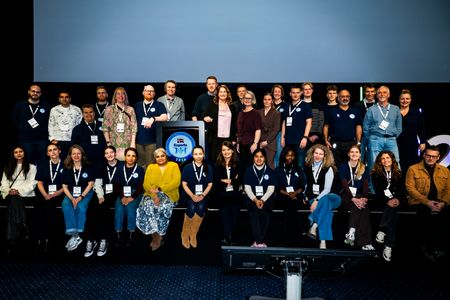
For the team behind Experts Live Denmark - organized by the Microsoft MVP & RD community in Denmark - this belief has shaped how they think about community: not just as a place to share knowledge, but as a space to open doors into the industry. That thinking is what led to the collaboration with ReDI School of Digital Integration Denmark. ReDI supports women with migrant and refugee backgrounds through digital education, mentorship, and career guidance. But as the organizers of Experts Live Denmark recognized early on, skills alone are not enough. The missing piece is often access to real environments - to people, conversations, and experiences that make the industry tangible. This is where the collaboration comes in. From Learning to Real-World Experience Rather than treating volunteers as event support, the approach has been to create an experience that reflects how the tech community actually works. As MVP Morten Knudsen says: “Our collaboration is not just about inviting volunteers to an event. It is about empowerment, mentorship, visibility, and long-term career support.” anjali Hinda at the Experts Live Denmark 2026 appreciation Dinner For volunteers like Geetanjali Hinda and Poorva Tumbde, that difference was immediately visible. Geetanjali describes it as a turning point: “It felt like a direct bridge between learning and the professional tech community.” What stood out most was not just the scale of the event - but how it felt to be part of it: “There was no clear divide between volunteers, learners, and experienced professionals. Everyone was approachable and willing to engage.” That openness is intentional. From the organizer perspective, creating an environment where people feel able to engage—not just observe - is what turns an event into an entry point. And for Geetanjali, it changed the experience entirely: “I didn’t feel like I was just supporting the event. I felt like I was contributing to it.” Confidence Comes From Participation For many entering a new country and job market, confidence can be one of the biggest barriers. Geetanjali speaks candidly about that reality: “Being a job-seeking expat, you tend to lose your confidence.” Working in a fast-paced, real-world setting helped shift that: “It reminded me of my communication and coordination skills… especially when dealing with last-minute changes.” More importantly, it changed how she approached her role: “I became more comfortable taking initiative and stepping in where needed without waiting for direction.” And something unexpected emerged: “Even without a formal role, I found myself thinking proactively and focusing on solutions.” This shift - from waiting to contributing - is exactly what the experience is designed to enable. Seeing the Industry Up Close For Poorva, the journey began through ReDI School itself: “It has been a meaningful bridge… helping us connect with and better understand Danish work culture.” Through that connection, she stepped into Experts Live Denmark and experienced the industry firsthand. What stayed with her most was the energy of the community: “The event brought together more than 1,400 attendees from diverse cultural backgrounds… What stood out to me was the passion shared by everyone involved.” But beyond the atmosphere, the experience helped expand her perspective: “I gained a better understanding of emerging technologies, the increasing role of AI… and how innovation is shaping the future of the tech industry.” Exposure to real conversations, real challenges, and real expertise helped turn abstract interest into something more concrete. Learning by Doing A key part of the experience is hands-on involvement. Poorva highlights the practical side: “I gained hands-on exposure to publishing a WordPress website, automating email communications using Microsoft Forms, and understanding the intricacies of event logistics.” At the same time, Geetanjali’s experience reflects another dimension—learning how to operate in dynamic environments. Together, these experiences provide something difficult to replicate elsewhere: Applying skills in real scenarios Understanding how collaboration works in practice Navigating uncertainty and adapting in real time Building confidence through contribution From the organizer perspective, this is the goal. Not just to expose participants to the industry - but to help them practice being part of it. More Than Technical Skills Both experiences point to a broader realization. For Poorva, it came through exposure to sessions and experts. For Geetanjali, it came through participation and interaction. As she puts it: “Being part of the tech industry is not just about technical skills, but also about collaboration and mindset.” This is a critical shift. Because entering the industry is not only about what you know - it’s about how you engage, contribute, and connect. Why This Collaboration Matters From the perspective of Experts Live Denmark, the collaboration with ReDI School is about creating continuity in the journey into tech. ReDI provides the foundation: Skills Learning Initial network The community provides the next step: Real-world exposure Practical experience Professional confidence By connecting the two, the gap between learning and working becomes smaller - and more navigable. Looking Ahead For both Poorva and Geetanjali, the experience did not end with the event. It shaped how they see their next steps. Geetanjali reflects this clearly: “Going forward, I want to combine my technical development with active participation in professional communities… showing up with a mindset of contribution, accountability, and curiosity.” That mindset - more than any single skill - is what enables long-term growth. And it is exactly what collaborations like this aim to support. Because building a strong tech community is not only about sharing knowledge. It is about bringing more people into it - and helping them find their place within it. Experts Live is a global network of community-driven conferences that brings together Microsoft executives, MVPs and community members sharing practical, real-world knowledge through sessions, conversations, and networking. Experts Live Denmark is happening again on February 9-10, 2027.406Views4likes1Comment