bits & byte
25 TopicsRise & Inspire: Women in Tech Leading the Way
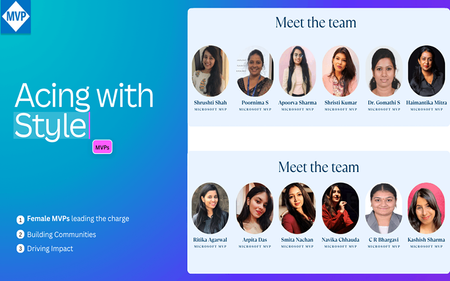
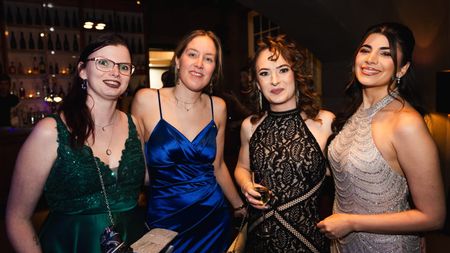
Historically, the tech industry has been predominantly male comprising 75% of the jobs in tech industry, but today, we see many talented women making significant strides, reshaping the landscape, and creating opportunities for themselves and others. These women are not only succeeding but excelling in the industry. Their journeys are marked by genuine challenges, perseverance, and a steadfast commitment to making a meaningful impact. We spoke with several female MVPs - Shrushti Shah, Poornima S, Apoorva Sharma, Shristi Kumar, Dr. Gomathi S, Haimantika Mitra, Ritika Agarwal, Arpita Das, Smita Nachan Navika Chhauda, C R Bhargavi, Kashish Sharma, who have not only built successful careers but also actively contributed to the community. Their stories reflect resilience, mentorship, and a passion for making the tech industry more inclusive. The Power of Community When asked about the impact of being part of the MVP community, the response was overwhelmingly positive. It’s more than just an award or recognition—it’s a space where women find encouragement, collaboration, and a platform to amplify their voices. For many women, the MVP community has become a game-changer. Ritika shares her experience: “I have been a part of this community for the past five years, and the community is extremely welcoming and supportive. It’s an incredible experience filled with learning, networking, and collaboration.” Apoorva Sharma echoes this, saying that being part of the community has been “a rewarding journey of giving back, learning, and growing together. It’s not just about receiving recognition—it’s about amplifying the voices of others and shaping a more inclusive future.” Community as a passion can do wonders, and Navika has excelled in this- “I am passionate about #TechforGood and thus have been using technology for a good cause by empowering the visually impaired students and acid attack survivors with Microsoft technology, one of the initiatives being “Empowering TechVision”, wherein the aim is to prepare the visually impaired for Azure Fundamentals Certification.” For many, the MVP community isn’t just about personal growth; it’s about paying it forward, as Dr. Gomathi says, “Engaging with communities like Code; Without Barriers, Microsoft Learn, and the MVP network has been instrumental in creating opportunities, sharing knowledge, and mentoring others.” Challenges: More Than Just a Buzzword Every woman in tech has a story. For Srushti Shah, it meant constantly proving her expertise in male-dominated spaces. But her resilience paid off—her dedication and community work led to a proud moment: standing beside Satya Nadella. A milestone that speaks louder than words. These MVPs are shaping the tech ecosystem, & we totally resonate with what Kashish Sharma mentioned - “Women’s representation in tech has improved—there are more role models, communities, and initiatives supporting women than ever before. It’s a matter of sharing your experience, sharing knowledge through content creation, mentoring aspiring designers and developers, and engaging in discussions around product, design, and web experiences.” So, how do they overcome these challenges? By advocating for themselves, showcasing their value and empowering others to do so too. Resonating to what Haimantika mentioned, “Start somewhere. If you want to be a web developer, start with HTML, show up every day and talk about it. Building trust is a skill, and you do that by showing up every day, and taking one step at a time.” Beyond the Job: Building the Tech Community Many of these leaders don’t stop at their professional roles—they are shaping the community in powerful ways: 📌 Mentoring: Arpita Das is an AI MVP and being a mentor has been important for her. “Beyond my job, I actively mentor aspiring engineers, especially young women who are trying to find their place in tech.” 📌 Blogging & Content Creation: Sharing knowledge and technical insights. Our AI MVP, C R Bhargavi actively contributes to the tech community through mentoring, blogging, and speaking at events. She has published 30+ articles and 10+ blogs, reaching 90,000+ readers, and conducted 100+ sessions, impacting over 7,000 individuals. Content creation is crucial in 2025 and one of MVP Shristi has cracked the model. "Beyond my job, I dedicate time to building a personal brand sharing my Excel learnings with the community of 269k+ followers over Instagram. 📌 Speaking at Events: Empowering more women to step into leadership roles. One of our MVPs takes it to another level, with a community of 9600, Smita Nachan, a co-organizer of Pune Tech Community keeps up an inclusive ecosystem for avid learners & professionals interested in Microsoft technologies. 📌 Open-Source Contributions: Helping build technology that’s accessible to all. “With a year full of growth and impact, I reached a milestone of 100 videos on YouTube, 25+ articles, mentoring 300+ underprivileged talent in rural areas,” said Dr. Gomathi S. This kind of grassroots effort is exactly what helps more women enter and thrive in technology. Where Do You Start? Advice for Women Wanting to Contribute Many women hesitate to step into community contributions, unsure where to begin. The advice from these MVPs? Just start. ✅ Find a community: Join meetups, tech forums, or online groups. ✅ Attend and speak at events: Even if you start as a listener, you’ll soon feel confident enough to share. ✅ Share your knowledge: Write blogs, make videos, or contribute to open-source projects. ✅ Don’t let perfection hold you back: Your voice and experience are valuable. "Start small—write a blog, join a discussion, or mentor someone. Every contribution matters." — Apoorva Sharma "The first step is always the hardest, but once you start, you’ll see how rewarding it is." — Shristi Kumar Change is Happening—But There’s Still Work to Do Women’s representation in tech has improved over the years, but there’s still a long way to go. "There’s a visible change—more women in leadership, better policies—but biases and representation gaps still exist,” commented Poornima S Our M365 MVP Ritika Agarwal says, “When I became an MVP, I think it was just 2-3 women MVPs in India, but that representation has changed a lot since then. More and more women are inclined towards taking part in tech activities nowadays and it is a great step. And with the MVP Mentorship Circle, we aim to grow stronger, join us now. Final Thoughts: Rise & Inspire The journey of women in tech isn’t just about breaking into the industry—it’s about staying, thriving, and leading. Ritika had a wonderful reflection and said, “If I could change one thing to make the industry more inclusive for women, I’d try to create awareness in a way, that it is not always a woman who is behind a successful man but there are also men who are behind successful women.” The women we spoke to are not just part of the tech community; they are building it. If you’re looking to contribute, take the leap —know this: you belong here. And there’s an entire community of women ready to rise and inspire alongside you. If you’re already on the path, bring others along with you. The future of tech is diverse, and it’s being shaped by women who refuse to be sidelined. Be a part of the Code; Without Barriers Program, an initiative to empower women with industry skills, become a mentor today and bridge the gap for tomorrow. There’s an entire community of women ready to rise and inspire alongside you. If you’re already on the path, bring others along with you. Are you ready to rise and inspire? Resources: Data points used: Women in Tech Statistics 2025: Male to Female Ratio - EarthWeb Code; Without Barriers: https://azdev.reskilll.com/cwb MVP Mentorship Circle: https://forms.office.com/r/RK2FXE2bCm MVP Mentors Map: https://mvpmentorsindia.web.app/958Views8likes2CommentsThinking of Joining the MVP Program? Hear What Makes It Special!
We’re thrilled to share our brand-new video spotlighting the heart of the MVP Program - our MVPs themselves! In this inspiring video, MVPs from around the world open up about what being part of this global community means to them, and why they love it. Watch the MVP Program video here If you’ve ever wondered what it’s like to be an MVP - or if you're considering applying - this is the perfect place to start! But that’s just the beginning. We’ve gathered a set of helpful resources to guide you through the program and how to get involved: New to the MVP Program? Start Here: MVP Communities Website – Find everything you need to know about the MVP Program, including how to apply, who the MVPs are near you, and the impact they’re making in their communities. MVP FAQs - Our updated FAQ page answers key questions about the application process, eligibility, expectations, and more. Live Event Replay - Don’t miss the replay of our recent live session, where MVPs Anastasia Salari and Zaid Zaim share their personal journeys, practical advice, and tips for those thinking about applying. Ready to Take the Next Step? If you’ve been actively contributing to the community over the past 12 months, this might be your moment. Whether through sharing knowledge, helping others, organizing events, or driving conversations - you’re exactly who the MVP Program is looking for. Dive into the resources, get inspired by the stories, and if you meet the criteria, consider applying or connecting with someone who can nominate you. Your journey to becoming an MVP could start today!718Views5likes1CommentThe Linebreakers: Where MVPs, Music, and Community Take the Stage
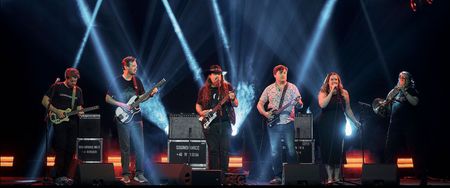
When Code Meets the Chorus At the intersection of technology, creativity, and community, The Linebreakers have found a stage all their own. The global group of technologists and musicians creates parody-style, programming-themed performances inspired by familiar songs, celebrating developer culture with humor, musicianship, and heart. Since 2016, they have entertained conference audiences and meetups around the world, from Kyiv to Kansas City, from Sydney to Siberia. What began as a few reworked lyrics has grown into a joyful reminder that community is built not only through code and collaboration, but also through shared laughter. From Frameworks to Front Row Singalongs The Linebreakers started with a simple question that could only come from developer culture: are there enough JavaScript frameworks to rewrite the Billy Joel song “We Didn’t Start the Fire?” For Microsoft MVP Dylan Beattie, the answer became “We’re Going to Build a Framework,” the first spark in what would become a globe-spanning musical side project. Dylan had played guitar as a teenager, became a developer, and never quite stopped changing song lyrics to make friends laugh. Conferences gave him the perfect audience: people who understood both the music and the technical absurdity. “There was an opportunity here to do a performance that wouldn’t work anywhere else.” - MVP Dylan Beattie As the act grew, so did the community around it. Fellow technologists joined in organically, often after seeing a show and asking, “Can I be in your band?” The result is a flexible, international lineup that can adapt to whoever is available for a given event. Dylan described today’s core group as spanning the UK, Belgium, Oslo, and Kansas City, with additional “stunt guitarists” and collaborators joining along the way. For Microsoft MVP Heather Downing, joining The Linebreakers meant stepping into a performance that was both technically sharp and delightfully ridiculous. Her first song with the band was the parody “Fight the Feature Creep,” a programming-themed take inspired by Adele’s “Rolling in the Deep,” centered on fighting feature creep in software projects. The audience response was immediate: phones came out, people sang along, and the room embraced the silliness. “When you are learning so much at an event, sometimes it’s nice to not have to think about anything and just relax and do something kind of silly.” – MVP Heather Downing The band’s catalog now ranges from JavaScript jokes to APIs, agile estimation, cloud migration, user stories, AI, and the everyday tensions between sales teams, engineers, product owners, and developers trying to ship good software. Their own description says it best: parody-style tech performances inspired by classic tunes, with lyrics lovingly reworked to fit as many programming, technology, and web jokes as possible into a four-minute pop-song format. Part of what makes The Linebreakers special is how intentionally rooted the performances are in the conference experience. Dylan remembered seeing event parties where a live band played familiar covers, but the music could have happened anywhere. The Linebreakers offered something different: a show that only made sense in a room full of people who had wrestled with frameworks, APIs, product requirements, deployment pipelines, and conference Wi-Fi. That sense of shared context has carried the band across events including Copenhagen Developers Festival, NDC, BuildStuff, DevSum, GOTO, YOW!, and more. Sometimes the lineup is a full stage of collaborators; other times it is a lean trio or even a hybrid performance stitched together across time zones. Dylan recalled two shows where he could not travel because of COVID, so the rest of the band put his private YouTube stream on a big screen and played along live while he performed from home. At the end, he signed off from an audience-filled room he could not see, then went back to everyday life - an appropriately surreal tech-community moment. “There’s never really been a plan. It’s: we want to have fun.” - MVP Dylan Beattie Heather described the band as fun and silly, but also full of people who are genuinely talented musicians. The challenge is not just getting the joke right; it is showing up ready to perform, often with very little in-person rehearsal. Because members live in different parts of the world, they usually practice individually and then pull the pieces together when they finally meet. That means listening closely, staying in sync with backing tracks, solving venue sound problems, and trusting one another on stage. Some of the best moments happen because the group is willing to experiment. Heather shared one favorite BuildStuff story: the band noticed that NDC had a theme song and wondered whether BuildStuff needed one too. Between soundcheck and showtime, Dylan found musical inspiration, reshaped the idea into “Build Stuff,” the group rehearsed it outside, and they performed it that same night. The song stuck, eventually becoming part of the event’s own recap culture. “That’s the level of talent that we have in this group.” - MVP Heather Downing More Than a Punchline: Craft, Community, and Code Behind the jokes is a serious commitment to craft. Dylan summed up the band’s creative standard with a motto that feels just as relevant to software as it does to parody: comedy never justifies mediocrity. If people are laughing, he said, they should be laughing at the intended jokes - not because the music, production, or performance falls short. That mindset has pushed The Linebreakers to build lyric videos, produce backing tracks, learn new media tools, and bring a true audio-visual show to developer audiences. “Comedy never justifies mediocrity.” - MVP Dylan Beattie The work has also fed back into their professional lives. Dylan shared how making videos for The Linebreakers helped him build media production skills that now strengthen his workshops, training videos, and conference presentations. Heather emphasized another kind of impact: the shared humanity of tech. Whether the song is about JavaScript weirdness, bad APIs, reply guys, feature creep, or vibe coding, audiences around the world recognize the situations because they have lived them. “It really is a celebration of the ridiculousness and the humanity behind all of what tech is.” - MVP Heather Downing That connection can be surprisingly practical, too. Dylan said “You Give REST a Bad Name ,” a parody of Bon Jovi’s classic “You Give Love a Bad Name,” catalogs common API design mistakes in a way that is both entertaining and memorable. The song has been shared by developers with suppliers and teams as a lighthearted way to encourage better API design. Humor, in that case, became a door-opener for better technical conversations. The song selection process is its own mix of art, timing, and technical instinct. Some ideas begin with a great tune or familiar musical structure the band wants to channel. Others begin with a technology frustration that begs to become a chorus. Dylan described “The Final Shutdown,” inspired by the emotional moment of decommissioning a server after years of care, patching, and maintenance. Another song, “Playing the Planning Poker,” came from watching an audience light up to a high-energy party song and realizing it could become a playful take on agile estimation and Scrum ceremonies. Other ideas take longer. Dylan said “Key for the WiFi,” inspired by a well-known late-90s rock track, lived on the back burner for years before it was ready. The creative work can be instant or slow, but the full production takes effort: lyrics, arrangements, recorded parts, backing tracks, and videos. For The Linebreakers, the joke may start the song, but polish is what turns it into a performance. “The idea is worth one, the lyrics are worth 10, the music is worth 100, and the video is worth 1000.” - MVP Dylan Beattie Encore: Keep the Community Singing The Linebreakers remind us that technical community is bigger than sessions, demos, and code samples. It is also hallway laughter, shared references, unexpected collaborations, and the courage to bring a different part of yourself to the stage. Their performances work because they are made by people who love both technology and music deeply enough to poke fun at each with care. Whether you are an MVP, developer, IT pro, community organizer, or technology enthusiast, their story is an invitation to celebrate the creative side of our industry - and maybe to laugh together at how wonderfully strange this work can be. Interested in learning more about The Linebreakers? Watch their videos, meet the band, and discover how this global group of technologists turns developer life into music, laughter, and community. And if you hear a familiar classic at karaoke and accidentally sing The Linebreakers version instead, Heather might consider that part of the mission accomplished. Want to learn more about the MVP Program? To find an MVP and learn more about the MVP Program visit the MVP Communities website and follow our updates on LinkedIn. Join us for a future live session through the Microsoft Reactor where we walk through what the MVP program is about, what we look for, and how nominations work. These sessions are designed to help you connect the dots between the work you’re already doing and the impact the MVP Program recognizes - with time for questions, examples, and real conversations.292Views3likes0Comments