azureai
22 Topics
Pre-train and Fine-tune Language Model with Hugging Face and Gaudi HPU.
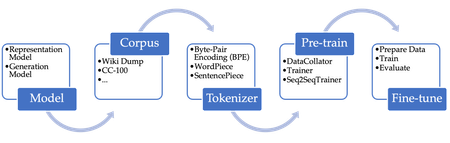
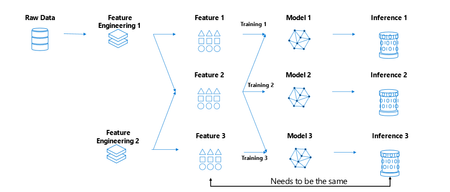
In this blog, we provide a general guideline of pre-training and fine-tuning language models using Hugging Face. For illustration, we use pre-training language models for question generation (answer-agnostic) in Korean as running example.13KViews0likes0CommentsBuilding a digital guide dog for railway passengers with impaired vision
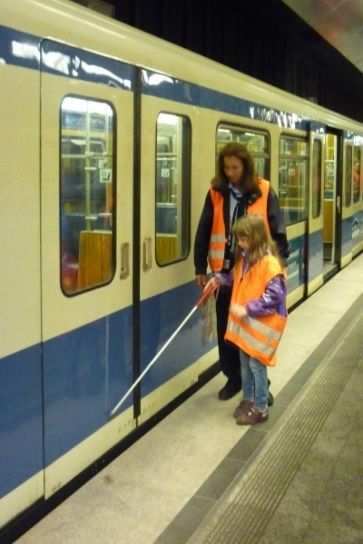
Catching your train on time can be challenging under the best of circumstances. Trains typically only stop for a few minutes, leaving little room for mistakes. For example, at Munich Main station around 240 express trains and 510 regional trains leave from 28 platforms per day. Some trains can also be quite long, up to 346 meters (1,135 ft) for express ICE trains. It is extremely important to quickly find the correct platform and platform section, and then the door closest to a reserved seat needs to be located. This already challenging adventure becomes even more so, if a vision impairment forces a customer to rely exclusively on auditory or tactile feedback. When traveling autonomously, without assistance, it is common practice to walk along the outside of a train, continuously tapping it with a white cane, to discover opened and closed doors (figure 1). While this works in principle, this practice has limitations, both in terms of speed and reliability. We therefore partnered with DB Systel GmbH, the digital partner for all Deutsche Bahn Group companies, to build the Digital Guide Dog. This is a feasibility study based on an AI-powered smartphone application that uses computer vision, auditory and haptic feedback to guide customers to the correct platform section and train car door. In this blog post, we are sharing some of the details and unique challenges that we experienced while the AI model behind this application.7.2KViews5likes2CommentsBuilding Image Classifiers made easy with Azure Custom Vision
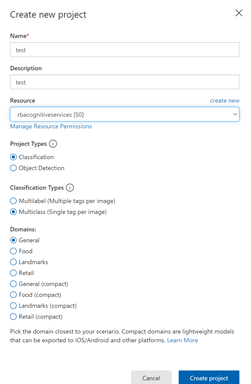
In our previous blog, we outlined that Supervised machine learning (ML) models need labeled data, but majority of the data collected in the raw format lacks labels. So, the first step before building a ML model would be to get the raw data labeled by domain experts. To do so, we outlined how Doccano is an easy tool for collaborative text annotation. However, not all data that gets collected is in text format, many a times we end up with a bunch of images but the end goal is again to build a Supervised ML model using them. Like stated previously, the first step would be to tag these images with specific labels. Image tagging as well as building and even deploying either a multi-class or a multi-label classifier can be done in a few simple steps using Azure Custom Vision.7.7KViews4likes0Comments