azure
7829 TopicsPartner Blog | Expanded partner benefits are now available: What’s new in February 2026
Expanded partner benefits are now available across the Microsoft AI Cloud Partner Program. These updates reflect continued investment in the tools, resources, and support partners rely on to build, differentiate, and grow, and they incorporate feedback we hear consistently across the ecosystem. If you read our January post about planning ahead for the February refresh, this is the follow-up: the new benefits are now rolling out, and partners with eligible offers will find them in Partner Center as they become available. What’s new You’ll find a range of meaningful additions designed to empower you to move faster with AI, support security needs, and improve go-to-market execution. Highlights include: Copilot additions in select offers: The FY26 refresh introduces new Copilot-related benefits across parts of the program, including Microsoft 365 Copilot, Copilot Studio, and Microsoft Dragon Copilot (per user) in select partner offers where available. Security benefits expansion: Security-focused benefits have been broadened, including additions such as Microsoft Defender Suite, Microsoft Entra Suite, and Microsoft Intune Suite in select offerings. Azure credit updates: Azure benefits are being updated across multiple offers, including new additions and increases in value for certain cloud benefits. These credits are designed to support solution development, testing, and expansion of your practice. Go-to-market resources: As partners continue to access marketing benefits and resources through the program, Microsoft is simplifying discovery and execution—so you can bring campaigns to market with less friction. Continue reading here204Views2likes4Comments
Azure Migrate: Now Supporting Premium SSD V2, Ultra and ZRS Disks as Targets
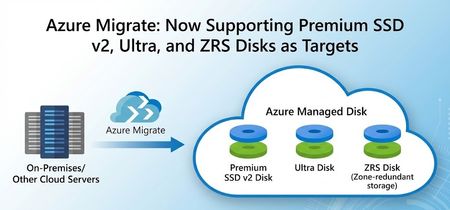
We are excited to announce that we have added assessment and migration support for Premium SSD v2,Ultra Disk and ZRS Disks as storage options in Azure Migrate, with Premium SSD v2 and ZRS Disks now Generally Available and Ultra Disk in Public Preview. This further enhances the assessment and migration experience Azure Migrate offers and allows you to bring your mission critical workloads to these key Azure Storage offerings seamlessly. What’s New Additional Assessment targets: Premium SSD v2 and Ultra Disks As part of the migration journey to the cloud, Azure Migrate makes recommendations on what cloud resources to move your workloads to. Post successful discovery of on-prem workloads, Azure Migrate utilizes multiple parameters like size, IOPS, and throughput to make target recommendations in Azure. Instead of just static sizing, assessments can map actual performance demand to Azure VM and disk SKUs, optimizing performance, resiliency, and total cost of ownership to give you a tailored recommendation that fits your cloud migration journey. With today’s announcement, we are adding more supported disks to Azure Migrate, providing you with improved guidance to ensure that you land on the resources in Azure that align with your goals. If you are looking to migrate your demanding on-premises applications and workloads to Azure, you will benefit from these advanced disk options, which come with greater flexibility and enhanced performance. For example, Premium SSD v2 disks decouple capacity from performance, allowing you to dial IOPS and throughput precisely to your workload’s needs. For high-end scenarios, Ultra Disks offer the highest performance among Azure managed disks, while ZRS disks provide zonally redundant storage to further protect your data. With these included in Azure Migrate’s assessment engine, you end up with a right‑sized, data‑driven target configuration that aligns Azure storage choices with how workloads actually run. Below is a snippet of how the assessment recommendations appear in Azure Migrate for Premium V2 SSD disks. Customers can get details on the disk type, provisioned IOPS, throughput, cost, and seamlessly migrate using the assessment to the recommended target. Migrating to Premium SSD v2 and Ultra Disks in Azure Migrate When Premium SSD v2 or Ultra disks are identified as the optimal targets based on workload characteristics during the assessment phase, they can be auto-populated seamlessly into the migration process. This workflow accelerates the lift-and-shift of on-prem disks to Azure’s high performance managed disks. Below is a snippet from the replication step during migration: Assessing and Migrating to ZRS Disks in Azure Migrate Azure Migrate also has enhanced resiliency by supporting migration to ZRS Disks during Migration. Zone-Redundant Storage (ZRS) for Azure Disks synchronously replicates data across three physically separate availability zones within a region - each with independent power, cooling, and networking - enhancing Disk availability and resiliency. While creating Assessments in Azure Migrate, you can configure a range of target preferences, including the newly introduced option to enable zone-redundant storage (ZRS). You can opt-in to enable ZRS Disk recommendations by editing the Server (Machine) default settings in the Advanced settings blade. Since the preview announcement for these capabilities, recommendations for Ultra, Premium v2 and ZRS Disks have led to petabytes of data being successfully migrated into Azure. Below is a quote from our Premium v2 (Pv2) customer that was provided during the preview: "Through this preview, we have Pv2 disks recommendations in place of Pv1, which is beneficial for our estate during migration in terms of both cost and performance. We are now awaiting General Availability " – Yogesh Patil, Cloud Enterprise Architect, Tata Consultancy Services (TCS) With these added capabilities, Azure Migrate and Azure disk storage are more ready than ever for migrating your most demanding and mission-critical workloads. Learn more about Azure Migrate and for expert migration help, please try Azure Accelerate. You can also contact your preferred partner or Microsoft field for next steps. Get started in Azure today!105Views1like0Comments
How Cloud + AI Solutions Empower Nonprofits to Do More with Less
Nonprofits play a vital role in our communities—delivering essential services, supporting vulnerable groups, and driving social change. Yet many face familiar hurdles: limited budgets, outdated systems, rising data demands, and the need to stay connected with donors, volunteers, and the people they serve. Cloud technology and artificial intelligence (AI) are helping nonprofits overcome these challenges. Solutions like Microsoft Azure make it easier to modernize, stay secure, and expand impact. The Cloud + AI Advantage for Nonprofits Cloud computing provides secure storage, flexible computing power, and modern tools without costly infrastructure. AI builds on that foundation—analyzing data, automating tasks, understanding language, and making predictions that help teams work smarter. Together, cloud and AI help nonprofits: Reduce manual work Improve staff and volunteer efficiency Personalize communications Gain deeper data insights Build more responsive, effective programs In short, AI becomes a digital copilot that frees teams to focus on their mission. Secure Data, Stronger Trust Nonprofits manage sensitive information and complex compliance needs. Azure offers built‑in security, encryption, and access controls—allowing organizations to protect data with enterprise‑grade safeguards, without needing a large IT team. Modernize Without Overspending Aging servers and disconnected systems slow organizations down. Azure enables nonprofits to: Move files and apps to the cloud Scale storage as needed Avoid expensive hardware upgrades Reduce downtime and crashes This flexibility stretches budgets while improving reliability. Unlock Better Insights With AI Data is powerful only when it’s usable. Azure AI helps nonprofits analyze trends, measure impact, forecast needs, and improve engagement—turning raw data into actionable insights. Do More With Limited Resources Small teams often juggle many roles. Cloud automation and AI‑enhanced workflows streamline processes, reduce manual tasks, and boost productivity—so more time goes toward serving communities. Ready to Explore Azure? Cloud and AI don’t replace human effort—they amplify it. With the right foundation, nonprofits can become more agile, secure, and impactful. Register for the eBook: The cloud + AI: Microsoft Azure solutions for nonprofits41Views0likes0CommentsCodeless Connect Framework (CCF) Template Help
As the title suggests, I'm trying to finalize the template for a Sentinel Data Connector that utilizes the CCF. Unfortunately, I'm getting hung up on some parameter related issues with the polling config. The API endpoint I need to call utilizes a date range to determine the events to return and then pages within that result set. The issue is around the requirements for that date range and how CCF is processing my config. The API expects an HTTP GET verb and the query string should contain two instances of a parameter called EventDates among other params. For example, a valid query string may look something like: ../path/to/api/myEndpoint?EventDates=2025-08-25T15%3A46%3A36.091Z&EventDates=2025-08-25T16%3A46%3A36.091Z&PageSize=200&PageNumber=1 I've tried a few approaches in the polling config to accomplish this, but none have worked. The current config is as follows and has a bunch of extra stuff and names that aren't recognized by my API endpoint but are there simply to demonstrate different things: "queryParameters": { "EventDates.Array": [ "{_QueryWindowStartTime}", "{_QueryWindowEndTime}" ], "EventDates.Start": "{_QueryWindowStartTime}", "EventDates.End": "{_QueryWindowEndTime}", "EventDates.Same": "{_QueryWindowStartTime}", "EventDates.Same": "{_QueryWindowEndTime}", "Pagination.PageSize": 200 } This yields the following URL / query string: ../path/to/api/myEndpoint?EventDates.Array=%7B_QueryWindowStartTime%7D&EventDates.Array=%7B_QueryWindowEndTime%7D&EventDates.Start=2025-08-25T15%3A46%3A36.091Z&EventDates.End=2025-08-25T16%3A46%3A36.091Z&EventDates.Same=2025-08-25T16%3A46%3A36.091Z&Pagination.PageSize=200 There are few things to note here: The query param that is configured as an array (EventDates.Array) does indeed show up twice in the query string and with distinct values. The issue is, of course, that CCF doesn't seem to do the variable substitution for values nested in an array the way it does for standard string attributes / values. The query params that have distinct names (EventDates.Start and .End) both show up AND both have the actual timestamps substituted properly. Unfortunately, this doesn't match the API expectations since the names differ. The query params that are repeated with the same name (EventDates.Same) only show once and it seems to use the value from which comes last in the config (so last one overwrites the rest). Again, this doesn't meet the requirements of the API since we need both. I also tried a few other things ... Just sticking the query params and placeholders directly in the request.apiEndpoint polling config attribute. No surprise, it doesn't do the variable substitution there. Utilizing queryParametersTemplate instead of queryParameters. https://learn.microsoft.com/en-us/azure/sentinel/data-connector-connection-rules-referenceindicates this is a string parameter that expects a JSON string. I tried this with various approaches to the structure of the JSON. In ALL instances, the values here seemed to be completely ignored. All other examples from Azure-Sentinel repository utilize the POST verb. Perhaps that attribute isn't even interpreted on a GET request??? And because some AI agents suggested it and ... sure, why not??? ... I tried queryParametersTemplate as an actual query string template, so "EventDates={_QueryWindowStartTime}&EventDates={_QueryWindowEndTime}". Just as with previous attempts to use this attribute, it was completely ignored. I'm willing to try anything at this point, so if you have suggestions, I'll give it a shot! Thanks for any input you may have!290Views0likes5CommentsUpcoming webinar: Maximize the Cost Efficiency of AI Agents on Azure
AI agents are quickly becoming central to how organizations automate work, engage customers, and unlock new insights. But as adoption accelerates, so do questions about cost, ROI, and long-term sustainability. That’s exactly what the Maximize the Cost Efficiency of AI Agents on Azure webinar is designed to address. The webinar will provide practical guidance on building and scaling AI agents on Azure with financial discipline in mind. Rather than focusing only on technology, the session helps learners connect AI design decisions to real business outcomes—covering everything from identifying high-impact use cases and understanding cost drivers to forecasting ROI. Whether you’re just starting your AI journey or expanding AI agents across the enterprise, the session will equip you with strategies to make informed, cost-conscious decisions at every stage—from architecture and model selection to ongoing optimization and governance. Who should attend? If you are in one of these roles and are a decision maker or can influence decision makers in AI decisions or need to show ROI metrics on AI, this session is for you. Developer Administrator Solution Architect AI Engineer Business Analyst Business User Technology Manager Why attending the webinar? In the webinar, you’ll hear how to translate theory into real-world scenarios, walk through common cost pitfalls, and show how organizations are applying these principles in practice. Most importantly, the webinar helps you connect the dots faster, turning what you’ve learned into actionable insights you can apply immediately, ask questions live, and gain clarity on how to maximize ROI while scaling AI responsibly. If you care about building AI agents that are not only innovative but also efficient, governable, and financially sustainable, this training—and this webinar that complements it—are well worth your time. Register for the free webinar today for the event on March 5, 2026, 8:00 AM - 9:00 AM (UTC-08:00) Pacific Time (US & Canada). Who will speak at the webinar? Your speakers will be: Carlotta Castelluccio: Carlotta is a Senior AI Advocate with the mission of helping every developer to succeed with AI, by building innovative solutions responsibly. To achieve this goal, she develops technical content, and she hosts skilling sessions, enabling her audience to take the most out of AI technologies and to have an impact on Microsoft AI products’ roadmap. Nitya Narasimhan: Nitya is a PhD and Polyglot with 25+ years of software research & development experience spanning mobile, web, cloud and AI. She is an innovator (12+ patents), a visual storyteller (@sketchtedocs), and an experienced community builder in the Greater New York area. As a senior AI Advocate on the Core AI Developer Relations team, she acts as "developer 0" for the Microsoft Foundry platform, providing product feedback and empowering AI developers to build trustworthy AI solutions with code samples, open-source curricula and content-initiatives like Model Mondays. Prior to joining Microsoft, she spent a decade in Motorola Labs working on ubiquitous & mobile computing research, founded Google Developer Groups in New York, and consulted for startups building real-time experiences for enterprise. Her current interests span Model understanding & customization, E2E Observability & Safety, and agentic AI workflows for maintainable software. Moderator Lee Stott is a Principal Cloud Advocate at Microsoft, working in the Core AI Developer Relations Team. He helps developers and organizations build responsibly with AI and cloud technologies through open-source projects, technical guidance, and global developer programs. Based in the UK, Lee brings deep hands-on experience across AI, Azure, and developer tooling. .Microsoft BizTalk Server Product Lifecycle Update
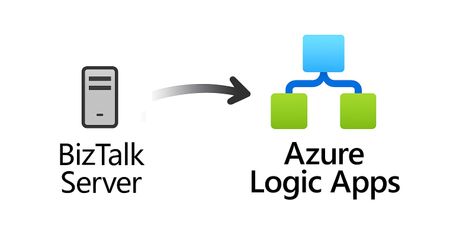
For more than 25 years, Microsoft BizTalk Server has supported mission-critical integration workloads for organizations around the world. From business process automation and B2B messaging to connectivity across industries such as financial services, healthcare, manufacturing, and government, BizTalk Server has played a foundational role in enterprise integration strategies. To help customers plan confidently for the future, Microsoft is sharing an update to the BizTalk Server product lifecycle and long-term support timelines. BizTalk Server 2020 will be the final version of BizTalk Server. Guidance to support long-term planning for mission-critical workloads This announcement does not change existing support commitments. Customers can continue to rely on BizTalk Server for many years ahead, with a clear and predictable runway to plan modernization at a pace that aligns with their business and regulatory needs. Lifecycle Phase End Date What’s Included Mainstream Support April 11, 2028 Security + non-security updates and Customer Service & Support (CSS) support Extended Support April 9, 2030 CSS support, Security updates, and paid support for fixes (*) End of Support April 10, 2030 No further updates or support (*) Paid Extended Support will be available for BizTalk Server 2020 between April 2028 and April 2030 for customers requiring hotfixes for non-security updates. CSS will continue providing their typical support. BizTalk Server 2016 is already out of mainstream support, and we recommend those customers evaluate a direct modernization path to Azure Logic Apps. Continued Commitment to Enterprise Integration Microsoft remains fully committed to supporting mission-critical integration, including hybrid connectivity, future-ready orchestration, and B2B/EDI modernization. Azure Logic Apps, part of Azure Integration Services — which includes API Management, Service Bus, and Event Grid — delivers the comprehensive integration platform for the next decade of enterprise connectivity. Host Integration Server: Continued Support for Mainframe Workloads Host Integration Server (HIS) has long provided essential connectivity for organizations with mainframe and midrange systems. To ensure continued support for those workloads, Host Integration Server 2028 will ship as a standalone product with its own lifecycle, decoupled from BizTalk Server. This provides customers with more flexibility and a longer planning horizon. Recognizing Mainframe modernization customers might be looking to integrate with their mainframes from Azure, Microsoft provides Logic Apps connectors for mainframe and midrange systems, and we are keen on adding more connectors in this space. Let us know about your HIS plans, and if you require specific features for Mainframe and midranges integration from Logic Apps at: https://aka.ms/lamainframe Azure Logic Apps: The Successor to BizTalk Server Azure Logic Apps, part of Azure Integration Services, is the modern integration platform that carries forward what customers value in BizTalk while unlocking new innovation, scale, and intelligence. With 1,400+ out-of-box connectors supporting enterprise, SaaS, legacy, and mainframe systems, organizations can reuse existing BizTalk maps, schemas, rules, and custom code to accelerate modernization while preserving prior investments including B2B/EDI and healthcare transactions. Logic Apps delivers elastic scalability, enterprise-grade security and compliance, and built-in cost efficiency without the overhead of managing infrastructure. Modern DevOps tooling, Visual Studio Code support, and infrastructure-as-code (ARM/Bicep) ensure consistent, governed deployments with end-to-end observability using Azure Monitor and OpenTelemetry. Modernizing Logic Apps also unlocks agentic business processes, enabling AI-driven routing, predictive insights, and context-aware automation without redesigning existing integrations. Logic Apps adapts to business and regulatory needs, running fully managed in Azure, hybrid via Arc-enabled Kubernetes, or evaluated for air-gapped environments. Throughout this lifecycle transition, customers can continue to rely on the BizTalk investments they have made while moving toward a platform ready for the next decade of integration and AI-driven business. Charting Your Modernization Path Microsoft remains fully committed to supporting customers through this transition. We recognize that BizTalk systems support highly customized and mission-critical business operations. Modernization requires time, planning, and precision. We hope to provide: Proven guidance and recommended design patterns A growing ecosystem of tooling supporting artifact reuse Unified Support engagements for deep migration assistance A strong partner ecosystem specializing in BizTalk modernization Potential incentive programs to help facilitate migration for eligible customers (details forthcoming) Customers can take a phased approach — starting with new workloads while incrementally modernizing existing BizTalk deployments. We’re Here to Help Migration resources are available today: Overview: https://aka.ms/btmig Best practices: https://aka.ms/BizTalkServerMigrationResources Video series: https://aka.ms/btmigvideo Feature request survey: https://aka.ms/logicappsneeds Reactor session: Modernizing BizTalk: Accelerate Migration with Logic Apps - YouTube Migration tool: A BizTalk Migration Tool: From Orchestrations to Logic Apps Workflows | Microsoft Community Hub We encourage customers to engage their Microsoft accounts team early to assess readiness, identify modernization opportunities, and explore assistance programs. Your Modernization Journey Starts Now BizTalk Server has played a foundational role in enterprise integration success for more than two decades. As you plan ahead, Microsoft is here to partner with you every step of the way, ensuring operational continuity today while unlocking innovation tomorrow. To begin your transition, please contact your Microsoft account team or visit our migration hub. Thank you for your continued trust in Microsoft and BizTalk Server. We look forward to partnering closely with you as you plan the future of your integration platforms. Frequently Asked Questions Do I need to migrate now? No. BizTalk Server 2020 is fully supported through April 11, 2028, with paid Extended Support available through April 9, 2030, for non-security hotfixes. CSS will continue providing their typical support. You have a long and predictable runway to plan your transition. Will there be a new BizTalk Server version? No. BizTalk Server 2020 is the final version of the product. What happens after April 9, 2030? BizTalk Server will reach End of Support, and security updates or technical assistance will no longer be provided. Workloads will continue running but without Microsoft servicing. Is paid support available past 2028? Yes. Paid extended support will be available through April 2030 for BizTalk Server 2020 customers looking for non-security hotfixes. CSS will continue to provide the typical support. What about BizTalk Server 2016 or earlier versions? Those versions are already out of mainstream support. We strongly encourage moving directly to Logic Apps rather than upgrading to BizTalk Server 2020. Will Host Integration Server continue? Yes. Host Integration Server (HIS) 2028 will be released as a standalone product with its own lifecycle and support commitments. Can I reuse BizTalk Server artifacts in Logic Apps? Yes. Most of BizTalk maps, schemas, rules, assemblies, and custom code can be reused with minimal effort using Microsoft and partner migration tooling. We welcome feature requests here: https://aka.ms/logicappsneeds Does modernization require moving fully to the cloud? No. Logic Apps supports hybrid deployments for scenarios requiring local processing or regulatory compliance, and fully disconnected environments are under evaluation. More information of the Hybrid deployment model here: https://aka.ms/lahybrid. Does modernization unlock AI capabilities? Yes. Logic Apps enables AI-driven automations through Agent Loop, improving routing, decisioning, and operational intelligence. Where do I get planning support? Your Microsoft account team can assist with assessment and planning. Migration resources are also linked in this announcement to help you get started. Microsoft Corporation3.7KViews3likes1CommentError when creating Assistant in Microsoft Foundry using Fabric Data Agent
I am facing an issue when using a Microsoft Fabric Data Agent integrated with the new Microsoft Foundry, and I would like your assistance to investigate it. Scenario: 1. I created a Data Agent in Microsoft Fabric. 2. I connected this Data Agent as a Tool within a project in the new Microsoft Foundry. 3. I published the agent to Microsoft Teams and Copilot for Microsoft 365. 4. I configured the required Azure permissions, assigning the appropriate roles to the Foundry project Managed Identity (as shown in the attached evidence – Azure AI Developer and Azure AI User roles). Issue: When trying to use the published agent, I receive the following error: Response failed with code tool_user_error: Create assistant failed. If issue persists, please use following identifiers in any support request: ConversationId = PQbM0hGUvMF0X5EDA62v3-br activityId = PQbM0hGUvMF0X5EDA62v3-br|0000000 Additional notes: • Permissions appear to be correctly configured in Azure. • The error occurs during the assistant creation/execution phase via Foundry after publishing. • The same behavior occurs both in Teams and in Copilot for Microsoft 365. Could you please verify: • Whether there are any additional permissions required when using Fabric Data Agents as Tools in Foundry; • If there are any known limitations or specific requirements for publishing to Teams/Copilot M365; • And analyze the error identifiers provided above. I appreciate your support and look forward to your guidance on how to resolve this issue.Solved483Views0likes6Comments
Microsoft Finland - Software Developing Companies monthly community series.
Tervetuloa jälleen mukaan Microsoftin webinaarisarjaan teknologiayrityksille! Microsoft Finlandin järjestämä Software Development monthly Community series on webinaarisarja, joka tarjoaa ohjelmistotaloille ajankohtaista tietoa, konkreettisia esimerkkejä ja strategisia näkemyksiä siitä, miten yhteistyö Microsoftin kanssa voi vauhdittaa kasvua ja avata uusia liiketoimintamahdollisuuksia. Sarja on suunnattu kaikenkokoisille ja eri kehitysvaiheissa oleville teknologiayrityksille - startupeista globaaleihin toimijoihin. Jokaisessa jaksossa pureudutaan käytännönläheisesti siihen, miten ohjelmistoyritykset voivat hyödyntää Microsoftin ekosysteemiä, teknologioita ja kumppanuusohjelmia omassa liiketoiminnassaan. Huom. Microsoft Software Developing Companies monthly community webinars -webinaarisarja järjestetään Cloud Champion -sivustolla, josta webinaarit ovat kätevästi saatavilla tallenteina pari tuntia live-lähetyksen jälkeen. Muistathan rekisteröityä Cloud Champion -alustalle ensimmäisellä kerralla, jonka jälkeen pääset aina sisältöön sekä tallenteisiin käsiksi. Pääset rekisteröitymään, "Register now"-kohdasta. Täytä tietosi ja valitse Distributor kohtaan - Other, mikäli et tiedä Microsoft-tukkurianne. Webinaarit: 27.2.2026 klo 09:00-09:30 - M-Files polku menestykseen yhdessä Microsoftin kanssa Mitä globaalin kumppanuuden rakentaminen M-Files:in ja Microsoft:in välillä on vaatinut – ja mitä hyötyä siitä on syntynyt? Tässä webinaarissa kuulet insiderit suoraan M-Filesin Kimmo Järvensivulta, Stategic Alliances Director: miten kumppanuus Microsoft kanssa on rakennettu, mitä matkalla on opittu ja miten yhteistyö on vauhdittanut kasvua. M-Files on älykäs tiedonhallinta-alusta, joka auttaa organisaatioita hallitsemaan dokumentteja ja tietoa metatiedon avulla sijainnista riippumatta. Se tehostaa tiedon löytämistä, parantaa vaatimustenmukaisuutta ja tukee modernia työtä Microsoft-ekosysteemissä. Tule kuulemaan, mitä menestyksekäs kumppanuus todella vaatii, ja miten siitä tehdään strateginen kilpailuetu. Rekisteröidy mukaan: Microsoft Finland – Software Developing Companies Monthly Community Series – M-Files polku menestykseen yhdessä Microsoftin kanssa – Finland Cloud Champion Asiantuntijat: Kimmi Järvensivu, Strategic Alliances Director, M-Files Mikko Marttinen, Sr Partner Development Manager, Microsoft Eetu Roponen, Sr Partner Development Manager, Microsoft 30.1.2026 klo 09:00-09:30 - Model Context Protocol (MCP)—avoin standardi, joka mullistaa AI-integraatiot Webinaarissa käymme läpi, mikä on Model Context Protocol (MCP), miten se mahdollistaa turvalliset ja skaalautuvat yhteydet AI‑mallien ja ulkoisten järjestelmien välillä ilman räätälöityä koodia, mikä on Microsoftin lähestyminen MCP‑protokollan hyödyntämiseen sekä miten softayritykset voivat hyödyntää MCP‑standardin tarjoamia liiketoimintamahdollisuuksia. Webinaarissa käymme läpi: Mikä MCP on ja miksi se on tärkeä nykyaikaisissa AI‑prosesseissa Kuinka MCP vähentää integraatioiden monimutkaisuutta ja nopeuttaa kehitystä Käytännön esimerkkejä Webiinarin asiaosuus käydään läpi englanniksi. Katso nauhoite: 30.1.2026 klo 09:00-09:30 – Model Context Protocol (MCP)—avoin standardi, joka mullistaa AI-integraatiot – Finland Cloud Champion Asiantuntijat: Massimo Caterino, Kumppaniteknologiastrategisti, Microsoft Europe North Mikko Marttinen, Sr Partner Development Manager, Microsoft Eetu Roponen, Sr Partner Development Manager, Microsoft 12.12. klo 09:00-09:30 - Mitä Suomen Azure-regioona tarkoittaa ohjelmistotaloille? Microsoftin uusi datakeskusalue Suomeen tuo pilvipalvelut lähemmäksi suomalaisia ohjelmistotaloja – olipa kyseessä startup, scaleup tai globaali toimija. Webinaarissa pureudumme siihen, mitä mahdollisuuksia uusi Azure-regioona avaa datan sijainnin, suorituskyvyn, sääntelyn ja asiakasvaatimusten näkökulmasta. Keskustelemme muun muassa: Miten datan paikallinen sijainti tukee asiakasvaatimuksia ja sääntelyä? Mitä hyötyä ohjelmistotaloille on pienemmästä latenssista ja paremmasta suorituskyvystä? Miten Azure-regioona tukee yhteismyyntiä ja skaalautumista Suomessa? Miten valmistautua teknisesti ja kaupallisesti uuden regioonan avaamiseen? Puhujat: Fama Doumbouya, Sales Director, Cloud Infra and Security, Microsoft Mikko Marttinen, Sr Partner Development Manager, Microsoft Eetu Roponen, Sr Partner Development Manager, Microsoft Katso nauhoite: Microsoft Finland – Software Developing Companies Monthly Community Series – Mitä Suomen Azure-regioona tarkoittaa ohjelmistotaloille? – Finland Cloud Champion 28.11. klo 09:00-09:30 - Pilvipalvelut omilla ehdoilla – mitä Microsoftin Sovereign Cloud tarkoittaa ohjelmistotaloille? Yhä useampi ohjelmistotalo kohtaa vaatimuksia datan sijainnista, sääntelyn noudattamisesta ja operatiivisesta kontrollista – erityisesti julkisella sektorilla ja säädellyillä toimialoilla. Tässä webinaarissa pureudumme siihen, miten Microsoftin uusi Sovereign Cloud -tarjonta vastaa näihin tarpeisiin ja mitä mahdollisuuksia se avaa suomalaisille ohjelmistoyrityksille. Keskustelemme muun muassa: Miten Sovereign Public ja Private Cloud eroavat ja mitä ne mahdollistavat? Miten datan hallinta, salaus ja operatiivinen suvereniteetti toteutuvat eurooppalaisessa kontekstissa? Mitä tämä tarkoittaa ohjelmistoyrityksille, jotka rakentavat ratkaisuja julkiselle sektorille tai säädellyille toimialoille? Puhujat: Juha Karppinen, National Security Officer, Microsoft Mikko Marttinen, Sr Partner Development Manager, Microsoft Eetu Roponen, Sr Partner Development Manager, Microsoft Katso nauhoite: Microsoft Finland – Software Developing Companies Monthly Community Series – Pilvipalvelut omilla ehdoilla – mitä Microsoftin Sovereign Cloud tarkoittaa ohjelmistotaloille? – Finland Cloud Champion 31.10. klo 09:00-09:30 - Kasvua ja näkyvyyttä ohjelmistotaloille – hyödynnä ISV Success ja Azure Marketplace rewards -ohjelmia Tässä webinaarissa pureudumme ohjelmistotaloille suunnattuihin Microsoftin keskeisiin kiihdytinohjelmiin, jotka tukevat kasvua, skaalautuvuutta ja kansainvälistä näkyvyyttä. Käymme läpi, miten ISV Success -ohjelma tarjoaa teknistä ja kaupallista tukea ohjelmistoyrityksille eri kehitysvaiheissa, ja miten Azure Marketplace toimii tehokkaana myyntikanavana uusien asiakkaiden tavoittamiseen. Lisäksi esittelemme Marketplace Rewards -edut, jotka tukevat markkinointia, yhteismyyntiä ja asiakashankintaa Microsoftin ekosysteemissä. Webinaari tarjoaa: Konkreettisia esimerkkejä ohjelmien hyödyistä Käytännön vinkkejä ohjelmiin liittymiseen ja hyödyntämiseen Näkemyksiä siitä, miten ohjelmistotalot voivat linjata strategiansa Microsoftin tarjoamiin mahdollisuuksiin Puhujat: Mikko Marttinen, Sr Partner Development Manager, Microsoft Eetu Roponen, Sr Partner Development Manager, Microsoft Nauhoite: Microsoft Finland – Software Developing Companies Monthly Community Series – Kasvua ja näkyvyyttä ohjelmistotaloille – hyödynnä ISV Success ja Azure Marketplace rewards -ohjelmia – Finland Cloud Champion 3.10. klo 09:00-09:30 - Autonomiset ratkaisut ohjelmistotaloille – Azure AI Foundry ja agenttiteknologioiden uudet mahdollisuudet Agenttiteknologiat mullistavat tapaa, jolla ohjelmistotalot voivat rakentaa älykkäitä ja skaalautuvia ratkaisuja. Tässä webinaarissa tutustumme siihen, miten Azure AI Foundry tarjoaa kehittäjille ja tuoteomistajille työkalut autonomisten agenttien rakentamiseen – mahdollistaen monimutkaisten prosessien automatisoinnin ja uudenlaisen asiakasarvon tuottamisen. Kuulet mm. Miten agenttiteknologiat muuttavat ohjelmistokehitystä ja liiketoimintaa. Miten Azure AI Foundry tukee agenttien suunnittelua, kehitystä ja käyttöönottoa. Miten ohjelmistotalot voivat hyödyntää agentteja kilpailuetuna. Puhujat: Juha Karvonen, Sr Partner Tech Strategist Mikko Marttinen, Sr Partner Development Manager, Microsoft Eetu Roponen, Sr Partner Development Manager, Microsoft Katso nauhoite täältä: Microsoft Finland – Software Developing Companies Monthly Community Series – Autonomiset ratkaisut ohjelmistotaloille – Azure AI Foundry ja agenttiteknologioiden uudet mahdollisuudet – Finland Cloud Champion 5.9.2025 klo 09:00-09:30 - Teknologiayritysten ja Microsoftin prioriteetit syksylle 2025. Tervetuloa jälleen mukaan Microsoftin webinaarisarjaan teknologiayrityksille! Jatkamme sarjassa kuukausittain pureutumista siihen, miten yhteistyö Microsoftin kanssa voi vauhdittaa kasvua ja avata uusia mahdollisuuksia eri vaiheissa oleville ohjelmistotaloille – olipa yritys sitten start-up, scale-up tai globaalia toimintaa harjoittava. Jokaisessa jaksossa jaamme konkreettisia esimerkkejä, näkemyksiä ja strategioita, jotka tukevat teknologia-alan yritysten liiketoiminnan kehitystä ja innovaatioita. Elokuun lopun jaksossa keskitymme syksyn 2025 prioriteetteihin ja uusiin mahdollisuuksiin, jotka tukevat ohjelmistoyritysten oman toiminnan suunnittelua, kehittämistä ja kasvun vauhdittamista. Käymme läpi, mitkä ovat Microsoftin strategiset painopisteet tulevalle tilikaudelle – ja ennen kaikkea, miten ohjelmistotalot voivat hyödyntää niitä omassa liiketoiminnassaan. Tavoitteena on tarjota kuulijoille selkeä ymmärrys siitä, miten oma tuote, palvelu tai markkinastrategia voidaan linjata ekosysteemin kehityksen kanssa, ja miten Microsoft voi tukea tätä matkaa konkreettisin keinoin. Puhujat: Mikko Marttinen, Sr Partner Development Manager, Microsoft Eetu Roponen, Sr Partner Development Manager, Microsoft Katso nauhoitus täältä: Teknologiayritysten ja Microsoftin prioriteetit syksylle 2025. – Finland Cloud Champion367Views0likes0CommentsHow Credential Manager in API Management can help you manage, store, and control access to your API
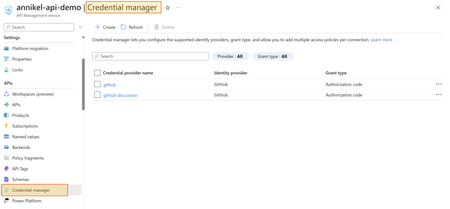
We're excited to introduce the rebranding and feature enhancements of Azure API Management's Credential Manager, previously known as Authorizations. In addition, Credential Manager now includes capabilities for user-delegated permissions.6.3KViews1like2CommentsAgents League: Join the Reasoning Agents Track
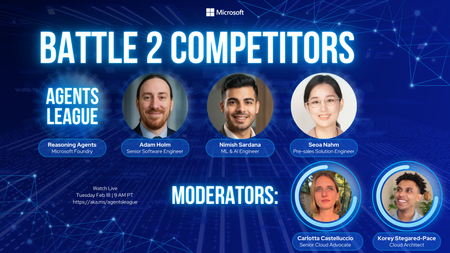
In a previous blog post, we introduced Agents League, a two‑week AI agent challenge running February 16–27, and gave an overview of the three available tracks. In this post, we’ll zoom in on one of them in particular:🧠 The Reasoning Agents track, built on Microsoft Foundry. If you’re interested in multi‑step reasoning, planning, verification, and multi‑agent collaboration, this is the track designed for you. What Do We Mean by “Reasoning Agents”? Reasoning agents go beyond simple prompt–response interactions. They are agents that can: Plan how to approach a task Break problems into steps Reason across intermediate results Verify or critique their own outputs Collaborate with other agents to solve more complex problems With Microsoft Foundry (via UI or SDK) and/or the Microsoft Agent Framework, you can design agent systems that reflect real‑world decision‑making patterns—closer to how teams of humans work together. Why Build Reasoning Agents on Microsoft Foundry? Microsoft Foundry provides production‑ready building blocks for agentic systems, without locking you into a single way of working. For the Reasoning Agents track, Foundry enables you to: Define agent roles (planner, executor, verifier, critic, etc.) Orchestrate multi‑agent workflows Integrate tools, APIs, and MCP servers Apply structured reasoning patterns Observe and debug agent behavior as it runs You can work visually in the Foundry UI, programmatically via the SDK, or mix both approaches depending on your project. How to get started? Your first step to enter the arena is registering to the Agents League challenge: https://aka.ms/agentsleague/register. After you registered, navigate to the Reasoning Agent Starter Kit, to get more context about the challenge scenario, an example of multi-agent architecture to address it, along with some guidelines on the tech stack to use and useful resources to get started. There’s no single “correct” project, feel free to unleash your creativity and leverage AI-assisted development tools to accelerate your build process (e.g. GitHub Copilot). 👉 View the Reasoning Agents starter kit: https://github.com/microsoft/agentsleague/starter-kits Live Coding Battle: Reasoning Agents 📽️ Wednesday, Feb 18 – 9:00 AM PT During Week 1, we’re hosting a live coding battle dedicated entirely to the Reasoning Agents track. You’ll watch experienced developers from the community: Design agent architectures live Explain reasoning strategies and trade‑offs Make real‑time decisions about agent roles, tools, and flows The session is streamed on Microsoft Reactor and recorded, so you can watch it live (highly recommended for the best experience!) or later at your convenience. AMA Session on Discord 💬 Wednesday, Feb 25 – 9:00 AM PT In Week 2, it’s your turn to build—and ask questions. Join the Reasoning Agents AMA on Discord to: Ask about agent architecture and reasoning patterns Get clarification on Foundry capabilities Discuss MCP integration and multi‑agent design Get unstuck when your agent doesn’t behave as expected Prizes, Badges, and Recognition 🏆 $500 for the Reasoning Agents track winner 🎖️ Digital badge for everyone who registers and submits a project Important reminder: 👉 You must register before submitting to be eligible for prizes and the badge. Beyond the rewards, every participant receives feedback from Microsoft product teams, which is often the most valuable prize of all. Ready to Build Agents That Reason? If you’ve been curious about: Agentic architectures Multi‑step reasoning Verification and self‑reflection Building AI systems that explain their thinking …then the Reasoning Agents track is your arena. 📝 Register here: https://aka.ms/agentsleague/register 💬 Join Discord: https://aka.ms/agentsleague/discord 📽️ Watch live battles: https://aka.ms/agentsleague/battles The league starts February 16. The reasoning begins now.