azure red hat openshift
29 TopicsBuilding AI apps and agents for the new frontier
Every new wave of applications brings with it the promise of reshaping how we work, build and create. From digitization to web, from cloud to mobile, these shifts have made us all more connected, more engaged and more powerful. The incoming wave of agentic applications, estimated to number 1.3 billion over the next 2 years[1] is no different. But the expectations of these new services are unprecedented, in part for how they will uniquely operate with both intelligence and agency, how they will act on our behalf, integrated as a member of our teams and as a part of our everyday lives. The businesses already achieving the greatest impact from agents are what we call Frontier Organizations. This week at Microsoft Ignite we’re showcasing what the best frontier organizations are delivering, for their employees, for their customers and for their markets. And we’re introducing an incredible slate of innovative services and tools that will help every organization achieve this same frontier transformation. What excites me most is how frontier organizations are applying AI to achieve their greatest level of creativity and problem solving. Beyond incremental increases in efficiency or cost savings, frontier firms use AI to accelerate the pace of innovation, shortening the gap from prototype to production, and continuously refining services to drive market fit. Frontier organizations aren’t just moving faster, they are using AI and agents to operate in novel ways, redefining traditional business processes, evolving traditional roles and using agent fleets to augment and expand their workforce. To do this they build with intent, build for impact and ground services in deep, continuously evolving, context of you, your organization and your market that makes every service, every interaction, hyper personalized, relevant and engaging. Today we’re announcing new capabilities that help you build what was previously impossible. To launch and scale fleets of agents in an open system across models, tools, and knowledge. And to run and operate agents with the confidence that every service is secure, governed and trusted. The question is, how do you get there? How do you build the AI apps and agents fueling the future? Read further for just a few highlights of how Microsoft can help you become frontier: Build with agentic DevOps Perhaps the greatest area of agentic innovation today is in service of developers. Microsoft’s strategy for agentic DevOps is redefining the developer experience to be AI-native, extending the power of AI to every stage of the software lifecycle and integrating AI services into the tools embraced by millions of developers. At Ignite, we’re helping every developer build faster, build with greater quality and security and deliver increasingly innovative apps that will shape their businesses. Across our developer services, AI agents now operate like an active member of your development and operations teams – collaborating, automating, and accelerating every phase of the software development lifecycle. From planning and coding to deployment and production, agents are reshaping how we build. And developers can now orchestrate fleets of agents, assigning tasks to agents to execute code reviews, testing, defect resolution, and even modernization of legacy Java and .NET applications. We continue to take this strategy forward with a new generation of AI-powered tools, with GitHub Agent HQ making coding agents like Codex, Claude Code, and Jules available soon directly in GitHub and Visual Studio Code, to Custom Agents to encode domain expertise, and “bring your own models” to empower teams to adapt and innovate. It’s these advancements that make GitHub Copilot, the world’s the most popular AI pair programmer, serving over 26 million users and helping organizations like Pantone, Ahold Delhaize USA, and Commerzbank streamline processes and save time. Within Microsoft’s own developer teams, we’re seeing transformative results with agentic DevOps. GitHub Copilot coding agent is now a top contributor—not only to GitHub’s core application but also to our major open-source projects like the Microsoft Agent Framework and Aspire. Copilot is reducing task completion time from hours to minutes and eliminating up to two weeks of manual development effort for complex work. Across Microsoft, 90% of pull requests are now covered by GitHub Copilot code review, increasing the pace of PR completion. Our AI-powered assistant for Microsoft’s engineering ecosystem is deeply integrated into VS Code, Teams, and other tools, giving engineers and product managers real-time, context-aware answers where they work—saving 2.2k developer days in September alone. For app modernization, GitHub Copilot has reduced modernization project timelines by as much as 88%. In production environments, Azure SRE agent has handled over 7K incidents and collected diagnostics on over 18K incidents, saving over 10,000 hours for on-call engineers. These results underscore how agentic workflows are redefining speed, scale, and reliability across the software lifecycle at Microsoft. Launch at speed and scale with a full-stack AI app and agent platform We’re making it easier to build, run, and scale AI agents that deliver real business outcomes. To accelerate the path to production for advanced AI applications and agents is delivering a complete, and flexible foundation that helps every organization move with speed and intelligence without compromising security, governance or operations. Microsoft Foundry helps organizations move from experimentation to execution at scale, providing the organization-wide observability and control that production AI requires. More than 80,000 customers, including 80% of the Fortune 500, use Microsoft Foundry to build, optimize, and govern AI apps and agents today. Foundry supports open frameworks like the Microsoft Agent Framework for orchestration, standard protocols like Model Context Protocol (MCP) for tool calling, and expansive integrations that enable context-aware, action-oriented agents. Companies like Nasdaq, Softbank, Sierra AI, and Blue Yonder are shipping innovative solutions with speed and precision. New at Ignite this year: Foundry Models With more than 11,000 models like OpenAI’s GPT-5, Anthropic’s Claude, and Microsoft’s Phi at their fingertips, developers, Foundry delivers the broadest model selection on any cloud. Developers have the power to benchmark, compare, and dynamically route models to optimize performance for every task. Model router is now generally available in Microsoft Foundry and in public preview in Foundry Agent Service. Foundry IQ, Delivering the deep context needed to make every agent grounded, productive, and reliable. Foundry IQ, now available in public preview, reimagines retrieval-augmented generation (RAG) as a dynamic reasoning process rather than a one-time lookup. Powered by Azure AI Search, it centralizes RAG workflows into a single grounding API, simplifying orchestration and improving response quality while respecting user permissions and data classifications. Foundry Agent Service now offers Hosted Agents, multi-agent workflows, built-in memory, and the ability to deploy agents directly to Microsoft 365 and Agent 365 in public preview. Foundry Tools, empowers developers to create agents with secure, real-time access to business systems, business logic, and multimodal capabilities. Developers can quickly enrich agents with real-time business context, multimodal capabilities, and custom business logic through secure, governed integration with 1,400+ systems and APIs. Foundry Control Plane, now in public preview, centralizes identity, policy, observability, and security signals and capabilities for AI developers in one portal. Build on an AI-Ready foundation for all applications Managed Instance on Azure App Service lets organizations migrate existing .NET web applications to the cloud without the cost or effort of rewriting code, allowing them to migrate directly into a fully managed platform-as-a-service (PaaS) environment. With Managed Instance, organizations can keep operating applications with critical dependencies on local Windows services, third-party vendor libraries, and custom runtimes without requiring any code changes. The result is faster modernizations with lower overhead, and access to cloud-native scalability, built-in security and Azure’s AI capabilities. MCP Governance with Azure API Management now delivers a unified control plane for APIs and MCP servers, enabling enterprises to extend their existing API investments directly into the agentic ecosystem with trusted governance, secure access, and full observability. Agent Loop and native AI integrations in Azure Logic Apps enable customers to move beyond rigid workflows to intelligent, adaptive automation that saves time and reduces complexity. These capabilities make it easier to build AI-powered, context-aware applications using low-code tools, accelerating innovation without heavy development effort. Azure Functions now supports hosting production-ready, reliable AI agents with stateful sessions, durable tool calls, and deterministic multi-agent orchestrations through the durable extension for Microsoft Agent Framework. Developers gain automatic session management, built-in HTTP endpoints, and elastic scaling from zero to thousands of instances — all with pay-per-use pricing and automated infrastructure. Azure Container Apps agents and security supercharges agentic workloads with automated deployment of multi-container agents, on-demand dynamic execution environments, and built-in security for runtime protection, and data confidentiality. Run and operate agents with confidence New at Ignite, we’re also expanding the use of agents to keep every application secure, managed and operating without compromise. Expanded agentic capabilities protect applications from code to cloud and continuously monitor and remediate production issues, while minimizing the efforts on developers, operators and security teams. Microsoft Defender for Cloud and GitHub Advanced Security: With the rise of multi-agent systems, the security threat surface continues to expand. Increased alert volumes, unprioritized threat signals, unresolved threats and a growing backlog of vulnerabilities is increasing risk for businesses while security teams and developers often operate in disconnected tools, making collaboration and remediation even more challenging. The new Defender for Cloud and GitHub Advanced Security integration closes this gap, connecting runtime context to code for faster alert prioritization and AI-powered remediation. Runtime context prioritizes security risks with insights that allow teams to focus on what matters most and fix issues faster with AI-powered remediation. When Defender for Cloud finds a threat exposed in production, it can now link to the exact code in GitHub. Developers receive AI suggested fixes directly inside GitHub, while security teams track progress in Defender for Cloud in real time. This gives both sides a faster, more connected way to identify issues, drive remediation, and keep AI systems secure throughout the app lifecycle. Azure SRE Agent is an always-on, AI-powered partner for cloud reliability, enabling production environments to become self-healing, proactively resolve issues, and optimize performance. Seamlessly integrated with Azure Monitor, GitHub Copilot, and incident management tools, Azure SRE Agent reduces operational toil. The latest update introduces no-code automation, empowering teams to tailor processes to their unique environments with minimal engineering overhead. Event-driven triggers enable proactive checks and faster incident response, helping minimize downtime. Expanded observability across Azure and third-party sources is designed to help teams troubleshoot production issues more efficiently, while orchestration capabilities support integration with MCP-compatible tools for comprehensive process automation. Finally, its adaptive memory system is designed to learn from interactions, helping improve incident handling and reduce operational toil, so organizations can achieve greater reliability and cost efficiency. The future is yours to build We are living in an extraordinary time, and across Microsoft we’re focused on helping every organization shape their future with AI. Today’s announcements are a big step forward on this journey. Whether you’re a startup fostering the next great concept or a global enterprise shaping your future, we can help you deliver on this vision. The frontier is open. Let’s build beyond expectations and build the future! Check out all the learning at Microsoft Ignite on-demand and read more about the announcements making it happen at: Recommended sessions BRK113: Connected, managed, and complete BRK103: Modernize your apps in days, not months, with GitHub Copilot BRK110: Build AI Apps fast with GitHub and Microsoft Foundry in action BRK100: Best practices to modernize your apps and databases at scale BRK114: AI Agent architectures, pitfalls and real-world business impact BRK115: Inside Microsoft's AI transformation across the software lifecycle Announcements aka.ms/AgentFactory aka.ms/AppModernizationBlog aka.ms/SecureCodetoCloudBlog aka.ms/AppPlatformBlog [1] IDC Info Snapshot, sponsored by Microsoft, 1.3 Billion AI Agents by 2028, #US53361825 and May 2025.9.4KViews2likes0CommentsWhat makes Azure Red Hat OpenShift a streamlined experience for developers?
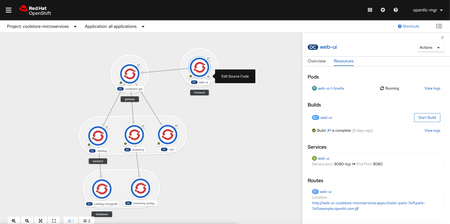
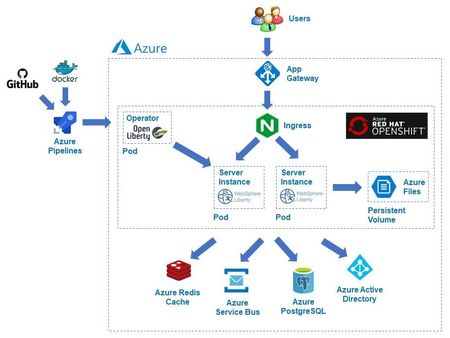
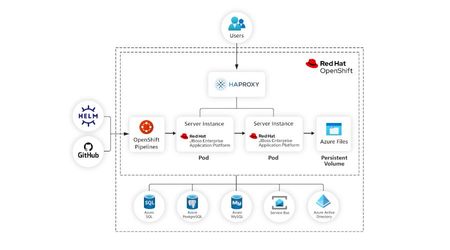
Kubernetes was built for the needs of IT operations, not developers. Wouldn’t it be nice if you can write code and push to source control, then have your application up and running in minutes? Azure Red Hat OpenShift runs Kubernetes at its core and includes everything you need to manage your development lifecycle, such as standardized workflows, support for multiple environments, continuous integration, release management, and more.7KViews2likes0CommentsNew releases in container configuration — Kubernetes on Azure
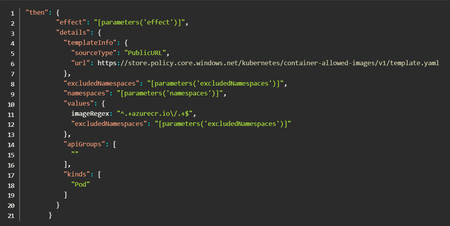
We work with Azure customers every day to drive our roadmap, ensuring that we are balancing the innovative capabilities of the cloud-native ecosystem with the requirements of some of the world’s largest companies. Today, I'd like to highlight some of our latest updates to Azure Kubernetes Service and Azure Red Hat OpenShift that enable customers to achieve their compliance and organizational requirements, while adopting cloud-native technology.6.1KViews2likes0CommentsJ4K – A Virtual Conference for Java Developers on Kubernetes – Coming to you on June 9th, 2021
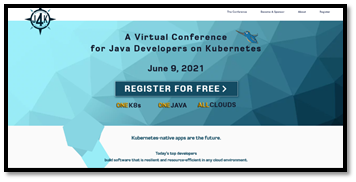
J4K is an industry-leading developer-oriented conference focused on open-source and hybrid cloud application development of Java and Kubernetes. This is a community event, delivered by stellar Java community leaders, and is dedicated to enriching developers and architects with cloud-focused solutions. Registration is free.5.4KViews0likes0CommentsReimagining App Modernization for the Era of AI
This blog highlights the key announcements and innovations from Microsoft Build 2025. It focuses on how AI is transforming the software development lifecycle, particularly in app modernization. Key topics include the use of GitHub Copilot for accelerating development and modernization, the introduction of Azure SRE agent for managing production systems, and the launch of the App Modernization Guidance to help organizations modernize their applications with AI-first design. The blog emphasizes the strategic approach to modernization, aiming to reduce complexity, improve agility, and deliver measurable business outcomes5KViews2likes0Comments