azure event grid
16 TopicsMicrosoft named a Leader in the Forrester Wave™: Integration Platforms As A Service, Q3 2023
We’re excited to announce that Forrester Research has recognized Microsoft as a Leader in the Forrester Wave™: Integration Platforms As A Service, Q3 2023. We believe this is a testament to our deep understanding of customer needs, strong customer engagement and adoption success, and continued investments in customers’ integration needs.5.3KViews3likes0Comments
Introducing native Service Bus message publishing from Azure API Management (Preview)
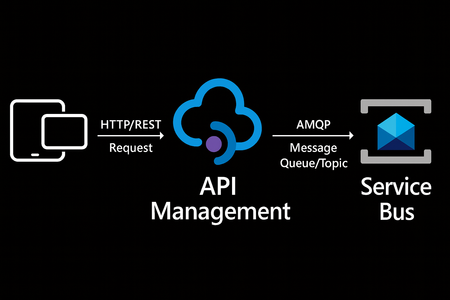
We’re excited to announce a preview capability in Azure API Management (APIM) — you can now send messages directly to Azure Service Bus from your APIs using a built-in policy. This enhancement, currently in public preview, simplifies how you connect your API layer with event-driven and asynchronous systems, helping you build more scalable, resilient, and loosely coupled architectures across your enterprise. Why this matters? Modern applications increasingly rely on asynchronous communication and event-driven designs. With this new integration: Any API hosted in API Management can publish to Service Bus — no SDKs, custom code, or middleware required. Partners, clients, and IoT devices can send data through standard HTTP calls, even if they don’t support AMQP natively. You stay in full control with authentication, throttling, and logging managed centrally in API Management. Your systems scale more smoothly by decoupling front-end requests from backend processing. How it works The new send-service-bus-message policy allows API Management to forward payloads from API calls directly into Service Bus queues or topics. High-level flow A client sends a standard HTTP request to your API endpoint in API Management. The policy executes and sends the payload as a message to Service Bus. Downstream consumers such as Logic Apps, Azure Functions, or microservices process those messages asynchronously. All configurations happen in API Management — no code changes or new infrastructure are required. Getting started You can try it out in minutes: Set up a Service Bus namespace and create a queue or topic. Enable a managed identity (system-assigned or user-assigned) on your API Management instance. Grant the identity the “Service Bus data sender” role in Azure RBAC, scoped to your queue/ topic. Add the policy to your API operation: <send-service-bus-message queue-name="orders"> <payload>@(context.Request.Body.As<string>())</payload> </send-service-bus-message> Once saved, each API call publishes its payload to the Service Bus queue or topic. 📖 Learn more. Common use cases This capability makes it easy to integrate your APIs into event-driven workflows: Order processing – Queue incoming orders for fulfillment or billing. Event notifications – Trigger internal workflows across multiple applications. Telemetry ingestion – Forward IoT or mobile app data to Service Bus for analytics. Partner integrations – Offer REST-based endpoints for external systems while maintaining policy-based control. Each of these scenarios benefits from simplified integration, centralized governance, and improved reliability. Secure and governed by design The integration uses managed identities for secure communication between API Management and Service Bus — no secrets required. You can further apply enterprise-grade controls: Enforce rate limits, quotas, and authorization through APIM policies. Gain API-level logging and tracing for each message sent. Use Service Bus metrics to monitor downstream processing. Together, these tools help you maintain a consistent security posture across your APIs and messaging layer. Build modern, event-driven architectures With this feature, API Management can serve as a bridge to your event-driven backbone. Start small by queuing a single API’s workload, or extend to enterprise-wide event distribution using topics and subscriptions. You’ll reduce architectural complexity while enabling more flexible, scalable, and decoupled application patterns. Learn more: Get the full walkthrough and examples in the documentation 👉 here5.2KViews4likes10CommentsForrester Total Economic Impact™ study of Azure Integration Services - 295 percent ROI over 3 years
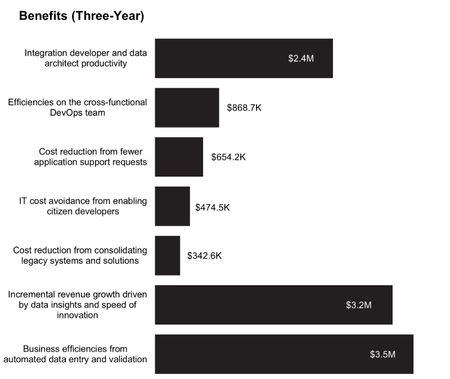
To provide businesses with a clearer understanding of the potential return on investment (ROI) when implementing Azure Integration Services, Microsoft commissioned Forrester Consulting to conduct a Total Economic Impact™ (TEI) study. Based on the interviews with decision-makers across these five organizations, and a trusted financial model, this 2023 TEI study revealed that Azure Integration Services collectively delivered a substantial 295 percent ROI over a three-year period. This significant return on investment is a testament to the platform's effectiveness.5.1KViews2likes0CommentsAzure Innovation Forum: Unleash the Power of a Modern Integration Platform
In their drive to deliver innovative connected experiences, businesses have seen a sharp rise in the number of applications they manage. Effectively integrating these applications that stretch across on-premises and multi-cloud environments is a challenge. Achieving seamless integration is not only crucial for efficient operations, but it's also a key strategy to outpace competitors in the market. We are excited to announce, "Unleash the Power of a Modern Integration Platform", the latest in the Microsoft Azure Innovation Forum webinar series, scheduled for October 5, 2023, at 2:00 PM GMT. In this 90-minute, interactive session, you will hear from analysts, product leaders, and our customers on how Azure Integration Services accelerates innovation, boosts productivity, and promotes a competitive advantage. Reserve your place today.4.3KViews2likes2CommentsDiscover your next integration inspiration at this year’s Ignite!
In this blog we’ll explore the major announcements for Azure Integration Services coming out of this year’s Ignite event. Join us online for a dynamic journey during which you'll gain invaluable insights, connect with industry experts, and uncover the full potential of Azure Integration Services.Azure Integration Services Quarterly Highlights and Insights 2024'Q1
Welcome to the first in a new series of quarterly blogs that will feature the latest and greatest from Azure Integration Services. With so many exciting new Azure products, Microsoft events, and updates from our partners and customers throughout the year, this series is your chance to revisit the highlights that continue to enable digital transformation with Azure Integration Services.3.1KViews3likes0Comments