azure database for postgresql flexible server
114 TopicsAnnouncing new security, maintenance and analytics features for PostgreSQL at Microsoft Build 2026
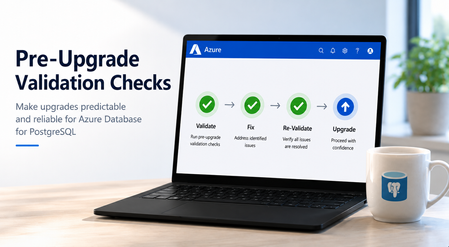
At Microsoft Build 2026, we’re announcing a major wave of PostgreSQL innovation across Azure. Alongside the public preview of Azure HorizonDB, we’re delivering a broad set of enhancements for our fully managed open-source PostgreSQL service: Azure Database for PostgreSQL flexible server. These updates span performance, analytics, security, operations, resilience and migration - helping you build faster, operate with more control, secure your workloads, and modernize with confidence. Here’s a quick tour of the top flexible server announcements at Build 2026. Feature Highlights pg_ivm Extension Defender Security assessments temporal_tables Extension Cross-tenant CMK Automatic Entra token refresh libraries New Powershell module: Az.PostgreSQLFlexibleServer More control over planned maintenance Pre-Upgrade validation checks New Built-in Grafana dashboards Chaos Studio supports Azure Database for PostgreSQL AI-assisted Oracle to PostgreSQL migration Migration Service for Azure Database for PostgreSQL improvements (EDB, AlloyDB) Performance, Scale & Analytics pg_ivm Extension Generally Available Materialized views are a useful way to optimize performance for queries that run regularly, but if underlying data becomes stale the result set needs to be recomputed. With the pg_ivm extension you can automatically maintain materialized views as the underlying data changes. This is particularly valuable for large datasets with small incremental changes that need real-time freshness, like dashboards, catalog analytics and SaaS usage reporting. We are pleased to announce the pg_ivm extension is now generally available in Azure Database for PostgreSQL. Learn more: pg_ivm. Security, Auditing & Identity Defender security assessments Preview Microsoft Defender Security Assessments for Azure Database for PostgreSQL enables continuous evaluation of your database security posture, helping identify vulnerabilities and misconfigurations across server and database configurations. Previously limited to reactive threat detection, in the latest preview release, Defender now provides proactive, risk-based insights through assessments tailored to PostgreSQL-specific best practices, delivering more relevant and actionable guidance. This helps you strengthen your security baseline, prioritize remediation, and align with best practices and compliance requirements. Learn more: https://aka.ms/Defender-Assessments-for-PG-Preview temporal_tables Extension Generally Available We’ve had many customer requests to support the temporal_tables extension, which provides built-in support for tracking and querying historical changes to data over time. Temporal tables are now generally available in Azure Database for PostgreSQL. With this extension enabled you can easily perform time-based queries, audit data changes, and maintain historical records without building custom tracking logic, simplifying application development and compliance scenarios. Learn more: temporal_tables Cross-tenant CMK Preview Azure Database for PostgreSQL now supports cross-tenant customer-managed keys (CMK) in public preview, allowing you to encrypt your data at rest using an Azure Key Vault key that resides in a separate Microsoft Entra tenant from the database service. This feature is designed for SaaS providers and enterprises that need to maintain strict separation of duties and ownership of encryption keys, enabling you to retain full control over key lifecycle management while PostgreSQL runs in a service provider’s tenant. Learn more: Data encryption at rest in Azure Database for PostgreSQL Automatic Entra token refresh libraries Preview We’re making it easier to use Entra ID authentication with Azure Database for PostgreSQL throughout the application stack by introducing new token refresh libraries for .NET, JavaScript, and Python. With Entra ID, access tokens are short-lived which can make managing their lifecycle complex in real-world applications. Developers need to be aware of token refresh and build additional handling around token expiration, connection retry, and session continuity. These new libraries remove that friction. By handling Entra token refresh seamlessly in the background, they allow applications to stay connected without interruption and with no custom logic required. The result is a simpler development experience and more resilient applications, especially for long-running or connection-heavy workloads. Across languages, the libraries provide a consistent and streamlined way to adopt secure, passwordless authentication, helping teams focus more on building their applications and less on managing authentication. Learn more: .NET, JavaScript, and Python. Operations, Maintenance & Monitoring New Powershell module: Az.PostgreSQLFlexibleServer Generally Available We’re excited to introduce the newly renamed Az.PostgreSQLFlexibleServer PowerShell module, delivering a streamlined experience for managing Azure Database for PostgreSQL with PowerShell. Building on the capabilities of the previous Az.PostgreSql module, the updated module aligns with the new features in the 2026-01-01 preview REST API. This module brings support for PostgreSQL 18, elastic clusters for scalable workloads and a range of enhancements designed to simplify management and improve performance. Whether you're provisioning new deployments or managing complex environments, this module ensures you can take full advantage of the latest platform capabilities directly from PowerShell. To learn more, visit our official documentation on PowerShell: Az.PostgreSql Module | Microsoft Learn More control over planned maintenance Generally Available We’ve seen many requests to provide more control when a maintenance update is applied to Azure Database for PostgreSQL. Sometimes when a critical workload is running you want to apply the maintenance when you’re ready. Announcing general availability this week, we’re building on the existing System and Custom maintenance window options and adding new self-service maintenance capabilities to the Azure portal. You can now reschedule upcoming maintenance updates for up to two weeks and apply maintenance on demand at a time that suits you. You can also view scheduled maintenance and review your server’s maintenance history after updates are complete. These options help you better align maintenance with your business schedules, reduce disruption during critical workload periods, and minimize the need for support-driven deferral requests. CLI and API support are coming soon. Learn more: https://aka.ms/azure-postgres-reschedule-maintenance Pre-Upgrade validation checks Preview Major version upgrades are critical for staying current with PostgreSQL features, security updates, and performance improvements, but you often discover blockers only after starting the upgrade workflow. Pre-Upgrade Validation Checks lets you validate upgrade readiness before initiating the actual upgrade by running Azure-specific upgrade checks and PostgreSQL pg_upgrade --check validations independently. The shift is simple: you can identify and fix upgrade blockers before the upgrade window begins. The feature surfaces actionable issues across configurations, extensions, dependencies, replication slots, event triggers, and other upgrade-sensitive objects. You can fix blockers, re-run validation until all checks pass, and proceed with the upgrade with greater predictability. Learn more: https://aka.ms/pg-flex-upgrade-checks New Built-in Grafana dashboards Generally Available Grafana dashboards are now built directly into the Azure portal for Azure Database for PostgreSQL - no setup, no extra cost, and no separate service to manage. You can open your PostgreSQL resource in the portal and immediately access prebuilt dashboards for key health and performance signals such as CPU, memory, storage, IOPS, connections, transactions, and availability. The key value is metrics + logs in one place. You can quickly correlate performance spikes with PostgreSQL logs, understand what changed, and troubleshoot faster using the familiar Grafana experience. Dashboards can also be customized, saved to your subscription, and shared across teams for ongoing operations. Learn more: https://aka.ms/azure-postgres-dashboards-grafana Resilience & Business Continuity Chaos Studio supports Azure Database for PostgreSQL Preview No matter how much you prepare, you only really know how good your database disaster recovery plan is when something breaks. With Chaos Studio support for Azure Database for PostgreSQL, you can simulate zone-down scenarios on PostgreSQL HA-enabled instances and validate the resilience of your mission-critical workloads. With Chaos Studio integration, you can proactively test failover behavior and gain confidence in how your applications respond to real-world zonal failures. This feature is currently available through a gated private preview. To get started, submit your subscription details using the form. Once reviewed, our team will enable the feature for your subscription, with guidance to help you begin testing. Getting started is simple: Create a Chaos Studio workspace via the Chaos Studio portal and configure your subscription, resource group, and region. Define the scope and assign the required managed identity and permissions. Review and verify your workspace setup. Browse available scenarios and select the PostgreSQL zone-down scenario. Configure the test (name, duration), then run it from My Library to begin validating failover behavior. With just a few steps, you’ll be able to simulate real-world failure conditions and gain confidence in your application’s resilience. To get started, please submit your details using this link: Private Preview Support for Chaos Studio Migration & Modernization AI-assisted Oracle to PostgreSQL migration Generally Available AI-assisted migration tooling has dramatically lowered the bar for moving between different databases and is changing the way people look at the return on investment for migration. The VS Code PostgreSQL extension comes with AI-Assisted migration tooling which converts Oracle schema and application code to Azure Database for PostgreSQL. This tooling uses GitHub Copilot, Microsoft Foundry, and custom Language Model tools to convert Oracle schema, database code and client applications into the PostgreSQL equivalents, and validates every change against a running flexible server instance. Learn more: Schema conversion, App conversion. Migration Service for Azure Database for PostgreSQL improvements (EDB, AlloyDB) Generally Available We’ve added AlloyDB and EDB Extended Server as new sources for migrating to PostgreSQL in the Azure Database for PostgreSQL Migration Service, with support for both online and offline migration support. Learn more: Migrate from AlloyDB, Migrate from EDB. Looking ahead That wraps up the Build 2026 announcements for Azure Database for PostgreSQL flexible server. There are also many great PostgreSQL technical sessions at Build this week, covering cloud-native app & AI development and migration. To find out more, here's a link to the Build session catalog for PostgreSQL sessions: https://aka.ms/Postgres-on-Azure_Build-2026. We'll continue to build out our roadmap over the coming months to deliver on your asks to improve the performance, security and stability of your PostgreSQL workloads. Check the Microsoft Blog for PostgreSQL for a regular monthly recap where we share the latest enhancements and product updates.1.6KViews2likes0CommentsLog Insights in Minutes: A Simpler pgBadger Workflow
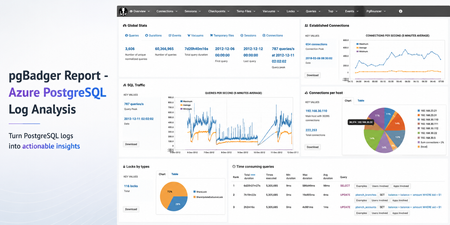
Sometimes the fastest way to understand a PostgreSQL workload is not another dashboard. It is a good log report. pgBadger is a PostgreSQL log analysis tool that turns raw PostgreSQL logs into an interactive HTML report. It helps summarize query activity, connection patterns, errors, temporary files, lock waits, autovacuum activity, and more. Earlier guidance for generating pgBadger reports from Azure Database for PostgreSQL Flexible Server focused on exporting logs through Diagnostic Settings, storing them in a storage account, and then using tools such as BlobFuse and jq to extract PostgreSQL log lines from JSON files. That workflow is still useful when customers centralize logs across multiple servers. However, if you are already using the Server logs feature in Azure Database for PostgreSQL Flexible Server, there is a much simpler path. In this post: You’ll learn how to generate a pgBadger HTML report from Azure Database for PostgreSQL Flexible Server by downloading native PostgreSQL .log files directly from the Azure portal. No storage account, BlobFuse mount, or JSON extraction required. Fast path Configure log_line_prefix . Enable Server logs for download. Download the PostgreSQL .log files. Run pgBadger with the matching prefix. Open pgbadger-report.html . Why use this workflow? With Server logs, you can download native PostgreSQL .log files directly from the Azure portal and run pgBadger locally. Older path Simpler path in this blog Diagnostic Settings → Storage account → BlobFuse → JSON extraction → pgBadger Server logs → Download .log files → pgBadger Area Older Diagnostic Settings workflow Server logs workflow Export path Diagnostic Settings to storage account Download .log files directly from the portal Format JSON payloads need extraction Native PostgreSQL .log files Extra tooling BlobFuse and jq JSON parsing None Best suited for Centralized or multi-server logging Quick per-server analysis Outcome Flexible, but more setup Faster path to pgBadger Recommended: Use the Server logs workflow when you want a fast, low-friction way to generate a pgBadger report from one Azure Database for PostgreSQL Flexible Server. When should you use this workflow? Use this workflow when... Use Diagnostic Settings when... You need a quick report for one Flexible Server. You centralize logs from many servers. You want to run pgBadger locally. You need long-term retention or workspace-level querying. You want to avoid JSON extraction. You already have automated log export pipelines. Before you start A machine where you can install or run pgBadger. A working Perl runtime. Git Bash on Windows, so the multi-line shell commands work as shown. Portal access to your Azure Database for PostgreSQL Flexible Server. Permission to update server parameters and enable Server logs. Important: pgBadger can only analyze what PostgreSQL logs capture. To populate query timing and slow-query sections in the report, enable log_min_duration_statement before collecting logs. Logs collected before that change will not include duration data. Workflow overview Task Type Rough effort Install or prepare pgBadger One-time setup per analysis machine 5–10 minutes Configure log_line_prefix One-time setup per server 2–3 minutes Enable Server logs One-time setup per server 2–3 minutes Download logs and run pgBadger Repeatable 2–5 minutes Install or prepare pgBadger on the machine where you will analyze logs. Configure log_line_prefix so pgBadger can parse each log line. Enable Server logs, so PostgreSQL logs are available for download. Download the logs and run pgBadger locally. 💡Pro tip: Start with a narrow log window first. Use one or two hourly log files, confirm the report looks right, and then expand the analysis window if needed. Step 1: Install pgBadger Before generating a report, you need pgBadger available on the machine where you plan to analyze the downloaded PostgreSQL log files. Run this on a Linux VM, WSL, or another Linux-based environment where you can install packages. Note: Azure Cloud Shell may work for quick testing, but package installation and build-tool availability can vary by session. For repeatable analysis, use a Linux VM, WSL, or another environment you control. Copy and run sudo apt-get update && sudo apt-get install -y git perl make gcc && \ git clone https://github.com/darold/pgbadger.git && \ cd pgbadger && \ perl Makefile.PL && \ make && \ sudo make install && \ pgbadger -V What good looks like: The install command completes successfully and pgbadger -V returns the installed pgBadger version. Step 2: Configure log_line_prefix This is a one-time server configuration step. The log_line_prefix parameter controls the beginning of each PostgreSQL log line. pgBadger uses this prefix to extract useful fields such as timestamp, user, database, and process ID. In the Azure portal, open your Flexible Server and go to Server parameters. Search for: Parameter log_line_prefix Set this value %m user=%u db=%d pid=%p: Then select Save. In Server parameters, confirm that the custom value is saved for log_line_prefix . Figure 1: Set log_line_prefix so pgBadger can correctly parse timestamp, user, database, and process ID from each log line. Prefix tokens Token Meaning %m Timestamp with milliseconds %u Username %d Database name %p Process ID After this change, log lines should look like this: Example log line 2026-06-22 19:00:00.070 UTC user=pgadmin db=highcpu pid=3805603: LOG: statement: SELECT 1 FROM pg_extension WHERE extname='pg_stat_statements' The matching pgBadger prefix for this log format is: Matching pgBadger prefix %m user=%u db=%d pid=%p: You will use this same value later in the pgBadger command. What good looks like: The server parameter is saved, and new PostgreSQL log lines begin with timestamp, user, database, and process ID fields that match the pgBadger prefix. Step 3: Enable Server logs for download This is also a one-time setup step. In the Azure portal, open your Flexible Server and go to Server logs. Enable: Portal setting Capture logs for download Set the retention period based on how long you want logs to remain available for download. For example, a 7-day retention period keeps logs available for download for 7 days. In Server logs, enable Capture logs for download and choose the retention window. Figure 2: Enable Capture logs for download and set a retention period long enough to cover the analysis window you want to inspect. What good looks like: After Server logs are enabled, hourly PostgreSQL log files appear in the Server logs blade and can be downloaded from the Azure portal. Once enabled, hourly log files appear in the Server logs blade. The files are named by date and hour, for example: Example log files postgresql_2026_06_22_19_00_00.log postgresql_2026_06_22_20_00_00.log Step 4: Download and organize the logs locally From the Server logs page, select the .log files for the time window you want to analyze and download them. For example, to analyze activity between 19:00 and 21:00 UTC, download: Example files to download postgresql_2026_06_22_19_00_00.log postgresql_2026_06_22_20_00_00.log On your local machine, create a folder for that analysis window. A simple convention is to use the Mon-DD format. Folder name Jun-22 Place the downloaded .log files inside that folder. Your local folder structure should look like this: Folder structure pgbadger-13.1/ pgbadger Jun-22/ postgresql_2026_06_22_19_00_00.log postgresql_2026_06_22_20_00_00.log Step 5: Generate the pgBadger report Open Git Bash from the folder where pgBadger is located. For example, if pgBadger is inside the pgbadger-13.1 folder, open Git Bash from that folder. # Action Command 1 Set the folder FOLDER=Jun-22 2 Confirm files ls -lh ./$FOLDER 3 Run pgBadger Use the full command below. Copy and run FOLDER=Jun-22 ls -lh ./$FOLDER perl -X ./pgbadger -f stderr \ --prefix '%m user=%u db=%d pid=%p:' \ ./$FOLDER/*.log \ -o ./$FOLDER/pgbadger-report.html Command breakdown Part of command Purpose perl -X ./pgbadger Runs pgBadger and suppresses non-critical Perl warnings. -f stderr Parses PostgreSQL stderr log files. --prefix '%m user=%u db=%d pid=%p:' Matches the log_line_prefix set on the server. ./$FOLDER/*.log Analyzes every .log file in the selected folder. -o ./$FOLDER/pgbadger-report.html Writes the HTML report into the same folder. When the command completes successfully, you should see output like this: Expected output Parsed 12134249 bytes of 12134249 (100.00%), queries: 26684, events: 83 LOG: Ok, generating html report... What good looks like: pgBadger finishes parsing the logs and creates pgbadger-report.html in the selected folder. Step 6: Open the report Open the generated report: Copy and run start ./$FOLDER/pgbadger-report.html The report opens in your default browser. The final report is created here: Generated report path Jun-22/pgbadger-report.html What the report can show The pgBadger report gives you a quick view into the workload shape for the selected log window. For example, in a sample run across two hourly log files, pgBadger summarized: Total number of queries. Number of unique normalized queries. Query traffic over time. Events such as errors and fatal messages. Session and connection patterns. Once the report opens, start with Global Stats to confirm the time range, total queries, normalized queries, and query peak. Figure 3: Start with Global Stats to validate the selected time range, total query count, normalized query count, and query peak. Query volume and normalized queries Many raw queries can often reduce to a smaller number of normalized query patterns. This helps identify whether the workload is spread across many different query shapes or dominated by a smaller set of repeated statements. Example: In this sample run, 26,684 queries reduced to 59 normalized query shapes. That suggests the workload is mostly a small set of repeated statements, which can help focus tuning effort. Traffic patterns The SQL Traffic section helps identify spikes, quiet periods, and workload changes over time. Figure 4: Use SQL Traffic to identify query spikes, quiet periods, and workload changes during the selected log window. Figure 5: Review the query breakdown to compare read vs. write volume and query-type distribution for the selected Server logs window. For example, if the report shows a steady baseline followed by a sharp spike, that spike can be correlated with application activity, batch jobs, synthetic tests, or operational events during the same time window. Query duration If query duration shows 0 ms or the slow query sections are empty, it usually means duration logging was not enabled when the logs were collected. In that case, pgBadger can still show query counts and events, but it cannot calculate the slowest queries, total execution time, average duration, or maximum duration. To unlock those timing sections, enable log_min_duration_statement , collect fresh logs, and rerun pgBadger. What pgBadger cannot infer from missing logs pgBadger reports are only as complete as the log data you provide. If PostgreSQL did not log duration, lock waits, temporary files, or autovacuum activity during the selected time window, pgBadger cannot reconstruct those details later. To analyze... Enable before collecting logs Slow queries log_min_duration_statement Lock waits log_lock_waits Temporary files log_temp_files Autovacuum activity log_autovacuum_min_duration Repeatable copy/paste block Reusable command block Change only FOLDER for each new analysis window. Copy and run FOLDER=Jun-22 ls -lh ./$FOLDER perl -X ./pgbadger -f stderr \ --prefix '%m user=%u db=%d pid=%p:' \ ./$FOLDER/*.log \ -o ./$FOLDER/pgbadger-report.html start ./$FOLDER/pgbadger-report.html For another date, change only this line: Update this value FOLDER=Jun-22 Examples: Example folder values FOLDER=Jun-23 FOLDER=Jul-01 FOLDER=Aug-15 Optional: Improve report quality pgBadger can only analyze the information captured in PostgreSQL logs. The default logs may be enough for query frequency, connection activity, and errors. For deeper performance troubleshooting, consider enabling additional logging parameters based on your scenario. Scenario Parameter Suggested value Notes Slow query analysis log_min_duration_statement 1000 Logs statements slower than 1 second. Short controlled test log_min_duration_statement 0 Logs every statement. Use carefully. Lock troubleshooting log_lock_waits on Helps identify lock waits. Temporary file analysis log_temp_files 0 Logs all temporary files. Autovacuum visibility log_autovacuum_min_duration 0 Useful during focused analysis. Useful parameters include: Recommended logging parameters log_lock_waits = on log_temp_files = 0 log_autovacuum_min_duration = 0 To capture query durations, configure: Duration logging log_min_duration_statement = 1000 This logs statements that run longer than 1000 milliseconds. For short test runs, you can temporarily use: Short test run only log_min_duration_statement = 0 Caution: Use log_min_duration_statement = 0 carefully on busy production servers. It logs every statement and can generate a large volume of logs. Duration matters: If duration logging is not enabled, pgBadger can still show query counts and events, but slowest-query, total duration, average duration, and maximum duration sections will be limited or empty. Common mistakes and quick fixes Symptom Likely cause Fix Report is empty Prefix mismatch Match --prefix with log_line_prefix . No duration data Duration logging was not enabled Set log_min_duration_statement before collecting logs. No files visible Server logs disabled or retention expired Enable capture and check retention. pgBadger command fails pgBadger is not in the current folder or path Run pgbadger -V to confirm installation. Common troubleshooting FAQs 1. Report is created but empty This usually means the pgBadger prefix did not match the actual log format. Check the first few lines: Copy and run head -5 ./$FOLDER/*.log Make sure the pgBadger --prefix matches the server’s log_line_prefix . 2. Report shows queries but no duration PostgreSQL logged statements but did not log durations. Enable one of the following, collect fresh logs, and rerun pgBadger: Parameter options log_min_duration_statement = 1000 # or temporarily for testing log_min_duration_statement = 0 3. No .log files are visible Confirm that Server logs are enabled: Portal setting Capture logs for download Also check the retention period. If the retention period has expired, older logs may no longer be available for download. 4. pgBadger command fails Confirm that pgBadger is available in the current folder or installed in your path. Copy and run pgbadger -V If you are running pgBadger from the local folder, use: Copy and run perl -X ./pgbadger Summary For customers already using Azure Database for PostgreSQL Flexible Server logs, the pgBadger workflow is straightforward: Install pgBadger. Configure log_line_prefix . Enable Server logs for download. Download the .log files. Place them in a local date-based folder. Run pgBadger with the matching prefix. Open pgbadger-report.html . Bottom line: Server logs give you the shortest path from Azure Database for PostgreSQL Flexible Server logs to a pgBadger report. Download the native .log files, run pgBadger with the matching prefix, and open the generated HTML report. References pgBadger - source and documentation GitHub pgBadger - project site Azure - Download server logs from the portal Flexible Server Azure - Logging concepts Flexible Server Azure - Configure server parameters via the portal PostgreSQL - log_line_prefix and logging parameters673Views2likes0CommentsJune 2026 Recap: Azure Database for PostgreSQL
POSETTE 2026 We hosted POSETTE: An Event for Postgres 2026 in June! This year marked our 5th annual event featuring 50 speakers and a total of 44 talks. PostgreSQL developers, contributors, and community members came together to share insights on topics covering everything from AI-powered applications to deep dives into PostgreSQL internals. If you missed it, you can catch up by watching the POSETTE livestream sessions. If this conference sounds interesting to you and want to be part of it next year, don’t forget to subscribe to POSETTE news. Features 💡 Chaos Studio Workspaces for Azure Database for PostgreSQL Flexible Server – Public Preview Chaos Studio Workspaces now support Azure Database for PostgreSQL Flexible Server in Public Preview. You point a Workspace at a subscription or resource group, and Chaos Studio discovers your Flexible Server instances and recommends a PostgreSQL zone-down failover Scenario. The Scenario requires a Flexible Server with High Availability enabled. Running the Scenario simulates an availability-zone outage, drives an HA failover, and produces a Scenario report of exactly what happened. Read more here: https://aka.ms/ChaosStudioPostgreSQL Try it today: https://aka.ms/chaos-portal Microsoft Defender Security Assessment for Azure Database for PostgreSQL - General Availability Microsoft Defender security posture assessments for Azure Database for PostgreSQL Flexible Server are now generally available. Built-in assessments continuously evaluate PostgreSQL configurations against PostgreSQL-specific security best practices, helping identify vulnerabilities and misconfigurations with actionable remediation guidance. Customers can use these assessments to strengthen their security baseline, prioritize remediation efforts, and support compliance requirements. Assessments are automatically available for servers already protected by Microsoft Defender for Cloud Security Posture Management (CSPM), with no additional setup required. An initial set of assessments is available today, with additional coverage planned for future releases to help strengthen the security posture of PostgreSQL workloads. Read more here: Microsoft Defender for Cloud - Azure Database for PostgreSQL | Microsoft Learn DROP CAST Support added Custom casts can be useful when applications need to convert between data types in a way that matches their business logic or migration requirements. Previously, while you could create custom casts, it wasn’t possible to drop them once they were no longer needed. With this update, you can now use the PostgreSQL DROP CAST command to clean up unused or obsolete casts, making it easier to manage schema customizations over time. Example: CREATE CAST (bigint AS text) WITH INOUT; … DROP CAST IF EXISTS (bigint AS text); Latest PostgreSQL minor versions: 18.4, 17.10, 16.14, 15.18, 14.23 Azure Database for PostgreSQL now supports the latest PostgreSQL minor versions: 18.4, 17.10, 16.14, 15.18, and 14.23. These updates are applied automatically during planned maintenance windows, helping keep your databases current with the latest PostgreSQL community fixes and reliability improvements, with no manual action required. This release includes fixes across query correctness, planner behavior, replication, backup and restore tooling, logical replication, foreign data wrapper behavior, and timezone data, improving overall stability and correctness of database operations. For details about the minor release, see the PostgreSQL announcement. Azure PostgreSQL Learning Bytes 🎓 Generate a pgBadger report from Server Logs Need a quick workload readout from PostgreSQL logs? Use pgBadger with Azure PostgreSQL Server Logs. Fast path: Server logs → Download '.log' files → Generate pgBadger report Before collecting logs, set log_line_prefix in Server parameters: %m user=%u db=%d pid=%p: Then enable Server logs > Capture logs for download, download the .log files for the time window you want to analyze, place them in a local folder, and run: FOLDER=<logs-folder-name> pgbadger -f stderr \ --prefix '%m user=%u db=%d pid=%p:' \ ./$FOLDER/*.log \ -o ./$FOLDER/pgbadger-report.html Open the generated report: start ./$FOLDER/pgbadger-report.html This gives you a quick HTML report for query activity, connection patterns, events, lock waits, and workload spikes - without setting up a storage account, BlobFuse mount, or JSON extraction pipeline. 💡Tip: Start with one or two hourly log files first. Confirm the report looks right, then expand the log analysis window. Learn more: Log Insights in Minutes: A Simpler pgBadger Workflow292Views1like0CommentsSELECT * FROM build2026_sessions WHERE postgres = true;
Microsoft Build 2026 is around the corner, and this year it’s shaping up to be a big one for PostgreSQL experts and enthusiasts. If you’re a developer working with Postgres, or just love exploring new database technology, there's plenty to get excited about. Microsoft’s new cloud-first evolution of PostgreSQL, Azure HorizonDB, alongside sessions featuring Azure Database for PostgreSQL, will highlight how Postgres is powering the next wave of AI-driven applications. A new horizon in Postgres Build 2026 arrives at a time when the role of databases in modern apps is evolving rapidly. From enabling AI model integration to scaling seamlessly across the cloud, PostgreSQL developers today are dealing with more complex demands than ever. That’s why Azure HorizonDB – Microsoft’s new cloud-native PostgreSQL service – is generating so much buzz ahead of Build. What is Azure HorizonDB? In short, it’s a reimagined version of PostgreSQL designed for cloud-scale performance and AI-era workloads. Azure HorizonDB, introduces a distributed architecture that decouples compute and storage, delivering sub-millisecond latencies and three times the throughput of self-managed Postgres at massive scale. It aims to preserve Postgres’s beloved features and SQL ecosystem while adding next-generation capabilities: built-in vector indexing for high-speed AI/ML retrieval, the ability to run AI models and vector operations directly in the database, and multi-zone replication for resilience. For Postgres developers, this means less time stitching together external data stores or machine learning services – and more time building powerful apps on a unified platform that’s both familiar and built for the future. The bottom line: Microsoft Build 2026 is an ideal opportunity for developers to see Azure HorizonDB in action, learn best practices for modern PostgreSQL architectures, and understand how to leverage Postgres in new scenarios like generative AI and multi-agent applications. Read on for a rundown of sessions covering these topics, complete with what you’ll learn from each one. Top sessions for PostgreSQL databases on Azure Below are key sessions tailored for PostgreSQL users and those interested in Azure HorizonDB, with session types and highlights of what you’ll gain by attending. 🎤 Breakout: From Rows to Reasoning: Designing Databases for AI Apps and Agents (BRK223, 45 min, in-person and digital options) Discover how to architect databases that can power tomorrow’s intelligent applications. This technical breakout will show how AI-ready databases can move beyond plain transactions. You’ll see live demos of integrating transactional, analytical, and vector data in one unified platform, with Azure’s new database capabilities, including Azure HorizonDB. Learn how to simplify your stack by eliminating separate analytics engines or vector stores. The session will highlight patterns that reduce data movement and latency so your apps can efficiently reason over live data with minimal complexity. 🧪 Hands-on lab: Create Advanced Postgres-Powered Agentic Apps with Azure HorizonDB (LAB511, 75 min, in person and digital options) Roll up your sleeves and get hands-on building a real multi-agent AI application with Postgres. In this advanced lab, you’ll create a production-ready AI agent powered by Azure HorizonDB as an all-in-one data, search, and intelligence layer. Experiment with retrieval-augmented generation (RAG) by combining semantic vector search (DiskANN) with traditional SQL queries right inside the database. Implement hybrid search and agent workflows without resorting to external vector databases or glue code – thanks to HorizonDB’s built-in vector indexing and in-database AI model capabilities. This lab is perfect for developers who want to experience how HorizonDB can simplify your stack and boost performance for AI-driven apps. Multiple hands-on labs are offered to suite your schedule. 💻 Demo: Simplify App Dev with Cloud-Native PostgreSQL in Azure HorizonDB (DEM364, 25 min, in-person and digital options) See how to cut your development time and complexity with built-in AI and search features in Postgres. This fast-paced demo shows how Azure HorizonDB helps eliminate the need for separate search engines and AI services by pulling those capabilities straight into PostgreSQL. Expect to learn how you can run hybrid vector + keyword queries using SQL, integrate AI models directly from within the database, and apply full-text search (BM25) and semantic ranking to get smarter results. If you’re eager to deliver intelligent apps faster, with fewer moving parts, this session will show how HorizonDB simplifies your architecture without sacrificing performance. ⚡Lightning Talk: Cloud-Native PostgreSQL, Rebuilt for Scale: Azure HorizonDB (LTG413, 15 min, in-person only) Get a rapid-fire introduction to the architecture behind HorizonDB’s eye-popping performance. This short talk dives into how HorizonDB re-architects core PostgreSQL to deliver effortless scale out and blazing speed. Learn how decoupled compute and storage, predictive caching, and multi-region replication combine to achieve sub-millisecond query latencies and 3× higher throughput than standard Postgres. If you care about performance tuning and high-scale database design, don’t miss this quick primer on the tech under HorizonDB’s hood. 👥 Interactive Table Talk: Scaling PostgreSQL for AI Apps: Patterns and Tradeoffs (TT622, 45 min, in-person only) Bring your questions and ideas to this collaborative discussion. In this open round-table session with community and Microsoft experts, you’ll explore architecture patterns for scaling PostgreSQL to meet the demands of agent-based and AI-driven applications. Discuss real-world strategies for handling vector embeddings in Postgres, unifying relational and document data, integrating with AI models, and more. Compare the trade-offs between different scaling approaches – from monolithic to microservices, sharding strategies, and new technologies like HorizonDB – and learn where each design shines or struggles in production. Come ready to share your experiences and learn from others in the room. ▶️ On-Demand: Smarter PostgreSQL Migrations to Power Modern, Intelligent Apps (OD822, 30 min, digital only) Planning to migrate to Postgres or move your databases to Azure? Start here. This on-demand session focuses on new tools and proven strategies to migrate large-scale databases to Azure Database for PostgreSQL quickly and safely. You’ll see AI-assisted migration tools in action that minimize downtime and risk when moving terabytes of data. Just as importantly, you’ll learn how migrating to Azure unlocks advanced capabilities – from boosted performance and enhanced security to AI-ready features – helping you turn your newly migrated data into intelligent apps and services. On-demand session will be available to stream on the first day of Build. Meet the team: PostgreSQL expert meetups If you’re attending Build in person, stop by the Expert Meetup (EMU) area and head to the relational cloud databases booth. This is your chance to talk directly with the engineers and product teams behind PostgreSQL on Azure. Bring your questions about architecture decisions, scaling patterns, migrations, AI workloads, or anything else on your mind. Whether you want to sanity-check a design, dig deeper into something you saw in a session, or give direct feedback, the EMU space is designed for exactly that convo. How to get the most out of Build (and what to do next) With so much great content lined up, how do you decide where to start? It really depends on what you’re most excited about: Curious about AI and agentic apps: Start with From Rows to Reasoning, then go deeper with the Simplify App Dev with HorizonDB demo or get hands-on at the Azure HorizonDB labs to see how these ideas work in practice. Performance and scale are your focus: The short Lightning Talk on HorizonDB’s cloud-native architecture and the Table Talk on scaling Postgres will both provide unique insights and pro tips for running Postgres at massive scale. Planning a migration to PostgreSQL on Azure: Watch the Smarter PostgreSQL Migrations on-demand session to learn how to migrate large workloads with minimal downtime, and the benefits you can unlock after moving to Azure. Looking for real answers to your specific questions: Make time for the PostgreSQL Expert Meetup area to connect directly with the team. No matter which sessions you choose, Build 2026 promises to be an exciting event for the PostgreSQL developer community. Browse the session catalog, save the sessions that match your interests, and we’ll see you at Build.908Views2likes0CommentsReal-World Success Stories with PostgreSQL on Azure
Organizations rarely leap into cloud migrations or AI-powered systems overnight. They progress in deliberate stages, establishing a reliable data foundation, optimizing for performance, and then accelerating innovation. Across healthcare, financial services, and AI startups, companies are navigating this journey on Azure Database for PostgreSQL: a fully managed, enterprise-ready PostgreSQL environment with 58% lower total cost of ownership (TCO) compared to on-premises deployments. This post walks through real customer stories that span the full arc, from lift-and-shift migration to production-grade AI agent development, illustrating how Azure Database for PostgreSQL supports scalability, performance, security, and AI-readiness at every stage. Migrating with Confidence: Apollo Hospitals & August AI Apollo Hospitals operates a network of more than 74 hospitals and needed to move beyond a legacy on-premises Oracle system that had become difficult to manage and couldn't keep pace with growing data volumes. IT teams were spending their time on maintenance rather than innovation. Apollo migrated its core hospital information system backend to Azure Database for PostgreSQL. Working with partner Quadrant Technologies, the team lifted and shifted critical applications while using Azure DevOps to orchestrate CI/CD pipelines and Azure Application Insights for telemetry and observability. The results: 99.95% availability across hospital systems Database transactions executing within 5 seconds 40% reduction in deployment times via modern CI/CD pipelines Decreased operational overhead, freeing IT staff for higher-value work With a stable, scalable PostgreSQL backend in place, Apollo is now exploring real-time analytics and AI-enabled tools like Microsoft 365 Copilot to advance patient care. "We saw Azure Database for PostgreSQL as the right foundation for the future. It's open, cost-effective, and capable of supporting the hospital information system we built in-house." — Shankar Krishna A., General Manager of IT, Apollo Hospitals Apollo's experience is not unique. August AI, a healthcare-tech startup offering an AI-driven medical companion, migrated its entire stack to Azure—with Azure Database for PostgreSQL storing mission-critical patient data while meeting strict compliance requirements such as HIPAA. The result: scaling from roughly 500,000 users to 3.5 million+ users worldwide, with zero downtime during the cutover, completed in just three months. As Founder and CEO Anuruddh Mishra noted: "We receive a log of queries that are not performing optimally, and within a couple of minutes we can optimize that query with PostgreSQL on Azure and move on". Modernizing at Scale: Nasdaq Migration is often the first step. Nasdaq demonstrates what becomes possible when organizations modernize their architecture on a scalable data foundation. To improve its Nasdaq Boardvantage platform—used by corporate boards to collaborate on governance documents—Nasdaq re-architected on Azure. The team containerized services with Azure Kubernetes Service (AKS) and adopted Azure Database for PostgreSQL alongside Azure Database for MySQL as persistent data stores for governance workloads. This architecture provided the flexibility, performance, and security required for a multitenant platform handling sensitive board materials. With the data layer in place, Nasdaq integrated Microsoft Foundry and Azure OpenAI to deliver AI-powered summarization and workflow automation. The measurable outcomes: 60% reduction in reading time through AI-powered document summarization 25% decrease in administrative preparation time across board workflows Up to 97% accuracy in AI-generated summaries and meeting minutes A reusable AI framework established for future extensibility "Both Azure Database for PostgreSQL and Azure Database for MySQL gave us the right balance of performance, security, and control. The governance workloads we handle are unique, so we needed something that could meet those isolation and encryption requirements." — Scott Ellison, Vice President of Technology, Nasdaq Building Intelligent Applications: SubgenAI and OpenAI Azure Database for PostgreSQL now supports native vector search via pgvector, high-performance DiskANN indexing, semantic operators and AI model management, and integrated graph capabilities for relationship reasoning—making it a production-ready foundation for intelligent applications. SubgenAI, a European generative AI company, built its flagship platform Serenity Star on Azure Database for PostgreSQL and Microsoft Foundry to transform AI agent development from a code-heavy, fragmented process into a streamlined, no-code experience. A core technical requirement: the platform's retrieval-augmented generation (RAG) system needs efficient vector search against embedded content while maintaining enterprise-grade reliability. After evaluating several database options, SubgenAI chose Azure Database for PostgreSQL with pgvector for its accurate and scalable vector similarity search. Serenity Star customers can now: Launch AI agents in as little as 15 minutes Cut coding and development time by 50% Resolve most AI agent queries in under 60 seconds [ "With Microsoft and Azure Database for PostgreSQL we have total control and an environment that is truly dynamic and can adapt to the evolution we're looking for." — Julia Schröder Langhaeuser, VP of Product Serenity Star, SubgenAI At the extreme end of scale, OpenAI runs PostgreSQL on Azure to support production systems behind ChatGPT. As write scalability limits emerged on an initially unsharded single primary instance, OpenAI offloaded write-heavy operations to other systems and optimized read workloads using PgBouncer for connection pooling. The Azure Database for PostgreSQL team responded by developing the elastic clusters feature, enabling horizontal scaling through row-based and schema-based sharding. The team reduced connection latency from approximately 50 ms to under 5 ms, scaled reads horizontally with multiple replicas, and improved reliability by prioritizing critical requests—all achieved by a small team making systematic optimizations on open-source PostgreSQL. "After all the optimization we did, we are super happy with Postgres right now for our read-heavy workloads. It's really scalable and reliable." — Bohan Zhang, Member of the Technical Staff, OpenAI Meeting You Where You Are Beyond these stories, organizations like BMW Group (cloud-native applications at global scale), Ahold Delhaize (highly available retail applications), Mott MacDonald (an AI agent accelerating onboarding and spreading best practices across 220,000 employees), and Multitude (scaling responsibly in regulated environments) all run on Azure Database for PostgreSQL. The service offers 99.99% availability with automatic failover and SLA, independent compute and storage scaling, and intelligent performance recommendations, available across 60+ Azure regions. Developer tooling including the PostgreSQL extension for Visual Studio Code with GitHub Copilot further accelerates productivity. Whether you are planning your first migration or building production AI agents, these stories share a clear signal: Azure Database for PostgreSQL delivers a scalable, secure, AI-ready data foundation at every stage of growth. Explore full customer stories in depth in the eBook: Customer Success Stories with Azure Database for PostgreSQL.435Views2likes0Comments
Native Database/Query Monitoring with Azure Database for PostgreSQL
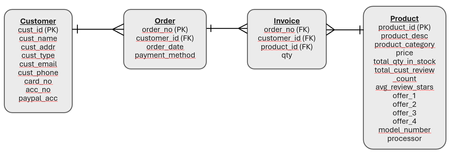
Monitoring PostgreSQL Database Engine The PostgreSQL database engine provides multiple administrative views, which can be leveraged to capture metrics of activities inside of the database engine including, but not limited to, database activities, query activities, execution time, database resource locks etc for initial and deep analysis on database & query performance. Database Administrators should use these views and their corresponding metrics to perform initial level analysis. Critical insights can be gathered around database activity, performance and system activity for reactive and proactive analysis. In this blog, I am going to show the important administrative views and their corresponding SQL statements for capturing database and query details. The following section provides details about the statistics views and their usage. It contains the most important and mostly used statistics views, there are other views available that can be used to get into further details. NOTE: The queries and flows provided below are a few of the ways for each scenario. Eventually, the final approach will depend on and be dictated by the issue at hand or its symptoms. Pre-requisites The following parameters should be enabled in Azure Database for PostgreSQL “Server parameters” before using the statistics views: track_activities track_counts track_io_timing pg_stat_statements.track = ALL The following extensions should be installed before using the stats: create extension pg_stat_statements; create extension pgstattuple; NOTE: All SQL queries mentioned below are as per PostgreSQL version 18. Schema & Data for Analysis All the "Example Scenario" mentioned in the analysis queries are based on the following schema and corresponding volumetrics: Table Name No. of rows customer 993,814 invoice 20,229,119 orders 4,497,292 product 2,818,000 Statistics Views and SQL Queries for Analysis The following SQL statements can be used to perform 1 st level monitoring on the database, tables and queries. Note that the output counters and metrics from the SQL statements represent cumulative data since the last server restart. The statistics should be reset to zero before performing troubleshooting or performance tuning exercises. Use the below mentioned SQL statements to reset statistics at database, table and IO level. Database level stats reset SELECT pg_stat_reset(); IO level stats reset. SELECT pg_stat_reset_shared('io'); Reset pg_stat_statements metrics per user, query and database id or for the entire database - pg_stat_statements contain query level metrics for a database, user or a single query. We can reset the statistics at these individual levels. If any of the parameters are not specified, the default value 0 is used for each of them and the statistics that match with other parameters will be reset. "userid", "dbid" (Database ID), "queryid" can be fetched from pg_roles (column - oid), pg_stat_database (column - datid) and pg_stat_activity (column - query_id) respectively. SELECT pg_stat_statements_reset(userid, dbid, queryid); SELECT pg_stat_statements_reset(); SQL Activity Monitoring: This query uses pg_stat_activity statistics view, which contains details of current activities in the database server. It can be used to track queries in transactions, transaction execution time, wait event details if any etc. The WHERE clause can be used to filter activities based on client IP address (client_addr), application name (application_name), user (usename) who has submitted the query and text of the SQL statement. SELECT datname AS dbname, pid, usename as username, application_name, client_addr as client_ip_addr, xact_start AS transaction_start_time, query_start AS query_start_time, wait_event_type AS db_waitign_on, wait_event AS waiting_activity, CAST(query AS varchar(100)) AS sql_query, backend_type AS db_operation FROM pg_stat_activity WHERE <conditions>; Interpreting output: This output should be used to find overall activity in your database. username, application_name, client_ip_addr - The user, application and client IP address from where the query is being executed. transaction_start_time - When transaction started (using BEGIN keyword or corresponding API). query_start_time - Start time of currently active query in the transaction. wait_event and wait_event_type columns output the events on which the query is waiting, if applicable. Refer to the official links for details on wait events and wait event types. db_operation - Type of database operation that is being performed by the application. E.g. autovacuum, parallel worker, client backend, etc. Example Scenario: Application team is complaining about higher load in "retail_db" database and it is causing multiple SQL statements to run slow, team wants to know whether ad-hoc SQL statements are being run using "psql" client by application developers. As a DBA, you want to look at the entire database activity - no. of SQL statements, who are running to SQLs and which client are they coming from. Above mentioned SQL can be used with filters on "application_name" (value = "psql") and "dbname" (value = "retail_db"). It generates the following output: Analysis: From the above output, it can be seen that "psql" client is indeed getting used from a few IP addresses. Next Step: pg_terminate_backend(<pid>) can be used to kill the applications with pid 22210, 22209 and 21993. Similarly, the same SQL statement can be used to look at overall SQL activities in individual database. SQL Statement Level monitoring This is one of the most important SQL statements that describes operations at query level. It provides execution time detail of queries, read time, write time, disk read and disk write. Output of this query should serve as one of the starting point of query troubleshooting and query optimization. SELECT queryid , CAST(query AS varchar(100)) AS sql_stmt, calls AS no_of_executions, total_exec_time, min_exec_time, max_exec_time, mean_exec_time AS avg_exec_time, rows AS rows_fetched, shared_blks_hit AS blocks_read_from_buffer, shared_blks_read AS blocks_read_from_disk, shared_blks_written AS blks_written_to_disk, shared_blk_read_time, shared_blk_write_time FROM pg_stat_statements WHERE query LIKE '%<sql-stmt>%'; Interpreting output: Output of this query can be used to dive deeper into SQL performance issues. sql_stmt - Provides the SQL statement that is being run. This is the query that is being analyzed for tuning. no_of_executions - How many times this SQL statement has been executed so far (since the reset of pg_stat_statements). total_exec_time - This is the execution time for the query combining all runs. e.g. if the query was run 10 times and each time took 1.5s, then total_exec_time would be 15s. min_exec_time - Min. time the query took to execute. This can be considered as the benchmark execution time for this query. max_exec_time - Max. time the query took to execute. avg_exec_time - Avg. execution time of the query. This time should fall within the query SLA. rows_fetched - No. of rows needed by application (SQL query) blocks_read_from_buffer & blocks_read_from_disk - Data blocks (8KB size) read from PostgreSQL shared memory and from disk respectively. shared_blk_read_time & shared_blk_write_time - Total time spent in reading from and writing to disk. This time is included in total_exec_time. If ratio of shared_blk_read_time or shared_blk_write_time or both with total_exec_time is higher, then IO is causing high execution time in this query. If the ratio is less then other complex SQL operations like join, order by, group by, functions etc. are taking longer to execute. Example Scenario: We will be using the same SQL statement that was used in the example scenario of "3. Application-wise IO Activities". But in this case, using "SQL Statement Level monitoring" we will look at the execution details of the query rather than IO usage. Following is the output of first execution (after server restart - shared memory was empty) of the SQL statement Analysis: Here is the observation, execution time of the query was 154.81 seconds. Total rows needed by application was 4,497,292 out of which 341 8KB blocks were read from shared memory (PostgreSQL bufferpool) and 58504 8KB blocks were read from disk. Following is the output after 2nd execution (after resetting pg_stat_statements): Analysis: The query was executed 4 times. Execution time got reduced to 95 seconds, but it is still high. Even though all rows (4497292 x 4) were read from shared memory (buffer pool) as blocks_read_from_disk was zero, execution time is very high. Next Step: Even if the execution time is found to be within SLA, the query needs to be analyzed for its execution plan. Use EXPLAIN ANALYZE command to analyze the access plan or execution path of the query. Query optimization must be done for this SQL statement. Table-level Bloat Statistics PostgreSQL uses MVCC (Multi Version Concurrency Control) to avoid read and write conflicts, which means one application can read rows while they are being modified by another application. This is done by storing multiple versions of the same row. But over time older versions, which are not needed by applications, become overhead as they occupy space. This is known as "Bloating". It can cause both storage and performance issue. The query mentioned below provides bloating percentage on a table, which should be monitored on a regular basis and DBAs should decide on the autovaccuum settings. SELECT (table_len/1024/1024) AS table_size_mb, tuple_count AS no_of_live_rows, (tuple_len/1024/1024) AS live_row_size_mb, dead_tuple_count AS no_of_dead_rows, (dead_tuple_len/1024/1024) AS dead_row_size_mb, tuple_percent AS live_rows_percent, dead_tuple_percent AS dead_rows_percent, free_percent AS free_space_percent, (((table_len – tuple_len)/table_len)*100) AS bloat_percent FROM pgstattuple('<table-name>'); Interpreting output: table_size_mb - This is the total table size, including bloating. no_of_live_rows - No. of actual usable rows in the table. live_row_size_mb - This is the actual size of the table. This is the amount of data in this table that can be used by applications. no_of_dead_rows - No. of irrelevant rows in the table. dead_row_size_mb - Size of irrelevant rows in the table. This is the amount of data that is not needed by any application, but is still there in the table and occupying storage. This is the data that has to be removed from the table. bloat_percent - Percentage of dead rows occupying the table. If it goes beyond 25-30%, manual VACUUM should be used to remove bloating. Example Scenario: invoice_history table contains more than 20 M rows and has a size of 1630 MB. Deleting records from a table does not reduce the size in PostgreSQL because of MVCC support to keep multiple versions of the same row. The deleted rows still occupy storage space, it is known as bloating as shown below. "Table level Bloat Statistics" can be used to find the bloat percentage of a table. Next Step: Aggressive AUTOVACUUM has to be configured to remove bloating on time. As AUTOVACUUM does not free up storage space, manual FULL VACUUM has to be executed to reclaim storage space. Note that full vacuum takes exclusive lock on tables. Bloat percentage changed after executing full vacuum. Table Bloat using Stat table Table bloating information using statistics table. SELECT schemaname, relname AS tblname, n_live_tup AS live_rows, n_dead_tup AS dead_rows, ((n_dead_tup - n_live_tup)/100) AS tbl_bloat_percent, last_vacuum AS last_manual_vacuum, last_autovacuum FROM pg_stat_all_tables WHERE relname = '<tblname>'; Interpreting output: Same as "Table-level Bloat Statistics". Database Activity Monitoring This SQL statement provides row level counters of DML statements for a database. SELECT datname AS dbname, blks_read AS total_no_of_read_ops, blks_hit AS no_of_blks_read_from_bufferpool, tup_returned AS no_of_rows_scanned, tup_fetched AS no_of_rows_fetched, tup_inserted AS no_of_rows_inserted, tup_updated AS no_of_rows_updated, tup_deleted AS no_of_rows_deteled, deadlocks AS no_of_deadlocks, (blk_read_time/1000) AS blk_read_time_s, (blk_write_time/1000) AS blk_write_time_s FROM pg_stat_database; Interpreting output: Output shows the impact of DML operations in a database. total_no_of_read_ops - This is the total block read request executed by the database engine. no_of_blks_read_from_bufferpool - Out of total read requests, how many blocks were already there in memory or shared_mem. no_of_rows_scanned & no_of_rows_fetched - Total no. of rows read from the database and the total no. of rows actually needed by application. Higher difference in the two metrics should call for query tuning using better indexes, join strategies etc. blk_read_time_s & blk_read_write_s - Time taken in seconds, to perform read and write operations. no_of_deadlocks - Higher no. of deadlocks should be investigated. Execution of application SQL queries might have to be re-looked if higher deadlocks create performance or application issues. Index-level Bloat Statistics – Live rows, dead rows, bloat This is similar to query no. 8, but it provides bloating information at index level. SELECT (index_size/1024/1024) AS idx_size_mb, (index_size/8192) AS index_pages, empty_pages, deleted_pages, ((index_pages - deleted_pages)/index_pages) * 100 AS idx_bloat_percent FROM pgstatindex('<idx-name>'); Interpreting output: The output is similar to table-level bloat statistics, but it is for indexes. Monitor IO activities Output of the following SQL statement shows the overall IO (Input/Output) activities for a database. It can be used to infer whether database workload is read heavy or write heavy. For read workloads, database level bufferpool_hit_ratio metrics can be used to increase or decrease shared memory configuration parameter. SELECT backend_type , object, context AS reason_for_io, reads AS no_of_reads, (read_bytes/1024) AS read_data_kb, read_time AS read_time_ms, writes AS no_of_writes, (write_bytes/1024) AS write_data_kb, write_time AS write_time_ms, writebacks AS no_of_blocks_to_storage, writeback_time AS block_to_storge_write_time_ms , hits AS no_of_reads_from_bufferpool, 100 * (hits / (hits + reads)) AS bufferpool_hit_ratio FROM pg_stat_io; Interpreting output: The output showcases database level IO metrics. backend_type - Type of database operation that is being performed by the application. E.g. autovacuum, parallel worker, client backend, etc. reason_for_io - corresponding IO operation. Following are the possible output values to look out for. normal - Read from or write to shared buffers. vacuum - IO used by VACUUM operation. bulkread & bulkwrite - Disk read and write operations. no_of_reads - Total read operations. read_data_kb - Amount of data read (in KB) across all operations. no_of_writes - Total write operations. write_data_kb - Amount of data written (in KB) across all operations. read_time_ms & write_time_ms - Duration of all read & write operations. Example Scenario: Extending the previous example, application team is complaining about overall performance of the database. As a DBA you want to find out the overall read and write operations to confirm whether it is causing slowness in the database. It will give an idea about how busy the database has been. "Monitor IO Activities" SQL can be used to find out the trigger of higher IO activities in the database. Following is the output: Analysis: Output above shows that most of the read and write operations are emanating from applications ("backend_type" = "client backend"). This gives an idea of database usage by the applications. Next Step: If resource utilization of this database is high, we can create read replica to offload the reads and increase server memory and CPU to handle the load. Or else, if possible, application throttling can be infused by reducing the no. of max connections or using application level throttling. Application-wise IO Activities Query no. 2 above provides database level IO, the following SQL statement can be used to track application level IO summary. As there is to one-to-one mapping between application id in pg_stat_activity and pg_stat_io, backend_type is the only way to relate these two admin views. SELECT psa.datname AS dbname, pid, psa.usename AS username, psa.application_name, psa.client_addr as client_ip_addr, psa.xact_start AS transaction_start_time, psa.query_start AS query_start_time, psa.wait_event_type AS db_waitign_on, psa.wait_event AS waiting_activity, CAST(psa.query AS varchar(100)) AS sql_query, state as current_state, psa.backend_type AS db_operation, psi.context AS reason_for_io, psi.reads AS no_of_reads, psi.writes AS no_of_writes FROM pg_stat_activity psa JOIN pg_stat_io psi ON psa.backend_type = psi.backend_type WHERE psa.query LIKE '%<sql-stmt>%'; Interpreting output: username, application_name and client_ip_addr column output can be used to track user who submitted the query, application from where the query was submitted and IP address of the application server from where query was executed. transaction_start_time & query_start_time show the execution start time of transaction and currently active query inside of the transaction. These metrics should be used to find the execution time of transaction and queries inside of the transaction. wait_event and wait_event_type columns output the events on which the query is waiting, if applicable. Refer to the official links for details on wait events and wait event types. reason_for_io column outputs corresponding IO operation. Following are the possible output values to look out for. normal - Read from or write to shared buffers. vacuum - IO used by VACUUM operation. bulkread & bulkwrite - Disk read and write operations. no_of_reads & no_of_writes - Total no. of read and write operations by the query. Example Scenario: So far we have been looking at database-level activities. In most of the cases, we need to track application level activities like read, write operations, application elapsed time (how long the query is getting executed for). These are some of the critical information that DBA should use while troubleshooting query performance or application slowness issue. Whereas pg_stat_statements should be the go to place to look at SQL or application-level statistics, above SQL statement can be used to monitor application level IO operations. Executed SQL statement : SELECT c.cust_id, c.cust_email, c.cust_type, o.order_no, o.order_date FROM customer c, orders o WHERE c.cust_id = o.cust_id ORDER BY o.order_date DESC; Output of the query can be filtered using partial SQL statement in the WHERE clause or using PID of the SQL statement as shown below. Following is the output of the query above (showing only relevant columns): Analysis: Highlighted output above shows 3 types of IO operations - normal, bulkwrite and bulkread. "normal" means that client is reading from buffer, but "bulkread" and "bulwrite" indicates read from disk and write to disk (temporary file write for sorting!). Next Step: SQL statement should to be analysed further for index usage, high disk read and write IO. EXPLAIN (with ANALYZE) statement can be used to understand query behaviour. Other monitoring SQL statements should be used to dig deeper into the execution details. Table & Index Operations The following SQL statement can be used to capture table-level DML operations and its corresponding index read operations. Output of this query can be used to create index if sequential scans on a table is high, also, how an application is impacting the table rows using INSERT, UPDATE, DELETE statements. SELECT t.schemaname AS tabschema, t.relname AS tabname, t.seq_scan AS no_of_seq_scan, t.seq_tup_read AS seq_scan_rows_read, t.n_tup_ins AS rows_inserted, t.n_tup_upd AS rows_updated, t.n_tup_del AS rows_deleted, t.n_live_tup AS total_active_rows, t.n_dead_tup AS total_dead_rows, i.schemaname AS idxschema, i.indexrelname AS idxname, i.idx_tup_read AS idx_rows_read, i.idx_tup_fetch AS idx_rows_fetched FROM pg_stat_all_tables t JOIN pg_stat_all_indexes i ON t.relid = i.relid AND t.relname = i.relname ; Interpreting output: It is almost similar to database activity monitoring except for the following columns. total_dead_rows - Total no. of rows that are not relevant for any transaction in PostgreSQL. total_active_rows - Total no. of actual rows in the table. If the ratio of dead rows vs active rows is higher, it shows VACUUM is not working properly. It can be fixed by running manual vacuum or changing the configuration of AUTOVACUUM. Table level Read IO This SQL statement provides critical metrics on read operations for all or individual tables. heap_blks_read and heap_blks_hit should be used to find out the disk read vs memory read in tables. Higher disk read indicates memory crunch and can be a factor in deciding whether to increase shared memory size. SELECT schemaname AS tabschema, relname AS tabname, heap_blks_read AS no_of_tab_blks_read, heap_blks_hit AS no_of_buffer_blks_read, idx_blks_read AS no_of_idx_blks_read, idx_blks_hit AS no_of_buffer_idx_blks_read FROM pg_statio_all_tables WHERE relname = '<table-name>'; Lock Information Data modification by applications or system commands locks rows and tables. Other application trying to modify the same row will get into waiting state thereby increasing the response time. Following SQL statement can be used to find out what type of locks is being held by applications on all or specific tables. SELECT db.datname AS dbname, tbl.relname AS tblname, lck.pid, lck.locktype , mode AS lock_mode, CASE lck.granted WHEN True THEN 'lock_held' WHEN False THEN 'lock_waiting' ELSE 'not_known' END AS lock_status, lck.waitstart AS lock_wait_start_time FROM pg_database db JOIN pg_locks lck ON lck.database = db.oid JOIN pg_class tbl ON lck.relation = tbl.oid WHERE tbl.relname NOT LIKE '%pg_%' AND tbl.relname = '<tablename>'; Interpreting output: Output rows contain database name, table name, process id of the query and the following fields. locktype - Object of the lock. E.g. table, page, row (tuple) etc. lock_status - Whether the lock has been granted to this application or application is waiting for lock. lock_wait_start_time - If lock waiting state, then when the wait was started. Example Scenario: Following SQL statement takes a lock on "orders" table as it is getting executed inside of a transaction which has not been either committed or rolled back. "Lock Information" SQL can be used to find out who is holding lock on a table as shown below: Next Step: If lock needs to be released then the application with pid 15505 must be terminated using pg_terminate_backend(15505). Who is Holding and who is Waiting for Locks If locks are being held long enough to block a critical application, it becomes imperative to terminate the application holding the lock. Following SQL statement provides information about applications waiting for locks and applications holding those locks so that necessary actions can be taken by DBA. WITH lock_holder AS (SELECT db.datname AS dbname, tbl.relname AS tblname, pid, locktype , mode AS lock_mode FROM pg_database db JOIN pg_locks lck ON lck.database = db.oid JOIN pg_class tbl ON lck.relation = tbl.oid WHERE granted = true), lock_waiter AS (SELECT db.datname AS dbname, tbl.relname AS tblname, pid, locktype , mode AS lock_mode FROM pg_database db JOIN pg_locks lck ON lck.database = db.oid JOIN pg_class tbl ON lck.relation = tbl.oid) SELECT lh.pid AS pid_holding, lh.locktype AS holding_lock_type, lh.lock_mode AS holding_lock_mode, lh.tblname AS holding_lock_table, lw.pid AS pid_waiting, lw.locktype AS waiting_lock_type, lw.lock_mode AS waiting_lock_mode, lw.tblname AS waiting_lock_table FROM lock_holder lh JOIN lock_waiter lw ON lh.tblname = lw.tblname WHERE lw.tblname='<tbl-name>'; Interpreting output: This is an extension of query 11 above. Following are the output columns: pid_holding - Application that is holding lock. holding_lock_type - Object (table, page, row) that has been locked. holding_lock_mode - Lock mode that is being held. holding_lock_table - Table that is being locked. pid_waiting - Application that is waiting for lock. waiting_lock_type - Object (table, page, row) that is waiting for lock. waiting_lock_mode - Lock mode that is needed. waiting_lock_table - Lock on table that is waiting. Example Scenario: There can be scenarios where multiple applications can take write lock on the same rows at the same time. Depending on lock_timeout, one of the applications has to wait for that duration. Criticality of an application might dictate the terms of waiting on locks and DBAs have to terminate application holding the lock. Following is an application that is updating rows in a transaction, but has not released the lock. And following application has timed out because of lock wait. Next Step: Using above query we can find out which application is waiting and who is holding lock on a table as shown below. Depending on priority one of the applications can be terminated by DBA. Diagnostic Flow: The following chart can be used to decide which admin view to use and when. It also shows how Azure Monitor and PostgreSQL admin views work in tandem at any analysis scenarios. Summary: PostgreSQL provides helpful administrative views that can be used by DBAs (Database Administrators) to perform initial level of analysis at engine side before looking at any infrastructure level issues. The initial analysis can be useful in relating infrastructure issues with database performance as well, if there is any.485Views1like0CommentsPostgres horizontal scaling with elastic clusters on Azure Database for PostgreSQL Flexible server
Elastic clusters (Preview) is a Flexible server feature that enables a database to be scaled out horizontally beyond a single node. Powered by the open-source Citus extension developed by Microsoft, elastic clusters offer horizontal scale out through row and schema-based sharding capabilities. With elastic clusters, you can future proof horizontal scale out, adding nodes as needed as the application grows and outgrows the capacity of a single node. By providing a unified endpoint to the cluster, elastic clusters eliminate the need for complex application-layer sharding, significantly simplifying the management of growing Flexible Server deployments. Online shard management and isolation capabilities are a core part of the services offloading this burden from the application stack. With elastic clusters, scaling out your applications has never been easier or more efficient. Benefits of using elastic clusters (Preview) Familiarity: It’s the same Flexible server you know and love, with the same feature set. Horizontal scaling: Grow your cluster out by adding more Flexible servers – lifting the single node limitation for your application growth. Simplicity: Offload complexity of sharding from your application layer to the managed service. Cost efficiency: You are not paying more than you would for the same amount of Flexible servers as nodes in your elastic cluster with the benefit of simplified management of the fleet. AI ready: Modern AI applications require storage of vast amounts of vectorized data. Their data models, however, are usually simple and scale out very well with sharding models provided by elastic clusters. What are elastic clusters? The elastic clusters feature of Azure Database for PostgreSQL Flexible server is a managed offering of horizontal scaling, powered by the Citus extension. Elastic clusters handle managing and configuring multiple PostgreSQL instances as a single resource, setting up the nodes, and providing cluster level choices for high availability, disaster recovery, compute and storage and resiliency. Nodes in your cluster reside in the same availability zones for optimal performance and the various Flexible server features and capabilities to become cluster aware such as backups, metrics, Entra ID authentication to just name a few. Every node in the elastic cluster is capable of handling DML, you can run your read and write queries on any node on the cluster, and it will automatically fetch the data from their current placement. In many distributed systems, often all queries go through a single node which can make it a bottleneck. With Elastic Clusters, however, when you connect via port 7432, the workload is automatically distributed across all nodes. What is sharding? Sharding is the act of splitting data into logical groups, that can then be moved into separate machines and retrieved individually. Sharding also supports queries that need data from two or more different shard groups living on different nodes. Such queries would be computed individually by each node and then rolled up by the initiating node before providing the result. You can also read more about sharding models here: Sharding models - elastic clusters Schema-based sharding Schema-based sharding is the most intuitive way to understand how this works. Every table in a distributed schema becomes its own shard. Shards can be co-located - moved around between nodes as a group. If your application creates a schema for every tenant in the system (or a microservice) all the data will live together on the same node and even if it moves around, the system will route queries to the correct node. The benefit is a pure architectural lift-and-shift for any application that already uses schema based sharding. Suddenly your legacy application can scale across many machines without a single line of code being changed. This is assuming that your application already uses schema based sharding but for database per tenant models the conversion to a schema-based model is easy. Follow the Tutorial: Design for microservices with elastic cluster to try schema-based sharding yourself! Row-based sharding Row-based sharding is different and requires some DDL modifications and choice of distribution key but with those few changes, it is a very scalable method when there is a need for high density packing of tenants. One way to think about row-based sharding is to paint parallels to table partitioning. With partitioning you decide what column can split the data into sensible chunks that can be queried in isolation – greatly reducing the amount of data you need to weed through to get results. A good example is partitioning by year, knowing that you rarely reach to past year. You then need to make sure that your queries all use the partition key in the WHERE clause, because without it the system doesn’t know how to filter out (prune) partitions that don’t hold the required data – neglecting the benefit of the partitioning. As with partitioning, row-based sharding required determining a distribution key. Selecting a good key can be a challenge itself – something with good cardinality (so data can be spread out), not skewed (so that data doesn’t fully land into one big shard) and logically splitting your tenants (avoiding cross tenant queries). Typical good distribution keys are tenant_id and device_id (to fan out writes) but this will heavily depend on your application. If you go back to the partitioning example, year was a great partition key, but it is a terrible distribution key. It has low cardinality, and only one node per year would be taking writes by not leveraging spreading out data to multiple shards. Instead of distributing on year, use a key with better cardinality in your system – you can still leverage partitioning on top of distribution as partitioned tables can be distributed. Having selected the key, the next step is easy. Just distribute the tables and this is as simple as calling: SELECT create_distributed_table('accounts', 'account_id'); SELECT create_distributed_table('campaigns', 'campaign_id'); There are many table types in elastic clusters, you can read more about them here: Table types - elastic clusters As with schema based sharding, each tenant is assigned into a shard but unlike row-based sharding a shard can be shared among tenants. Like with partitioning you can then think of a shard as a smaller PostgreSQL table and if you put all of them together – you would get the whole thing. In the same vein, as with partitioning if queries ran by the application miss the distribution key in their WHERE clause – they would start hitting all nodes in the cluster to find the required data. In some cases, such fan-out queries are desired and a form of implementing parallelization of query execution among all cluster nodes. In most cases, however, it is more efficient to have queries that filter down to one node. The biggest benefit of row-based sharding is the density of how tight tenants can be packed on the same machine. It’s as good as it gets, which is rows in the same table – the drawback, is the work up front required to decide on the schema and potential query changes in the application. Follow either tutorial: Design multitenant database with elastic cluster or Design a real-time dashboard with elastic cluster, to try out row-based sharding yourself! When things get hot There will be times where either the system needs room to grow (CPU, Storage, connections), or a specific tenant becomes very noisy (making other tenants experience degraded performance). Elastic clusters allow you to address both. In the case of capacity (either CPU, Storage, maximum connections) being reached, just grow your cluster by adding nodes and call trigger online rebalancer. Without blocking your existing workloads, data will be redistributed among the available nodes (including the new node) by disk size, shard count or any strategy that you decide to implement yourself. This is as easy as connecting to the cluster and issuing: SELECT citus_rebalance_start(); You may not need to rebalance depending on how you sharded your data. The new node will be immediately used for new inserts as soon as it becomes online and that may be just enough to redistribute the load on your cluster. When one tenant throws a party, you can decide to move them out to their own node though, sometimes it is easier to move the well behaving tenants if they happen to store less data than the noisy one. With elastic clusters this can be as easy as running: SELECT citus_schema_move('wideworldimporters','10.54.0.254', 7003); Using elastic clusters in Azure Database for PostgreSQL Flexible server Step 1: Create an elastic cluster Begin by setting up a new instance of elastic cluster with Azure Database for PostgreSQL Flexible server Azure portal Quickstart: Create elastic cluster Select your cluster size, up to 10 nodes can be deployed during preview. Review your settings after confirming the compute and storage configuration. Step 2: Choosing a sharding model Citus on Flexible server offers two sharding models: row-based sharding and schema-based sharding. You can learn more about sharding models here: Sharding models - elastic clusters Step 3: Follow one of the tutorials For row-based sharding: Design multitenant database with elastic cluster Design a real-time dashboard with elastic cluster For schema-based sharding: Design for microservices with elastic cluster Frequently Asked Questions In what regions are elastic clusters available? Elastic clusters are currently available in the following regions: East Asia East US North Europe UK South West US West US 3 Please see Limitations of elastic clusters for an up-to date list. Will all features of Flexible server be available on elastic clusters? We aim to feature parity, some cluster incompatible extensions like TimescaleDB may not be available. Other features may need a bit of work to become cluster aware. Are there any limitations I should be aware of? Please see Limitations of elastic clusters Ready to dive in? Get started for free with an Azure free account Azure Database for PostgreSQL Quickstart: Create elastic cluster with Azure portal Learn more Elastic clusters with PostgreSQL Flexible server Distributed Postgres. At any scale. - Citus Data citusdata/citus: Distributed PostgreSQL as an extension3.5KViews5likes3Comments