azure database for mysql
37 TopicsDeploying Moodle on Azure – things you should know
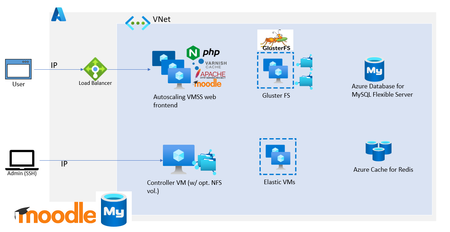
Moodle is one of the most popular open-source learning management platform empowering educators and researchers across the world to disseminate their work efficiently. It is also one of the most mature and robust OSS applications that the community has developed and improvised over the years. We have seen customers from small, medium, and large enterprises to schools, public sector, and government organizations deploying Moodle in Azure. In this blog post, I’ll share some best practices and tips for deploying Moodle on Azure based on our experiences working with several of our customers.70KViews14likes25CommentsAzure Database for MySQL bindings for Azure Functions (Public Preview)
The Azure Database for MySQL bindings for Azure Functions is now available in Public Preview! These newly released input and output bindings enable seamless integration with Azure Functions, allowing developers and organizations to build at-scale event-driven applications and serverless APIs that integrate with MySQL, using programming languages of their choice, including C#, Java, JavaScript, Python, and PowerShell. This integration significantly speeds up application development time by reducing the need for complex code to read and write from the database.Azure Database for MySQL - Service update
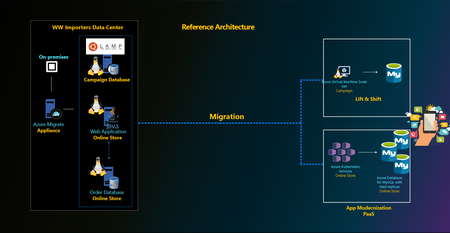
As our CEO Satya Nadella puts it, “We have seen two years of digital transformation in two months.” Azure Database for MySQL service is at the heart of this transformation, empowering online education, video streaming services, digital payment solutions, e-commerce platforms, gaming services, news portals, government and healthcare websites to support unprecedented growth at optimized cost. Over the last six months, we’ve focused on enhancing security and governance for customers, simplifying performance tuning, and reducing cost for our customers A complete list of all the features we’ve released is available via Azure updates, but I’ll summarize a few important updates below.Multitude builds resilient banking platform with PostgreSQL and MySQL on Azure
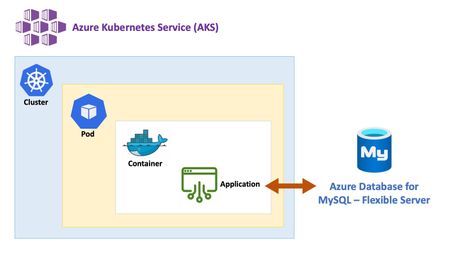
Expanding into new markets is usually a sign that things are going well. For digital banking platforms, however, growth brings a different kind of challenge - more customers, more data, and stricter expectations around availability, security, and regulatory compliance. At Multitude, we operate across 17 countries and deliver digital banking, credit services, payment processing, and regulatory reporting through a platform composed of more than 400 microservices. Each service encapsulates a defined business capability, including onboarding, risk assessment, collections, and compliance workflows. Historically, our services relied on on-premises PostgreSQL and MySQL environments deployed within our own data centers, where capacity scaled vertically on shared compute and storage resources. This model created contention between unrelated workloads and limited their ability to scale independently. Expanding capacity required adding or upgrading physical hardware, which involved demand forecasting, procurement, delivery coordination, and installation within the data center. Over time, continued growth amplified these architectural constraints. The database engines themselves remained reliable, but the surrounding infrastructure limited elasticity and domain-level isolation. As a result, sustained growth began to expose structural limits in the underlying infrastructure. "In a regulated financial environment, those constraints carried broader implications. Frameworks such as DORA and GDPR require predictable availability, controlled recovery procedures, and governed access to sensitive data. As workload demands increased, sustaining both growth and compliance required structural changes at the database layer. We decided that redesigning our data architecture was necessary to improve workload isolation, scalability, and governance alignment. Rearchitecting data boundaries with Azure Databases We initiated our architectural redesign by migrating database workloads to Microsoft Azure and standardizing on Azure Database for PostgreSQL and Azure Database for MySQL for core application services. Central to this redesign was the adoption of bounded contexts. Each bounded context represents a logical business domain and encapsulates the services and schemas required to support that capability. Each domain is owned and managed by a single team, aligning technical boundaries with team responsibility and accountability. Rather than maintaining a small number of large, shared database instances, we provisioned dedicated database instances aligned to defined business domains, establishing domain-level isolation at the database layer. Today, approximately 35 database instances support more than 400 microservices across the platform. Each instance may host multiple schemas serving related services within the same domain, while cross-domain database dependencies are intentionally avoided. This structure limits the blast radius of configuration changes or workload spikes and allows scaling adjustments to be applied within clearly defined domain boundaries. While the bounded context model was a strategic architectural decision, leveraging managed database services helped us implement it by drastically reducing the operational overhead of provisioning, scaling, and maintaining independent instances across domains. Azure Database for PostgreSQL and Azure Database for MySQL provide the managed capabilities required to sustain this model. Instances are provisioned according to the performance and storage requirements of each domain and can be adjusted as workload characteristics evolve. Compute and storage resources are scaled at the instance level, allowing capacity changes to be applied to a specific bounded context without affecting unrelated domains. Altogether, these architectural decisions balance domain-level isolation with operational manageability. A database-per-microservice pattern would significantly increase provisioning, monitoring, and lifecycle overhead without materially improving data ownership boundaries. By grouping related services within bounded contexts, we maintain clear domain alignment while keeping the number of database instances practical to operate. As a result, data boundaries, scaling behavior, and operational controls remain consistent with business domain structures across the platform. Operationalizing high availability and backup strategy To support availability, we deploy Azure Database for PostgreSQL and Azure Database for MySQL with zone-redundant high availability, placing primary and standby replicas in separate availability zones within the same Azure region. Replication preserves transactional consistency, and zone separation reduces exposure to localized infrastructure failures. We periodically exercise failover procedures as part of operational validation to confirm recovery behavior under defined conditions. Availability controls are complemented by a layered backup strategy. Azure Database for PostgreSQL and Azure Database for MySQL provide automated backups with a retention window of up to 35 days and point-in-time restore capabilities. These features allow us to restore a database to a specific timestamp within the retention window, supporting recovery from application-level errors or unintended data modifications without custom snapshot orchestration. Together, operational backups and governed archival retention address both short-term recovery and long-term compliance obligations. Restore operations require documented justification and follow established approval workflows, ensuring that recovery actions remain controlled, traceable, and auditable. We also enforce consistency through lifecycle management. Azure’s managed service model standardizes engine patching and version updates across environments, reducing configuration drift and minimizing manual coordination. By operating within the managed service boundary, the database team can focus on workload analysis, performance tuning, and capacity planning. For migration and synchronization scenarios, we use Azure Data Migration Service to orchestrate controlled cutovers between database environments. Engineers validate configuration and readiness before initiating synchronization, after which Azure-managed replication then maintains data alignment until final switchover. Provisioning decisions and structural modifications remain subject to internal governance approvals to preserve change control and oversight. By combining zone-redundant availability, structured recovery workflows, governed retention policies, and standardized lifecycle management, we operate a database layer engineered for resilience, auditability, and regulatory alignment at scale. Compliance as an architectural property For us, governance is embedded directly into how the platform operates, beginning at the identity layer. Access to Azure Database for PostgreSQL and Azure Database for MySQL integrates with Microsoft Entra ID, aligning database authentication with centrally managed corporate identities. Role-based access control is enforced through enterprise identity policies, providing centralized visibility into access assignments and authentication events across environments. These controls extend into production access management. Privileged access is approval-based and time-bound, and administrative roles are not permanently assigned. Access requests follow defined workflows, and all privileged actions are logged for review under established oversight procedures, ensuring traceability of operational interventions. Database isolation reinforces these identity controls. By aligning database instances with bounded contexts, each business domain maintains a discrete data boundary at the database layer. This structure limits lateral access across domains and confines sensitive data to clearly defined ownership scopes, simplifying monitoring and audit review. In a regulated financial environment, these architectural controls also support compliance requirements under frameworks such as DORA and GDPR. By embedding identity integration, domain isolation, and lifecycle controls directly into the platform architecture, governance becomes an operational property of the system rather than a separate procedural layer. The simplicity of this architecture is a strong driver for both auditability and security of the whole platform. Measurable impact across engineering teams and business outcomes Beyond improved stability, our ability to respond to growth has changed significantly since moving to Azure. In the past, expanding database capacity meant procuring hardware and planning installation in the data center. Now, capacity adjustments happen directly within Azure and can be applied to individual databases instances, allowing us to scale in near real time as workload demands change. Maintenance effort has also decreased. Managed patching, version alignment, and automated backups have reduced the need for manual coordination and reactive capacity management. Infrastructure-level tasks that once required continuous oversight are now handled within the managed service boundary. Our DBAs are now focused on improving performance and stability. We spend far less time maintaining the basics. Resilience by design The structural changes behind these results reflect a deliberate long-term strategy. Our database architecture now aligns with the operating model we expect to sustain over the next five years and beyond. Bounded contexts define discrete data domains, while Azure Database for PostgreSQL and Azure Database for MySQL provide managed high availability, scaling controls, and standardized lifecycle management across those domains. Identity integration and governed recovery procedures operate consistently across environments. With this architecture in place, Multitude scales responsibly in regulated markets while maintaining strict governance and availability standards. Expanding into new markets still means more customers and more data - but now our platform is designed to handle that success.549Views3likes0CommentsIgnite 2022: Announcing new features in Azure Database for MySQL – Flexible Server
Today, we're pleased to announce a set of new and exciting features in Azure Database for MySQL - Flexible Server that further improve the service's availability, performance, security, management, and developer experiences!6.9KViews3likes0CommentsAnnouncing Autoscale IOPS (Public Preview) for Azure Database for MySQL - Flexible Server
Today, we are introducing Autoscale IOPS, making it easier and more cost effective for customers to run their mission-critical workloads on Azure Database for MySQL – Flexible Server. The server scales IOPs up or down automatically depending on your workload needs! You pay only for the IO you use and no longer need to provision and pay for resources which aren’t fully used.6.4KViews3likes5CommentsIgnite 2025: Advancing Azure Database for MySQL with Powerful New Capabilities
At Ignite 2025, we’re introducing a wave of powerful new capabilities for Azure Database for MySQL, designed to help organizations modernize, scale, and innovate faster than ever before. From enhanced high availability and seamless serverless integrations to AI-powered insights and greater flexibility for developers, these advancements reflect our commitment to delivering a resilient, intelligent data platform. Join us as we unveil what’s next for MySQL on Azure - and discover how industry leaders are already building the future with confidence. Enhanced Failover Performance with Dedicated SLB for High-Availability Servers We’re excited to announce the General Availability of Dedicated Standard Load Balancer (SLB) for HA-enabled servers in Azure Database for MySQL. This enhancement introduces a dedicated SLB to High Availability configurations for servers created with public access or private link. By managing the MySQL data traffic path, SLB eliminates the need for DNS updates during failover, significantly reducing failover time. Previously, failover relied on DNS changes, which caused delays due to DNS TTL (30 seconds) and client-side DNS caching. What’s new with GA: The FQDN consistently resolves to the SLB IP address before and after failover. Load-balancing rules automatically route traffic to the active node. Removes DNS cache dependency, delivering faster failovers. Note: This feature is not supported for servers using private access with VNet integration. Learn more Build serverless, event-driven apps at scale – now GA with Trigger Bindings for Azure Functions We’re excited to announce the General Availability of Azure Database for MySQL Trigger bindings for Azure Functions, completing the full suite of Input, Output, and Trigger capabilities. This feature lets you build real-time, event-driven applications by automatically invoking Azure Functions when MySQL table rows are created or updated - eliminating custom polling and boilerplate code. With native support across multiple languages, developers can now deliver responsive, serverless solutions that scale effortlessly and accelerate innovation. Learn more Enable AI agents to query Azure Database for MySQL using Azure MCP Server We’re excited to announce that Azure MCP Server now supports Azure Database for MySQL, enabling AI agents to query and manage MySQL data using natural language through the open Model Context Protocol (MCP). Instead of writing SQL, you can simply ask questions like “Show the number of new users signed up in the last week in appdb.users grouped by day.”, all secured with Microsoft Entra authentication for enterprise-grade security. This integration delivers a unified, secure interface for building intelligent, context-aware workflows across Azure services - accelerating insights and automation. Learn more Greater networking flexibility with Custom Port Support Custom port support for Azure Database for MySQL is now generally available, giving organizations the flexibility to configure a custom port (between 25001 and 26000) during new server creation. This enhancement streamlines integration with legacy applications, supports strict network security policies, and helps avoid port conflicts in complex environments. Supported across all network configurations - including public access, private access, and Private Link - custom port provisioning ensures every new MySQL server can be tailored to your needs. The managed experience remains seamless, with all administrative capabilities and integrations working as before. Learn more Streamline migrations and compatibility with Lower Case Table Names support Azure Database for MySQL now supports configuring lower_case_table_names server parameter during initial server creation for MySQL 8.0 and above, ensuring seamless alignment with your organization’s naming conventions. This setting is automatically inherited for restores and replicas, and cannot be modified. Key Benefits: Simplifies migrations by aligning naming conventions and reducing complexity. Enhances compatibility with legacy systems that depend on case-insensitive table names. Minimizes support dependency, enabling faster and smoother onboarding. Learn more Unlock New Capabilities with Private Preview Features at Ignite 2025 We’re excited to announce that you can now explore two powerful capabilities in early access - Reader Endpoint for seamless read scaling and Server Rename for greater flexibility in server management. Scale reads effortlessly with Reader Endpoint (Private Preview) We’re excited to announce that the Reader Endpoint feature for Azure Database for MySQL is now ready for private preview. Reader Endpoint provides a dedicated read-only endpoint for read replicas, enabling automatic connection-based load balancing of read-only traffic across multiple replicas. This simplifies application architecture by offering a single endpoint for read operations, improving scalability and fault tolerance. Azure Database for MySQL supports up to 10 read replicas per primary server. By routing read-only traffic through the reader endpoint, application teams can efficiently manage connections and optimize performance without handling individual replica endpoints. Reader endpoints continuously monitor the health of replicas and automatically exclude any replica that exceeds the configured replication lag threshold or becomes unavailable. To enroll in the preview, please submit your details using this form. Limitations During Private Preview: Only performance-based routing is supported in this preview. Certain settings such as routing method and the option to attach new replicas to the reader endpoint can only be configured at creation time. Only one reader endpoint can be created per replica group. Including the primary server as a fallback for read traffic when no replicas are available is not supported in this preview. Get flexibility in server management with Server Rename (Private Preview) We’re excited to announce the Private Preview of Server Rename for Azure Database for MySQL. This feature lets you update the name of an existing MySQL server without recreating it, migrating data, or disrupting applications - making it easier to adopt clear, consistent naming. It provides a near zero-downtime path to a new hostname of the server. To enroll in the preview, please submit your details using this form. Limitations During Private Preview: Primary server with read replicas: Renaming a primary server that has read replicas keeps replication healthy. However, the SHOW SLAVE STATUS output on the replicas will still display the old primary server's name. This is a display inconsistency only and does not affect replication. Renaming is currently unsupported for servers using Customer Managed Key (CMK) encryption or Microsoft Entra Authentication (Entra Id). Real-World Success: Azure Database for MySQL Powers Resilient Applications at Scale Factorial Factorial, a leading HR software provider, uses Azure Database for MySQL alongside Azure Kubernetes Service to deliver secure, scalable HR solutions for thousands of businesses worldwide. By leveraging Azure Database for MySQL’s reliability and seamless integration with cloud-native technologies, Factorial ensures high availability and rapid innovation for its customers. Learn more YES (Youth Employment Service) South Africa’s largest youth employment initiative, YES, operates at national scale by leveraging Azure Database for MySQL to deliver a resilient, centralized platform for real-time job matching, learning management, and career services - connecting thousands of young people and employers, and helping nearly 45 percent of participants secure permanent roles within six months. Learn more Nasdaq At Ignite 2025, Nasdaq will showcase how it uses Azure Database for MySQL - alongside Azure Database for PostgreSQL and other Azure products - to power a secure, resilient architecture that safeguards confidential data while unlocking new agentic AI capabilities. Learn more These examples demonstrate that Azure Database for MySQL is trusted by industry leaders to build resilient, scalable applications - empowering organizations to innovate and grow with confidence. We Value Your Feedback Azure Database for MySQL is built for scale, resilience, and performance - ready to support your most demanding workloads. With every update, we’re focused on simplifying development, migration, and management so you can build with confidence. Explore the latest features and enhancements to see how Azure Database for MySQL meets your data needs today and in the future. We welcome your feedback and invite you to share your experiences or suggestions at AskAzureDBforMySQL@service.microsoft.com Stay up to date by visiting What's new in Azure Database for MySQL, and follow us on YouTube | LinkedIn | X for ongoing updates. Thank you for choosing Azure Database for MySQL!697Views2likes0Comments