azure cache for redis
15 TopicsExciting Updates Coming to Conversational Diagnostics (Public Preview)
Last year, at Ignite 2023, we unveiled Conversational Diagnostics (Preview), a revolutionary tool integrated with AI-powered capabilities to enhance problem-solving for Windows Web Apps. This year, we're thrilled to share what’s new and forthcoming for Conversational Diagnostics (Preview). Get ready to experience a broader range of functionalities and expanded support across various Azure Products, making your troubleshooting journey even more seamless and intuitive.440Views0likes0Comments
Find the Alerts You Didn't Know You Were Missing with Azure SRE Agent
I had 6 alert rules. CPU. Memory. Pod restarts. Container errors. OOMKilled. Job failures. I thought I was covered. Then my app went down. I kept refreshing the Azure portal, waiting for an alert. Nothing. That's when it hit me: my alerts were working perfectly. They just weren't designed for this failure mode. Sound familiar? The Problem Every Developer Knows If you're a developer or DevOps engineer, you've been here: a customer reports an issue, you scramble to check your monitoring, and then you realize you don't have the right alerts set up. By the time you find out, it's already too late. You set up what seems like reasonable alerting and assume you're covered. But real-world failures are sneaky. They slip through the cracks of your carefully planned thresholds. My Setup: AKS with Redis I love to vibe code apps using GitHub Copilot Agent mode with Claude Opus 4.5. It's fast, it understands context, and it lets me focus on building rather than boilerplate. For this project, I built a simple journal entry app: AKS cluster hosting the web API Azure Cache for Redis storing journal data Azure Monitor alerts for CPU, memory, pod restarts, container errors, OOMKilled, and job failures Seemed solid. What could go wrong? The Scenario: Redis Password Rotation Here's something that happens constantly in enterprise environments: the security team rotates passwords. It's best practice. It's in the compliance checklist. And it breaks things when apps don't pick up the new credentials. I simulated exactly this. The pods came back up. But they couldn't connect to Redis (as expected). The readiness probes started failing. The LoadBalancer had no healthy backends. The endpoint timed out. And not a single alert fired. Using SRE Agent to Find the Alert Gaps Instead of manually auditing every alert rule and trying to figure out what I missed, I turned to Azure SRE Agent. I asked it a simple question: "My endpoint is timing out. What alerts do I have, and why didn't any of them fire?" Within minutes, it had diagnosed the problem. Here's what it found: My Existing Alerts Why They Didn't Fire High CPU/Memory No resource pressure,just auth failures Pod Restarts Pods weren't restarting, just unhealthy Container Errors App logs weren't being written OOMKilled No memory issues Job Failures No K8s jobs involved The gaps SRE Agent identified: ❌ No synthetic URL availability test ❌ No readiness/liveness probe failure alerts ❌ No "pods not ready" alerts scoped to my namespace ❌ No Redis connection error detection ❌ No ingress 5xx/timeout spike alerts ❌ No per-pod resource alerts (only node-level) SRE Agent didn't just tell me what was wrong, it created a GitHub issue with : KQL queries to detect each failure type Bicep code snippets for new alert rules Remediation suggestions for the app code Exact file paths in my repo to update Check it out: GitHub Issue How I Built It: Step by Step Let me walk you through exactly how I set this up inside SRE Agent. Step 1: Create an SRE Agent I created a new SRE Agent in the Azure portal. Since this workflow analyzes alerts across my subscription (not just one resource group), I didn't configure any specific resource groups. Instead, I gave the agent's managed identity Reader permissions on my entire subscription. This lets it discover resources, list alert rules, and query Log Analytics across all my resource groups. Step 2: Connect GitHub to SRE Agent via MCP I added a GitHub MCP server to give the agent access to my source code repository.MCP (Model Context Protocol) lets you bring any API into the agent. If your tool has an API, you can connect it. I use GitHub for both source code and tracking dev tickets, but you can connect to wherever your code lives (GitLab, Azure DevOps) or your ticketing system (Jira, ServiceNow, PagerDuty). Step 3: Create a Subagent inside SRE Agent for managing Azure Monitor Alerts I created a focused subagent with a specific job and only the tools it needs: Azure Monitor Alerts Expert Prompt: " You are expert in managing operations related to azure monitor alerts on azure resources including discovering alert rules configured on azure resources, creating new alert rules (with user approval and authorization only), processing the alerts fired on azure resources and identifying gaps in the alert rules. You can get the resource details from azure monitor alert if triggered via alert. If not, you need to ask user for the specific resource to perform analysis on. You can use az cli tool to diagnose logs, check the app health metrics. You must use the app code and infra code (bicep files) files you have access to in the github repo <insert your repo> to further understand the possible diagnoses and suggest remediations. Once analysis is done, you must create a github issue with details of analysis and suggested remediation to the source code files in the same repo." Tools enabled: az cli – List resources, alert rules, action groups Log Analytics workspace querying – Run KQL queries for diagnostics GitHub MCP – Search repositories, read file contents, create issues Step 4: Ask the Subagent About Alert Gaps I gave the agent context and asked a simple question: "@AzureAlertExpert: My API endpoint http://132.196.167.102/api/journals/john is timing out. What alerts do I have configured in rg-aks-journal, and why didn't any of them fire? The agent did the analysis autonomously and summarized findings with suggestions to add new alert rules in a GitHub issue. Here's the agentic workflow to perform azure monitor alert operations Why This Matters Faster response times. Issues get diagnosed in minutes, not hours of manual investigation. Consistent analysis. No more "I thought we had an alert for that" moments. The agent systematically checks what's covered and what's not. Proactive coverage. You don't have to wait for an incident to find gaps. Ask the agent to review your alerts before something breaks. The Bottom Line Your alerts have gaps. You just don't know it until something slips through. I had 6 alert rules and still missed a basic failure. My pods weren't restarting, they were just unhealthy. My CPU wasn't spiking, the app was just returning errors. None of my alerts were designed for this. You don't need to audit every alert rule manually. Give SRE Agent your environment, describe the failure, and let it tell you what's missing. Stop discovering alert gaps from customer complaints. Start finding them before they matter. A Few Tips Give the agent Reader access at subscription level so it can discover all resources Use a focused subagent prompt, don't try to do everything in one agent Test your MCP connections before running workflows What Alert Gaps Have Burned You? What's the alert you wish you had set up before an incident? Credential rotation? Certificate expiry? DNS failures? Let us know in the comments.650Views2likes0CommentsReimagining AI Ops with Azure SRE Agent: New Automation, Integration, and Extensibility features
Azure SRE Agent offers intelligent and context aware automation for IT operations. Enhanced by customer feedback from our preview, the SRE Agent has evolved into an extensible platform to automate and manage tasks across Azure and other environments. Built on an Agentic DevOps approach - drawing from proven practices in internal Azure operations - the Azure SRE Agent has already saved over 20,000 engineering hours across Microsoft product teams operations, delivering strong ROI for teams seeking sustainable AIOps. An Operations Agent that adapts to your playbooks Azure SRE Agent is an AI powered operations automation platform that empowers SREs, DevOps, IT operations, and support teams to automate tasks such as incident response, customer support, and developer operations from a single, extensible agent. Its value proposition and capabilities have evolved beyond diagnosis and mitigation of Azure issues, to automating operational workflows and seamless integration with the standards and processes used in your organization. SRE Agent is designed to automate operational work and reduce toil, enabling developers and operators to focus on high-value tasks. By streamlining repetitive and complex processes, SRE Agent accelerates innovation and improves reliability across cloud and hybrid environments. In this article, we will look at what’s new and what has changed since the last update. What’s New: Automation, Integration, and Extensibility Azure SRE Agent just got a major upgrade. From no-code automation to seamless integrations and expanded data connectivity, here’s what’s new in this release: No-code Sub-Agent Builder: Rapidly create custom automations without writing code. Flexible, event-driven triggers: Instantly respond to incidents and operational changes. Expanded data connectivity: Unify diagnostics and troubleshooting across more data sources. Custom actions: Integrate with your existing tools and orchestrate end-to-end workflows via MCP. Prebuilt operational scenarios: Accelerate deployment and improve reliability out of the box. Unlike generic agent platforms, Azure SRE Agent comes with deep integrations, prebuilt tools, and frameworks specifically for IT, DevOps, and SRE workflows. This means you can automate complex operational tasks faster and more reliably, tailored to your organization’s needs. Sub-Agent Builder: Custom Automation, No Code Required Empower teams to automate repetitive operational tasks without coding expertise, dramatically reducing manual workload and development cycles. This feature helps address the need for targeted automation, letting teams solve specific operational pain points without relying on one-size-fits-all solutions. Modular Sub-Agents: Easily create custom sub-agents tailored to your team’s needs. Each sub-agent can have its own instructions, triggers, and toolsets, letting you automate everything from outage response to customer email triage. Prebuilt System Tools: Eliminate the inefficiency of creating basic automation from scratch, and choose from a rich library of hundreds of built-in tools for Azure operations, code analysis, deployment management, diagnostics, and more. Custom Logic: Align automation to your unique business processes by defining your automation logic and prompts, teaching the agent to act exactly as your workflow requires. Flexible Triggers: Automate on Your Terms Invoke the agent to respond automatically to mission-critical events, not wait for manual commands. This feature helps speed up incident response and eliminate missed opportunities for efficiency. Multi-Source Triggers: Go beyond chat-based interactions, and trigger the agent to automatically respond to Incident Management and Ticketing systems like PagerDuty and ServiceNow, Observability Alerting systems like Azure Monitor Alerts, or even on a cron-based schedule for proactive monitoring and best-practices checks. Additional trigger sources such as GitHub issues, Azure DevOps pipelines, email, etc. will be added over time. This means automation can start exactly when and where you need it. Event-Driven Operations: Integrate with your CI/CD, monitoring, or support systems to launch automations in response to real-world events - like deployments, incidents, or customer requests. Vital for reducing downtime, it ensures that business-critical actions happen automatically and promptly. Expanded Data Connectivity: Unified Observability and Troubleshooting Integrate data, enabling comprehensive diagnostics and troubleshooting and faster, more informed decision-making by eliminating silos and speeding up issue resolution. Multiple Data Sources: The agent can now read data from Azure Monitor, Log Analytics, and Application Insights based on its Azure role-based access control (RBAC). Additional observability data sources such as Dynatrace, New Relic, Datadog, and more can be added via the Remote Model Context Protocol (MCP) servers for these tools. This gives you a unified view for diagnostics and automation. Knowledge Integration: Rather than manually detailing every instruction in your prompt, you can upload your Troubleshooting Guide (TSG) or Runbook directly, allowing the agent to automatically create an execution plan from the file. You may also connect the agent to resources like SharePoint, Jira, or documentation repositories through Remote MCP servers, enabling it to retrieve needed files on its own. This approach utilizes your organization’s existing knowledge base, streamlining onboarding and enhancing consistency in managing incidents. Azure SRE Agent is also building multi-agent collaboration by integrating with PagerDuty and Neubird, enabling advanced, cross-platform incident management and reliability across diverse environments. Custom Actions: Automate Anything, Anywhere Extend automation beyond Azure and integrate with any tool or workflow, solving the problem of limited automation scope and enabling end-to-end process orchestration. Out-of-the-Box Actions: Instantly automate common tasks like running azcli, kubectl, creating GitHub issues, or updating Azure resources, reducing setup time and operational overhead. Communication Notifications: The SRE Agent now features built-in connectors for Outlook, enabling automated email notifications, and for Microsoft Teams, allowing it to post messages directly to Teams channels for streamlined communication. Bring Your Own Actions: Drop in your own Remote MCP servers to extend the agent’s capabilities to any custom tool or workflow. Future-proof your agentic DevOps by automating proprietary or emerging processes with confidence. Prebuilt Operations Scenarios Address common operational challenges out of the box, saving teams time and effort while improving reliability and customer satisfaction. Incident Response: Minimize business impact and reduce operational risk by automating detection, diagnosis, and mitigation of your workload stack. The agent has built-in runbooks for common issues related to many Azure resource types including Azure Kubernetes Service (AKS), Azure Container Apps (ACA), Azure App Service, Azure Logic Apps, Azure Database for PostgreSQL, Azure CosmosDB, Azure VMs, etc. Support for additional resource types is being added continually, please see product documentation for the latest information. Root Cause Analysis & IaC Drift Detection: Instantly pinpoint incident causes with AI-driven root cause analysis including automated source code scanning via GitHub and Azure DevOps integration. Proactively detect and resolve infrastructure drift by comparing live cloud environments against source-controlled IaC, ensuring configuration consistency and compliance. Handle Complex Investigations: Enable the deep investigation mode that uses a hypothesis-driven method to analyze possible root causes. It collects logs and metrics, tests hypotheses with iterative checks, and documents findings. The process delivers a clear summary and actionable steps to help teams accurately resolve critical issues. Incident Analysis: The integrated dashboard offers a comprehensive overview of all incidents managed by the SRE Agent. It presents essential metrics, including the number of incidents reviewed, assisted, and mitigated by the agent, as well as those awaiting human intervention. Users can leverage aggregated visualizations and AI-generated root cause analyses to gain insights into incident processing, identify trends, enhance response strategies, and detect areas for improvement in incident management. Inbuilt Agent Memory: The new SRE Agent Memory System transforms incident response by institutionalizing the expertise of top SREs - capturing, indexing, and reusing critical knowledge from past incidents, investigations, and user guidance. Benefit from faster, more accurate troubleshooting, as the agent learns from both successes and mistakes, surfacing relevant insights, runbooks, and mitigation strategies exactly when needed. This system leverages advanced retrieval techniques and a domain-aware schema to ensure every on-call engagement is smarter than the last, reducing mean time to resolution (MTTR) and minimizing repeated toil. Automatically gain a continuously improving agent that remembers what works, avoids past pitfalls, and delivers actionable guidance tailored to the environment. GitHub Copilot and Azure DevOps Integration: Automatically triage, respond to, and resolve issues raised in GitHub or Azure DevOps. Integration with modern development platforms such as GitHub Copilot coding agent increases efficiency and ensures that issues are resolved faster, reducing bottlenecks in the development lifecycle. Ready to get started? Azure SRE Agent home page Product overview Pricing Page Pricing Calculator Pricing Blog Demo recordings Deployment samples What’s Next? Give us feedback: Your feedback is critical - You can Thumbs Up / Thumbs Down each interaction or thread, or go to the “Give Feedback” button in the agent to give us in-product feedback - or you can create issues or just share your thoughts in our GitHub repo at https://github.com/microsoft/sre-agent. We’re just getting started. In the coming months, expect even more prebuilt integrations, expanded data sources, and new automation scenarios. We anticipate continuous growth and improvement throughout our agentic AI platforms and services to effectively address customer needs and preferences. Let us know what Ops toil you want to automate next!5.1KViews1like0CommentsCustom scaling on Azure Container Apps based on Redis Streams
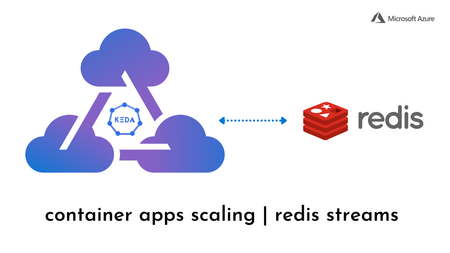
ACA's autoscaling feature internally leverages KEDA and gives you the ability to configure the number of replicas to deploy based on rules (event triggers). Apart from HTTP and TCP rule based scaling, container apps also support custom rules giving it the flexibility and opening up a lot more configuration options since all of KEDA's event-based scalers are supported.8.5KViews3likes2CommentsUnlock New AI and Cloud Potential with .NET 9 & Azure: Faster, Smarter, and Built for the Future
.NET 9, now available to developers, marks a significant milestone in the evolution of the .NET platform, pushing the boundaries of performance, cloud-native development, and AI integration. This release, shaped by contributions from over 9,000 community members worldwide, introduces thousands of improvements that set the stage for the future of application development. With seamless integration with Azure and a focus on cloud-native development and AI capabilities, .NET 9 empowers developers to build scalable, intelligent applications with unprecedented ease. Expanding Azure PaaS Support for .NET 9 With the release of .NET 9, a comprehensive range of Azure Platform as a Service (PaaS) offerings now fully support the platform’s new capabilities, including the latest .NET SDK for any Azure developer. This extensive support allows developers to build, deploy, and scale .NET 9 applications with optimal performance and adaptability on Azure. Additionally, developers can access a wealth of architecture references and sample solutions to guide them in creating high-performance .NET 9 applications on Azure’s powerful cloud services: Azure App Service: Run, manage, and scale .NET 9 web applications efficiently. Check out this blog to learn more about what's new in Azure App Service. Azure Functions: Leverage serverless computing to build event-driven .NET 9 applications with improved runtime capabilities. Azure Container Apps: Deploy microservices and containerized .NET 9 workloads with integrated observability. Azure Kubernetes Service (AKS): Run .NET 9 applications in a managed Kubernetes environment with expanded ARM64 support. Azure AI Services and Azure OpenAI Services: Integrate advanced AI and OpenAI capabilities directly into your .NET 9 applications. Azure API Management, Azure Logic Apps, Azure Cognitive Services, and Azure SignalR Service: Ensure seamless integration and scaling for .NET 9 solutions. These services provide developers with a robust platform to build high-performance, scalable, and cloud-native applications while leveraging Azure’s optimized environment for .NET. Streamlined Cloud-Native Development with .NET Aspire .NET Aspire is a game-changer for cloud-native applications, enabling developers to build distributed, production-ready solutions efficiently. Available in preview with .NET 9, Aspire streamlines app development, with cloud efficiency and observability at its core. The latest updates in Aspire include secure defaults, Azure Functions support, and enhanced container management. Key capabilities include: Optimized Azure Integrations: Aspire works seamlessly with Azure, enabling fast deployments, automated scaling, and consistent management of cloud-native applications. Easier Deployments to Azure Container Apps: Designed for containerized environments, .NET Aspire integrates with Azure Container Apps (ACA) to simplify the deployment process. Using the Azure Developer CLI (azd), developers can quickly provision and deploy .NET Aspire projects to ACA, with built-in support for Redis caching, application logging, and scalability. Built-In Observability: A real-time dashboard provides insights into logs, distributed traces, and metrics, enabling local and production monitoring with Azure Monitor. With these capabilities, .NET Aspire allows developers to deploy microservices and containerized applications effortlessly on ACA, streamlining the path from development to production in a fully managed, serverless environment. Integrating AI into .NET: A Seamless Experience In our ongoing effort to empower developers, we’ve made integrating AI into .NET applications simpler than ever. Our strategic partnerships, including collaborations with OpenAI, LlamaIndex, and Qdrant, have enriched the AI ecosystem and strengthened .NET’s capabilities. This year alone, usage of Azure OpenAI services has surged to nearly a billion API calls per month, illustrating the growing impact of AI-powered .NET applications. Real-World AI Solutions with .NET: .NET has been pivotal in driving AI innovations. From internal teams like Microsoft Copilot creating AI experiences with .NET Aspire to tools like GitHub Copilot, developed with .NET to enhance productivity in Visual Studio and VS Code, the platform showcases AI at its best. KPMG Clara is a prime example, developed to enhance audit quality and efficiency for 95,000 auditors worldwide. By leveraging .NET and scaling securely on Azure, KPMG implemented robust AI features aligned with strict industry standards, underscoring .NET and Azure as the backbone for high-performing, scalable AI solutions. Performance Enhancements in .NET 9: Raising the Bar for Azure Workloads .NET 9 introduces substantial performance upgrades with over 7,500 merged pull requests focused on speed and efficiency, ensuring .NET 9 applications run optimally on Azure. These improvements contribute to reduced cloud costs and provide a high-performance experience across Windows, Linux, and macOS. To see how significant these performance gains can be for cloud services, take a look at what past .NET upgrades achieved for Microsoft’s high-scale internal services: Bing achieved a major reduction in startup times, enhanced efficiency, and decreased latency across its high-performance search workflows. Microsoft Teams improved efficiency by 50%, reduced latency by 30–45%, and achieved up to 100% gains in CPU utilization for key services, resulting in faster user interactions. Microsoft Copilot and other AI-powered applications benefited from optimized runtime performance, enabling scalable, high-quality experiences for users. Upgrading to the latest .NET version offers similar benefits for cloud apps, optimizing both performance and cost-efficiency. For more information on updating your applications, check out the .NET Upgrade Assistant. For additional details on ASP.NET Core, .NET MAUI, NuGet, and more enhancements across the .NET platform, check out the full Announcing .NET 9 blog post. Conclusion: Your Path to the Future with .NET 9 and Azure .NET 9 isn’t just an upgrade—it’s a leap forward, combining cutting-edge AI integration, cloud-native development, and unparalleled performance. Paired with Azure’s scalability, these advancements provide a trusted, high-performance foundation for modern applications. Get started by downloading .NET 9 and exploring its features. Leverage .NET Aspire for streamlined cloud-native development, deploy scalable apps with Azure, and embrace new productivity enhancements to build for the future. For additional insights on ASP.NET, .NET MAUI, NuGet, and more, check out the full Announcing .NET 9 blog post. Explore the future of cloud-native and AI development with .NET 9 and Azure—your toolkit for creating the next generation of intelligent applications.10KViews2likes1Comment
Introducing Azure Managed Redis, cost-effective caching for your AI apps
Azure Managed Redis, announced at Microsoft's Ignite conference, is a new service that brings the latest Redis innovations to the hyperscale cloud. It features four tiers—Memory Optimized, Balanced, Compute Optimized, and Flash Optimized—designed to enhance performance and scalability for GenAI applications. With up to 99.999% availability SLA, cost-effective total cost of ownership, and seamless interoperability with Azure services, it supports high-performance, scalable AI workloads.5.4KViews2likes0Comments