attack simulation training
39 TopicsState Explosion Security Problem in AI-Era Software Supply Chains
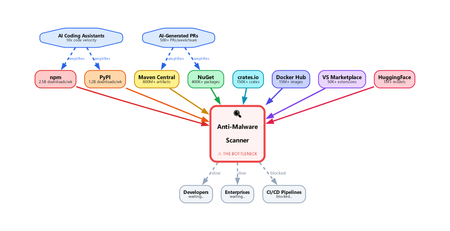
Introduction To see why this problem scales so quickly, start with the smallest possible change: a single line of code. In modern software, even a tiny edit is rarely just a local modification. It can change execution flow, introduce a new dependency, expose sensitive data, or quietly shift the purpose of the package itself. What looks trivial in a diff can create a materially different security outcome. That is why supply chain defenders cannot afford to treat small code changes as small security events. How a Single Line Changes Package Intent Every software package exists in a particular state at a particular moment in time. Imagine a benign version — State X — that behaves exactly as intended. Now add one line of code. That small edit can shift the package into a new state with different behavior and, potentially, a very different risk profile. The security issue is not the added line by itself. It is the fact that the package now has to be interpreted differently. A tiny diff can change the role of the entire component, which means defenders have to reason about the resulting behavior, not just the textual change. That is why file-level scanning breaks down so quickly. A change in one file can alter the behavior of the entire package because software semantics emerge from how components interact. Security systems therefore need to analyze packages as composed systems, not as a series of isolated file edits. Why the whole package matters This matters even more in modern supply chain attacks, where malicious intent is rarely concentrated in one obvious file. More often, the behavior is distributed across several files that look harmless when viewed independently. File A defines an encoded string constant. Looks like a config value. File B provides a decode function. Looks like a utility. File C (setup.py / postinstall) imports both, decodes, and executes. Viewed independently, each file may appear benign. No single file has to trigger a clear signature, rule, or heuristic. The malicious behavior only becomes visible when you reconstruct how the files interact as a system. Any scanner that evaluates files one by one without rebuilding that interaction is likely to miss the real behavior. Why every change demands re-analysis Every meaningful state change — a commit, pull request, version bump, or package publish — can alter the semantics of the software. That means defenders cannot stop at diff inspection or lightweight pattern matching. The real question is not only what changed, but what the software now does. Quantifying the problem The scale of the problem becomes clearer when you look at how many software state changes occur across the ecosystem every day: GitHub alone recorded nearly 1 billion commits in 2025, merged an average of 43.2 million pull requests per month, and now hosts roughly 630 million repositories. In 2026, GitHub was projected to reach roughly 38 million commits per day. npm has grown to well over 2 million packages, making JavaScript one of the largest public package ecosystems. PyPI published more than 130,000 new projects in 2025 and more than 3.9 million new files in the same year. NuGet serves package downloads at massive operational scale, with recent weekly totals in the 5 to 6 billion range. Maven Central indexed more than 20 million packages and published more than 3.2 million packages in 2025. Taken together, these ecosystems are generating an enormous stream of new software states. Some numbers describe repositories, some describe publishes, and some describe downloads, but they all point to the same reality: the scale of software movement is already massive before you even account for the acceleration from AI-assisted development. The number of state changes is already enormous, and AI-assisted development is increasing it even further. The result is not just more code, but more package states that may require meaningful security interpretation. Why the math breaks traditional scanning Assume a single semantic package analysis takes 30 seconds, which is a reasonable range for LLM-based inference. Scanning 50,000 packages would require roughly 1.5 million seconds of compute time per day — about 417 hours. But the ecosystem only gives defenders 24 hours before the next wave of packages arrives. Without aggressive parallelism and purpose-built infrastructure, backlog becomes inevitable. The scanning bottleneck This leaves modern scanning systems with a fundamental bottleneck: Heuristic and signature-based scanners are fast. They can match known patterns in milliseconds and work well for familiar malware families or repeated behaviors. Some systems also use emulation or detonation, but these approaches still struggle to deliver deep reasoning at ecosystem scale. That makes them easier to bypass with novel, well-structured, or AI-generated code that behaves maliciously without resembling previously known samples. LLM-based semantic analysis can reason about intent. It can follow behavior across files, recognize obfuscated exfiltration paths, and explain why a package is suspicious even when the code appears ordinary at first glance. The tradeoff is cost, latency, and trust: inference takes seconds rather than milliseconds, and a single package may require multiple reasoning passes. At ecosystem scale, that becomes a serious infrastructure challenge. Neither approach is sufficient on its own. Heuristics provide speed without deep understanding, while semantic models provide understanding without inherent scale. Closing the gap requires systems that combine both: package-level reasoning with the latency and throughput needed for production supply chains. Heuristics often miss novel attacks, while LLM-based approaches remain too slow to apply inline at large scale. That gap between understanding and throughput is where supply chain malware can persist. What needs to change Closing that gap will require a different class of supply chain security systems. Detonation can help in some cases, but it is too slow and expensive to apply inline to every package state change. What is needed is a system that can: Analyze entire packages as a unit — not individual files. The intent lives in the interaction between files, not within any single one. Run semantic analysis at data-plane speed — every package, every version, on the hot path, with latency low enough for inline enforcement. Not async advisories. Not CI-time checks. Inline, before delivery. Handle the state explosion — millions of state changes per day, each requiring full re-analysis. This is an infrastructure problem as much as a security problem: rate limiting, backpressure, connection pooling, regional failover, model versioning — the same hard distributed systems problems, with security stakes. Maintain high accuracy under evasion — attackers deliberately use encoding, string splitting, dynamic imports, polyglot files, and similar techniques to reduce detection quality. The scanner must continue to classify packages accurately even when the code is designed to obscure intent. The Latency-Accuracy Tradeoff: Malware Detection as an ML Problem At cloud scale, malware detection is governed by a hard tradeoff between latency, accuracy, throughput, and cost. The fastest detectors are typically shallow: signatures, heuristics, and lightweight models can make decisions in milliseconds, but they often miss novel, compositional, or intent-level attacks. Deeper semantic analysis can improve recall and resilience against evasion, but it also increases inference time, compute cost, and operational complexity. As a result, defenders cannot optimize for accuracy in isolation; they must deliver strong detection quality within strict performance constraints. This makes malware detection not just a cybersecurity problem, but a machine learning and distributed systems problem. In modern software supply chains, AI-assisted development increases the number of package states and enables attackers to generate variants at high speed, expanding the space defenders must reason over. The challenge is therefore to build detection architectures that preserve semantic depth while remaining fast enough for inline use at global scale. The gap between the rate of software change and the capacity to analyze it is widening. That gap is the attack surface. If defenders cannot inspect software at the speed it is being produced and published, attackers will continue to exploit the delay. What the industry needs now is a cloud-scale malware analysis capability that can deliver low latency, low cost, high accuracy, and the flexibility to meet different operational requirements , such as SLAs, false-positive tolerance, and enforcement policies , without compromising on package-level semantic analysis.
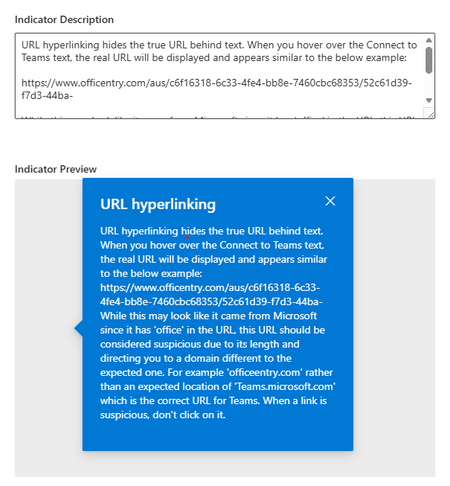
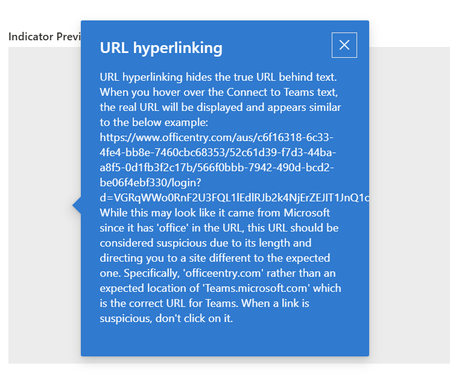
Text formatting issue with URL Hyperlinking in phishing campaign indicators.
I am running some phishing campaigns and while editing a payload i added a URL hyperlinking indicator. I type in the text for the indicator and include some empty lines. However, when it's previewed and in the actual email extra lines are removed. This makes it look all crammed together and not very readable. Any idea how i can include empty lines to break it up?URL Hyperlinking phishing training
Mi using the Defender phishing simulations to perform testing. When creating a positive reinforcement email that goes to the person you have the option to use default text or put in your own text. When I put in my own text I have lines in the text, but when it renders the lines are not displayed so it looks like a bunch of text crammed together. Any idea how to get these lines to display?Solved274Views0likes3CommentsSave the date - January 26, 2026 - AMA: Best practices for applying Zero Trust using Intune
Join us on January 26 at 10:00 AM PT, to Ask Microsoft Anything (AMA) and get the answers you need to implement the right policies, security settings, device configurations, and more. Never trust, always verify. Tune in for tips and insights to help you secure your endpoints using Microsoft Intune as part of your larger Zero Trust strategy. Find out how you can use Intune to protect both access and data on organization-owned devices and personal devices used for work. Go to aka.ms/AMA/IntuneZeroTrust and select "attend" to add this event to your calendar. Have questions? Submit them early by signing in to Tech Community and posting them on the event page!
URL rewriting does not apply during Attack Simulation (Credential Harvesting)
I’m running a credential-harvesting attack simulation in Microsoft Defender for Office 365, but the URL rewriting does not work as expected. In the final confirmation screen, the phishing link is shown as rewritten to something like: https://security.microsoft.com/attacksimulator/redirect?... However, during the actual simulation, the link is NOT rewritten. It stays as the original domain (e.g., www.officentry.com), which causes the simulation to fail with an error. I’m not sure whether this behavior is related to Safe Links or something else within Defender. Why is the URL not rewritten at runtime, and how can I ensure that the redirect link is applied correctly in the actual simulation?SolvedCybersecurity: What Every Business Leader Needs to Know Now
As a Senior Cybersecurity Solution Architect, I’ve had the privilege of supporting organisations across the United Kingdom, Europe, and the United States—spanning sectors from finance to healthcare—in strengthening their security posture. One thing has become abundantly clear: cybersecurity is no longer the sole domain of IT departments. It is a strategic imperative that demands attention at board-level. This guide distils five key lessons drawn from real-world engagements to help executive leaders navigate today’s evolving threat landscape. These insights are not merely technical—they are cultural, operational, and strategic. If you’re a C-level executive, this article is a call to action: reassess how your organisation approaches cybersecurity before the next breach forces the conversation. In this article, I share five lessons (and quotes) from the field that help demystify how to enhance an organisation’s security posture. 1. Shift the Mindset “This has always been our approach, and we’ve never experienced a breach—so why should we change it?” A significant barrier to effective cybersecurity lies not in the sophistication of attackers, but in the predictability of human behaviour. If you’ve never experienced a breach, it’s tempting to maintain the status quo. However, as threats evolve, so too must your defences. Many cyber threats exploit well-known vulnerabilities that remain unpatched or rely on individuals performing routine tasks in familiar ways. Human nature tends to favour comfort and habit—traits that adversaries are adept at exploiting. Unlike many organisations, attackers readily adopt new technologies to advance their objectives, including AI-powered ransomware to execute increasingly sophisticated attacks. It is therefore imperative to recognise—without delay—that the advent of AI has dramatically reduced both the effort and time required to compromise systems. As the UK’s National Cyber Security Centre (NCSC) has stated: “AI lowers the barrier for novice cyber criminals, hackers-for-hire and hacktivists to carry out effective access and information gathering operations. This enhanced access will likely contribute to the global ransomware threat over the next two years.” Similarly, McKinsey & Company observed: “As AI quickly advances cyber threats, organisations seem to be taking a more cautious approach, balancing the benefits and risks of the new technology while trying to keep pace with attackers’ increasing sophistication.” To counter this evolving threat landscape, organisations must proactively leverage AI in their cyber defence strategies. Examples include: Identity and Access Management (IAM): AI enhances IAM by analysing real-time signals across systems to detect risky sign-ins and enforce adaptive access controls. Example: Microsoft Entra Agents for Conditional Access use AI to automate policy recommendations, streamlining access decisions with minimal manual input. Figure 1: Microsoft Entra Agents Threat Detection: AI accelerates detection, response, and recovery, helping organisations stay ahead of sophisticated threats. Example: Microsoft Defender for Cloud’s AI threat protection identifies prompt injection, data poisoning, and wallet attacks in real time. Incident Response: AI facilitates real-time decision-making, removing emotional bias and accelerating containment and recovery during security incidents. Example: Automatic Attack Disruption in Defender XDR, which can automatically contain a breach in progress. AI Security Posture Management AI workloads require continuous discovery, classification, and protection across multi-cloud environments. Example: Microsoft Defender for Cloud’s AI Security Posture Management secures custom AI apps across Azure, AWS, and GCP by detecting misconfigurations, vulnerabilities, and compliance gaps. Data Security Posture Management (DSPM) for AI AI interactions must be governed to ensure privacy, compliance, and insider risk mitigation. Example: Microsoft Purview DSPM for AI enables prompt auditing, applies Data Loss Prevention (DLP) policies to third-party AI apps like ChatGPT, and supports eDiscovery and lifecycle management. AI Threat Protection Organisations must address emerging AI threat vectors, including prompt injection, data leakage, and model exploitation. Example: Defender for AI (private preview) provides model-level security, including governance, anomaly detection, and lifecycle protection. Embracing innovation, automation, and intelligent defence is the secret sauce for cyber resilience in 2026. 2. Avoid One-Off Purchases – Invest with a Strategy “One MDE and one Sentinel to go, please.” Organisations often approach me intending to purchase a specific cybersecurity product—such as Microsoft Defender for Endpoint (MDE)—without a clearly articulated strategic rationale. My immediate question is: what is the broader objective behind this purchase? Is it driven by perceived value or popularity, or does it form part of a well-considered strategy to enhance endpoint security? Cybersecurity investments should be guided by a long-term, holistic strategy that spans multiple years and is periodically reassessed to reflect evolving threats. Strengthening endpoint protection must be integrated into a wider effort to improve the organisation’s overall security posture. This includes ensuring seamless integration between security solutions and avoiding operational silos. For example, deploying robust endpoint protection is of limited value if identities are not safeguarded with multi-factor authentication (MFA), or if storage accounts remain publicly accessible. A cohesive and forward-looking approach ensures that all components of the security architecture work in concert to mitigate risk effectively. Security Adoption Journey (Based on Zero Trust Framework) Assess – Evaluate the threat landscape, attack surface, vulnerabilities, compliance obligations, and critical assets. Align – Link security objectives to broader business goals to ensure strategic coherence. Architect – Design integrated and scalable security solutions, addressing gaps and eliminating operational silos. Activate – Implement tools with robust governance and automation to ensure consistent policy enforcement. Advance – Continuously monitor, test, and refine the security posture to stay ahead of evolving threats. Security tools are not fast food—they work best as part of a long-term plan, not a one-off order. This piecemeal approach runs counter to the modern Zero Trust security model, which assumes no single tool will prevent every breach and instead implements layered defences and integration. 3. Legacy Systems Are Holding You Back “Unfortunately, we are unable to implement phishing-resistant MFA, as our legacy app does not support integration with the required protocols.” A common challenge faced by many organisations I have worked with is the constraint on innovation within their cybersecurity architecture, primarily due to continued reliance on legacy applications—often driven by budgetary or operational necessity. These outdated systems frequently lack compatibility with modern security technologies and may introduce significant vulnerabilities. A notable example is the deployment of phishing-resistant multi-factor authentication (MFA)—such as FIDO2 security keys or certificate-based authentication—which requires advanced identity protocols and conditional access policies. These capabilities are available exclusively through Microsoft Entra ID. To address this issue effectively, it is essential to design security frameworks based on the organisation’s future aspirations rather than its current limitations. By adopting a forward-thinking approach, organisations can remain receptive to emerging technologies that align with their strategic cybersecurity objectives. Moreover, this perspective encourages investment in acquiring the necessary talent, thereby reducing reliance on extensive change management and staff retraining. I advise designing for where you want to be in the next 1–3 years—ideally cloud-first and identity-driven—essentially adopting a Zero Trust architecture, rather than being constrained by the limitations of legacy systems. 4. Collaboration Is a Security Imperative “This item will need to be added to the dev team's backlog. Given their current workload, they will do their best to implement GitHub Security in Q3, subject to capacity.” Cybersecurity threats may originate from various parts of an organisation, and one of the principal challenges many face is the fragmented nature of their defence strategies. To effectively mitigate such risks, cybersecurity must be embedded across all departments and functions, rather than being confined to a single team or role. In many organisations, the Chief Information Security Officer (CISO) operates in isolation from other C-level executives, which can limit their influence and complicate the implementation of security measures across the enterprise. Furthermore, some teams may lack the requisite expertise to execute essential security practices. For instance, an R&D lead responsible for managing developers may not possess the necessary skills in DevSecOps. To address these challenges, it is vital to ensure that the CISO is empowered to act without political or organisational barriers and is supported in implementing security measures across all business units. When the CISO has backing from the COO and HR, initiatives such as MFA rollout happen faster and more thoroughly. Cross-Functional Security Responsibilities Role Security Responsibilities R&D - Adopt DevSecOps practices - Identify vulnerabilities early - Manage code dependencies - Detect exposed secrets - Embed security in CI/CD pipelines CIO - Ensure visibility over organizational data - Implement Data Loss Prevention (DLP) - Safeguard sensitive data lifecycle - Ensure regulatory compliance CTO - Secure cloud environments (CSPM) - Manage SaaS security posture (SSPM) - Ensure hardware and endpoint protection COO - Protect digital assets - Secure domain management - Mitigate impersonation threats - Safeguard digital marketing channels and customer PII Support & Vendors - Deliver targeted training - Prevent social engineering attacks - Improve awareness of threat vectors HR - Train employees on AI-related threats - Manage insider risks - Secure employee data - Oversee cybersecurity across the employee lifecycle Empowering the CISO to act across departments helps organisations shift towards a security-first culture—embedding cybersecurity into every function, not just IT. 5. Compliance Is Not Security “We’re compliant, so we must be secure.” Many organisations mistakenly equate passing audits—such as ISO 27001 or SOC 2—with being secure. While compliance frameworks help establish a baseline for security, they are not a guarantee of protection. Determined attackers are not deterred by audit checklists; they exploit gaps, misconfigurations, and human error regardless of whether an organisation is certified. Moreover, due to the rapidly evolving nature of the cyber threat landscape, compliance frameworks often struggle to keep pace. By the time a standard is updated, attackers may already be exploiting new techniques that fall outside its scope. This lag creates a false sense of security for organisations that rely solely on regulatory checkboxes. Security is a continuous risk management process—not a one-time certification. It must be embedded into every layer of the enterprise and treated with the same urgency as other core business priorities. Compliance may be the starting line, not the finish line. Effective security goes beyond meeting regulatory requirements—it demands ongoing vigilance, adaptability, and a proactive mindset. Conclusion: Cybersecurity Is a Continuous Discipline Cybersecurity is not a destination—it is a continuous journey. By embracing strategic thinking, cross-functional collaboration, and emerging technologies, organisations can build resilience against today’s threats and tomorrow’s unknowns. The lessons shared throughout this article are not merely technical—they are cultural, operational, and strategic. If there is one key takeaway, it is this: avoid piecemeal fixes and instead adopt an integrated, future-ready security strategy. Due to the rapidly evolving nature of the cyber threat landscape, compliance frameworks alone cannot keep pace. Security must be treated as a dynamic, ongoing process—one that is embedded into every layer of the enterprise and reviewed regularly. Organisations should conduct periodic security posture reviews, leveraging tools such as Microsoft Secure Score or monthly risk reports, and stay informed about emerging threats through threat intelligence feeds and resources like the Microsoft Digital Defence Report, CISA (Cybersecurity and Infrastructure Security Agency), NCSC (UK National Cyber Security Centre), and other open-source intelligence platforms. As Ann Johnson aptly stated in her blog: “The most prepared organisations are those that keep asking the right questions and refining their approach together.” Cyber resilience demands ongoing investment—in people (through training and simulation drills), in processes (via playbooks and frameworks), and in technology (through updates and adoption of AI-driven defences). To reduce cybersecurity risk over time, resilient organisations must continually refine their approach and treat cybersecurity as an ongoing discipline. The time to act is now. Resources: https://www.ncsc.gov.uk/report/impact-of-ai-on-cyber-threat Defend against cyber threats with AI solutions from Microsoft - Microsoft Industry Blogs Generative AI Cybersecurity Solutions | Microsoft Security Require phishing-resistant multifactor authentication for Microsoft Entra administrator roles - Microsoft Entra ID | Microsoft Learn AI is the greatest threat—and defense—in cybersecurity today. Here’s why. Microsoft Entra Agents - Microsoft Entra | Microsoft Learn Smarter identity security starts with AI https://www.microsoft.com/en-us/security/blog/2025/06/12/cyber-resilience-begins-before-the-crisis/ https://www.microsoft.com/en-us/security/security-insider/threat-landscape/microsoft-digital-defense-report-2023-critical-cybersecurity-challenges https://www.microsoft.com/en-us/security/blog/2025/06/12/cyber-resilience-begins-before-the-crisis/2.3KViews2likes0CommentsHacking Made Easy, Patching Made Optional: A Modern Cyber Tragedy
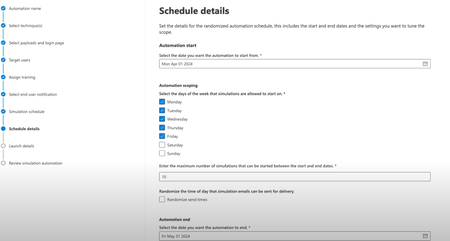
In today’s cyber threat landscape, the tools and techniques required to compromise enterprise environments are no longer confined to highly skilled adversaries or state-sponsored actors. While artificial intelligence is increasingly being used to enhance the sophistication of attacks, the majority of breaches still rely on simple, publicly accessible tools and well-established social engineering tactics. Another major issue is the persistent failure of enterprises to patch common vulnerabilities in a timely manner—despite the availability of fixes and public warnings. This negligence continues to be a key enabler of large-scale breaches, as demonstrated in several recent incidents. The Rise of AI-Enhanced Attacks Attackers are now leveraging AI to increase the credibility and effectiveness of their campaigns. One notable example is the use of deepfake technology—synthetic media generated using AI—to impersonate individuals in video or voice calls. North Korean threat actors, for instance, have been observed using deepfake videos and AI-generated personas to conduct fraudulent job interviews with HR departments at Western technology companies. These scams are designed to gain insider access to corporate systems or to exfiltrate sensitive intellectual property under the guise of legitimate employment. Social Engineering: Still the Most Effective Entry Point And yet, many recent breaches have begun with classic social engineering techniques. In the cases of Coinbase and Marks & Spencer, attackers impersonated employees through phishing or fraudulent communications. Once they had gathered sufficient personal information, they contacted support desks or mobile carriers, convincingly posing as the victims to request password resets or SIM swaps. This impersonation enabled attackers to bypass authentication controls and gain initial access to sensitive systems, which they then leveraged to escalate privileges and move laterally within the network. Threat groups such as Scattered Spider have demonstrated mastery of these techniques, often combining phishing with SIM swap attacks and MFA bypass to infiltrate telecom and cloud infrastructure. Similarly, Solt Thypoon (formerly DEV-0343), linked to North Korean operations, has used AI-generated personas and deepfake content to conduct fraudulent job interviews—gaining insider access under the guise of legitimate employment. These examples underscore the evolving sophistication of social engineering and the need for robust identity verification protocols. Built for Defense, Used for Breach Despite the emergence of AI-driven threats, many of the most successful attacks continue to rely on simple, freely available tools that require minimal technical expertise. These tools are widely used by security professionals for legitimate purposes such as penetration testing, red teaming, and vulnerability assessments. However, they are also routinely abused by attackers to compromise systems Case studies for tools like Nmap, Metasploit, Mimikatz, BloodHound, Cobalt Strike, etc. The dual-use nature of these tools underscores the importance of not only detecting their presence but also understanding the context in which they are being used. From CVE to Compromise While social engineering remains a common entry point, many breaches are ultimately enabled by known vulnerabilities that remain unpatched for extended periods. For example, the MOVEit Transfer vulnerability (CVE-2023-34362) was exploited by the Cl0p ransomware group to compromise hundreds of organizations, despite a patch being available. Similarly, the OpenMetadata vulnerability (CVE-2024-28255, CVE-2024-28847) allowed attackers to gain access to Kubernetes workloads and leverage them for cryptomining activity days after a fix had been issued. Advanced persistent threat groups such as APT29 (also known as Cozy Bear) have historically exploited unpatched systems to maintain long-term access and conduct stealthy operations. Their use of credential harvesting tools like Mimikatz and lateral movement frameworks such as Cobalt Strike highlights the critical importance of timely patch management—not just for ransomware defense, but also for countering nation-state actors. Recommendations To reduce the risk of enterprise breaches stemming from tool misuse, social engineering, and unpatched vulnerabilities, organizations should adopt the following practices: 1. Patch Promptly and Systematically Ensure that software updates and security patches are applied in a timely and consistent manner. This involves automating patch management processes to reduce human error and delay, while prioritizing vulnerabilities based on their exploitability and exposure. Microsoft Intune can be used to enforce update policies across devices, while Windows Autopatch simplifies the deployment of updates for Windows and Microsoft 365 applications. To identify and rank vulnerabilities, Microsoft Defender Vulnerability Management offers risk-based insights that help focus remediation efforts where they matter most. 2. Implement Multi-Factor Authentication (MFA) To mitigate credential-based attacks, MFA should be enforced across all user accounts. Conditional access policies should be configured to adapt authentication requirements based on contextual risk factors such as user behavior, device health, and location. Microsoft Entra Conditional Access allows for dynamic policy enforcement, while Microsoft Entra ID Protection identifies and responds to risky sign-ins. Organizations should also adopt phishing-resistant MFA methods, including FIDO2 security keys and certificate-based authentication, to further reduce exposure. 3. Identity Protection Access Reviews and Least Privilege Enforcement Conducting regular access reviews ensures that users retain only the permissions necessary for their roles. Applying least privilege principles and adopting Microsoft Zero Trust Architecture limits the potential for lateral movement in the event of a compromise. Microsoft Entra Access Reviews automates these processes, while Privileged Identity Management (PIM) provides just-in-time access and approval workflows for elevated roles. Just-in-Time Access and Risk-Based Controls Standing privileges should be minimized to reduce the attack surface. Risk-based conditional access policies can block high-risk sign-ins and enforce additional verification steps. Microsoft Entra ID Protection identifies risky behaviors and applies automated controls, while Conditional Access ensures access decisions are based on real-time risk assessments to block or challenge high-risk authentication attempts. Password Hygiene and Secure Authentication Promoting strong password practices and transitioning to passwordless authentication enhances security and user experience. Microsoft Authenticator supports multi-factor and passwordless sign-ins, while Windows Hello for Business enables biometric authentication using secure hardware-backed credentials. 4. Deploy SIEM and XDR for Detection and Response A robust detection and response capability is vital for identifying and mitigating threats across endpoints, identities, and cloud environments. Microsoft Sentinel serves as a cloud-native SIEM that aggregates and analyses security data, while Microsoft Defender XDR integrates signals from multiple sources to provide a unified view of threats and automate response actions. 5. Map and Harden Attack Paths Organizations should regularly assess their environments for attack paths such as privilege escalation and lateral movement. Tools like Microsoft Defender for Identity help uncover Lateral Movement Paths, while Microsoft Identity Threat Detection and Response (ITDR) integrates identity signals with threat intelligence to automate response. These capabilities are accessible via the Microsoft Defender portal, which includes an attack path analysis feature for prioritizing multicloud risks. 6. Stay Current with Threat Actor TTPs Monitor the evolving tactics, techniques, and procedures (TTPs) employed by sophisticated threat actors. Understanding these behaviours enables organizations to anticipate attacks and strengthen defenses proactively. Microsoft Defender Threat Intelligence provides detailed profiles of threat actors and maps their activities to the MITRE ATT&CK framework. Complementing this, Microsoft Sentinel allows security teams to hunt for these TTPs across enterprise telemetry and correlate signals to detect emerging threats. 7. Build Organizational Awareness Organizations should train staff to identify phishing, impersonation, and deepfake threats. Simulated attacks help improve response readiness and reduce human error. Use Attack Simulation Training, in Microsoft Defender for Office 365 to run realistic phishing scenarios and assess user vulnerability. Additionally, educate users about consent phishing, where attackers trick individuals into granting access to malicious apps. Conclusion The democratization of offensive security tooling, combined with the persistent failure to patch known vulnerabilities, has significantly lowered the barrier to entry for cyber attackers. Organizations must recognize that the tools used against them are often the same ones available to their own security teams. The key to resilience lies not in avoiding these tools, but in mastering them—using them to simulate attacks, identify weaknesses, and build a proactive defense. Cybersecurity is no longer a matter of if, but when. The question is: will you detect the attacker before they achieve their objective? Will you be able to stop them before reaching your most sensitive data? Additional read: Gartner Predicts 30% of Enterprises Will Consider Identity Verification and Authentication Solutions Unreliable in Isolation Due to AI-Generated Deepfakes by 2026 Cyber security breaches survey 2025 - GOV.UK Jasper Sleet: North Korean remote IT workers’ evolving tactics to infiltrate organizations | Microsoft Security Blog MOVEit Transfer vulnerability Solt Thypoon Scattered Spider SIM swaps Attackers exploiting new critical OpenMetadata vulnerabilities on Kubernetes clusters | Microsoft Security Blog Microsoft Defender Vulnerability Management - Microsoft Defender Vulnerability Management | Microsoft Learn Zero Trust Architecture | NIST tactics, techniques, and procedures (TTP) - Glossary | CSRC https://learn.microsoft.com/en-us/security/zero-trust/deploy/overviewMaking the Most of Attack Simulation Training: Dynamic Groups, Automation, and User Education
Learn how to maximize the impact of Attack Simulation Training in Microsoft Defender for Office 365. This guide covers dynamic groups, automation, localization, and reporting to help you build a scalable and effective security awareness program.Attack Simulation - Copy to SOC Mailbox
Hello Community! Currently we are using Knowbe4 to simulate phishing campaigns. We are evaluating the Microsoft E5 Attack simulation. One problem that I cannot figure out with the MSFT version is as follows: I have the SOC mailbox setup to send phishing emails to a shared mailbox for triage (I have it setup to not forward to Microsoft) When I create an attack simulation, and folks report the phish, I still get a copy of it in the phishing mailbox (I send these out monthly to thousands of people so I would prefer not to have a copy) I have looked at the email headers, and there is nothing in them that I can create a custom rule for. Has anyone been able to filter out attack simulation emails, while still receiving normal user reported emails in the SOC mailbox? Any advice appreciated. Em