artifical intelligence
1 TopicAnnouncing the Public Preview of Reader Endpoint for Azure Database for MySQL
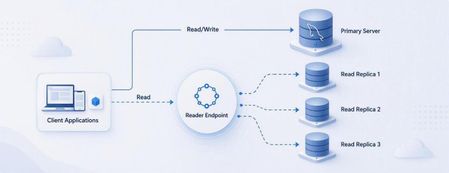
We are excited to announce the Public Preview of Reader Endpoint for Azure Database for MySQL. Read replicas help applications scale read-intensive workloads by moving read traffic away from the primary server. This can include traditional applications, analytics and reporting workloads, and AI-powered applications that retrieve structured context from MySQL. However, as the number of replicas grows, applications traditionally need to maintain separate replica hostnames and implement their own connection-routing logic. Reader Endpoint simplifies that experience. It provides a single DNS endpoint for read replicas and automatically distributes new read connections across eligible replicas. Applications can use one connection endpoint instead of managing every replica individually. Simplified read scaling through one endpoint Reader Endpoint uses connection-level routing and continuously monitors replica availability and replication lag. If a replica becomes unavailable or exceeds the configured replication-lag threshold, Reader Endpoint automatically excludes it from routing. Reader Endpoint does not inspect individual queries and does not route write traffic. Applications should continue directing writes to the primary server. Choose the routing method that fits your workload Reader Endpoint supports two routing methods: Rotational routing: Distributes connections across eligible replicas in a round-robin pattern. Performance routing: Uses geographic proximity to route connections to eligible replicas in the region closest to the client. This gives application teams the flexibility to distribute connections evenly or prioritize geographic proximity. Configure routing for your application’s needs Reader Endpoint allows you to configure: The read replicas that participate in routing The maximum acceptable replication lag for an eligible replica DNS time to live, including a TTL value of 0 Whether the primary server can serve reads when no eligible replica is available Whether newly created replicas are automatically attached to the endpoint Configure the Reader Endpoint name, routing method, DNS TTL, and replication-lag threshold. Select participating replicas and configure fallback and automatic replica attachment. You can also create multiple Reader Endpoints for the same source server. This enables different applications or workloads to use their own replica selections, routing methods, lag thresholds, and DNS TTL settings. For example, an operational application could use one endpoint with a strict replication-lag threshold, while a reporting workload could use another endpoint with a different set of replicas and routing configuration. What is new in Public Preview? Building on the Private Preview, the Public Preview introduces several enhancements: Support for multiple Reader Endpoints per source server The new Performance routing method, alongside Rotational routing Support for configuring DNS TTL to 0 An option to allow the primary server to serve reads when no eligible replica is available Automatic attachment of newly created replicas Scale data retrieval for AI-powered applications AI-powered applications can generate significant read traffic when retrieving structured context, such as product, customer, or application data, from MySQL. Reader Endpoint helps scale these read-intensive operations by distributing new connections across eligible read replicas through a single endpoint. Applications can also use a separate Reader Endpoint for AI workloads, with their own replica selection, routing method, and replication-lag threshold. Other common scenarios Reader Endpoint can simplify connection management for several read-intensive scenarios: Applications that need to scale read traffic across multiple replicas Business intelligence, analytics, and reporting workloads Read-only microservices Applications that need to avoid routing new connections to unavailable or lagging replicas Different workloads requiring independent replica and routing configurations Public Preview considerations The following limitations currently apply: Support for changing the routing method after endpoint creation will be added in an upcoming update. Azure CLI is not yet supported for Reader Endpoint. You can't use SSL connections that use VERIFY_IDENTITY mode through the reader endpoint. Other SSL modes are supported. Reader Endpoint incurs an additional charge. Use the Azure Pricing Calculator to estimate applicable costs. Get started To learn more about routing behaviour, configuration options, pricing, and current limitations, see Read replicas in Azure Database for MySQL. We encourage you to try Reader Endpoint with your read-intensive workloads and share your feedback as we continue improving the experience toward general availability. We invite you to share your experiences or suggestions at AskAzureDBforMySQL@service.microsoft.com Thank you for choosing Azure Database for MySQL!133Views0likes0Comments