akv
22 Topics
Announcing: Microsoft transforms Licensing with Cloud Security and Confidential Computing
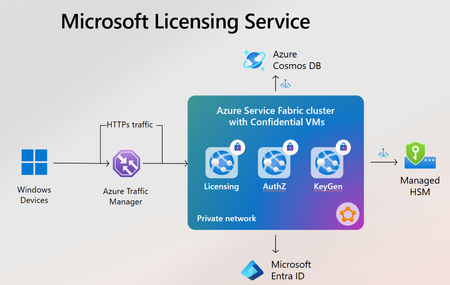
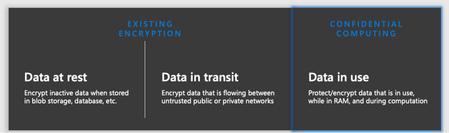
Microsoft is proud to announce the successful migration of its Windows Licensing Service to Azure, leveraging cutting-edge Confidential Computing and Managed Hardware Security Modules (mHSM) technology. This marks a significant breakthrough in the cloud adoption journey for workloads operating in highly secure environments, reshaping the way Microsoft’s licensing services operate securely at scale. But what did it really take to move one of Microsoft’s most security-critical services to the cloud? Read on to uncover how the team enabled the largest cryptographic workload ever run in Azure—built on high-assurance infrastructure designed for secure, high-throughput operations. Migrating highly secure workloads is made possible with the help of Confidential computing and Managed HSM empowering organizations handling highly secure, high-throughput, and confidential workloads to operate with greater confidence, flexibility, and value. Advancing Security and Throughput The Microsoft Windows Key Management Licensing Service (MKMS) is built around the protection and management of high-value cryptographic keys, which are central to its security model. This service processes billions of licensing requests and related cryptographic operations each day, using these keys to ensure that only authorized individuals have access to their Windows operating systems, desktop applications, and games. Through its focus on secure key management, MKMS supports the authenticity of software licenses and the protection of sensitive data, making secure Windows licensing possible on a global scale. With the integration of Confidential Virtual Machines (CVM) and Managed Hardware Security Modules, the service now meets modern high-security requirements by extending this rigorous protection into the cloud environment. This evolution not only reinforces Microsoft's dedication to safeguarding sensitive cryptographic operations but also ensures that customers can trust the reliability and security of their licensing experience. Building Trust by Moving to Azure Transitioning from multiple highly secure on-prem datacenters to strategically selected Azure regions has enabled greater reliability, stronger security, and a seamless customer experience for the service. This migration not only aligns with Microsoft’s Secure Future Initiative and delivers CAPEX savings by eliminating the need for hardware refreshes but also unlocks the benefits of cloud-native solutions powered by Confidential Computing and Azure Key Vault Managed HSM. Migrating MKMS licensing service from on-premises infrastructure to Azure has delivered significant operational benefits. Azure’s elastic cloud resources allow us to scale efficiently, adapting to changing workload demands and supporting future growth while optimizing costs by paying only for the resources we use. Distributing services across multiple geographic regions in Azure has substantially improved our service availability, minimizing downtime and maintaining consistent delivery even during unexpected events. This geographic redundancy ensures our customers experience fewer disruptions. By utilizing Azure’s performance-driven infrastructure, we have reduced upfront hardware investments and ongoing maintenance costs, while still meeting the high throughput, speed, and reliability necessary for large-scale cryptographic operations—achieving results on par with or better than our previous on-premises environment. Enabling Security with Azure Confidential Computing At the heart of this transformation lies Azure Confidential Computing based on 4th generation AMD EPYC™ CPUs with SEV-SNP, which safeguards sensitive data during processing through hardware-based Trusted Execution Environments (TEEs). This technology prevents unauthorized access, including by cloud administrators and datacenter operators, ensuring robust confidentiality for cryptographic operations that are central to the authenticity of software licenses. Azure encrypts data at rest and in transit, while confidential computing further secures data in use. This added layer of protection addressed essential security requirements for migrating secure workloads to Azure, supporting the safety and integrity of customer data. The migration also incorporated Azure Managed HSM to provide enhanced security and tighter control over cryptographic keys. Complemented by Confidential Virtual Machines and securely attested OS images, the service now operates in a trusted and isolated environment, delivering a resilient and scalable cryptographic foundation —crucial for managing high value cryptographic keys required for Windows licensing. Setting a Benchmark for High-Scale Cryptographic Services Microsoft’s Key Management Licensing Service, leveraging Azure Confidential Computing and the specially engineered high-throughput Managed HSM capabilities, delivers advanced performance for securely hosting confidential, high-scale workloads in the cloud. These enhanced MHSM features were designed and built to meet the immense demand of this service, enabling it to support the highest throughput cryptographic workload ever run on Azure to date. MKMS is deployed on Azure using a purpose-built, internally attested secure image to ensure a trusted baseline. The deployment leverages Azure confidential VMs, and managed hardware security modules to protect data: all data at rest and in transit is encrypted, with encryption keys secured by FIPS-validated HSMs. In addition, CVM guarantees our service that all data in-use is encrypted and secure as an additional layer of security. Comprehensive logging and monitoring are enabled across the stack: control-plane operations, host OS events, and network traffic are all recorded and analyzed for auditing and threat detection. This defense-in-depth design layers protection from the hardware and hypervisor up through network firewalls and application-level safeguards, ensuring comprehensive resilience against both volumetric and application-targeted attacks. Summary In summary, migration of Windows Licensing to Azure signifies Microsoft’s commitment to driving innovation and security in the cloud. By leveraging Confidential Computing and Managed HSMs, Microsoft is delivering value to billions of users worldwide while reinforcing the trust placed in its services. This achievement highlights the potential of cloud-native technologies to transform traditional mission-critical systems, offering a glimpse into the future of secure and scalable computing.3.8KViews12likes0CommentsAnnouncing: Microsoft moves $25 Billion in credit card transactions to Azure confidential computing
Microsoft is proud to showcase that customers in the financial sector can rely on public Azure to add confidentiality to provide secure and compliant payment solutions that meet or exceed industry standards. Microsoft is committed to hosting 100% of our payment services on Azure, just as we would expect our customers to do. Microsoft’s Commerce Financial Services (CFS) has completed a critical milestone by deploying a level 1 Payment Card Industry Data Security Standard (PCI-DSS) compliant credit card processing and vaulting solution, moving $25 Billion in annual credit card transactions to the public Azure cloud.
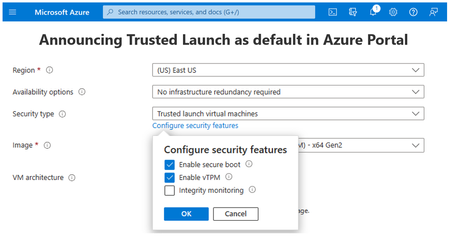
Announcing Trusted Launch as default in Azure Portal
In the spirit of ‘Secure-by-default’, today, we are announcing Trusted Launch virtual machines as default in Azure Portal. With Trusted Launch as default, the security settings in Portal are pre-set for you and no special attention is required. Any new VM created on Azure Portal will have Trusted Launch capabilities turned on by default.Lesson Learned #422: Retrieving Database Connection Strings with Azure Key Vault
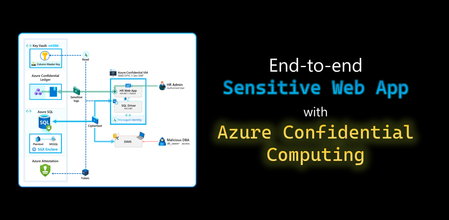
Today, we worked on a service request that our customer wants to use Azure Key Vault for saving the connectionstring for their Azure SQL Database or Managed Instance. Azure Key Vault (AKV) provides a secure and centralized way of managing sensitive data such as secrets, encryption keys, and certificates. In this article, we will focus on securely retrieving a database connection string using AKV. I would like to share an example about it, based on this article: Quickstart - Set & retrieve a secret from Key Vault using PowerShell | Microsoft Learn4.3KViews2likes0CommentsPreview of multiparty analytics with Azure Confidential Clean Rooms
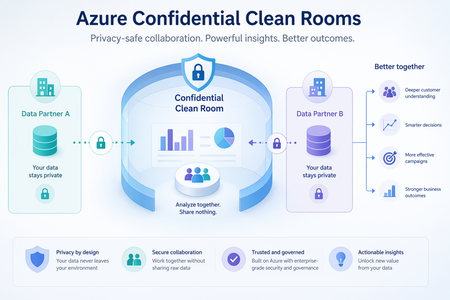
Today, we are excited to announce the preview of multiparty analytics feature of Azure Confidential Clean Rooms, a fully managed service that allows customers and their partners to securely analyze privacy-sensitive datasets from multiple parties. It uses confidential compute enabled Apache Spark-based big-data analytics (Spark SQL) which helps protect their raw data from other collaborators and from the Azure operator by performing computations in a Trusted Execution Environment (TEE). Privacy-sensitive datasets include personally identifiable information (PII), protected health information (PHI) and cryptographic secrets. Organizations across industries are increasingly looking to supplement their data with data from business partners, to build a complete view of their business. For example, brands, publishers, and their partners need to collaborate using datasets containing Intellectual Property (IP) to improve the relevance of their campaigns. Confidential data clean rooms help solve this challenge by enabling organizations to share and analyze granular datasets in a secure environment that helps prevent raw data exfiltration—protecting intellectual property, preserving customer privacy, and addressing concerns around regulatory compliance. You can sign up for the preview here Key Features Fully Managed: Azure takes care of the infrastructure provisioning and scaling with no user intervention. This significantly reduces your onboarding effort allowing you to focus on the queries and insights, not on infra management. Confidential Spark SQL: Spark SQL allows you to query large datasets and run complex queries in a distributed computing environment. In the confidential computing enabled version, the Spark driver and executors are fully attested policy-governed enclaves running as virtual nodes on confidential Azure Container Instances (ACI) which helps prevent exfiltration of collaborators’ data during query execution. Governance: Helps manage membership to cleanrooms, enables and verifies approval for queries from relevant collaborators before executing them and verifies consent to access sensitive collaborator data. It also helps generate tamper-resistant audit trails containing salient clean room events. This is made possible with the help of an implementation of the Confidential Consortium Framework (CCF). Telemetry: Throughout every clean-room run, detailed logs are streamed out in real time to monitor performance, troubleshoot issues, and keep the analytics healthy — all without ever exposing the collaborators’ data at any time. Verifiable trust: Cryptographic remote attestation viz. full attestation based on confidential hardware reports allows independent verification of the TEE along with along with all components that are part of it, without just trusting the cloud provider, before sensitive data and decryption keys are made available to the TEE Open-source containers: All Microsoft provided cleanroom containers and sidecars are open-sourced here and can be verified for provenance and integrity guarantees using GitHub artifact attestation Use Cases Multi-party confidential big-data analytics unlocks value in scenarios where data sensitivity, regulatory pressure, or competitive concerns previously blocked collaboration. These are some early scenarios that can benefit from this. Media & Advertising Collaboration of advertiser CRM data with publisher data for audience targeting and segment activation. Collaboration of audience data with measurement partners for measurement and attribution. Banking & Finance Collaboration between banks and insurance firms to upsell relevant products to existing bank customers without sharing raw data from either side Collaboration with retailers to generate customized offers for bank customers, without exposing either party’s underlying data. Government & Public Sector Secure collaboration of data across government departments to deliver better citizen welfare outcomes. Secure collaboration between government and private enterprises on shared-interest workloads such as traffic monitoring and weather systems. Healthcare Enable healthcare firms — including biopharma organizations — to combine their data with third-party institutions to accelerate clinical development, like identifying eligible participants for a clinical trial, without exposing underlying patient data. Combine patient datasets across hospitals to study disease patterns or outcomes without exposing sensitive protected health information. "A higher standard for protecting user privacy and trust, the phase-out of third-party cookies, and global regulations demand more sophisticated data collaboration tools to support advertising marketplaces. Azure Confidential Cleanrooms (ACCR) provides a secure, feature-rich, and flexible foundation to implement privacy-preserving functions and enable insights without sharing privacy-sensitive data outside of organization boundaries. Built on the Azure Confidential Compute (ACC) platform and offering cohesion with Azure's diverse set of services, ACCR offers the attestation, audit, fine-grained access control, and verifiable trust tools required for secure and privacy-safe data collaboration in today's world." — Andrei Mackenzie, Engineering Manager, Microsoft AI "Azure Confidential Clean Rooms enabled our team to evaluate how clean room capabilities can support secure, governed data collaboration at scale. Through the Proof-of-Concept (PoC), we explored how privacy-preserving workflows, trusted access controls, and scalable compute can create a stronger foundation for responsibly leveraging first-party data. This helps reduce operational friction while supporting business growth, improving customer engagement, and enabling more relevant customer experiences." — Nic Dregne, Director, Microsoft AdTech Engineering Beyond Spark SQL Realizing other multi-party scenarios like custom analytics, ML training and inferencing on Azure Confidential Clean Rooms is in our roadmap. If you have such a scenario to be realized, you can fill in and submit the preview signup form with the details of your scenario and we’ll get back to you. Learn More · Signup for the preview of Azure Confidential Clean Rooms for Analytics · Confidential Consortium Framework (CCF) · Virtual Nodes on Azure Container InstancesPreview of Azure Confidential Clean Rooms for secure multiparty data collaboration
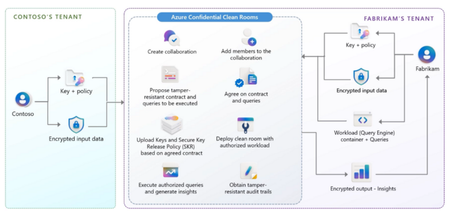
Today, we are excited to announce the preview of Azure Confidential Clean Rooms, a cutting-edge solution designed for organizations that require secure multi-party data collaboration. With Confidential Clean Rooms, you can share privacy sensitive data such as personally identifiable information (PII), protected health information (PHI) and cryptographic secrets confidently, thanks to robust trust guarantees that help ensure that your data remains protected throughout its lifecycle from other collaborators and from Azure operators. This secure data sharing is powered by confidential computing, which helps protect data in-use by performing computations in hardware-based, attested Trusted Execution Environments (TEEs). These TEEs help prevent unauthorized access or modification of application code and data during use. Organizations across industries need to perform multi-party data collaboration with business partners, outside organizations, and even within company silos to improve business outcomes and bolster innovation. Confidential Clean Rooms help derive true value from such collaborations by enabling granular and private data to be shared while providing safeguards on data exfiltration hence protecting the intellectual property of the organization and the privacy of its customers and addressing concerns around regulatory compliance. Whether you’re a data scientist looking to securely fine-tune your ML model with sensitive data from other organizations, or a data analyst wanting to perform secure analytics on joint data with your partner organizations, Confidential Clean Rooms will help you achieve the desired results. You can sign up for the preview here Key Features Secure Collaboration and Governance: Allows collaborators to create tamper-resistant contracts that contain the constraints which will be enforced by the clean room. Governance verifies validity of those constraints before allowing data to be released into clean rooms and helps generate tamper-resistant audit trails. This is made possible with the help of an implementation of the Confidential Consortium Framework CCF). Enhanced Data Privacy: Provides a sandboxed execution environment which allows only authorized workloads to execute and prevents any unauthorized network or IO operations from within the clean room. This helps keep your data secure throughout the workload execution. This is possible with the help of deploying clean rooms in confidential containers on Azure Container Instances (ACI) which provides container group level integrity with runtime enforcement of the same. Verifiable trust at each step with the help of cryptographic remote attestation forms the cornerstone of Confidential Clean Rooms. Salient Use Cases Azure Confidential Clean Rooms caters to use cases spanning multiple industries. Healthcare: For fine-tuning and inferencing with predictive healthcare machine-learning (ML) models and for joint data analysis for advancing pharmaceutical research. This can help protect the privacy of patients and intellectual property of organizations while demonstrating regulatory compliance. Finance: For financial fraud detection through analysis of combined data across banks and other financial institutions and for providing personalized offers to customers through secure analysis of transaction data and purchase data in retail outlets Media and Advertising: For improving marketing campaign effectiveness by combining data across advertisers, ad-techs, publishers and measurement firms for audience targeting and attribution and measurement Retail: For enhanced personalized marketing and improved inventory and supply chain management Government and Public Sector Organizations: For analysis of high security data across multiple government and public sector organizations to streamline benefits for citizens Customer Testimonials We are already partnering with several organizations to accelerate their secure multi-party collaboration journey with confidential clean rooms. Confidential computing in healthcare allows secure data processing within isolated environments, called 'clean rooms', protecting sensitive patient data during AI model development, validation and deployment. Apollo Hospitals uses Azure Confidential Clean Rooms to enhance data privacy, encrypt data, and securely train AI models. The benefits include secure collaboration, anonymized patient privacy, intellectual property protection, and enhanced cybersecurity. Apollo’s pilot with Confidential Clean Rooms showed promising results, and future efforts aim to scale secure AI solutions, ensuring patient safety, privacy, and compliance as the healthcare industry advances technologically. - Dr. Sujoy Kar, Chief Medical Information Officer and Vice President, Apollo Hospitals Azure Confidential Clean Rooms is a game changer to make collaborations on sensitive data both seamless and secure. When combined with Sarus, any data processing job is automatically analyzed using the most advanced privacy technology. Once validated, they are processed securely in Confidential Clean Rooms protecting both the privacy of data and the confidentiality of the analysis itself. This eliminates administrative overheads and makes it very easy to build advanced data processing pipelines. With our partner EY, we're already leveraging it to help international banks improve AML practices without compromising privacy. - Maxime Agostini, CEO & Cofounder of Sarus Read here to learn more about how Sarus is using Confidential Clean Rooms. As co-leaders on this Data Consortium Pilot, we are thrilled to be working with industry partners, Sarus and Microsoft, to drive this initiative forward. By combining Sarus’ privacy preserving technologies and Microsoft’s Azure Confidential Clean Rooms, not only does this project push the edge of technology innovation, but it strives to address a pivotal issue that affects us as Canadians. Through this work, we aim to help financial services organizations and regulators navigate the complexities of private and personal data sharing, without compromising the integrity of the data, and adhering to all relevant privacy regulations. For the purposes of this pilot, we are focusing our efforts on how this technology can play a pivotal role in helping better detect cases of human trafficking, however, we recognize that it can be used to help organizations for multiple other use cases, and cross industries, including health care and government & public sector. - Jessica Hansen, Privacy Partner EY Canada, and Dana Ohab, AI & Data Partner EY Canada Retrieval-Augmented Generation (RAG) applications accessing Large Language Models (LLMs) are common in private AI workflows, but managing secure access to sensitive data can be complex. SafeLiShare’s integration of its LLM Secure Data Proxy (SDP) with Azure Confidential Clean Rooms (ACCR) simplifies access control and token management. The joint solution helps ensure runtime security through advanced Public Key Infrastructure (PKI) and centralized policy management in Trusted Execution Environments (TEEs), enforcing strict access policies and admission controls to guarantee authorized access to sensitive data. This integration establishes trust bindings between the Identity Provider (IDP), applications, and data, safeguarding each layer without compromise. It also enables secure creation, sharing, and management of applications and data assets, ensuring compliance in high-performance AI environments. - Cynthia Hsieh, VP of Marketing, SafeLiShare Read here to learn more about how SafeLiShare is using Confidential Clean Rooms. Learn More Signup for the preview of Azure Confidential Clean Rooms Confidential Consortium Framework (CCF) Confidential containers on Azure Container Instances (ACI)