ai security
3 Topics
Securing Enterprise AI Agents with Microsoft Sentinel
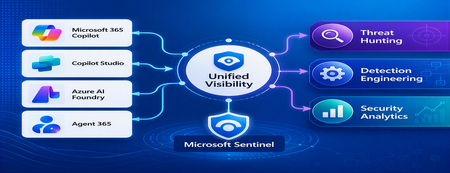
1. Introduction Enterprise adoption of Generative AI is accelerating rapidly through Microsoft 365 Copilot, Copilot Studio, Azure AI Foundry Agents, Security Copilot, and custom AI agents integrated with business applications. Unlike traditional SaaS applications, AI agents can: Access enterprise data Query internal knowledge repositories Invoke APIs and MCP tools Execute workflows Interact with business applications Make decisions on behalf of users While these capabilities improve productivity, they introduce a new attack surface that security teams must monitor and secure. Common AI threats include: Prompt Injection Cross Prompt Injection Attacks (XPIA) Jailbreak Attempts Unauthorized Tool Invocation Data Exfiltration through AI Agents Agent Identity Abuse Excessive Data Access Malicious MCP Tool Execution Traditional SOC monitoring platforms were designed for users, devices, applications and infrastructure—not autonomous AI systems. To address this challenge, Microsoft provides a comprehensive AI security monitoring framework built around: Agent 365 Observability Microsoft Agent Identities Microsoft Copilot Logs Defender XDR Defender for AI Microsoft Sentinel Together these components provide end-to-end observability of: User prompts Agent execution paths Tool invocations Safety signal detections Agent identities Security alerts 2. Reference Architecture AI Security Monitoring Architecture 3. Integration Architecture Microsoft provides multiple telemetry sources that complement one another. 3.1 Agent Runtime Telemetry Sentinel Data Connector Agent 365 Data Connector Table UnifiedAgentObservability Captures runtime behavior of AI agents including: User prompts Session IDs Conversation IDs Agent identities MCP tool invocations Connector invocations Tool arguments Tool responses Request payloads Response payloads Execution errors This dataset provides the forensic trail of everything an AI agent performed. 3.2 Agent Governance and Asset Inventory Sentinel Data Connector Microsoft Agent Identities Provides visibility into: Agent inventory Agent blueprint inventory Ownership Relationships Governance metadata Risk context This allows SOC teams to answer: Who owns this agent? What permissions does it have? Which business unit deployed it? Which related agents exist? 3.3 Copilot Audit and Usage Monitoring Sentinel Data Connector Microsoft Copilot Logs Connector Table CopilotActivity Provides: Copilot usage auditing Operational visibility User interaction tracking Useful for governance, compliance and adoption reporting. 3.4 AI Safety Telemetry Sentinel Data Connector Microsoft Defender XDR Connector Table CloudAppEvents CloudAppEvents provides AI safety signals such as: Prompt Shield detections Prompt Injection attempts Cross Prompt Injection Attacks (XPIA) Jailbreak-related verdicts Unsafe prompt classifications Think of CloudAppEvents as answering: "Was the prompt malicious?" 3.5 AI Security Alerts Sentinel Data Connectors Microsoft Defender XDR Microsoft Defender for Cloud Tables SecurityAlert SecurityIncident Used for: AI attack detections Security incidents Correlated investigation workflows 4. Understanding the Two Most Important AI Tables CloudAppEvents Focuses on AI Safety Questions answered: Was Prompt Shield triggered? Was this a jailbreak attempt? Was XPIA detected? Was the prompt suspicious? UnifiedAgentObservability Focuses on Agent Runtime Behavior Questions answered: What tool was invoked? Which connector executed? What arguments were passed? What data was returned? What actions did the agent perform? 5. Advanced Threat Hunting Scenarios The Agent365 Observability hunting guide contains several investigation scenarios that can be used directly in Microsoft Sentinel. Reference: Agent 365 Observability — AI Agent Telemetry Hunting https://github.com/SCStelz/security-investigator/blob/main/queries/cloud/agent365_observability.md 5.1 Prompt Injection Detection Detect prompts containing indicators such as: Ignore previous instructions Reveal system prompt Developer mode Disregard safety controls Investigation workflow: Review Tool Activity This allows analysts to determine whether a suspicious prompt resulted in downstream actions. 5.2 Session Reconstruction One of the most powerful capabilities of UnifiedAgentObservability is session reconstruction. Analysts can correlate: This creates complete forensic timelines. 5.3 MCP Tool Auditing Monitor all MCP activity including: query_lake Graph API tools ServiceNow connectors SharePoint connectors Custom enterprise tools Questions answered: Which tool was used? Who triggered it? What parameters were supplied? What data was returned? 5.4 Sensitive Data Access Monitoring Monitor AI agent interaction with: Employee records Customer data Financial information SharePoint repositories HR databases Useful for identifying: Data exfiltration attempts Excessive access patterns Sensitive data exposure 5.5 Query Lake Monitoring The GitHub hunting guide introduces monitoring of: query_lake RunAdvancedHuntingQuery Analysts can inspect: Actual KQL submitted Target workspaces Data sources queried Scope of access This provides visibility into AI-driven security investigations. 5.6 New Tool Detection Identify newly observed tool usage. Examples: Unauthorized MCP servers Newly registered connectors Unapproved tools Unexpected integrations This use case is particularly useful for governance programs. 5.7 Tool Failure Monitoring Monitor: Permission failures Connector failures Application errors Access-denied responses A sudden increase in failures may indicate: Reconnaissance activity Misconfiguration Privilege abuse attempts 6. Detection Engineering Opportunities Organizations can create Sentinel Analytics Rules for: 6.1 Prompt Injection Detection Developer Mode prompts Prompt Override attempts System Prompt disclosure requests 6.2 Jailbreak Attempt Detection Safety bypass attempts Role manipulation prompts Instruction override patterns 6.3 Unauthorized Tool Usage New MCP tools High-risk connectors Rare tool executions 6.4 Sensitive Data Access HR data queries Identity information retrieval Large-volume exports 6.5 Agent Identity Abuse Ownership changes Unexpected agent activity Agent-to-agent anomalies 7. Data Lake Exploration and Long-Term Analytics Because agent telemetry resides within Sentinel Data Lake, organizations can perform: Long-term AI investigations Historical AI attack analysis Agent baselining Governance reporting Trend analysis Tool inventory reporting Example dashboards include: Top Prompt Injection Attempts Most Active Agents High-Risk MCP Tools Agent Ownership Analysis AI Security Incidents Sensitive Data Access Trends 8. Summary AI agents represent the next major computing platform, but they also introduce a completely new attack surface. To effectively secure enterprise AI solutions, organizations require visibility across: User interactions Agent execution paths MCP tool usage Prompt safety signals Agent identities Security detections Microsoft Sentinel provides this unified view by integrating: Agent 365 Observability UnifiedAgentObservability Microsoft Agent Identities Microsoft Copilot Logs CloudAppEvents Defender XDR Defender for AI By combining AI runtime telemetry with AI safety signals and Defender detections, security teams can move beyond traditional monitoring and build a modern SOC capability for threat hunting, incident response, governance and forensic investigations across Microsoft 365 Copilot, Copilot Studio, Azure AI Foundry and future AI agent ecosystems. Reference: https://github.com/SCStelz/security-investigator/blob/main/queries/cloud/agent365_observability.mdMicrosoft Security Copilot: AI-Driven Security Operations at Greater Scale
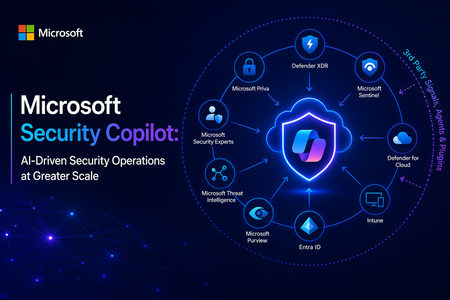
At its core, Security Copilot is built to enhance every facet of security operations at machine speed. It translates a vast array of inputs (Microsoft’s cloud-scale telemetry, threat intelligence feeds, security best practices, and enterprise-specific data) into tailored recommendations and summaries, helping security teams “catch what others miss,” respond faster, and strengthen their expertise. In the sections below, I explore the key security benefits of Security Copilot, its extensibility via third-party plugins and skills, and the value of its deep integration with Microsoft’s security ecosystem. Key Benefits for Security Operations Security Copilot meaningfully improves threat detection, investigation, response, correlation of signals, and analyst productivity. The table below summarizes these core security benefits and capabilities: Security Operations Aspect Benefit with Security Copilot Threat Detection Augmented detection of elusive threats: Security Copilot leverages broad threat intelligence and comprehensive signals to identify subtle threats, anomalies, and attack patterns that might be missed through manual analysis. By reasoning over Microsoft’s vast security graph and global threat telemetry, it helps analysts “catch what others miss,” ensuring unique or stealthy threats are surfaced. Incident Investigation Faster, context-rich investigations: Security Copilot can swiftly summarize and analyze incident data from multiple sources, enhancing incident details with additional context from logs, alerts, and threat intel. It correlates related events and highlights root causes, giving analysts a consolidated understanding of complex incidents in minutes. This enables quicker triage and deeper insights, so investigators know what happened and where to focus next. Response & Remediation Guided response and remediation: Security Copilot not only identifies issues but also provides prescriptive guidance on how to respond. It can suggest remediation steps and mitigation strategies in plain language, helping analysts act decisively. For example, it may outline containment steps or orchestrate automated actions through integrated tools, significantly reducing response time to incidents. Signal Correlation Holistic cross-domain correlation: Because it taps into signals across identities, endpoints, email, cloud workloads, and more, Security Copilot automatically connects the dots among disparate alerts and data streams. It presents unified incident narratives by linking related indicators (e.g., matching an endpoint malware alert with identity login anomalies and cloud logs), eliminating manual cross-tool correlation and uncovering hidden attack paths. Analysts get a single cohesive view of an incident across the kill chain. Analyst Productivity Boosted efficiency & skill elevation: By automating repetitive tasks (like scanning logs, writing KQL queries, or summarizing reports) and supporting natural language interaction, Security Copilot reduces manual workload and accelerates everyday tasks. This lets analysts focus on higher-value activities. In practice, teams using Security Copilot have seen significant productivity gains – a recent study found 23–47% improvement in SecOps task efficiency after adoption. Junior analysts ramp up faster (learning from Copilot’s guidance), while senior analysts can handle more incidents with less fatigue. These improvements translate into measurable security outcomes. Incident response becomes faster and more consistent, with mean time to resolution reduced by 30% on average within a few months of use according to early research. Security Copilot’s ability to accelerate investigations and streamline tasks drives down risk exposure and helps organizations make the most of their security investments. Ultimately, it strengthens an organization’s security posture by augmenting human analysts with AI-driven speed, scale, and intelligence. Seamless Integration with the Microsoft Security Ecosystem Another key strength of Security Copilot is its deep native integration with Microsoft’s security portfolio. From day one, Security Copilot was “designed with integration in mind.” It plugs directly into a broad range of Microsoft security products — including Microsoft 365 Defender (XDR), Microsoft Sentinel (SIEM), Microsoft Entra (ID and access management), Microsoft Intune (endpoint management), Microsoft Purview (compliance), and more. In practice, Security Copilot is available as both a standalone portal and as an embedded side-by-side experience within these Microsoft security tools. This means a security analyst working in Microsoft Sentinel or Defender can access Copilot’s capabilities without switching context: Copilot is right there in the workflow, ready to answer questions or assist with tasks in real time. Because of this close integration, Security Copilot can access data and signals from across all Microsoft security solutions that an organization uses. It operates over a unified security data estate encompassing endpoints, identities, emails, applications, cloud workloads, data repositories, and beyond. The result is truly end-to-end visibility and protection: Copilot can reason across diverse telemetry (e.g., correlating a device malware alert from Defender with cloud logs from Azure, or identity risk signals from Entra) to provide comprehensive insight. This unified approach eliminates silos and tool fragmentation — analysts spend less time pivoting between separate consoles or manually stitching together information because Copilot synthesizes it automatically. Moreover, leveraging the Microsoft ecosystem means Security Copilot can immediately add value without requiring a rip-and-replace of existing tools. It acts as a “force multiplier” across the installed Microsoft Security stack, maximizing the return on those investments by making them more effective and easier to use. For example, Copilot can turn a collection of raw alerts from different Microsoft products into a single, coherent incident storyline with actionable next steps. This synergy leads to significant operational efficiency gains and a more streamlined SOC workflow, as analysts have a central AI assistant coordinating across all defenses on their behalf. By providing unified insights, reducing tool sprawl, and bringing together Microsoft’s best-in-class security technologies, Security Copilot emerges as a valuable asset for modern security teams. It empowers organizations to practice “AI-first” security operations – enabling defenders to work faster and smarter, while fully utilizing an integrated security ecosystem to protect the enterprise from evolving threats. In summary, Microsoft Security Copilot offers a compelling combination of advanced AI capabilities, extensibility, and seamless integration that helps security teams achieve unprecedented speed, breadth, and efficiency in defending their organizations. It enhances human expertise with machine-scale intelligence, improving threat detection and response outcomes and transforming the way security operations centers operate for the better. Open Extensibility with Third-Party Plugins and Skills A standout capability of Security Copilot is its extensible plugin architecture, which allows it to incorporate external data sources and integrate with third-party security tools. Plugins in Security Copilot are modular connectors that bring in specific data or perform defined actions (each plugin encapsulates certain “skills,” such as running a KQL query, calling an API, or searching threat intel). Microsoft provides numerous pre-installed plugins out-of-the-box for common Microsoft security services and workflows, and administrators can easily add or develop custom plugins to connect 3rd-party systems or bespoke data sources. This design ensures that Security Copilot’s capabilities can expand and adapt to different environments. Through both Microsoft-built and third-party plugins, Security Copilot can tap into a wide variety of security data beyond the Microsoft stack. For example, supported third-party plugins let Copilot pull context from external solutions such as IT service management tools (e.g., ServiceNow), vulnerability management platforms, identity providers, network security appliances, and others. Plugins feed additional logs, alerts, and intelligence into Copilot’s analysis, thereby enriching its understanding of incidents with non-Microsoft data and events. This means a SOC can leverage existing investments in third-party security products by having Security Copilot analyze and correlate those systems’ outputs alongside Microsoft’s telemetry. Microsoft and its partners have already created an ecosystem of Security Copilot plugins. For instance, Microsoft announced 15+ new third-party plugins at Ignite 2024, spanning categories like threat intelligence (e.g., integrating feeds from providers like CrowdSec, Cybersixgill, GreyNoise) and device/network/identity management tools (e.g., Red Canary, Netskope, Tanium, CyberArk, etc.). These plugins bring rich external data on threat actors, indicators of compromise, vulnerabilities, device health, user activity, and more, allowing Copilot to provide even more comprehensive analyses and recommendations. Crucially, customers can build their own plugins and skills if needed, using Security Copilot’s developer tools and APIs. This means an enterprise could integrate a proprietary threat feed, custom data store, or even trigger custom response workflows via Copilot, tailoring the AI assistant to their unique security environment. Thanks to secure design and admin controls, organizations maintain full governance over which plugins are enabled and how they consume resources. In summary, Security Copilot’s open, plugin-based extensibility ensures that it can grow with an organization’s needs, incorporating any relevant third-party data or workflow to further enhance threat analysis and incident response. Technical Resources: Security Copilot Main documentation site Security Copilot agents Security Copilot plugins What’s new for Security Copilot Responsible AI in Security Copilot Official Security Copilot GitHub How to operationalize Security Copilot and increase SOC productivityRedefining Security for an AI Driven World
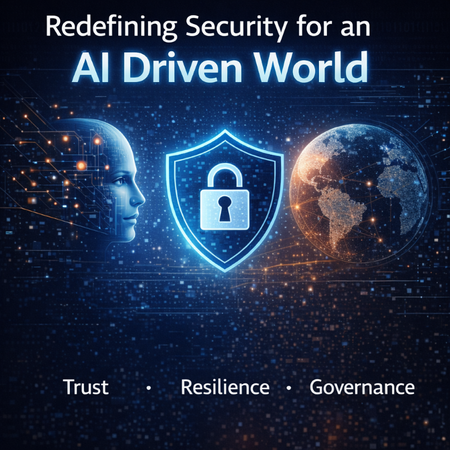
Vendors are being challenged to help customers address these challenges not as a point-solution vendor but as an end-to-end security and AI platform partner. By integrating identity, data governance, threat protection, and AI services into a unified ecosystem, Microsoft can deliver coordinated defenses, continuous compliance monitoring, and operational efficiency gains that fragmented toolsets cannot match. The sections that follow examine each challenge in depth — why it persists, what makes it hard, and specifically how Microsoft helps organizations bridge the gap. Challenge 1: Safeguarding Data Privacy in the AI Era AI systems are voracious consumers of data, and their adoption is outpacing the governance structures meant to protect it. More than 80% of business leaders cite leakage of sensitive data as their primary concern with generative AI, and nearly 48% have responded by banning all use of GenAI in the workplace entirely. Meanwhile, AI is raising the value of human-generated data as a critical training input while introducing entirely new avenues for potential data leakage through models and AI-powered applications. Why This Challenge Persists Fragmented tooling is the most immediate obstacle. Organizations are managing security, compliance, and data governance through disconnected platforms, creating siloed visibility that undermines cohesive protection. Only 31% of organizations have established a global data architecture, and just 25% maintain a global data quality program — two foundations essential for trustworthy AI innovation. Without enterprise-wide data classification and access controls, AI systems cannot distinguish what is too sensitive to surface. At the same time, shadow AI compounds the risk. When employees turn to unapproved AI tools to boost productivity, sensitive data can flow to services outside IT's purview. According to Microsoft's guide on securing the AI-powered enterprise, 80% of business leaders worry that sensitive data could slip through the cracks due to unchecked AI use. AI models also inherit the permissions of their users, meaning an over-permissioned employee can unknowingly expose critical data to an AI system. Gartner has estimated that by 2025, generative AI will account for 10% of all data produced, further blurring the boundary between what is corporate-controlled and what is AI-generated. Regulatory stakes add urgency: Gartner projects that by 2027, at least one global company will see its AI deployment banned by a regulator for non-compliance with data protection or AI governance legislation. How can organizations bridge the gap? Microsoft Purview provides a unified platform that combines data classification, data loss prevention (DLP), and AI-specific posture management to address fragmentation head-on. Its Data Security Posture Management (DSPM) for AI centralizes visibility into how AI applications interact with sensitive data across the organization — including Microsoft 365 Copilot, enterprise AI apps, and third-party AI tools. Security teams can see, for example, how many unlabeled files were referenced by Copilot and where the greatest concentrations of unprotected data reside. Sensitivity labels created in Purview travel with documents and are enforced at inference time: when an AI app retrieves a file labeled "Highly Confidential," the system ensures the requesting user holds the required EXTRACT and VIEW usage rights before returning data. In practice, an executive running a Copilot query on a labeled strategy document would see the sensitivity label clearly marked alongside the response. Purview's DLP policies now extend to AI scenarios directly, including inline browser protection that can block or warn users attempting to paste sensitive data into third-party generative AI sites such as ChatGPT in Microsoft Edge, Chrome, or Firefox. For organizations handling the most sensitive workloads, Azure Confidential Computing protects data even while it is being processed, using hardware-based Trusted Execution Environments (TEEs) that keep information encrypted in memory — invisible even to cloud operators. This capability is especially relevant for AI training and inference on regulated data, where customers need verifiable proof that their information was never exposed in plaintext during processing. The net result is defense-in-depth for data: discover where sensitive information lives, classify it so AI systems respect boundaries, enforce policies at the point of AI interaction, and encrypt data in use for the highest-risk scenarios — all governed through a single compliance surface. Challenge 2: The AI-Weaponized Threat Landscape Adversaries are using AI to accelerate, scale, and personalize attacks faster than traditional defenses can respond. In the past year, 67% of all phishing attacks employed some form of AI, and organizations now face an average of 66 data security alerts per day — up from 52 in 2023. Under this pressure, 73% of cybersecurity experts admit they have missed, ignored, or failed to respond to high-priority security alerts. Why This Challenge Persists The speed differential is the core problem. AI-enabled threat actors can now use models to autonomously discover, chain, and exploit vulnerabilities, compressing the window from discovery to exploitation from months to hours. Attackers leverage generative AI for malware generation, automated vulnerability scanning, customized exploits, password cracking, sophisticated phishing and social engineering, and deepfake-based impersonation of data, email, and voice. At the same time, AI systems themselves introduce novel attack surfaces. A staggering 88% of organizations, according to a Gartner Peer Community survey of 332 participants, are concerned about indirect prompt injection attacks — where malicious instructions embedded in data manipulate an AI's behavior to reveal confidential information or bypass controls. AI models are also susceptible to fabrications, initially known as hallucinations, in essence biased outputs, and data poisoning — risks that traditional vulnerability management frameworks were never designed to address. From an operational standpoint, SOC analysts already spend nearly three hours per day on incidents, accumulating costs that reach billions in aggregate. Layering AI-driven attacks on top of this existing overload threatens to break conventional security operations entirely. How can organizations bridge the gap? Microsoft counters the asymmetry with AI-powered defense at cloud scale, grounded in threat intelligence no single organization could replicate alone. Microsoft processes more than 100 trillion security signals per day from endpoints, cloud services, identity systems, and the edge, and tracks 1,500 unique threat actor groups — including 600 nation-state actors, 300 cybercrime groups, and 200 influence operations groups. This intelligence feeds directly into detection models and product updates, ensuring customers benefit from patterns observed across billions of users and devices worldwide. Microsoft Security Copilot is the most visible expression of this strategy. A generative AI security assistant combining advanced OpenAI models with a Microsoft-developed security-specific model, it helps analysts investigate and remediate incidents in natural language — from triaging complex alerts into actionable summaries, to reverse-engineering malicious scripts, to generating KQL queries for threat hunting. Early deployment data shows that Defender XDR customers using Security Copilot experienced a 30% reduction in incident resolution time in just three months. For securing AI models themselves, Microsoft Defender for Cloud now offers AI model security (in public preview since March 2026), which scans custom AI models in Azure Machine Learning registries and workspaces for embedded malware, unsafe operators, and exposed secrets — integrated directly into CI/CD pipelines so risky models are stopped before reaching production. The Microsoft Digital Defense Report 2025 reinforced this posture with seven top recommendations, led by managing cyber risk at the boardroom level, prioritizing identity protection, and investing in people alongside tools. Microsoft's approach treats AI threats not as a separate domain but as an intensification of the broader threat landscape that demands coordinated, platform-level defense. Challenge 3: Identity and Access Governance for AI Agents AI is creating an entirely new class of digital actors that most identity systems were never designed to manage. According to IDC, there will be approximately 1.3 billion AI agents operating across enterprises by 2028. These agents — which range from simple automation bots to fully autonomous decision-making systems — require resource access, generate data, and interact with users and services in ways that fundamentally differ from traditional applications or human users. Why This Challenge Persists Most organizations lack lifecycle management, ownership models, and policy controls for non-human identities, and AI agents amplify these gaps significantly. Industry analysts argue that AI agents should not be treated as just another non-human identity; they introduce complex delegation chains between humans, agents, and services that require distinct identity, accountability, and audit models. Traditional human-in-the-loop controls may not scale for agentic systems, yet new identity-centric governance mechanisms are only beginning to emerge. Compounding the issue, the indeterministic nature of large language models means that an AI agent with broad access privileges may behave unpredictably — potentially taking actions its developers did not anticipate. Without proper controls, forgotten or orphaned agent identities can become easy targets for attackers, and the resulting security incidents may be difficult to attribute or contain. How can organizations bridge the gap? Microsoft extends its identity-first Zero Trust architecture to AI through Microsoft Entra Agent ID (in public preview). The core idea: every AI agent receives a unique, first-class identity — discoverable, manageable, and securable alongside human users, applications, and devices. Once registered, an agent's access can be scoped using the same enterprise-grade controls as any other identity: conditional access policies, role-based access control, lifecycle governance, and risk-based protection. Conditional Access for Agents allows organizations to evaluate an agent's context and risk level before granting a token. Policies can enforce controls such as restricting agents to specific network locations or blocking access when risk signals are elevated. Microsoft is also developing RBAC guardrails specifically tailored to AI agent behaviors, acknowledging that LLM-based agents present heightened risk when granted broad role assignments. For lifecycle management, Microsoft provides mechanisms for IT administrators to create automated lifecycle policies for agent identities — including periodic attestation by designated sponsors, automated cleanup of unmonitored agents, and notifications when agent identities approach expiration. This directly addresses the "agent sprawl" problem identified by CISOs and security architects. At a broader level, Microsoft Agent 365 delivers a unified control plane for agents, aggregating posture, and real-time risk signals from Defender, Entra, and Purview into a single dashboard — providing discovery of both Microsoft and third-party agents, AI posture tracking, and governance controls to delegate remediation tasks to the appropriate teams. The Security Dashboard for AI (in GA now) answers the executive-level questions: Which AI assets exist in our environment? What is their current security posture? Where must we take action? — covering Microsoft 365 Copilot, Copilot Studio agents, Foundry apps, and third-party AI including Google Gemini, OpenAI ChatGPT, and MCP servers Challenge 4: Regulatory Compliance and Ethical AI Governance The regulatory landscape for AI is evolving faster than most organizations can track, and the stakes — legal, financial, and reputational — are escalating. More than 52% of business leaders admit they are unsure how to navigate rapidly evolving AI regulations. Frameworks like the EU AI Act (whose first obligations took effect on February 2, 2025), GDPR, and sector-specific rules such as DORA are converging to create a compliance environment that demands continuous adaptation. Why This Challenge Persists The EU AI Act alone adopts a risk-based approach to AI regulation, classifying systems by their potential impact on health, safety, and fundamental rights and imposing corresponding obligations for documentation, transparency, human oversight, and testing. Organizations must map every AI deployment to the correct risk category — and misclassification can lead to regulatory violations. Simultaneously, the responsibilities of security leaders are expanding to include governance and regulatory compliance oversight that traditionally belonged to legal or compliance teams. The NC State University Executive Perspectives on Top Risks survey of 1,540 board members and C-suite executives ranked regulatory uncertainty and fragmentation as the eighth-highest near-term risk (2026–2028), and AI implementation risks as sixth. Among AI-specific concerns, 24% of respondents identified lack of governance and accountability for AI deployments as a top three worry. Culturally, building internal consensus around what constitutes "responsible" AI use — across diverse business units with different risk appetites — remains a persistent organizational challenge. How can organizations bridge the gap? Microsoft's Responsible AI program, anchored by six durable principles established in 2018 — Fairness, Reliability & Safety, Privacy & Security, Inclusiveness, Transparency, and Accountability — provides a governance blueprint that has proven stable even as AI technology evolves rapidly. These principles shape design, deployment, and oversight choices across Microsoft's products, and the company shares the lessons openly through its 2025 Responsible AI Transparency Report and customer guidance. In preparing for the EU AI Act specifically, Microsoft has taken a proactive, layered approach to compliance, conducting impact assessments and adversarial red teaming on high-risk models and systems, and extending its Sensitive Uses governance program to ensure additional oversight for the most consequential AI deployments. Microsoft has also documented its approach to EU AI Act implementation to help customers understand how its products and services are being built to comply. Operationally, the Security Dashboard for AI provides board-ready analytics and compliance insights, aggregating risk signals across Entra, Defender, and Purview into a single executive view with recommendations and direct remediation paths. This makes AI governance visible and actionable within the same tools security leaders already use for broader risk management. Microsoft also fosters community-driven governance through initiatives like the Security for AI Accelerated Collaboration Forum (ACF), which brings together CISOs, security architects, SOC leaders, identity and data owners, and platform engineers to share challenges, shape roadmap priorities, and develop reusable governance frameworks. Challenge 5: Integration Complexity and Workforce Readiness Even when the right AI security tools exist, most organizations struggle to integrate them into existing technology stacks and to equip their people to use them effectively. Among executives surveyed by NC State University, 31% identified integrating AI with existing technologies, business processes, and workforce as a top-three AI concern, 29% pointed to equipping the workforce to realize AI's value proposition, and 28% flagged the inability to deploy AI at a competitive pace. Why This Challenge Persists Years of tool proliferation have left enterprises with fragmented security architectures. Organizations rely on disconnected platforms for endpoint protection, cloud workload security, identity management, and data governance — and AI capabilities are now being added to each domain independently. Microsoft's own research notes that organizations using fragmented platforms across security, compliance, and data teams see exacerbated security outcomes. When a data loss prevention alert in one system cannot be correlated with an identity anomaly in another, threats slip through. At the same time, AI security as a discipline lacks comprehensive resources and seasoned experts. Because major cloud AI platforms only became generally available in 2021–2023, organizations must often develop protective measures without much external guidance or established precedent. The cybersecurity workforce shortage is well documented; the additional demand for professionals who understand both machine learning and security compounds it further. The broader threat environment amplifies the urgency: cyberthreats have grown 5X in scale, Microsoft now tracks over 1,500 threat actor groups (up from roughly 300 just a few years ago), and the median time for an attacker to access confidential data after a successful phishing attack is just 1 hour 12 minutes. Teams that cannot integrate and respond quickly are structurally disadvantaged. How can organizations bridge the gap? Microsoft's primary answer to integration complexity is a unified, cloud-native security platform in which AI, identity, data governance, and threat protection work as a coordinated system. Security Copilot, for instance, is embedded within and integrates across Microsoft Defender XDR, Microsoft Sentinel, Microsoft Intune, Microsoft Entra, and Microsoft Purview. An analyst can use a single natural language interface to investigate incidents drawing on data from any of these products, generate remediation steps, build reports for stakeholders, and automate routine tasks with autonomous Security Copilot agents — all without switching consoles. The inclusion of Security Copilot in Microsoft 365 E5 and E7 licensing simplifies adoption further. Customers receive a monthly allocation of SCUs or Secure Computing Units to empower Security Copilot, eliminating the need for separate AI security procurement. This positions integrated, agentic AI-powered security as a default capability rather than an add-on. For endpoint-level visibility into AI agent sprawl, Microsoft Defender for Endpoint now automatically discovers supported AI coding agents on onboarded Windows 11 devices — including OpenClaw, Claude Code, Codex, Cursor, GitHub Copilot CLI, ChatGPT Desktop, Gemini CLI, and others — and surfaces them in the Defender portal inventory for investigation and correlation with existing device telemetry. On workforce enablement, Microsoft operates the Security Copilot Adoption Hub, which provides role-specific guidance for CISOs, threat intelligence analysts, IT admins, and data security administrators on how to embed AI into their daily workflows. The broader Microsoft Learn platform now offers modules on securing AI applications and responsible AI governance. Microsoft's role here is as a force multiplier: by consolidating tools, reducing integration burden, and actively investing in customer readiness, Microsoft enables organizations to convert AI from a source of complexity into an operational advantage — without leaving security behind. Conclusion: Turning AI Security into Competitive Advantage The five challenges examined here — data exposure, adversarial threats, identity sprawl, regulatory uncertainty, and integration complexity — will only intensify as AI adoption accelerates. Yet for organizations that address them proactively, the payoff extends well beyond risk mitigation. Robust AI security has become a source of trust with customers and regulators, a prerequisite for bold innovation, and a differentiator in markets where competitors may still be scrambling to catch up. Microsoft's contribution is structural: an integrated platform where identity, data governance, threat intelligence, and compliance converge — backed by principles of Responsible AI that have remained durable since 2018 and by threat visibility at a scale (more than 100 trillion signals per day, 1,500+ tracked threat actor groups) that no single enterprise can replicate. For executive leadership, the actionable imperative is to treat AI security not as a technical footnote but as a boardroom priority — one that spans the CIO, CISO, Chief Data Officer, and business-unit leaders working together. As Microsoft's own AI security guidance articulates, cross-team collaboration, employee training, and transparent governance are just as essential as firewalls and encryption in building a secure AI future. The organizations that internalize this lesson will be those best positioned to harness AI's full potential — securely, responsibly, and at scale. Tech Resources: Defense at AI speed: Microsoft’s new multi-model agentic security system tops leading industry benchmark Securing AI and Navigating risks and compliance for the future Entra agent Identities for AI agents Secure Dashboard for AI Microsoft Security Copilot Microsoft Security Copilot FAQ