ai ops
13 TopicsEvolving the Network Operations Agent Framework: Driving the Next Wave of Autonomous Networks
The original announcement of the Network Operations Agent (NOA) Framework outlined a bold mission: provide telecom operators with a modular, multiagent foundation to accelerate the journey toward autonomous networks. NOA combined intelligent agents, unified data access, and strong governance to help operators modernize complex, cloud scale environments. A follow-up is timely. Over the past year, customer deployments, industry collaboration, and Microsoft’s own internal learnings have fueled a rapid evolution of the framework. Telecom operators face skyrocketing event volumes, rising operational costs, and a deepening skills gap—conditions echoed in the challenges documented by Microsoft’s own NetAI. Against this backdrop, NOA’s enhancements are designed to deliver more automation, more intelligence, and more resilience—while maintaining safety and human oversight. What’s New: Key Enhancements in NOA v2 Adoption of NetAI Concepts and Best Practices Although NOA is not NetAI, its latest iteration incorporates proven architectural principles and operational practices from the NetAI program—including intelligent agents, curated context, engineered prompts, and deterministic workflows. NetAI’s focus on scaling automation without scaling headcount, and its multi‑agent roles such as diagnostics and fiber repair, informed several NOA improvements. This infusion strengthens NOA’s ability to support autonomous incident detection, diagnosis, and remediation while preserving telco-grade safety and predictability. And the partnership is symbiotic, as NetAI is leveraging NOA’s modern, Foundry based architecture in future iterations. The UI for AI: Deep Integration with Microsoft 365 Copilot and Teams NOA now embraces Microsoft Teams, Outlook, and Copilot as the primary user interface for AI agents—turning everyday collaboration tools into a real-time operations cockpit. Operations engineers can ask questions such as “What’s causing the latency spike in region X?” directly in Teams and receive agent generated diagnostics, summaries, or recommended actions. Agents proactively post alerts, help draft incident summaries, and allow supervisor approvals—merging human and AI workflows seamlessly. This “UI for AI” approach dramatically reduces friction, shortens response cycles, and boosts adoption across operations teams. Migration to Microsoft Foundry & the Microsoft Agent Framework A cornerstone update is NOA’s full alignment with Microsoft Foundry technology, including: Microsoft Agent Framework – An extensible, open‑source orchestration layer providing standardized agent communication, tool use (via MCP), A2A, observability, and hybrid deployment options. Foundry Agent Service – A secure runtime for deploying and scaling NOA’s multi‑agent workflows. Foundry Observability – Built-in memory, traceability, and monitoring for every action and interaction. Foundry IQ – Intelligence services enabling context retrieval, semantic grounding, and safe decision-making. These enhancements give NOA a more deterministic, governed, and auditable operational backbone—crucial for regulated telco environments. Integration of TM Forum Open APIs via MCP The NOA Framework’s alignment with TM Forum standards has expanded significantly since the initial release. In addition to its broader support for TM Forum’s Autonomous Network principles, NOA now incorporates TM Forum Open APIs for trouble ticketing, delivered through the Model Context Protocol (MCP) integration layer. A key enhancement is the explicit support for the TMF621 Trouble Ticket Management API, the industry standard interface for creating, updating, querying, and resolving trouble tickets in OSS/BSS environments. By exposing TMF621 operations through NOA agents and MCP toolchains, the framework enables: Automated creation of standardized TMF621‑compliant trouble tickets Agent driven correlation of telemetry, diagnostics, and ticket history Seamless interoperability with existing OSS/BSS and service desk systems Consistent, vendor neutral workflows for incident lifecycle management This deeper TMF621 alignment ensures NOA agents can participate directly in ticket-driven operational processes while maintaining full compliance with telco grade open standards. Strengthened Security, Governance, and Compliance Controls NOA’s governance model has been expanded with: Read-only defaults and restricted permissions, enforced through managed identities and RBAC Detailed action logging for auditability Operator defined policy gates requiring human approval for sensitive tasks Support for hybrid and multi-cloud deployments with consistent identity and compliance This ensures telcos can deploy autonomous agents without compromising regulatory responsibilities or operational safety. Real-World Impact: How Azure Accelerates Autonomous Operations NOA’s evolution is driven not only by design, but by field usage across operators and large‑scale networks. Microsoft’s internal Azure Networking success Microsoft used NetAI to automate fiber incident management across the global Azure backbone—achieving: 60% reduction in time-to-detect fiber issues 25% improvement in repair times These measurable gains demonstrate the potential of agentic operations at hyperscale. These learnings, best practices, concepts, and designs are at the core of NOA. Alignment with broader telco transformations Far EasTone Telecom (FET) exemplifies how leading operators are turning this architecture into real operational impact. FET is leveraging the NOA framework to redefine cloud native network operations by embedding agentic AI across its NOC and change management workflows. Today, nearly 60% of its NOC operations are AI-assisted, with about 10,500 operational tasks executed per month, including incident summaries, automated ticket closure, network checks, and proactive voice notifications. AI agents now handle largescale alarm correlation and root cause analysis in seconds, supporting nearly 7,000 monthly operational queries with an average response time of 16 seconds, and enabling most maintenance actions to complete within one minute. This shift has significantly reduced human error, accelerated recovery times, and allowed engineers to focus on higher value work. Built on Azure cloud native and hybrid data principles, FET can scale network intelligence securely across on premises and cloud environments, deploying capabilities closer to customers while maintaining carrier grade reliability, performance, and regulatory confidence—demonstrating how adaptive cloud and AI can turn network operations into a strategic advantage. Vodafone is working with Microsoft to apply a proven AI‑powered blueprint for autonomous network operations across transport infrastructure and field‑force management. The collaboration combines Vodafone’s deep network expertise with Microsoft Foundry and the NOA framework to modernize how large‑scale telecom networks are operated. This blueprint is built on Microsoft’s own experience running autonomous agents across its global Azure transport network, where AI continuously monitors performance, identifies root causes, and autonomously manages more than 65% of fibre‑break field dispatches—improving time to repair by up to 25% and accelerating root‑cause analysis by 80%. By applying these proven capabilities to Vodafone’s transport network, the two companies are accelerating the shift toward intelligent, automated transport network operations across the telecom industry. “By working with Microsoft, we’re combining deep network expertise with proven AI‑powered operations to create something greater than either could achieve alone. Together, we’re building intelligent, automated transport network operations that empower our teams and deliver faster, more resilient connectivity networks for our customers.” —Alberto Ripepi, Chief Network Officer, Vodafone Other operators, including AT&T, T-Mobile, Telefónica, and MEO, are adopting Microsoft Foundry as a blueprint for scaling agentic AI across complex, multi-vendor networks. Case studies from global operators leveraging Foundry and Azure AI capabilities—though not NOA specific—demonstrate similar patterns of AI driven operational gains: AT&T unifies and analyzes massive volumes of network data with Microsoft Azure—particularly Azure Databricks, Power BI, and cloud-scale AI analytics—in a secure lakehouse architecture, enabling faster AI-driven insights, improved network-informed decision-making, and more efficient, scalable operations across its telecom network. T‑Mobile leverages Microsoft Azure, data, and AI analytics platform—combining services like Azure Data Explorer, Azure Databricks, and AI-driven analytics—to ingest and analyze trillions of network data points in near real time, giving teams deep visibility into network performance, proactively identifying and resolving issues, and continuously optimizing the customer experience across its nationwide network. Telefónica España applies Microsoft Azure’s big data, AI, and automation capabilities—such as Azure Data Explorer and Azure Databricks—to analyze massive volumes of network data in real time, detect anomalies, and enable self‑optimizing 4G/5G networks that improve performance, reliability, and customer experience while reducing operational costs. MEO uses Microsoft AI systems to improve technician efficiency and transparency in operational processes. These customer achievements reinforce the architectural direction taken with the NOA Framework, leveraging Azure data and AI capabilities like Azure Databricks, Fabric, and Foundry to operate world-class networks. Architecture & Key Components Based on the latest Foundry capabilities, the NOA reference architecture emphasizes four key subsystems, detailed in the next sections. UI for AI The UI for AI is the human interaction layer through which operators engage with the NOA system using natural language. In the NOA architecture, this UI is delivered through familiar enterprise surfaces—the WebApp, Microsoft Teams, and Microsoft 365 Copilot—allowing users to initiate workflows, review agent findings, approve actions, and observe outcomes without switching tools or learning new interfaces. Teams based agent interactions and supervisor controls now form a key architectural pillar. What it enables Conversational interaction with the NOC Manager and specialist agents Human-in-the-loop approvals for diagnostics, remediation, and ticket actions Consistent experience across web, Teams, and Copilot while preserving enterprise identity and permissions Agentic Governance Agentic Governance is the policy, safety, and control layer that enforces Responsible AI, security, compliance, and observability across all NOA agents and workflows. In the NOA architecture, this governance is provided by the Foundry Control Plane and associated guardrails, evaluations, audit logs, and operator views. What it enables Runtime guardrails for content safety, PII protection, prompt injection, and tool misuse Human-in-the-loop escalation and approval controls Auditability, compliance reporting, and policy enforcement across all deployed agents Foundry Control Plane Foundry Control Plane functions as the governance + observability + safety enforcement layer that sits above the multi-agent system, ensuring agent workflows can run in production with the right controls. It is where governance, observability, security, and Responsible AI controls are enforced for agent workflows. It’s presented as the mechanism that turns the solution into a scalable, governed, and enterprise-ready operations framework. Concretely, the Foundry Control Plane provides: Guardrails (safety controls): a central place to apply and manage protections against harmful content, PII leakage, prompt injection, and off-topic drift—plus the ability to create custom guardrails tailored to telecom needs (e.g., restricting sensitive config exposure or limiting high-risk tool calls during incidents). Evaluations (quality and readiness checks): benchmarking agents via “evaluation runs” using built-in evaluators (accuracy, safety, coherence, domain quality), helping validate integrations (like MCP / Fabric) and catch regressions before rollout. Operator view for fleet monitoring: centralized monitoring across deployed agents/channels, including fleet health (uptime, errors, sessions), performance (latency, token usage, throughput), and compliance signals (guardrail violations, policy alerts). Asset inventory and lifecycle management: a unified inventory of deployed agents, models, and tools (e.g., MCP servers, Fabric Data Agents), supporting versioning, staging/rollback, usage analytics, credential rotation, and model policy enforcement. Compliance management: centralized management of guardrails, policy templates, audit logs, and risk dashboards to produce audit-ready governance across the agent estate. Foundry Control Plane is the control-and-monitoring system that makes autonomous, multi-agent incident workflows safe, auditable, and operable at enterprise scale. Agent 365 Agent 365 functions as the enterprise management plane for AI agents—the place where agents are registered, controlled, observed, and secured at scale. Agent 365 is positioned as the central control plane that provides: Unified registry / inventory of AI agents (a single place to manage what agents exist across the enterprise). Access control so only the right users/roles can use particular agents and tools. Observability to monitor agent usage and behavior across deployments. Enterprise security controls applied consistently across agents and where they run. In short, Agent 365 is the “management hub” for governing and operating the organization’s agent estate, complementing (and working alongside) the Foundry Control Plane’s runtime guardrails/evaluations and the broader multi-agent orchestration. Agentic Framework The Agentic Framework is the orchestration layer that enables stateful, multi‑agent workflows within the NOA system. Built on the Microsoft Agent Framework, it allows a NOC Manager (Niobe) to coordinate specialized agents (e.g., Troubleshooting, Telemetry, Ticketing, Field Ops) through delegated tasks, shared context, and ordered execution. What it enables Vertical orchestration of specialized agents under a single supervisory control Durable workflows spanning diagnosis, remediation, validation, and ticketing Agent-to-Agent (A2A) communication and integration with external agents (e.g., ServiceNow) Microsoft Agent Framework The Microsoft Agent Framework functions as the foundation layer for building the Telco NOA solution’s stateful, multi-agent system, providing the structure for how agents are defined, orchestrated, and operated end-to-end. Specifically, the Microsoft Agent Framework enables: Stateful, multi-agent workflows for NOC operations: it underpins the NOA platform, letting agents collaborate across a single incident while retaining shared context over time (not just one-off prompts). A centrally orchestrated (“vertically orchestrated”) model: a NOC Manager (Niobe) manages task delegation, sequencing, and shared context across the workflow, while specialized agents (Troubleshooting, Incident Management, Field Ops, SONiC, Security & Compliance) execute domain-specific tasks. Secure cross-platform agent collaboration via A2A (agent-to-agent) communication: external agents (example given: ServiceNow Now Assist) can plug into the ecosystem through A2A to enable coordinated actions across platforms. Operationalization of multi-agent systems with durable workflows: an open-source SDK used for designing, orchestrating, and operationalizing multiagent systems with durable, stateful workflows. All of that positions Microsoft Agent Framework as the core multi-agent runtime/SDK layer that makes the NOA incident flow (supervisor + specialist agents + external A2A agents) possible and maintainable as a workflow-driven system. Foundry Workflows Foundry Workflows function as the orchestration layer that defines, executes, and governs the end-to-end sequence of multiagent actions required to resolve network incidents in the Telco NOA Framework. The workflow models how tasks flow across agents—from initial intent capture through diagnostics, remediation, ticketing, verification, and closure—under the supervision of a central orchestrator agent. Specifically, the workflow encodes the ordered handoffs and decision logic between agents such as the Supervisor Agent (Niobe), Network Telemetry Analyzer, Troubleshooting Agent (Pal Locke), SONiC Agent, Field Ops Agent, and Ticketing Agent. Rather than relying on static scripts or point integrations, the workflow graph visually and operationally represents how the Supervisor dynamically delegates tasks, routes context, and coordinates execution across specialized agents. Foundry Workflows also provide a testable and observable execution environment. Workflows can be previewed in a sandbox mode, allowing presenters to simulate real incident flows, trigger agent interactions via natural language prompts, and validate that tool calls (for example, MCP-based ServiceNow or TM Forum APIs) execute correctly before production deployment. During execution, the workflow enables full traceability and auditability. Debug and conversation detail views expose each step in the workflow, including routing decisions by the Supervisor, tool invocations, intermediate responses, and final outputs. This makes workflows not just an automation mechanism, but a governance artifact that supports troubleshooting, cost analysis, and compliance review. Finally, Foundry Workflows act as the deployment unit for operationalizing agentic solutions. Once validated, the same workflow can be published with one click to Microsoft Teams or Microsoft 365 Copilot, preserving guardrails, evaluations, RBAC, and monitoring. This allows the exact same orchestrated logic to run consistently across chat, Copilot, and custom channels without re‑engineering. Telco IQ Telco IQ is the intelligence layer that grounds agent reasoning in telecom specific operational knowledge. In the NOA architecture, this intelligence is delivered through Foundry IQ and Fabric IQ, which provide retrieval augmented reasoning across structured telemetry, operational data, and unstructured domain knowledge. What it enables Telecom aware reasoning using KPIs, SOPs, policies, and historical incidents Multi-hop retrieval and citation backed answers Reduced hallucinations through grounded, policy aware context Fabric IQ Fabric IQ functions as the semantic intelligence layer that helps agents make better decisions by organizing operational + analytical data into business concepts, so the agents can reason over it more effectively (not just retrieve raw records). This dramatically simplifies connecting to data while improving the quality of the results. Foundry IQ Foundry IQ functions as the unified knowledge and retrieval layer that grounds the NOC agents with relevant, policy-aware context during incident troubleshooting. Foundry IQ is described as: A Foundry Knowledge Base (built on Azure AI Search) that unifies content such as network security policies, troubleshooting guides, and SOP knowledge articles across sources including Microsoft 365/SharePoint, Fabric IQ/OneLake, Azure Blob Storage, ADLS Gen2, ServiceNow tables, and the web. The capability that automates key RAG pipeline steps—including query planning, multi-hop reasoning, and answer synthesis with citations—so each agent doesn’t have to rebuild chunking, indexing, and connector logic per project. A mechanism for enterprise-grade security and governance, explicitly leveraging Entra ID governance and respecting Microsoft Purview sensitivity labels, while reducing hallucinations through grounded retrieval. The knowledge backbone agents rely on in the workflow: for example, the NOC Agent leverages the Foundry IQ knowledge base to retrieve operational insights and summarize likely causes, and other specialized agents (e.g., troubleshooting and security compliance). Universal Data Access Universal Data Access is the data foundation that unifies real-time, structured, and unstructured data sources into a single, governable knowledge fabric for NOA agents. The architecture explicitly combines Microsoft Fabric Eventhouse, Azure Cosmos DB, ADLS Gen2, Azure Blob Storage, ServiceNow tables, and Microsoft 365 sources, all accessed through governed tools and identity passthrough. What it enables Real‑time telemetry access for diagnostics and validation Persistent conversational memory and incident history Secure, identity aware access across enterprise and operational systems NOTE: While the NOA Framework sample implementation and demo utilize this specific data architecture, the Framework can integrate into any existing data environment. The focus of NOA is to simplify and accelerate the development of network AI agents by leveraging your existing data estate. With the included Microsoft Fabric connectors and OneLake virtualization, NOA can reason over: Real‑time telemetry OSS/BSS data Ticketing systems Multi-cloud or on-prem data stores These updates collectively make NOA more scalable, more open, and easier to operationalize across diverse network environments. Meet the Agents The following agents are the core “cast” of the NOA. Each one represents a specialized capability (telemetry analysis, troubleshooting, device interaction, compliance validation, ticketing, and field operations) coordinated by a central supervisor. NOC Manager Agent (Niobe) The central orchestrator and human interface: manages task delegation, sequencing, and shared context across workflows; coordinates the other specialized agents through Foundry’s runtime. This agent flags/triages critical tickets, coordinates with connected agents, and uses Foundry IQ to retrieve operational insights and summarize likely causes for the operator. Network Telemetry Analyzer Agent Analyzes network performance metrics (e.g., packet loss, throughput) and uses the Fabric Data Agent to generate/execute KQL queries against the Fabric (Eventhouse/KQL DB) to support diagnostics and post-mitigation verification. Network Troubleshooting Agent (Pal Locke) Runs diagnostic playbooks and remediation steps; retrieves insights from Foundry IQ and proposes fixes via the SONiC Agent for device-level commands. SONiC Agent Interfaces directly with the network elements (e.g. SW-TOR-05 device) to execute commands and retrieve system-level data/telemetry (e.g., OS details, PFC watchdog stats, logs). Network Security Compliance Agent Validates post-mitigation QoS/SLA metrics (e.g. latency and jitter) using Foundry IQ, ensuring fixes remain within defined SLAs. Ticketing Agent Manages incident tickets and documentation: creates/updates tickets, logs agent actions, supports auditing/handovers, and integrates via an MCP server exposing ServiceNow tools and TM Forum Trouble Ticket Open API to retrieve history for accurate categorization and updates. Field Ops Agent (Miles Dyson) Handles physical/field issues (e.g. fiber cuts) and collaborates with the appropriate teams via email. Building the Autonomous Network Ecosystem NOA is intentionally designed as a partner-extensible framework, not a closed product. As a result, many partners are adopting NOA as a reference implementation for agentic operations—then integrating it into their existing agent framework, OSS/BSS, assurance, and automation portfolios to deliver differentiated autonomous network solutions for operators. How partners are adopting NOA Starting point for agentic architecture: using NOA’s supervisor + specialist agent pattern as the baseline for incident, problem, and change workflows. Accelerator for telco-grade governance: adopting the guardrails, approvals, observability, and auditability concepts to meet operator safety and compliance expectations. Reference integration blueprint: mapping NOA’s tool and API-driven approach (MCP, TM Forum Open APIs) onto their own integration adapters and connectors. Blueprint for the “UI for AI” in operations: embedding agents into Teams/Copilot experiences to reduce swivel-chair work and drive practitioner adoption. Foundation for packaged offerings: creating repeatable solution bundles (templates, playbooks, and connectors) that can be deployed across multiple operators with configuration, not re-engineering. Integrating NOA into existing autonomous network solutions Most partners integrate NOA by keeping their domain platforms (assurance, orchestration, inventory, ticketing, observability) as the systems of record, while positioning NOA as the agentic orchestration and experience layer that coordinates people, tools, and workflows end-to-end. Practically, this integration typically follows a repeatable sequence: Choose the first high-value workflow (for example: P1 incident triage, RAN anomaly investigation, transport fault isolation, or trouble ticket enrichment) and define clear success metrics (MTTD/MTTR reduction, ticket quality, deflection rate). Connect tools through MCP and Open APIs, exposing partner and operator capabilities (queries, actions, validations) as governed tools the agents can call deterministically. Ground agents in partner/operator knowledge by connecting SOPs, topology, inventory, prior incidents, and KPI definitions via retrieval and curated context. Implement policy gates and RBAC so that high-risk actions (config changes, mass remediation, ticket closure) require explicit human approval and are fully logged. Operationalize with testing and observability, using evaluation runs, traces, and runbooks to validate correctness and monitor agent behavior in production. Where partners extend NOA to differentiate Partners extend NOA to differentiate on top of an open agentic foundation by combining Microsoft’s orchestration with deep domain expertise and proprietary IP. Packaged solutions, multi‑vendor interoperability, and a consistent Teams/Copilot‑based operations experience ensure scalability while preserving a familiar NOC workflow. Domain-specialized agents: adding RAN, core, transport, edge, and security agents tailored to vendor-specific telemetry, counters, and remediation procedures. Proprietary reasoning and models: incorporating partner algorithms (anomaly detection, RCA graphs, topology analytics) and selecting models suited to latency/cost/regulatory needs. Closed-loop automation: integrating with orchestration/controllers to move from “recommend” to “execute” in bounded, policy-approved scenarios (for example, self-healing with automatic rollback). Vertical solution packaging: delivering repeatable “packs” (connectors + prompts + workflows + dashboards) for specific operator pain points. Multi-vendor interoperability: normalizing data and actions across heterogeneous network domains using TM Forum Open APIs and partner mediation layers. Operations experience: embedding NOA into partner portals and NOC tooling while maintaining a consistent Teams/Copilot experience for daily operations. Co-innovation and operating model Successful partner implementations treat NOA as a living operations capability that is improved continuously—not a one-time integration. Partners typically establish a shared lifecycle with operators that covers solution design, governance, deployment, and ongoing optimization. Clear RACI: which actions agents may take autonomously vs. which require NOC supervisor approval vs. which must be escalated to engineering. Evaluation and release management: versioned prompts/workflows, pre-production evaluation runs, and rollback plans aligned to telco change-control practices. Safety-by-design: read-only defaults, least-privilege tool access, and explicit policy gates around configuration, customer impact, and data handling. Observability as a first-class requirement: tracing, action logging, and dashboards for quality, latency, and cost—plus incident reviews that include agent performance and tool outcomes. Knowledge ops: continuously curating SOPs, updating topology/inventory context, and incorporating learnings from resolved incidents to reduce repeat failures. Taken together, these adoption patterns show how NOA is becoming a common architectural baseline that partners can integrate into their portfolios and extend with domain expertise—helping operators move faster toward safe, scalable autonomy while preserving differentiation where it matters most. Partner Solutions Microsoft is actively working with a number of GSI and ISV partners on integrating NOA concepts into their solutions. Partners include: Global Systems Integrators Provide professional services to build, connect and ground you agent orchestration and data modernisation with Microsoft Fabric and Microsoft Foundry. Independent Software Vendors Turnkey, packaged solutions that include RAN & Core optimization agents, telco ontologies, or network insights which integrate or leverage the NOA architecture. Kenmei announced its collaboration with Microsoft to help operators accelerate their path toward autonomous networks by combining Kenmei’s telecom intelligence offer with Azure and Microsoft Fabric to enable scalable analytics and agentic AI–powered operations. Already in use at leading operators like Telefónica and etisalat (e&), this collaboration brings proven deployments into a broader cloud and AI ecosystem designed to reduce manual effort, speed decision‑making, and unlock new levels of network automation. Amdocs and Microsoft have further strengthened their strategic partnership by combining Amdocs’ aOS with Microsoft’s NOA Framework, amplifying the capabilities of the Amdocs Network Digital Twin. Leveraging Microsoft Fabric IQ’s unified data and intelligence platform, the Digital Twin evolves into a dynamic, AI-ready foundation that contextualizes inventory, assurance, analytics, and cross-domain data in real time. Together, the companies deliver intelligent network operations agents that detect anomalies, assess service impact, conduct root-cause analysis, and validate remediation scenarios prior to execution. This collaboration enables transparent, agent-driven automation that dismantles operational silos, improves efficiency, and accelerates CSPs’ advancement toward truly autonomous networks. Advancing the Journey Looking ahead, Microsoft remains committed to advancing telco autonomy through: Continued expansion of agent capabilities Future releases will bring additional agent roles, deeper coordination patterns, and broader integration with OSS/BSS systems—reflecting the trajectory of NetAI’s evolving multi‑agent ecosystem. Accelerated partner and customer enablement A downloadable NOA Framework accelerator, combining reference architectures, prompt libraries, agent templates, and deployment assets, will be made available in April 2026. Reinforcement of openness NOA will continue to support: Third-party agent onboarding Interoperability via MCP and TM Forum Open APIs Hybrid network environments Open‑source extensibility through Foundry components This ensures operators retain maximum flexibility while adopting autonomous operations. Closing: The Road to Autonomous Networks As telcos navigate increasing complexity and rising expectations, the enhanced NOA Framework provides a practical, modular, and secure path toward autonomous operations. By combining the intelligence of multi‑agent systems, the familiarity of Teams and Copilot, the power of Microsoft Foundry, and the safety of strong governance, NOA helps operators boost reliability, reduce MTTR, and simplify operations at scale. We invite you to explore the documentation, demos, and community resources at Mobile World Congress 2026 to learn how NOA can accelerate your autonomous network journey.4.6KViews5likes0CommentsIntroducing Microsoft’s Network Operations Agent – A Telco framework for Autonomous Networks
How NOA Works: Multi-Agent Intelligence with Human Oversight At its core, NOA is a multi-agent system tailored for telecom operations. It hosts a suite of specialized agents, each with a focused domain expertise – for example, one agent might handle network provisioning, another oversees software updates, and another focus on fault management. These agents continuously gather and interpret data from across the network and IT systems and feed their insights to a higher-level coordinating “planner” agent (NOA itself). The planner agent synthesizes inputs from all the specialists and generates real-time recommendations and insights for the operations team throughout the service lifecycle. In practice, this means many routine issues can be anticipated or resolved autonomously, with examples such as: Proactive deployment checks: During a new service rollout, a provisioning agent can automatically scan configuration scripts and flag anomalies or errors before they cause incidents, preventing outages caused by human error and improving overall network reliability. Accelerated incident response: If a network fault occurs, a service assurance agent springs into action to diagnose the issue. It can correlate telemetry and logs to pinpoint the root cause in seconds, then suggest the best remediation steps to engineers – massively reducing time to restore service. This shrinks the mean time to detect and repair issues, improving uptime. Crucially, NOA keeps humans in the loop. All agent-initiated actions operate under strict governance and operator-defined policies. Any automated fix or change recommended by an agent can be gated behind approvals, and every action is logged for audit compliance. This ensures that even as more tasks become automated, network engineers retain control and regulatory requirements are met. In short, NOA’s agents do the heavy lifting, but people set the guardrails. Key Components of the NOA Framework NOA brings together several Microsoft technologies into an integrated solution. Three foundational components make this telco agent framework powerful: Unified Data Access with Microsoft Fabric Effective AI agents require access to all relevant data, wherever it resides. NOA leverages Microsoft Fabric to break down data silos across the telco environment. Fabric acts as a unified data mesh for the network: it connects real-time telemetry streams, operational support system (OSS/BSS) databases, ticketing systems, and more into a single logical data layer. Broad data connectors: Fabric provides prebuilt connectors for Microsoft 365, Graph API, Dynamics 365, as well as telecom OSS/BSS and third-party systems. This means agents can directly tap into data ranging from network device metrics to customer trouble tickets, without custom integration work. Virtualized lakehouse (“OneLake”): Through OneLake, Fabric virtualizes multi-cloud and on-premises data into one scalable data lake. Whether the source is Azure Data Lake Storage, Amazon S3, Google Cloud Storage, or on-prem SQL servers, NOA’s agents can read and reason over it in real time without needing to physically relocate the data. Cross-domain data sharing: Fabric’s data virtualization and mirroring allow agents to combine insights across domains (e.g., correlating network performance data with service desk logs or even sales data) to make more informed decisions. By unifying telemetry and business data, NOA accelerates troubleshooting and decision-making. Agents and human analysts get a full picture of the network’s state and context instantly, improving accuracy of insights and enabling faster root-cause analysis. For the business, this means less downtime and more informed strategy, since decisions are based on comprehensive, up-to-date data. The framework is also aligned with industry standards like the TM Forum’s Autonomous Networks model, providing a common blueprint that fits into existing OSS/BSS processes. Microsoft has made available TM Forum–aligned templates, reference architectures, GitHub assets, and even Azure-hosted sandbox environments so that telcos can prototype and deploy their own agent-based solutions rapidly. Multi-Agent Orchestration with Azure Agent Framework A highlight of NOA is its multi-agent orchestration engine, built on the Azure Agent Framework. This open-source platform (part of Microsoft Foundry) provides the runtime environment and tooling to deploy, manage, and coordinate all the AI agents working in the system. In essence, it’s the “brain” that makes sure the right agent does the right task at the right time, and that they can communicate and work together seamlessly. Key capabilities of the Azure Agent Framework include: Standardized agent communication: Agents can talk to each other and to external services using open protocols. For example, Agent-to-Agent (A2A) messaging and the Model Context Protocol (MCP) allow dynamic tool use and data sharing between agents. This means a fault-management agent can trigger a troubleshooting agent automatically when needed, or an agent can call external APIs via OpenAPI definitions. Agent catalog and SDKs: Azure Agent Framework comes with a catalog of pre-built agent templates for common telco scenarios (provisioning, fault management, repair, etc.). Developers can also create custom agents using its SDK (with support for integration into existing apps), leveraging familiar tools like Visual Studio and GitHub for development and CI/CD. This drastically shortens the time to build new agents and integrate them into the NOA system. Built-in memory and observability: The framework provides long-term memory storage for agents and robust tracing/monitoring capabilities. This means agents “remember” past interactions and learn over time, and operations teams can monitor agent decisions and interactions in detail – crucial for refining agent behavior and troubleshooting any issues. It also includes enterprise-grade logging of agent actions (tying into the governance mentioned earlier). Enterprise security & hybrid readiness: Governance and security are baked in at the platform level. Agents can be deployed in a fully isolated manner (e.g. within Azure Virtual Networks), use managed identities for auth, and respect role-based access controls. The framework supports running agents in Azure or connecting to external/on-prem agent hosts, enabling hybrid and multi-cloud deployments out of the box. By using Azure Agent Framework, NOA ensures that a telco’s autonomous operations are running on a proven, secure, and extensible orchestration layer. (For more detail, see the Azure AI blog post “Introducing Microsoft Agent Framework” and the open-source Agent Framework repository on GitHub which provide deeper dives into these capabilities.) “UI for AI” – Copilot Integration in Teams and Outlook A distinguishing feature of Microsoft’s approach is making AI collaborative and user-friendly. Rather than confining insights to a dashboard, NOA integrates its agents into the tools where humans already work. This creates a “Copilot”-style experience for network operations. Through Microsoft Teams, Outlook, and the Copilot platform, NOA agents interact with engineers and managers in natural language: Conversational interface: An operations engineer can chat with the network AI agents as if they are teammates. For example, in a Teams channel, one could ask, “NOA, what’s causing the latency spike in region X?” and the agent would respond with its analysis, backed by data. Agents can also proactively post alerts or recommendations in chat when certain conditions are detected. Integrated into daily workflow: Within Outlook or Teams, if an incident occurs, an agent might automatically draft an incident summary or recommend next steps via a Copilot card, which the engineer can approve or tweak. This turns everyday collaboration tools into a unified operations cockpit where monitoring, troubleshooting, and decision-making happen collaboratively in real-time. Supervisor visibility and control: Managers can use the same interface to get high-level summaries, see trends (e.g., a weekly digest of recurring issues or network KPIs), and intervene when necessary. For instance, a supervisor could override an automated recommendation directly from within Teams if they see fit, or provide feedback to train the agents. With Microsoft 365 Copilot as the control system for these interactions, the learning curve is low – the AI fits into existing workflows. This “UI for AI” approach has proven to be a “killer app” internally at Microsoft: it dramatically improved productivity and response times in Microsoft’s own network operations by making human-AI collaboration seamless. The bottom line is that NOA’s advanced AI capabilities remain accessible and transparent to the people running the networks, rather than a black box. Open and Secure by Design The Network Operations Framework is built to be open and extensible. It’s not a closed system limited to Microsoft-only tools. Operators can integrate third-party or custom-built agents into NOA’s orchestration layer just as easily as first-party ones. For example, if a telecom has an existing AI solution or an OSS tool they want to include, they can wrap it as an agent and plug it into the framework. Microsoft’s AI Gateway service in Azure helps manage the security and identity of all agents (including third-party agents) via the MCP standard, ensuring consistent authentication, authorization, and compliance policies across the board. This open ecosystem approach means telcos can leverage their current investments and expertise, augmenting them with NOA, rather than starting from scratch. At the same time, NOA is secure by design. As mentioned, every agent action can require approval and is logged. The framework enforces read-only defaults for agents unless explicitly granted permissions. It uses restricted service accounts and integrates with existing access control systems (AAA/TACACS) to ensure agents only do what they’re permitted to do. Built-in guardrails prevent unsafe operations on network devices. This level of governance is critical in telecom environments, which are often highly regulated and sensitive. Automation is controlled – it operates within the bounds set by the network operators. Real-World Impact: Azure Networking’s Success Story Microsoft itself has been a “customer zero” for NOA, applying this framework to manage its vast global Azure network. The results demonstrate the transformative impact of autonomous operations. Microsoft’s Azure Networking team deployed multiple agents using the NOA framework to handle fiber optic incidents worldwide. These agents act as copilots and even fully autonomous responders for network fiber cuts and degradations – a traditionally labor-intensive domain. The outcome has been remarkable: Azure Networking achieved a 60% reduction in time-to-detect fiber issues and a 25% improvement in repair times. In other words, faults that used to take hours to even notice are now identified within minutes, and the restoration of service is significantly faster. Such improvements translate to higher network uptime and better customer experience. This example underscores how NOA’s combination of data-driven agents and automation can drastically improve operational efficiency in practice. Conclusion: A Blueprint for Telecom Autonomy The Microsoft Network Operations Agent Framework (NOA) offers telecom operators a pragmatic path to achieve autonomous networks. It’s modular, open, and built on proven technology – from AI agents and data fabric to collaboration tools – that operators may already use. Whether you are looking to modernize a Network Operations Center (NOC), automate fiber-optic repairs, or build a self-healing, self-optimizing network, NOA provides the foundation and tools to get started. It brings the promise of AI-driven autonomy within reach of network operators – augmenting human teams with intelligent agents to handle complexity at cloud scale. By adopting this framework, telecoms can improve reliability and performance today, while setting the stage for the fully autonomous networks of the future. Learn more: Read the NetAI White Paper https://aka.ms/netai_wpdl Check out the Microsoft Azure Blog announcement on the Agent Framework for the developer side of this technology. Explore the Agent Framework on GitHub to see how multi-agent systems are built. Read Microsoft’s Tech Community blog on Introducing Teams Mode for Microsoft 365 Copilot which illustrates the power of bringing agents into collaborative workflows. Review the Azure API Management AI Gateway documentation details how third-party AI agents can be securely managed in this ecosystem. With NOA, Microsoft is delivering a telco-specific blueprint for autonomous operations – and inviting the industry to build upon it.3.3KViews0likes0Comments
Toward a Distributed AI Platform for 6G RAN
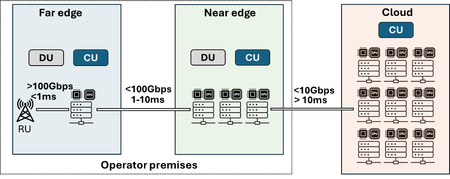
Cellular Radio Access Networks (RANs) are rapidly evolving towards 6G, driven by the need to reduce costs and introduce new revenue streams for operators and enterprises. In this context, AI emerges as a key enabler in solving complex RAN problems spanning both the management and application domains. Unfortunately, and despite the undeniable promise of AI, several practical challenges still remain, hindering the widespread adoption of AI applications in the RAN space. This article attempts to shed light to these challenges and argues that existing approaches in addressing them are inadequate for realizing the vision of a truly AI-native 6G network. Motivated by this lack of solutions, it proposes a generic distributed AI platform architecture, tailored to the needs of an AI-native RAN and discusses its alignment with ongoing standardization efforts.3.2KViews2likes2CommentsProject Janus: Now Open Source
We are excited to announce that Project Janus is now available as open-source software on GitHub. This release includes the jbpf library, which implements dynamic service models that can be used to make current O-RAN service models much more flexible. We are also releasing jrt-controller, a reference implementation of a real-time controller that supports the use cases currently under study in the O-RAN RT-RIC study item. Previously, at Mobile World Congress (MWC) 2024, we announced Project Janus along with leaders across the telecommunications industry. Project Janus uses telco-grade cloud infrastructure compatible with O-RAN standards to draw on fine-grained telemetry from the radio access network (RAN), the edge cloud infrastructure, and other sources of data. This enables a communication service provider (CSP) to gain detailed monitoring and fast closed loop control of their RAN network. Project Janus helps CSPs optimize RAN performance through visibility, analytics, AI, and closed loop control. To meet this objective, Microsoft and industry collaborators built a set of capabilities including RAN instrumentation tools that can improve the existing E2 O-RAN interface and update its service models to communicate with components of a CSP’s RAN and SMO architecture. Project Janus’ dynamic service models can add new functionality to operational RAN deployment without disruption. They allow developers to obtain RAN telemetry and, where required, exert control over its behaviour, both at microsecond time scales. The dynamic service models can be directly consumed by xApps on a nRT-RIC, or further coupled with the real-time apps (dApps) on the real-time controller we are also releasing. The flexibility and richness of data allows network operators and developers to harness the full power of AI for RAN, which is further discussed in our paper, “Distributed AI Platform for the 6G RAN.” This architecture enables several new use cases, such as precise analytics for anomaly detection and root cause analysis, interference detection, and optimizing other RAN performance metrics. The framework also enables new applications of particular interest to macro network deployments, such as fast vRAN power savings, failover, and live migration. It also allows for easy customization of RAN performance for niche requirements in different industrial use cases (as discussed in our paper “The Future of the Industrial AI Edge is Cellular.”). More details about Project Janus and the use cases are available on the project’s website. Project Janus has already garnered significant interest and support from our partners. They have already built and deployed several new applications on top of it, such as RAN performance optimization through fine grained L1 telemetry, interference mitigation and accurate localization. Learn more about how our top partners are integrating Project Janus into their product offerings and research: “The Project Janus framework enhances Mavenir's cloud-native, software-based Open RAN solutions with additional real-time capabilities. This enables the creation of customizable solutions, such as low-latency intelligent controllers. Furthermore, Project Janus serves as a flexible framework for supporting decentralized applications (dApps), playing a crucial role in advancing AI-driven Radio Access Networks (RAN) and laying the groundwork for the development of 6G technology.” – Bejoy Pankajakshan, EVP, Chief Technology and Strategy Officer, Mavenir “Project Janus introduces innovative ways of collecting RAN data in real-time without causing performance deterioration of RAN. The Project Janus framework has been integrated with 5G RAN solutions to control the behaviour of RAN algorithms in real-time by writing simple codelet to aggregate and compress the large volume of timeseries of data received in real-time and pass it to the external entity (e.g. xApp or analytics software). Capgemini is leveraging this solution to enrich our 5G RAN software frameworks, to boost its xApp capabilities and demonstrate improved RAN performance. This framework has been utilized to demonstrate several state-of-the-art features, such as power saving, mobility load balancing, RU sharing, failsafe fronthaul, and more. Additionally, Project Janus provides real-time graphical insights into execution scenarios, significantly enhancing our analysis and debugging capabilities to further optimizes and improve RAN performance.” – Utkarsh Malik, Senior Director of Product Management, Capgemini "AI in RAN is the next frontier, and it continues to evolve as the industry further uncovers its potential. This is why a software centric architecture, coupled with this exciting collaboration with Microsoft and Project Janus, demonstrates how you can deploy hardware and software now, while enabling new AI use cases in the future. Project Janus allows real time dynamic access to L1 telemetry, allowing the type of telemetry to be controlled based on new future AI use cases, expanding the developer scope." - Dan Lynch, Senior Director, FlexRAN at Intel “Project Janus promises to revolutionize real-time network telemetry, programmability and optimization through its flexible, dynamically loadable service models. The ability to implement new functionality and deploy at run-time without affecting RAN operations unlocks a new dimension of RAN efficiency, resilience and performance. We're excited to bring this game-changing functionality to our commercial srsRAN Enterprise partners and to our broad community of open-source srsRAN Project users.” – Paul Sutton, CEO, SRS "Project Janus makes it easy for a RAN vendor to add our sub-meter positioning capability to their products. It has also allowed us to accelerate our development to come to market at least a year ahead of other 5G positioning solutions and with 10-100x better performance than any other 5G positioning solution.” – Daniel Jacker,CEO, ZaiNar “EdgeRIC is an open-source platform developed through a collaboration between Texas A&M University and UC San Diego, designed to enable real-time AI-in-the-loop feedback control for radio access networks. By integrating EdgeRIC with Microsoft's Project Janus framework, we are advancing the programmability of open-source 5G platforms, allowing precise, low-latency control at the edge. This integration enhances spectrum efficiency, optimizes resource allocation, and provides a robust foundation for AI-driven network intelligence. Through this collaboration, we are fostering an open ecosystem where researchers and industry leaders can accelerate innovation in intelligent wireless communications.” – Professor Srinivas G Shakkotai, Department of ECE and Department of CSE, Texas A&M University "RAN Intelligent Controllers standardization is typically slow, requiring multiple vendors to align on a constrained set of information sharing between RAN and RICs. Microsoft open-sourcing Project Janus, which works with existing commercial stacks, enables rapid access to information without requiring standardization changes. UC San Diego and Texas A&M University developed the EdgeRIC platform and micro-apps that support open-source RAN stacks (srsRAN and OAI). EdgeRIC's integration with Project Janus allows apps to be directly translated to commercial stacks, enabling them in more industry-accepted stacks. These tools are key to unlocking novel applications, revenues, and business productivity for enterprises, from AI-driven networking to networking-driven AI to network infrastructure-driven sensing, fostering rapid innovation in the 6G ecosystem. The technology has the potential to lead to a world where our phones and base stations are upgrading every other day, much like software releases for apps," - Professor Dinesh Bharadia, Electrical Engineering, Klein Gilhousen Chancellor's Endowed Faculty Fellow for Next Generation Wireless, University of California San Diego. “RAN is undergoing a transformation toward data-driven operations. Project Janus provides a key enabling technology to make the RAN data accessible for intelligent monitoring and control applications. As such, we have adopted it as the primary RAN telemetry system in our testbed and research efforts.” – Professor Mahesh Marina, University of Edinburgh We look forward to seeing the community's contributions and innovations with Project Janus. You can read more about our Project Janus announcement, plus our additional telco industry news, ahead of MWC here.2.1KViews0likes0CommentsUnifying Data and AI in Telecom: Inside the Telco Analytics PoC Accelerator
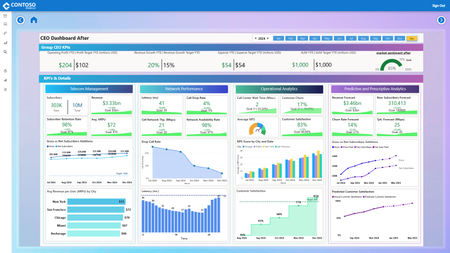
As telecom operators race to modernize their operations and deliver personalized, data-driven services, the need for a unified, intelligent analytics platform has never been greater. The Telco Analytics PoC (TAP) Accelerator is Microsoft’s answer to this challenge: a deployable, open-source solution that brings together the power of Microsoft Fabric, Power BI, Azure AI, and Purview to help telcos unlock the full potential of their data. What Is the TAP Accelerator? The TAP Accelerator is a pre-packaged, cloud-native PoC environment that enables telcos to explore and showcase AI-powered analytics in action. It includes: A demo web app Power BI dashboards for tracking telco specific KPIs and reports Microsoft Fabric Lakehouses with a telco data model Sample telco data ML notebooks Real-time telemetry via Eventhouse Automation scripts and ARM templates for deployment It’s designed to be deployed in a customer’s Azure subscription, allowing hands-on customization and exploration of real-world telecom scenarios. Why It Matters Telcos face a unique set of challenges: Fragmented data across legacy and cloud systems Slow, manual decision-making processes Difficulty demonstrating the ROI of AI and analytics The TAP Accelerator addresses these by offering a unified, governed, and scalable platform that brings together data from across the business—network, finance, customer service, and sales—and applies AI to drive actionable insights. Core Capabilities Unified Data Integration Connects on-prem and cloud data sources via Microsoft Fabric and OneLake Uses a data mesh approach to unify domains without duplication Real-Time and Historical Analytics Eventhouse enables real-time telemetry (e.g., call center, network KPIs) Fabric Lakehouses support historical trend analysis and forecasting AI-Driven Insights Azure AI Foundry powers predictive models (e.g., churn, campaign ROI) Data Agents enable Copilot-style natural language querying Governance and Security Microsoft Purview ensures compliance, access control, and auditing Built-in security best practices for customer deployments Key Components Layer Description Fabric Lakehouses Bronze, Silver, and Gold layers for structured data processing Power BI Reports Dashboards for Call Center, Finance, Network, Sales, CEO views Eventhouse Real-time KQL-based telemetry ingestion and analytics Semantic Models Structured telco semantic models for Power BI and Copilot Data Agents Natural language interface for querying data Azure AI Services Cognitive services and ML models for advanced analytics Telco Data Model The TAP Accelerator uses the Azure Synapse database template for wireless that helps to redefine how data is managed and utilized within the telecommunications sector. This model is designed to streamline operations, foster innovation, and enable a more seamless integration of services across the industry. It's a comprehensive telco data model consisting of more than 20 domains, and thousands of tables. For example, the Network domain alone contains 399 tables defining every entity and attribute commonly used in network use cases. The Accelerator also includes guidance for modeling the required telco data schema in Synapse, and importing it into your Microsoft Fabric environment. Business Value The TAP Accelerator delivers measurable outcomes across the telco value chain: Customer Experience: Personalized engagement and faster issue resolution Operational Efficiency: Streamlined workflows and reduced overhead Financial Control: Real-time visibility into revenue, disputes, and liabilities Strategic Agility: Faster, AI-informed decision-making Security & Compliance: Enterprise-grade governance across all data flows Deployment and Access The solution is open-source and available on GitHub under a Microsoft license. It can be deployed via automation scripts into a customer's Azure and Fabric environment. Get started now!1.8KViews3likes0CommentsReimagining Network Operations: How Microsoft NetAI Tackles Hyperscale Challenges
The Business Imperative: Why Network Operations Must Change Modern network operators face a perfect storm of challenges: Exponential Growth in Events and Maintenance Network events and maintenance activities are increasing at an unprecedented rate. According to Microsoft’s analysis, weekly network events are projected to grow from hundreds to thousands over the next five years. Maintenance activities are expected to follow a similar trajectory. Without automation, this growth would require a dramatic—and unsustainable—increase in staffing. Rising Operational Costs Dense Wavelength Division Multiplexing (DWDM) operations, which are critical for high-capacity fiber networks, are both costly and labor-intensive. The global spend on Network Operations Center (NOC) services exceeds $5 billion annually, with total network operations costs reaching $250 billion per year. As networks expand, these costs threaten to spiral out of control. Human-Centered Workflow Limitations Manual processes are slow, error-prone, and unable to keep pace with the scale and speed of modern networks. Organizational inertia, fragmented tooling, and siloed systems further impede efficiency. Engineers are often bogged down by device-specific command-line interfaces and isolated management systems, slowing onboarding and cross-functional collaboration. Safety and Reliability Concerns Early attempts to automate network operations with AI revealed critical gaps. Traditional AI models struggled with limited context, leading to unpredictable outcomes and eroding trust. Machine learning models often generated false positives, overwhelming operations teams with unnecessary alerts. The risk of unsafe command execution—where an autonomous agent might inadvertently disrupt service—remained a constant concern. The Talent Crunch As network complexity grows, so does the demand for skilled engineers. Yet, hiring and training enough talent to keep up with operational demands is neither cost-effective nor sustainable. The industry faces a widening gap between operational needs and available expertise. NetAI: A Strategic Shift Toward Autonomous Operations Microsoft NetAI is not just another automation tool—it’s a strategic framework for transforming how networks are managed. By leveraging intelligent agents, curated context, and modular workflows, NetAI enables the Azure Networking team to move from reactive, manual processes to proactive, AI-driven automation. Key Objectives of NetAI Achieve Fully Autonomous Network Operations: NetAI aims to eliminate the need for manual intervention in the majority of network incidents, allowing intelligent agents to detect, diagnose, and resolve issues independently. Minimize Human Involvement in Incident Lifecycle: By automating detection, root cause analysis, and repair, engineers can focus on higher-order tasks like agent enablement and system design. Scale Operations Without Scaling Headcount: As network events grow exponentially, NetAI maintains a flat staffing curve by automating repetitive and time-consuming tasks. Ensure Deterministic and Reliable AI Behavior: NetAI emphasizes deterministic workflows, engineered prompts, and stateful context management to guarantee consistent and safe outcomes. Enable Role-Based Agent Collaboration: Specialized agents operate within defined scopes, enhancing reliability and accountability. Support Organizational Transformation: NetAI redefines the role of network engineers, shifting their focus from manual operations to automation enablement and system governance. How NetAI Addresses Business Challenges NetAI’s architecture is designed to tackle the most pressing operational challenges head-on: Scalability: By automating incident handling, NetAI enables organizations to manage more events without increasing headcount. Cost Efficiency: Automation reduces the need for expensive, labor-intensive operations, delivering significant cost savings. Reliability and Safety: Deterministic workflows, strict guardrails, and role-based access controls ensure that automation is both reliable and safe. Organizational Agility: By freeing engineers from repetitive tasks, NetAI empowers them to focus on innovation and strategic initiatives. A summary table from the whitepaper highlights the breadth of challenges addressed, from exponential event growth and DWDM inefficiency to fragmented tooling and repair delays. The Measurable Benefits of NetAI The impact of NetAI on Microsoft’s global network operations has been transformative. Here are some of the most notable outcomes: 40% More Incidents Handled Per Person AI agents manage detection, diagnosis, and resolution, allowing engineers to handle 40% more incidents per person. This shift enables human operators to focus on higher-value activities such as agent enablement, prompt refinement, and system design. 80% Faster Root Cause Analysis With agents like Pal leveraging topology, telemetry, and historical data, the time required to isolate and understand complex issues has dropped by 80%. This acceleration not only improves service reliability but also reduces the operational burden on Tier 2 support teams. 25% Reduction in Time to Repair (TTR) Autonomous agents like Miles initiate and manage fiber repair workflows without waiting for human coordination, streamlining the resolution process and minimizing service disruption. Flat Staffing Curve Despite 10x Event Growth Perhaps most impressively, NetAI has enabled Microsoft to maintain a flat staffing curve even as the number of incidents and maintenance tasks has increased dramatically. This decoupling of scale and headcount is a critical advantage in hyperscale environments. Improved Consistency and Reliability Deterministic automation reduces false positives and operational noise, improving consistency and reliability across the board. Cultural Transformation Beyond the numbers, NetAI has fostered a cultural shift within Microsoft. Engineers are no longer just responders—they are automation architects, designing and refining the systems that drive autonomous operations. This evolution enhances job satisfaction, reduces burnout, and positions the workforce for long-term success in an AI-driven future. Strategic Collaboration and Industry Impact The success of NetAI is not just a product of internal innovation—it’s also shaped by Microsoft’s active collaboration with network operators around the world. Through joint workshops, pilot deployments, and feedback loops, Microsoft works closely with partners to tailor the agentic framework, workflow orchestration, and safety protocols to real-world conditions. This collaborative approach accelerates the maturity of NetAI while empowering operators to modernize their network operations. To further accelerate adoption, Microsoft has introduced the Network Operations Agent (NOA) Framework—a deployment and enablement toolkit that packages NetAI’s best practices, engineered prompt libraries, architectural blueprints, and modular components into a reusable format for operators. As NetAI continues to evolve, Microsoft is focused on expanding agent roles, enhancing multi-agent coordination, and deepening integration with operational systems. The vision is clear: smarter, safer, and more strategic operations that redefine what’s possible in network management. Download the Full Whitepaper Ready to dive deeper? The full Microsoft NetAI whitepaper explores the strategic vision, technical architecture, and real-world impact of autonomous networking. Download it here to learn how your organization can benefit from the next generation of network operations: ⬇️Download the Microsoft NetAI Whitepaper1.4KViews0likes2Comments
Monetizing generative AI: How telecoms are unlocking new revenue streams
Introduction As someone deeply engaged in AI-driven transformations within the telecoms industry, I’ve witnessed firsthand how telecoms are spearheading the adoption of generative AI (GenAI). By leveraging AI-powered solutions and forming strategic alliances, telecoms are enabling enterprises to streamline operations, enhance customer experiences, and—most importantly—unlock new revenue opportunities. A recent survey of telecom executives underscores the growing momentum behind AI adoption, with nearly 50% of telcos reporting tangible benefits from GenAI—double the adoption rate from the previous year. Early adopters are already seeing meaningful returns, achieving cost efficiencies and enhancing customer engagement through AI-driven hyper-personalization. For example, one telecom refined its upselling techniques using GenAI, resulting in a 5–15% increase in average revenue per user (ARPU). Another deployed an AI-powered help desk bot, reducing per-call costs by 35% while increasing resolution rates by 60%. The urgency to monetize AI GenAI is becoming essential for tackling industry challenges such as streamlining operations and reducing costs through automation, accelerating growth via hyper-personalized marketing and customer insights, enhancing customer service through AI-driven virtual assistants and chatbots, and evolving telcos into “techcos” that deliver AI-driven services beyond basic connectivity. AI’s Impact on Business Strategies and Revenue Models Generative AI is reshaping the telecom landscape by optimizing pricing models, enabling personalized customer interactions, and reducing churn rates. AI-driven analytics can proactively identify customers at risk of switching providers, allowing telcos to deploy personalized retention strategies such as loyalty programs and customized pricing tiers. Modern monetization models require flexibility, allowing telcos to integrate a mix of subscription-based, usage-based, and one-time payment plans that cater to evolving customer demands. Monetizing AI in telecoms AI-Optimized Computing Services / GPU as a Service: With the demand for GPUs far exceeding supply, telcos can monetize their data centers by offering AI computing power to enterprises and government entities seeking sovereign AI solutions. AI-Driven Customer Engagement Platforms: Telecoms can package their AI-enhanced customer service capabilities as enterprise solutions for companies managing high-volume call centers. Intelligent Network Optimization: AI-powered Radio Access Network (RAN) solutions are improving network performance through real-time analytics, predictive maintenance, and dynamic resource allocation. Centralized AI Platforms / LLM as a Service: Leading organizations are developing centralized AI platforms that serve as repositories of proven and maintained AI/gen AI modules, APIs, tools, and code snippets. This platform approach helps drive quicker implementation of successful use cases while maintaining consistent guardrails and leveraging proven architectures and use-case “recipes.” For example, by building a GenAI platform with ~50 reusable services, one telecom successfully reduced the time it took to build new use cases from months to about two weeks. This ensured that all similar use cases used consistent architectures and that best practices and learnings were shared in a common repository. AI-powered fraud detection and risk management: AI can analyze vast volumes of transactional and behavioral data in real time to detect anomalies and prevent fraud. By offering fraud detection as a service or embedding it into enterprise solutions, telcos can reduce revenue leakage and enhance customer trust—both of which directly impact the bottom line. AI-enhanced personalized marketing: By leveraging customer data and behavioral insights, telecoms can use AI to deliver hyper-personalized offers, upsell opportunities, and loyalty programs. These targeted campaigns increase conversion rates and average revenue per user (ARPU), making marketing spend more efficient and profitable. AI-driven field operations optimization: AI can streamline field service operations by predicting equipment failures, optimizing technician dispatch, and automating maintenance workflows. These efficiencies reduce operational costs and improve service reliability—both of which contribute to margin expansion and customer satisfaction. Success stories: AI-driven transformation in telecoms Several telecoms are already seeing significant ROI from their AI investments. One achieved an in-year ROI of more than 2x from GenAI implementations, contributing to a multibillion-dollar cost-reduction target. Another reported an ROI of 9x to 12x from its proprietary AI tool, which optimizes customer support and internal workflows. A third launched a platform to democratize AI adoption, with real-world applications showcased at a major global event. High-ROI AI applications for telecoms AI is proving to be a game-changer across several key areas. In operational efficiency, AI-driven automation reduces workloads and enhances workforce productivity. In customer engagement, personalized AI-driven interactions improve satisfaction and retention rates. For network optimization, AI-powered analytics predict outages and enhance service reliability. In product innovation, AI enables more customized offerings, increasing customer loyalty. For fraud prevention, AI’s pattern-recognition capabilities enhance fraud detection and mitigate risks. In sustainability initiatives, AI helps telecoms minimize their carbon footprint by optimizing energy use and device recycling programs. Conclusion Generative AI is fundamentally reshaping the telecom industry, ushering in a new era of automation, intelligence, and monetization. By investing in robust AI frameworks and monetization strategies, telecoms can improve efficiency, expand revenue streams, and secure their leadership in the evolving digital economy.926Views2likes0CommentsAI-Powered RAN and the Intelligent Edge: Microsoft’s Vision for the Future of Telecom
Artificial intelligence (AI) is rapidly converging with telecommunications infrastructure, promising to transform how networks are built, optimized, and monetized. Nowhere is this more evident than in the radio access network (RAN) – the crucial “last mile” that connects our devices to the digital world. At Mobile World Congress, Microsoft is sharing a strategic vision for AI in the RAN (AI-RAN) and intelligent edge computing. This vision centers on harnessing cloud and AI technologies to make telecom networks smarter, more efficient, and ready for new services. With decades of wireless research and a broad AI ecosystem spanning Azure to Copilot and Microsoft Foundry, Microsoft is partnering with the telecom industry to enable a new generation of AI-powered networks. A New Era of AI-RAN: AI Meets the Radio Network The concept of AI-RAN captures a threefold innovation in telecom networks, where AI and RAN technology intersect: AI for RAN: using advanced machine learning and AI algorithms to improve how RANs operate. By leveraging AI-based analytics and control, operators can dynamically optimize spectrum usage, network performance, and energy efficiency, leading to lower operational and capital expenditures. In practice, this means mobile networks that self-optimize – automatically adjusting parameters to reduce interference, enhance coverage, and cut power consumption without human intervention. AI on RAN: turning the RAN itself into a distributed AI computing engine. In this paradigm, the thousands of cell sites and edge data centers in a network can host AI inference workloads closer to end users. This intelligent edge approach allows telecom providers to offer new AI-driven services – from real-time translation to AR/VR and interactive gaming – with the ultra-low latency and data sovereignty that cloud alone cannot achieve. AI and RAN: creating a shared infrastructure where AI platforms and the RAN co-exist and collaborate. By co-locating AI resources with telecom network functions, operators unlock synergies like integrated sensing and communications (for example, using 5G cells as distributed sensors), and they can support “physical AI” use cases such as autonomous robots and smart factories at the edge. This convergence of AI and telecom infrastructure not only improves the network itself but also opens new revenue streams through innovative services delivered over 5G and future 6G networks. Microsoft envisions AI-infused RANs that are more than just communication channels – they become intelligent platforms for innovation. For instance, in recent trials, Microsoft researchers demonstrated AI systems that detect radio interference in real time by turning a 5G base station into a wideband spectrum analyzer. Similarly, an AI-driven anomaly detection system can continuously learn a network’s normal behavior and spot irregularities before they cause outages, helping prevent failures and improve reliability. These examples illustrate how applying AI to RAN data can translate into more resilient networks and better user experiences. Edge AI: Bringing Cloud Intelligence Closer The push for edge AI in telecom is about extending the power of the cloud out to the network’s edge, closer to where data is generated and consumed. This is crucial for applications that demand instantaneous processing and response, or that must keep data local for privacy and security. In a traditional setup, complex AI models live in the cloud, and lightweight AI runs on devices. But many new scenarios – such as unmanned aerial vehicle, autonomous mobile robot, or industrial IoT – require a middle ground. The telecom network’s edge (for example, in 5G base stations or nearby edge data centers) can serve as that ideal “in-between” AI execution layer. Edge AI offers several strategic advantages for operators and enterprises: Ultra-low latency: By processing data on edge servers just one “hop” away from end-users, critical applications (like autonomous driving or remote robotic control) can respond in milliseconds, far faster than sending data to distant cloud servers. Data sovereignty and privacy: Keeping sensitive data (such as video feeds, industrial sensor data, or health information) within local networks or on-premises helps meet regulatory and privacy requirements. AI at the edge can analyze data without that data ever leaving the telecom’s domain. Bandwidth optimization: By processing and filtering data locally, only the most important insights (or lightly compressed data) are sent to the cloud. This reduces backhaul traffic and lowers costs. Resilience and continuity: Edge AI systems can continue to operate even when connectivity to cloud is limited, ensuring critical services remain available. In short, intelligent edge computing transforms telecom networks into platforms for innovation. A prime example is the concept of “physical AI” – where AI-driven services control physical devices in real time via the network. Imagine factory robots or autonomous drones connected to a 5G network: with edge AI, heavy computation (like computer vision or coordination algorithms) can run on nearby servers, leveraging GPUs at the base station or aggregation site. Microsoft’s research has shown that offloading robotics AI workloads from onboard devices to edge GPUs can improve response times dramatically – in one scenario, cutting inference latency from over a second on a device to under 100 milliseconds at the edge. This kind of performance boost can make previously impossible applications feasible, from real-time hazard detection in smart cities to advanced augmented reality experiences. Unifying Cloud and Telecom through Microsoft’s AI Ecosystem Achieving the AI-RAN and edge vision requires more than just ideas – it demands a cohesive platform that brings cloud technology into the heart of telecom networks. This is where Microsoft’s broad AI and cloud ecosystem plays a pivotal role. Azure’s cloud platform provides the robust, scalable foundation. Telecom operators can run key network functions in Azure (such as 4G/5G core networks) and leverage Azure’s global infrastructure for high performance and elasticity. At the same time, Azure’s capabilities extend on-premises and to the edge via Azure Arc, enabling a single pane of glass for managing resources across public cloud, private data centers, and network edge sites. This means operators can deploy and manage AI models or applications on distributed RAN edge servers as easily as in the cloud – achieving “zero-touch” automation and unified operations across their entire network. Microsoft’s AI platforms and tools further empower telecom innovation. With Azure Machine Learning and the new Microsoft Foundry platform, operators and partners can train, fine-tune, and deploy state-of-the-art AI models for their unique needs. In fact, Microsoft’s AI ecosystem includes thousands of advanced models – from the latest OpenAI GPT-5.2 and domain-specific models, to a vast catalog of open-source models from partners like Anthropic, Meta, and Mistral – all available through Foundry for use in custom solutions. Likewise, Microsoft’s growing family of Copilot experiences and AI agent services can be harnessed to improve telecom operations and customer experiences. For example, the Network Operations Agent (NOA) Framework demonstrates how a service desk AI agent might assist network engineers by intelligently parsing through network alerts and suggesting fixes, while different agents could help automate customer support with industry-specific expertise. Under the hood, developers have access to powerful frameworks like the Semantic Kernel and Azure’s AI libraries to build their own telecom-focused AI applications and xApps (RAN applications) that run on cloud or edge infrastructure. Microsoft’s vision is to make developing AI-driven network solutions as seamless as any cloud application development – develop in Azure, deploy to the RAN. Crucially, all these capabilities are grounded in an open, standards-based approach. Microsoft is working closely with the industry to support Open RAN standards and has collaborated with leading operators and vendors on initiatives like Project Janus – an open RAN programmability platform that exposes rich RAN telemetry and control to AI algorithms. By embracing open interfaces and partnering across the telecom ecosystem, Microsoft ensures that AI solutions can plug into existing networks and equipment regardless of vendor, protecting operators’ investments while extending their capabilities. Microsoft is also a founding member of the global AI-RAN Alliance, a cross-industry effort to accelerate AI-native RAN technologies and establish best practices for integrating AI into next-generation networks. From Research to Reality: Innovation with Partners Microsoft’s leadership in AI and cloud is backed by deep research and real-world experimentation. Microsoft Research has been pushing the boundaries of wireless networking for over 20 years. Today, that research is yielding dividends in the form of new telecom technologies: Microsoft’s researchers have constructed a live AI-RAN testbed network across two global innovation hubs. This 24/7 private 5G network – spanning more than 30 cloud-controlled cell sites on Microsoft’s Redmond (USA) and Cambridge (UK) campuses – serves as a blueprint for the future RAN. It is fully software-defined, cloud-managed, and open, allowing internal teams to develop and test advanced 5G/6G capabilities like AI-driven optimization, edge robotics, and healthcare applications in a real-world environment. Insights from these efforts are shared with the industry and academy, helping define 6G-era concepts such as real-time RAN intelligent control and AI-native RAN architectures. Microsoft’s research prototypes (including reference designs and proofs-of-concept) offer operators a head start in understanding how to implement AI in their networks – from intelligent resource allocation to network slicing and beyond. Collaboration is key: Microsoft works hand-in-hand with major communication service providers (CSPs), network equipment manufacturers, and startups to bring these innovations to production. Joint trials and proof-of-concepts have demonstrated use cases like interference detection, energy-efficient RAN automation, and near-real-time network anomaly detection in live networks. By co-innovating with the telecom community, Microsoft ensures that its AI solutions align with real operational needs and can be deployed in multivendor environments. A Strategic Path Forward for the Telecom Industry As the telecom sector looks to the future, the message is clear: AI and the network are no longer separate – they are becoming one and the same. Operators that embrace AI-powered RAN and edge computing stand to benefit from significant gains in efficiency and customer experience. They will be able to optimize network performance in ways not possible before, from squeezing more capacity out of spectrum to slashing energy usage during off-peak hours. At the same time, these intelligent networks can unlock new revenue opportunities by offering differentiated services – think of carriers providing AI-powered insights or automation services to enterprise customers, or delivering rich digital experiences (from cloud gaming to mixed reality) with quality guaranteed by AI-driven network slices. Microsoft’s role is to serve as a platform and partner for this industry-wide transformation. By bringing its unparalleled cloud and AI ecosystem to the telecom domain, Microsoft is helping operators transform into hyperscale tech-driven enterprises. That means Azure infrastructure for carrier-grade reliability and scale, Azure ML and data platforms to train models on telecom data, Copilot and agent technologies to augment both network operations and customer-facing services, and the Foundry catalog of AI models and tools to jumpstart innovation. All of these building blocks are designed to work in a hybrid, open environment – spanning public and private clouds, the network core, and the far edge – so that AI can run wherever it creates the most value, even directly in the RAN. The convergence of AI and telecom infrastructure is poised to define the next decade of networks. Microsoft’s strategic investments in AI-RAN and edge computing, combined with deep partnerships across the telecom ecosystem, position it as a key enabler of this transformation. As the industry gathers at MWC to discuss what’s next, Microsoft reaffirms its commitment to helping telecom operators and partners harness the power of AI, from the cloud to the intelligent edge, and to jointly create a future where networks aren’t just faster or more open – but truly smarter.Reimagining Telco with Microsoft: AI, TM Forum ODA, and Developer Innovation
The telecom industry is undergoing a seismic shift—driven by AI, open digital architectures, and the urgent need for scalable, customer-centric innovation. At the heart of this transformation is TM Forum Innovate Americas 2025, a flagship event bringing together global leaders to reimagine the future of connectivity. Microsoft’s presence at this year’s event is both strategic and visionary. As a key partner in the telecom ecosystem, Microsoft is showcasing how its technologies—spanning AI, cloud, and developer tools—are enabling Communication Service Providers (CSPs) to modernize operations, accelerate innovation, and deliver exceptional customer experiences. 🔑 Key Themes Shaping the Conversation Connected Intelligence: Microsoft is championing a new model of collaboration—one where AI systems, teams, and technologies work together seamlessly to solve real-world problems. This approach breaks down silos and enables intelligent decision-making across the enterprise. AI-First Mindset: From network optimization to customer service, Microsoft is helping telcos embed AI into the fabric of their operations. The focus is on building shared data platforms, connected models, and orchestration frameworks that scale. Customer Experience & Efficiency: With rising expectations and increasing complexity, CSPs must deliver faster, smarter, and more personalized services. Microsoft’s solutions are designed to enhance agility, reduce friction, and elevate the end-user experience. As the event unfolds, Microsoft’s sessions and showcases will highlight how these themes come to life—through real-world implementations, collaborative frameworks, and developer-first tools. Thought Leadership & Sessions At TM Forum Innovate Americas 2025, Microsoft is not just showcasing technology—it’s sharing a bold vision for the future of telecom. Through a series of thought-provoking sessions led by industry experts, Microsoft is demonstrating how AI, open standards, and developer tools can converge to drive meaningful transformation across the telco ecosystem. From enabling intelligent collaboration through the Azure AI Foundry, to operationalizing AI and Open Digital Architecture (ODA) for autonomous networks, and empowering developers with GitHub Copilot, Microsoft’s contributions reflect a deep commitment to innovation, scalability, and interoperability. Each session offers a unique lens into how Microsoft is helping Communication Service Providers (CSPs) modernize their IT stacks, accelerate development, and deliver exceptional customer experiences. Microsoft Thought Leadership Sessions CASE STUDY: Connected Intelligence: multiplying AI value across the enterprise 📅Sep 10 1:30pm CDT Peter Huang, Senior Director, Technology, Network Data and AI T-Mobile Andres Gil, Industry Advisor/Business Developer, Telco, Media and Gaming Industry Microsoft CASE STUDY: From hype to impact: operationalizing AI in telco with TM Forum’s ODA and Open APIs 📅Sep 11 1:30pm CDT Puja Athale, Director - Telco Global Azure AI Lead Microsoft Connected Intelligence & Azure AI Foundry: Scaling AI Across the Telco Enterprise T-Mobile and Microsoft are spotlighting a transformative approach to enterprise AI: Connected Intelligence. The joint session explores how telcos can break down silos and unlock the full potential of AI by enabling strategic collaboration across systems, teams, and technologies. The core challenge they address is clear: AI in isolation cannot answer even the simplest customer questions. Whether it's billing, device performance, or network coverage, fragmented systems lead to blind spots, duplication, and poor customer outcomes. To overcome this, they propose a unified framework that blends technology and culture—because tech alone doesn’t scale, and culture alone doesn’t transform. Azure AI Foundry: The Engine Behind Connected Intelligence At the heart of this vision is Microsoft’s Azure AI Foundry, a shared AI platform designed to scale intelligence across the enterprise and a core component of Microsoft’s recently announced Network Operations Agent Framework. Connected Intelligence integrates: Agent Frameworks and Agent Catalogs for modular AI deployment Hundreds of TBs of daily data from network switches, device logs, and location records Enterprise-grade orchestration and data governance AI/ML models aligned with customer-level time series events This architecture enables reuse, speed, and alignment across people, organizations, and systems—turning data into actionable intelligence. Model Context Protocol (MCP): AI-to-AI Collaboration A standout innovation is the Model Context Protocol (MCP), which goes beyond traditional APIs. While APIs connect systems through data, MCP connects intelligence through context. It allows AI agents to dynamically discover and chain APIs without custom coding, enabling real-time collaboration across network operations, device management, and deployment workflows. By integrating MCP into the API fabric, Microsoft is laying the groundwork for agentic AI—where intelligent systems can autonomously interact, adapt, and scale across the telco ecosystem. From Hype to Impact: Operationalizing AI in Telco with TM Forum’s ODA and Open APIs The telecom industry is moving from hype to impact by operationalizing AI through TM Forum’s Open Digital Architecture (ODA) and Open APIs. The session, From hype to impact: operationalizing AI in telco with TM Forum’s ODA and Open APIs, explores how telcos can build AI-ready architectures, unlock data value for automation and AI agents, and scale responsibly with governance and ethics at the core. Microsoft’s collaboration with TM Forum is enabling telcos to modernize OSS/BSS systems using the ODA Canvas—a modular, cloud-native execution environment orchestrated with AI and powered by Microsoft Azure. This architecture supports plug-and-play integration of differentiated services, reduces integration costs by over 30%, and boosts developer productivity by more than 40% with GitHub Copilot. Learn how leading telcos like Telstra are scaling AI solutions such as “One Sentence Summary” and “Ask Telstra” across their contact centers and retail teams. These solutions, built on Azure AI Foundry, have delivered measurable impact: 90% of employees reported time savings and increased effectiveness, with a 20% reduction in follow-up contacts. Telstra’s success is underpinned by a modernized data ecosystem and strong governance frameworks that ensure ethical and secure AI deployment. From Chaos to Clarity with Observability Despite advances in operational tooling, fragmented observability remains a persistent challenge. Vendors often capture telemetry in incompatible formats, forcing operations teams to rely on improvised log aggregators and custom parsers that drive up costs and hinder rapid incident resolution. Microsoft’s latest contribution to the Open Digital Architecture (ODA) initiative directly tackles this issue with the ODA Observability Operator, now available as open source on GitHub. By enforcing a standardized logging contract, integrating seamlessly with Azure Monitor, and surfacing health metrics through TM Forum nonfunctional APIs, the operator streamlines telemetry across systems. Early trials have shown promising results—carriers significantly reduced the time needed to detect billing anomalies, enabling teams to shift from reactive troubleshooting to proactive optimization. Accelerating TM Forum Open API Development with GitHub Copilot As the telecom industry embraces open standards and modular architectures, Microsoft is empowering developers to move faster and smarter with GitHub Copilot—an AI-powered coding assistant that’s transforming how TM Forum (TMF) Open APIs are built and deployed. Why GitHub Copilot for TM Forum Open APIs? TMF Open APIs are a cornerstone of interoperability in telecom, offering over 100 standardized RESTful interfaces across domains like customer management, product catalog, and billing. But implementing these APIs can be time-consuming and repetitive. GitHub Copilot streamlines this process by: Autocompleting boilerplate code for TMF endpoints Suggesting API handlers and data models aligned with TMF specs Generating test plans and documentation Acting as an AI pair programmer that understands your code context This means developers can focus on business logic while Copilot handles the heavy lifting. Real-World Uses Telco developers benefit from powerful features in GitHub Copilot that streamline the development of TMF Open API services. One such feature is Agent Mode, which automates complex, multi-step tasks such as implementing TMF API flows, running tests, and correcting errors—saving developers significant time and effort. Another key capability is Copilot Chat, which provides conversational support directly within the IDE, helping developers debug code, validate against TMF specifications, and follow best practices with ease. Together, these tools enhance productivity and reduce friction in building compliant, scalable telecom solutions. For example, when building a Customer Management microservice using the TMF629 API, Copilot can suggest endpoint handlers, validate field names against the spec, and even help write README documentation or unit tests. 📈 Proven Productivity Gains CSPs like Proximus have reported significant productivity improvements using GitHub Copilot in their Network IT functions: 20–30% faster code writing 25–35% faster refactoring 80–90% improvement in documentation 40–50% gains in code compliance Other telcos like Vodafone, NOS, Orange, TELUS, and Lumen Technologies are also leveraging Copilot to accelerate innovation and reduce development friction. Best Practices for TMF API Projects To get the most out of Copilot: Use it for repetitive tasks and pattern recognition Always validate generated code against TMF specs Keep relevant spec files open to improve suggestion accuracy Use Copilot Chat for guidance on security, error handling, and optimization GitHub Copilot is more than a coding assistant—it’s a catalyst for telco transformation. By combining AI with TMF’s open standards, Microsoft is helping developers build faster, smarter, and more consistently across the telecom ecosystem. Learn more about how to configure and use GitHub Copilot in your own TMF Open API projects in our latest tech community blog. Microsoft’s Broader Vision for Telco Transformation Microsoft’s contributions reflect a comprehensive strategy to reshape the telecom landscape through scalable intelligence, open collaboration, and developer empowerment. At the core of Microsoft’s vision is the idea that AI must be connected, contextual, and reusable. The Azure AI Foundry and Model Context Protocol (MCP) exemplify this approach by enabling telcos to: Harness massive volumes of time-series data from networks, devices, and customer interactions Deploy modular AI agents that can collaborate across systems Orchestrate workflows that adapt in real time to changing conditions This architecture transforms fragmented data into actionable insights, allowing CSPs to move from reactive operations to proactive intelligence. Conclusion: Microsoft’s Strategic Alignment with TM Forum Microsoft’s participation at TM Forum Innovate Americas 2025 reflects a deep commitment to transforming the telecom industry through AI-first innovation, open collaboration, and developer empowerment. From T-Mobile’s vision for Connected Intelligence, to Microsoft’s roadmap for operationalizing AI and ODA, and the developer-centric acceleration enabled by GitHub Copilot, Microsoft is helping Communication Service Providers (CSPs) move faster, scale smarter, and deliver better customer experiences. By aligning with TM Forum’s goals—standardization, interoperability, and autonomous operations—Microsoft is not just participating in the conversation; it’s helping lead it. 📣 Call to Action Join Microsoft and other industry leaders at TM Forum Innovate Americas 2025 to explore the future of telco transformation. Whether you're a strategist, technologist, or developer, this is your opportunity to connect, learn, and shape what’s next.799Views2likes0CommentsAI beyond Chatbots
Artificial intelligence (AI) has rapidly evolved from narrow automation tools to autonomous, intent‑driven agents that perceive environments, interpret high‑level objectives, and execute complex tasks with minimal human intervention. This shift — known as agentic AI — represents the next frontier of generative AI, empowering telecom operators to transform customer engagement, network management, and operational efficiency. According to McKinsey, the global telecom industry could capture up to $250 billion in value by 2040 through advanced AI and agentic deployments. Microsoft, at the forefront of this revolution, is enabling telcos to leverage GenAI to enhance customer engagement, optimize networks, secure operations, and drive new revenue streams. By leveraging Microsoft’s Copilot Studio and Azure AI capabilities, telecom CTOs can move beyond conversational chatbots to build intelligent, self‑optimizing workflows that drive measurable outcomes across the enterprise. The Agentic AI Advantage Agentic AI goes well beyond today’s conversational chatbots: it comprises autonomous systems that perceive their environment, interpret high‑level goals, plan and execute multi‑step workflows, and continuously learn to improve outcomes. In telecom, agentic AI is rapidly moving from pilot projects to strategic priority. A recent McKinsey survey found that 64% of telco C‑suite executives have made scaling agentic use cases a top priority for 2025, and nearly 75% are targeting customer service first. Early adopters are already seeing material ROI: one North American operator reduced network capital expenditure by 10% by deploying an autonomous optimization agent, and a leading European telco cut cost per call by 35% while increasing first‑contact resolution by 60% with an AI‑powered help‑desk agent. According to a recent IDC white paper, telecom and media companies are seeing nearly four times the return on investment (ROI) on every dollar invested in AI. These results demonstrate that agentic AI isn’t merely a technological upgrade—it’s a transformative capability that automates complex processes, drives significant efficiency gains, and delivers measurable financial impact across the telecom value chain. For Chief Technology Officers (CTOs), the question isn’t whether to integrate AI into their operations but how to best implement these tools to achieve measurable results. In this exploration, we’ll examine Microsoft’s GenAI offerings and their role in reshaping the telecom landscape. Cracking the Code on Fraud: AI’s Role in Network Security Fraud is a persistent and costly issue for telecom operators, with industry losses nearing $39 billion globally in 2023. Traditional fraud detection systems, dependent on static rules, struggle to keep up with the rapidly evolving techniques used by attackers. GenAI and AI agents are proving to be game-changers in combating it. These agents continuously monitor vast volumes of network and transactional data in real-time, using pattern recognition, anomaly detection, and predictive analytics to identify suspicious behavior as it unfolds. Unlike traditional rule-based systems, AI agents can adapt to evolving fraud tactics, flagging irregularities such as sudden call spikes, unusual roaming activity, or identity mismatches. They can also trigger automated responses—like blocking transactions, flagging accounts, or alerting fraud teams—within seconds. This autonomous, always-on defense enables telcos to detect and prevent fraud faster, reduce financial losses, and protect customer trust. At the heart of Microsoft’s fraud prevention strategy is Azure OpenAI Service, integrated into platforms like Nokia’s NetGuard Cybersecurity Dome. These systems leverage GenAI models trained on extensive datasets to detect and neutralize threats more effectively. For example, Microsoft’s Extended Detection and Response (XDR) framework aggregates and enriches data from core, RAN, and transport domains. This telco-specific context enables the system to identify anomalies and threats with greater precision. By reducing the time needed to detect and respond to fraud by up to 50%, these solutions enhance network security and scalability. Additionally, their adaptability ensures that telcos remain ahead of emerging threats without needing constant manual updates. Beyond detection, Microsoft employs Confidential Computing on Azure, which ensures sensitive data remains encrypted during processing. This approach not only aligns with stringent global privacy regulations like GDPR but also builds customer trust in data-intensive applications. Enhanced Use Cases for GenAI in Telecom Security Proactive Risk Mitigation: GenAI models continuously evolve by learning from historical data and real-time events, enabling predictive analysis to preempt potential vulnerabilities. Dynamic Network Behavior Analysis: By analyzing user behavior and device activity, these systems detect deviations that might signal fraud, such as unauthorized access or abnormal data usage patterns. Automated Remediation: Once a threat is identified, GenAI-driven systems and AI agents can automatically initiate countermeasures, such as blocking suspicious transactions or isolating compromised network segments. Voice AI: Redefining Customer Engagement with GenAI For years, voice has been the backbone of customer interactions in telecom. GenAI is now transforming these experiences by integrating advanced voice capabilities that create seamless, personalized, and efficient customer engagements. Microsoft’s collaboration with Norwood Systems and their CogVoice platform highlights how GenAI elevates voice interactions. By integrating Azure OpenAI Service and Azure AI Translator, Norwood’s solutions provide real-time transcription and multilingual support, allowing telcos to serve a diverse customer base with minimal latency. Norwood Systems' CogVoice Agentic Network IVR represents the next generation of interactive voice response (IVR) systems, powered by advanced AI. This solution merges AI with voice technology to enable natural, smart conversations, replacing rigid menus with fluid, context-aware interactions. Key features include an intelligent memory system for continuity across multiple conversations, real-time interruptible conversations, and multilingual support with seamless language switching. AT&T has implemented GenAI-powered voice solutions to reduce spam calls and deliver predictive customer service. Their Visual Voicemail platform not only filters unwanted calls but also uses analytics to anticipate user needs, offering targeted responses. This system operates on a foundation of Azure Speech Service, which processes vast amounts of voice data to provide real-time, context-aware insights. Additional Technical Capabilities Custom Neural Voice, a feature of Azure Cognitive Services enables telcos to create branded AI voices that maintain a consistent tone and identity across all customer interactions. Contextual Integration: GenAI-powered voice systems can integrate with CRM platforms to provide agents with real-time insights during calls, enhancing customer satisfaction. These innovations are not just about efficiency—they represent an opportunity for telcos to redefine their customer engagement strategies, setting themselves apart in a competitive market. Boosting Worker Productivity with AI-Infused Tools Telcos face ongoing challenges with workforce productivity, particularly in roles that involve repetitive or administrative tasks. Microsoft 365 Copilot is revolutionizing how telecom employees work by automating these processes and freeing up time for higher-value activities. Telcos can also build their own agents or enhance Microsoft 365 Copilot with Microsoft Copilot Studio using an intuitive natural language interface that doesn’t require coding expertise. Developers can further extend with Microsoft 365 Agents SDK to publish agents across multiple channels including Microsoft Teams, the web, and more. Additionally, developers can craft scenarios that leverage code-first experiences in Azure AI Foundry, a trusted, integrated platform to design, customize, and manage AI applications and agents Lumen Technologies, for instance, reduced sales proposal preparation time from four hours to just 15 minutes, saving an estimated $50 million annually. This is achieved through Microsoft Graph APIs, which aggregates data from multiple sources like emails, documents, and CRM systems. The result is contextually relevant insights delivered directly to employees, allowing them to focus on strategic objectives. KT Corporation is leveraging Microsoft's advanced AI to drive efficiency and innovation. “The Microsoft AI-driven solutions have enabled KT Corporation to improve its work efficiency and drive significant work innovation. By introducing Microsoft 365 Copilot, KT Corporation empowered over 11,000 employees with the latest AI solutions. Additionally, by developing AI agents built on solutions such as Microsoft Sustainability Manager and Copilot, KT reduced task completion time by 50% and improved infrastructure efficiency by 20%.” Phil Oh, CTO, KT Corporation Vodafone, another Microsoft partner, expanded its use of Copilot to 68,000 employees across departments, including legal teams and customer service. For customer-facing roles, Copilot summarizes previous interactions, equipping representatives with the knowledge they need to resolve issues more effectively. This has driven Net Promoter Scores (NPS) from low single digits to the high 30s, highlighting the impact of AI-driven tools on customer satisfaction. Vodafone has developed AI-powered tools like "SuperAgent" to assist customer care agents in handling complex inquiries. Built using Microsoft Azure AI Foundry, Azure OpenAI Service, and Microsoft Copilot, SuperAgent enables agents to access relevant information swiftly, improving response times and customer satisfaction. NTT DATA is leveraging Microsoft AI to build agentic AI workloads. “NTT DATA leverages Microsoft Copilot Studio to deliver agentic AI advisory, implementation, managed services, and connectivity. By providing industry-specific automation and utilizing our integrated managed services platform, we support clients throughout their agents’ lifecycle. This collaboration is pivotal in achieving our clients’ outcomes, enabling us to deliver tailored, efficient, and innovative solutions that drive business success and enhance decision-making processes.” Aishwarya Sing, SVP, Global Head of Digital Collaboration, NTT T-Mobile is harnessing the power of agentic AI through Microsoft Copilot Studio to empower its customer service representatives (CSRs). A key implementation is the “PromoGenius” app, enhanced by an AI-driven agent that connects to over 20 device manufacturers’ websites. This AI agent enables CSRs to ask natural language questions and receive instant, structured answers — including detailed product specs and side-by-side comparisons — without leaving the customer conversation. Enhancements underway will soon allow CSRs to generate customer-specific PDF reports and automatically email them via Power Automate, while upcoming voice capabilities will make access to data even faster. Remarkably, this powerful AI-powered app — which would typically take nine months to build — was delivered in just one week, underscoring the agility and innovation AI agents bring to telecom operations. Scalability and Integration Microsoft 365 Copilot integrates seamlessly with Azure Entra ID and Power Automate, enabling telcos to scale these solutions across global operations while maintaining security and compliance. Network Optimization Through Azure Programmable Connectivity Telecom networks are increasingly complex, requiring operators to manage integrations across multiple providers and platforms. Microsoft’s Azure Programmable Connectivity (APC) simplifies this process by offering standardized APIs that abstract network-specific complexities. With 5G slicing support, APC enables developers to build applications that leverage low-latency, high-throughput network segments. This is particularly valuable for use cases like autonomous vehicles, remote surgery, and immersive AR/VR experiences. Additionally, APC’s compatibility with Azure Kubernetes Service (AKS) makes it easy for telcos to deploy containerized applications in hybrid cloud environments. Azure Programmable Connectivity (APC), when integrated with AI agents, offers transformative capabilities for network optimization in the telecommunications sector. By providing a unified interface across multiple operator networks, APC enables AI agents to dynamically allocate network resources, predict and mitigate potential issues, and ensure compliance with regulatory standards. This integration facilitates real-time analytics, allowing telecom providers to monitor network performance, detect anomalies, and make data-driven decisions to enhance service reliability and efficiency. A Closer Look at IoT Deployments In the IoT space, APC accelerates deployment timelines by reducing the need for operator-specific customizations. For example, a smart city project can connect thousands of sensors and devices across different telecom networks without disruption, ensuring consistent performance and reliability. AI-Driven Analytics and GenAI for Operational Insights The vast amounts of data generated by telecom operations can overwhelm traditional analytics platforms. AI agents can empower telcos to transform operational insights into intelligent, real-time actions that optimize both network performance and customer experience. By continuously analyzing data from across the network and customer interactions, AI agents enable proactive network monitoring, automatically detecting and resolving issues before they affect users. They support predictive maintenance by identifying early signs of equipment failure and scheduling repairs to avoid outages. Through intelligent resource allocation, agents dynamically manage bandwidth and capacity based on usage trends to ensure consistent service quality. Critically, they also drive customer experience enhancement by using segmentation and behavioral insights to personalize services, proactively resolve customer issues, and tailor offers or interactions. This data-driven personalization improves satisfaction and loyalty while reducing churn. Combined, these agentic AI capabilities allow telecom operators to evolve from reactive operations to an automated, customer-centric, and insight-led model. GenAI-powered solutions like those offered by Microsoft bring clarity to this complexity, transforming raw data into actionable insights. Yobi, a platform built on Azure Machine Learning, demonstrates the power of GenAI analytics. By analyzing millions of data points in real time, Yobi provides telcos with insights into customer behavior, network performance, and operational efficiency. This enables operators to proactively address service issues, predict churn, and optimize marketing strategies. AT&T has also harnessed Microsoft’s AI capabilities to streamline field operations. The Ask AT&T platform uses GenAI to analyze technician routes, reducing fuel consumption and increasing daily service capacity. These optimizations not only improve customer experiences but also contribute to sustainability efforts by minimizing environmental impact. One NZ is using Microsoft Fabric for real-time analytics from unified data sources. With the integration of multiple systems and visualizing insights on a single pane, One NZ has rapidly streamlined processes and proactively addressed growth opportunities. A CTO’s Blueprint for GenAI Integration To capture agentic AI’s full potential, telecom CTOs need a structured, action‑oriented roadmap. Here are five high‑impact steps to guide enterprise‑wide GenAI adoption: Assess and Modernize Infrastructure: Run a cloud readiness audit using tools like Azure Advisor to identify gaps in compute, networking, and security. Prioritize hybrid deployments with Azure Arc for seamless integration of on‑premises systems and public cloud. Start with High-Impact Use Cases: Focus first on customer service, network optimization, and fraud detection — domains where telcos have reported 10–15% capex savings and 35% cost‑per‑call reduction. Develop clear success metrics (e.g., time‑to‑resolution, NPS lift, EBITDA improvement). Build a Modular AI Platform: Centralize reusable components (APIs, models, data pipelines) in Copilot Studio to accelerate new deployments from months to weeks. Implement LLMOps practices for continuous monitoring, retraining, and governance. Build Internal Expertise: Launch role‑based GenAI certification programs via Microsoft Learn, targeting data engineers, AI product owners, and frontline managers. Establish an internal GenAI Center of Excellence to curate best practices and accelerate cross‑functional collaboration. Govern Responsibly, Iterate and Scale: Define guardrails for data privacy, bias mitigation, and model explainability, aligned with GDPR and emerging AI regulations. Adopt agile cycles: deploy pilot → collect usage and performance data → refine workflows → scale gradually. Building the Future of Telecom with GenAI The telecom industry is entering a new era where AI isn’t just a tool - it’s a cornerstone of strategy. Microsoft’s GenAI solutions provide telcos with the technical foundation to innovate, compete, and thrive in a fast-changing landscape. By embedding GenAI across every layer of the business — from customer care and network orchestration to capital planning and new product innovation — telcos can transform cost centers into growth engines. Early adopters are already capturing double‑digit improvements in efficiency, slashing call‑center costs by up to 45%, and boosting capital‑expenditure ROI by 10–15%. More importantly, GenAI unlocks entirely new revenue streams: personalized digital services, on‑demand network slices, and AI‑as‑a‑service offerings that turn connectivity into a strategic asset. Realizing this future demands a holistic approach: modernize infrastructure for AI‑ready compute, build modular platforms that scale reusable AI components, cultivate AI fluency across the workforce, and govern responsibly to earn stakeholder trust. Telco leaders who move decisively today — executing the blueprint outlined earlier — will not merely survive; they will redefine what it means to compete in a 5G and beyond world. For CTOs, the time to act is now. Integrating GenAI isn’t just a technological upgrade; it’s a strategic imperative. By leveraging Microsoft’s robust ecosystem of AI tools, telcos can reimagine operations, delight customers, and unlock new revenue streams. Explore how Microsoft is enabling telecom innovation through agentic and generative AI For a business-centric point of view on this topic, see our blog on this topic on Telecom Industry Blogs.