agentic ai
2 Topics
Did AI Bring Microsoft Down?
Question for Microsoft Engineering: Was Agentic AI Involved in the November 12–13, 2026 Microsoft 365 Outage? The recent widespread Microsoft 365 outage appears to have involved server health-check failures, infrastructure configuration issues and cascading service disruptions. I have a question that I believe deserves a clear technical answer from Microsoft's engineering team. Given the increasing deployment of AI-assisted and agentic systems across cloud infrastructure, automated monitoring, configuration management and incident response: Can Microsoft confirm whether any autonomous AI agent initiated, authorised or materially contributed to the configuration changes preceding this incident? Were AI-driven systems involved in the server health-check mechanisms that resulted in multiple servers being taken offline? Did any autonomous AI-driven recovery or remediation processes contribute to the cascading failure or complicate Microsoft's recovery efforts? Does Microsoft maintain sufficiently detailed audit trails to distinguish between human-authorised changes, conventional automation and autonomous AI-initiated actions? I am not suggesting that AI was necessarily responsible. However, given the growing operational autonomy of AI systems, I believe this is a legitimate question that deserves a transparent answer. Can Microsoft Engineering explicitly confirm whether agentic AI was involved at any stage in the incident, including its initiation, escalation or recovery? I would welcome a technically detailed response rather than a general statement that the incident resulted from a configuration error.Transforming Enterprise AKS: Multi-Tenancy at Scale with Agentic AI and Semantic Kernel
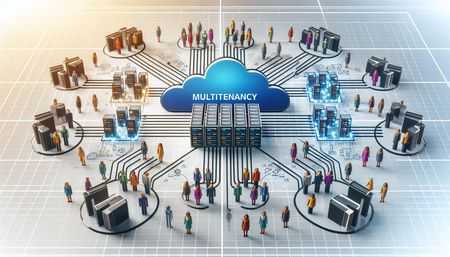
In this post, I’ll show how you can deploy an AI Agent on Azure Kubernetes Service (AKS) using a multi-tenant approach that maximizes both security and cost efficiency. By isolating each tenant’s agent instance within the cluster and ensuring that every agent has access only to its designated Azure Blob Storage container, cross-tenant data leakage risks are eliminated. This model allows you to allocate compute and storage resources per tenant, optimizing usage and spending while maintaining strong data segregation and operational flexibility—key requirements for scalable, enterprise-grade AI applications.