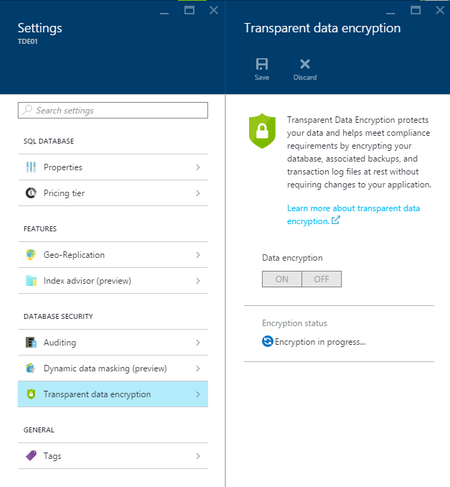
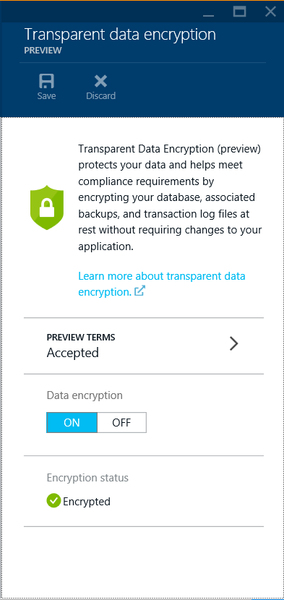
Recent Blog ArticlesNewest TopicsMost LikesTagged:TagAzure Key Vault Integration for Azure SQL Server VMsFirst published on MSDN on Nov 03, 2015 Last week, the SQL VM team announced the Azure Key Vault Integration feature.Azure SQL Database Transparent Data Encryption General AvailabilityFirst published on MSDN on Oct 14, 2015 I'm pleased to announce the general availability of Azure SQL Database Transparent Data Encryption to protect your data and help you meet compliance requirement...Announcing Transparent Data Encryption for Azure SQL DatabaseFirst published on MSDN on Apr 29, 2015 Available today, SQL Database Transparent Data Encryption (preview) protects your data and helps you meet compliance requirements by encrypting your database, a...Updated MSDN Documentation for Azure SQL Database Row-Level SecurityFirst published on MSDN on Jan 30, 2015 Row-Level Security PreviewRow-Level Security for Azure SQL DatabaseFirst published on MSDN on Jan 29, 2015 I'm so excited to announce that we are deploying Row-Level Security, a programmability feature to ease the writing of business security logic in the database, t...Auditing in Azure SQL DatabaseFirst published on MSDN on Aug 05, 2014 I'm very excited to share the hard work some of my peers have been doing - Auditing in Azure SQL Database.Yes, You Really CanFirst published on MSDN on Aug 11, 2015 I thought today would be a good day to remind you about Microsoft's stance on customer validation of the security of our online services.PVKConverterFirst published on MSDN on Oct 23, 2013 I'm happy to inform you that if you were looking for a tool from Microsoft to convert PFX files to PVK files so you could import PFX certificates into SQL Serve...Security Best Practice and Label Security WhitepapersFirst published on MSDN on Mar 06, 2012 2 New Whitepapers: SQL Server 2012 Security Best Practice white paper (updated link: http://download.Guest account in User DatabasesFirst published on MSDN on Sep 24, 2010 Andreas Wolter recently posted yet another reason to keep guest disabled on user databases in SQL Server.

 MicrosoftMicrosoft