Forum Discussion

 Microsoft
Microsoft Purview PowerShell: Interactive Sign-In Basics + Fixing Common Connect-IPPSSession Errors

Hi,
Good write-up for getting people connected to Purview PowerShell quickly.
One thing I'd push back on though, and I say this constructively, is the assumption that interactive sign-in and WAM workaround are a reasonable starting point, even for someone new to the Purview side of things.
Anyone working with PowerShell is almost certainly already familiar with Entra ID, app registrations, and modern authentication pattern. The technical bar for setting up app-only authentication with a certificate is not the issue here. The question is really about what we normalise as acceptable practice.
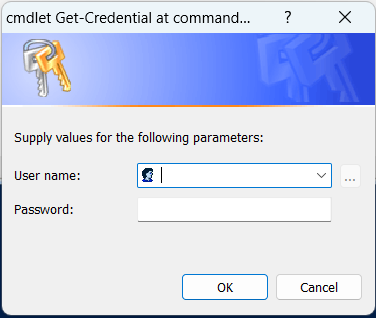
Using Get-Credential means credentials exist in memory during the session and the connection depends on a licensed user account being available, active, and not blocked. Disabling WAM goes further, WAM is the Windows authentication broker responsible for enforcing Conditional Access policies and handling tokens securely at the OS level. Recommending it be disabled, even with the caution note, is the kind of advice that tends to quietly make its way into runbooks and onboarding docs and stay there long after anyone remembers why.
In an environment where admin access is a high-value target, these are not small considerations. A compromised admin account or a leaked credential with access to Purview is a serious incident, we're talking DLP Policies, sensitivity labels, eDiscovery. The blast radius is significant.
The secure pattern, app registration with a certificate, eliminates the credential risk entirely, removes the WAM dependency so the original error never occurs, and produces a clean audit trail that separates automation from human sessions. It is supported and is Microsoft's own recommended approach for scripted scenarios.
In a world where access attempts and misuse of administrative environment are increasingly common, every entry point matters. If we have the opportunity to guide people towards a more secure foundation from the start, that is worth taking, rather than offering workarounds that chip away at the very controls that are there to protect these environments.
 Prathista IlangoApr 22, 2026
Thanks for calling this out. Appreciate the perspective here. I agree with your point on being mindful of what we normalize, especially for security-sensitive workloads like Purview.
Just to clarify intent: the post was aimed at helping unblock users who are stuck at the very first step (for example, connection issues with interactive flows), not to position interactive auth or WAM workarounds as recommended long-term approaches.
The target audience here are admins who are new or currently blocked at the very first step — “I can’t even connect to Purview PowerShell”, which in practice, is where a lot of friction exists today, particularly due to WAM-related behaviors.
I fully agree that:
- Credential-based approaches introduce avoidable risk
- Certificate-based app-only authentication is the more secure and scalable model, especially for automation
- Separating human vs. programmatic access is critical for high-impact areas like DLP, labeling, and eDiscovery
That said, interactive sign-in still has a place in limited scenarios such as:
- Initial exploration or learning
- One-off troubleshooting
- Situations where app registration or certificate setup isn’t immediately feasible
On the WAM point, this was shared purely as a temporary diagnostic step to help unblock connectivity, not as a best practice or recommendation to formalize in runbooks.
The goal here is to reduce initial friction so admins can connect, validate access, and understand the system, which ultimately reinforces why more secure patterns like app-only are important. These aren’t competing goals; they’re different phases of the same journey.On the app-only side, I’ve actually been working on a follow-up that walks through certificate and access token based connection in a more approachable way, with the aim of lowering the barrier for folks newer to that model. I’ll link that once it’s fully refined, as I think it complements your point quite well without overcomplicating the entry path.
Appreciate you raising this! These discussions really help keep guidance aligned with strong security practices and I just wanted to make sure the article is understood in the context it was written for.