Forum Widgets
Latest Discussions

System Center Virtual Machine Manager 2025 fails to install
Hi, We're migrating to HyperV because of the excessive cost of Vmware and to complete our project we need to install Virtual Machine Manager, unfortunately we haven't had any luck as it fails because of the below issue. Error 1720. There is a problem with this Windows Installer package. A script required for this install to complete could not be run. Custom action ConfigWsman script error -2147221503, Line 312, Column 9 I have tried with Windows Sever 2022 and 2025 and follow all instructions but have had no success. Even tried Virtual Machine Manager 2016 and same issue occurs. Has anyone had any success as this is a major blocker for us? I can provide logs. Any help would be greatly appreciated,.pommyoneMay 31, 2026Copper Contributor43Views0likes0Comments
System Center Operations Manager alerts I can't close?
Hello, (mind you I've just started really working with SCOM, prior to this I have known about it's existence and what it can do (globally)). We have System Center 2022 version 10.22.10118.0 (Retail). Recently we've been seeing how we can monitor Certificates for Agent Managed Windows Servers. Through the out of the box Management Pack. Since we enabled this, we received some alerts about for example expired certificates. After we received these alerts we started looking into them and now seem to have run into an issue. We now have a few alerts (which are monitor alerts) which we can't remove from the "Monitoring > Active Alerts" console view. Manually closing them doesn't seem to do anything (i read about how I COULD be able to manually close them when they are generated through "Certificate Expiry Monitor".. (setting the Administration > Settings > Alerts > Alert Closure Experience (for example)). So we have for example one alert which is the "Certificate Expiry Monitor" which is alerting for an Unhealthy Certificate. The alert context mentions: Critical - The certificate is expired. It expired on *** blabla. Another way I read was if you want to remove such alerts you could: Disable the alert (or create an override) and then you should be able to close them (or they would get removed automatically if its set like auto-closure when underlying monitor health is resolved or reset manually). Well none of this works. I've also tried resolving them through powershell, but that also doesn't remove the alerts (i.e.. change it's ResolutionState to 255). where i tied through get-scomalert -> set-scomalert when the override was in place for example SCOMClass -DisplayName "Microsoft Certificates Certificate" Also tried to completely disable the Authoring > Monitors > Microsoft Certificates Certificate > Entity Health > For all objects of class.... and then trying to set the resolutionstate, also doesnt do anthing (not getting any error warnings when I do so in powershell). Reverting that and overriding that Authoring > Monitors > Microsoft Certificates Certificate > Entity Health > For all objects of class.... and then trying to set the resolutionstate, also doesnt do anthing (not getting any error warnings when I do so in powershell). Also removing for example the certificate from the server (it's in the \Personal store of this particular windows server) doesn't do anything. (i've since re-imported it again) So now I'm a bit lost. If I go to Monitoring > Microsoft Certificate Monitoring > All certificates I don't see the certificate mentioned for this host there. Then we have another 3 certificate monitors in alert which we can't seem to remove, but those are "Certificate Chain Monitor" alerts. For those we have the same issue, can't somehow close those. Does anyone have any ideas what we can try next to get them removed from the Alert view? So the end goal is to somehow set these alerts to ResolutionState 255, OR in the case for example for the certificate expiry alert, just remove the object/entity that it's alerting for from SCOM since I can just delete the certificate from the server, but ya, the object/entity in SCOM seems to stay (or at least the alert does). I've also tried to see if it was some sort of console caching problem by clearing the console cache, but that doesn't seem to be the issue either. Help is appreciated! Kind regards, JDGPJDGPApr 16, 2026Copper Contributor60Views0likes0Comments
Orchestrator Scheduling Challenge
Hi. I've been using SC orchestrator for almost a decade now. However, not until today have I needed to run something hourly and on the hour. Presently, when I configure this, in the "Monitor Date/Time activity I specify 0 days, 1 hour, and 0 minutes. Then I check the "Starting" checkbox and enter 0 for "minutes after the hour". Press finish, and come back in and it's unchecked. How can I schedule my hourly job to run at the hour mark? I have a workaround to run at the 1 minute after the hour mark, but that's ... not what we really want.ubjoshiJan 14, 2026Copper Contributor336Views1like1Commentdeployment script fails with division through zero when deploying
I created an installation script with this batch line: setup.exe -s -l1031 -f1".\Provi75inst.iss" This is put into a install.bat file that gets deployed with the software package. I tested it with admin-rights and the software installs fine. When I depoloy it through system center and run it in my softwarecenter, I get this error: 0xC0000094 (-1073741676) I researched that it is a "division through zero" error. What the heck. Does anyone know what is going on here? Is there a difference running the installation in SYSTEM context? Due to company restrictions I can't use PSEXEC to verify this. Any idea?HorNet505Dec 30, 2025Copper Contributor69Views0likes0Comments
SCOM 2022 and SCOM 2019
Hello All I have just joined this forum after 48 hours of intensive struggling, I am trying to apply for a job that requires SCOM experience, so I tried to install it on my Windows server 2019 domain on my home lab, I found that setting up SCOMJ 2022 or 2019 is a complete nightmare, possibly I tried over 50 times to no avail, I consistently get the error message in the SCOM setup log of: Error: :PopulateUserRoles: failed : Threw Exception.Type: System.Runtime.InteropServices.COMException, Exception Error Code: 0x80070539, Exception.Message: The security ID structure is invalid. (Exception from HRESULT: 0x80070539) Error: :PopulateUserRoles: failed : Threw Exception.Type: System.ArgumentException, Exception Error Code: 0x80070057, Exception.Message: Value does not fall within the expected range. Error: :StackTrace: at Microsoft.EnterpriseManagement.Interop.Security.Auth.AzAuthorizationStoreClass.Initialize(Int32 lFlags, String bstrPolicyURL, Object varReserved) The SQL connection during setup is ok as the first DB OperationsDatabase is created but it gets deleted after that error due to a rollback. Can anyone help me please as I am just about to give up on the SCOM and the job CheersAhmedBahgatDec 19, 2025Copper Contributor2KViews0likes6Comments
Cannot update to Update Rollup 3 for System Center 2022
Hi, I tried update my DPM 2022 to the latest version. I tried also via Windows Update and manually but both method is unsuccessful. When I tried windows update method I got the following error message: There were some problems installing updates, but we'll try again later. If you keep seeing this and want to search the web or contact support for information, this may help: (0x80070643) For manually update I run this package but the setup wizard didn't show up: dataprotectionmanager-kb5059073_ce4e4e4b8dd358bd0b79e77235e9945dc96131fa.exe I restarted the server as recommended by Microsoft and tried again but not helped for me. My dpm setup: Virtual Machine Windows Server 2022 Standard Language: English Region: HungarianAntal_KabatekDec 01, 2025Brass Contributor606Views2likes3Comments
Unable to update Service request via SCO runbook
Good afternoon, Everyone, I’ve started developing a series of runbooks for our new service desk implementation, and one of the key requirements is the ability to automatically update Service Requests and other work items during the workflow. However, I’m running into an issue when attempting to pass the GUID of the Service Request into the “Update Object” activity. Even though the GUID is successfully retrieved from the Service Request and passed into the runbook as an input parameter, the activity reports that the value is an invalid GUID. This suggests that either the GUID is being transformed somewhere in the process, isn’t being interpreted correctly by the activity, or the wrong property is being supplied even though the value appears correct when inspected within the runbook. At this stage, I’m trying to determine whether the issue is caused by the way SCSM exposes the GUID, how the runbook passes the parameter, or a limitation quirk within the Update Object activity itself. Any guidance or examples of correctly updating Service Requests via runbooks especially when using GUID values dynamically would be greatly appreciated.Hjb118Nov 23, 2025Copper Contributor86Views0likes0CommentsSystem Center Orchestrator 2022
I have automations set up for user terminations. When a user is termed, i want to be able to give the manager access to their one drive (sharepoint module issues). The way i am authenticating is with a cert, app-only authentication. the problem that i have found with connect-sposervice is that the module is older than the connect-exchange online module and it only looks in the current users cert store so when i run a command it says it cant find it. so Ok, i connected to powershell with the orchestrator service account and imported the cert to that local store but it still didnt work. I then tried to use the newer powershell module, connect-pnponline but that requires powershell 7.x.x to even run and orchestrator is using powershell 5 (at least its 64 bit) So i then try to run powershell 7 with a run .net activity but when i use orchestrator variables, it just comes out as garbled text since the activity isnt the one running the command. Any suggestions on how i make this work? As i have said, i just need orchestrator to be able to assign the manager as full control over a terminated user's onedrive. The exchange modules work great for app only auth, but the sharepoint ones just arent working for me. I used to pass a password using basic auth but that is now deprecated, (and its not a good practice to do that anyways). Thank you so much in advance for any tips or tricks to get this working.good1228Nov 14, 2025Copper Contributor143Views0likes0Comments
Unable to patch Windows Server 2025/24H2
Windows updates will not display in software center for 2025/24H2 clients. Currently running SCCM version 2503 hotfix rollup KB32851084. SCCM client version on test server is 5.00.9135.1013. Test server OS is 24H2 build 2600.2894. I have verified that the 24H2 product is enabled in the software update point configuration and within the ADR. ADR preview shows the 24H2 update (KB5068861). I see KB5068861 under the deployments tab of the test server device. I have a daily maintenance window on the collection, and this shows on the test client within "installation status -->upcoming" tab in software center. I do realize that this hotfix rollup included a fix for 2025 OS. Windows Server 2025 updates use the incorrect Maximum run time value in the properties for the software update component. The value can lead to update installations being incorrectly canceled. I did change the maximum run time for KB5068861 from 10 minutes to 60 minutes. Could this be a metadata related issue with the existing KB that is currently downloaded to SCCM (via WSUS)? I hope I'm not missing something obvious but do welcome an easy resolution if that's the case. Thanks for any suggestions or troubleshooting suggestions.BigGreen2014Nov 14, 2025Copper Contributor738Views0likes0Commentsneed help with a problem related to the system center
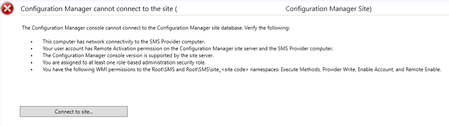
This problem started after the September database server update. I can't access the system center interface to view reports, see devices, check updates, track device status, etc. When I try to open it, I see the attached image. Has anyone else experienced this problem and resolved it? What is the solution for this issue?Hamza-AlzaidiNov 08, 2025Copper Contributor97Views0likes0Comments

Tags
- system center91 Topics
- Operations Manager37 Topics
- Data Protection Manager26 Topics
- Service Manager21 Topics
- orchestrator16 Topics
- Virtual Machine Manager12 Topics
- Operating System Deployment10 Topics
- Hybrid Cloud Management8 Topics
- software update management8 Topics
- configuration manager6 Topics