Hi vasekv I am answering to your questions and consider this my personal experience and opinion. Not endorsed or speaking on behalf of MSFT.
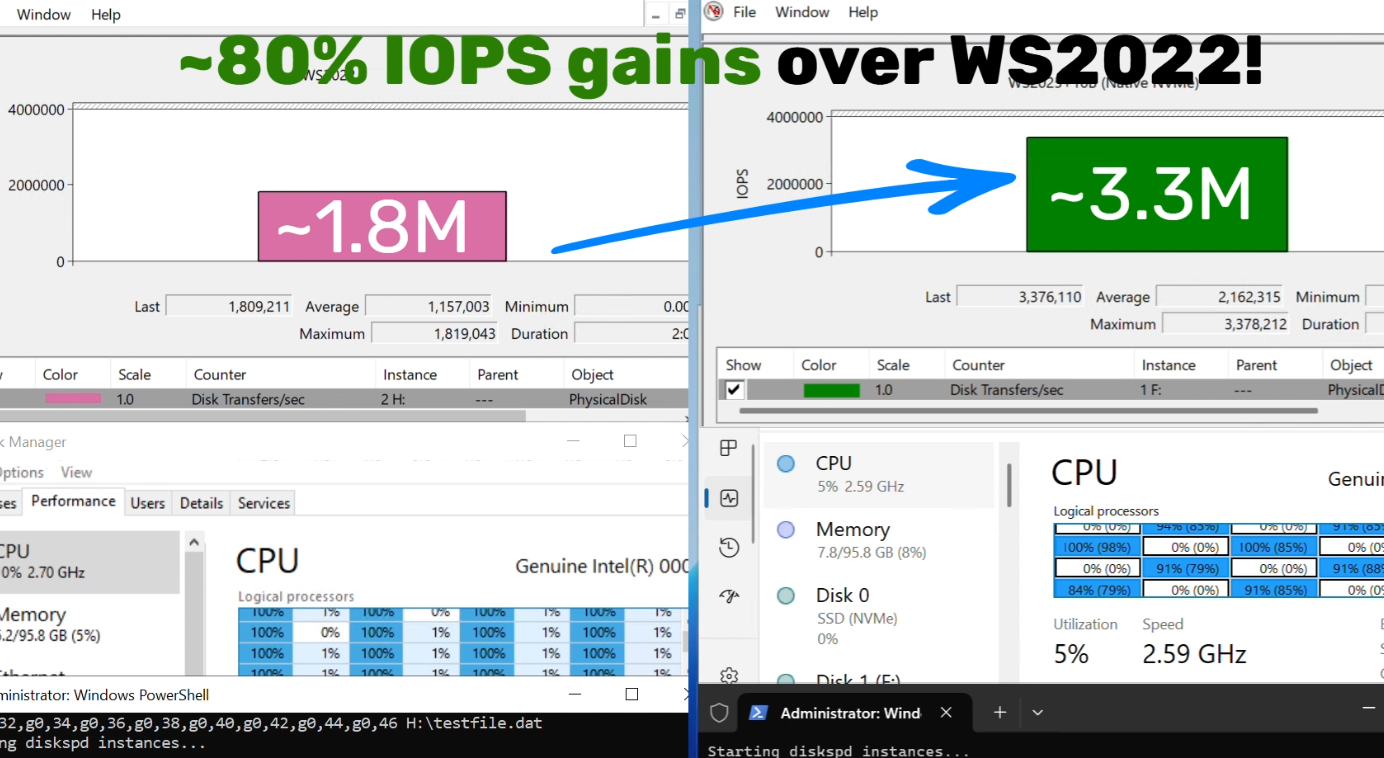
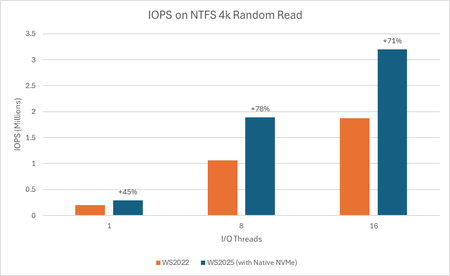
- The improved driver was a feature that has been announced as part of Windows Server 2025 at release, see Windows Server summit 2024 and 2025. However I believe it needed more testing and verification by Microsoft and their partners, especially OEMs and vendors of storage devices like NVMe. We had some issues with overheating on few models of server NVMe because the new unleashed performance, AFAIK.
- Again believe it needed more time to test and staging. All changes were first deployed in Windows Server 2025 Insider and vNext builds.
- Good question and we'll spotted. Imho, it deserves a note in release notes with backlink to documentation or this blogpost. Personally I would like to consider this even more as it's an LTSC release which bears the rule that no new features are introduced post release (usually), which again would explain the early shoutout of a feature before release.
- Since of drastic code changes and making Windows more modular, first started with Windows 11 Insider, it's possible to enable or disable features to control a staged rollout and user adoption testing (UAT / A/B tests). Vivetool is an unofficial tool to handle this for Windows 11 Insider and release builds. So consider it a feature flag that unlock certain features hidden in the Microsoft Windows code (Core OS).
- I heard about it and cannot answer. Usually I pretend that Windows 11 24H2 and Windows Server share the same Core OS, and as such personally expect same flags. Yet Windows 11 is always a bit faster, current 25H2. Another reason might be that client OS face more 3rd party drivers in the NVMe scene like Intel RST, Intel VMD, Samsung NVMe driver 3.x that might require more testing compared to Windows Server.
Again this reflects my personal opinion (as always), and in this particular posting involves puzzling and guessing. Usually I don't write much in that style.

 Microsoft
