I'm just trying to clarify this for myself. As i've said i haven't used deferral policies (i'm talking about GPO for Windows Update for Business). From what i have read in this blog post and other comments i gathered that it works the other way that you describe.
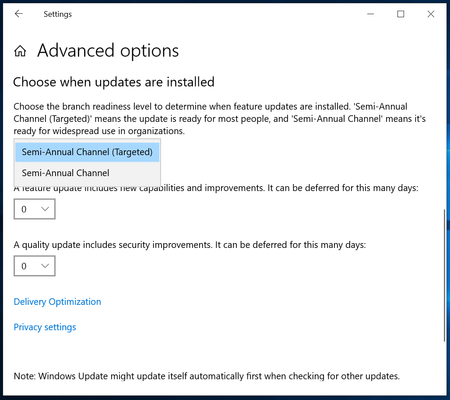
You install 1903 (say in April), your GPO was set to 365 days (not important when, could be even before 1903). So it will always count 365 days since the official release of any feature update coming in the future. This means that 1909 would be installed in 2020 September, 2003 in 2021 March and so on. Every feature update would be postponed for a year. But that means that you would still get two updates twice a year on March and September, they just will be a year old every time.
But you say that it counts 365 days since the last feature update installed. This doesn't sound right and not what i have heard.
Unless you mean that you don't have a way to not have updates installed twice a year or during spring or fall. That i understand and i always advocate for MS to stop doing feature releases twice a year and go to once a year practice. Though i fear they might start doing even more often updates in the future. If it was just once a year, say in March, then you would set it to 180 days and every update would be installed during summer. But when there are two updates per year it is impossible to have one policy to work for both of them. You would have to have two policies and switch them twice a year. One for the spring update to defer for 180 days and one for fall update to defer for 270 or so.