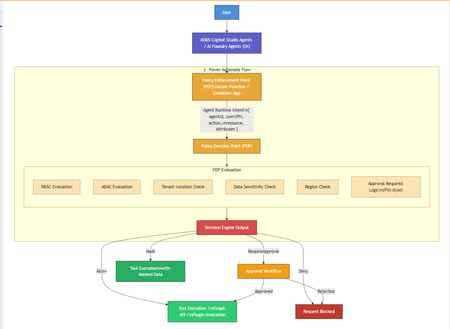
This is very close to the runtime governance problem I have been exploring. I’m building a pilot-grade open reference project called SMERC: recoverability-aware runtime permission infrastructure for AI-agent actions. The narrow question SMERC adds beside identity, RBAC/ABAC, approval injection, and policy decisioning is:
If this agent action is technically authorized, is it recoverable enough to execute now?
SMERC evaluates signals such as reversibility, containment strength, rollback latency, evidence validity, anomaly pressure, impact scope, and executor fitness. It then returns a replayable posture: ALLOW, THROTTLE, FREEZE, DENY, or ESCALATE. It does not replace Microsoft Entra, OPA, IAM, AI gateways, SIEM, EDR, approval workflows, or policy engines. The goal is to add a recoverability checkpoint before high-impact agent actions execute.
Public review site: https://admirable-sorbet-9986d5.netlify.app/
GitHub: https://github.com/KingsMtn/SMERC-Runtime-Permission-Layer
I would value technical feedback from this community on whether recoverability scoring is a useful additional runtime governance signal, especially for GitHub Actions, deployment workflows, cloud operations, and security-response automation. Current boundary: SMERC is pilot-grade software with public code, tests, and replayable evidence. It is not production-certified or customer-proven yet.


 Microsoft

