Raleigh is one of the fastest-growing cities in the United States, and its residents feel that growth every morning, in traffic. Easing congestion has become a priority the whole city can measure.
Understanding how traffic actually moves has traditionally meant sending transportation engineers out to observe intersections and analyze them by hand, a slow and resource-intensive process for a city serving 500,000 residents and 19 million annual visitors. Raleigh saw a chance to approach it differently.
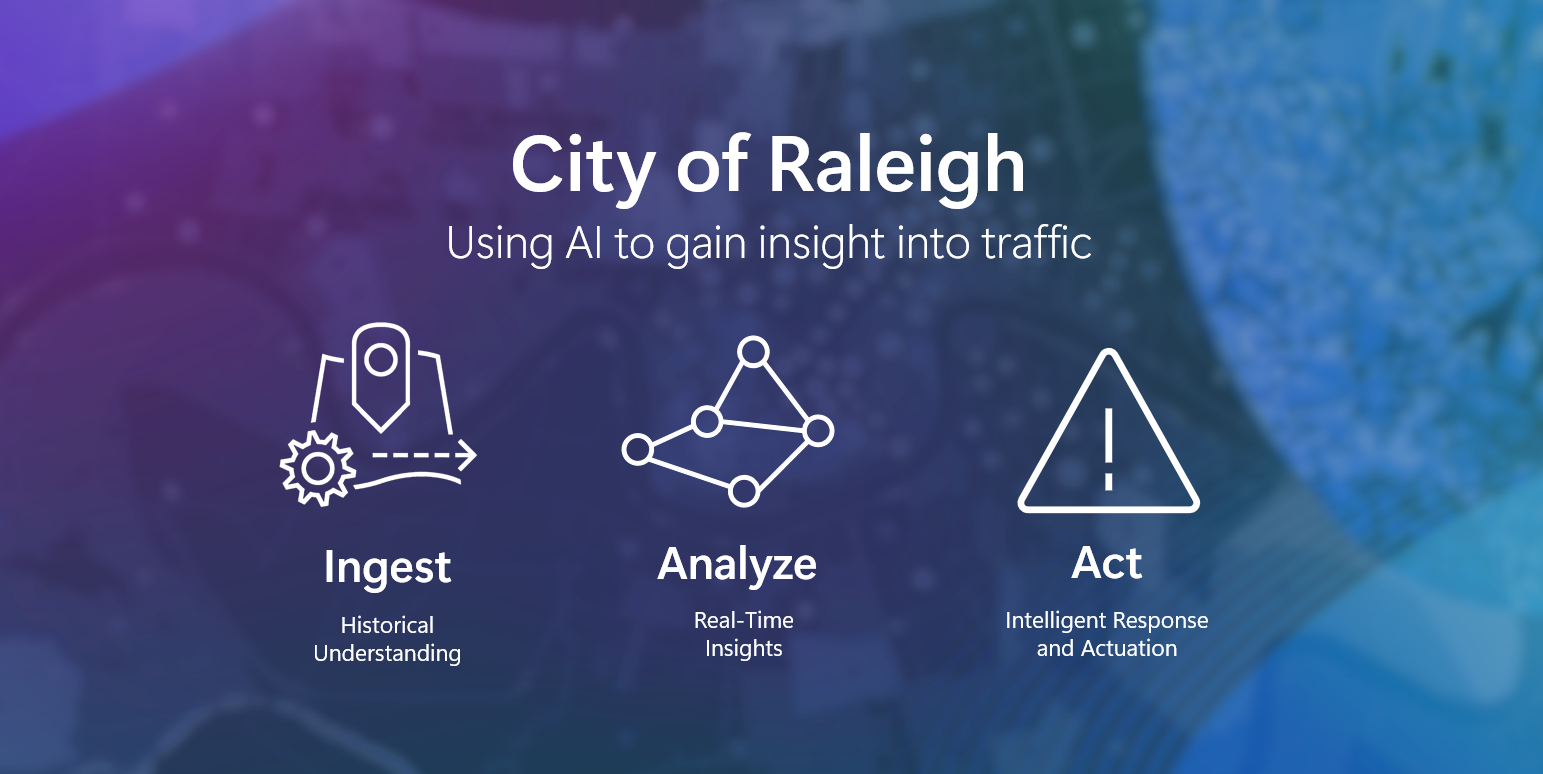
Working with Esri, NVIDIA, and Microsoft, the city built a real-time digital twin of its traffic, a virtual environment where teams can watch conditions unfold and understand what a change would do before making it. Built on Azure, it combines video from existing traffic cameras with AI analytics and geospatial intelligence to give engineers a live view of the busiest intersections in the city.
Raleigh moved from concept to pilot in six weeks, using infrastructure it already owned. "This has not required a single modification to our on-the-streets assets," says James Alberque, GIS and Emerging Technology Manager at the City of Raleigh. The cameras were already on the poles, and the cloud foundation was already in place.
With that foundation in place, Raleigh estimates that optimizing signal timing along one busy corridor could save commuters $9.7 million in time and travel costs. That figure is a projection, not audited savings. It rests on delays cut by seconds per signal, changes most drivers would never notice, spread across thousands of daily trips.
The work is also changing what a small team can cover. Two engineers now have a live view of the network that once took field visits to assemble, creating room to improve safety, tune operations, and look at services beyond traffic.
For governments looking to improve quality of life without new capital, Raleigh's experience carries a useful lesson. Transformation doesn't always mean starting over. Often it starts with reimagining the data and infrastructure already in the ground.
Read the full story to see how Raleigh built it in six weeks, and what two engineers can now cover.

 Microsoft