version control
5 TopicsFunctor Model Transparency and Auditability
https://github.com/AutonomicAI/functor-resnet/tree/main/slm_template shows a refactoring of the model into separate files. For example, a file f.py is used for the model function, delta.py for model changes that are applied and w.py for the weights function. Every changed to the model is logged to an enterprise streaming event log and versions in a source code repository for these files can be referenced. The model.py code now references these other files as well as containing model functionality. It resembles an orchestrator or a controller in a sense. model.py => { load current functions, route inference, invoke components, invoke state/context representation functions, apply governed updates, emit provenance } With a specialized VCS tied into normal engineering workflow, a model change can become an ordinary governed change record. Then an auditor can traverse the chain in either direction answering: who changed it? what changed? why it changed? which requirement authorized it? what evidence supported it? which tests passed? which model version resulted? That is much richer than conventional model observability. So, there are really two layers: prediction audit - explain why a certain output prediction was given evolution audit - explain the current manifestation of the model Simple integration of the event log with the version control system and the project management tooling such as Microsoft Planner Functor Models may be unusually strong on the second because the change itself is a first-class artifact. The Microsoft Planner/Jira/PR integration matters because we are not asking enterprises to invent a new governance process. We are mapping model evolution into processes they already use for software change control. The specialized version control is a separate topic in as sense as we could see some significant energy savings via reuse in learning/training computation. A VCS with sophisticated semantic searching, fragmentation matching (we computed learning with a expression containing reusable piece for example) could save computation. This is preliminary research and requires further investigation of course. "Treat a learned model change with the same rigor as a production code change". For regulated environments, that is a very compelling proposition.Continuous Analysis: Enhancing Reproducibility in Scientific Research
Continuous Analysis (CA) enhances reproducibility in scientific research by integrating DevOps principles, such as Continuous Integration (CI) and Continuous Deployment (CD), with DataOps and MLOps. This approach manages data and analysis lifecycles, ensuring consistent replication of results using shared data, code, and methods, thereby addressing challenges in complex workflows, software dependencies, and data sharing practices.Get Started with Git
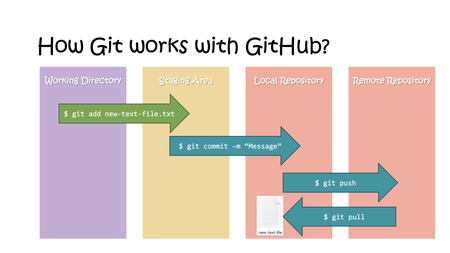
Using Git and GitHub can be a little intimidating at first. But worry no more; here are the tips, tricks, and analogies that will help you get started with Git and GitHub. By the end of this blog you’ll have the tools you need to work on a solo project using Git and GitHub. In this blog, you’ll learn the absolute essentials of Git and GitHub: What is version control about, and how are Git and GitHub involved? What is a “repo”? What does “add” mean? What is a “commit”? Why do we “push”?
5.8KViews1like0CommentsAzure DevOps for Beginners: How to Set Up Your Account, Organization, and Repository
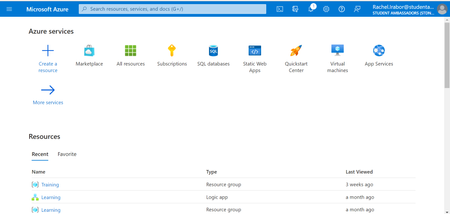
Microsoft Learn Student Ambassador and developer in Power Platform and Dynamics 365 Customer Engagement, Rachel Irabor, shares how to create a new organization and repository in Azure DevOps. This step-by-step guide will walk you through the process of setting up an Azure DevOps account and creating a new organization, project, and repository. Follow this guide and start building your own projects in Azure DevOps.15KViews4likes2Comments