updates
12 Topics
The new frontier of data for the next generation of innovation
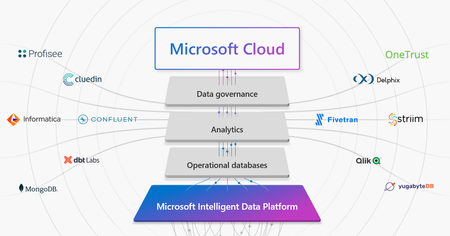
A decade ago, an agent that could gather insights from data, trigger actions and make intelligent decisions was science fiction. Today, that kind of intelligent technology is not only possible, but it’s becoming a business requirement. Enterprises must find new and meaningful ways to propel AI innovation that meets customer and business needs. The next generation of innovation requires a data foundation that is unified, secure, and addresses persistent challenges of latency, rigidity, and complexity, while infusing data with AI to optimize performance and accelerate development. This week at Ignite, Microsoft is taking a bold step toward making a future-ready data foundation a reality, unveiling innovations that deliver performance, scale and flexibility, and bridge the gap between analytical intelligence and operational agility. The innovations we’re announcing are catalysts for businesses to modernize faster and build the intelligent applications of tomorrow. By leveraging a unified data strategy on Azure, BMW is much closer to their goal of predictive maintenance for vehicles and smart factories. With these releases announced today at Ignite, Azure is poised to deliver a resilient, scalable, and AI-integrated data foundation that will help you unlock innovation at scale. Modeling a future-proofed data platform A future-proofed data platform should deliver performance at scale, flexibility and openness, unified operations and analytics, streamlined management, and seamless integration with developer tools, all backed by security and trust. The innovations we’re announcing reflect these priorities. Performance at any scale We’re releasing performance enhancements across the database portfolio that let users easily scale performance to support intelligent agents and applications that can stand apart in any industry. These new features enable applications backed by Microsoft databases to seamlessly handle massive throughput and global user loads without performance bottlenecks. Introducing Azure HorizonDB We’re excited to unveil Azure HorizonDB in private preview, a new fully managed PostgreSQL service built for performance and AI workloads that will offer scaling up to 192 virtual cores and 128 TB of storage. Azure HorizonDB is built for business and engineered for developers. Ultra-low latency, high read scale, built in AI, and deep integration with developer tools including GitHub Copilot delivers performance, resilience and simplicity at any scale. With HorizonDB, teams can: Build AI apps that perform at scale with advanced DiskANN vector indexing, pre-provisioned AI models, semantic search, and unified support for relational and graph data. Accelerate app development with built-in extensions, including the PostgreSQL extension for Visual Studio (VS) Code integrated with GitHub Copilot. GitHub Copilot in VS Code is context aware of PostgreSQL and includes one-click performance debugging. Unlock data insights with deep integrations with Microsoft Fabric and Microsoft Foundry. Expect reliability with a service that is enterprise ready on day one, integrated with Entra ID, Private Link networking, and Azure Defender for Cloud. Perfecting performance across the portfolio We’re also addressing cloud-ready performance and scaling needs in Azure Database for PostgreSQL and Azure SQL. Elastic Clusters for Azure Database for PostgreSQL, now generally available, enables developers to easily scale a single database across a cluster of read and write nodes using a simple SQL command. Additionally, new v6 SKUs, which support up to 192 vCores, and general availability of PostgreSQL 18 gives Azure Database for PostgreSQL users a potent performance boost. With the release of the next-generation Azure SQL Managed Instance, we’re helping you modernize SQL Server in the cloud with better performance and easier migration. You’ll now have access to the latest technology, unlocking better performance and scale with more storage and database capacity. Flexible compute, storage and memory options also enhance the ROI of migration and offer broad compatibility for unique workload demands. Multi-modal, flexible and open A comprehensive data strategy isn’t one-size fits all. Openness and flexibility are core tenants of a future-ready data platform. Flexibility means you get to choose the deployment model that works for your business, whether it’s on-premises, cloud only or hybrid. Beyond having flexibility for where your data lives, the modern data platform should also support multiple data models and open APIs to reduce complexity and enable extensibility as workload needs and team resources evolve. That’s why Azure fully embraces, supports, and contributes to open-source innovation. Meet the new Azure DocumentDB We’re excited to announce the general availability of Azure DocumentDB, the new name for our MongoDB-compatible NoSQL document database service with hybrid and multi-cloud flexibility. Powered by the open-source DocumentDB engine managed by the Linux Foundation, Azure DocumentDB is designed for enterprise workloads with the flexibility to build anywhere and run managed on Azure. It includes native vector search powered by DiskANN and full-text search, and it supports advanced search scenarios that combine fuzzy search and BM25 ranking for smarter, more accurate query results. Support for translytical workloads A translytical data platform is designed to support both transactional and analytical workloads. This combo is crucial for responsive, real-time AI applications. A future-proofed data strategy should natively bridge operational data and analytical insight; a capability we’re delivering with Microsoft Fabric. Unifying data with Fabric databases Fabric databases are now generally available, bringing together SQL database and Cosmos DB inside Microsoft Fabric. Built natively into Microsoft Fabric, Fabric databases bridge the gap between traditional databases and data lakes, enabling real-time analytics, transactional processing, and AI workloads to run side by side in one governed environment. Every Fabric Database automatically connects to your organizational data mesh, ready for Power BI, AI, and Copilot experiences. Replicating databases with zero ETL, in near real time, with mirroring If you prefer to keep your operational databases where they are, you can still take advantage of Fabric’s unified data foundation with database mirroring, which is now generally available in Microsoft Fabric, supporting SQL Server, Azure Cosmos DB, and Azure Database for PostgreSQL. With mirroring, you can replicate these databases in Fabric for business analytics and AI scenarios without migrating or refactoring. Several early adopters are already experiencing real results with Fabric Databases and mirroring. AP Pension, a Danish pension fund, has consolidated decades of fragmented data using Microsoft Fabric, enabling a unified, governed analytics platform for actuarial, finance, and development teams. With Fabric, they’ve built a centralized medallion architecture, automated data delivery via APIs, and supported real-time write-back from Power BI through SQL Databases — all with strong governance and security baked in. General availability of SQL Server 2025 SQL Server 2025 is now generally available following an outstanding preview with 10,000 participating organizations, double the download rates of SQL Server 2022, and more than one million databases created so far. Built on SQL Server’s foundation of trusted security, performance and availability, SQL Server 2025 redefines what's possible for enterprise data. With built-in AI and developer-first enhancements, SQL Server 2025 empowers customers to accelerate AI innovation using the data they already have, securely and at scale, all within SQL Server using the familiar T-SQL language. AI at the core We believe that AI is a force multiplier for the data platform itself, so every Azure database is deeply embedded with AI capabilities transforming them from passive data stores into active, intelligent engines for AI-powered applications. Azure databases are built to understand, reason and act, which translates to faster, more accurate search, smarter recommendations, streamlined developer workflows, and the ability to power agentic and generative AI workloads without friction. Azure SQL integrates DiskANN DiskANN, Microsoft’s cutting-edge vector search algorithm, is now natively integrated into SQL Server 2025, Azure SQL Database and Azure SQL Managed Instance. DiskANN delivers fast, scalable, and highly accurate approximate nearest neighbor (ANN) search, handling millions to billions of vectors with low latency and high recall. This enables developers to build intelligent, AI-powered applications more efficiently directly within the database engine, eliminating the need for external vector databases and simplifying the architecture for future AI-native apps. Azure Cosmos DB supercharged by AI Azure Cosmos DB continues to evolve as the backbone for AI-powered, globally distributed applications. At Ignite, we’re introducing a new wave of enhancements that make vector search, text retrieval, and semantic relevance faster, more intuitive, and more intelligent for modern AI workloads. One of the biggest improvements comes from advancements in Azure Cosmos DB vector search powered by DiskANN. The latest engine optimizations significantly boost throughput and reduce latency for vector insert and update operations. Additional enhancements include: General availability of fuzzy search in Azure Cosmos DB full-text search, which enables more flexible text matching. General availability of Azure Cosmos DB Fleets, allowing multi-tenant apps to share throughput capacity across multiple database accounts while maintaining full security and performance isolation for their tenants. Public preview of fleet analytics that provide insights for multi-tenant workload optimization and growth planning. Azure Database for PostgreSQL optimizes developer experiences We’ve also made improvements to Azure Database for PostgreSQL to help developers streamline their workflows and build and scale next-gen AI solutions faster with confidence. The PostgreSQL extension for Visual Studio (VS) Code, now generally available, seamlessly unifies DBA and developer workflows for PostgreSQL databases—on Azure or anywhere. The improved extension, which already reached more than 250K installs in preview, gives developers a familiar, productive environment to work with PostgreSQL, complete with Azure AD authentication and GitHub Copilot AI assistance for SQL coding. Azure Database for PostgreSQL is also now natively integrated with Microsoft Foundry, enabling developers to build intelligent, secure AI apps and agents with minimal friction. Grounded in security and trust Innovation shouldn’t come at the expense of security. A unified data platform should have end-to-end governance and security built in for enterprise-grade resilience as you build what’s next. At Microsoft, we continue to deliver a secure cloud environment for your data with features like Microsoft Purview for data governance and unified identity and access controls across the entire Azure data estate. Most recently, we’ve announced: Access token refresh with Entra ID for Azure Database for PostgreSQL, which enables database connections using AD credentials to automatically renew tokens, eliminating disruptions and ensuring strong identity-based security without added complexity. Confidential Compute in Azure Database for PostgreSQL, which provides access to Confidential Virtual Machines (CVMs) to protect sensitive data even during processing. The next frontier of data is here BMW has already begun to embrace the next frontier of data. They modernized their Mobile Data Recorder (MDR) system on Azure to deploy multi-agent AI that enables their engineers to instantly analyze telemetry data. Azure Cosmos DB provides persistent storage for chat conversations and memory, while Azure Database for PostgreSQL supports structured telemetry analysis and feedback mechanisms. Both integrate seamlessly with Microsoft Foundry Agent Service, which BMW leverages to orchestrate specialized agents. This solution helped them deliver insights 12x faster, embed AI-driven workflows into daily engineering, and accelerate innovation across their global operations. As someone who’s seen data technology evolve, I’m excited about how the latest capabilities and integrations across the Azure database portfolio simplify architectures while opening new doors. They represent Microsoft’s commitment to helping customers innovate with a unified, intelligent data estate. The organizations that lead in the AI era will be those that have their data house in order; our goal at Microsoft is to give you the keys to that house. With a unified data platform, you’re not just solving today’s problems—you’re building a foundation for endless innovation. Join us online or in person at Microsoft Ignite November 18—21, 2025, to see these announcements in action and get insights on building your own future-ready data strategy.1.2KViews3likes1CommentAzure Data Components Network Architecture with secure configurations
This Blog will guide how to setup Data Components in Secure VNET's : 1.We have also defined the network architecture diagram and the secure configuration for these data components. 2. How we deploy the code securely within the VNET's13KViews3likes1CommentBuilding Intelligent AI Apps with Microsoft Databases
We’re living in a transformative era—where AI is no longer a futuristic vision, but an urgent, present-day imperative. Organizations across every industry are racing to integrate intelligent solutions that can streamline operations, unlock insights, and deliver deeply personalized experiences. But here’s the truth: AI readiness doesn’t start with the model—it starts with the data. And for enterprises, having the right data infrastructure in place isn’t just helpful, it’s mission critical. That’s where Azure databases come in. At Microsoft, we understand that to be truly AI-ready, organizations need a data foundation that’s built on trust, scale, and resilience, so they can innovate boldly, securely, and at scale. Modern AI solutions—from copilots to autonomous agents—thrive on data at scale. And not just traditional structured data like customer records or transactions, but massive volumes of unstructured data: documents, images, logs, conversations, sensor outputs, and more. Today's announcements highlight our commitment to helping customers fully unlock the potential of their data, building upon a strong foundation for using AI to create new possibilities and opportunities. Modernize your data for AI Readiness Modernizing your data is a critical first step in making it more accessible, reliable and usable for AI app development. SQL developers love the scalability and agility they can achieve in the cloud, and we’ve brought many of those cloud benefits on-premises with SQL Server 2025. This release has already resonated well with more than 3,400 applicants for our private preview program, with full adoption coming twice as fast as SQL Server 2022. We’re excited to announce public preview of SQL Server 2025, our most significant release of SQL Server in the last decade. SQL Server 2025 empowers developers to build modern AI applications using their own data. Built on a foundation known for best-in-class security and performance, SQL Server 2025 will accelerate time-to-market for your new applications with features designed to boost developer productivity while keeping your data safe. Make the most of Microsoft’s most significant release of SQL Server in the last decade to: Boost search intelligence using advanced semantic search alongside full text search and filtering - allowing you to run generative AI models of your choice using your own data. Process and manage data flows more simply and efficiently using native JSON support, built-in REST API, Change Event Streaming for real-time data updates. Leverage the most secure database to improve credential management and reduce potential vulnerabilities with support for Microsoft Entra managed identities through Azure Arc. Increase workload uptime and improve concurrency for SQL Server applications with enhanced query optimization, optimized locking and improved failover reliability. Achieve zero-ETL, real-time analytics by replicating SQL Server data to Microsoft OneLake with Fabric database mirroring. See SQL Server 2025 in action and learn how you can get started today. “We are excited about the future of SQL Server 2025 and the transformative improvements it brings to database performance and management.” Madhab Paudel, Database Engineer, Entain SQL Server Management Studio (SSMS) is the go-to tool for developers and database administrators managing, configuring and querying SQL Server databases. Today we’re taking a leap forward with the general availability of SQL Server Management Studio 21, now built on Visual Studio 2022 and including 64-bit support, Git integration, an enhanced user interface and more. We’re further enhancing the user experience with the preview of Copilot in SSMS 21, providing an AI-powered assistant to help with writing, editing and fixing T-SQL queries using natural language. Visual Studio (VS) Code has become a favorite among developers for its lightweight design, powerful extensions, and seamless support for a wide range of programming languages and workflows. Today we’re announcing the preview of MSSQL extension for Visual Studio Code with GitHub Copilot capabilities. GitHub Copilot also brings natural language capabilities and helps developers explore schemas, optimize queries with intelligent suggestions, and streamline database interactions—all within VS Code. For mission-critical workloads, performance and availability are non-negotiable. We’re excited to announce the general availability of two major performance upgrades in Azure SQL Database Hyperscale. Continuous priming now ensures faster failover recovery by proactively warming up secondary replicas, minimizing downtime and boosting resilience. Additionally, the log generation rate has increased to 150 MiB/s, enabling significantly faster data ingestion and improved performance for write-heavy workloads. These enhancements make Hyperscale even more powerful for critical applications. “When we process new data, we have a massive amount that needs to go out immediately. Azure SQL Database Hyperscale was the only tier that allowed us to do a massive data push without affecting the user experience in our platform.” Marco De Sanctis, Chief Technology Officer, Mondra Global Limited Modern application development demands speed and flexibility and JSON enables developers to model complex, evolving data without rigid schemas. We’re happy to announce that the native JSON type and JSON aggregates in Azure SQL Database are generally available, enabling more efficient reads, writes and storage. JSON indexing, now in preview for Azure SQL Database, allows for more efficient searching of JSON documents using JSON functions and relational operators. Experience open flexibility with Azure scale Open source databases play a critical role in shaping the future of intelligent applications, with PostgreSQL being the most popular according to Stack Overflow’s 2024 Developer Survey. Microsoft proudly supports open source, and our recent investments into both the open-source Postgres project and our cloud services underscore our commitment to making the developer experience better than ever, using AI to shape how apps are built. Today, we’re announcing the preview of a new and improved PostgreSQL extension for Visual Studio (VS) Code with GitHub Copilot capabilities. With this powerful tool, you can connect to PostgreSQL database instances, run queries, create and manage connection profiles, take advantage of Entra ID support, and more—all within VS Code. Designed to boost your productivity and streamline development, the extension includes the ability to chat with GitHub Copilot for PostgreSQL context and AI assistance and support for deployments in Docker, on premises or on Azure. For AI app developers, database speed and availability are critical to ensuring AI models can access and process data quickly. We are pleased to announce that DiskANN, one of the fastest vector indexing algorithms on the market, is now generally available on Azure Database for PostgreSQL. With this release, developers can leverage the new product quantization optimizations in DiskANN to build high performance, low latency and scalable generative AI applications that outperform pgvector index types. Also coming soon, you can enable high availability (HA) with Azure Premium SSD v2 disks while deploying Azure Database for PostgreSQL flexible server. We’ve rearchitected HA for SSD v2 and most workloads will typically see less performance impact when using high availability in SSD v2 vs SSD v1. “Azure Database for PostgreSQL gives us greater performance capabilities and flexibility, enabling smaller teams to do more—especially when managing large numbers of databases.” Mike Jasperson, VP, IoT Software Operations and Support, PTC Vector search is vital for generative AI but often misses semantic relationships in enterprise data. We’re introducing generative AI-powered reasoning in PostgreSQL with the preview of semantic operators in Azure Database for PostgreSQL. By adding semantic understanding to the levels of operational data that are not visible to vector search, customers can gain deeper insights from their data, allowing applications to reason in ways that were not possible before. Build no-compromise SaaS apps that scale AI applications thrive on real-time, reliable, and always accessible data, making enterprise-grade availability and global scale foundational to their success. For multi-tenant SaaS platforms delivering intelligent experiences, even brief data outages or latency can disrupt AI model performance and degrade user trust. Azure Cosmos DB provides the distributed architecture, multi-region replication, low latency, and elastic scalability needed to meet these demands. Today we’re announcing the public preview of per partition automatic failover for Azure Cosmos DB. This new capability intelligently routes requests at a more granular partition level during localized or regional outages, helping you achieve active-active 5’9s availability for any workload type, any consistency level from eventual to strong. You’ll benefit from stronger, built-in resiliency, reduced downtime, and less operational overhead—helping to ensure that your applications remain consistently available and reliable. We’re further optimizing queries on Azure Cosmos DB with a global secondary index, now in public preview. Previously known as materialized views, global secondary indexes are read-only containers that automatically sync data from a source container. They have an independent partition key, data model, and index policy, allowing you to fine-tune them for any query pattern. And now, you can create index containers using Azure portal. Managing multi-tenant SaaS apps is complex—balancing diverse customer needs with performance, scalability, and security. With Azure Cosmos DB fleets, now in preview, you can streamline operations by pooling throughput (RU/s) across accounts, reducing overprovisioning while maintaining tenant-level isolation and security. It’s a simpler, more efficient way to scale and manage Azure Cosmos DB resources for multi-tenant scenarios. Managing user access across tenants quickly becomes complex and error-prone without centralized identity control. Today we announced the general availability of Microsoft Entra ID authentication for Azure Cosmos DB for MongoDB (vCore), enhancing security and simplifying identity management. With this update, you can now add Entra ID accounts directly to your MongoDB vCore clusters and use them for secure database access. Azure AI Foundry simplifies project management and deployments while integrating advanced AI capabilities. Developers can now use Azure Cosmos DB accounts to power AI solutions within the platform. Using the Azure AI Foundry SDK, customers can now securely store conversation threads between users and AI agents in Azure Cosmos DB accounts, enabling agents to recall and resume previous discussions. Threads storage is now generally available. Also, developers will soon have the capability to utilize data stored in their Azure Cosmos DB accounts for powering AI solutions in Azure AI Foundry. Customers will be able to connect and access their Azure Cosmos DB data using Azure AI Foundry within application code. We’re also announcing the public preview of Azure AI Foundry connection for Azure Databricks, enabling Foundry Agents to use AI/BI Genie and run Azure Databricks Jobs. This can enhance knowledge retrieval and broadens how Foundry Agents deliver contextual answers grounded in enterprise data. Foundry Agents can now reason across Microsoft’s entire ecosystem, including Microsoft 365, Dynamics 365, Microsoft Fabric, and Azure Databricks— providing a robust foundation for building intelligent AI applications. We’re making several announcements focused on enhancing the search capabilities of your applications. Now generally available, native full-text and hybrid search capabilities mean you can use Azure Cosmos DB for NoSQL to efficiently create sophisticated applications and GenAI solutions, reducing complexity and costs compared to using external search services. We’re continuing to invest here with the previews of fuzzy text search and full-text search and scoring in multiple languages in Azure Cosmos DB for NoSQL. These new features enable developers to deliver more flexible and forgiving search experiences alongside full-text indexing and BM25-based ranking across a growing set of languages. Rounding out our search enhancements, phrase search is now generally available and makes your full-text search more precise and powerful by matching entire phrases rather than just individual keywords. “We found Cosmos DB built-in hybrid search to be 50-60 times cheaper than other search services we evaluated, providing us performance and resiliency Docusign needs.” Kunal Mukerjee, VP of AI Technology Strategy, Docusign Finally, DiskANN is now generally available in vCore-based Azure Cosmos DB for MongoDB, bringing powerful vector search capabilities directly into the database. With support for up to 4,000 dimensions, you can efficiently search across high-dimensional data like text embeddings and images—enabling low-latency, high-accuracy AI experiences without the need for a separate vector store. “With our virtual assistant in particular, we have experienced the higher scale, higher availability, and faster time to market of using Azure Cosmos DB.” Viju Chacko, Head of Digital Architecture, Air India Unify your data estate on Microsoft Fabric With Microsoft Fabric, our vision is to simplify how you interact with data by bringing together all the tools you need on a single platform. We're expanding that vision with the unification of data estates with the preview of Cosmos DB (NoSQL) in Fabric. Based on Azure Cosmos DB, Cosmos DB in Fabric brings the same enterprise-grade dynamic scalability for unstructured data types that the world’s largest retailers and large-scale AI applications rely on today. Developers can now deploy Cosmos DB in Fabric in just a few clicks to build high-performance, distributed applications with ease. You can try Cosmos DB in Fabric today. Organizations are under pressure to unify fragmented data estates and deliver insights faster than ever. Whether you're modernizing on-premises systems or building AI-powered applications, mirroring into Microsoft Fabric simplifies integration, enhances resilience, and accelerates time-to-insight across your entire data estate. We recently announced the preview of mirroring for Azure Database for PostgreSQL and Azure SQL Database behind a firewall. We are now excited to announce mirroring for all in-market versions of SQL Server from SQL Server 2016 to SQL Server 2022. And, with the preview announcement for SQL Server 2025, we are also announcing preview of mirroring for SQL Server 2025 in Fabric. Azure databases are the foundation for AI innovation Scalable, resilient, and secure data is the cornerstone of breakthrough AI innovation and Azure databases are built with the enterprise-grade performance modern apps demand. Whether you're supporting millions of users across a global SaaS platform or training intelligent models on real-time data, Azure’s fully managed database services provide the foundation to move fast without compromising trust or uptime. With built-in high availability, advanced threat protection, and elastic scalability, Azure databases empower organizations to innovate confidently and deliver intelligent, data-driven experiences at enterprise scale. Join us at Microsoft Build from May 19 to 22, 2025 to see all these announcements in action across the following sessions: BRK 197: Architecting highly resilient applications in Azure BRK 202: Scale and secure MongoDB-compatible apps with Azure Cosmos DB BRK203: Get faster LLM responses and low app latency with Azure Managed Redis BRK 204: What's New in Microsoft Databases: Empowering AI-Driven App Dev BRK206: Microsoft Fabric for Developers: Build Scalable Data & AI Solutions BRK207: SQL Server 2025: The Database Developer Reimagined BRK210: Build AI apps and unlock the power of your data with Azure Databricks BRK211: Building advanced agentic apps with PostgreSQL on Azure BRK212: Design scalable data layers for multi-tenant apps with Azure Cosmos DB BRK213: Enable Advanced AI Scenarios with Unified Data Estates in Microsoft Fabric COMM410: The Future of Databases & Developers: An AMA with Azure Database Leadership3.4KViews2likes0CommentsFuel AI Innovation with Microsoft Databases
If data is the fuel that powers AI, then AI is only as good as the data behind it. Right now, it’s never been more important to have a strong data analytics and management foundation in place. To help our customers achieve real transformation with AI, we’ve invested heavily across the Microsoft databases portfolio. That includes developing a comprehensive vision for our databases focused on one goal: enabling you to build the next generation of intelligent applications. This week at Microsoft Ignite 2024, you’ll hear about how Azure helps you create fast, secure, and scalable applications powered by the latest advances in AI. Let me share a quick summary of our top database announcements. Delivering the best enterprise databases At the heart of this vision is our commitment to providing the best enterprise databases, with a strong emphasis on reliability, resiliency, and security and the performance and availability needed to support modern, intelligent applications. We’re proud of the ground-to-cloud flexibility we offer for your workloads, and that’s especially true when it comes to our SQL databases—they’re enterprise-ready and built on the same proven, industry-leading SQL engine, so you have a consistent SQL experience whether you’re on-premises or in the cloud. The latest release, SQL Server 2025, is now in private preview and features built-in AI to simplify intelligent application development and RAG patterns. We also announced the general availability of instance pools in Azure SQL Managed Instance. Instance pools let you provision small, cost-effective 2-vCores instances within a pre-provisioned pool, helping you right-size your workloads when migrating or modernizing in the cloud. In our flagship NoSQL database Azure Cosmos DB, dynamic autoscaling is now generally available, providing cost optimization for nonuniform workloads. With dynamic autoscaling, partitions and regions scale independently so you can scale all the data your AI applications are using in the most cost-efficient way. We’ve also invested in our fully managed open-source databases. This includes new features in Azure Database for MySQL such as zonal resiliency by default, which will be generally available in December 2024. This feature helps you ensure seamless server recovery and business continuity in the face of zonal outages. Also coming to public preview in December, you can use Azure Migrate to discover MySQL instances and their attributes within your environment, assess their readiness for migration, and obtain recommendations on suitable compute and storage options. In addition, we’ve made recent investments in Azure Database for PostgreSQL, including the public preview of elastic clusters on Azure Database for PostgreSQL – Flexible Server. This enables horizontal scaling through row-based and schema-based sharding, making it easy to build multitenant apps by offloading shard management and operations—such as tenant isolation, split, or online rebalancing of shards—to the service. Unlocking the power of AI with SaaS-ified databases Built on a SaaS foundation, Fabric Databases are a new class of cloud databases that bring together transactional and analytical workloads to create a truly unified data platform. Now in preview, SQL database is the first database engine to come to Fabric, enabling customers to: Build intelligent AI applications faster with built-in vector search, RAG support, and Azure AI integration. Boost productivity with auto-optimizing and auto-scaling databases. Accelerate innovation with Copilot assistance. Support CI/CD using GitHub integration for source control. Ready to give SQL database in Fabric a try? Starting December 3rd, you can join live sessions with database experts and the Microsoft product team and see just how easy it is to get started. View the schedule and register for the series here. You can also register today to join us from March 29 to April 3, 2025, at the Microsoft Fabric Community Conference in Las Vegas, Nevada to learn more. Rounding out our Fabric Databases news, we’re also pleased to announce the public preview of Fabric integration with Microsoft Purview Information Protection, extending the benefits of central, policy-based governance to Fabric items, including the new SQL database in Fabric. Meeting the needs of modern AI developers Beyond a SaaS-ified experience, we also want to provide the best databases for AI developers. We have a lot of exciting developments to share that demonstrate our commitment to building an ecosystem that’s integrated with Azure AI services and tool support to make building AI applications even easier. Let’s start with a recent innovation in Azure SQL Database and now in SQL database in Fabric – native vector support. We’re excited to announce the public preview of a vector data type that gives developers the ability to handle vector data, which is foundational when it comes to building scalable AI-enabled applications. This announcement also includes essential new vector functions, like VECTOR_DISTANCE, VECTOR_NORM and VECTOR_NORMALIZE to support advanced operations, particularly when the embedding model does not return normalized vectors. And, we’re working hard to make vector indexing on Azure SQL even faster with DiskANN, coming in the future. DiskANN is one of the fastest vector indexing algorithms on the market, and its performance and reliability characteristics are a great fit for our customers’ demanding requirements. While Azure Cosmos DB is already fueling some of the most powerful AI applications on the market, we’re committed to making it even better. We're making a number of announcements to boost performance even further, to include the general availability of DiskANN vector index in Azure Cosmos DB for NoSQL. We’re also announcing two new search features available in public preview: full-text search, which enables efficient text searches and text-based ranking with BM25, and hybrid search, which combines the benefits of semantic vector search, with the text-based relevance of BM25. These new capabilities help retrieve the most accurate data from the database to power generative AI applications. Azure Database for PostgreSQL is optimized for AI developers, and we continue to expand its capabilities with the addition of DiskANN, now available in preview. The new Semantic Ranker Solution Accelerator, now generally available, provides automated deployment scripts that can be used to provision a semantic ranker model as an Azure Machine Learning inference endpoint. Finally, we introduced graph processing capabilities within Azure Database for PostgreSQL with the Apache AGE graph extension and enhanced the accuracy of your generative AI applications with a solution accelerator that integrates GraphRAG with PostgreSQL graph query capabilities. Finally, automatic parameter tuning is coming soon to Azure Database for PostgreSQL. Using machine learning to optimize workload parameters, your AI applications will exhibit significantly higher performance and scalability. We also have some exciting enhancements for MySQL developers. Azure Database for MySQL now supports the MySQL 9.1 Innovation release, which includes exciting new capabilities, such as JavaScript for stored procedures and vector datatype support, expanding your options for application development and advanced data processing. Integrating your data estate Microsoft Fabric is the foundation of an integrated data estate, bringing together everything from data science, engineering, and warehousing to real-time intelligence and operational databases in one environment. Mirroring provides a modern way of accessing and ingesting data continuously and seamlessly from any database into Microsoft Onelake in Fabric. This capability is now generally available for Azure SQL Database and in preview for Azure SQL Managed Instance. Mirroring is also in private preview for SQL Server 2016-2022, and you can sign-up to participate here. The future of databases is now Microsoft databases are empowering developers with essential tools to create groundbreaking AI applications. Whether you’re a large enterprise or a startup building your first application, Microsoft databases provide the performance, security, and reliability to help you make the most of your investments—and unlock valuable insights that drive business growth. Embracing these technologies today sets the stage for a more innovative, efficient, and secure tomorrow.1KViews1like0CommentsZero to Hero: Your Guide to Getting Skilled on Azure Data and AI
Technology is changing fast. With these guides you will ramp-up and level up your skill set to keep the upper hand in this competitive market. Our Zero to Hero guides ensure that you have a solid foundation as you begin to explore Azure.15KViews1like6CommentsAzure Data Factory CI-CD using YAML template
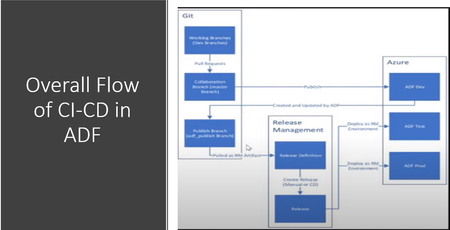
Purpose of this Blog 1. Defined the end to end Git integration and Deployment flow using YAML template from a project implementation perspective 2. This can be easily implemented as you just need include this YAML template and do few changes as this has been successfully implemented for Deployments in some projects.33KViews4likes15Comments