threat detection and response
23 Topics
Introducing a Unified Security Operations Platform with Microsoft Sentinel and Defender XDR
Read about our announcement of an exciting private preview that represents the next step in the SOC protection and efficiency journey by bringing together the power of Microsoft Sentinel, Microsoft Defender XDR and Microsoft Security Copilot into a unified security operations platform.83KViews17likes12CommentsWhat’s new in Microsoft Sentinel: RSAC 2026
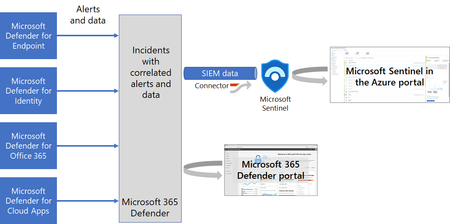
Security is entering a new era, one defined by explosive data growth, increasingly sophisticated threats, and the rise of AI-enabled operations. To keep pace, security teams need an AI-powered approach to collect, reason over, and act on security data at scale. At RSA Conference 2026 (RSAC), we’re unveiling the next wave of Sentinel innovations designed to help organizations move faster, see deeper, and defend smarter with AI-ready tools. These updates include AI-driven playbooks that accelerate SOC automation, Granular Delegated Admin Privileges (GDAP) and granular role-based access controls (RBAC) that let you scale your SOC, accelerated data onboarding through new connectors, and data federation that enables analysis in place without duplication. Together, they give teams greater clarity, control, and speed. Come see us at RSAC to view these innovations in action. Hear from Sentinel leaders during our exclusive Microsoft Pre-Day, then visit Microsoft booth #5744 for demos, theater sessions, and conversations with Sentinel experts. Read on to explore what’s new. See you at RSAC! Sentinel feature innovations: Sentinel SIEM Sentinel data lake Sentinel graph Sentinel MCP Threat Intelligence Microsoft Security Store Sentinel promotions Sentinel SIEM Playbook generator [Now in public preview] The Sentinel playbook generator delivers a new era of automation capabilities. You can vibe code complex automations, integrate with different tools to ensure timely and compliant workflows throughout your SOC and feel confident in the results with built in testing and documentation. Customers and partners are already seeing benefit from this innovation. “The playbook generator gives security engineers the flexibility and speed of AI-assisted coding while delivering the deterministic outcomes that enterprise security operations require. It's the best of both worlds, and it lives natively in Defender where the engineers already work.” – Jaime Guimera Coll | Security and AI Architect | BlueVoyant Learn more about playbook generator. SIEM migration experience [General availability now] The Sentinel SIEM migration experience helps you plan and execute SIEM migrations through a guided, in-product workflow. You can upload Splunk or QRadar exports to generate recommendations for best‑fit Sentinel analytics rules and required data connectors, then assess migration scope, validate detection coverage, and migrate from Splunk or QRadar to Sentinel in phases while tracking progress. “The tool helps turn a Splunk to Sentinel migration into a practical decision process. It gives clear visibility into which detections are relevant, how they align to real security use cases, and where it makes sense to enable or prioritize coverage—especially with cost and data sources in mind.” – Deniz Mutlu | Director | Swiss Post Cybersecurity Ltd Learn more about SIEM migration experience. GDAP, unified RBAC, and row-level RBAC for Sentinel [Public preview, April 1] As Sentinel environments grow for enterprises, MSSPs, hyperscalers, and partners operating across shared or multiple environments, the challenge becomes managing access control efficiently and consistently at scale. Sentinel’s expanded permissions and access capabilities are designed to meet these needs. Granular Delegated Admin Privileges (GDAP) lets you streamline management across multiple governed tenants using your primary account, based on existing GDAP relationships. Unified RBAC allows you to opt in to managing permissions for Sentinel workspaces through a single pane of glass, configuring and enforcing access across Sentinel experiences in the analytics tier and data lake in the Defender portal. This simplifies administration and improves operational efficiency by reducing the number of permission models you need to manage. Row-level RBAC scoping within tables enables precise, scoped access to data in the Sentinel data lake. Multiple SOC teams can operate independently within a shared Sentinel environment, querying only the data they are authorized to see, without separating workspaces or introducing complex data flow changes. Consistent, reusable scope definitions ensure permissions are applied uniformly across tables and experiences, while maintaining strong security boundaries. To learn more, read our technical deep dives on RBAC and GDAP. Sentinel data lake Sentinel data federation [Public preview, April 1] Sentinel data federation lets you analyze security data in place without copying or duplicating your data. Powered by Microsoft Fabric, you can now federate data from Fabric, Azure Data Lake Storage (ADLS), and Azure Databricks into Sentinel data lake. Federated data appears alongside native Sentinel data, so you can use familiar tools like KQL hunting, notebooks, and custom graphs to correlate signals and investigate across your entire digital estate, all while preserving governance and compliance. You can start analyzing data in place and progressively ingest data into Sentinel for deeper security insights, advanced automation, and AI-powered defense at scale. You are billed only when you run analytics on federated data using existing Sentinel data lake query and advanced insights meters. les for unified investigation and hunting Sentinel cost estimation tool [Public Preview, April 9] The new Sentinel cost estimation tool offers all Microsoft customers and partners a guided, meter-level cost estimation experience that makes pricing transparent and predictable. A built-in three-year cost projection lets you model data growth and ramp-up over time, anticipate spend, and avoid surprises. Get transparent estimates into spend as you scale your security operations. All other customers can continue to use the Azure calculator for Sentinel pricing estimates. See the Sentinel pricing page for more information. Sentinel data connectors A365 connector [Public preview, May 5] Bring AI agent telemetry into the Sentinel data lake to investigate agent behavior, tool usage, prompts, reasoning and execution using hunting, graph, and MCP workflows. GitHub audit log connector using API polling [General availability, March 6] Ingest GitHub enterprise audit logs into Sentinel to monitor user and administrator activity, detect risky changes, and investigate security events across your development environment. Google Kubernetes Engine (GKE) connector [General availability, March 6] Collect Google Kubernetes Engine (GKE) audit and workload logs in Sentinel to monitor cluster activity, analyze workload behavior, and detect security threats across Kubernetes environments. Microsoft Entra and Azure Resource Graph (ARG) connector enhancements [Public preview, April 15] Enable new Entra assets (EntraDevices, EntraOrgContacts) and ARG assets (ARGRoleDefinitions) in existing asset connectors, expanding inventory coverage and powering richer, built‑in graph experiences for greater visibility. With over 350 Sentinel data connectors, customers achieve broad visibility into complex digital environments and can expand their security operations effectively. “Microsoft Sentinel data lake forms the core of our agentic SOC. By unifying large volumes of Microsoft and third-party data, enabling graph-based analysis, and supporting MCP-driven workflows, it allows us to investigate faster, at lower cost, and with greater confidence.” – Øyvind Bergerud | Head of Security Operations | Storebrand Learn more about Sentinel data connectors. Sentinel connector builder agent using Sentinel Visual Studio Code extension [Public preview, March 31] Build Sentinel data connectors in minutes instead of weeks using the AI‑assisted Connector Builder agent in Visual Studio Code. This low‑code experience guides developers and ISVs end-to-end, automatically generating schemas, deployment assets, connector UI, secure secret handling, and polling logic. Built‑in validation surfaces issues early, so you can validate event logs before deployment and ingestion. Example prompt in GitHub Copilot Chat: @sentinel-connector-builder Create a new connector for OpenAI audit logs using https://api.openai.com/v1/organization/audit_logs Get started with custom connectors and learn more in our blog. Data filtering and splitting [Public preview, March 30] As security teams ingest more data, the challenge shifts from scale to relevance. With filtering and splitting now built into the Defender portal, teams can shape data before it lands in Sentinel, without switching tools or managing custom JSON files. Define simple KQL‑based transformations directly in the UI to filter low‑value events and intelligently route data, making ingestion optimization faster, more intuitive, and easier to manage at scale. Filtering at ingest time allows you to remove low-value or benign events to reduce noise, cut unnecessary processing, and ensure that high-signal data drives detections and investigations. Splitting enables intelligent routing of data between the analytics tier and the data lake tier based on relevance and usage. Together, these two capabilities help you balance cost and performance while scaling data ingestion sustainably as your digital estate grows. Create workbook reports directly from the data lake [Public preview, April 1] Sentinel workbooks can now directly run on the data lake using KQL, enabling you to visualize and monitor security data straight from the data lake. By selecting the data lake as the workbook data source, you can now create trend analysis and executive reporting. Sentinel graph Custom graphs [Public preview, April 1] Custom graphs let you build tailored security graphs tuned to your unique security scenarios using data from Sentinel data lake as well as non-Microsoft sources. With custom graph, powered by Fabric, you can build, query, and visualize connected data, uncover hidden patterns and attack paths, and help surface risks that are hard to detect when data is analyzed in isolation. These graphs provide the knowledge context that enables AI-powered agent experiences to work more effectively, speeding investigations, revealing blast radius, and helping you move from noisy, disconnected alerts to confident decisions at scale. In the words of our preview customers: “We ingested our Databricks management-plane telemetry into the Sentinel data lake and built a custom security graph. Without writing a single detection rule, the graph surfaced unusual patterns of activity and overprivileged access that we escalated for investigation. We didn't know what we were looking for, the graph surfaced the risk for us by revealing anomalous activity patterns and unusual access combinations driven by relationships, not alerts.” – SVP, Security Solutions | Financial Services organization Custom graph API usage for creating graph and querying graph will be billed starting April 1, 2026, according to the Sentinel graph meter. Creating custom graph Using the Sentinel VS Code extension, you can generate graphs to validate hunting hypotheses, such as understanding attack paths and blast radius of a phishing campaign, reconstructing multi‑step attack chains, and identifying structurally unusual or high‑risk behavior, making it accessible to your team and AI agents. Once persisted via a schedule job, you can access these custom graphs from the ready-to-use section in the graph experience in the Defender portal. Graphs experience in the Microsoft Defender portal After creating your custom graphs, you can access them in the graphs section of the Defender portal under Sentinel. From there, you’ll be able to perform interactive graph-based investigations, such as using a graph built for phishing analysis to help you quickly evaluate the impact of a recent incident, profile the attacker, and trace its paths across Microsoft telemetry and third-party data. The new graph experience lets you run Graph Query Language (GQL) queries, view the graph schema, visualize the graph, view graph results in tabular format, and interactively travers the graph to the next hop with a simple click. Sentinel MCP Sentinel MCP entity analyzer [General availability, April 1] Entity analyzer provides reasoned, out-of-the-box risk assessments that help you quickly understand whether a URL or user identity represents potential malicious activity. The capability analyzes data across modalities including threat intelligence, prevalence, and organizational context to generate clear, explainable verdicts you can trust. Entity analyzer integrates easily with your agents through Sentinel MCP server connections to first-party and third-party AI runtime platforms, or with your SOAR workflows through Logic Apps. The entity analyzer is also a trusted foundation for the Defender Triage Agent and delivers more accurate alert classifications and deeper investigative reasoning. This removes the need to manually engineer evaluation logic and creates trust for analysts and AI agents to act with higher accuracy and confidence. Learn more about entity analyzer and in our blog here. Entity analyzer will be billed starting April 1, 2026, based on Security Compute Units (SCU) consumption. Learn more about MCP billing. Sentinel MCP graph tool collection [Public preview, May 20] Graph tool collection helps you visualize and explore relationships between identities and device assets, threats and activities signals ingested by data connectors and alerted by analytic rules. The tool provides a clear graph view that highlights dependencies and configuration gaps, which makes it easier to understand how content interacts across your environment. This helps security teams assess coverage, optimize content deployment, and identify areas that may need tuning or additional data sources, all from a single, interactive workspace. Executing graph queries via the MCP tools will trigger the graph meter. Claude MCP connector [Public preview, April 1] Anthropic Claude can connect to Sentinel through a custom MCP connector, giving you AI-assisted analysis across your Sentinel environment. Microsoft provides step-by-step guidance for configuring a custom connector in Claude that securely connects to a Sentinel MCP server. With this connection you can summarize incidents, investigate alerts, and reason over security signals while keeping data inside Microsoft's security boundary. Access to large language models (LLMs) is managed through Microsoft authentication and role-based controls, supporting faster triage and investigation workflows while maintaining compliance and visibility. Threat Intelligence CVEs of interest in the Threat Intelligence Briefing Agent [Public preview in April] The Threat Intelligence Briefing Agent delivers curated intelligence based on your organization’s configuration, preferences, and unique industry and geographic needs. CVEs of interest which highlights vulnerabilities actively discussed across the security landscape and assesses their potential impact on your environment, delivering more timely threat intelligence insights. The agent automatically incorporates internet exposure data powered by the Sentinel platform to surface threats targeting technologies exposed in your organization. Together, these enhancements help you focus faster on the threats that matter most, without manual investigation. Microsoft Security Store Security Store embedded in Entra [General availability, March 23] As identity environments grow more complex, teams need to move faster and extend Entra with trusted third‑party capabilities that address operational, compliance, and risk challenges. The Security Store embedded directly into Entra lets you discover and adopt Entra‑ready agents and solutions in your workflow. You can extend Entra with identity‑focused agents that surface privileged access risk, identity posture gaps, network access insights, and overall identity health, turning identity data into clear recommendations and reports teams can use immediately. You can also enhance Entra with Verified ID and External ID integrations that strengthen identity verification, streamline account recovery, and reduce fraud across workforce, consumer, and external identities. Security Store embedded in Microsoft Purview [General availability, March 31] Extending data security across the digital estate requires visibility and enforcement into new data sources and risk surfaces, often requiring a partnered approach. The Security Store embedded directly into Purview lets you discover and evaluate integrated solutions inside your data security workflows. Relevant partner capabilities surface alongside context, making it easier to strengthen data protection, address regulatory requirements, and respond to risk without disrupting existing processes. You can quickly assess which solutions align to data security scenarios, especially with respect to securing AI use, and how they can leverage established classifiers, policies, and investigation workflows in Purview. Keeping integration discovery in‑flow and purchases centralized through the Security Store means you move faster from evaluation to deployment, reducing friction and maintaining a secure, consistent transaction experience. Security Store Advisor [General availability, March 23] Security teams today face growing complexity and choice. Teams often know the security outcome they need, whether that's strengthening identity protection, improving ransomware resilience, or reducing insider risk, but lack a clear, efficient way to determine which solutions will help them get there. Security Store Advisor provides a guided, natural-language discovery experience that shifts security evaluation from product‑centric browsing to outcome‑driven decision‑making. You can describe your goal in plain language, and the Advisor surfaces the most relevant Microsoft and partner agents, solutions, and services available in the Security Store, without requiring deep product knowledge. This approach simplifies discovery, reduces time spent navigating catalogs and documentation, and helps you understand how individual capabilities fit together to deliver meaningful security outcomes. Sentinel promotions Extending signups for promotional 50 GB commitment tier [Through June 2026] The Sentinel promotional 50 GB commitment tier offers small and mid-sized organizations a cost-effective entry point into Sentinel. Sign up for the 50 GB commitment tier until June 30, 2026, and maintain the promotional rate until March 31, 2027. This promotion is available globally with regional variations in pricing and accessible through EA, CSP, and Direct channels. Visit the Sentinel pricing page for details and to get started. Sentinel RSAC 2026 sessions All week – Sentinel product demos, Microsoft Booth #5744 Mon Mar 23, 3:55 PM – RSAC 2026 main stage Keynote with CVP Vasu Jakkal [KEY-M10W] Ambient and autonomous security: Building trust in the agentic AI era Tue Mar 24, 10:30 AM – Live Q&A session, Microsoft booth #5744 and online Ask me anything with Microsoft Security SMEs and real practitioners Tue Mar 24, 11 AM – Sentinel data lake theater session, Microsoft booth #5744 From signals to insights: How Microsoft Sentinel data lake powers modern security operations Tue Mar 24, 2 PM – Sentinel SIEM theater session, Microsoft booth #5744 Vibe-coding SecOps automations with the Sentinel playbook generator Wed Mar 25, 12 PM – Executive event at Palace Hotel with Threat Protection GM Scott Woodgate The AI risk equation: Visibility, control, and threat acceleration Wed Mar 25, 1:30 PM – Sentinel graph theater session, Microsoft booth #5744 Bringing knowledge-driven context to security with Microsoft Sentinel graph Wed Mar 25, 5 PM – MISA theater session, Microsoft booth #5744 Cut SIEM costs without reducing protection: A Sentinel data lake case study Thu Mar 26, 1 PM – Security Store theater session, Microsoft booth #5744 What's next for Security Store: Expanding in portal and smarter discovery All week – 1:1 meetings with Microsoft security experts Meet with Microsoft Defender and Sentinel SIEM and Defender Security Operations Additional resources Sentinel data lake video playlist Explore the full capabilities of Sentinel data lake as a unified, AI-ready security platform that is deeply integrated into the Defender portal Sentinel data lake FAQ blog Get answers to many of the questions we’ve heard from our customers and partners on Sentinel data lake and billing AI‑powered SIEM migration experience ninja training Walk through the SIEM migration experience, see how it maps detections, surfaces connector requirements, and supports phased migration decisions SIEM migration experience documentation Learn how the SIEM migration experience analyzes your exports, maps detections and connectors, and recommends prioritized coverage Accenture collaborates with Microsoft to bring agentic security and business resilience to the front lines of cyber defense Stay connected Check back each month for the latest innovations, updates, and events to ensure you’re getting the most out of Sentinel. We’ll see you in the next edition!12KViews6likes0CommentsAnnouncing Public Preview: New STIX Objects in Microsoft Sentinel
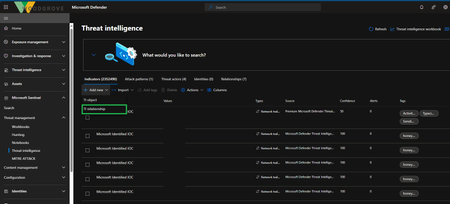
Security teams often struggle to understand the full context of an attack. In many cases, they rely solely on Indicators of Compromise (IoCs) without the broader insights provided by threat intelligence developed on Threat Actors, Attack Patterns, Identities - and the Relationships between each. This lack of context available to enrich their workflows limits their ability to connect the dots, prioritize threats effectively, and respond comprehensively to evolving attacks. To help customers build out a thorough, real-time understanding of threats, we are excited to announce the public preview of new Threat Intelligence (TI) object support in Microsoft Sentinel and in the Unified SOC Platform. In addition to Indicators of Compromise (IoCs), Microsoft Sentinel now supports Threat Actors, Attack Patterns, Identities, and Relationships. This enhancement empowers organizations to take their threat intelligence management to the next level. In this blog, we’ll highlight key scenarios for which your team would use STIX objects, as well as demos showing how to create objects and new relationships and how to use them to hunt threats across your organization Key Scenarios STIX objects are a critical tool for incident responders attempting to understand an attack and threat intelligence analysts seeking more information on critical threats. It is designed to improve interoperability and sharing of threat intelligence across different systems and organizations. Below, we’ve highlighted four ways Unified SOC Platform customers can begin using STIX objects to protect their organization. Ingesting Objects: You can now ingest these objects from various commercial feeds through several methods including STIX TAXII servers, API, files, or manual input. Curating Threat Intelligence: Curate and manage any of the supported Threat Intelligence objects. Creating Relationships: Establish connections between objects to enhance threat detection and response. For example: Connecting Threat Actor to Attack Pattern: The threat actor "APT29" uses the attack pattern "Phishing via Email" to gain initial access. Linking Indicator to Threat Actor: An indicator (malicious domain) is attributed to the threat actor "APT29". Associating Identity (Victim) with Attack Pattern: The organization "Example Corp" is targeted by the attack pattern "Phishing via Email". Hunt and Investigate Threats More Effectively: Match curated TI data against your logs in the unified SOC platform powered by Microsoft Sentinel. Use these insights to detect, investigate, and hunt threats more efficiently, keeping your organization secure. Get Started Today with the new Hunting Model The ability to ingest and manage these new Threat Intelligence objects is now available in public preview. To enable this data in your workspaces for hunting and detection, submit your request here and we will provide further details. Demo and screen shots Demo 1: Hunt and detect threats using STIX objects Scenario: Linking an IOC to a Threat Actor: An indicator (malicious domain) is attributed to the threat actor " Sangria tempest " via the new TI relationship builder. Please note that the Sangria tempest actor object and the IOC are already present in this demo. These objects can be added automatically or created manually. To create new relationship, sign into your Sentinel instance and go to Add new à TI relationship. In the New TI relationship builder, you can select existing TI objects and define how it's related to one or more other TI objects. After defining a TI object’s relationship, click on “Common” to provide metadata for this relationship, such as Description, Tags, and Confidence score: p time, source, and description. Another type of meta data a customer can add to a relationship is the Traffic Light Protocol (TLP). The TLP is a set of designations used to ensure that sensitive information is shared with the appropriate audience. It uses four colors to indicate different levels of sensitivity and the corresponding sharing permissions: TLP:RED: Information is highly sensitive and should not be shared outside of the specific group or meeting where it was originally disclosed. TLP:AMBER: Information can be shared with members of the organization, but not publicly. It is intended to be used within the organization to protect sensitive information. TLP:GREEN: Information can be shared with peers and partner organizations within the community, but not publicly. It is intended for a wider audience within the community. TLP:WHITE: Information can be shared freely and publicly without any restrictions. Once the relationship is created, your newly created relationship can be viewed from the “Relationships” tab. Now, retrieve information about relationships and indicators associated with the threat actor 'Sangria Tempest'. For Microsoft Sentinel customers leveraging the Azure portal experience, you can access this in Log Analytics. For customers who have migrated to the unified SecOps platform in the Defender portal, you can go find this under “Advanced Hunting”. The following KQL query provides you with all TI objects related to “Sangria Tempest.” You can use this query for any threat actor name. let THREAT_ACTOR_NAME = 'Sangria Tempest'; let ThreatIntelObjectsPlus = (ThreatIntelObjects | union (ThreatIntelIndicators | extend StixType = 'indicator') | extend tlId = tostring(Data.id) | extend StixTypes = StixType | extend Pattern = case(StixType == "indicator", Data.pattern, StixType == "attack-pattern", Data.name, "Unkown") | extend feedSource = base64_decode_tostring(tostring(split(Id, '---')[0])) | summarize arg_max(TimeGenerated, *) by Id | where IsDeleted == false); let ThreatActorsWithThatName = (ThreatIntelObjects | where StixType == 'threat-actor' | where Data.name == THREAT_ACTOR_NAME | extend tlId = tostring(Data.id) | extend ActorName = tostring(Data.name) | summarize arg_max(TimeGenerated, *) by Id | where IsDeleted == false); let AllRelationships = (ThreatIntelObjects | where StixType == 'relationship' | extend tlSourceRef = tostring(Data.source_ref) | extend tlTargetRef = tostring(Data.target_ref) | extend tlId = tostring(Data.id) | summarize arg_max(TimeGenerated, *) by Id | where IsDeleted == false); let SourceRelationships = (ThreatActorsWithThatName | join AllRelationships on $left.tlId == $right.tlSourceRef | join ThreatIntelObjectsPlus on $left.tlTargetRef == $right.tlId); let TargetRelationships = (ThreatActorsWithThatName | join AllRelationships on $left.tlId == $right.tlTargetRef | join ThreatIntelObjectsPlus on $left.tlSourceRef == $right.tlId); SourceRelationships | union TargetRelationships | project ActorName, StixTypes, ObservableValue, Pattern, Tags, feedSource You now have all the information your organization has available about Sangria Tempest, correlated to maximize your understanding of the threat actor and its associations to threat infrastructure and activity. Demo 2: Curate and attribute objects We have created new UX to streamline TI object creation, which includes the capability to attribute to other objects, so while you are creating a new IoC, you can also attribute that indicator to a Threat Actor, all from one place. To create a new TI object and attribute it to one or multiple threat actors, follow the steps below: Go to Add new a TI Object. In the Context menu, select any object type. Enter all the required information in the fields on the right-hand side for your selected indicator type. While creating a new TI object, you can do TI object curation. This includes defining the relationship. You can also quickly duplicate TI objects, making it easier for those who create multiple TI objects daily. Please note that we also introduced an “Add and duplicate” button to allow customers to create multiple TI objects with the same metadata to streamline a manual bulk process. Demo 3: New supported IoC types The attack pattern builder now supports the creation of four new indicator types. These enable customers to build more specific attack patterns that boost understanding of and organizational knowledge around threats. These new indicators include: X509 certificate X509 certificates are used to authenticate the identity of devices and servers, ensuring secure communication over the internet. They are crucial in preventing man-in-the-middle attacks and verifying the legitimacy of websites and services. For instance, if a certificate is suddenly replaced or a new, unknown certificate appears, it could indicate a compromised server or a malicious actor attempting to intercept communications. JA3 JA3 fingerprints are unique identifiers generated from the TLS/SSL handshake process. They help in identifying specific applications and tools used in network traffic, making it easier to detect malicious activities For example, if a network traffic analysis reveals a JA3 fingerprint matching that of the Cobalt Strike tool, it could indicate an ongoing cyber attack. JA3S JA3S fingerprints extend the capabilities of JA3 by also including server-specific characteristics in the fingerprinting process. This provides a more comprehensive view of the network traffic and helps in identifying both client and server-side threats For instance, if a server starts communicating with an unknown external IP address using a specific JA3S fingerprint, it could be a sign of a compromised server or data exfiltration attempt. User agent User Agents provide information about the client software making requests to a server, such as the browser or operating system. They are useful in identifying and profiling devices and applications accessing a network For example, if a User Agent string associated with a known malicious browser extension appears in network logs, it could indicate a compromised device. Conclusion: The ability to ingest, curate, and establish relationships between various threat intelligence objects such as Threat Actors, Attack Patterns, and Identities provides a powerful framework for incident responders and threat intelligence analysts. The use of STIX objects not only improves interoperability and sharing of threat intelligence but also empowers organizations to hunt and investigate threats more efficiently. As customers adopt these new capabilities, they will find themselves better equipped to understand the full context of an attack and build robust defenses against future threats. With the public preview of Threat Intelligence (TI) object support, organizations are encouraged to explore these new tools and integrate them into their security operations, taking the first step towards a more informed and proactive approach to cybersecurity.8.2KViews4likes2Comments
How to Set Up Sentinel Data Connectors for Kubernetes and GitHub
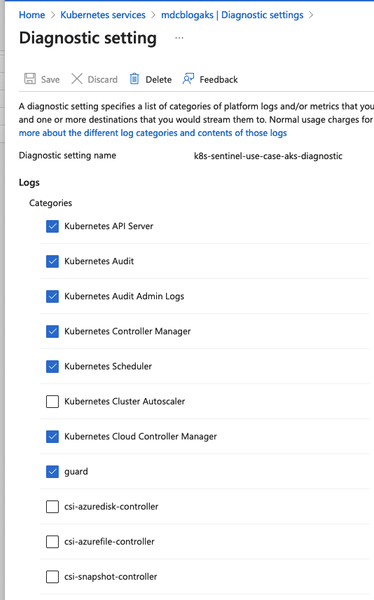
A guide to configure and use Sentinel Connectors to collect logs and data from your Kubernetes clusters and GitHub CI/CD pipelines. Part 2 of 3 part series about security monitoring of your Kubernetes Clusters and CI/CD pipelines by @singhabhi and @Umesh_Nagdev Link to Part 1 Link to Part 3 Introduction In part 1 of this series, we discussed the type of log sources you should consider for monitoring the security of your Kubernetes environment. This blog will demonstrate how to connect some of the critical log sources using Sentinel Data Connectors. Sentinel Data Connectors are a set of tools that enable you to collect and analyze logs and data from various sources, such as cloud services, applications, devices, and networks. Sentinel Data Connectors can help you monitor the health, performance, and security of your Kubernetes clusters and GitHub CI/CD pipelines, as well as detect and respond to threats and incidents. In this document, we will show you how to set up Sentinel Data Connectors for three types of sources: Kubernetes clusters, GitHub CI/CD pipelines, and Defender for Containers alerts and Defender for Cloud recommendations. We will also explain how to use the connectors to view and query the collected data in Sentinel. Security monitoring use cases Let’s first highlight some security risks you would want to monitor with Sentinel: 1. Pod Security Monitoring: Log source: Defender of Containers Risks monitored: Detect unauthorized or suspicious pods running in the cluster. Monitor for privilege escalation attempts within pods. Track and alert on changes to pod security policies. 2. Network Security Monitoring: Log source: Defender of Containers Risks monitored: Identify and alert on unexpected network traffic patterns. Monitor for unauthorized ingress and egress traffic. Detect and investigate potential denial-of-service (DoS) attacks. 3. Container Image Security: Log source: Defender for Cloud - Defender Cloud Security Posture Management (DCSPM) Risks monitored: Scan container images for vulnerabilities before deployment. Monitor for unauthorized or unsigned images. Track changes to container image repositories. 4. Kubelet Activity Monitoring: Log source: Defender of Containers Risks monitored: Monitor kubelet logs for signs of compromise or unauthorized access. Detect abnormal activities related to node management. 5. API Server Security: Log source: Defender of Containers Risks monitored: Monitor Kubernetes API server logs for suspicious activities. Track and alert on failed authentication attempts. Detect unusual API server request patterns. 6. RBAC (Role-Based Access Control) Monitoring: Log source: AKS Diagnostics Logs, Azure AD logs, Azure Monitor Container Insights Risks monitored: Monitor changes to RBAC policies and roles. Detect and alert on unauthorized access attempts. Track role binding changes and escalations. 7. Secrets and ConfigMap Access Monitoring: Log source: Defender of Containers Risks monitored: Monitor for unauthorized access to Kubernetes secrets and ConfigMaps. Detect changes to sensitive configuration data. Track usage patterns of sensitive information. 8. Audit Logging: Log source: AKS Diagnostic Logs Risks monitored: Enable and monitor Kubernetes audit logs for cluster-wide activities. Correlate audit logs to identify security events and policy violations. Regularly review audit logs for anomalies and potential threats. 9. Compliance Monitoring: Log source: Defender for Cloud - Defender Cloud Security Posture Management (DCSPM) Risks monitored: Ensure compliance with security standards and policies. Monitor for deviations from security best practices. Generate reports on compliance status and potential risks. 10. Container Runtime Security: Log source: Defender of Containers Risks monitored: Monitor runtime activities of containers for abnormal behavior. Detect and alert on suspicious system calls within containers. Integrate with container runtime security tools for enhanced monitoring. 11. Incident Response and Forensics: Log source: Defender of Containers Risks monitored: Develop and test incident response plans for Kubernetes security incidents. Monitor for indicators of compromise (IoCs) and initiate investigations in Sentinel Collect and analyze forensics data in the event of a security incident in Sentinel 12. Cluster Health Monitoring: Log source: AKS Diagnostic Logs Risks monitored: Regularly monitor the overall health of the Kubernetes cluster. Detect and alert on abnormal resource consumption or performance issues. Ensure the availability of critical components and services. Prerequisites Before you can set up Sentinel Data Connectors, you need to have the following: Sentinel workspace. This is where you store and analyze the data collected by the connectors. Enable Sentinel on the Log Analytics Workspace where you are exporting all of the below mentioned log sources . Instructions on how to setup Sentinel Kubernetes cluster. This is the source of the data for the Kubernetes Cluster using Diagnostics logs. You can use any Kubernetes cluster that supports the Kubernetes API, such as Azure Kubernetes Service (AKS), Google Kubernetes Engine (GKE), or Amazon Elastic Kubernetes Service (EKS). We will showcase this with AKS. Instructions on how to deploy AKS GitHub account. This is the source of the code and manifests used for creating container images which are then deployed in your Kubernetes Clusters. You will need to configure DCSPM DevOps security for secure scanning of artifacts. Or if you are using a third-party scanning tool you will need to send the scan results to Sentinel. Container Registry. The images stored in the registry need to be scanned for vulnerabilities. You will need access to the scan logs this can be done via Defender for Cloud DCSPM Defender for Containers subscription. This is a service that provides security and compliance monitoring for your Kubernetes clusters. You need to enable Defender for Containers on your subscription where your Kubernetes cluster is located and configure it to send alerts to the Sentinel workspace. Instructions on how to enable Defender for Containers on a subscription. A Defender for Cloud DSPM subscription. This is a service that provides security and compliance recommendations for your cloud resources such as AKS, ACR, and Azure tenant. You need to enable Defender for Cloud DCSPM on your subscription with AKS cluster and configure it to send recommendations to the Sentinel workspace. Instructions on how to enable DCSPM on a subscription. How to Set Up Kubernetes Cluster Connector The Kubernetes Cluster connector allows you to collect logs and metrics from your Kubernetes cluster, such as cluster events, pod logs, node metrics, and container metrics. To ingest AKS logs into Sentinel, deploy the Azure Kubernetes Solution for Sentinel then, follow the steps below to enable the AKS data connector. Configure AKS data connector to ingest logs into Sentinel: In Microsoft Sentinel, go to the "Data connectors" page. Find and configure the "Azure Kubernetes Service (AKS)" connector. Launch the Azure Policy wizard under configuration to enable logging. Verify Integration: After configuration, verify that logs from your AKS cluster are flowing into Sentinel. Create Sentinel Workbooks and Queries (to be elaborated in part 3): Leverage Microsoft Sentinel workbooks and Kusto Query Language (KQL) queries to create visualizations and reports based on AKS logs. Customize the workbooks and queries based on your specific security and monitoring requirements. Set Up Alerts and Incidents (to be elaborated in part 3): Configure alerts within Microsoft Sentinel based on specific events or patterns detected in AKS logs. Set up incidents and response workflows to investigate and respond to security events. Monitor and Fine-Tune: Regularly monitor the integration, alerts, and logs to ensure that the AKS logs are being properly processed in MicrosoftSentinel. Fine-tune your configurations based on feedback, new security requirements, or changes to your AKS environment. How to Set Up GitHub connector To ingest logs into Sentinel, deploy the Microsoft Sentinel - Continuous Threat Monitoring for GitHub. Enable the two connector that are installed as part of this solution: GitHub Enterprise Audit Log connector: this connector collects GitHub audit logs which tracks changes to repository, user added/removed, pull request activities, etc. GitHub (using Webhooks) connector: to ingest you can ingest the scan data using a built in data connector for GitHub events. This connector can pull events related to code scanning alert, repository vulnerability alert (via Dependabot) and Secret Scanning Alert. How to Set Up Defender for Containers Alerts and Defender for Cloud Connector Sentinel has a buil-in data connector to ingest Defender for Cloud alerts and recommendation. You can find the details https://learn.microsoft.com/en-us/azure/sentinel/connect-defender-for-cloud#connect-to-microsoft-defender-for-cloud Setting up AKS data connector and additional logging for Sentinel Setup the Diagnostic Settings for the Azure Kubernetes Services to send the events to a Sentinel-enabled Log Analytics workspace. https://learn.microsoft.com/en-us/azure/aks/monitor-aks#aks-control-planeresource-logs. In our scenario we are using the following logs In addition, you will also need to enable Container Insights to get the Pod level data so you can run the search queries for risk related to Pod specifics like pods running in Default namespace. You can refer to this https://learn.microsoft.com/en-us/azure/azure-monitor/containers/kubernetes-monitoring-enable?tabs=cli#enable-container-insights resource to enable Container Insights. The logs will go to ContainerLogsV2 in Log Analytics Workspace https://learn.microsoft.com/en-us/azure/azure-monitor/containers/container-insights-logs-schema#enable-the-containerlogv2-schema The following pic shows the ContainerLogv2 Schema as an example. You will need to for to Sentinel Content Hub and enable the following. This will give you Workbook, several hunting queries and a data connector to ingest AKS data. Your AKS cluster will populate the data in the following tables, which we will use to write custom search queries in the section below.7.9KViews1like0CommentsMicrosoft Sentinel data lake FAQ
Microsoft Sentinel data lake (generally available) is a purpose‑built, cloud‑native security data lake. It centralizes all security data in an open format, serving as the foundation for agentic defense, enhanced security insights, and graph-based enrichment. It offers cost‑effective ingestion, long‑term retention, and advanced analytics. In this blog we offer answers to many of the questions we’ve heard from our customers and partners. General questions What is the Microsoft Sentinel data lake? Microsoft has expanded its industry-leading SIEM solution, Microsoft Sentinel, to include a unified, security data lake, designed to help optimize costs, simplify data management, and accelerate the adoption of AI in security operations. This modern data lake serves as the foundation for the Microsoft Sentinel platform. It has a cloud-native architecture and is purpose-built for security—bringing together all security data for greater visibility, deeper security analysis, contextual awareness and agentic defense. It provides affordable, long-term retention, allowing organizations to maintain robust security while effectively managing budgetary requirements. What are the benefits of Sentinel data lake? Microsoft Sentinel data lake is purpose built for security offering flexible analytics, cost management, and deeper security insights. Sentinel data lake: Centralizes security data delta parquet and open format for easy access. This unified data foundation accelerates threat detection, investigation, and response across hybrid and multi-cloud environments. Enables data federation by allowing customers to access data in external sources like Microsoft Fabric, ADLS and Databricks from the data lake. Federated data appears alongside native Sentinel data, enabling correlated hunting, investigation, and custom graph analysis across a broader digital estate. Offers a disaggregated storage and compute pricing model, allowing customers to store massive volumes of security data at a fraction of the cost compared to traditional SIEM solutions. Allows multiple analytics engines like Kusto, Spark, and ML to run on a single data copy, simplifying management, reducing costs, and supporting deeper security analysis. Integrates with GitHub Copilot and VS Code empowering SOC teams to automate enrichment, anomaly detection, and forensic analysis. Supports AI agents via the MCP server, allowing tools like GitHub Copilot to query and automate security tasks. The MCP Server layer brings intelligence to the data, offering Semantic Search, Query Tools, and Custom Analysis capabilities that make it easier to extract insights and automate workflows. Provides streamlined onboarding, intuitive table management, and scalable multi-tenant support, making it ideal for MSSPs and large enterprises. The Sentinel data lake is designed for security workloads, ensuring that processes from ingestion to analytics meet evolving cybersecurity requirements. Is Microsoft Sentinel SIEM going away? No. Microsoft is expanding Sentinel into an AI powered end-to-end security platform that includes SIEM and new platform capabilities - Security data lake, graph-powered analytics and MCP Server. SIEM remains a core component and will be actively developed and supported. Getting started What are the prerequisites for Sentinel data lake? To get started: Connect your Sentinel workspace to Microsoft Defender prior to onboarding to Sentinel data lake. Once in the Defender experience see data lake onboarding documentation for next steps. Note: Sentinel is moving to the Microsoft Defender portal and the Sentinel Azure portal will be retired by March 31, 2027. I am a Sentinel-only customer, and not a Defender customer. Can I use the Sentinel data lake? Yes. You must connect Sentinel to the Defender experience before onboarding to the Sentinel data lake. Microsoft Sentinel is generally available in the Microsoft Defender portal, with or without Microsoft Defender XDR or an E5 license. If you have created a log analytics workspace, enabled it for Sentinel and have the right Microsoft Entra roles (e.g. Global Administrator + Subscription Owner, Security Administrator + Sentinel Contributor), you can enable Sentinel in the Defender portal. For more details on how to connect Sentinel to Defender review these sources: Microsoft Sentinel in the Microsoft Defender portal In what regions is Sentinel data lake available? For supported regions see: Geographical availability and data residency in Microsoft Sentinel | Azure Docs. Is there an expected release date for Microsoft Sentinel data lake in GCC, GCC-H, and DoD? While the exact date is not yet finalized, we plan to expand Sentinel data lake to the US Government environments. . How will URBAC and Entra RBAC work together to manage the data lake given there is no centralized model? Entra RBAC will provide broad access to the data lake (URBAC maps the right permissions to specific Entra role holders: GA/SA/SO/GR/SR). URBAC will become a centralized pane for configuring non-global delegated access to the data lake. For today, you will use this for the “default data lake” workspace. In the future, this will be enabled for non-default Sentinel workspaces as well – meaning all workspaces in the data lake can be managed here for data lake RBAC requirements. Azure RBAC on the Log Analytics (LA) workspace in the data lake is respected through URBAC as well today. If you already hold a built-in role like log analytics reader, you will be able to run interactive queries over the tables in that workspace. Or, if you hold log analytics contributor, you can read and manage table data. For more details see: Roles and permissions in the Microsoft Sentinel platform | Microsoft Learn Data ingestion and storage How do I ingest data into the Sentinel data lake? To ingest data into the Sentinel data lake, you can use existing Sentinel data connectors or custom connectors to bring data from Microsoft and third-party sources. Data can be ingested into the analytics tier or the data lake tier. Data ingested into the analytics tier is automatically mirrored to the lake (at no additional cost). Alternatively, data that is not needed in the analytics tier can be ingested directly into the data lake. Data retention is configured directly in table management, for both analytics retention and data lake storage. Note: Certain tables do not support data lake-only ingestion via either API or data connector UI. See here for more information: Custom log tables. What is Microsoft’s guidance on when to use analytics tier vs. the data lake tier? Sentinel data lake offers flexible, built-in data tiering (analytics and data lake tiers) to effectively meet diverse business use cases and achieve cost optimization goals. Analytics tier: Is ideal for high-performance, real-time, end-to-end detections, enrichments, investigation and interactive dashboards. Typically, high-fidelity data from EDRs, email gateways, identity, SaaS and cloud logs, threat intelligence (TI) should be ingested into the analytics tier. Data in the analytics tier is best monitored proactively with scheduled alerts and scheduled analytics to enable security detections Data in this tier is retained at no cost for up to 90 days by default, extendable to 2 years. A copy of the data in this tier is automatically available in the data lake tier at no extra cost, ensuring a unified copy of security data for both tiers. Data lake tier: Is designed for cost-effective, long-term storage. High-volume logs like NetFlow logs, TLS/SSL certificate logs, firewall logs and proxy logs are best suited for data lake tier. Customers can use these logs for historical analysis, compliance and auditing, incident response (IR), forensics over historical data, build tenant baselines, TI matching and then promote resulting insights into the analytics tier. Customers can run full Kusto queries, Spark Notebooks and scheduled jobs over a single copy of their data in the data lake. Customers can also search, enrich and promote data from the data lake tier to the analytics tier for full analytics. For more details see documentation. What does it mean that a copy of all new analytics tier data will be available in the data lake? When Sentinel data lake is enabled, a copy of all new data ingested into the analytics tier is automatically duplicated into the data lake tier. This means customers don’t need to manually configure or manage this process, every new log or telemetry added to the analytics tier becomes instantly available in the data lake. This allows security teams to run advanced analytics, historical investigations, and machine learning models on a single, unified copy of data in the lake, while still using the analytics tier for real-time SOC workflows. It’s a seamless way to support both operational and long-term use cases—without duplicating effort or cost. What is the guidance for customers using data federation capability in Sentinel data lake? Starting April 1, 2026, federate data from Microsoft Fabric, ADLS, and Azure Databricks into Sentinel data lake. Use data federation when data is exploratory, infrequently accessed, or must remain at source due to governance, compliance, sovereignty, or contractual requirements. Ingest data directly into Sentinel to unlock full SIEM capabilities, always-on detections, advanced automation, and AI‑driven defense at scale. This approach lets security teams start where their data already lives — preserving governance, then progressively ingest data into Sentinel for full security value. Is there any cost for retention in the analytics tier? Analytics ingestion includes 90 days of interactive retention, at no additional cost. Simply set analytics retention to 90 days or less. Analytics retention beyond 90 days will incur a retention cost. Data can be retained longer within the data lake by using the “total retention” setting. This allows you to extend retention within the data lake for up to 12 years. While data is retained within the analytics tier, there is no charge for the mirrored data within the lake. Retaining data in the lake beyond the analytics retention period incurs additional storage costs. See documentation for more details: Manage data tiers and retention in Microsoft Sentinel | Microsoft Learn What is the guidance for Microsoft Sentinel Basic and Auxiliary Logs customers? If you previously enabled Basic or Auxiliary Logs plan in Sentinel: You can view Basic Logs in the Defender portal but manage it from the Log Analytics workspace. To manage it in the Defender portal, you must change the plan from Basic to Analytics. Once the table is transitioned to the analytics tier, if desired, it can then be transitioned to the data lake. Existing Auxiliary Log tables will be available in the data lake tier for use once the Sentinel data lake is enabled. Billing for these tables will automatically switch to the Sentinel data lake meters. Microsoft Sentinel customers are recommended to start planning their data management strategy with the data lake. While Basic and Auxiliary Logs are still available, they are not being enhanced further. Sentinel data lake offers more capabilities at a lower price point. Please plan on onboarding your security data to the Sentinel data lake. Azure Monitor customers can continue to use Basic and Auxiliary Logs for observability scenarios. What happens to customers that already have Archive logs enabled? If a customer has already configured tables for Archive retention, existing retention settings will not change and will be automatically inherited by the Sentinel data lake. All data, including existing data in archive retention will be billed using the data lake storage meter, benefiting from 6x data compression. However, the data itself will not move. Existing data in archive will continue to be accessible through Sentinel search and restore experiences: o Data will not be backfilled into the data lake. o Data will be billed using the data lake storage meter. New data ingested after enabling the data lake: o Will be automatically mirrored to the data lake and accessible through data lake explorer. o Data will be billed using the data lake storage meter. Example: If a customer has 12 months of total retention enabled on a table, 2 months after enabling ingestion into the Sentinel data lake, the customer will still have access to 10 months of archived data (through Sentinel search and restore experiences), but access to only 2 months of data in the data lake (since the data lake was enabled). Key considerations for customers that currently have Archive logs enabled: The existing archive will remain, with new data ingested into the data lake going forward; previously stored archive data will not be backfilled into the lake. Archive logs will continue to be accessible via the Search and Restore tab under Sentinel. If analytics and data lake mode are enabled on table, which is the default setting for analytics tables when Sentinel data lake is enabled, all new data will be ingested into the Sentinel data lake. There will only be one storage meter (which is data lake storage) going forward. Archive will continue to be accessible via Search and Restore. If Sentinel data lake-only mode is enabled on table, new data will be ingested only into the data lake; any data that’s not already in the Sentinel data lake won’t be migrated/backfilled. Only data that was previously ingested under the archive plan will be accessible via Search and Restore. What is the guidance for customers using Azure Data Explorer (ADX) alongside Microsoft Sentinel? Some customers might have set up ADX cluster for their DIY lake setup. Customers can choose to continue using that setup and gradually migrate to Sentinel data lake for new data that they want to manage. The lake explorer will support federation with ADX to enable the customers to migrate gradually and simplify their deployment. What happens to the Defender XDR data after enabling Sentinel data lake? By default, Defender XDR tables are available for querying in advanced hunting, with 30 days of analytics tier retention included with the XDR license. To retain data beyond this period, an explicit change to the retention setting is required, either by extending the analytics tier retention or the total retention period. You can extend the retention period of supported Defender XDR tables beyond 30 days and ingest the data into the analytics tier. For more information see Manage XDR data in Microsoft Sentinel. You can also ingest XDR data directly into the data lake tier. See here for more information. A list of XDR advanced hunting tables supported by Sentinel are documented here: Connect Microsoft Defender XDR data to Microsoft Sentinel | Microsoft Learn. KQL queries and jobs Is KQL and Notebook supported over the Sentinel data lake? Yes, via the data lake KQL query experience along with a fully managed Notebook experience which enables spark-based big data analytics over a single copy of all your security data. Customers can run queries across any time range of data in their Sentinel data lake. In the future, this will be extended to enable SQL query over lake as well. Note: Triggering a KQL job directly via an API or Logic App is not yet supported but is on the roadmap. Why are there two different places to run KQL queries in Sentinel experience? Advanced hunting queries both XDR and analytics tables, with compute cost included. Data lake explorer only queries data in the lake and incurs a separate compute cost. Consolidating advanced hunting and KQL explorer user interfaces is on the roadmap. This will provide security analysts a unified query experience across both analytics and data lake tiers. Where is the output from KQL jobs stored? KQL jobs are written into existing or new custom tables in the analytics tier. Is it possible to run KQL queries on multiple data lake tables? Yes, you can run KQL interactive queries and jobs using operators like join or union. Can KQL queries (either interactive or via KQL jobs) join data across multiple workspaces? Security teams can run multi-workspace KQL queries for broader threat correlation Pricing and billing How does a customer pay for Sentinel data lake? Billing is automatically enabled at the time of onboarding based on Azure Subscription and Resource Group selections. Customers are then charged based on the volume of data ingested, retained, and analyzed (e.g. KQL Queries and Jobs). See Sentinel pricing page for more details. 2. What are the pricing components for Sentinel data lake? Sentinel data lake offers a flexible pricing model designed to optimize security coverage and costs. At a high level, pricing is based on the volume of data ingested/processed, the volume of data retained, and the volume of data processed. For specific meter definitions, see documentation. 3. How does the business model for Sentinel SIEM change with the introduction of the data lake? There is no change to existing Sentinel analytics tier ingestion business model. Sentinel data lake has separate meters for ingestion, storage and analytics. 4. What happens to the existing Sentinel SIEM and related Azure Monitor billing meters when a customer onboards to Sentinel data lake? When a customer onboards to the Sentinel data lake, nothing changes with analytic ingestion or retention. Customers using data archive and Auxiliary Logs will automatically transition to the new data lake meters. How does data lake storage affect cost efficiency for high volume data retention? Sentinel data lake offers cost-effective, long-term storage with uniform data compression of 6:1 across all data sources, applicable only to data lake storage. Example: For 600GB of data stored, you are only billed for 100GB compressed data. This approach allows organizations to retain greater volumes of security data over extended periods cost-effectively, thereby reducing security risks without compromising their overall security posture. here How “Data Processing” billed? To support the ingestion and standardization of diverse data sources, the Data Processing feature applies a $0.10 per GB (US East) charge for all data ingested into the data lake. This feature enables a broad array of transformations like redaction, splitting, filtering and normalization. The data processing charge is applied per GB of uncompressed data Note: For regional pricing, please refer to the “Data processing” meter within the Microsoft Sentinel Pricing official documentation. Does “Data processing” meter apply to analytics tier data mirrored in the data lake? No. Data processing charge will not be applied to mirrored data. Data mirrored from the analytic tier is not subject to either data ingestion or processing charges. How is retention billed for tables that use data lake-only ingestion & retention? Sentinel data lake decouples ingestion, storage, and analytics meters. Customers have the flexibility to pay based on how data is retained and used. For tables that use data lake‑only ingestion, there is no included free retention—unlike the analytics tier, which includes 90 days of analytics retention. Retention charges begin immediately once data is stored in the data lake. Data lake storage billing is based on compressed data size rather than raw ingested volume, which significantly reduces storage costs and delivers lower overall retention spend for customers. Does data federation incur charges? Data federation does not generate any ingestion or storage fees in Sentinel data lake. Customers are billed only when they run analytics or queries on federated data, with charges based on Sentinel data lake compute and analytics meters. This means customers pay solely for actual data usage, not mere connectivity. How do I understand Sentinel data lake costs? Sentinel data lake costs driven by three primary factors: how much data is ingested, how long that data is retained, and how the data is used. Customers can flexibly choose to ingest data into the analytics tier or data lake tier, and these architectural choices directly impact cost. For example, data can be ingested into the analytics tier—where commitment tiers help optimize costs for high data volumes—or ingested data directly into the Sentinel data lake for lower‑cost ingestion, storage, and on‑demand analysis. Customers are encouraged to work with their Microsoft account team to obtain an accurate cost estimate tailored to their environment. See Sentinel pricing page to understand Sentinel pricing. How do I manage Sentinel data lake costs? Built-in cost management experiences help customers with cost predictability, billing transparency, and operational efficiency. Reports provide customers with insights into usage trends over time, enabling them to identify cost drivers and optimize data retention and processing strategies. Set usage-based alerts on specific meters to monitor and control costs. For example, receive alerts when query or notebook usage passes set limits, helping avoid unexpected expenses and manage budgets. See our Sentinel cost management documentation to learn more. If I’m an Auxiliary Logs customer, how will onboarding to the Sentinel data lake affect my billing? Once a workspace is onboarded to Sentinel data lake, all Auxiliary Logs meters will be replaced by new data lake meters. Do we charge for data lake ingestion and storage for graph experiences? Microsoft Sentinel graph-based experiences are included as part of the existing Defender and Purview licenses. However, Sentinel graph requires Sentinel data lake and specific data sources to build the underlying graph. Enabling these data sources will incur ingestion and data lake storage costs. Note: For Sentinel SIEM customers, most required data sources are free for analytics ingestion. Non-entitled sources such as Microsoft Entra ID logs will incur ingestion and data lake storage costs. How is Entra asset data and ARG data billed? Data lake ingestion charges of $0.05 per GB (US EAST) will apply to Entra asset data and ARG data. Note: This was previously not billed during public preview and is billed since data lake GA. To learn more, see: https://learn.microsoft.com/azure/sentinel/datalake/enable-data-connectors When a customer activates Sentinel data lake, what happens to tables with archive logs enabled? To simplify billing, once the data lake is enabled, all archive data will be billed using the data lake storage meter. This provides consistent long-term retention billing and includes automatic 6x data compression. For most customers, this change results in lower long‑term retention costs. However, customers who previously had discounted archive retention pricing will not automatically receive the same discounts on the new data lake storage meters. In these cases, customers should engage their Microsoft account team to review pricing implications before enabling the Sentinel data lake. Thank you Thank you to our customers and partners for your continued trust and collaboration. Your feedback drives our innovation, and we’re excited to keep evolving Microsoft Sentinel to meet your security needs. If you have any questions, please don’t hesitate to reach out—we’re here to support you every step of the way. Learn more: Get started with Sentinel data lake today: https://aka.ms/Get_started/Sentinel_datalake Microsoft Sentinel AI-ready platform: https://aka.ms/Microsoft_Sentinel Sentinel data lake videos: https://aka.ms/Sentineldatalake_videos Latest innovations and updates on Sentinel: https://aka.ms/msftsentinelblog Sentinel pricing page: https://aka.ms/MicrosoftSentinel_Pricing7.4KViews1like9CommentsIntroducing Threat Intelligence Ingestion Rules
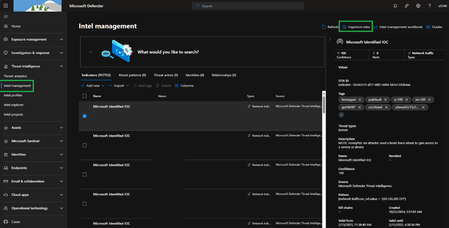
Microsoft Sentinel just rolled out a powerful new public preview feature: Ingestion Rules. This feature lets you fine-tune your threat intelligence (TI) feeds before they are ingested to Microsoft Sentinel. You can now set custom conditions and actions on Indicators of Compromise (IoCs), Threat Actors, Attack Patterns, Identities, and their Relationships. Use cases include: Filter Out False Positives: Suppress IoCs from feeds known to generate frequent false positives, ensuring only relevant intel reaches your analysts. Extending IoC validity periods for feeds that need longer lifespans. Tagging TI objects to match your organization's terminology and workflows Get Started Today with Ingestion Rules To create new “Ingestion rule”, navigate to “Intel Management” and Click on “Ingestion rules” With the new Ingestion rules feature, you have the power to modify or remove indicators even before they are integrated into Sentinel. These rules allow you to act on indicators currently in the ingestion pipeline. > Click on “Ingestion rules” Note: It can take up to 15 minutes for the rule to take effect Use Case #1: Delete IOC’s with less confidence score while ingesting When ingesting IOC's from TAXII/Upload API/File Upload, indicators are imported continuously. With pre-ingestion rules, you can filter out indicators that do not meet a certain confidence threshold. Specifically, you can set a rule to drop all indicators in the pipeline with a confidence score of 0, ensuring that only reliable data makes it through. Use Case #2: Extending IOC’s The following rule can be created to automatically extend the expiration date for all indicators in the pipeline where the confidence score is greater than 75. This ensures that these high-value indicators remain active and usable for a longer duration, enhancing the overall effectiveness of threat detection and response. Use Case #3: Bulk Tagging Bulk tagging is an efficient way to manage and categorize large volumes of indicators based on their confidence scores. With pre-ingestion rules, you can set up a rule to tag all indicators in the pipeline where the confidence score is greater than 75. This automated tagging process helps in organizing indicators, making it easier to search, filter, and analyze them based on their tags. It streamlines the workflow and improves the overall management of indicators within Sentinel. Managing Ingestion rules In addition to the specific use cases mentioned, managing ingestion rules gives you control over the entire ingestion process. 1. Reorder Rules You can reorder rules to prioritize certain actions over others, ensuring that the most critical rules are applied first. This flexibility allows for a tailored approach to data ingestion, optimizing the system's performance and accuracy. 2. Create From Creating new ingestion rules from existing ones can save you a significant amount of time and offer the flexibility to incorporate additional logic or remove unnecessary elements. Effectively duplicating these rules ensures you can quickly adapt to new requirements, streamline operations, and maintain a high level of efficiency in managing your data ingestion process. 3. Delete Ingestion Rules Over time, certain rules may become obsolete or redundant as your organizational needs and security strategies evolve. It's important to note that each workspace is limited to a maximum of 25 ingestion rules. Having a clean and relevant set of rules ensures that your data ingestion process remains streamlined and efficient, minimizing unnecessary processing and potential conflicts. Deleting outdated or unnecessary rules allows for a more focused approach to threat detection and response. It reduces clutter, which can significantly enhance the performance. By regularly reviewing and purging obsolete rules, you maintain a high level of operational efficiency and ensure that only the most critical and up-to-date rules are in place. Conclusion By leveraging these pre-ingestion rules effectively, you can enhance the quality and reliability of the IOC’s ingested into Sentinel, leading to more accurate threat detection and an improved security posture for your organization.5.8KViews4likes2CommentsIgnite 2025: New Microsoft Sentinel Connectors Announcement
Microsoft Sentinel continues to set the pace for innovation in cloud-native SIEMs, empowering security teams to meet today’s challenges with scalable analytics, built-in AI, and a cost-effective data lake. Recognized as a leader by Gartner and Forrester, Microsoft Sentinel is a platform for all of security, evolving to unify signals, cut costs, and power agentic AI for the modern SOC. As Microsoft Sentinel’s capabilities expand, so does its connector ecosystem. With over 350+ integrations available, organizations can seamlessly bring data from a wide range of sources into Microsoft Sentinel’s analytics and data lake tiers. This momentum is driven by our partners, who continue to deliver new and enhanced connectors that address real customer needs. The past year has seen rapid growth in both the number and diversity of connectors, ensuring that Microsoft Sentinel remains robust, flexible, and ready to meet the demands of any security environment. Today we showcase some of the most recent additions to our growing Microsoft Sentinel ecosystem spanning categories such as cloud security, endpoint protection, identity, IT operations, threat intelligence, compliance, and more: New and notable integrations BlinkOps and Microsoft Sentinel BlinkOps is an enterprise-ready agentic security automation platform that integrates seamlessly with Microsoft Sentinel to accelerate incident response and streamline operations. With Blink, analysts can rapidly build sophisticated workflows and custom security agents—without writing a single line of code—enabling agile, scalable automation with both Microsoft Sentinel and any other security platform. This integration helps eliminate alert fatigue, reduce mean time to resolution (MTTR), and free teams to focus on what matters most: driving faster operations, staying ahead of cyber threats, and unlocking new levels of efficiency through reliable, trusted orchestration. Check Point for Microsoft Sentinel solutions Check Point’s External Risk Management (ERM) IOC and Alerts integration with Microsoft Sentinel streamlines how organizations detect and respond to external threats by automatically sending both alerts and indicators of compromise (IOCs) into Microsoft Sentinel. Through this integration, customers can configure SOAR playbooks to trigger automated actions such as updating security policies, blocking malicious traffic, and executing other security operations tasks. This orchestration reduces manual effort, accelerates response times, and allows IT teams, network administrators, and security personnel to focus on strategic threat analysis—strengthening the organization’s overall security posture. Cloudflare for Microsoft Sentinel Cloudflare’s integration with Microsoft Sentinel, powered by Logpush, brings detailed security telemetry from its Zero Trust and network services into your SIEM environment. By forwarding logs such as DNS queries, HTTP requests, and access events through Logpush, the connector enables SOC teams to correlate Cloudflare data with other sources for comprehensive threat detection. This integration supports automated workflows for alerting and investigation, helping organizations strengthen visibility across web traffic and identity-based access while reducing manual overhead. Contrast ADR for Microsoft Sentinel Contrast Security gives Microsoft Sentinel users their first-ever integration with Application Detection and Response (ADR), delivering real-time visibility into application and API attacks, eliminating the application-layer blind spot. By embedding security directly into applications, Contrast enables continuous monitoring and precise blocking of attacks, and with AI assistance, the ability to fix underlying software vulnerabilities in minutes. This integration helps security teams prioritize actionable insights, reduce noise, and better understand the severity of threats targeting APIs and web apps. GreyNoise Enterprise Solution for Microsoft Sentinel GreyNoise helps Microsoft Sentinel users cut through the noise by identifying and filtering out internet background traffic that clutters security alerts. Drawing from a global sensor network, GreyNoise classifies IP addresses that are scanning the internet, allowing SOC teams to deprioritize benign activity and focus on real threats. The integration supports automated triage, threat hunting, and enrichment workflows, giving analysts the context they need to investigate faster and more effectively. iboss Connector for Microsoft Sentinel The iboss Connector for Microsoft Sentinel delivers real-time ingestion of URL event logs, enriching your SIEM with high-fidelity web traffic insights. Logs are forwarded in Common Event Format (CEF) over Syslog, enabling streamlined integration without the need for a proxy. With built-in parser functions and custom workbooks, the solution supports rapid threat detection and investigation. This integration is especially valuable for organizations adopting Zero Trust principles, offering granular visibility into user access patterns and helping analysts accelerate response workflows. Mimecast Mimecast’s integration with Microsoft Sentinel consolidates email security telemetry into a unified threat detection environment. By streaming data from Mimecast into Microsoft Sentinel’s Log Analytics workspace, security teams can craft custom queries, automate response workflows, and prioritize high-risk events. This connector supports a wide range of use cases, from phishing detection to compliance monitoring, while helping reduce mean time to respond (MTTR). MongoDB Atlas Solution for Microsoft Sentinel MongoDB Atlas integrates with Microsoft Sentinel to provide visibility into database activity and security events across cloud environments. By forwarding database logs into Sentinel, this connector enables SOC teams to monitor access patterns, detect anomalies, and correlate database alerts with broader security signals. The integration allows for custom queries and dashboards to be built on real-time log data, helping organizations strengthen data security, streamline investigations, and maintain compliance for critical workloads. Onapsis Defend Onapsis Defend integrates with Microsoft Sentinel Solution for SAP to deliver real-time security monitoring and threat detection from both cloud and on-premises SAP systems. By forwarding Onapsis's unique SAP exploit detection, proprietary SAP zero-day rules, and expert SAP-focused insights into Microsoft Sentinel, this integration enables SOC teams to correlate SAP-specific risks with enterprise-wide telemetry and accelerate incident response. The integration supports prebuilt analytics rules and dashboards, helping organizations detect suspicious behavior and malicious activity, prioritize remediation, and strengthen compliance across complex SAP application landscapes. Proofpoint on Demand (POD) Email Security for Microsoft Sentinel Proofpoint’s Core Email Protection integrates with Microsoft Sentinel to deliver granular email security telemetry for advanced threat analysis. By forwarding events such as phishing attempts, malware detections, and policy violations into Microsoft Sentinel, SOC teams can correlate Proofpoint data with other sources for a unified view of risk. The connector supports custom queries, dashboards, and automated playbooks, enabling faster investigations and streamlined remediation workflows. This integration helps organizations strengthen email defenses and improve response efficiency across complex attack surfaces. Proofpoint TAP Solution Proofpoint’s Targeted Attack Protection (TAP), part of its Core Email Protection, integrates with Microsoft Sentinel to centralize email security telemetry for advanced threat detection and response. By streaming logs and events from Proofpoint into Microsoft Sentinel, SOC teams gain visibility into phishing attempts, malicious attachments, and compromised accounts. The connector supports custom queries, dashboards, and automated playbooks, enabling faster investigations and streamlined remediation workflows. This integration helps organizations strengthen email defenses while reducing manual effort across incident response processes. RSA ID Plus Admin Log Connector The RSA ID Plus Admin Log Connector integrates with Microsoft Sentinel to provide centralized visibility into administrative activity within RSA ID Plus Connector. By streaming admin-level logs into Sentinel, SOC teams can monitor changes, track authentication-related operations, and correlate identity events with broader security signals. The connector supports custom queries and dashboards, enabling organizations to strengthen oversight and streamline investigations across their hybrid environments. Rubrik Integrations with Microsoft Sentinel for Ransomware Protection Rubrik’s integration with Microsoft Sentinel strengthens ransomware resilience by combining data security with real-time threat detection. The connector streams anomaly alerts, such as suspicious deletions, modifications, encryptions, or downloads, directly into Microsoft Sentinel, enabling fast investigations and more informed responses. With built-in automation, security teams can trigger recovery workflows from within Microsoft Sentinel, restoring clean backups or isolating affected systems. The integration bridges IT and SecOps, helping organizations minimize downtime and maintain business continuity when facing data-centric threats. Samsung Knox Asset Intelligence for Microsoft Sentinel Samsung’s Knox Asset Intelligence integration with Microsoft Sentinel equips security teams with near real-time visibility into mobile device threats across Samsung Galaxy enterprise fleets. By streaming security events and logs from managed Samsung devices into Microsoft Sentinel via the Azure Monitor Log Ingestion API, organizations can monitor risk posture, detect anomalies, and investigate incidents from a centralized dashboard. This solution is especially valuable for SOC teams monitoring endpoints for large mobile workforces, offering data-driven insights to reduce blind spots and strengthen endpoint security without disrupting device performance. SAP S/4HANA Public Cloud – Microsoft Sentinel SAP S/4HANA Cloud, public edition integrates with Microsoft Sentinel Solution for SAP to deliver unified, real-time security monitoring for cloud ERP environments. This connector leverages Microsoft’s native SAP integration capabilities to stream SAP logs into Microsoft Sentinel, enabling SOC teams to correlate SAP-specific events with enterprise-wide telemetry for faster, more accurate threat detection and response. SAP Enterprise Threat Detection – Microsoft Sentinel SAP Enterprise Threat Detection integrates with Microsoft Sentinel Solution for SAP to deliver unified, real-time security monitoring across SAP landscapes and the broader enterprise. Normalized SAP logs, alerts, and investigation reports flow into Microsoft Sentinel, enabling SOC teams to correlate SAP-specific alerts with enterprise telemetry for faster, more accurate threat detection and response. SecurityBridge: SAP Data to Microsoft Sentinel SecurityBridge extends Microsoft Sentinel for SAP’s reach into SAP environments, offering real-time monitoring and threat detection across both cloud and on-premises SAP systems. By funneling normalized SAP security events into Microsoft Sentinel, this integration enables SOC teams to correlate SAP-specific risks with broader enterprise telemetry. With support for S/4HANA, SAP BTP, and NetWeaver-based applications, SecurityBridge simplifies SAP security auditing and provides prebuilt dashboards and templates to accelerate investigations. Tanium Microsoft Sentinel Connector Tanium’s integration with Microsoft Sentinel bridges real-time endpoint intelligence and SIEM analytics, offering a unified approach to threat detection and response. By streaming real-time telemetry and alerts into Microsoft Sentinel,Tanium enables security teams to monitor endpoint health, investigate incidents, and trigger automated remediation, all from a single console. The connector supports prebuilt workbooks and playbooks, helping organizations reduce dwell time and align IT and security operations around a shared source of truth. Team Cymru Pure Signal Scout for Microsoft Sentinel Team Cymru’s Pure Signal™ Scout integration with Microsoft Sentinel delivers high-fidelity threat intelligence drawn from global internet telemetry. By enriching Microsoft Sentinel alerts with real-time context on IPs, domains, and adversary infrastructure, Scout enables security teams to proactively monitor third-party compromise, track threat actor infrastructure, and reduce false positives. The integration supports external threat hunting and attribution, enabling analysts to discover command-and-control activity, signals of data exfiltration and compromise with greater precision. For organizations seeking to build preemptive defenses by elevating threat visibility beyond their borders, Scout offers a lens into the broader threat landscape at internet scale. Veeam App for Microsoft Sentinel The Veeam App for Microsoft Sentinel enhances data protection by streaming backup and recovery telemetry into your SIEM environment. The solution provides visibility into backup job status, anomalies, and potential ransomware indicators, enabling SOC teams to correlate these events with broader security signals. With support for custom queries and automated playbooks, this integration helps organizations accelerate investigations, trigger recovery workflows, and maintain resilience against data-centric threats. WithSecure Elements via Function for Microsoft Sentinel WithSecure’s Elements platform integrates with Microsoft Sentinel to provide centralized visibility into endpoint protection and detection events. By streaming incident and malware telemetry into Microsoft Sentinel, organizations can correlate endpoint data with broader security signals for faster, more informed responses. The solution supports a proactive approach to cybersecurity, combining predictive, preventive, and responsive capabilities, making it well-suited for teams seeking speed and flexibility without sacrificing depth. This integration helps reduce complexity while enhancing situational awareness across hybrid environments, and for companies to prevent or minimize any disruption. In addition to these solutions from our third-party partners, we are also excited to announce the following connectors published by the Microsoft Sentinel team, available now in Azure Marketplace and Microsoft Sentinel content hub. Alibaba Cloud Action Trail Logs AWS: Network Firewall AWS: Route 53 DNS AWS: Security Hub Findings AWS: Server Access Cisco Secure Endpoint GCP: Apigee GCP: CDN GCP: Cloud Monitor GCP: Cloud Run GCP: DNS GCP: Google Kubernetes Engine (GKE) GCP: NAT GCP: Resource Manager GCP: SQL GCP: VPC Flow GCP: IAM OneLogin IAM Oracle Cloud Infrastructure Palo Alto: Cortex Xpanse CCF Palo Alto: Prisma Cloud CWPP Ping One Qualys Vulnerability Management Salesforce Service Cloud Slack Audit Snowflake App Assure: The Microsoft Sentinel promise Every connector in the Microsoft Sentinel ecosystem is built to work out of the box, backed by the App Assure team and the Microsoft Sentinel promise. In the unlikely event that customers encounter any issues, App Assure stands ready to assist to ensure rapid resolution. With the new Microsoft Sentinel data lake features, we extend our promise for customers looking to bring their data to the lake. To request a new connector or features for an existing one, contact us via our intake form. Learn More Microsoft Sentinel data lake Microsoft Sentinel data lake: Unify signals, cut costs, and power agentic AI Introducing Microsoft Sentinel data lake What is Microsoft Sentinel data lake Unlocking Developer Innovation with Microsoft Sentinel data lake Microsoft Sentinel Codeless Connector Framework (CCF) Create a codeless connector for Microsoft Sentinel What’s New in Microsoft Sentinel Microsoft App Assure App Assure home page App Assure services App Assure blog App Assure’s promise: Migrate to Sentinel with confidence App Assure’s Sentinel promise now extends to Microsoft Sentinel data lake RSAC 2025 new Microsoft Sentinel connectors announcement Microsoft Security Microsoft’s Secure Future Initiative Microsoft Unified SecOps4.8KViews2likes0Comments
What’s New in Microsoft Sentinel: November 2025
Welcome to our new Microsoft Sentinel blog series! We’re excited to launch a new blog series focused on Microsoft Sentinel. From the latest product innovations and feature updates to industry recognition, success stories, and major events, you’ll find it all here. This first post kicks off the series by celebrating Microsoft’s recognition as a Leader in the 2025 Gartner Magic Quadrant for SIEM 1 . It also introduces the latest innovations designed to deliver measurable impact and empower defenders with adaptable, collaborative tools in an evolving threat landscape. Microsoft is recognized as a Leader in 2025 Gartner Magic Quadrant for Security Information and Event Management (SIEM) Microsoft Sentinel continues to drive security innovation—and the industry is taking notice. Microsoft was named a leader in the 2025 Gartner Magic Quadrant for Security Information and Event Management (SIEM) 1 , published on October 8, 2025. We believe this acknowledgment reinforces our commitment to helping organizations stay secure in a rapidly changing threat landscape. Read blog for more information. Take advantage of M365 E5 benefit and Microsoft Sentinel promotional pricing Microsoft 365 E5 benefit Customers with Microsoft 365 E5, A5, F5, or G5 licenses automatically receive up to 5 MB of free data ingestion per user per day, covering key security data sources like Azure AD sign-in logs and Microsoft Cloud App Security discovery logs—no enrollment required. Read more about M365 benefits for Microsoft Sentinel. New 50GB promotional pricing To make Microsoft Sentinel more accessible to small and mid-sized organizations, we introduced a new 50 GB commitment tier in public preview, with promotional pricing starting October 1, 2025, through March 31, 2026. Customers who choose the 50 GB commitment tier during this period will maintain their promotional rate until March 31, 2027. Available globally with regional variations in regional pricing it is accessible through EA, CSP, and Direct channels. For more information see Microsoft Sentinel pricing page. Partner Integrations: Strengthening TI collaboration and workflow automation Microsoft Sentinel continues to expand its ecosystem with powerful partner integrations that enhance security operations. With Cyware, customers can now share threat intelligence bi-directionally across trusted destinations, ISACs, and multi-tenant environments—enabling real-time intelligence exchange that strengthens defenses and accelerates coordinated response. Learn more about the Cyware integration. Learn more about the Cyware integration here. Meanwhile, BlinkOps integration combined with Sentinel’s SOAR capabilities empowers SOC teams to automate repetitive tasks, orchestrate complex playbooks, and streamline workflows end-to-end. This automation reduces operational overhead, cuts Mean Time to Respond (MTTR) and frees analysts for strategic threat hunting. Learn more about the BlinkOps integration. Learn more about the BlinkOps integration. Harnessing Microsoft Sentinel Innovations Security is being reengineered for the AI era, moving beyond static, rule-based controls and reactive post-breach response toward platform-led, machine-speed defense. To overcome fragmented tools, sprawling signals, and legacy architectures that cannot keep pace with modern attacks, Microsoft Sentinel has evolved into both a SIEM and a unified security platform for agentic defense. These updates introduce architectural enhancements and advanced capabilities that enable AI-driven security operations at scale, helping organizations detect, investigate, and respond with unprecedented speed and precision. Microsoft Sentinel graph – Public Preview Unified graph analytics for deeper context and threat reasoning. Microsoft Sentinel graph delivers an interactive, visual map of entity relationships, helping analysts uncover hidden attack paths, lateral movement, and root causes for pre- and post-breach investigations. Read tech community blog for more details. Microsoft Sentinel Model Context Protocol (MCP) server – Public Preview Context is key to effective security automation. Microsoft Sentinel MCP server introduces a standardized protocol for building context-aware solutions, enabling developers to create smarter integrations and workflows within Sentinel. This opens the door to richer automation scenarios and more adaptive security operations. Read tech community blog for more details. Enhanced UEBA with New Data Sources – Public Preview We are excited to announce support for six new sources in our user entity and behavior analytics algorithm, including AWS, GCP, Okta, and Azure. Now, customers can gain deeper, cross-platform visibility into anomalous behavior for earlier and more confident detection. Read our blog and check out our Ninja Training to learn more. Developer Solutions for Microsoft Sentinel platform – Public Preview Expanded APIs, solution templates, and integration capabilities empower developers to build and distribute custom workflows and apps via Microsoft Security Store. This unlocks faster innovation, streamlined operations, and new revenue opportunities, extending Sentinel beyond out-of-the-box functionality for greater agility and resilience. Read tech community blog for more details. Growing ecosystem of Microsoft Sentinel data connectors We are excited to announce the general availability of four new data connectors: AWS Server Access Logs, Google Kubernetes Engine, Palo Alto CSPM, and Palo Alto Cortex Xpanse. Visit find your Microsoft Sentinel data connector page for the list of data connectors currently supported. We are also inviting Private Previews for four additional connectors: AWS EKS, Qualys VM KB, Alibaba Cloud Network, and Holm Security towards our commitment to expand the breadth and depth to support new data sources. Our customer support team can help you sign up for previews. New agentless data connector for Microsoft Sentinel Solution for SAP applications We’re excited to announce the general availability of a new agentless connector for Microsoft Sentinel solution for SAP applications, designed to simplify integration and enhance security visibility. This connector enables seamless ingestion of SAP logs and telemetry directly into Microsoft Sentinel, helping SOC teams monitor critical business processes, detect anomalies, and respond to threats faster—all while reducing operational overhead. Events, Webinars and Training Stay connected with the latest security innovation and best practices. From global conferences to expert-led sessions, these events offer opportunities to learn, network, and explore how Microsoft is shaping AI-driven, end-to-end security for the modern enterprise. Microsoft Ignite 2025 Security takes center stage at Microsoft Ignite, with dedicated sessions and hands-on experiences for security professionals and leaders. Join us in San Francisco, November 17–21, 2025, or online, to explore our AI-first, end-to-end security platform designed to protect identities, devices, data, applications, clouds, infrastructure—and critically—AI systems and agents. Register today! Microsoft Security Webinars Stay ahead of emerging threats and best practices with expert-led webinars from the Microsoft Security Community. Discover upcoming sessions on Microsoft Sentinel SIEM & platform, Defender, Intune, and more. Sign up today and be part of the conversation that shapes security for everyone. Learn more about upcoming webinars. Onboard Microsoft Sentinel in Defender – Video Series Microsoft leads the industry in both SIEM and XDR, delivering a unified experience that brings these capabilities together seamlessly in the Microsoft Defender portal. This integration empowers security teams to correlate insights, streamline workflows, and strengthen defenses across the entire threat landscape. Ready to get started? Explore our video series to learn how to onboard your Microsoft Sentinel experience and unlock the full potential of integrated security. Watch Microsoft Sentinel is now in Defender video series. MDTI Convergence into Microsoft Sentinel & Defender XDR overview Discover how Microsoft Defender Threat Intelligence Premium is transforming cybersecurity by integrating into Defender XDR, Sentinel, and the Defender portal. Watch this session to learn about new features, expanded access to threat intelligence, and how these updates strengthen your security posture. Partner Sentinel Bootcamp Transform your security team from Sentinel beginners to advanced practitioners. This comprehensive 2-day bootcamp helps participants master architecture design, data ingestion strategies, multi-tenant management, and advanced analytics while learning to leverage Microsoft's AI-first security platform for real-world threat detection and response. Register here for the bootcamp. Looking to dive deeper into Microsoft Sentinel development? Check out the official https://aka.ms/AppAssure_SentinelDeveloper. It’s the central reference for developers and security teams who want to build custom integrations, automate workflows, and extend Sentinel’s capabilities. Bookmark this link as your starting point for hands-on guidance and tools. Stay Connected Check back each month for the latest innovations, updates, and events to ensure you’re getting the most out of Microsoft Sentinel. 1 Gartner® Magic Quadrant™ for Security Information and Event Management, Andrew Davies, Eric Ahlm, Angel Berrios, Darren Livingstone, 8 October 20253.6KViews2likes3CommentsWhat’s New: Exciting new Microsoft Sentinel Connectors Announcement - Ignite 2024
Microsoft Sentinel continues to be a leading cloud-native security information and event management (SIEM) solution, empowering organizations to detect, investigate, and respond to threats across their digital ecosystem at scale. Microsoft Sentinel offers robust out of the box (OOTB) content, allowing seamless connections with a wide array of data sources from both Microsoft and third-party providers. This enables comprehensive collection and analysis of security signals across multicloud, multiplatform environments, enhancing your overall security posture. In this Ignite 2024 blog post, we are thrilled to present the latest integrations contributed by our esteemed Partners. These new integrations further expand the capabilities of Microsoft Sentinel, enabling you to connect your existing security solutions and leverage Microsoft Sentinel’s powerful analytics and automation capabilities to fortify your defenses against evolving cyber threats. Featured ISV 1Password for Microsoft Sentinel The integration between 1Password Extended Access Management and Microsoft Sentinel provides businesses with real-time visibility and alerts for login attempts and account changes. It enables quick detection of security threats and streamlines reporting by monitoring both managed and unmanaged apps from a single, centralized platform, ensuring faster response times and enhanced security. Cisco Secure Email Threat Defense Sentinel Application This application collects threat information from Cisco Secure Email Threat Defense and ingests it into Microsoft Sentinel for visualization and analysis. It enhances email security by detecting and blocking advanced threats, providing comprehensive visibility and fast remediation. Cribl Stream Solution for Microsoft Sentinel Cribl Stream accelerates SIEM migrations by ingesting, transforming, and enriching third party data into Microsoft Sentinel. It simplifies data onboarding, optimizes data in various formats, and helps maintain compliance, enhancing security operations and threat detection. FortiNDR Cloud FortiNDR Cloud integrates Fortinet’s network detection and response capabilities with Microsoft Sentinel, providing advanced threat detection and automated response. Fortinet FortiNDR Cloud enhances network security by helping to identify and mitigate threats in real-time. Pure Storage Solution for Microsoft Sentinel This solution integrates Pure Storage’s data storage capabilities with Sentinel, providing enhanced data protection and performance. It helps optimize storage infrastructure and improve data security. New and Notable CyberArk Audit for Microsoft Sentinel This solution extracts audit trail data from CyberArk and integrates it with Microsoft Sentinel, providing a comprehensive view of system and user activities. It enhances incident response with automated workflows and real-time threat detection. Cybersixgill Actionable Alerts for Microsoft Sentinel Cybersixgill provides contextual and actionable alerts based on data from the deep and dark web. It helps SOC analysts detect phishing, data leaks, and vulnerabilities, enhancing incident response and threat remediation. Cyware For Microsoft Sentinel Cyware integrates with Microsoft Sentinel to automate incident response and enhance threat hunting. It uses Logic Apps and hunting queries to streamline security operations and provides contextual threat intelligence. Ermes Browser Security for Microsoft Sentinel Ermes Browser Security ingests security and audit events into Microsoft Sentinel, providing enhanced visibility and reporting. It helps monitor and respond to web threats, improving the organization’s security posture. Gigamon Data Connector for Microsoft Sentinel This solution integrates Gigamon GigaVUE Cloud Suite, including Application Metadata Intelligence, with Microsoft Sentinel, providing comprehensive network traffic visibility and insights. It helps detect anomalies and optimize network performance, enhancing overall security. Illumio Sentinel Integration Illumio integrates its micro-segmentation capabilities with Microsoft Sentinel, providing real-time visibility and control over network traffic. It helps prevent lateral movement of threats and enhances overall network security. Infoblox App for Microsoft Sentinel The Infoblox solution enhances SecOps capabilities by seamlessly integrating Infoblox's AI-driven analytics, providing actionable insights, dashboards, and playbooks derived from DNS intelligence. These insights empower SecOps teams to achieve rapid incident response and remediation, all within the familiar Microsoft Sentinel user interface. LUMINAR Threat Intelligence for Microsoft Sentinel LUMINAR integrates threat intelligence and leaked credentials data into Microsoft Sentinel, helping organizations maintain visibility of their threat landscape. It provides timely, actionable insights to help detect and respond to threats before they impact the organization. Prancer PenSuite AI Prancer PenSuite AI now supercharges Microsoft Sentinel by injecting pentesting and real-time AppSec data into SOC operations. With powerful red teaming simulations, it empowers teams to detect vulnerabilities earlier, respond faster, and stay ahead of evolving threats. Phosphorus Connector for Microsoft Sentinel Phosphorus Cybersecurity’s Intelligent Active Discovery provides in-depth context for xIoT assets, that enhances threat detection and allows for targeted responses, enabling organizations to isolate or secure specific devices based on their criticality. Silverfort for Microsoft Sentinel Silverfort integrates its Unified Identity Protection Platform with Microsoft Sentinel, securing authentication and access to sensitive systems, both on-premises and in the cloud without requiring agents or proxies. Transmit Security Data Connector for Sentinel Transmit Security integrates its identity and access management capabilities with Sentinel, providing real-time monitoring and threat detection for user activities. It helps secure identities and prevent unauthorized access. In addition to commercially supported integrations, Microsoft Sentinel Content Hub also connects you to hundreds of community-based solutions as well as thousands of practitioner contributions. For more details and instructions on how to set up these integrations see Microsoft Sentinel data connectors | Microsoft Learn. To our partners: Thank you for your unwavering partnership and invaluable contributions on this journey to deliver the most comprehensive, timely insights and security value to our mutual customers. Security is indeed a team sport, and we are grateful to be working together to enhance the security landscape. Your dedication and innovation are instrumental in our collective success. We hope you find these new partner solutions useful, and we look forward to hearing your feedback and suggestions. Stay tuned for more updates and announcements on Microsoft Sentinel and its partner ecosystem. Learn More Microsoft’s commitment to Security Microsoft’s Secure Future Initiative Unified SecOps | SIEM and XDR Solutions Unified Platform documentation | Microsoft Defender XDR What else is new with Microsoft Sentinel? Microsoft Sentinel product home Schema Mapping Microsoft Sentinel Partner Solution Contributions Update – Ignite 2023 Additional resources: Sentinel Ignite 2024 Blog Latest Microsoft Tech Community Sentinel blog announcements Microsoft Sentinel solution for SAP Microsoft Sentinel solution for Power Platform Microsoft Sentinel pricing Microsoft Sentinel customer stories Microsoft Sentinel documentation3.6KViews0likes0Comments