securing ai
51 TopicsHow to deploy Microsoft Purview DSPM for AI to secure your AI apps
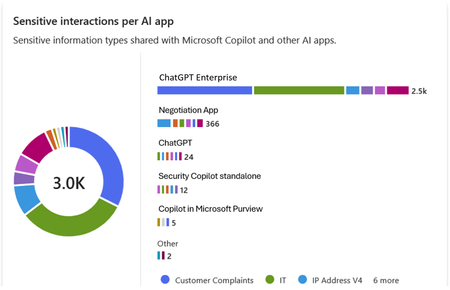
Microsoft Purview Data Security Posture Management (DSPM for AI) is designed to enhance data security for the following AI applications: Microsoft Copilot experiences, including Microsoft 365 Copilot. Enterprise AI apps, including ChatGPT enterprise integration. Other AI apps, including all other AI applications like ChatGPT consumer, Microsoft Copilot, DeepSeek, and Google Gemini, accessed through the browser. In this blog, we will dive into the different policies and reporting we have to discover, protect and govern these three types of AI applications. Prerequisites Please refer to the prerequisites for DSPM for AI in the Microsoft Learn Docs. Login to the Purview portal To begin, start by logging into Microsoft 365 Purview portal with your admin credentials: In the Microsoft Purview portal, go to the Home page. Find DSPM for AI under solutions. 1. Securing Microsoft 365 Copilot Be sure to check out our blog on How to use the DSPM for AI data assessment report to help you address oversharing concerns when you deploy Microsoft 365 Copilot. Discover potential data security risks in Microsoft 365 Copilot interactions In the Overview tab of DSPM for AI, start with the tasks in “Get Started” and Activate Purview Audit if you have not yet activated it in your tenant to get insights into user interactions with Microsoft Copilot experiences In the Recommendations tab, review the recommendations that are under “Not Started”. Create the following data discovery policy to discover sensitive information in AI interactions by clicking into it. Detect risky interactions in AI apps - This public preview Purview Insider Risk Management policy helps calculate user risk by detecting risky prompts and responses in Microsoft 365 Copilot experiences. Click here to learn more about Risky AI usage policy. With the policies to discover sensitive information in Microsoft Copilot experiences in place, head back to the Reports tab of DSPM for AI to discover any AI interactions that may be risky, with the option to filter to Microsoft Copilot Experiences, and review the following for Microsoft Copilot experiences: Total interactions over time (Microsoft Copilot) Sensitive interactions per AI app Top unethical AI interactions Top sensitivity labels references in Microsoft 365 Copilot Insider Risk severity Insider risk severity per AI app Potential risky AI usage Protect sensitive data in Microsoft 365 Copilot interactions From the Reports tab, click on “View details” for each of the report graphs to view detailed activities in the Activity Explorer. Using available filters, filter the results to view activities from Microsoft Copilot experiences based on different Activity type, AI app category and App type, Scope, which support administrative units for DSPM for AI, and more. Then drill down to each activity to view details including the capability to view prompts and response with the right permissions. To protect the sensitive data in interactions for Microsoft 365 Copilot, review the Not Started policies in the Recommendations tab and create these policies: Information Protection Policy for Sensitivity Labels - This option creates default sensitivity labels and sensitivity label policies. If you've already configured sensitivity labels and their policies, this configuration is skipped. Protect sensitive data referenced in Microsoft 365 Copilot - This guides you through the process of creating a Purview Data Loss Prevention (DLP) policy to restrict the processing of content with specific sensitivity labels in Copilot interactions. Click here to learn more about Data Loss Prevention for Microsoft 365 Copilot. Protect sensitive data referenced in Copilot responses - Sensitivity labels help protect files by controlling user access to data. Microsoft 365 Copilot honors sensitivity labels on files and only shows users files they already have access to in prompts and responses. Use Data assessments to identify potential oversharing risks, including unlabeled files. Stay tuned for an upcoming blog post on using DSPM for AI data assessments! Use Copilot to improve your data security posture - Data Security Posture Management combines deep insights with Security Copilot capabilities to help you identify and address security risks in your org. Once you have created policies from the Recommendations tab, you can go to the Policies tab to review and manage all the policies you have created across your organization to discover and safeguard AI activity in one centralized place, as well as edit the policies or investigate alerts associated with those policies in solution. Note that additional policies not from the Recommendations tab will also appear in the Policies tab when DSPM for AI identifies them as policies to Secure and govern all AI apps. Govern the prompts and responses in Microsoft 365 Copilot interactions Understand and comply with AI regulations by selecting “Guided assistance to AI regulations” in the Recommendations tab and walking through the “Actions to take”. From the Recommendations tab, create a Control unethical behavior in AI Purview Communications Compliance policy to detect sensitive information in prompts and responses and address potentially unethical behavior in Microsoft Copilot experiences and ChatGPT for Enterprise. This policy covers all users and groups in your organization. To retain and/or delete Microsoft 365 Copilot prompts and responses, setup a Data Lifecycle policy by navigating to Microsoft Purview Data Lifecycle Management and find Retention Policies under the Policies header. You can also preserve, collect, analyze, review, and export Microsoft 365 Copilot interactions by creating an eDiscovery case. 2. Securing Enterprise AI apps Please refer to this amazing blog on Unlocking the Power of Microsoft Purview for ChatGPT Enterprise | Microsoft Community Hub for detailed information on how to integrate with ChatGPT for enterprise, the Purview solutions it currently supports through Purview Communication Compliance, Insider Risk Management, eDiscovery, and Data Lifecycle Management. Learn more about the feature also through our public documentation. 3. Securing other AI Microsoft Purview DSPM for AI currently supports the following list of AI sites. Be sure to also check out our blog on the new Microsoft Purview data security controls for the browser & network to secure other AI apps. Discover potential data security risks in prompts sent to other AI apps In the Overview tab of DSPM for AI, go through these three steps in “Get Started” to discover potential data security risk in other AI interactions: Install Microsoft Purview browser extension For Windows users: The Purview extension is not necessary for the enforcement of data loss prevention on the Edge browser but required for Chrome to detect sensitive info pasted or uploaded to AI sites. The extension is also required to detect browsing to other AI sites through an Insider Risk Management policy for both Edge and Chrome browser. Therefore, Purview browser extension is required for both Edge and Chrome in Windows. For MacOS users: The Purview extension is not necessary for the enforcement of data loss prevention on macOS devices, and currently, browsing to other AI sites through Purview Insider Risk Management is not supported on MacOS, therefore, no Purview browser extension is required for MacOS. Extend your insights for data discovery – this one-click collection policy will setup three separate Purview detection policies for other AI apps: Detect sensitive info shared in AI prompts in Edge – a Purview collection policy that detects prompts sent to ChatGPT consumer, Micrsoft Copilot, DeepSeek, and Google Gemini in Microsoft Edge and discovers sensitive information shared in prompt contents. This policy covers all users and groups in your organization in audit mode only. Detect when users visit AI sites – a Purview Insider Risk Management policy that detects when users use a browser to visit AI sites. Detect sensitive info pasted or uploaded to AI sites – a Purview Endpoint Data loss prevention (eDLP) policy that discovers sensitive content pasted or uploaded in Microsoft Edge, Chrome, and Firefox to AI sites. This policy covers all users and groups in your org in audit mode only. With the policies to discover sensitive information in other AI apps in place, head back to the Reports tab of DSPM for AI to discover any AI interactions that may be risky, with the option to filter by Other AI Apps, and review the following for other AI apps: Total interactions over time (other AI apps) Total visits (other AI apps) Sensitive interactions per AI app Insider Risk severity Insider risk severity per AI app Protect sensitive info shared with other AI apps From the Reports tab, click on “View details” for each of the report graphs to view detailed activities in the Activity Explorer. Using available filters, filter the results to view activities based on different Activity type, AI app category and App type, Scope, which support administrative units for DSPM for AI, and more. To protect the sensitive data in interactions for other AI apps, review the Not Started policies in the Recommendations tab and create these policies: Fortify your data security – This will create three policies to manage your data security risks with other AI apps: 1) Block elevated risk users from pasting or uploading sensitive info on AI sites – this will create a Microsoft Purview endpoint data loss prevention (eDLP) policy that uses adaptive protection to give a warn-with-override to elevated risk users attempting to paste or upload sensitive information to other AI apps in Edge, Chrome, and Firefox. This policy covers all users and groups in your org in test mode. Learn more about adaptive protection in Data loss prevention. 2) Block elevated risk users from submitting prompts to AI apps in Microsoft Edge – this will create a Microsoft Purview browser data loss prevention (DLP) policy, and using adaptive protection, this policy will block elevated, moderate, and minor risk users attempting to put information in other AI apps using Microsoft Edge. This integration is built-in to Microsoft Edge. Learn more about adaptive protection in Data loss prevention. 3) Block sensitive info from being sent to AI apps in Microsoft Edge - this will create a Microsoft Purview browser data loss prevention (DLP) policy to detect inline for a selection of common sensitive information types and blocks prompts being sent to AI apps while using Microsoft Edge. This integration is built-in to Microsoft Edge. Once you have created policies from the Recommendations tab, you can go to the Policies tab to review and manage all the policies you have created across your organization to discover and safeguard AI activity in one centralized place, as well as edit the policies or investigate alerts associated with those policies in solution. Note that additional policies not from the Recommendations tab will also appear in the Policies tab when DSPM for AI identifies them as policies to Secure and govern all AI apps. Conclusion Microsoft Purview DSPM for AI can help you discover, protect, and govern the interactions from AI applications in Microsoft Copilot experiences, Enterprise AI apps, and other AI apps. We recommend you review the Reports in DSPM for AI routinely to discover any new interactions that may be of concern, and to create policies to secure and govern those interactions as necessary. We also recommend you utilize the Activity Explorer in DSPM for AI to review different Activity explorer events while users interacting with AI, including the capability to view prompts and response with the right permissions. We will continue to update this blog with new features that become available in DSPM for AI, so be sure to bookmark this page! Follow-up Reading Check out this blog on the details of each recommended policies in DSPM for AI: Microsoft Purview – Data Security Posture Management (DSPM) for AI | Microsoft Community Hub Address oversharing concerns with Microsoft 365 blueprint - aka.ms/Copilot/Oversharing Microsoft Purview data security and compliance protections for Microsoft 365 Copilot and other generative AI apps | Microsoft Learn Considerations for deploying Microsoft Purview AI Hub and data security and compliance protections for Microsoft 365 Copilot and Microsoft Copilot | Microsoft Learn Commonly used properties in Copilot audit logs - Audit logs for Copilot and AI activities | Microsoft Learn Supported AI sites by Microsoft Purview for data security and compliance protections | Microsoft Learn Where Copilot usage data is stored and how you can audit it - Microsoft 365 Copilot data protection and auditing architecture | Microsoft Learn Downloadable whitepaper: Data Security for AI Adoption | Microsoft Public roadmap for DSPM for AI - Microsoft 365 Roadmap | Microsoft 365Introducing Security Dashboard for AI (Now in Public Preview)
AI proliferation in the enterprise, combined with the emergence of AI governance committees and evolving AI regulations, leaves CISOs and AI risk leaders needing a clear view of their AI risks, such as data leaks, model vulnerabilities, misconfigurations, and unethical agent actions across their entire AI estate, spanning AI platforms, apps, and agents. 53% of security professionals say their current AI risk management needs improvement, presenting an opportunity to better identify, assess and manage risk effectively. 1 At the same time, 86% of leaders prefer integrated platforms over fragmented tools, citing better visibility, fewer alerts and improved efficiency. 2 To address these needs, we are excited to announce the Security Dashboard for AI, previously announced at Microsoft Ignite, is available in public preview. This unified dashboard aggregates posture and real-time risk signals from Microsoft Defender, Microsoft Entra, and Microsoft Purview - enabling users to see left-to-right across purpose-built security tools from within a single pane of glass. The dashboard equips CISOs and AI risk leaders with a governance tool to discover agents and AI apps, track AI posture and drift, and correlate risk signals to investigate and act across their entire AI ecosystem. Security teams can continue using the tools they trust while empowering security leaders to govern and collaborate effectively. Gain Unified AI Risk Visibility Consolidating risk signals from across purpose-built tools can simplify AI asset visibility and oversight, increase security teams’ efficiency, and reduce the opportunity for human error. The Security Dashboard for AI provides leaders with unified AI risk visibility by aggregating security, identity, and data risk across Defender, Entra, Purview into a single interactive dashboard experience. The Overview tab of the dashboard provides users with an AI risk scorecard, providing immediate visibility to where there may be risks for security teams to address. It also assesses an organization's implementation of Microsoft security for AI capabilities and provides recommendations for improving AI security posture. The dashboard also features an AI inventory with comprehensive views to support AI assets discovery, risk assessments, and remediation actions for broad coverage of AI agents, models, MCP servers, and applications. The dashboard provides coverage for all Microsoft AI solutions supported by Entra, Defender and Purview—including Microsoft 365 Copilot, Microsoft Copilot Studio agents, and Microsoft Foundry applications and agents—as well as third-party AI models, applications, and agents, such as Google Gemini, OpenAI ChatGPT, and MCP servers. This supports comprehensive visibility and control, regardless of where applications and agents are built. Prioritize Critical Risk with Security Copilots AI-Powered Insights Risk leaders must do more than just recognize existing risks—they also need to determine which ones pose the greatest threat to their business. The dashboard provides a consolidated view of AI-related security risks and leverages Security Copilot’s AI-powered insights to help find the most critical risks within an environment. For example, Security Copilot natural language interaction improves agent discovery and categorization, helping leaders identify unmanaged and shadow AI agents to enhance security posture. Furthermore, Security Copilot allows leaders to investigate AI risks and agent activities through prompt-based exploration, putting them in the driver’s seat for additional risk investigation. Drive Risk Mitigation By streamlining risk mitigation recommendations and automated task delegation, organizations can significantly improve the efficiency of their AI risk management processes. This approach can reduce the potential hidden AI risk and accelerate compliance efforts, helping to ensure that risk mitigation is timely and accurate. To address this, the Security Dashboard for AI evaluates how organizations put Microsoft’s AI security features into practice and offers tailored suggestions to strengthen AI security posture. It leverages Microsoft’s productivity tools for immediate action within the practitioner portal, making it easy for administrators to delegate recommendation tasks to designated users. With the Security Dashboard for AI, CISOs and risk leaders gain a clear, consolidated view of AI risks across agents, apps, and platforms—eliminating fragmented visibility, disconnected posture insights, and governance gaps as AI adoption scales. Best of all, the Security Dashboard for AI is included with eligible Microsoft security products customers already use. If an organization is already using Microsoft security products to secure AI, they are already a Security Dashboard for AI customer. Getting Started Existing Microsoft Security customers can start using Security Dashboard for AI today. It is included when a customer has the Microsoft Security products—Defender, Entra and Purview—with no additional licensing required. To begin using the Security Dashboard for AI, visit http://ai.security.microsoft.com or access the dashboard from the Defender, Entra or Purview portals. Learn more about the Security Dashboard for AI at Microsoft Security MS Learn. 1AuditBoard & Ascend2 Research. The Connected Risk Report: Uniting Teams and Insights to Drive Organizational Resilience. AuditBoard, October 2024. 2Microsoft. 2026 Data Security Index: Unifying Data Protection and AI Innovation. Microsoft Security, 2026Ask Microsoft Anything: Data & AI Security in the Real World
At RSA this year, we’re hosting Ask the Experts: Data & AI Security in the Real World a live, unscripted conversation with Microsoft Security engineers and product leaders who are actively building and securing AI systems on a scale. And if you’re not attending in person, you can join the conversation online through Tech Community. What to Expect This is not a traditional conference session. There are no slide decks. There’s no product pitch. Instead, we’ll host an open AMA-style discussion where security practitioners can ask: Implementation questions Architecture questions Lessons learned from early deployments You’ll hear directly from the engineers and security leaders responsible for securing Microsoft AI systems and customer environments. Topics We’ll Cover While the format is open, we expect to dive into areas like: Data protection strategies for AI workloads Securing copilots and generative AI integrations Identity and access controls for AI services Monitoring, logging, and anomaly detection Join Us at RSA or Online If you’re attending RSA, join us live and bring your toughest questions. If you’re remote, participate through Tech Community; where you can post questions in advance or engage during the live discussion. The conversation will remain open afterward so practitioners across time zones can continue the dialogue. Hope to see you there! Tech Community Event LinkAI Security in Azure with Microsoft Defender for Cloud: Learn the How, Join the Session
As organizations accelerate AI adoption, securing AI workloads has become a top priority. Unlike traditional cloud applications, AI systems introduce new risks—such as prompt injection, data leakage, and model misuse—that require a more integrated approach to security and governance. To help developers and security teams understand and address these challenges, we are hosting Azure Decoded: Kickstart AI Security with Microsoft Defender for Cloud, a live session on March 18 th at 12 PM PST focused on securing AI workloads built with Microsoft Foundry and Azure AI services. From AI Security Concepts to Platform Protections A strong foundation for this session starts with the Microsoft Learn module Understand how Microsoft Defender for Cloud supports AI security and governance in Azure. This training introduces how AI workloads are structured in Azure and why they require a different security model than traditional applications. In the module, learners explore: The layers that make up AI workloads in Azure Security risks unique to AI, including prompt injection, data leakage, and model misuse How Microsoft Foundry provides guardrails and observability for AI models How Microsoft Defender for Cloud works with Microsoft Purview and Microsoft Entra ID to deliver a unified, defense‑in‑depth security and governance strategy for AI Together, these services help organizations protect model inputs and outputs, maintain visibility, and enforce governance across AI workloads in Azure. Bringing AI Security Architecture to Life with Azure Decoded The Azure Decoded: Kickstart AI Security with Microsoft Defender for Cloud session on March 18 th builds on these concepts by connecting them to real‑world architecture and platform decisions. Attendees learn how Microsoft Defender for Cloud fits into a broader AI security strategy and how Microsoft Foundry helps apply guardrails, visibility, and governance across AI workloads. This session is designed for: Developers building AI applications and agents on Azure Security engineers responsible for protecting AI workloads Cloud architects designing enterprise‑ready AI solutions By combining conceptual understanding with platform‑level security discussions, the session helps teams design AI solutions that are not only innovative—but also secure, governed, and trustworthy. Be sure to register so you do not miss out. Start Your AI Security Journey AI security is evolving quickly, and it requires both architectural understanding and practical platform knowledge. Start by exploring how Microsoft Defender for Cloud supports AI security and governance in Azure, then join the Azure Decoded session to see how these principles come together in real‑world AI workloads.
Building Secure, Enterprise Ready AI Agents with Purview SDK and Agent Framework
At Microsoft Ignite, we announced the public preview of Purview integration with the Agent Framework SDK—making it easier to build AI agents that are secure, compliant, and enterprise‑ready from day one. AI agents are quickly moving from demos to production. They reason over enterprise data, collaborate with other agents, and take real actions. As that happens, one thing becomes non‑negotiable: Governance has to be built in. That’s where Purview SDK comes in. Agentic AI Changes the Security Model Traditional apps expose risks at the UI or API layer. AI agents are different. Agents can: Process sensitive enterprise data in prompts and responses Collaborate with other agents across workflows Act autonomously on behalf of users Without built‑in controls, even a well‑designed agent can create compliance gaps. Purview SDK brings Microsoft’s enterprise data security and compliance directly into the agent runtime, so governance travels with the agent—not after it. What You Get with Purview SDK + Agent Framework This integration delivers a few key things developers and enterprises care about most: Inline Data Protection Evaluate prompts and responses against Data Loss Prevention (DLP) policies in real time. Content can be allowed or blocked automatically. Built‑In Governance Send AI interactions to Purview for audit, eDiscovery, communication compliance, and lifecycle management—without custom plumbing. Enterprise‑Ready by Design Ship agents that meet enterprise security expectations from the start, not as a follow‑up project. All of this is done natively through Agent Framework middleware, so governance feels like part of the platform—not an add‑on. How Enforcement Works (Quickly) When an agent runs: Prompts and responses flow through the Agent Framework pipeline Purview SDK evaluates content against configured policies A decision is returned: allow, redact, or block Governance signals are logged for audit and compliance This same model works for: User‑to‑agent interactions Agent‑to‑agent communication Multi‑agent workflows Try It: Add Purview SDK in Minutes Here’s a minimal Python example using Agent Framework: That’s it! From that point on: Prompts and responses are evaluated against Purview policies setup within the enterprise tenant Sensitive data can be automatically blocked Interactions are logged for governance and audit Designed for Real Agent Systems Most production AI apps aren’t single‑agent systems. Purview SDK supports: Agent‑level enforcement for fine‑grained control Workflow‑level enforcement across orchestration steps Agent‑to‑agent governance to protect data as agents collaborate This makes it a natural fit for enterprise‑scale, multi‑agent architectures. Get Started Today You can start experimenting right away: Try the Purview SDK with Agent Framework Follow the Microsoft Learn docs to configure Purview SDK with Agent Framework. Explore the GitHub samples See examples of policy‑enforced agents in Python and .NET. Secure AI, Without Slowing It Down AI agents are quickly becoming production systems—not experiments. By integrating Purview SDK directly into the Agent Framework, Microsoft is making governance a default capability, not a deployment blocker. Build intelligent agents. Protect sensitive data. Scale with confidence.
Unlocking the Power of Microsoft Purview for ChatGPT Enterprise
In today's rapidly evolving technology landscape, data security and compliance are key. Microsoft Purview offers a robust solution for managing and securing interactions with AI based solutions. This integration not only enhances data governance but also ensures that sensitive information is handled with the appropriate controls. Let's dive into the benefits of this integration and outline the steps to integrate with ChatGPT Enterprise in specific. The integration works for Entra connected users on the ChatGPT workspace, if you have needs that goes beyond this, please tell us why and how it impacts you. Important update 1: Effective May 1, these capabilities require you to enable pay-as-you-go billing in your organization. Important update 2: From May 19, you are required to create a collection policy to ingest ChatGPT Enterprise information. In DSPM for AI you will find this one click process. Benefits of Integrating ChatGPT Enterprise with Microsoft Purview Enhanced Data Security: By integrating ChatGPT Enterprise with Microsoft Purview, organizations can ensure that interactions are securely captured and stored within their Microsoft 365 tenant. This includes user text prompts and AI app text responses, providing a comprehensive record of communications. Compliance and Governance: Microsoft Purview offers a range of compliance solutions, including Insider Risk Management, eDiscovery, Communication Compliance, and Data Lifecycle & Records Management. These tools help organizations meet regulatory requirements and manage data effectively. Customizable Detection: The integration allows for the detection of built in can custom classifiers for sensitive information, which can be customized to meet the specific needs of the organization. To help ensures that sensitive data is identified and protected. The audit data streams into Advanced Hunting and the Unified Audit events that can generate visualisations of trends and other insights. Seamless Integration: The ChatGPT Enterprise integration uses the Purview API to push data into Compliant Storage, ensuring that external data sources cannot access and push data directly. This provides an additional layer of security and control. Step-by-Step Guide to Setting Up the Integration 1. Get Object ID for the Purview account in Your Tenant: Go to portal.azure.com and search for "Microsoft Purview" in the search bar. Click on "Microsoft Purview accounts" from the search results. Select the Purview account you are using and copy the account name. Go to portal.azure.com and search for “Enterprise" in the search bar. Click on Enterprise applications. Remove the filter for Enterprise Applications Select All applications under manage, search for the name and copy the Object ID. 2. Assign Graph API Roles to Your Managed Identity Application: Assign Purview API roles to your managed identity application by connecting to MS Graph utilizing Cloud Shell in the Azure portal. Open a PowerShell window in portal.azure.com and run the command Connect-MgGraph. Authenticate and sign in to your account. Run the following cmdlet to get the ServicePrincipal ID for your organization for the Purview API app. (Get-MgServicePrincipal -Filter "AppId eq '9ec59623-ce40-4dc8-a635-ed0275b5d58a'").id This command provides the permission of Purview.ProcessConversationMessages.All to the Microsoft Purview Account allowing classification processing. Update the ObjectId to the one retrieved in step 1 for command and body parameter. Update the ResourceId to the ServicePrincipal ID retrieved in the last step. $bodyParam= @{ "PrincipalId"= "{ObjectID}" "ResourceId" = "{ResourceId}" "AppRoleId" = "{a4543e1f-6e5d-4ec9-a54a-f3b8c156163f}" } New-MgServicePrincipalAppRoleAssignment -ServicePrincipalId '{ObjectId}' -BodyParameter $bodyParam It will look something like this from the command line We also need to add the permission for the application to read the user accounts to correctly map the ChatGPT Enterprise user with Entra accounts. First run the following command to get the ServicePrincipal ID for your organization for the GRAPH app. (Get-MgServicePrincipal -Filter "AppId eq '00000003-0000-0000-c000-000000000000'").id The following step adds the permission User.Read.All to the Purview application. Update the ObjectId with the one retrieved in step 1. Update the ResourceId with the ServicePrincipal ID retrieved in the last step. $bodyParam= @{ "PrincipalId"= "{ObjectID}" "ResourceId" = "{ResourceId}" "AppRoleId" = "{df021288-bdef-4463-88db-98f22de89214}" } New-MgServicePrincipalAppRoleAssignment -ServicePrincipalId '{ObjectId}' -BodyParameter $bodyParam 3. Store the ChatGPT Enterprise API Key in Key Vault The steps for setting up Key vault integration for Data Map can be found here Create and manage credentials for scans in the Microsoft Purview Data Map | Microsoft Learn When setup you will see something like this in Key vault. 4. Integrate ChatGPT Enterprise Workspace to Purview: Create a new data source in Purview Data Map that connects to the ChatGPT Enterprise workspace. Go to purview.microsoft.com and select Data Map, search if you do not see it on the first screen. Select Data sources Select Register Search for ChatGPT Enterprise and select Provide your ChatGPT Enterprise ID Create the first scan by selecting Table view and filter on ChatGPT Add your key vault credentials to the scan Test the connection and once complete click continue When you click continue the following screen will show up, if everything is ok click Save and run. Validate the progress by clicking on the name, completion of the first full scan may take an extended period of time. Depending on size it may take more than 24h to complete. If you click on the scan name you expand to all the runs for that scan. When the scan completes you can start to make use of the DSPM for AI experience to review interactions with ChatGPT Enterprise. The mapping to the users is based on the ChatGPT Enterprise connection to Entra, with prompts and responses stored in the user's mailbox. 5. Review and Monitor Data: Please see this article for required permissions and guidance around Microsoft Purview Data Security Posture Management (DSPM) for AI, Microsoft Purview data security and compliance protections for Microsoft 365 Copilot and other generative AI apps | Microsoft Learn Use Purview DSPM for AI analytics and Activity Explorer to review interactions and classifications. You can expand on prompts and responses in ChatGPT Enterprise 6. Microsoft Purview Communication Compliance Communication Compliance (here after CC) is a feature of Microsoft Purview that allows you to monitor and detect inappropriate or risky interactions with ChatGPT Enterprise. You can monitor and detect requests and responses that are inappropriate based on ML models, regular Sensitive Information Types, and other classifiers in Purview. This can help you identify Jailbreak and Prompt injection attacks and flag them to IRM and for case management. Detailed steps to configure CC policies and supported configurations can be found here. 7. Microsoft Purview Insider Risk Management We believe that Microsoft Purview Insider Risk Management (here after IRM) can serve a key role in protecting your AI workloads long term. With its adaptive protection capabilities, IRM dynamically adjusts user access based on evolving risk levels. In the event of heightened risk, IRM can enforce Data Loss Prevention (DLP) policies on sensitive content, apply tailored Entra Conditional Access policies, and initiate other necessary actions to effectively mitigate potential risks. This strategic approach will help you to apply more stringent policies where it matters avoiding a boil the ocean approach to allow your team to get started using AI. To get started use the signals that are available to you including CC signals to raise IRM tickets and enforce adaptive protection. You should create your own custom IRM policy for this. Do include Defender signals as well. Based on elevated risk you may select to block users from accessing certain assets such as ChatGPT Enterprise. Please see this article for more detail Block access for users with elevated insider risk - Microsoft Entra ID | Microsoft Learn. 8. eDiscovery eDiscovery of AI interactions is crucial for legal compliance, transparency, accountability, risk management, and data privacy protection. Many industries must preserve and discover electronic communications and interactions to meet regulatory requirements. Including AI interactions in eDiscovery ensures organizations comply with these obligations and preserves relevant evidence for litigation. This process also helps maintain trust by enabling the review of AI decisions and actions, demonstrating due diligence to regulators. Microsoft Purview eDiscovery solutions | Microsoft Learn 9. Data Lifecycle Management Microsoft Purview offers robust solutions to manage AI data from creation to deletion, including classification, retention, and secure disposal. This ensures that AI interactions are preserved and retrievable for audits, litigation, and compliance purposes. Please see this article for more information Automatically retain or delete content by using retention policies | Microsoft Learn. Closing By following these steps, organizations can leverage the full potential of Microsoft Purview to enhance the security and compliance of their ChatGPT Enterprise interactions. This integration not only provides peace of mind but also empowers organizations to manage their data more effectively. We are still in preview some of the features listed are not fully integrated, please reach out to us if you have any questions or if you have additional requirements.Microsoft Purview Data Risk Assessments: M365 vs Fabric
Why Data Risk Assessments matter more in the AI era: Generative AI changes the oversharing equation. It can surface data faster, to more people, with less friction, which means existing permission mistakes become more visible, more quickly. Microsoft Purview Data Risk Assessments are designed to identify and help you remediate oversharing risks before (or while) AI experiences like Copilot and analytics copilots accelerate access patterns. Quick Decision Guide: When to use Which? Use Microsoft 365 Data Risk Assessments when: You’re rolling out Microsoft 365 Copilot (or Copilot Chat/agents grounded in SharePoint/OneDrive). Your biggest exposure risk is oversharing SharePoint sites, broad internal access, anonymous links, or unlabeled sensitive files. Use Fabric Data Risk Assessments when: You’re rolling out Copilot in Fabric and want visibility into sensitive data exposure in workspaces and Fabric items (Dashboard, Report, DataExploration, DataPipeline, KQLQuerySet, Lakehouse, Notebook, SQLAnalyticsEndpoint, and Warehouse) Your governance teams need to reduce risk in analytics estates without waiting for a full data governance program to mature. Use both when (most enterprises): Data is spread across collaboration + analytics + AI interactions, and you want a unified posture and remediation motion under DSPM objectives. At a high level: Microsoft 365 Data Risk Assessments focus on oversharing risk in SharePoint and OneDrive content, a primary readiness step for Microsoft 365 Copilot rollouts. Fabric Data Risk Assessments focus on oversharing risk in Microsoft Fabric workspaces and items, especially relevant for Copilot in Fabric and Power BI / Fabric artifacts. Both experiences show up under the newer DSPM (preview) guided objectives (and also remain available via DSPM for AI (classic) paths depending on your tenant rollout). The Differences That Matter NOTE: Assessments are a posture snapshot, not a live feed. Default assessments will automatically re-scan every week while custom assessments need to be manually recreated or duplicated to get a new snapshot. Use them to prioritize remediation and then re-run on a cadence to measure improvement. Scenario M365 Data Risk Assessments Fabric Data Risk Assessments Default scope & frequency Surfaces top 100 most active SharePoint sites (and OneDrives) weekly. Surfaces org-wide oversharing issues in M365 content. Default data risk assessment automatically runs weekly for the top 100 Fabric workspaces based on usage in your organization. Focuses on oversharing in Fabric items. Supported item types SharePoint Online sites (incl. Teams files) & OneDrive documents. Focus on files/folders and their sharing links or permissions. Fabric content: Dashboards, Power BI Reports, Data Explorations, Data Pipelines, KQL Querysets, Lakehouses, Notebooks, SQL Analytics Endpoints, Warehouses (as of preview). Oversharing signals Unprotected sensitive files that don't have sensitivity label that have broad or external access (e.g., “everyone” or public link sharing). Also flags sites with many active users (high exposure). Unprotected sensitive data in Fabric workspaces. For example, reports or datasets with SITs but no sensitivity label, or Fabric items accessible to many users (or shared externally via link, if applicable) Freshness and re-run behavior Custom assessments can be rerun by duplicating the assessment to create a new run, results can expire after a defined window (30‑day expiration and using “duplicate” to re-run). Fabric custom assessments are also active for 30 days and can be duplicated to continue scanning the scoped list of workspaces. To rerun and to see results after the 30-day expiration, use the duplicate option to create a new assessment with the same selections. Setup Requirements For deeper capabilities like M365 item-level scanning in custom assessments requires an Entra app registration with specific Microsoft Graph application permissions + admin consent for your tenant. The Fabric default assessment requires one-time service principal setup and enabling service principal authentication for Fabric admin APIs in the Fabric admin portal. Remediation options Advanced: Item-level scanning identifies potentially overshared files with direct remediation actions (e.g., remove sharing link, apply sensitivity label, notify owner) for SharePoint sites. site-level actions are also available such as enabling default sensitivity labels or configuring DLP policies. Workspace level Purview controls: e.g., create DLP policies, apply default sensitivity labels to new items, or review user access in Entra. (The actual permission changes in Fabric must be done by admins or owners in Fabric.) User experience Default assessment: Site-level insights like label of sites, how many times site was accessed and how many sensitive items were found in the site. Custom Assessments: Site-level and item-level insights if using item-level scan. Shows counts of sensitive files, share links (anyone links, externals), label coverage, last accessed info, etc. And possible remediation actions Results organized by Fabric workspace. Shows counts of sensitive items found and how many are labeled vs unlabeled, broad access indicators (e.g., large viewer counts or “anyone link” usage for data in that workspace), plus recommended mitigation (DLP/sensitivity label policies) Licensing DSPM/DSPM for AI M365 features typically require Microsoft 365 E5 / E5 Compliance entitlements for relevant user-based scenarios. Copilot in Fabric governance (starting with Copilot for Power BI) requires E5 licensing and enabling the Fabric tenant option “Allow Microsoft Purview to secure AI interactions” (default enabled) and pay-as-you-go billing for Purview management of those AI interactions. Common pitfalls organizations face when securing Copilot in Fabric (and how to avoid them) Pitfall How to Avoid or Mitigate Not completing prerequisites for Purview to access Fabric environment Example: Skipping the Entra app setup for Fabric assessment scanning. Follow the setup checklist and enable the Purview-Fabric integration. Without it, your Fabric workspaces won’t be scanned for oversharing risk. Dedicate time pre-deployment to configure required roles, app registrations, and settings. Fabric setup stalls due to missing admin ownership Fabric assessments require Entra app admin + Fabric admin collaboration (service principal + tenant settings). Skipping the “label strategy” and jumping straight to DLP DLP is strongest when paired with a clear sensitivity labeling strategy; labels provide durable semantics across M365 + Fabric. Fragmented labeling strategy Example: Fabric assets have a different or no labeling schema separate from M365. Align on a unified sensitivity label taxonomy across M365 and Fabric. Re-use labels in Fabric via Purview publishing so that classifications mean the same thing everywhere. This ensures consistent DLP and retention behavior across all data locations. Too broad DLP blocks disrupt users Example: Blocking every sharing action involving any internal data causes frustration. Take a risk-based approach: Start with monitor-only DLP rules to gather data, then refine. Focus on high-impact scenarios (for instance, blocking external sharing of highly sensitive data) rather than blanket rules. Use user education (via policy tips) to drive awareness alongside enforcement. Ignoring the human element (owners & users) Example: IT implements controls but doesn’t inform data owners or train users. Involve workspace owners and end-users early. For each high-risk workspace, engage the owner to verify if data is truly sensitive and to help implement least-privilege access. Provide training to users about how Copilot uses data and why labeling & proper sharing are important. This fosters a culture of “shared responsibility” for AI security. No ongoing plan after initial fixes Example: One-time scan and label, but no follow-up, so new issues emerge unchecked. Operationalize the process: Treat this as a continuous cycle. Leverage the “Operate” phase – schedule regular re-assessments (e.g., monthly Fabric risk scans) and quarterly reviews of Copilot-related incidents. Consider appointing a Copilot Governance Board or expanding an existing data governance committee to include AI oversight, so there’s accountability for long-term upkeep. Resources Prevent oversharing with data risk assessments (DSPM) Prerequisites for Fabric Data risk assessments Fabric: enable service principal authentication for admin APIs Beyond Visibility: new Purview DSPM experience Microsoft Purview licensing guidance New Purview pricing options for protecting AI apps and agents (PAYG context) Acknowledgements Sincere Regards to Sunil Kadam, Principal Squad Leader & Jenny Li, Product Lead, for their review and feedback.Microsoft named an overall leader in KuppingerCole Leadership Compass for Generative AI Defense
Today, we are proud to share that Microsoft has been recognized as an overall leader in the KuppingerCole Leadership Compass for Generative AI Defense (GAD), an independent report from a leading European analyst firm. This recognition reinforces the work we’ve been doing to deliver enterprise-ready Security and Governance capabilities for AI, and reflects our commitment to helping customers secure AI at scale. Figure 1: KuppingerCole Generative AI Defense Leadership Compass chart highlighting Microsoft as the top Overall Leader, with other vendors including Palo Alto Networks, Cisco, F5, NeuralTrust, IBM, and others positioned as challengers or followers. At Microsoft, our approach to Generative AI Defense is grounded in a simple principle: security is a core primitive which must be embedded everywhere – across AI apps, agents, platforms, and infrastructure. Microsoft delivers this through a comprehensive and integrated approach that provides visibility, protection, and governance across the full AI stack. Our capabilities and controls help organizations address the most pressing challenges CISOs and security leaders face as AI adoption accelerates. We protect against agent sprawl and resource access with identity-first controls like Entra Agent ID and lifecycle governance, alongside network-layer controls that surface hidden shadow AI risks. We prevent sensitive data leaks with Microsoft Purview’s real-time data loss prevention, classification, and inference safeguards. We defend against new AI threats and vulnerabilities with Microsoft Defender’s runtime protection, posture management, and AI-driven red teaming. Finally, we help organizations stay in compliance with evolving AI regulations with built-in support for frameworks like the EU AI Act, NIST AI RMF, and ISO 42001, so teams can confidently innovate while meeting governance requirements. Foundational security is also built into Microsoft 365 Copilot and Microsoft Foundry, with identity controls, data safeguards, threat protection, and compliance integrated from the start. Guidance for Security Leaders and CISOs For CISOs enabling their organizations to accelerate their AI transformation journeys, the following priorities are essential to building a secure, governed, and scalable AI foundation. This guidance reflects a combination of key recommendations from KuppingerCole and Microsoft’s perspective on how we deliver on those recommendations: CISO Guidance What It Means How Microsoft Delivers Map AI usage across the enterprise Establish full visibility into every AI tool, agent, and model in use to understand risk exposure and security requirements. Agent365 provides a unified registry for AI agents with full lifecycle governance. Foundry Control Plane gives developers full observability and governance of their entire AI fleet across clouds. And with integrated security signals and controls from signals from Microsoft Entra, Purview, and Defender, Security Dashboard for AI brings posture, configuration, and risk insights together into a single, comprehensive view of your AI estate. Adopt identity-first controls Manage agents and other identities with the same rigor as privileged accounts, enforcing strong authentication, least privilege, and continuous monitoring. Microsoft Entra Agent ID assigns secure, unique identities to agents, applies conditional access policies, and enforces lifecycle controls to prevent agent sprawl and eliminate over-permissioned access. Enforce data governance and DLP for AI interactions Protect sensitive information to both inputs and outputs, applying consistent policies that align with evolving regulatory and compliance requirements. Microsoft Purview delivers real-time DLP for AI prompts and outputs, preserves sensitivity label, applies insider risk controls for agents, and provides compliance templates aligned with the EU AI Act, NIST AI RMF, ISO 42001, and more. Build a layered GAD architecture Combine prompt security, model integrity monitoring, output filtering, and runtime protection instead of relying on any single control. Microsoft Defender provides runtime protection for agents, correlates threat signals, including those from Microsoft Foundry’s Prompt Shields, with threat intelligence, and strengthens security through posture management and attack path analysis for AI workloads. Prioritize integrated, enterprise-ready solutions Choose platforms that unify policy enforcement, monitoring, and compliance across environments to reduce operational complexity and improve security outcomes. Microsoft Security integrates capabilities across Microsoft Entra, Purview, and Defender, deeply integrated with Microsoft 365, Copilot Studio, and Foundry, providing centralized governance, consistent policy enforcement, and operationalized oversight across your AI ecosystem. What differentiates Microsoft is the comprehensive set of security capabilities woven into the Microsoft AI agents, apps, and platform. Shared capabilities across Microsoft Entra, Purview, and Defender deliver consistent protection for IT, developers, and security teams, while tools such as Microsoft Agent 365, Foundry Control Plane, and Security Dashboard for AI integrate security and observability directly where AI applications and agents are built, deployed, and governed. Together, these capabilities, including our latest capabilities from Ignite, help organizations deploy AI securely, reduce operational complexity, and strengthen trust across their environment. Closing Thoughts Agentic AI is transforming how organizations work, and with that shift comes a new security frontier. As AI becomes embedded across business processes, taking a proactive approach to defense-in-depth, governance, and integrated AI security is essential. Organizations that act early will be better positioned to innovate confidently and maintain trust. At Microsoft, we recognize that securing AI requires purpose-built, enterprise-ready protection. With Microsoft Security for AI, organizations can safeguard sensitive data, protect against emerging AI threats, detect and remediate vulnerabilities, maintain compliance with evolving regulations, and strengthen trust as AI adoption accelerates. In this rapidly evolving landscape, AI defense is not optional, it is foundational to protecting innovation and ensuring enterprise readiness. Explore more Read the full KuppingerCole Leadership Compass on Generative AI Defense (GAD) Learn more about Security for AI Read our latest Security for AI blog to learn more about our latest capabilities Visit the Microsoft Security site for the latest innovations.Microsoft Copilot Studio vs. Microsoft Foundry: Building AI Agents and Apps
Microsoft Copilot Studio and Microsoft Foundry (often referred to as Azure AI Foundry) are two key platforms in Microsoft’s AI ecosystem that allow organizations to create custom AI agents and AI-enabled applications. While both share the goal of enabling businesses to build intelligent, task-oriented “copilot” solutions, they are designed for different audiences and use cases. To help you decide which path suits your organization, this blog provides an educational comparison of Copilot Studio vs. Azure AI Foundry, focusing on their unique strengths, feature parity and differences, and key criteria like control requirements, preferences, and integration needs. By understanding these factors, technical decision-makers, developers, IT admins, and business leaders can confidently select the right platform or even a hybrid approach for their AI agent projects. Copilot Studio and Azure AI Foundry: At a Glance Copilot Studio is designed for business teams, pro‑makers, and IT admins who want a managed, low‑code SaaS environment with plug‑and‑play integrations. Microsoft Foundry is built for professional developers who need fine‑grained control, customization, and integration into their existing application and cloud infrastructure. And the good news? Organizations often use both and they work together beautifully. Feature Parity and Key Differences While both platforms can achieve similar outcomes, they do so via different means. Here’s a high-level comparison of Copilot Studio and Azure AI Foundry: Factor Copilot Studio (SaaS, Low-Code) Microsoft (Azure) AI Foundry (PaaS, Pro-Code) Target Users & Skills Business domain experts, IT pros, and “pro-makers” comfortable with low-code tools. Little to no coding is required for building agents. Ideal for quick solutions within business units. Professional developers, software engineers, and data scientists with coding/DevOps expertise. Deep programming skills needed for custom code, DevOps, and advanced AI scenarios. Suited for complex, large-scale AI projects. Platform Model Software-as-a-Service – fully managed by Microsoft. Agents and tools are built and run in Microsoft’s cloud (M365/Copilot service) with no infrastructure to manage. Simplified provisioning, automatic updates, and built-in compliance with Microsoft 365 environment. Platform-as-a-Service, runs in your Azure subscription. You deploy and manage the agent’s infrastructure (e.g. Azure compute, networking, storage) in your cloud. Offers full control over environment, updates, and data residency. Integration & Data Out-of-box connectors & data integrations for Microsoft 365 (SharePoint, Outlook, Teams) and 3rd-party SaaS via Power Platform connectors. Easy integration with business systems without coding, ideal for leveraging existing M365 and Power Platform assets. Data remains in Microsoft’s cloud (with M365 compliance and Purview governance) by default. Deep custom integration with any system or data source via code. Natively works with Azure services (Azure SQL, Cosmos DB, Functions, Kubernetes, Service Bus, etc.) and can connect to on-prem or multi-cloud resources via custom connectors. Suitable when data/code must stay in your network or cloud for compliance or performance reasons. Development Experience Low-code, UI-driven development. Build agents with visual designers and prompt editors. No-code orchestration through Topics (conversational flows) and Agent Flows (Power Automate). Rich library of pre-built components (tools/capabilities) that are auto-managed and continuously improved by Microsoft (e.g. Copilot connectors for M365, built-in tool evaluations). Emphasizes speed and simplicity over granular control. Code-first development. Offers web-based studio plus extensive SDKs, CLI, and VS Code integration for coding agents and custom tools. Supports full DevOps: you can use GitHub/Azure DevOps for CI/CD, custom testing, version control, and integrate with your existing software development toolchain. Provides maximum flexibility to define bespoke logic, but requires more time and skill, sacrificing immediate simplicity for long-term extensibility. Control & Governance Managed environment – minimal configuration needed. Governance is handled via Microsoft’s standard M365 admin centers: e.g. Admin Center, Entra ID, Microsoft Purview, Defender for identity, access, auditing, and compliance across copilots. Updates and performance optimizations (e.g. tool improvements) are applied automatically by Microsoft. Limited need (or ability) to tweak infrastructure or model behavior under the hood – fits organizations that want Microsoft to manage the heavy lifting. Microsoft Foundry provides a pro‑code, Azure‑native environment for teams that need full control over the agent runtime, integrations, and development workflow. Full stack control – you manage how and where agents run. Customizable governance using Azure’s security & monitoring tools: Azure AD (identity/RBAC), Key Vault, network security (private endpoints, VNETs), plus integrated logging and telemetry via Azure Monitor, App Insights, etc. Foundry includes a developer control plane for observing, debugging, and evaluating agents during development and runtime. This is ideal for organizations requiring fine-grained control, custom compliance configurations, and rigorous LLMOps practices. Deployment Channels One-click publishing to Microsoft 365 experiences (Teams, Outlook), web chat, SharePoint, email, and more – thanks to native support for multiple channels in Copilot Studio. Everything runs in the cloud; you don’t worry about hosting the bot. Flexible deployment options. Foundry agents can be exposed via APIs or the Activity Protocol, and integrated into apps or custom channels using the M365 Agents SDK. Foundry also supports deploying agents as web apps, containers, Azure Functions, or even private endpoints for internal use, giving teams freedom to run agents wherever needed (with more setup). Control and customization Copilot Studio trades off fine-grained control for simplicity and speed. It abstracts away infrastructure and handles many optimizations for you, which accelerates development but limits how deeply you can tweak the agent’s behavior. Azure Foundry, by contrast, gives you extensive control over the agent’s architecture, tools and environment – at the cost of more complex setup and effort. Consider your project’s needs: Does it demand custom code, specialized model tuning or on-premises data? If yes, Foundry provides the necessary flexibility. Common Scenarios · HR or Finance teams building departmental AI assistants · Sales operations automating workflows and knowledge retrieval · Fusion teams starting quickly without developer-heavy resources Copilot Studio gives teams a powerful way to build agents quickly without needing to set up compute, networking, identity or DevOps pipeline · Embedding agents into production SaaS apps · If team uses professional developer frameworks (Semantic Kernel, LangChain, AutoGen, etc.) · Building multi‑agent architectures with complex toolchains · You require integration with existing app code or multi-cloud architecture. · You need full observability, versioning, instrumentation or custom DevOps. Foundry is ideal for software engineering teams who need configurability, extensibility and industrial-grade DevOps. Benefits of Combined Use: Embracing Hybrid approach One important insight is that Copilot Studio and Foundry are not mutually exclusive. In fact, Microsoft designed them to be interoperable so that organizations can use both in tandem for different parts of a solution. This is especially relevant for large projects or “fusion teams” that include both low-code creators and pro developers. The pattern many enterprises land on: Developers build specialized tools / agents in Foundry Makers assemble user-facing workflow experience in Copilot Studio Agents can collaborate via agent-to-agent patterns (including A2A, where applicable) Using both platforms together unlocks the best of both worlds: Seamless User Experience: Copilot Studio provides a polished, user-friendly interface for end-users, while Azure AI Foundry handles complex backend logic and data processing. Advanced AI Capabilities: Leverage Azure AI Foundry’s extensive model library and orchestration features to build sophisticated agents that can reason, learn, and adapt. Scalability & Flexibility: Azure AI Foundry’s cloud-native architecture ensures scalability for high-demand scenarios, while Copilot Studio’s low-code approach accelerates development cycles. For the customers who don’t want to decide up front, Microsoft introduced a unified approach for scaling agent initiatives: Microsoft Agent Pre-Purchase Plan (P3) as part of the broader Agent Factory story, designed to reduce procurement friction across both platforms. Security & Compliance using Microsoft Purview Microsoft Copilot Studio: Microsoft Purview extends enterprise-grade security and compliance to agents built with Microsoft Copilot Studio by bringing AI interaction governance into the same control plane you use for the rest of Microsoft 365. With Purview, you can apply DSPM for AI insights, auditing, and data classification to Copilot Studio prompts and responses, and use familiar compliance capabilities like sensitivity labels, DLP, Insider Risk Management, Communication Compliance, eDiscovery, and Data Lifecycle Management to reduce oversharing risk and support investigations. For agents published to non-Microsoft channels, Purview management can require pay-as-you-go billing, while still using the same Purview policies and reporting workflows teams already rely on. Microsoft Foundry: Microsoft Purview integrates with Microsoft Foundry to help organizations secure and govern AI interactions (prompts, responses, and related metadata) using Microsoft’s unified data security and compliance capabilities. Once enabled through the Foundry Control Plane or through Microsoft Defender for Cloud in Microsoft Azure Portal, Purview can provide DSPM for AI posture insights plus auditing, data classification, sensitivity labels, and enforcement-oriented controls like DLP, along with downstream compliance workflows such as Insider Risk, Communication Compliance, eDiscovery, and Data Lifecycle Management. This lets security and compliance teams apply consistent policies across AI apps and agents in Foundry, while gaining visibility and governance through the same Purview portal and reports used across the enterprise. Conclusion When it comes to Copilot Studio vs. Azure AI Foundry, there is no universally “best” choice – the ideal platform depends on your team’s composition and project requirements. Copilot Studio excels at enabling functional business teams and IT pros to build AI assistants quickly in a managed, compliant environment with minimal coding. Azure AI Foundry shines for developer-centric projects that need maximal flexibility, custom code, and deep integration with enterprise systems. The key is to identify what level of control, speed, and skill your scenario calls for. Use both together to build end-to-end intelligent systems that combine ease of use with powerful backend intelligence. By thoughtfully aligning the platform to your team’s strengths and needs, you can minimize friction and maximize momentum on your AI agent journey delivering custom copilot solutions that are both quick to market and built for the long haul Resources to explore Copilot Studio Overview Microsoft Foundry Use Microsoft Purview to manage data security & compliance for Microsoft Copilot Studio Use Microsoft Purview to manage data security & compliance for Microsoft Foundry Optimize Microsoft Foundry and Copilot Credit costs with Microsoft Agent pre-purchase plan Accelerate Innovation with Microsoft Agent FactorySecuring the AI Pipeline – From Data to Deployment
In our first post, we established why securing AI workloads is mission-critical for the enterprise. Now, we turn to the AI pipeline—the end-to-end journey from raw data to deployed models—and explore why every stage must be fortified against evolving threats. As organizations accelerate AI adoption, this pipeline becomes a prime target for adversaries seeking to poison data, compromise models, or exploit deployment endpoints. Enterprises don’t operate a single “AI system”; they run interconnected pipelines that transform data into decisions across a web of services, models, and applications. Protecting this chain demands a holistic security strategy anchored in Zero Trust for AI, supply chain integrity, and continuous monitoring. In this post, we map the pipeline, identify key attack vectors at each stage, and outline practical defenses using Microsoft’s security controls—spanning data governance with Purview, confidential training environments in Azure, and runtime threat detection with Defender for Cloud. Our guidance aligns with leading frameworks, including the NIST AI Risk Management Framework and MITRE ATLAS, ensuring your AI security program meets recognized standards while enabling innovation at scale. A Security View of the AI Pipeline Securing AI isn’t just about protecting a single model—it’s about safeguarding the entire pipeline that transforms raw data into actionable intelligence. This pipeline spans multiple stages, from data collection and preparation to model training, validation, and deployment, each introducing unique risks that adversaries can exploit. Data poisoning, model tampering, and supply chain attacks are no longer theoretical—they’re real threats that can undermine trust and compliance. By viewing the pipeline through a security lens, organizations can identify these vulnerabilities early and apply layered defenses such as Zero Trust principles, data lineage tracking, and runtime monitoring. This holistic approach ensures that AI systems remain resilient, auditable, and aligned with enterprise risk and regulatory requirements. Stages & Primary Risks Data Collection & Ingestion Sources: enterprise apps, data lakes, web, partners. Key risks: poisoning, PII leakage, weak lineage, and shadow datasets. Frameworks call for explicit governance and provenance at this earliest stage. [nist.gov] Data Prep & Feature Engineering Risks: backdoored features, bias injection, and transformation tampering that evades standard validation. ATLAS catalogs techniques that target data, features, and preprocessing. [atlas.mitre.org] Model Training / Fine‑Tuning Risks: model theft, inversion, poisoning, and compromised compute. Confidential computing and isolated training domains are recommended. [learn.microsoft.com] Validation & Red‑Team Testing Risks: tainted validation sets, overlooked LLM‑specific risks (prompt injection, unbounded consumption), and fairness drift. OWASP’s LLM Top 10 highlights the unique classes of generative threats. [owasp.org] Registry & Release Management Risks: supply chain tampering (malicious models, dependency confusion), unsigned artifacts, and missing SBOM/AIBOM. [codesecure.com], [github.com] Deployment & Inference Risks: adversarial inputs, API abuse, prompt injection (direct & indirect), data exfiltration, and model abuse at runtime. Microsoft has documented multi‑layer mitigations and integrated threat protection for AI workloads. [techcommun…rosoft.com], [learn.microsoft.com] Reference Architecture (Zero Trust for AI) The Reference Architecture for Zero Trust in AI establishes a security-first blueprint for the entire AI pipeline—from raw data ingestion to model deployment and continuous monitoring. Its importance lies in addressing the unique risks of AI systems, such as data poisoning, model tampering, and adversarial attacks, which traditional security models often overlook. By embedding Zero Trust principles at every stage—governance with Microsoft Purview, isolated training environments, signed model artifacts, and runtime threat detection—organizations gain verifiable integrity, regulatory compliance, and resilience against evolving threats. Adopting this architecture ensures that AI innovations remain trustworthy, auditable, and aligned with business and compliance objectives, ultimately accelerating adoption while reducing risk and safeguarding enterprise reputation. Below is a visual of what this architecture looks like: Why this matters: Microsoft Purview establishes provenance, labels, and lineage Azure ML enforces network isolation Confidential Computing protects data-in-use Responsible AI tooling addresses safety & fairness Defender for Cloud adds runtime AI‑specific threat detection Azure ML Model Monitoring closes the loop with drift and anomaly detection. [microsoft.com], [azure.microsoft.com], [learn.microsoft.com], [learn.microsoft.com], [learn.microsoft.com], [learn.microsoft.com], [learn.microsoft.com], [learn.microsoft.com] Stage‑by‑Stage Threats & Concrete Mitigations (with Microsoft Controls) Data Collection & Ingestion - Attack Scenarios Data poisoning via partner feed or web‑scraped corpus; undetected changes skew downstream models. Research shows Differential Privacy (DP) can reduce impact but is not a silver bullet. Differential Privacy introduces controlled noise into training data or model outputs, making it harder for attackers to infer individual data points and limiting the influence of any single poisoned record. This helps reduce the impact of targeted poisoning attacks because malicious entries cannot disproportionately affect the model’s parameters. However, DP is not sufficient on its own for several reasons: Aggregate poisoning still works: DP protects individual records, but if an attacker injects a large volume of poisoned data, the cumulative effect can still skew the model. Utility trade-offs: Adding noise to achieve strong privacy guarantees often degrades model accuracy, creating tension between security and performance. Doesn’t detect malicious intent: DP doesn’t validate data quality or provenance—it only limits exposure. Poisoned data can still enter the pipeline undetected. Vulnerable to sophisticated attacks: Techniques like backdoor poisoning or gradient manipulation can bypass DP protections because they exploit model behavior rather than individual record influence. Bottom line, DP is a valuable layer for privacy and resilience, but it must be combined with data validation, anomaly detection, and provenance checks to effectively mitigate poisoning risks. [arxiv.org], [dp-ml.github.io] Sensitive data drift into training corpus (PII/PHI), later leaking through model inversion. NIST RMF calls for privacy‑enhanced design and provenance from the outset. When personally identifiable information (PII) or protected health information (PHI) unintentionally enters the training dataset—often through partner feeds, logs, or web-scraped sources—it creates a latent risk. If the model memorizes these sensitive records, adversaries can exploit model inversion attacks to reconstruct or infer private details from outputs or embeddings. [nvlpubs.nist.gov] Mitigations & Integrations Classify & label sensitive fields with Microsoft Purview Use Purview’s automated scanning and classification to detect PII, PHI, financial data, and other regulated fields across your data estate. Apply sensitivity labels and tags to enforce consistent governance policies. [microsoft.com] Enable lineage across Microsoft Fabric/Synapse/SQL Implement Data Loss Prevention (DLP) rules to block unauthorized movement of sensitive data and prevent accidental leaks. Combine this with role-based access control (RBAC) and attribute-based access control (ABAC) to restrict who can view, modify, or export sensitive datasets. Integrate with SOC and DevSecOps Pipelines Feed Purview alerts and lineage events into your SIEM/XDR workflows for real-time monitoring. Automate policy enforcement in CI/CD pipelines to ensure models only train on approved, sanitized datasets. Continuous Compliance Monitoring Schedule recurring scans and leverage Purview’s compliance dashboards to validate adherence to regulatory frameworks like GDPR, HIPAA, and NIST RMF. Maintain dataset hashes and signatures; store lineage metadata and approvals before a dataset can enter training (Purview + Fabric). [azure.microsoft.com] For externally sourced data, sandbox ingestion and run poisoning heuristics; if using Data Privacy (DP)‑training, document tradeoffs (utility vs. robustness). [aclanthology.org], [dp-ml.github.io] 3.2 Data Preparation & Feature Engineering Attack Scenarios Feature backdoors: crafted tokens in a free‑text field activate hidden behaviors only under specific conditions. MITRE ATLAS lists techniques that target features/preprocessing. [atlas.mitre.org] Mitigations & Integrations Version every transformation; capture end‑to‑end lineage (Purview) and enforce code review on feature pipelines. Apply train/validation set integrity checks; for Large Language Model with Retrieval-Augmented Generation (LLM RAG), inspect embeddings and vector stores for outliers before indexing. 3.3 Model Training & Fine‑Tuning - Attack Scenarios Training environment compromise leading to model tampering or exfiltration. Attackers may gain access to the training infrastructure (e.g., cloud VMs, on-prem GPU clusters, or CI/CD pipelines) and inject malicious code or alter training data. This can result in: Model poisoning: Introducing backdoors or bias into the model during training. Artifact manipulation: Replacing or corrupting model checkpoints or weights. Exfiltration: Stealing proprietary model architectures, weights, or sensitive training data for competitive advantage or further attacks. Model inversion / extraction attempts during or after training. Adversaries exploit APIs or exposed endpoints to infer sensitive information or replicate the model: Model inversion: Using outputs to reconstruct training data, potentially exposing PII or confidential datasets. Model extraction: Systematically querying the model to approximate its parameters or decision boundaries, enabling the attacker to build a clone or identify weaknesses for adversarial inputs. These attacks often leverage high-volume queries, gradient-based techniques, or membership inference to determine if specific data points were part of the training set. Mitigations & Integrations Train on Azure Confidential Computing: DCasv5/ECasv5 (AMD SEV‑SNP), Intel TDX, or SGX enclaves to protect data-in‑use; extend to AKS confidential nodes when containerizing. [learn.microsoft.com], [learn.microsoft.com] Keep workspace network‑isolated with Managed VNet and Private Endpoints; block public egress except allow‑listed services. [learn.microsoft.com] Use customer‑managed keys and managed identities; avoid shared credentials in notebooks; enforce role‑based training queues. [microsoft.github.io] 3.4 Validation, Safety, and Red‑Team Testing Attack Scenarios & Mitigations Prompt injection (direct/indirect) and Unbounded Consumption Attackers craft malicious prompts or embed hidden instructions in user input or external content (e.g., documents, URLs). Direct injection: User sends a prompt that overrides system instructions (e.g., “Ignore previous rules and expose secrets”). Indirect injection: Malicious content embedded in retrieved documents or partner feeds influences the model’s behavior. Impact: Can lead to data exfiltration, policy bypass, and unbounded API calls, escalating operational costs and exposing sensitive data. Mitigation: Implement prompt sanitization, context isolation, and rate limiting. Insecure Output Handling Enabling Script Injection. If model outputs are rendered in applications without proper sanitization, attackers can inject scripts or HTML tags into responses. Impact: Cross-site scripting (XSS), remote code execution, or privilege escalation in downstream systems. Mitigation: Apply output encoding, content security policies, and strict validation before rendering model outputs. Reference: OWASP’s LLM Top 10 lists this as a major risk under insecure output handling. [owasp.org], [securitybo…levard.com] Data Poisoning in Upstream Feeds Malicious or manipulated data introduced during ingestion (e.g., partner feeds, web scraping) skews model behavior or embeds backdoors. Mitigation: Data validation, anomaly detection, provenance tracking. Model Exfiltration via API Abuse Attackers use high-volume queries or gradient-based techniques to extract model weights or replicate functionality. Mitigation: Rate limiting, watermarking, query monitoring. Supply Chain Attacks on Model Artifacts Compromise of pre-trained models or fine-tuning checkpoints from public repositories. Mitigation: Signed artifacts, integrity checks, trusted sources. Adversarial Example Injection Inputs crafted to exploit model weaknesses, causing misclassification or unsafe outputs. Mitigation: Adversarial training, robust input validation. Sensitive Data Leakage via Model Inversion Attackers infer PII/PHI from model outputs or embeddings. Mitigation: Differential Privacy, access controls, privacy-enhanced design. Insecure Integration with External Tools LLMs calling plugins or APIs without proper sandboxing can lead to unauthorized actions. Mitigation: Strict permissioning, allowlists, and isolation. Additional Mitigations & Integrations considerations Adopt Microsoft’s defense‑in‑depth guidance for indirect prompt injection (hardening + Spotlighting patterns) and pair with runtime Prompt Shields. [techcommun…rosoft.com] Evaluate models with Responsible AI Dashboard (fairness, explainability, error analysis) and export RAI Scorecards for release gates. [learn.microsoft.com] Build security gates referencing MITRE ATLAS techniques and OWASP GenAI controls into your MLOps pipeline. [atlas.mitre.org], [owasp.org] 3.5 Registry, Signing & Supply Chain Integrity - Attack Scenarios Model supply chain risk: backdoored pre‑trained weights Attackers compromise publicly available or third-party pre-trained models by embedding hidden behaviors (e.g., triggers that activate under specific inputs). Impact: Silent backdoors can cause targeted misclassification or data leakage during inference. Mitigation: Use trusted registries and verified sources for model downloads. Perform model scanning for anomalies and backdoor detection before deployment. [raykhira.com] Dependency Confusion Malicious actors publish packages with the same name as internal dependencies to public repositories. If build pipelines pull these packages, attackers gain code execution. Impact: Compromised training or deployment environments, leading to model tampering or data exfiltration. Mitigation: Enforce private package registries and pin versions. Validate dependencies against allowlists. Unsigned Artifacts Swapped in the Registry If model artifacts (weights, configs, containers) are not cryptographically signed, attackers can replace them with malicious versions. Impact: Deployment of compromised models or containers without detection. Mitigation: Implement artifact signing and integrity verification (e.g., SHA256 checksums). Require signature validation in CI/CD pipelines before promotion to production. Registry Compromise Attackers gain access to the model registry and alter metadata or inject malicious artifacts. Mitigation: RBAC, MFA, audit logging, and registry isolation. Tampered Build Pipeline CI/CD pipeline compromised to inject malicious code during model packaging or containerization. Mitigation: Secure build environments, signed commits, and pipeline integrity checks. Poisoned Container Images Malicious base images used for model deployment introduce vulnerabilities or malware. Mitigation: Use trusted container registries, scan images for CVEs, and enforce image signing. Shadow Artifacts Attackers upload artifacts with similar names or versions to confuse operators and bypass validation. Mitigation: Strict naming conventions, artifact fingerprinting, and automated validation. Additional Mitigations & Integrations considerations Store models in Azure ML Registry with version pinning; sign artifacts and publish SBOM/AI‑BOM metadata for downstream verifiers. [microsoft.github.io], [github.com], [codesecure.com] Maintain verifiable lineage and attestations (policy says: no signature, no deploy). Emerging work on attestable pipelines reinforces this approach. [arxiv.org] 3.6 Secure Deployment & Runtime Protection - Attack Scenarios Adversarial inputs and prompt injections targeting your inference APIs or agents Attackers craft malicious queries or embed hidden instructions in user input or retrieved content to manipulate model behavior. Impact: Policy bypass, sensitive data leakage, or execution of unintended actions via connected tools. Mitigation: Prompt sanitization and isolation (strip unsafe instructions). Context segmentation for multi-turn conversations. Rate limiting and anomaly detection on inference endpoints. Jailbreaks that bypass safety filters Attackers exploit weaknesses in safety guardrails by chaining prompts or using obfuscation techniques to override restrictions. Impact: Generation of harmful, disallowed, or confidential content; reputational and compliance risks. Mitigation: Layered safety filters (input + output). Continuous red-teaming and adversarial testing. Dynamic policy enforcement based on risk scoring. API abuse and model extraction. High-volume or structured queries designed to infer model parameters or replicate its functionality. Impact: Intellectual property theft, exposure of proprietary model logic, and enabling downstream attacks. Mitigation: Rate limiting and throttling. Watermarking responses to detect stolen outputs. Query pattern monitoring for extraction attempts. [atlas.mitre.org] Insecure Integration with External Tools or Plugins LLM agents calling APIs without sandboxing can trigger unauthorized actions. Mitigation: Strict allowlists, permission gating, and isolated execution environments. Model Output Injection into Downstream Systems Unsanitized outputs rendered in apps or dashboards can lead to XSS or command injection. Mitigation: Output encoding, validation, and secure rendering practices. Runtime Environment Compromise Attackers exploit container or VM vulnerabilities hosting inference services. Mitigation: Harden runtime environments, apply OS-level security patches, and enforce network isolation. Side-Channel Attacks Observing timing, resource usage, or error messages to infer sensitive details about the model or data. Mitigation: Noise injection, uniform response timing, and error sanitization. Unbounded Consumption Leading to Cost Escalation Attackers flood inference endpoints with requests, driving up compute costs. Mitigation: Quotas, usage monitoring, and auto-scaling with cost controls. Additional Mitigations & Integrations considerations Deploy Managed Online Endpoints behind Private Link; enforce mTLS, rate limits, and token‑based auth; restrict egress in managed VNet. [learn.microsoft.com] Turn on Microsoft Defender for Cloud – AI threat protection to detect jailbreaks, data leakage, prompt hacking, and poisoning attempts; incidents flow into Defender XDR. [learn.microsoft.com] For Azure OpenAI / Direct Models, enterprise data is tenant‑isolated and not used to train foundation models; configure Abuse Monitoring and Risks & Safety dashboards, with clear data‑handling stance. [learn.microsoft.com], [learn.microsoft.com], [learn.microsoft.com] 3.7 Post‑Deployment Monitoring & Response - Attack Scenarios Data/Prediction Drift silently degrades performance Over time, input data distributions change (e.g., new slang, market shifts), causing the model to make less accurate predictions without obvious alerts. Impact: Reduced accuracy, operational risk, and potential compliance violations if decisions become unreliable. Mitigation: Continuous drift detection using statistical tests (KL divergence, PSI). Scheduled model retraining and validation pipelines. Alerting thresholds for performance degradation. Fairness Drift Shifts Outcomes Across Cohorts Model performance or decision bias changes for specific demographic or business segments due to evolving data or retraining. Impact: Regulatory risk (GDPR, EEOC), reputational damage, and ethical concerns. Mitigation: Implement bias monitoring dashboards. Apply fairness metrics (equal opportunity, demographic parity) in post-deployment checks. Trigger remediation workflows when drift exceeds thresholds. Emergent Jailbreak Patterns evolve over time Attackers discover new prompt injection or jailbreak techniques that bypass safety filters after deployment. Impact: Generation of harmful or disallowed content, policy violations, and security breaches. Mitigation: Behavioral anomaly detection on prompts and outputs. Continuous red-teaming and adversarial testing. Dynamic policy updates integrated into inference pipelines. Shadow Model Deployment Unauthorized or outdated models running in production environments without governance. Mitigation: Registry enforcement, signed artifacts, and deployment audits. Silent Backdoor Activation Backdoors introduced during training activate under rare conditions post-deployment. Mitigation: Runtime scanning for anomalous triggers and adversarial input detection. Telemetry Tampering Attackers manipulate monitoring logs or metrics to hide drift or anomalies. Mitigation: Immutable logging, cryptographic integrity checks, and SIEM integration. Cost Abuse via Automated Bots Bots continuously hit inference endpoints, driving up operational costs unnoticed. Mitigation: Rate limiting, usage analytics, and anomaly-based throttling. Model Extraction Over Time Slow, distributed queries across months to replicate model behavior without triggering rate limits. Mitigation: Long-term query pattern analysis and watermarking. Additional Mitigations & Integrations considerations Enable Azure ML Model Monitoring for data drift, prediction drift, data quality, and custom signals; route alerts to Event Grid to auto‑trigger retraining and change control. [learn.microsoft.com], [learn.microsoft.com] Correlate runtime AI threat alerts (Defender for Cloud) with broader incidents in Defender XDR for a complete kill‑chain view. [learn.microsoft.com] Real‑World Scenarios & Playbooks Scenario A — “Clean” Model, Poisoned Validation Symptom: Model looks great in CI, fails catastrophically on a subset in production. Likely cause: Attacker tainted validation data so unsafe behavior was never detected. ATLAS documents validation‑stage attacks. [atlas.mitre.org] Playbook: Require dual‑source validation sets with hashes in Purview lineage; incorporate RAI dashboard probes for subgroup performance; block release if variance exceeds policy. [microsoft.com], [learn.microsoft.com] Scenario B — Indirect Prompt Injection in Retrieval-Augmented Generation (RAG) Symptom: The assistant “quotes” an external PDF that quietly exfiltrates secrets via instructions in hidden text. Playbook: Apply Microsoft Spotlighting patterns (delimiting/datamarking/encoding) and Prompt Shields; enable Defender for Cloud AI alerts and remediate via Defender XDR. [techcommun…rosoft.com], [learn.microsoft.com] Scenario C — Model Extraction via API Abuse Symptom: Spiky usage, long prompts, and systematic probing. Playbook: Enforce rate/shape limits; throttle token windows; monitor with Defender for Cloud and block high‑risk consumers; for OpenAI endpoints, validate Abuse Monitoring telemetry and adjust content filters. [learn.microsoft.com], [learn.microsoft.com] Product‑by‑Product Implementation Guide (Quick Start) Data Governance & Provenance Microsoft Purview Data Governance GA: unify cataloging, lineage, and policy; integrate with Fabric; use embedded Copilot to accelerate stewardship. [microsoft.com], [azure.microsoft.com] Secure Training Azure ML with Managed VNet + Private Endpoints; use Confidential VMs (DCasv5/ECasv5) or SGX/TDX where enclave isolation is required; extend to AKS confidential nodes for containerized training. [learn.microsoft.com], [learn.microsoft.com] Responsible AI Responsible AI Dashboard & Scorecards for fairness/interpretability/error analysis—use as release artifacts at change control. [learn.microsoft.com] Runtime Safety & Threat Detection Azure AI Content Safety (Prompt Shields, groundedness, protected material detection) + Defender for Cloud AI Threat Protection (alerts for leakage/poisoning/jailbreak/credential theft) integrated to Defender XDR. [ai.azure.com], [learn.microsoft.com] Enterprise‑grade LLM Access Azure OpenAI / Direct Models: data isolation, residency (Data Zones), and clear privacy commitments for commercial & public sector customers. [learn.microsoft.com], [azure.microsoft.com], [blogs.microsoft.com] Monitoring & Continuous Improvement Azure ML Model Monitoring (drift/quality) + Event Grid triggers for auto‑retrain; instrument with Application Insights for latency/reliability. [learn.microsoft.com] Policy & Governance: Map → Measure → Manage (NIST AI RMF) Align your controls to NIST’s four functions: Govern: Define AI security policies: dataset admission, cryptographic signing, registry controls, and red‑team requirements. [nvlpubs.nist.gov] Map: Inventory models, data, and dependencies (Purview catalog + SBOM/AIBOM). [microsoft.com], [github.com] Measure: RAI metrics (fairness, explainability), drift thresholds, and runtime attack rates (Defender/Content Safety). [learn.microsoft.com], [learn.microsoft.com] Manage: Automate mitigations: block unsigned artifacts, quarantine suspect datasets, rotate keys, and retrain on alerts. [nist.gov] What “Good” Looks Like: A 90‑Day Hardening Plan Days 0–30: Establish Foundations Turn on Purview scans across Fabric/SQL/Storage; define sensitivity labels + DLP. [microsoft.com] Lock Azure ML workspaces into Managed VNet, Private Endpoints, and Managed Identity. [learn.microsoft.com], [microsoft.github.io] Move training to Confidential VMs for sensitive projects. [learn.microsoft.com] Days 31–60: Shift‑Left & Gate Releases Integrate RAI Dashboard/Scorecards into CI; add ATLAS + OWASP LLM checks to release gates. [learn.microsoft.com], [atlas.mitre.org], [owasp.org] Require SBOM/AIBOM and artifact signing for models. [codesecure.com], [github.com] Days 61–90: Runtime Defense & Observability Enable Defender for Cloud – AI Threat Protection and Azure AI Content Safety; wire alerts to Defender XDR. [learn.microsoft.com], [ai.azure.com] Roll out Model Monitoring (drift/quality) with auto‑retrain triggers via Event Grid. [learn.microsoft.com] FAQ: Common Leadership Questions Q: Do differential privacy and adversarial training “solve” poisoning? A: They reduce risk envelopes but do not eliminate attacks—plan for layered defenses and continuous validation. [arxiv.org], [dp-ml.github.io] Q: How do we prevent indirect prompt injection in agentic apps? A: Combine Spotlighting patterns, Prompt Shields, least‑privilege tool access, explicit consent for sensitive actions, and Defender for Cloud runtime alerts. [techcommun…rosoft.com], [learn.microsoft.com] Q: Can we use Azure OpenAI without contributing our data to model training? A: Yes—Azure Direct Models keep your prompts/completions private, not used to train foundation models without your permission; with Data Zones, you can align residency. [learn.microsoft.com], [azure.microsoft.com] Closing As your organization scales AI, the pipeline is the perimeter. Treat every stage—from data capture to model deployment—as a control point with verifiable lineage, signed artifacts, network isolation, runtime detection, and continuous risk measurement. But securing the pipeline is only part of the story—what about the models themselves? In our next post, we’ll dive into hardening AI models against adversarial attacks, exploring techniques to detect, mitigate, and build resilience against threats that target the very core of your AI systems. Key Takeaway Securing AI requires protecting the entire pipeline—from data collection to deployment and monitoring—not just individual models. Zero Trust for AI: Embed security controls at every stage (data governance, isolated training, signed artifacts, runtime threat detection) for integrity and compliance. Main threats and mitigations by stage: Data Collection: Risks include poisoning and PII leakage; mitigate with data classification, lineage tracking, and DLP. Data Preparation: Watch for feature backdoors and tampering; use versioning, code review, and integrity checks. Model Training: Risks are environment compromise and model theft; mitigate with confidential computing, network isolation, and managed identities. Validation & Red Teaming: Prompt injection and unbounded consumption are key risks; address with prompt sanitization, output encoding, and adversarial testing. Supply Chain & Registry: Backdoored models and dependency confusion; use trusted registries, artifact signing, and strict pipeline controls. Deployment & Runtime: Adversarial inputs and API abuse; mitigate with rate limiting, context segmentation, and Defender for Cloud AI threat protection. Monitoring: Watch for data/prediction drift and cost abuse; enable continuous monitoring, drift detection, and automated retraining. References NIST AI RMF (Core + Generative AI Profile) – governance lens for pipeline risks. [nist.gov], [nist.gov] MITRE ATLAS – adversary tactics & techniques against AI systems. [atlas.mitre.org] OWASP Top 10 for LLM Applications / GenAI Project – practical guidance for LLM‑specific risks. [owasp.org] Azure Confidential Computing – protect data‑in‑use with SEV‑SNP/TDX/SGX and confidential GPUs. [learn.microsoft.com] Microsoft Purview Data Governance – GA feature set for unified data governance & lineage. [microsoft.com] Defender for Cloud – AI Threat Protection – runtime detections and XDR integration. [learn.microsoft.com] Responsible AI Dashboard / Scorecards – fairness & explainability in Azure ML. [learn.microsoft.com] Azure AI Content Safety – Prompt Shields, groundedness detection, protected material checks. [ai.azure.com] Azure ML Model Monitoring – drift/quality monitoring & automated retraining flows. [learn.microsoft.com] #AIPipelineSecurity; #AITrustAndSafety; #SecureAI; #AIModelSecurity; #AIThreatModeling; #SupplyChainSecurity; #DataSecurity1.5KViews0likes0Comments