oracle database@azure
35 Topics
Meet Microsoft at Oracle AI World 2026
Where your Oracle data meets Microsoft AI Most enterprise AI runs into the same wall: the data lives in Oracle, and the AI lives somewhere else. Oracle AI Database@Azure closes that gap, running Oracle data alongside Microsoft’s trusted AI platform. Microsoft is a sponsor at Oracle AI World 2026 — register now to reserve your seat and stop by booth #10028 to talk to experts and win prizes! Hear from Microsoft’s Brett Tanzer Four Clouds, One Conversation: OCI, AWS, Azure, and Google Leaders on What's Next [LRN1134] Join Microsoft Vice President Brett Tanzer for a four-cloud panel discussion exploring what’s next for multicloud data and AI, and why the decisions being made today will shape tomorrow’s cloud strategy. October 26 | 11:30AM Microsoft sessions you won't want to miss Monday, Oct 26 12:45 PM - 1:30 PM PDT Mission-Critical Modernization with Oracle Database@AnyCloud [LRN2573] See how Talcott Financial Group and Citizens Bank modernized mission-critical platforms on a secure, audit-ready multicloud foundation — Talcott moved 50+ databases and cut operational TCO by 70%. Tuesday, Oct 27 8:00 AM - 8:45 AM PDT From Oracle Data to AI Innovation with Oracle AI Database@Azure [LRN2247] See how Oracle AI Database@Azure connects Oracle data to Fabric, Foundry, Copilot, and AI agents without moving or rebuilding what works — plus, hear directly from customers as they discuss their Azure journey, the decisions that shaped their transformation, and the results they’re achieving today. Tuesday, Oct 27 1:00 PM - 1:45 PM PDT Connected Agents Across the Enterprise, Built with Microsoft Foundry [LRN2274] See how the Agent2Agent (A2A) protocol connects Oracle Private Agent Factory and Microsoft Foundry so agents collaborate across cloud boundaries. Tuesday, Oct 27 1:50 PM - 2:10 PM PDT Build an AI Agent on Oracle Data with Microsoft AI in 20 Minutes [THR2275] What can you do in 20 minutes? Watch an Oracle workload go from migration to AI agent in a single demo, proving you don’t have to rearchitect to start putting enterprise data to work with AI. Check out additional sessions featuring Microsoft and Oracle product experts. Tuesday, Oct 27 1:00 PM - 1:45 PM PDT AI Without Cloud Boundaries: Autonomous AI Database on AWS, Azure, Google Cloud [LRN6082] Tuesday, Oct 27 2:15 PM - 3:00 PM PDT Breaking the Walled Garden: The Engineering Behind Oracle Database@Everywhere [LRN2423] Wednesday, Oct 28 1:40 PM - 2:00 PM PDT Oracle AI Database@Azure: Real-World Multicloud Patterns from an Oracle ACE [THR6094] Stop by the Microsoft booth (#10028) in the hub – where innovation meets fun! Connect with Microsoft and explore how Oracle AI Database@Azure can help accelerate your cloud strategy and unlock new possibilities with Microsoft AI. We're running live demos with our experts throughout the day, so come see the platform in action and bring the questions you can't get answered anywhere else. Enter our raffle for a chance to win– all while exploring the most innovative Azure solutions driving enterprise transformation.228Views1like0CommentsOracle AI Database@Azure Expands with Azure Native Oracle GoldenGate User Experience, Observability
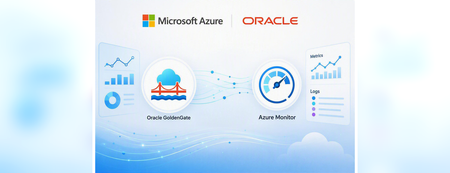
Customers running mission-critical Oracle workloads on Azure want more than database infrastructure in an Azure datacenter. They want their Oracle environments to fit naturally into the way their teams already build, govern, monitor, and purchase services on Azure. Today, Oracle AI Database@Azure takes another step in that direction with a native Azure experience for Oracle GoldenGate. Customers can provision and manage GoldenGate resources through the Azure portal and APIs, configure connections across databases, clouds, streaming platforms, and Microsoft Fabric, and bring GoldenGate metrics and operational logs into Azure Monitor and Azure Log Analytics. Together, these capabilities reduce the boundaries between Oracle data replication and the Azure applications, analytics services, operational tools, and governance processes that surround it. Oracle GoldenGate as a native Azure experience Oracle GoldenGate helps enterprises keep operational systems, analytics platforms, and AI workloads synchronized through real-time data replication. The native Azure experience brings GoldenGate provisioning, resource management, connectivity, automation, governance, and observability into the Oracle AI Database@Azure environment. Customers can create, list, pair, manage, and delete GoldenGate deployments and connections through the Azure portal and incorporate the same lifecycle operations into automated workflows through APIs. Resources are discoverable from the Oracle AI Database@Azure overview and through Microsoft Marketplace search. Because these objects participate in the Azure control plane, teams can apply familiar Azure capabilities such as role-based access control, tags, sizing choices, and Activity Log auditing across the GoldenGate lifecycle. Provisioning is handled through the Azure experience, while administrators can open the GoldenGate console for detailed replication configuration after deployment. This approach keeps resource deployment, ownership, automation, governance, and auditability in Azure while preserving the specialized GoldenGate experience for configuring replication processes. Connect Oracle data to the platforms where teams use it The native Azure experience also reflects the breadth of systems that GoldenGate can connect. Customers can configure connections for Oracle Database, Oracle Exadata, OCI Autonomous Database, and Amazon RDS for Oracle, along with Exadata and Autonomous Database services running across Azure, Google Cloud, and AWS. For streaming scenarios, supported connection options include Azure Event Hubs, Apache Kafka, Confluent Kafka, Microsoft Fabric Eventstream, and OCI Streaming. GoldenGate can also synchronize Oracle data with Microsoft Fabric destinations including Fabric Lakehouse and Fabric Mirror expediting your ongoing journey of AI solutioning to build Data agents in Fabric more seamlessly. These connection options make GoldenGate a practical bridge between operational Oracle data and the analytics, streaming, and AI services that depend on continuously updated information. Observe GoldenGate with Azure Monitor and Log Analytics Provisioning GoldenGate in Azure is only part of the operational experience. As replication environments grow, teams also need a consistent way to monitor service health, identify lag, and investigate operational changes alongside the rest of their Azure estate. Oracle GoldenGate deployment metrics and operational logs are now generally available in Azure Monitor and Azure Log Analytics for Oracle AI Database@Azure customers. Teams can monitor replication health, create alerts, analyze lifecycle events, and correlate GoldenGate telemetry with Azure applications and infrastructure using the Azure tools they already rely on. Metrics for health, resource use, lag, and process status Azure Monitor provides 18 GoldenGate metrics organized around three operational needs. Deployment health and resource metrics cover CPU, memory, OCPU consumption, file system usage, temporary space, swap space, and overall deployment health. Replication-lag metrics provide visibility across the deployment and its components, including inbound and outbound deployment lag, Extract and Replicat lag, distribution and receiver path lag, and heartbeat lag. Status metrics show the state of Extract, Replicat, distribution paths, and receiver paths. Teams can use these signals in Azure alerts, dashboards, workbooks, and queries, helping them spot replication delays or unavailable processes before those issues affect downstream applications and data consumers. Operational events in Azure Log Analytics GoldenGate lifecycle and operational events can also be sent to an Azure Log Analytics workspace through diagnostic settings. The release includes event categories for deployment updates, deletions, restore workflows, maintenance activity, critical service conditions, and informational state transitions. Bringing both metrics and operational events into Azure gives operations teams a more complete view. They can see when behavior changed, review the lifecycle or maintenance activity around that change, and correlate the result with signals from Azure applications and infrastructure. A more connected Oracle and Azure experience The native GoldenGate experience brings provisioning, API-driven lifecycle management, connectivity, governance, metrics, and operational logs together as part of Oracle AI Database@Azure. Customers can manage replication resources through Azure, connect Oracle data to the services and platforms where teams use it, and incorporate GoldenGate telemetry into day-to-day Azure operations. The result is less operational friction for customers building applications, data platforms, analytics, and AI solutions around Oracle databases on Azure. Oracle AI Database@Azure continues to evolve as an experience that is managed, governed, automated, and observed through the Azure tools customers already use. Learn more Get started with Oracle AI Database@Azure Learn about the native Azure experience for Oracle GoldenGate279Views0likes0CommentsBuild Enterprise-Ready Agents with Microsoft IQ and Oracle AI Database@Azure — now with Oracle MCP
We’re making it easier to bring Oracle data into intelligent applications with Microsoft IQ and Oracle AI Database@Azure. Oracle Managed Database MCP (Model Context Protocol) remote servers are now available in Microsoft Foundry—introducing a fully managed option that simplifies AI integration without disrupting existing MCP workflows. This builds on the momentum with Oracle AI Database@Azure, where enterprises are already pushing the boundaries of what's possible with Oracle data in the Microsoft Cloud. In just one year, we've shipped capabilities like: Oracle data mirrored into Microsoft Fabric — near real-time replication of Oracle data into OneLake for Analytics and AI. Fabric Data Agents — query mirrored Oracle data in natural language, then publish those agents as MCP servers, Teams apps, Copilot Studio connectors, or Microsoft Foundry tools. Custom copilots built with Microsoft Copilot Studio — secure, no-code access to Oracle data directly within Microsoft 365. Blueprints for enterprise-grade agents with Oracle data in Microsoft Cloud— blueprints for production‑grade, business‑aware AI agents powered by LLM of your choice, grounded in Oracle data, and enriched by the Microsoft IQ stack, with identity, governance, and compliance built-in. For developers, Oracle Database MCP server can already be enabled locally on VS Code through Oracle SQLcl MCP Server Integration available as part of the Oracle SQL Developer extension or hosted on Azure services such as Azure Functions and Azure Container Apps — providing direct, protocol-based interaction with Oracle databases. What changes now is how simple this becomes. With a fully managed OCI MCP discoverable in Microsoft Foundry tools catalog, developers can reduce operational overhead and focus on building intelligent, data-driven applications without sacrificing flexibility or control. We are excited about what this protocol unlocks: Oracle MCP is the connective tissue that lets Microsoft IQ bring its full intelligence to bear on Oracle enterprise data. “AI agents are exploding in the enterprise, but to create real value they need secure, governed access to trusted business data. With OCI Managed MCP Service for Oracle AI Database@Azure, customers can connect Microsoft IQ and agentic applications to Oracle Database with strict access governance and deep data security down to the cell level—bringing together Oracle’s database innovation with Microsoft’s AI innovation.” - Nathan Thomas, SVP Multicloud, Oracle The Magic: Unified Intelligence with Microsoft IQ The real value is agents that reason across every layer of organizational intelligence — structured, unstructured, and real-time: Fabric IQ — mirrored Oracle data analytics with ontology and graph, via OneLake Foundry IQ — knowledge grounding from documents in SharePoint, Blob, and Fabric Work IQ — M365 work signals (email, meetings, Teams) correlated with Oracle business data Oracle live data — transactional insights at runtime, via Oracle MCP That combination answers questions no single system can: "APAC meeting frequency dropped 30% last month — how did that affect Q1 sales, and does our SOP require escalation?" One agent. Live Oracle data, mirrored analytics, policy documents, and work signals — reasoned together. That's the magic Oracle MCP makes possible. Three paths to production with Oracle MCP All three deployment models remain available. Customers choose what fits their architecture, governance, and operational needs. Path 1: Local MCP via VS Code — Developer Productivity Run MCP on your laptop for rapid prototyping and developer inner-loop productivity. The SQL Developer Extension for VS Code automatically registers an SQLcl MCP Server for GitHub Copilot Agent Mode — zero setup beyond installing the extension and configuring a database connection. Best for: individual developers exploring schemas, generating SQL from natural language, prototyping agent interactions, and automating DBA tasks — all from within VS Code. Path 2: Self-Hosted MCP on Azure — Enterprise Control Deploy Oracle's Database MCP server on Azure Functions (serverless scaling, pay-per-execution) or Azure Container Apps (always-on, full container control, KEDA autoscaling). Both options support VNET integration with private endpoints to Oracle AI Database@Azure, Managed Identity for Key Vault credential access, and Azure API Management for rate limiting and OAuth2 enforcement. Best for: teams that need full infrastructure control, custom runtime dependencies, lower latency, enterprise networking (private endpoints, NSGs), and centralized governance — one MCP server shared by many agents. Path 3: Fully Managed Oracle MCP in OCI — NEW Register a production-grade, Oracle-managed database tools remote MCP server with zero infrastructure to manage. Browse the Foundry tools catalog, select Oracle remote MCP, authenticate and register your remote database tools MCP server pre-configured in OCI as a tool, and your agents in Microsoft foundry can now use this as a tool connection to fetch live Oracle data insights. Oracle handles deployment, patching, and scale. Best for: teams that want the fastest path to production with no servers to deploy. You focus on the agent logic. What you can build: live data agents The managed MCP option slots directly into the patterns developers are already using to put Oracle data to work in Foundry — querying live at runtime, with zero data movement: Blueprint AI Platform Connection Method Best For Foundry + Oracle MCP Microsoft Foundry Self-hosted or Managed MCP (NEW) Full model & tool control, multi-agent orchestration Foundry + ORDS + Vector Search Microsoft Foundry ORDS REST APIs + Oracle 26ai vectors RAG-powered agents, governed REST endpoints Power Apps + Oracle Connector Power Platform Gateway Modernize workflows, AI Builder predictions With the Microsoft Foundry Catalog, the “Foundry + Oracle MCP” blueprint now has a new deployment option —managed MCP— that eliminates infrastructure overhead while preserving the same agent capabilities. For analytics-heavy scenarios, you can also mirror Oracle data into Fabric (via Oracle Database Mirror or Open Mirror + GoldenGate service running on Oracle Database@azure) and expose it through Fabric Data Agents. Security and governance, built-in Enterprise agents are only useful if they're trustworthy. Regardless of which MCP path you choose, the security and governance model is consistent: Layer Control Identity Microsoft Entra ID — SSO, MFA, Conditional Access across all paths Network VNET integration, Private Endpoints, NSGs — no public IP on Oracle Secrets Azure Key Vault with Managed Identity — credentials never in code Data governance Microsoft Purview — scan, classify, and label Oracle data Access control Least-privilege Oracle DB users (read-only for agents), RBAC at every layer Audit Oracle Unified Audit + Azure Monitor + Log Analytics — full observability API governance Azure API Management — rate limiting, OAuth2 validation, WAF For the managed MCP path, Oracle adds authentication via OAuth2 client credentials, server-side logging, and OCI-native security policies. Tying it all together, the A365 Control Plane manages every IQ layer, agent publishing, DLP, sensitivity labels (MIP), Conditional Access, and centralized audit from a single pane of glass — so agents stay governed as they move from prototype to production. To tie it all together, Microsoft IQ delivers unified, governed intelligence across your enterprise. Oracle AI Database@Azure brings your Oracle data into the Microsoft ecosystem. And Oracle MCP — now fully managed in Microsoft Foundry — is the enabler that makes building enterprise-ready agents effortless. What's Next Coming Soon: The Complete Oracle AI Database@Azure AI Agent Playbook We're building a comprehensive playbook of 14 blueprints for building AI solutions on Oracle AI Database@Azure — from low-code and no-code patterns with Microsoft Copilot Studio and Power Apps, to full agentic AI solutioning with Microsoft Foundry, Oracle MCP, and the Microsoft IQ intelligence layers across three categories: Zero Data Movement (Live Oracle Data) — Copilot Studio, Microsoft Foundry + MCP, Microsoft Foundry + ORDS, Power Apps, Logic Apps Managed Replication (Mirrored Data Analytics) — Fabric Mirroring, GoldenGate CDC, Data Agents published as MCP/Teams/Copilot Studio/Microsoft Foundry tools AI Enrichment (IQ Layers) — Fabric IQ, Foundry IQ, Work IQ, Unified IQ Stay tuned. Catch us at these Microsoft Build sessions to see it all in action. Catch Us at Microsoft Build Build AI Apps with Oracle AI Database@Azure, MCP, and GitHub Copilot — Wed Jun 3, 2:30 PM PDT — Rajya Laxmi Yellajosyula (Microsoft) & Partha Srinivasan (Oracle). Live demo: MCP + Copilot orchestrating workflows across Oracle and Fabric using natural language. Move from Data to Intelligence with Oracle MCP and Microsoft IQ — Pre-recorded, Online — Ram Kakani (Microsoft) & Jeff Smith (Oracle). OCI Managed MCP + Work IQ, Fabric IQ, and Foundry IQ powering enterprise agentic experiences at scal...812Views0likes0CommentsYour Oracle Data Is Sitting Next to Microsoft AI. Are You Using It?
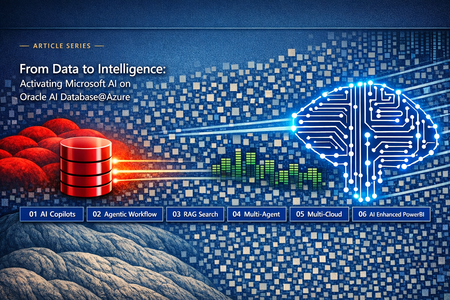
"Your organization runs Oracle on Azure. You've purchased Microsoft Foundry & OpenAI licenses. Why are your AI projects still stuck in proof-of-concept? "Your employees spend hours every week entering or reconciling data from documents, copying information into ERP systems. What would it mean if that information could be automatically gathered and processed in sub-millisecond level? "You have contracts, policies, SOPs, and compliance documents buried across Oracle modules that nobody can find fast enough to use. What decisions are being made on guesswork because the right answer was technically there but practically invisible? "Your data science team built a churn model, an equipment failure predictor, a demand forecast. Those predictions live in a Python notebook. When did your executives last act on one of them before the thing it predicted had already happened? If these feel familiar, the issue is not your models. It is the distance between your Data and your AI. Here's a scenario that plays out in enterprise after enterprise: The CIO has a mandate to deploy AI. The business runs on Oracle On-Premise or other Hyperscaler — ERP, EBS, financials, operations, the whole estate. Microsoft 365, Microsoft Fabric Power BI is popular choice of tool for Data Analytics and AI. Azure OpenAI licenses are purchased. Proof-of-concepts perform beautifully in demos and collapse in production cross-cloud boundaries. Copilots return stale data. Agents time out. Dashboards refresh so slowly that executives print them out and trust the paper more than the screen. The culprit is almost never the AI model. It's perhaps 200–300 milliseconds of latency between your Oracle data and your Microsoft AI platform cloud services. That gap — caused by Oracle sitting on-premises, in OCI, or in a different cloud — literally kills enterprise AI on Oracle workloads. It makes real-time copilots impractical, autonomous agents commercially unviable, and hourly AI-enriched dashboards technically impossible. Until that distance is removed, Azure AI in Oracle environments remains a demo. It does not become a production capability. WHERE THESE PATTERNS COME FROM? These six patterns in the article series were not invented for this article. They were discovered — built pattern by pattern, deployment by deployment, by Oracle customers and teams working on real enterprise problems against real Oracle databases. The original implementations ran on Oracle Cloud Infrastructure: Oracle's converged database handling JSON, vectors, graphs and relational data together; Oracle Integration Cloud orchestrating workflows; Oracle APEX delivering low-code applications; Oracle GenAI Service providing the intelligence layer. Real problems. Real Oracle customers. Real production deployments. Then something changed. Oracle AI Database@Azure arrived — and with it, a question nobody had been able to answer cleanly before: what happens when you take these proven Oracle patterns and surround them with the full Microsoft AI stack? Not as a replacement. Not as a migration away from Oracle. But as a surrounding activation layer — Microsoft Foundry, Azure Open AI, Power Platform, Copilot Studio, Power BI, Microsoft Fabric as well as Microsoft IQ Intelligence layer (Work IQ + Fabric IQ + Foundry IQ) — all now living in the same Azure region, same datacenter fabric, same network switch as Oracle AI Database@Azure. Sub-millisecond latency away from your Oracle data. Zero egress between them. The same tenancy, effectively. Oracle AI Database@Azure collapses the distance between your data and your models to zero. With Oracle Exadata and Microsoft AI platform sharing the same physical datacenter fabric — same building, same top-of-rack switch — the network hop becomes negligible. Latency falls to milliseconds. Cross-cloud egress charges vanish entirely. The patterns didn't change. The physics did. What changed is the underlying infrastructure. Microsoft AI sitting close to Oracle Data. This shift moves AI from possibility into practicality. These patterns already worked. What changed is that they now work fast enough, cheap enough, and simply enough to deploy at scale. NOTE: Based on the desired degree of customization and deployment flexibility, the six patterns described in this series may be realized using Microsoft 365, Power Platform, Copilot Studio, Microsoft Fabric, and associated services. The scope of this article series is limited to illustrating the Agent‑to‑Oracle AI Database@Azure integration paths through which these patterns are enabled. Six High‑Impact AI Use Cases for Oracle Estate Modernization on Azure with Microsoft AI Your Oracle data answers questions in plain English, without touching a line of code or a single schema object in Oracle. Your application runs on Oracle AI Database@Azure — the data is co-located, the latency is gone, the infrastructure is ready. But your teams are still spending the first hour of every shift logging into Oracle screens, toggling between systems, and manually looking up the numbers they need before they can start working. Relationship managers, care coordinators, and field engineers switch between multiple applications during a single interaction. The data is right there in Oracle. The friction is in how people reach it. This pattern removes that friction entirely. For sake of illustrating the end-to-end integration flows we will focus on Foundry which helps build custom agents get request from users and connect to Oracle. THE PATTERN IN-PLACE AI ENABLEMENT HIGH LEVEL DESCRIPTION Your Agents connects to Oracle AI Database@Azure, treating your Oracle schema as a live service endpoint. Users ask questions in plain English and because Microsoft AI and database share the same datacenter at sub-millisecond latency, responses are real-time - no stale or timeouts. AI doesn’t replace Oracle access. It removes the 40-minute overhead of logging in, navigating screens, and running reports — so teams focus on decisions, not data retrieval. The question for your architecture team: how does Agents reach Oracle AI Database@Azure? There are six distinct paths. All six end at the same place. The path you choose determines who builds the integration and how much control you have. SIX PATHS AT A GLANCE Path In plain language Who builds it Best for Oracle requirement 1. Oracle Connector Point-and-click chatbot for Teams Business analyst Fastest start Any Oracle 19c+ 2. ORDS + PL/SQL Secure web service, your own SQL DBA + developer Max control Any Oracle 3. ORDS + Select AI NL2SQL inside Oracle via Azure OpenAI DBA + developer Production NL2SQL Autonomous DB only 4. JDBC Functions Custom code, any language Developer Custom logic Any Oracle 5. Logic Apps Low-code workflow orchestration Citizen dev Multi-system Any Oracle 6. MCP + AI Agent Oracle reasons autonomously DBA + developer Complex reasoning Autonomous 26ai Your Oracle data answers questions in plain English, without touching a line of code or a single schema object in Oracle. Think of this as giving your agent the ability to look things up in your Oracle database — without anyone writing code. Microsoft Copilot Studio is a drag-and-drop tool where a business analyst points a chatbot at specific Oracle tables and says “these are your knowledge sources.” From that moment, any employee in Teams can type a question like “What’s the status of PO 4872?” and the chatbot answers instantly by reading live Oracle data. HOW IT WORKS Copilot Studio using the Native Oracle connector. Best separation of concerns. User → Teams→ Copilot Studio Agent → Oracle: The user interacts with Teams and asks plain English question. Copilot Agent with the native Oracle Database connector as knowledge source to query live Oracle AI Database@Azure data tables. Oracle → Copilot Agent: Returns live, governed data based on user context and access controls. Returns structured results to Copilot Agent for response assembly and formatting. Copilot Agent→ Teams → User: Delivers the final response back to the user in Teams, web app, or chatbot. STRENGTHS Accelerates AI deployment with minimal engineering overhead, enabling rapid rollout of enterprise copilots and agents without custom application development. Democratizes agent creation across business units through low‑code conversational interfaces — expanding AI innovation beyond centralized data science teams. Enterprise identity governance built‑in via Microsoft Entra ID with MFA, conditional access, and centralized authentication. Aligned to Responsible AI and data governance mandates through Microsoft Purview, Entra ID, and RBAC‑based access enforcement. Native integration across Microsoft 365 and Power Platform enables AI experiences to be embedded directly into existing workforce workflows. Data‑in‑place architecture: Oracle data remains at the source, eliminating duplication risks and enabling real‑time AI grounded in operational truth. Flexible agent development paths: Both Copilot Studio (low‑code) and Microsoft Foundry Agent Builders (pro‑code) can be leveraged to build enterprise agents using standardized Oracle connectors/tools. CONSIDERATIONS NL2SQL generation is mediated by Copilot Studio’s AI engine rather than Oracle Select AI — reducing direct control over SQL generation logic. Knowledge grounding is limited to table‑level data sources, restricting reuse of custom PL/SQL‑based business logic within agent interactions. Key Takeaway — Oracle AI Database@Azure Deployment Compatibility Base DB Service: Fully supported. Exadata DB Service: Fully supported. Same direct table access as Base DB. Exascale DB Service: Fully supported. ADB Serverless: Fully supported. Note that NL2SQL still comes from Copilot Studio, not Oracle Select AI. ADB Dedicated: Fully supported. This is the most universally compatible path. It works on every Oracle Database@Azure deployment type because the Copilot Studio connector reads tables directly — no dependency on Select AI or any Autonomous-only feature. On-premises Oracle (11g+) is also reachable via the Power Platform on-premises data gateway. You define exactly what goes back to the user — every SQL statement, every business rule, every byte of data is governed by your PL/SQL logic. This is the path for users that need deterministic, predictable responses from Oracle. Your Oracle DBA writes the exact stored procedures that retrieve and transform data. These procedures are exposed as secure REST endpoints via ORDS. Foundry calls them like any other API. You control the SQL, the business logic, the validation, and the shape of every response. HOW IT WORKS Microsoft Foundry Agents invoke ORDS REST endpoints that execute custom PL/SQL — no AI-generated SQL involved. User → Teams -> Foundry: The user interacts with Teams and asks plain English question that gets submitted to a structured intent request to a Foundry agent. Foundry → ORDS REST Endpoint: Foundry is the authoritative control plane: it validates the intent and route calls a pre-defined ORDS endpoint using OAuth 2.0 or Entra ID managed identity authentication with structured parameters. It accesses ORDS the same way it accesses any external API: thru tool connection. Best patterns for ORDS are Open API or a wrapped as Azure Functions/APIM. ORDS → PL/SQL Stored Procedure: ORDS routes the call to a PL/SQL stored procedure. The procedure executes your hand-crafted SQL with full RLS/VPD enforcement. Oracle → ORDS: Oracle executes the query, applies Row-Level Security, runs business validation, returns structured results. ORDS → Foundry: ORDS formats the result as JSON. Rate limiting and audit logging applied automatically. Foundry → Teams → User: Foundry assembles the response, optionally enriches with Azure OpenAI narration, delivers the answer back to user. STRENGTHS Deterministic AI‑to‑data interaction layer: Every SQL statement is explicitly defined — eliminating autonomous query generation and enabling policy‑driven data access. Enterprise‑grade identity and access controls through OAuth 2.0, Microsoft Entra ID managed identities. Embedded data‑level governance: Enforces Row‑Level Security (RLS) and Virtual Private Database (VPD) policies on every agent‑initiated query. Consistent deployment across database estates: ORDS is natively integrated with Autonomous Database and deployable on Base Database and Exadata. Agent‑ready API abstraction: ORDS endpoints can be registered as Open API tools/specs within Foundry Agent Service or Copilot Studio for controlled agent access. Enterprise AI control plane integration: Azure API Management (APIM) and Azure Functions introduce centralized authentication, policy enforcement, and abstraction of Oracle‑specific logic. Improved AI observability and governance posture across agent‑mediated database interactions. CONSIDERATIONS Requires PL/SQL development expertise to build and maintain stored procedure wrappers for agent access. ORDS endpoints must be explicitly defined and lifecycle‑managed, including versioning. New data use cases typically require endpoint or stored procedure updates, increasing operational overhead. Does not leverage Oracle Select AI, limiting ad hoc natural language query flexibility at the database layer. Key Takeaway — Oracle AI Database@Azure Deployment Compatibility Base DB Service: Fully supported. ORDS is installable. Full PL/SQL control with no Autonomous features required. Exadata DB Service: Fully supported. ORDS installable. Ideal for EBS/ERP workloads with custom stored procedures. Exascale DB Service: Fully supported. ADB Serverless: Fully supported. ORDS is built-in with zero setup — the best developer experience. ADB Dedicated: Fully supported. ORDS built-in. This is the most universally deployable path for controlled data access. It works on every Oracle Database@Azure service including Base DB (19c). No Autonomous-only features required. If your organization demands complete control over SQL generation and data exposure, this is the production-recommended starting point. Users ask plain English questions — Oracle’s own AI engine translates them into SQL, executes them, and returns governed answers, all within the database boundary. Your Oracle DBA creates a secure REST endpoint that accepts a plain-English question and returns an answer. Inside Oracle, Select AI reads your table structures, asks Azure OpenAI to generate the right SQL, runs it, and returns the result — all within the database boundary. Your data never leaves Oracle. HOW IT WORKS Microsoft Foundry Agents invoke ORDS REST endpoints that call Oracle’s Select AI engine (DBMS_CLOUD_AI). User → Teams -> Foundry: The user interacts with Teams and asks plain English question that gets submitted to a structured intent request to a Foundry agent. Foundry → ORDS REST Endpoint: Foundry is the authoritative control plane: it validates the intent and route calls a pre-defined ORDS endpoint Calls ORDS using OAuth 2.0 / Entra ID. Payload: {"question": "Avg salary by dept?", "action": "narrate"}. ORDS → DBMS_CLOUD_AI.GENERATE: PL/SQL wrapper invokes Select AI. Reads schema metadata, sends augmented prompt to Azure OpenAI (sub-ms latency). Azure OpenAI → Select AI: Returns generated SQL. Select AI validates, executes inside Oracle with RLS/VPD. Data never leaves Oracle. Oracle → Foundry: Select AI narrates the result. ORDS formats as JSON. Foundry → Team →User: Delivers the natural language answer with full audit trail. STRENGTHS In‑database natural language query capability through Select AI (NL→SQL engine in 26ai) enables governed, conversational access to enterprise data for ad hoc analysis and BI‑style exploration. Agent interaction occurs via curated query intelligence endpoints, ensuring controlled invocation from any agent orchestration layers like Microsoft Foundry or Power Platform. Governed data exposure model: Curated object_list definitions prevent unintended access to sensitive datasets. Enterprise‑grade identity and access controls via OAuth 2.0, Microsoft Entra ID, and ORDS rate limiting. NL2SQL execution remains fully contained within the Oracle database boundary, with Row‑Level Security (RLS) and Virtual Private Database (VPD) policies enforced at runtime. Native ORDS integration within Autonomous Database eliminates the need for separate deployment layers. Multi‑modal Select AI interaction support including showsql, runsql, narrate, chat, and summarize for agent‑mediated reasoning workflows. CONSIDERATIONS Requires PL/SQL expertise to implement stored procedure wrappers for agent invocation. Schema changes necessitate Select AI profile updates to maintain alignment with governed query surfaces. Select AI is limited to Autonomous Database deployments, and is not available on Base Database or Exadata Database Service environments. Key Takeaway — Oracle AI Database@Azure Deployment Compatibility Base DB Service: Not supported for Select AI. DBMS_CLOUD_AI is not available on Base DB. Use Path 2 (ORDS + PL/SQL) instead, or deploy a sidecar ADB instance to unlock NL2SQL capabilities. Exadata DB Service: Not supported for Select AI. Same limitation as Base DB. Deploy a sidecar ADB Serverless that reaches Exadata data via Database Links. Exascale DB Service: Not supported for Select AI. Same sidecar approach applies. ADB Serverless: Fully supported. Full Select AI, ORDS built-in, Azure OpenAI integration. This is the production-recommended deployment for Path 3. ADB Dedicated: Fully supported. Full Select AI and ORDS built-in. ORDS itself works on every deployment type — you can always expose PL/SQL as REST endpoints. But Select AI (the NL2SQL engine) is exclusively Autonomous Database. For Base DB, Exadata, or Exascale, the sidecar pattern (see Sidecar section below) unlocks Select AI without modifying your production systems. Your developers write the integration code — any language, any framework, any logic — connecting directly to Oracle using traditional database drivers. Your engineering team writes a small Azure Function that connects directly to Oracle using JDBC or Python. Maximum flexibility: custom logic, combining Oracle results with other data sources, retry policies, caching, and batching. HOW IT WORKS Microsoft Foundry Agents invoke Azure Functions that connect to Oracle via JDBC/python-oracledb. User → Teams-> Foundry: The user interacts with Teams and asks plain English question submitted to Foundry agent. Foundry → Azure Function: Calls the Azure Function’s HTTP endpoint as a custom tool. Azure Function → Oracle (JDBC): Opens JDBC/python-oracledb connection using wallet or token auth. Calls DBMS_CLOUD_AI.GENERATE, custom PL/SQL, or direct SQL. Oracle → Azure Function: Executes with RLS/VPD. Function can then enrich, transform, cache, or combine with other sources. Azure Function → Foundry: Formats and returns response. Your code controls error handling and retries. Foundry → Teams → User: Delivers the final answer. STRENGTHS Maximum engineering flexibility: Full developer control across any language and framework, enabling teams to standardize on existing enterprise development patterns. Leverages existing Azure app infrastructure: Runs cleanly on established Azure Functions and Azure App Service footprints. Operational resilience patterns under your control: Supports batching, retries, caching, and multi‑source aggregation to optimize performance and reliability. Broad driver ecosystem: Works with standard Oracle drivers including python-oracledb, JDBC (Java), and ODP.NET (.NET). CONSIDERATIONS Higher build-and-run burden: More custom code to develop, test, secure, maintain, and operate compared to an ORDS-based API approach. Key Takeaway — Oracle AI Database@Azure Deployment Compatibility Base DB Service: Supported for custom PL/SQL via JDBC. Not supported for Select AI — your Function would call Azure OpenAI directly for NL2SQL, then execute the generated SQL against Oracle. Exadata DB Service: Supported for custom PL/SQL via JDBC. Same external NL2SQL approach for Select AI. Exascale DB Service: Supported for custom PL/SQL. Same limitation for Select AI. ADB Serverless: Fully supported. ADB Dedicated: Fully supported. JDBC connectivity works with every Oracle Database@Azure service. You can always call custom PL/SQL from an Azure Function. However, calling DBMS_CLOUD_AI.GENERATE (Select AI) is Autonomous only. Low-code workflow orchestration that bridges Oracle into the broader Azure ecosystem — CRUD operations, stored procedures, conditional logic, and multi-system integration. Azure Logic Apps or Power Automate provides a visual workflow designer with a pre-built Oracle connector. Ideal when Oracle is one component of a larger multi-system workflow — invoice processing, approval chains, scheduled synchronization, cross-system orchestration. HOW IT WORKS Microsoft Foundry Agents invoke Azure Logic Apps workflows that orchestrate Oracle alongside other enterprise systems. User → Teams -> Foundry: The user interacts with Microsoft 365 Copilot or Teams and asks plain English question. Copilot interprets user intent and available Microsoft 365 context, then submits a structured intent request to a Foundry agent. Foundry → Logic Apps: Invokes a Logic Apps workflow as a tool — visual, low-code canvas. Logic Apps → Oracle (Connector): Uses pre-built Oracle connector for CRUD and stored procedures. Supports on-prem via data gateway. Oracle → Logic Apps: Returns results. Workflow applies conditional logic, routes to approvals, calls additional systems. Logic Apps → Foundry: Returns orchestrated result — may combine Oracle + other system data. Foundry → User: Delivers the final response or workflow status. STRENGTHS Low‑code orchestration model: Enables business teams to design workflows using a visual interface without requiring PL/SQL development. Pre‑built Oracle connectivity: Native connector manages authentication, connection handling, and CRUD operations out of the box. Supports invocation of stored procedures for integration with existing business logic and transactional workflows. Enterprise integration layer: Integrates Oracle into cross‑platform workflows spanning SAP, Salesforce, ServiceNow, and other enterprise systems via the same connector framework. Hybrid deployment support: Enables access to on‑premises Oracle environments (11g+) through the on‑premises data gateway without modifying the source database. CONSIDERATIONS Connector does not natively invoke Select AI or DBMS_CLOUD_AI, limiting direct access to in‑database NL2SQL capabilities. On‑premises data gateway may introduce an additional runtime component requiring installation, security assessment, and lifecycle management Key Takeaway — Oracle Database@Azure Deployment Compatibility Base DB Service: Fully supported. Full CRUD + stored procedure invocation via the Oracle connector. Exadata DB Service: Fully supported. Ideal for EBS workflow automation. Exascale DB Service: Fully supported. ADB Serverless: Fully supported. Can invoke Select AI indirectly by calling an ORDS endpoint as one workflow step. ADB Dedicated: Fully supported. Logic Apps works with every Oracle deployment type including on-premises Oracle (11g+) via the data gateway. For NL2SQL, combine Logic Apps with an ORDS endpoint (Path 2 or 3) as one step in the workflow. ORDS gives you control; Logic Apps give you speed and multi-system orchestration. The latest advanced path — the Oracle database itself becomes an AI agent that reasons, calls tools, reflects, and chains multi-step business logic autonomously. While Select AI is a stateless NL→SQL capability that handles a single query and returns a single result, Select AI Agent provides context-aware, multi-step agentic reasoning to support workflows—effectively acting as an agent wrapper that uses Select AI (or a data agent endpoint) as one of its tools. Oracle Private Agent Factory ("PAF") may be used to build agent that run inside the Oracle database which can query data (SQL, vector), analyze, reason, research and execute workflow. *MCP (Model Context Protocol) is an open standard — a “USB-C port” for AI agents. Oracle now offers a built-in MCP server on Autonomous Database (GA March 2026). HOW IT WORKS Microsoft Foundry Agents invoke Oracle’s Select AI Agent via ORDS or the built-in ADB MCP Server. User → Teams -> Foundry: The user interacts with Teams and asks plain English question submitted to Foundry agent. Foundry → Oracle (MCP/ORDS/REST API): Calls Oracle’s Select AI Agent. Oracle → ReAct Loop: Select AI Agent reasons about data needs, calls NL2SQL, Vector Search, PL/SQL business rules, external APIs. Agent → Tools (Iterative): Calls tools, evaluates results, iterates 3–10 times. All within Oracle’s security boundary. Oracle → Foundry: Formulates comprehensive narrated answer with citations. Foundry → User: Delivers the answer with full audit trail of every reasoning step STRENGTHS Advanced agentic execution capability: Supports multi‑step reasoning workflows where agents can invoke tools, maintain conversational context, and orchestrate actions across turns. Business logic executes natively within Oracle at sub‑millisecond latency — minimizing external orchestration overhead. Data remains within the database boundary, supporting structural compliance requirements for regulated industries. Select Agent execution path: ORDS invokes the Oracle in‑database agent runtime, enabling multi‑step reasoning workflows prior to returning results. Oracle Private Agent Factory agents may be exposed through ORDS endpoints or optionally surfaced via an Oracle MCP Server for agent‑based tool invocation. CONSIDERATIONS Requires Oracle 26ai Autonomous Database deployments to support in‑database agent runtime capabilities. Configuration complexity may be higher relative to lower‑capability integration patterns. Agent‑based reasoning may increase token consumption, resulting in higher per‑query costs compared to direct Select AI NL2SQL execution. Model Context Protocol (MCP) support remains in preview, and enterprise orchestration platform integrations continue to mature. Key Takeaway — Oracle Database@Azure Deployment Compatibility Base DB Service: Not supported. Exadata DB Service: Not supported. Exascale DB Service: Not supported. ADB Serverless: Fully supported. Built-in MCP server (GA March 2026), ReAct reasoning, Private Agent Factory, multi-turn memory. Requires 19.29+ or 26ai. ADB Dedicated: Fully supported. Full agent capabilities. Requires 26ai. Path 6 is exclusively Autonomous Database. The agentic runtime is deeply integrated into the ADB kernel. For non-Autonomous deployments, deploy a sidecar ADB instance to unlock agent capabilities. If your priority is… Start with… Oracle requirement Fastest time-to-value, M365 Path 1 — Copilot Studio Any Oracle 19c+ Complete SQL control, regulated Path 2 — ORDS + PL/SQL Any Oracle Natural language with Oracle NL2SQL Path 3 — ORDS + Select AI Autonomous DB Custom integration, multi-source Path 4 — JDBC Functions Any Oracle Multi-system orchestration Path 5 — Logic Apps Any Oracle Complex reasoning, agentic AI Path 6 — ORDS/MCP + AI Agent Autonomous 26ai Key principle All six paths can coexist. Most enterprises will run Path 1 (Copilot Studio) for rapid Teams access, Path 2 or 3 (ORDS) for production, and Path 6 (Select AI Agent) for complex reasoning — all against the same Oracle database, same security model, same audit trail. Now imagine your company has years of critical data sitting in Oracle databases. You want AI to answer business questions — "What were our top 10 customers last quarter?" or "Why did revenue dip in March?" — but you can't afford the risk, cost, or time of migrating your data to a Oracle Database At Azure system. The sidecar solves this. It's a small, lightweight AI database you park next to your existing Oracle environment. Your data never moves. Your production systems are never touched. You simply get AI-powered answers on top of what you already own — in minutes, not months. The sidecar can be an Autonomous Database instance (Serverless or Dedicated) running on Oracle Database@Azure. It does not store your production data — it connects to your existing databases (Exadata, Base DB, on-premises Oracle). What it IS: A smart AI assistant sitting beside your data, reading and answering questions on demand. Additionally enterprises can adopt a Fabric-centric, sidecar architecture that integrates Microsoft Fabric OneLake and Oracle Database@Azure. What it IS NOT: A replacement for your existing databases, a data warehouse, or a migration project. It does not own your data — it borrows a view of it. Everything in this article comes down to one physical reality: when Oracle AI Database@Azure and Microsoft AI share the same datacenter, the economics of enterprise AI don't just improve — they flip entirely. Latency disappears. Egress disappears. Complexity disappears. What we discussed today - PATTERN #01 of #06 - "AI In-Place Enablement" was never the hard part. The distance was. This only works because the AI and Oracle data now sit within milliseconds of each other. Previously, this interaction would time out or return stale results. For years, the gap between your Oracle data and your AI ambitions wasn't a technology problem — it was both physics and geography problem. That gap is now closed. Permanently. So now the only question left is this: "Do you want to be early — or do you want to be catching up?" Because Frontier organizations are not experimenting. They are building the next version of how their business runs. If you’re already running Oracle AI Database@Azure, you’re closer than you think. The only thing left is deciding where to start. If this resonates, you already know where to start. Pattern 1 of 6 is live and Oracle AI Database@Azure is live across 40+ regions. Remaining five patterns drop in over next series of this blog. Which one are you most curious about? We would love to know where you are headed. Drop it in the comments - we read every comment. 🔜 Next up — Pattern #02 of #06: Smart Agentic Workflow Automation and Document Intelligence. READING REFERENCES — Build Copilots with Copilot Studio + Oracle Database@Azure (Microsoft) Add Oracle as a knowledge source in Copilot Studio (Microsoft Learn) Unlocking Data for AI for Sidecar - Empowering Business Users with AI Driven Insights | autonomous ai database (Oracle) - Use Autonomous AI Database as an AI Proxy for Select AI (Oracle) Use AI Proxy Database for Select AI NL2SQL Oracle REST Data Services documentation hub (Oracle) Connect Logic Apps to Azure OpenAI and AI Search (Microsoft Learn) ORDS POST/PUT handlers for write-back to Oracle (Oracle community) Oracle AI Database 26ai announcement Microsoft Foundry Agent Service overview (Microsoft Learn) ORDS download page listing Oracle MCP Servers (Oracle) Extend agents with REST APIs / OpenAPI specs from ORDS (Microsoft Learn) Copilot Studio integration strategies including MCP and connectors (Microsoft Learn) Oracle Database@Azure multicloud overview (Oracle) Power BI Oracle Database Connector (Microsoft Learn) IMPORTANT DISCLAIMER: Before making architectural decisions or production commitments based on any pattern or paths described here, we strongly recommend validating the latest capabilities, version compatibility, regional availability, licensing, and support status directly with Oracle and Microsoft. This includes confirming Select AI feature availability, MCP server GA status, Copilot Studio connector regional rollout, Logic Apps connector capabilities, and sidecar Database compatibility for your specific Oracle version and deployment type. The assumptions, figures, and concepts presented in this blog are directional; each requires validation through a proof-of-concept or pilot before production commitment. The intent is not to prescribe a final architecture, but to map the art of the possible: identifying feasible, high-value AI use cases worth carrying forward into deeper design and execution. This blog is for educational purposes only. It does not constitute a product commitment, service guarantee, or contractual obligation from Oracle, Microsoft, or the authors. ## Acknowledgements This work reflects a collaborative "Art of Possible" effort between Microsoft Global Black Belt, Oracle Tiger Team and Cloud Engineering teams. Special thanks to Chip Baber, Dennis Var, John Andrew Prabaharan, Don Kidwell, Heema Satapathy and Johnnie Konstantas from Oracle Corporation for their valuable input and contributions to validating the real-world implementation scenarios, sidecar AI database activation patterns, Select AI Engine, Private Agent Factory with in-database agent orchestration, and hybrid multi-agent integration approaches that helped shape several of the multi-cloud architecture patterns discussed in this blog series.1KViews2likes0Comments
New Oracle Autonomous AI Database - Dedicated option on Oracle AI Database@Azure
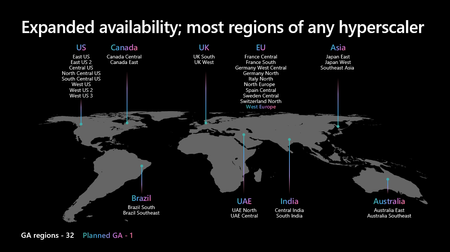
At Microsoft, our partnership with Oracle reflects a shared commitment to meeting customers where they are — helping them modernize mission-critical workloads on Azure without sacrificing the performance, control, or compliance posture they've built over years. As part of this continued evolution, Oracle Database@Azure has expanded and is now called Oracle AI Database@Azure — reflecting the broader portfolio of Oracle AI‑enabled database services available natively on Microsoft Azure, and the growing role these databases play as the foundation for analytics and AI. Today, we're thrilled to announce the general availability of Oracle Autonomous AI Database on Dedicated Exadata Infrastructure on Oracle AI Database@Azure, giving enterprises a new level of infrastructure exclusivity and operational control on Microsoft Azure. What's New: Autonomous AI Database on Dedicated Exadata Infrastructure Oracle Autonomous AI Database on Dedicated Exadata Infrastructure on Oracle AI Database@Azure gives organizations exclusive cloud resources for their databases — with greater control over maintenance windows, resource allocation, security boundaries, and lifecycle management policies, while Oracle continues to handle database administration. This is purpose-built for enterprises in highly regulated industries — financial services, healthcare, government, and defense — where resource isolation, audit trail requirements, and strict SLA obligations demand infrastructure that is exclusively theirs. Dedicated architecture reserves an entire Exadata cluster for a single customer, ensuring no shared tenancy, predictable performance, and full operational control without the complexity of managing the database layer. For organizations that prioritize agility over isolation, Oracle Autonomous AI Database on Serverless architecture remains available on Oracle AI Database@Azure — offering elastic scaling, rapid provisioning, and hands-off management on Oracle-managed infrastructure, with minimal administrative overhead. Together, both deployment options are available within the same Azure environment, giving every organization a path to run Oracle's most advanced autonomous database technology — at the right level of control for their needs. The Microsoft IQ Stack: Enabling Frontier Transformation The race to become an AI-powered enterprise starts with data — and for many of the world's largest organizations, Oracle isn't just a database — it's the system of record for their most critical data: financials, supply chains, ERP, and customer operations. That makes Oracle the foundation — and the gateway — to Frontier Transformation. Frontier Transformation isn't about replacing what works. It's about owning the autonomous intelligence layer above every system — Oracle included. That means transforming static enterprise data into active, agent-driven intelligence that reasons, acts, and continuously improves — with less manual intervention and faster time to value. The Microsoft IQ Stack is how that becomes real: Infrastructure— Azure is the hyperscaler substrate. Oracle AI Database@Azure runs Oracle's Exadata hardware natively inside Azure datacenters, bringing Oracle's systems of record into direct, low-latency proximity with Microsoft’s cloud services. Data — Oracle remains the authoritative system of record. Microsoft Fabric and OneLake activates that data to be governed, unified, and AI-ready. Models (IQ Core) — Work IQ, Foundry IQ, and Fabric IQ sit above the data layer, grounding Azure OpenAI and Microsoft Foundry in real business context that lives inside Oracle. Applications — Oracle apps remain systems of record. Microsoft Copilot and agents become the system of intelligence — embedded in the workflows where work happens. Oracle AI Database@Azure — and today's dedicated infrastructure expansion — directly strengthens the Data layer of the IQ Stack. Enterprises can now bring their Oracle data from anywhere — on-premises, Oracle Cloud Infrastructure (OCI), AWS, Google Cloud, or other environments — and land it on Azure, connecting decades of mission-critical data to the full power of Microsoft AI. Once on Azure, that data becomes active intelligence. It flows into Microsoft Fabric for governed analytics and unified data insights. It feeds Microsoft Foundry to power autonomous agents that don't just surface information — they reason over it, take action, and reduce operational overhead. And through Work IQ — via Microsoft 365 Copilot, Copilot in Teams, and Copilot Studio — it surfaces in the tools your people already use: meeting prep grounded in live financials, decisions informed by real ERP data, and custom agents built directly on your Oracle systems of record. The result is faster innovation, fewer operational bottlenecks, and a new generation of agent-driven processes built on the data your organization has trusted for decades. This is where the Microsoft IQ Stack becomes the strategic imperative for your Oracle workloads. Customer Spotlight: Activision Blizzard Modernizes Oracle E‑Business Suite and Activates AI on Azure Global gaming leader Activision Blizzard is using Oracle Database@Azure to modernize its Oracle E‑Business Suite (EBS) environment while laying the foundation for AI‑driven insights across the Microsoft cloud ecosystem. By running Oracle Exadata natively inside Azure datacenters, Activision Blizzard was able to move its EBS‑backed Oracle databases to the cloud without compromise—preserving the performance, reliability, and governance required for core financial and operational systems, while gaining direct proximity to Microsoft’s data and AI services. With Oracle EBS data available natively on Azure, Activision Blizzard gained real‑time access to its systems of record from Azure services and seamless integration across Oracle and non‑Oracle data sources. This enables faster insight delivery to business stakeholders and creates new opportunities to analyze and act on operational and financial data without costly data movement. Crucially, Oracle Database@Azure allows Activision Blizzard to extend the value of its EBS data using Microsoft Fabric, Power BI, and Copilot Studio—transforming traditional ERP data into AI‑ready intelligence. This provides a practical foundation for agent‑driven workflows, where AI can reason over trusted EBS data to support decision‑making, streamline processes, and accelerate innovation while maintaining strong governance and security controls. This customer story demonstrates how Oracle Database@Azure helps organizations modernize EBS‑based systems of record and connect them directly to the Microsoft IQ Stack—bridging enterprise ERP data with analytics, AI, and Copilot experiences to prepare for an AI‑first future. Learn more: https://www.microsoft.com/en/customers/story/26227-activision-blizzard-oracle-database-at-azure Generally Available Across All 33 Azure Regions Oracle AI Database@Azure is now generally available in all 33 Azure regions — making it most broadly available service amongst all hyperscalers. Each supported region includes multiple Availability Zones (AZs), enabling customers to architect highly available, resilient deployments that maximize uptime and protect against zone-level failures. These 33 regions span the globe across every major geography: Americas East US · East US 2 · West US · West US 2 · West US 3 · South Central US · Canada Central · Brazil South Europe UK South · North Europe · West Europe · France Central · Germany West Central · Switzerland North · Sweden Central · Norway East · Poland Central · Italy North Middle East & Africa UAE North · Qatar Central · Israel Central · South Africa North Asia Pacific East Asia · Southeast Asia · Japan East · Japan West · Australia East · Australia Southeast · Korea Central · Central India · South India · West India This global footprint ensures that enterprises — regardless of where their data must reside — can deploy Oracle AI Database@Azure with the data residency, latency, and compliance characteristics they require. A Comprehensive Oracle Database Portfolio on Azure Oracle AI Database@Azure is designed to give customers the same broad set of Oracle AI Database capabilities they rely on today — fully available on Azure. The portfolio includes: Exadata Database Service on Dedicated Infrastructure — for mission-critical OLTP workloads Exadata Database Service on Exascale Infrastructure — for cost-efficient, burstable enterprise workloads Oracle Autonomous AI Database (serverless and dedicated) Oracle Base Database Service — for flexible, customer-managed Oracle DB deployments Oracle Autonomous AI Lakehouse — for unified analytics and data warehousing Oracle GoldenGate — for real-time data replication and integration Oracle Database Zero Data Loss Autonomous Recovery Service — for enterprise-grade backup and recovery Customers can migrate to Azure without rearchitecting their existing solutions. Oracle Zero Downtime Migration automates the migration process to minimize disruption, and customers can implement Oracle Maximum Availability Architecture (MAA) Silver and Gold reference architectures within Azure for high availability and disaster recovery — all while keeping existing Oracle licenses (BYOL) or choosing a license-included model. Next Steps Whether you're migrating Oracle workloads to Azure, building AI-powered applications on top of enterprise data, or architecting for the highest levels of compliance and availability, Oracle AI Database@Azure gives you the foundation to move fast without compromise. Here's how to get started: Learn more at aka.ms/oracle Attend the Oracle + Azure Technical Webinar Series from our technical experts to go deeper on Oracle AI Database@Azure Join the Oracle AI Database@Azure community on LinkedIn to connect with peers and get the latest updates Talk to your Microsoft or Oracle account team to discuss architecture options, migration planning, licensing, and how to get started663Views1like1CommentMicrosoft hits the road with Oracle AI World Tour 2026.
Microsoft is a Gold Sponsor of the Oracle AI World Tour 2026, a series of five events in Amsterdam, London, Sydney, New York City, and Tokyo, aimed at promoting Oracle Database@Azure as a comprehensive, AI-ready solution for enterprise Oracle workloads in the public cloud. Attendees can engage with Microsoft experts, attend demos, and join theater sessions on modernizing Oracle workloads, security with Microsoft Sentinel, and leveraging Microsoft Foundry for AI-driven environments, all designed to simplify migration, enhance security, and accelerate AI innovation for enterprises.1.6KViews0likes0CommentsOracle Database@Azure Is Now Generally Available in West Europe (Amsterdam)
As organizations across Europe accelerate their cloud modernization and AI adoption, data locality, compliance, and performance remain critical decision factors. Over the past year, Microsoft and Oracle have worked closely to rapidly expand the global footprint of Oracle Database@Azure, bringing Oracle’s enterprise‑grade database services natively into Azure datacenters around the world. Today, we are excited to announce that Oracle Database@Azure is now generally available in the West Europe (Amsterdam) Azure region. This new region enables customers across Western Europe to run mission‑critical Oracle databases closer to their Azure applications—meeting stringent regional compliance requirements while benefiting from ultra‑low latency and a fully integrated Azure experience. Why West Europe (Amsterdam) matters Regional availability is essential for enterprises operating in regulated industries and distributed geographies. With Oracle Database@Azure now available in West Europe, customers can: Meet EU data residency and sovereignty requirements by keeping Oracle data within the Netherlands Reduce application latency by colocating Oracle databases and Azure services within the same Azure datacenter region Simplify compliance and risk management for industries such as financial services, public sector, utilities, retail, and healthcare Design resilient architectures with regional and in‑country disaster recovery options This expansion builds on the growing European footprint of Oracle Database@Azure and complements existing regions across EMEA, North America, APAC, and Brazil. A unified Oracle and Azure data platform—without re‑architecting Oracle Database@Azure delivers a unique architecture that colocates Oracle‑managed database services on Oracle Exadata infrastructure directly inside Azure datacenters. This allows Azure applications to access Oracle databases over Azure’s internal network fabric, delivering predictable performance and microsecond‑level latency—without the complexity of cross‑cloud networking. In the West Europe region, customers can run: Oracle Exadata Database Service (Dedicated and Exascale Infrastructure) Oracle Autonomous Database Oracle Base Database Service Oracle GoldenGate and Autonomous Recovery Services These services integrate natively with Azure identity, networking, security, and management services, enabling customers to modernize at their own pace while preserving existing Oracle investments and operational practices. Built for European enterprise workloads For many organizations, migrating Oracle databases has historically required complex re‑architecture or compromises on performance and governance. With Oracle Database@Azure in West Europe, customers can: Migrate existing Oracle databases to Azure without code changes Use familiar Oracle tools and skills while adopting Azure AI, analytics, and application services Preserve licensing flexibility through BYOL or license‑included options Accelerate modernization initiatives while minimizing risk and disruption This architecture is particularly well‑suited for enterprises running applications in Azure alongside deeply customized Oracle databases that are difficult to replace or refactor. Get started in West Europe today Oracle Database@Azure is now available in 33 regions worldwide, including West Europe (Amsterdam). Customers can deploy Oracle database services directly from Azure and begin modernizing their Oracle workloads with confidence. Learn more: https://aka.ms/oracle Attend the EMEA webinar on March 4th: Unlock the Future of Oracle Workloads: Oracle Database@Azure Read the blog: Microsoft at Oracle AI World Tour Technical documentation: Overview - Oracle Database@Azure | Microsoft Learn Get skilled: https://aka.ms/ODAA_Learn Microsoft Azure Region policy: Azure region pairs and nonpaired regions | Microsoft Learn330Views0likes0CommentsGlobal expansion—now available in West Europe (Netherlands)
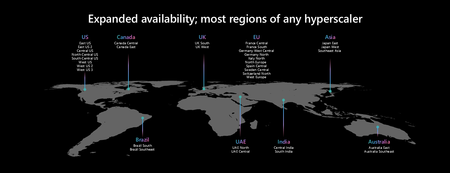
Global availability is critical as customers address data residency, sovereignty, and regional compliance requirements. Over the past year, we have worked closely with Oracle to rapidly expand the global footprint of Oracle Database@Azure, bringing Oracle AI Database services to more than 30 Azure regions worldwide. We are excited to announce that Oracle Database@Azure is now available in the West Europe (Netherlands) region. This expansion allows customers across Europe to deploy AI and data‑intensive workloads closer to their users while meeting stringent regulatory and compliance standards. In addition, Oracle Database@Azure is now live in Brazil Southeast (Rio de Janeiro), enhancing regional disaster recovery and business continuity capabilities. This new region complements the existing Brazil South (São Paulo) region, providing customers with greater resilience and flexibility across geographies. With this announcement, Oracle Database@Azure is available in the following Azure regions: Canada Central, Canada East, Central US, East US, East US2, North Central US, South Central US, West US, West US 2, West US 3, UK South, UK West, France Central, France South, Germany North, Germany West Central, North Europe, Italy North, West Europe, Spain Central, Sweden Central, Switzerland North, United Arab Emirates Central, United Arab Emirates North, Australia East, Australia Southeast, Central India, South India, Japan East, Japan West, Southeast Asia, Brazil South, and Brazil Southeast. Seamless migration to Oracle Database@Azure—without re‑architecting With Oracle Database@Azure, Microsoft and Oracle deliver a unified, AI-ready data platform that brings applications and data together in a single, tightly integrated cloud environment. Oracle Database services—including Oracle Autonomous Database, Oracle Base Database Service, and Oracle Exadata Database Service (Exascale and Dedicated)—run on Oracle Exadata infrastructure deployed directly inside Azure datacenters, providing ultra-low latency, high throughput, and predictable performance for Azure-based applications. Customers can migrate and modernize with confidence while preserving full licensing flexibility, continuing to use existing Oracle licenses through Bring Your Own License (BYOL) or choosing a license-included option. Databases can move to Azure quickly without code changes or re-architecting, using Oracle Zero Downtime Migration to automate migrations and minimize risk and disruption. For mission-critical workloads, customers can deploy Oracle Maximum Availability Architecture (MAA) Silver and Gold reference architectures on Azure, combining Oracle database resilience with Azure Availability Zones and global infrastructure. With databases and applications colocated in the cloud, customers eliminate the cost, complexity, and performance impact of cross-environment data movement—creating an ideal foundation for AI-driven analytics, real-time insights, and intelligent applications. This close integration makes it easy to pair Oracle databases with Azure’s AI and data services, including Microsoft Fabric, Copilot Studio, and Azure App Service, while keeping mission-critical data securely governed within Oracle Database. The result is a native Azure experience for identity, networking, security, observability, and billing—managed through Microsoft Entra ID, Azure networking, Azure Monitor, and Microsoft Defender for Cloud—delivering a simpler architecture, faster time to value, and a more efficient path to AI adoption. Ready to get started? We look forward to continuing to expand Oracle Database@Azure across more regions and delivering the capabilities customers need to unlock the full potential of their Oracle data. We invite you to our upcoming Oracle AI World Tour events to learn more about the exciting growth of Oracle Database@Azure. Come join us to learn more! Learn more: https://aka.ms/oracle Read the blog: Microsoft at Oracle AI World Tour Technical documentation: Overview - Oracle Database@Azure | Microsoft Learn Get skilled: https://aka.ms/ODAA_Learn Microsoft Azure Region policy: Azure region pairs and nonpaired regions | Microsoft Learn666Views0likes0CommentsOracleDatabase@Azure expands footprint to 31 regions and strengthens security with Azure Key Vault
Microsoft is setting the standard for global availability and security with Oracle Database@Azure. We’re excited to announce that Oracle Database@Azure is now live in 31 regions worldwide, including three new additions – giving enterprises more choice to run mission-critical Oracle workloads where they operate. With plans to bring two more regions online in the next three months, Oracle Database@Azure will continue to lead the industry with 33 regions around the world – more than any other hyperscaler. Plus, Azure Key Vault (Standard, Premium, and Managed HSM) is now generally available for Oracle Autonomous AI Database on Oracle Database@Azure. Exadata Database and Autonomous AI Database on Oracle Database@Azure customers can now get built-in encryption and key control for uncompromised protection. Oracle Database@Azure offers customers more choice, more control, and more places to run mission-critical workloads. Oracle Database@azure is now live in 31 regions worldwide Oracle Database@Azure is live in North Central, South India, and France South, giving enterprises more flexibility and control over global deployments of their business-critical applications. The service is now available in 31 regions, including: Australia East • Australia Southeast • Brazil South • Canada Central • Canada East • Central India • Central US • East US • East US 2 • France Central • France South • Germany North • Germany West Central • Italy North • Japan East • Japan West • North Central US • North Europe • Southeast Asia • South Central US • South India • Spain Central • Sweden Central • Switzerland North • UAE Central • UAE North • UK South • UK West • West US • West US 2 • West US 3 We will be launching 2 additional regions in the next three months, bringing the total number of regions to 33 – more than any other hyperscaler. Key to even better security: Azure Key Vault GA powers secure Oracle workloads for Oracle Autonomous AI Database on Oracle Database@Azure We’re excited to announce expanded GA support for Azure Key Vault (Standard, Premium, and Managed HSM) for Oracle Autonomous AI Database on Oracle Database@Azure, enabling secure storage and management of Oracle Transparent Data Encryption (TDE) keys. This integration – now available for both Exadata Database and Autonomous AI Database on Oracle Database@Azure – centralizes key management within Azure’s governance, monitoring, and lifecycle tools, giving enterprises full control and compliance. Customers gain flexibility to choose the right tier for their workloads—from dev/test to highly regulated environments—while simplifying operations and eliminating external key systems. Read more about the announcement in this blog. Catch these must-see sessions at Microsoft Ignite Join us at Ignite to discover how Oracle Database@Azure can help transform your enterprise and get your Oracle workloads ready for AI. How to modernize Oracle workloads on Azure Wednesday, November 19 @ 1:30pm AI use cases to transform your Oracle workloads in Azure Thursday, November 20 @ 3:30pm Partner opportunities: Modernize Oracle, SAP & VMware on Azure Thursday, November 20 @ 4:45pm Don’t miss your opportunity to learn more about Oracle Database@Azure directly from Oracle in these sessions: Develop intelligent apps with Oracle Database@Azure Wednesday, November 19 @ 10:30am Innovate with Oracle Database@Azure and native Azure AI services This session is pre-recorded and will be available online only In case you missed it at Oracle AI World... Here’s a roundup of the latest Oracle Database@Azure announcements. Expanded Oracle database offering – Oracle Base Database Service is now generally available on Azure. Customers can now run any Oracle Database service— with version flexibility (19c or 26ai). Oracle Autonomous AI Lakehouse is now generally available – Built on Apache Iceberg and powered by Oracle AI Database 26ai, it unifies AI, analytics, and open data, streamlining integration with Microsoft Fabric and Power BI so Azure users can securely apply AI to data wherever it lives. Smarter, connected operations – The general availability of Oracle Smart Operations, Azure IoT Operations, and Microsoft Fabric RTI brings unified, real-time analytics and automation to operational systems. AI-ready data unification – The public preview of Oracle Database mirroring in OneLake for Microsoft Fabric and general availability of native OCI GoldenGate integration with Oracle Database@Azure creates AI-optimized, real-time data estates, reducing ETL complexity and accelerating insights. AI Integration with Copilot Studio and Microsoft Foundry – Enables direct Oracle data access for no-code/low-code AI application development and intelligent workflows. Enterprise-grade security and governance – Deep integration with Microsoft Defender, Sentinel, and Entra ID delivers comprehensive protection and compliance for Oracle workloads, with additional governance provided by Microsoft Purview. Operational modernization and automation – Azure Arc enables unified management and governance across hybrid and multicloud environments, complemented by new capabilities like Azure Backup, Autonomous Database-S Elastic Pools, Terraform/SDK releases, Azure Tags in OCI, and VCN DNS automation to simplify operations and improve efficiency. New programs: Azure Accelerate for Oracle program supports customers across their cloud and AI journey with expert guidance and investments Reseller expansion for Oracle Database@Azure for partners to purchase and resell directly from Microsoft Marketplace Microsoft Valuable Professionals (MVP) Program now includes Oracle Database@Azure under Azure Solutions and Ecosystem, empowering community leaders to share expertise and drive innovation for mission-critical workloads on Azure. To learn more about the program, visit this FAQ. You can learn more about these updates in the full blog here. You can also find all Microsoft sessions at Oracle AI World 2025 on the Oracle Database@Azure YouTube channel. Join our Oracle Database@Azure LinkedIn Community to stay up to date on the latest events and product news.620Views1like0Comments