my mvp story
4 TopicsFrom the Classroom to Community Impact: Lindsay Shelton’s MVP Journey
Where Curiosity Met Community Lindsay Shelton’s path to becoming a Microsoft MVP did not begin with a traditional tech resume. It began in the classroom, where she spent a decade teaching middle school English Language Arts before being selected to train as a technology and pre-engineering teacher. What carried her forward was not only technical curiosity, but also a deep belief in sharing knowledge, helping others grow, and building community. Today, that same mindset shapes her work as an Application Programmer, consultant, speaker, and community leader. “It was through sharing knowledge that I had learned with other teachers that even led me down this pathway and got me to where I am today.” From Teacher to Technologist Technology had always been part of Lindsay’s life. She grew up in a home where her father, a self-taught career switcher, explored HTML, CSS, graphic design, and web design long before career pivots became common conversation. Later, while teaching eighth-grade writing, Lindsay built a paperless classroom so she would not have to carry stacks of essays home. That practical problem-solving mindset led colleagues to seek her out, and soon she was sharing what she had learned while teaching STEM-focused courses. When burnout pushed her to imagine something different, she began looking for a new direction. An unexpected conversation at a community gathering opened the door to a role at a tech consultancy, growing from a lunch meeting into a part-time position and then a full-time opportunity in 2020. As Lindsay found her footing in tech, she also found her people - organizing events, speaking at user groups, and channeling the energy she once brought to teaching into community, collaboration, and helping other technologists solve real-world problems. “It’s not about the size of the crowd, it’s just about the impact really.” Building an Inclusive, Pay-It-Forward Community For Lindsay, the MVP Award represented more than recognition. It affirmed that she was contributing in meaningful ways and gave her more opportunities to advocate for the people she serves. She values how the MVP community helps members connect with product groups, share practical feedback, and influence better outcomes. Just as important, she believes community should be inclusive by design. Lindsay speaks openly about making space for people with different identities, backgrounds, and experiences - and about the responsibility allies have to listen, learn, and support without taking over. That perspective shapes the spaces she helps build and the way she encourages others entering tech from nontraditional paths. Her message is clear: community is strongest when people feel welcome, respected, and encouraged to contribute in their own way. “People want to help other people, especially MVPs. If you ask for help and you are given help, then remember to pay it forward.” Finding Her Voice on Stage As Lindsay became more involved in the community, she discovered that speaking was not just a professional skill - it was a way to connect. Her earliest contributions included helping organize SharePoint Saturday in Kansas City and speaking at local user groups, experiences that helped her explore what community leadership could look like outside the classroom. Over time, those smaller moments led to bigger opportunities, including her first international conference appearance at Scottish Summit. What stayed with her was not the size of the audience, but the relationships formed in those rooms. Whether she is presenting to a packed session or a handful of peers, Lindsay approaches every talk as a chance to make someone’s work a little easier, share a practical lesson, or help another person feel more confident showing up in tech spaces. “It was more like a jam session than a concert.” Advice for Career Changers and Future MVPs One of the most encouraging parts of Lindsay’s story is how directly it speaks to people who may not see a traditional path into tech. Her advice is practical: say yes to opportunities, even when they seem small or uncertain. Attend the local user group. Go to the networking event. Introduce yourself. Ask questions. Lindsay knows firsthand that career changes can feel intimidating, especially when confidence has not yet caught up with curiosity. But she also believes community can bridge that gap. For those interested in becoming an MVP one day, her example is a reminder that contributions take many forms—speaking, writing, organizing, mentoring, advocating, and simply helping others solve problems. The common thread is generosity: show up, share what you know, and when someone helps you, pay it forward. “Say yes to networking events, say yes to local user groups... you never know who you're going to meet.” Why This Matters Lindsay Shelton’s story matters because it challenges a common myth in tech: that there is only one right way to get here. Her journey shows that skills built in other careers - teaching, communication, adaptability, empathy, and problem-solving - can become powerful assets in technical spaces. It also highlights something equally important: community can be a catalyst. For aspiring MVPs, developers, IT Pros, and technologists, Lindsay’s example is a reminder that meaningful contributions do not begin with having all the answers. They begin with curiosity, generosity, and a willingness to participate. In a field that changes quickly, communities grow stronger when people with different experiences feel welcome to learn, share, and lead. Explore Lindsay’s Story - and Your Own Next Step If Lindsay Shelton’s story resonates with you, let it be a reminder that there is no single path into tech - or into community leadership. Whether you are early in your journey, changing careers, or looking for ways to contribute more deeply, there is value in showing up, learning in public, and helping others along the way. To learn more, visit Lindsay’s existing MVP Profile and LinkedIn, and explore the Microsoft MVP Program to see how community contributions can grow into meaningful impact. Want to Learn More About the MVP Program? To find an MVP and learn more about the MVP Program visit the MVP Communities website and follow our updates on LinkedIn or #mvpbuzz. Join us for a future live session through the Microsoft Reactor where we walk through what the MVP program is about, what we look for, and how nominations work. These sessions are designed to help you connect the dots between the work you’re already doing and the impact the MVP Program recognizes - with time for questions, examples, and real conversations.117Views2likes0CommentsFrom Showing Up to Lifting Others: Diego Domingos da Silva's MVP Journey
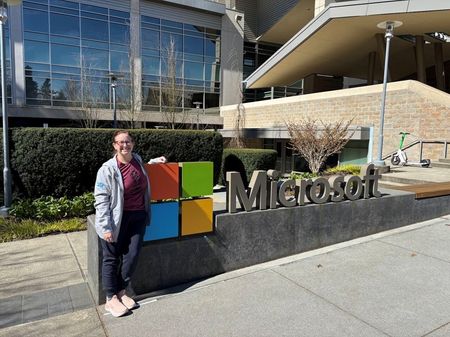
For MVP Diego Domingos da Silva, the journey to becoming a Microsoft MVP was never about collecting credentials. It was about showing up, learning in public, and finding people who made the tech world feel more human. A newer MVP in the program, Diego has built his reputation by helping others make sense of Microsoft 365 with honesty, humor, and heart. Along the way, the community became more than a professional network. It became a place of growth, connection, and support—and ultimately helped shape both his career and his life. The spark that started it all Diego’s path into the community started with a challenge from a manager: build a personal brand. At the time, he was working in Washington, D.C. and began experimenting with a blog that would eventually grow into his recognizable voice in the Microsoft 365 space. He attended his first Microsoft 365 Community Conference in Las Vegas shortly after the pandemic, where one session about making community part of your career shifted his perspective. Instead of watching from the back, he moved to the front of the room - curious, observant, and determined to understand how people built careers through sharing what they knew. “I had zero of the knowledge, but I had the curiosity. I went to the front of the room because I wanted to see how it was done.” That curiosity turned into action. After encouragement from community leaders, Diego submitted sessions, spoke at events, and kept returning - not because he was chasing a title, but because he loved the energy of helping others and learning alongside them. He discovered that community work is not only what happens on stage. It is also the invisible work: moving chairs, carrying pizza boxes, welcoming newcomers, and creating spaces where people feel they belong. Over time, mentors encouraged him to keep going, build meaningful contributions, and trust that impact matters more than perfection. Behind the scenes, Diego was also navigating profound personal loss. In that season, the M365 community became far more than a place to talk about technology. It gave him a sense of safety, connection, and stability when he needed it most. That experience shaped the way he shows up today: candid, welcoming, and committed to making space for other people’s stories as well as their technical growth. “Community wasn’t just my escape. Community was my lifeline. It was my safe space.” and the Microsoft sign in Redmond, Washington at MVP Summit What impact really looks like One of Diego’s biggest lessons is that community impact is rarely about knowing everything. It is about listening well, staying humble, and helping people connect to the knowledge they need. That mindset has shaped how he contributes today as a Microsoft MVP in the M365 category, with a focus on SharePoint and M365 Copilot. On his Microsoft MVP profile, Diego describes his work as “flipping the script in M365 with SharePoint, Copilot, and the power of community,” a phrase that reflects both his technical focus and his people-first approach. He also believes belonging grows when people bring their full selves into the room. That is part of what motivates his work to foster visibility and connection for underrepresented groups in tech spaces. Whether he is mentoring, speaking, blogging, or simply starting conversations that help people feel less intimidated, Diego keeps coming back to the same idea: meaningful community is built one generous interaction at a time. “I do not know everything, but I know everyone who knows something—and I can help you get the information you need.” Alongside his work in mentorship and storytelling, Diego is also actively creating new spaces for connection. Inspired by an LGBTQIA+ meetup at the Microsoft 365 Community Conference - organized with very little notice but still drawing a meaningful group - he recognized a deeper need within the ecosystem. That moment sparked the creation of Pride in M365, a community for LGBTQIA+ individuals and allies across Microsoft 365, Power Platform, AI, and the broader Microsoft ecosystem. The group focuses on building connection, visibility, mentorship, and support through shared experiences and community conversations - with a clear message that everyone is welcome. For Diego, the goal is simple but powerful: carry the energy of those in-person moments forward so that connection doesn’t start from scratch at every event. By creating a consistent space between conferences, Pride in M365 helps people show up already knowing they belong - and already recognizing a few familiar faces. “If we can keep those conversations going between events, then by the time we show up at the next conference, we already know each other. That’s the goal - to make the community easier to find, easier to join, and a little more welcoming for everyone.” LGBTQIA+ meetup at the Microsoft 365 Community Conference. Keep showing up If you are thinking about becoming a Microsoft MVP, Diego’s advice is refreshingly practical: pick something you genuinely enjoy, stay curious, and keep showing up. Expertise grows over time, but authenticity, empathy, and consistency are what help build trust. To learn more about Diego’s work, visit his Microsoft MVP profile and LinkedIn page, and explore the Microsoft MVP Program to see how community contributions can open doors - not just professionally, but personally too. Connect with the Microsoft 365 & Power Platform Community and Microsoft 365 Community Hub. “Every day will be happier than the day before.” (Left to right) MVPs Jeremy Sinclair,Diego Domingos da Silva,Sucheta Gawade, andAgnieszka Maria Mietz-Blijleven on a Mentoring Ring panel at MVP Summit Want to Learn More About the MVP Program? To find an MVP and learn more about the MVP Program visit the MVP Communities website and follow our updates on LinkedIn or #mvpbuzz. Join us for a future live session through the Microsoft Reactor where we walk through what the MVP program is about, what we look for, and how nominations work. These sessions are designed to help you connect the dots between the work you’re already doing and the impact the MVP Program recognizes - with time for questions, examples, and real conversations.150Views4likes1CommentFrom Late Nights to Global Impact: Ariane Djeupang’s Microsoft MVP Journey
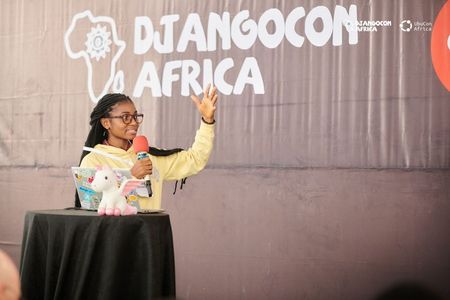
DjangoCon Africa Some journeys begin with a plan. Others begin with a brave choice—and the determination to keep showing up. For Ariane Djeupang, becoming a Microsoft Most Valuable Professional (MVP) wasn’t a trophy hunt. It was the next chapter in a much longer story: years of mentoring, organizing, writing, and building community - often with limited resources, but unlimited heart. Meet Ariane: a builder of communities Ariane is a project manager and machine learning engineer based in Cameroon - and a leader across multiple open-source communities. “I’m currently chairing PyCon Africa,” she shared, describing a conference that rotates host countries across the continent. In addition, she volunteers and organizes across the Python and Django ecosystem, mentoring beginners, coaching Django Girls workshops, and helping events run smoothly behind the scenes. “I also mentor people - newcomers and beginners in tech - and those who would like to start their Python or Django journey.” Choosing her own path into tech Growing up, Ariane felt the familiar pressure many young people experience: someone else had already decided what her future “should” be. “My dad wanted me to become a doctor,” she said. But after high school, she made a bold pivot: “I instantly chose to register in computer science.” From there, her world expanded beyond textbooks. A senior student introduced her to a local developer community, and Ariane started asking big questions: “What is a community? … What is that impact?” Soon she was volunteering at events - and then helping build new ones. She and peers co-founded Python Cameroon, fueled by a love for the language and its welcoming learning curve. “I used to describe the syntax as elegant,” she laughed, remembering how she encouraged friends to start learning Python. DjangoCon Africa The moment she became a Microsoft MVP Ariane didn’t set out to chase an award—she didn’t even know the program existed until a friend from the Django community pointed it out. “That was my first time … someone talking about that,” she said. After she was nominated and completed the application, she was welcomed into the Microsoft MVP community - one of only four MVPs in Cameroon, and the first (and currently only) woman MVP in the country. “It’s like a validation of years of dedication for me - because late nights and written tutorials… organizing meetups and events, mentoring aspiring technologists… all these were done with limited resources.” For Ariane, the recognition wasn’t just personal - it was also a statement about what meaningful contribution looks like. “Impact is not just measured by … demography, by geography or privilege,” she said. “It’s measured by consistency.” Professionally, being an MVP opened doors she “never imagined even possible” - including “direct access to Microsoft product teams” and early previews of technology (she mentioned getting access to previews in GitHub Copilot). But she quickly returned to what matters most to her: the people around her. “Perhaps, most importantly, it’s a responsibility,” Ariane said. In a country where digital transformation is still emerging and opportunity can be unevenly distributed, she sees her MVP platform as a way to show others what’s possible - especially for those whose voices are too often overlooked. Ariane’s advice: inclusion is built (and rebuilt) every day When asked what helps communities become more welcoming - especially in global spaces - Ariane didn’t hesitate. She believes experienced community leaders have “a unique responsibility … to set the tone for inclusion.” Here are a few practices she shared that any of us can start using right now. Lead with empathy. “Remember what it felt like to be new,” she said - and also what it felt like “to be uncertain, to be overlooked.” Her takeaway: be patient, approachable, and generous with your time. Lower the barriers to entry. Ariane called out onboarding as a common inclusion failure point: “The onboarding processes are not really … easy for newcomers.” Her fix: beginner-friendly resources and “safe spaces for questions,” recognizing that not everyone starts with the same access or confidence. Actively amplify diverse voices. “Seek out and highlight contributions from women … from people with disabilities … and those from rural or marginalized backgrounds,” she urged, emphasizing that representation matters “at every level.” Mentor and sponsor - then advocate. Mentorship is more than advice: “Connect them with opportunities and also advocate for their inclusion in events, projects and also in leadership roles.” Foster collaboration across communities. She encouraged cross-community partnerships, hybrid events, and knowledge exchange—because “the more we break down silos, the richer our communities become.” “Inclusivity is not just a one-time effort, it’s a continuous practice. By modeling openness, humility, and curiosity… we can create environments where everyone feels they belong, can contribute - contribute meaningfully.” “No rush”: a message to new leaders (and future MVPs) Ariane also offered a refreshingly grounded reminder about growth: it doesn’t have to be frantic to be real. She remembers the early days of MVP onboarding clearly. “There is a lot to know. There is a lot to read,” she said. Her advice: “Don’t rush… no rush. You will learn gradually.” Most importantly, she encouraged new MVPs (and anyone stepping into leadership) to keep doing what earned trust in the first place: “Just continue to work as you used to work.” Yes, new doors open - talk opportunities, volunteering, collaborations - but sustainability matters. “At the end of the day, you are not like a robo,” she said. “You shouldn’t overstress yourself … trying to prove ‘I’m an MVP’ by doing everything at once. “I’m giving 15 talks in one month… I’ve written 100 articles in one month… that’s not sustainable.” Inclusion is also logistics: access, travel, and the power of naming In Ariane’s world, “inclusion” isn’t just what happens on stage - it’s whether people can even get into the room. She spoke candidly about the realities many African technologists face when attending global events: flights that can be “almost 2000” dollars, plus accommodation, ground transportation, and visa fees. Those constraints don’t reflect a lack of talent - they reflect a lack of access. And sometimes, inclusion starts with language. Ariane helped change the name of a conference benefit from “financial aid” to “opportunity grant.” Why? “The main reason we changed it was because of inclusivity reasons,” she explained. Some people avoid applying because they don’t want to be seen as “broken”—when the reality is simply: “I cannot afford maybe a ticket or the flight to attend the conference.” Names matter. They can either add stigma - or open a door. Call to action: be the person who makes the room bigger Ariane’s story is a celebration - but it’s also an invitation. In every region, in every user group, in every online forum, we can choose to be the kind of community member who makes someone feel seen. We can lead with empathy. We can simplify onboarding. We can amplify voices that are too often ignored. And we can sponsor - not just with money, but with introductions, speaking invites, leadership opportunities, and public credit. If you want to learn from Ariane’s advice and support underrepresented voices in your tech community, start here: Make your next welcome explicit. Message a newcomer, invite questions, and share a “getting started” path. Share the mic. Recommend a first-time speaker, co-present, or offer a practice run and feedback. Turn mentorship into sponsorship. Introduce someone to organizers, nominate them for opportunities, and advocate for them in rooms they’re not in yet. Design for access. Offer hybrid options when possible, publish clear event logistics, and be thoughtful about cost and travel barriers. Build partnerships locally. Break down silos by collaborating with neighboring communities, universities, and local meetups to create pathways in your region. Learn more Congratulations again to Ariane - an MVP whose work reminds us that community leadership isn’t about a spotlight. It’s about building ladders, widening doors, and making sure more people get to step into their future. Learn more and connect with Ariane Djeupang through her MVP Profile and on LinkedIn. Want to Learn More About the MVP Program? To find an MVP and learn more about the MVP Program visit the MVP Communities website and follow our updates on LinkedIn or #mvpbuzz. Join us for a future live session through the Microsoft Reactor where we walk through what the MVP program is about, what we look for, and how nominations work. These sessions are designed to help you connect the dots between the work you’re already doing and the impact the MVP Program recognizes - with time for questions, examples, and real conversations.213Views1like1CommentMy MVP Story: Finding My Way Into Data and Community - Deborah Jones’ Journey
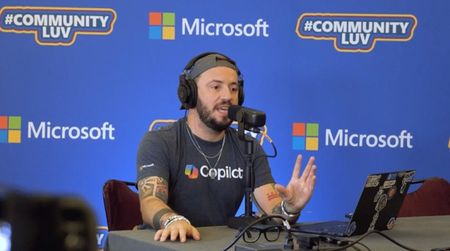
In the world of data, some people learn tools - and some turn them into superpowers. Microsoft MVP Deborah Jones is firmly in the second category. She’s self-taught across Power BI, Power Apps, Power Automate, and SharePoint, and she puts those skills to work in a high-stakes setting: a nuclear power plant in Canada. She also co-leads two user groups. Deborah’s story starts with a simple question: “What else can I do with data?” Microsoft AI Tour From curiosity to capability For Deborah, becoming a Microsoft MVP wasn’t about chasing a title - it followed naturally from curiosity, persistence, and a habit of helping others learn. “I honestly had never heard of the MVP program at all,” she said. “People kept saying, ‘You should be nominated,’ and I was like, ‘I have no idea what you’re talking about.’” After years in project management and construction, she shifted into the nuclear industry as a reporting analyst and encountered Power BI almost by accident. A consultant told her, “I think this is going to blow up. You definitely need to learn this [Power BI]” - and she listened. Formal courses didn’t fully click at first, but hands-on practice (and real problems to solve) did. Community turned learning into momentum The turning point was community. During the pandemic, Deborah found and joined the Power BI Women user group - a judgment-free space where people shared what they knew. Over time, she went from showing up as a learner to helping lead the user group as a co-lead. “I was so surprised. I had never seen a community where people didn’t gatekeep information,” she said. “People were just sharing - asking questions, answering questions.” At first, Deborah was the one asking. Over time, she became the one answering - sharing the real, non-linear experience of learning while working full time and raising a family. That authenticity resonated, especially with students and early-career professionals, and mentorship became a cornerstone of her community work. Samuel Gomez, Jack Lee, Betsy Weber (Microsoft), Deborah Jones, Harjit Dhaliwal, Christopher Gill at the Microsoft AI Tour Leading with impact (and a clear mission) As a Black woman in tech, Deborah is passionate about empowering others - mentoring new data professionals and helping people get unstuck when a report (or a career path) feels out of reach. Her mission is straightforward: make data accessible, useful, and empowering. Like many MVPs, Deborah’s journey wasn’t a straight line. She first learned about the MVP program through the Power BI community, agreed to be nominated, and didn’t get accepted the first time. Instead of letting that moment stall her, she took guidance from fellow MVP Belinda Allen, who encouraged her to speak up about her work and impact: “You have to talk about yourself… and I got it.” The MVP award itself didn’t fully click for her until she attended the MVP Summit. Before that, she said it could feel like “your face is on this little website” plus some perks. At Summit, the bigger purpose came into focus through the people: “Some of the people I met were just phenomenal,” she said - and suddenly, it all made sense. In that moment, she realized the point wasn’t the badge - it was the community behind it, and that’s exactly why she keeps showing up and giving back. Going in without expectations was part of the gift: it was a “good dry run” that let her experience the community without feeling like she had anything to prove. That experience also reinforced how she thinks about recognition: it’s an added bonus, not the goal. As Deborah put it, “If I don’t get renewed… I did it twice. Just celebrate that.” - because either way, she’s going to keep doing the work she loves and giving back. Practical, approachable solutions Deborah is known for building practical tools that make everyday work easier - often small, incremental improvements that add up. “I’m not after the big flashy solution,” she laughed. “I like the little incremental stuff that just makes your day easier.” Accessibility is central to her approach. She documents in plain language so others can understand and maintain what she builds, and she encourages learners to start with a dataset they genuinely enjoy - because curiosity sticks when it’s fun. Deborah’s advice: start small, find your people, keep going Deborah doesn’t offer a rigid roadmap. Her guidance comes down to a few habits that helped her build momentum - through curiosity, community, and small wins. Start with what’s meaningful - and solve one small problem. “There’s no point in trying to dive into something big… there’s always a business problem you can solve, as little as you think it is.” She also recommends learning with data you actually enjoy: “Bring something that you’re interested in… something you’re passionate about.” Find a community that shares openly (then participate). “I’ve never seen something where people didn’t gatekeep information so much… people were just talking, asking questions.” Those spaces helped her learn in public and eventually lead. Make your work easy to follow - and keep going when it’s hard. “It shouldn’t be a mystery how I got from point A to point B.” And when momentum dips: “You’re going to have moments where you feel like giving up, but then it’s like - okay, what are you going to do next?” Why MVP fits Today, Deborah is a Microsoft MVP because she consistently shows up for others - sharing what she’s learning, building in public, and making technology feel more approachable. Her mission? To turn data into a superpower for all. Learn more about Deborah and her community contributions on her MVP profile, connect with her on LinkedIn and consider joining the Power BI Women’s user group.350Views2likes1Comment