modern service management
6 Topics
𝐓𝐡𝐞 𝐌𝐨𝐬𝐭 𝐔𝐧𝐝𝐞𝐫𝐫𝐚𝐭𝐞𝐝 𝐒𝐤𝐢𝐥𝐥 𝐢𝐧 𝐈𝐓: 𝐎𝐩𝐞𝐫𝐚𝐭𝐢𝐨𝐧𝐚𝐥 𝐄𝐦𝐩𝐚𝐭𝐡𝐲
In an industry obsessed with speed, automation, and tooling, there’s one capability that quietly determines whether a project actually succeeds: 👉 𝐎𝐩𝐞𝐫𝐚𝐭𝐢𝐨𝐧𝐚𝐥 𝐄𝐦𝐩𝐚𝐭𝐡𝐲 Not empathy in the emotional sense — but the ability to step into the shoes of: 🛠 Ops 🧩 Support 🔐 Security 📊 Monitoring 💰 FinOps 🌐 Networking And ask: “What will this look like for them on Day 100, not just Day 1?” And here's the truth: Most failures in cloud migrations, cutovers, and large IT programs don’t happen because technology is broken — they happen because teams never thought about what happens after the deploy. 🔍 𝑾𝒉𝒂𝒕 𝑬𝒙𝒂𝒄𝒕𝒍𝒚 𝑰𝒔 𝑶𝒑𝒆𝒓𝒂𝒕𝒊𝒐𝒏𝒂𝒍 𝑬𝒎𝒑𝒂𝒕𝒉𝒚? Operational Empathy is the habit of stepping into the shoes of the teams who will run, monitor, secure, and support the application after go-live. It means asking questions like: - If I introduce this design choice, who will maintain it? - How will the support team troubleshoot this? - Will this create noise on monitoring dashboards? - Is onboarding new engineers going to be a nightmare? - What happens at 2 AM when an alert fire — is the runbook clear? This single mindset shift dramatically transforms delivery outcomes. 🎯 𝑾𝒉𝒚 𝑰𝒕 𝑴𝒂𝒕𝒕𝒆𝒓𝒔: 𝑻𝒉𝒆 𝑫𝒐𝒘𝒏𝒔𝒕𝒓𝒆𝒂𝒎 𝑹𝒊𝒑𝒑𝒍𝒆 𝑬𝒇𝒇𝒆𝒄𝒕 Every upstream decision has a downstream cost. 1️⃣ Smoother Deployments & Fewer Escalations When engineering anticipates operational needs early, issues like missing alerts, unclear log patterns, or unsupported configurations don’t become last-minute fire drills. 2️⃣ Faster Mean Time to Recovery (MTTR) If Ops has the right tools, logs, metrics, and runbooks from Day 1, incidents shrink from hours → minutes. 3️⃣ Happier Support Teams Handovers stop feeling like “surprise gifts” and more like mature transitions. 4️⃣ Stronger Relationships & Accountability Teams collaborate instead of blame-shifting. Delivery stops seeing Operations as blockers; Operations stops seeing Delivery as risk creators. 5️⃣ Better User Experience Stable releases. Predictable behavior. No outages during critical business windows. 🌟 𝐓𝐡𝐞 𝐏𝐚𝐲𝐨𝐟𝐟: 𝐁𝐞𝐭𝐭𝐞𝐫 𝐃𝐞𝐥𝐢𝐯𝐞𝐫𝐲. 𝐁𝐞𝐭𝐭𝐞𝐫 𝐑𝐞𝐥𝐢𝐚𝐛𝐢𝐥𝐢𝐭𝐲. 𝐁𝐞𝐭𝐭𝐞𝐫 𝐂𝐮𝐥𝐭𝐮𝐫𝐞. Operational Empathy is not a soft skill. It is a strategic differentiator in modern IT delivery. Teams that practice it ship faster, break less, escalate less, and collaborate better. And in a world moving toward automation, AI, and cloud-native complexity, the ability to think about downstream impact will become the new superpower for IT professionals. #OperationalEmpathy #DevOpsCulture #CloudMigration #OperationalReadiness #ITLeadership #SRE #SupportEngineering #DeliveryExcellence #TechCulture #ModernEngineering169Views0likes0Comments𝐖𝐡𝐚𝐭 𝐍𝐨 𝐎𝐧𝐞 𝐓𝐞𝐥𝐥𝐬 𝐘𝐨𝐮 𝐀𝐛𝐨𝐮𝐭 𝐂𝐥𝐨𝐮𝐝 𝐌𝐢𝐠𝐫𝐚𝐭𝐢𝐨𝐧𝐬
Everyone talks about 𝙩𝙤𝙤𝙡𝙨, 𝙩𝙞𝙢𝙚𝙡𝙞𝙣𝙚𝙨, 𝙖𝙣𝙙 𝙩𝙚𝙘𝙝 𝙨𝙩𝙖𝙘𝙠𝙨 — but the real challenges of cloud migrations often live below the surface. Here are the invisible challenges no one warns you about: ⚠️ 1. 𝐎𝐰𝐧𝐞𝐫𝐬𝐡𝐢𝐩 𝐂𝐡𝐚𝐨𝐬 Everyone is “involved” — but no one is responsible. Migration stalls in the grey zones. 🔍 2. 𝐇𝐢𝐝𝐝𝐞𝐧 𝐎𝐩𝐞𝐫𝐚𝐭𝐢𝐨𝐧𝐚𝐥 𝐆𝐚𝐩𝐬 No runbooks. No monitoring. No rollback plans. Issues waiting to explode at cutover. 📉 3. 𝐔𝐧𝐞𝐯𝐞𝐧 𝐀𝐩𝐩𝐥𝐢𝐜𝐚𝐭𝐢𝐨𝐧 𝐌𝐚𝐭𝐮𝐫𝐢𝐭𝐲 Some apps fly. Some crawl. But the migration date? Same for all. Pressure guaranteed. 🚨 4. 𝐑𝐢𝐬𝐤𝐬 𝐅𝐨𝐮𝐧𝐝 𝐖𝐡𝐞𝐧 𝐈𝐭'𝐬 𝐓𝐨𝐨 𝐋𝐚𝐭𝐞 Most “critical blockers” were actually early signals… just never captured, assessed, or tracked. This is where 𝐎𝐩𝐞𝐫𝐚𝐭𝐢𝐨𝐧𝐚𝐥 𝐑𝐞𝐚𝐝𝐢𝐧𝐞𝐬𝐬 (𝐎𝐑) changes the game. ✨ A strong OR discipline turns complexity into predictability: ✔️ Early identification of gaps ✔️ Structured assessments ✔️ Cross-team alignment ✔️ Zero-surprise cutovers ✔️ Reduced operational risk post-go-live 🌟 𝑪𝒍𝒐𝒖𝒅 𝒎𝒊𝒈𝒓𝒂𝒕𝒊𝒐𝒏𝒔 𝒅𝒐𝒏’𝒕 𝒇𝒂𝒊𝒍 𝒃𝒆𝒄𝒂𝒖𝒔𝒆 𝒐𝒇 𝒕𝒆𝒄𝒉. They fail due to lack of readiness. When 𝐎𝐑 is done right, go-lives feel less like firefighting…and more like a well-rehearsed launch.142Views0likes0Comments𝐀𝐈 𝐈𝐬 𝐍𝐨𝐭 𝐭𝐡𝐞 𝐑𝐢𝐬𝐤. 𝐔𝐧𝐠𝐨𝐯𝐞𝐫𝐧𝐞𝐝 𝐀𝐈 𝐈𝐬
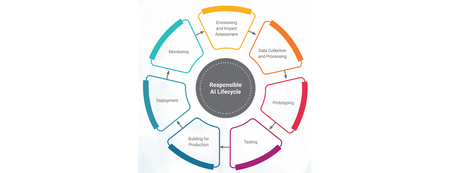
This blog explores why the real danger lies not in adopting AI, but in deploying it without clear governance, ownership, and operational readiness. Learn how modern AI governance enables speed, trust, and resilience—transforming AI from a risk multiplier into a reliable business accelerator.233Views0likes0CommentsHow AI is Transforming Operations Readiness in Azure | Part 3
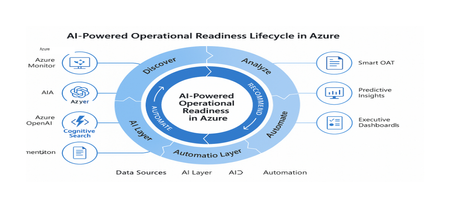
Operations Readiness is shifting from manual checklists to AI-driven intelligence. Using Azure services, organizations can automate runbooks, predict risks, streamline testing, and improve governance—reducing readiness time by up to 60% and enabling proactive, resilient cloud operations.680Views7likes0CommentsEmpowering Autonomous IT Service Management with Agentic AI in 2025
A New Era for ITSM: Why 2025 Demands a Shift IT Service Management (ITSM) is entering a phase of reinvention. For years, organizations have leaned heavily on automation platforms like ServiceNow, Jira Service Management, and AIOps tools to streamline workflows, eliminate redundancies, and enhance visibility. These efforts standardized incident handling and improved operational efficiency. However, 2025 brings forward a fresh set of challenges: Decentralized infrastructure: IT landscapes now span across cloud, edge, and hybrid environments from multiple vendors. Exponential data complexity: Systems are inundated with alerts, metrics, telemetry, and feedback—far exceeding the capabilities of legacy rule-based solutions. Elevated user expectations: End users anticipate intelligent, immediate support rather than slow, portal-based ticketing systems. Demand for agility: Business environments evolve too quickly for static automation to keep pace. In this dynamic setting, manual automation scripts and reactive operations simply don’t cut it. What’s needed is a paradigm where ITSM solutions act more like decision-making entities—autonomously navigating systems, interpreting context, and driving resolution. This is where Agentic AI enters — an evolution from traditional automation into a layer of intelligent autonomy. What Is Agentic AI? A Smarter Approach to IT Operations Agentic AI refers to AI systems designed to function as autonomous entities. These systems aren’t just executing predefined scripts—they understand objectives, evaluate context, and take real-time actions to reach desired outcomes. Key traits of Agentic AI: Goal-oriented: Focused on achieving results rather than following static rules. Self-governing: Capable of taking initiative without awaiting user prompts. Context-aware: Able to process structured (e.g., logs, metrics) and unstructured (e.g., chats, documentation) information. Continuously learning: Improves over time based on outcomes, with no need for manual reprogramming. In the ITSM landscape, these intelligent agents serve as digital teammates — resolving issues, fine-tuning workflows, summarizing tickets, and evolving with every interaction. Think of Agentic AI as your Tier 1 or Tier 2 analyst — only faster, scalable, and always online. The Shift: From Basic Automation to Autonomous Intelligence Current automation models typically rely on linear workflows — if X happens, do Y. While predictable, this structure is fragile and inflexible: Doesn’t adapt when conditions change Requires constant manual maintenance Breaks when dependencies shift Agentic AI flips this model. It understands situational nuance, adapts in real-time, and chooses the optimal action — not just the programmed one. Capability Traditional ITSM Automation Agentic AI-Driven ITSM Trigger Mechanism Static rules, timers Goal recognition + live context Data Handling Structured Only Structured + unstructured Learning Model Manual rule tuning Continuous self-learning Resolution Strategy Single path Adaptive decision trees Human Dependency High Low Real-World Applications of Agentic AI in ITSM Here’s how Agentic AI is already reshaping IT service management: Fully Autonomous Incident Handling These agents detect patterns in logs and alerts, take corrective actions (like restarting services or rolling back changes), and close tickets automatically — often before users notice. Intelligent Root Cause Analysis Agentic systems correlate data across observability tools, tickets, CMDBs, and feedback channels to produce concise RCA reports with cause identification, timelines, and confidence levels. AI-Enhanced Support Desks By assisting human analysts with ticket summaries, solution recommendations, and response drafts, these copilots significantly cut down handling time and improve accuracy. Automated Change Risk Management AI agents simulate potential impacts of change deployments, flag risks, and route approvals — acting as a virtual Change Advisory Board (CAB) to prevent outages. Dynamic Workflow Optimization These agents optimize service workflows on-the-fly — taking into account analyst load, ticket history, and real-time metrics to intelligently escalate and prioritize work. Tangible Benefits of Agentic AI in ITSM Organizations deploying Agentic AI report: 40–60% reduction in Mean Time to Resolve (MTTR) Up to 80% decrease in Level 1 ticket volume 2–3x improvement in analyst efficiency Fewer reopened issues Stronger adherence to SLAs and SLOs Steps to Create Your Agentic ITSM Framework To start the journey toward autonomous IT operations: Evaluate your current automation maturity — Identify where manual efforts still dominate. Select high-impact use cases — Password resets, VPN issues, patch compliance, etc. Adopt in stages — Begin with assistive copilots, then roll out autonomous functionalities. Upskill teams — Build trust between human operators and AI agents. Measure autonomy progress — Track how much resolution and decision-making is handled by AI. Agentic AI vs GenAI: Complementary Forces Aspect GenAI Agentic AI Focus Generating content (text, code) Achieving goals through decisions Data Used Human prompts + training data Environment inputs + real-time data Primary Output Summaries, KBs, answers Actions, resolutions, escalations Role in ITSM Enhances communication Drives autonomous operations The Future Is Intelligent, Not Optional Agentic AI isn’t just another IT trend — it’s a foundational shift in how IT operates. It brings together adaptability, autonomy, and intelligence in ways that legacy systems cannot match. By enabling systems to: Proactively detect and resolve issues Collaborate seamlessly with humans Continuously improve through feedback Agentic AI sets the stage for future-ready IT operations.2.5KViews2likes0CommentsITSM with AI and Automation: Transforming Service Management in the Digital Age
In today's dynamic business environment, organizations are increasingly turning to Artificial Intelligence (AI) and automation to streamline IT Service Management (ITSM). By integrating these technologies, businesses can enhance efficiency, reduce operational costs, and deliver superior user experiences. Microsoft's suite of tools, including Microsoft 365 Copilot and Azure AI, offers robust solutions to achieve these objectives. The Role of AI and Automation in ITSM AI and automation are transforming ITSM by: Automating Routine Tasks: AI-driven tools can handle repetitive tasks such as incident logging, ticket categorization, and status updates, allowing IT teams to focus on more complex issues. Enhancing Decision-Making: AI analyses historical data to provide insights, enabling proactive problem-solving and informed decision-making. Improving User Support: AI-powered chatbots and virtual assistants offer immediate assistance, resolving common queries and issues efficiently. Microsoft's AI-Powered ITSM Solutions Microsoft provides a comprehensive suite of AI and automation tools tailored for ITSM: Microsoft 365 Copilot: Integrated into Microsoft 365 applications like Word, Excel, and Teams, Copilot assists in drafting documents, summarizing meetings, and analysing data, thereby enhancing productivity. Azure AI: Azure's AI services offer machine learning models and cognitive services that can be customized for various ITSM needs, from predictive maintenance to security threat detection. Copilot Studio: This low-code platform enables IT teams to develop custom AI agents for automating specific ITSM tasks, such as incident management and service requests. Practical Use Cases of AI and Automation in ITSM Incident Management Automation: AI agents can swiftly categorize and prioritize incidents, assign them to the right personnel, and provide real-time updates to users, ensuring a seamless incident resolution process. Predictive Maintenance: By analyzing system performance data, AI can foresee potential failures, enabling IT teams to take proactive measures and minimize downtime. Enhanced User Support: AI-powered chatbots address common service requests, such as password resets and software installations, improving response times and user satisfaction. Incident Prevention: Machine Learning algorithms can analyze historical data to predict and prevent incidents before they happen. Self-healing systems can autonomously detect anomalies and initiate corrective actions, reducing downtime and system failures. Conversational IT Support: AI can comprehend user queries in natural language, providing personalized support across various platforms. By tapping into resources like knowledge bases or past support interactions, AI will offer tailored solutions in a conversational manner. 24/7 Support: AI can also help deliver continuous, human-like support around the clock, meeting end-user expectations for 24/7 assistance and promoting efficient self-service. Benefits of Integrating AI and Automation in ITSM Increased Efficiency: Automating routine tasks frees up IT staff to focus on strategic initiatives. Cost Reduction: Proactive issue resolution and efficient resource management lead to significant cost savings. Improved User Experience: Faster response times and personalized support enhance user satisfaction. Conclusion Integrating AI and automation into ITSM processes is essential for organizations aiming to enhance efficiency and user satisfaction. Microsoft's AI-powered tools provide a robust framework for achieving these goals, offering scalable and customizable solutions to meet diverse ITSM needs.3.2KViews1like0Comments