microsoft planetary computer
2 TopicsWhat's New in Microsoft Foundry Labs – May 2026
Four new releases this month — a new benchmark for how agents interact, an experimental end-to-end agentic stack, a faster image model, and a first-party geospatial model. Last month we kicked off this series with a roundup of new Foundry Labs releases across speech, vision, and multimodal AI. This month, we're back with another update — read on to see learn what's new! SocialReasoning-Bench: measuring whether AI agents act in their user's best interest We are moving into a world where agents are interacting with other agents on behalf of their users, and thus, task completion is no longer a sufficient measure of usefulness. What matters is whether the agent advocates well for the person it represents. SocialReasoning-Bench, a new open-source benchmark from Microsoft Research AI Frontiers, measures exactly that. The benchmark currently supports two main scenarios — Calendar Coordination and Marketplace Negotiation — and scores them on two new metrics: Outcome Optimality (the share of available value the agent captures for its principal) and Due Diligence (the quality of the process used, scored against a deterministic reasonable-agent policy). Together they define an operational notion of duty of care. Learn more about SocialReasoning-Bench in Foundry Labs Try it on GitHub MagenticLite, Magentic Orchestrator & Fara 1.5: an end-to-end agentic stack Microsoft Research AI Frontiers also released a complete agentic stack: MagenticLite is the application layer — the next generation of Magentic-UI, with a redesigned chat-and-browser interface and a harness rebuilt for small models. It works across both your browser and your local file system in a single workflow, with browser sessions and code execution sandboxed by Quicksand, the project's open-source QEMU runtime. Transparency is baked in: you see what the agent is reasoning about, you can take direct control at any moment, and critical actions pause for explicit approval. MagenticBrain is the orchestrator of the stack — an orchestration model fine-tuned on Qwen 3 8B that plans, codes, and delegates. Critically, it was trained end-to-end inside the MagenticLite harness with the same tool schemas it sees at inference, eliminating the gap between training and execution. Fara1.5 is the next generation of Microsoft's computer-use model family — three models (4B, 9B, 27B) on Qwen 3.5, with the 9B as the recommended flagship. Fara1.5 sets a new state of the art among small computer-use models on the Online‑Mind2Web benchmark, nearly doubling the performance of the previously released Fara‑7B, and the 27B variant records 90+% on the same benchmark 1 . Together, they represent an open-source, end-to-end agentic stack that work together, so developers can build, plan, and run agents on infrastructure they control. Learn more about MagenticLite on Foundry Labs Try it on GitHub MAI-Image-2-Efficient: high-quality image generation at speed and scale MAI-Image-2-Efficient — Image‑2e for short — is Microsoft's latest text-to-image model, built on the same architecture as MAI-Image-2 (which debuted at #3 on the Arena.ai leaderboard for image model families) but engineered for the production workloads where every millisecond and every GPU hour matters. When normalized by latency and GPU usage, Image‑2e is up to 22% faster and 4x more efficient than MAI-Image-2 — and outpaces leading text-to-image models by 40% on average 1 . In short, it delivers more output for less compute, giving teams the headroom to iterate faster without blowing through their GPU budget. That efficiency unlocks new categories of work. E-commerce platforms, media companies, and marketing teams generating thousands of images per day for targeted ads, concept art, and mood boards translate it directly into larger batches at lower GPU cost. Chatbots, creative copilots, and AI-powered design tools translate it into latency low enough for real-time interaction. The model also has a distinct visual signature — sharp, defined lines that fit illustration, animation, and attention-grabbing photoreal imagery. Learn more about MAI-Image-2-Efficient in Foundry Labs Try it in Microsoft Foundry EO/OS Object Detection: production-grade earth observation Object detection on satellite and aerial imagery has historically required months of in-house computer vision engineering — bespoke models, custom labels, fragile pipelines. EO/OS Object Detection collapses that into a managed first-party endpoint in Microsoft Foundry. Built by the team behind Planetary Computer, EO/OS Object Detection is a model that identifies and localizes objects in overhead imagery and returns bounding-box detections optimized for batch processing of large image archives. It's part of a new GeoAI category in Microsoft Foundry, opening Microsoft's geospatial intelligence stack to anyone building on satellite or aerial data. Defense and intelligence teams analyzing satellite feeds, infrastructure operators monitoring assets at scale, agriculture and energy companies tracking change across vast landscapes, and disaster response teams triaging post-event imagery can all swap a custom one-off detector for a managed endpoint that fits inside their existing Foundry stack. Put simply, the work shifts from "build the detector" to "use the detector" — and the detection signal lands faster, more consistently, and inside the same Microsoft platform their broader AI work already runs on. Learn more about EO/OS Object Detection in Foundry Labs Try EO/OS Object Detection in Microsoft Foundry What's Next Foundry Labs is where Microsoft's most ambitious AI research becomes accessible to builders and where the products you'll rely on tomorrow are taking shape today. There's plenty more in the pipeline. Explore more AI innovations on Foundry Labs Join the Microsoft Foundry Discord community to shape the future of AI together References As tested on April 13, 2026. Compared to MAI-Image-2 when normalized by latency and GPU usage. Throughput per GPU vs MAI-Image-2 on NVIDIA H100 at 1024×1024; measured with optimized batch sizes and matched latency targets. Results vary with batch size, concurrency, and latency constraints.1.2KViews2likes0CommentsUnified AI Weather Forecasting Pipeline thru Aurora, Foundry, and Microsoft Planetary Computer Pro
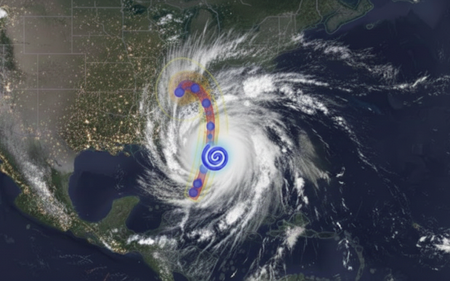
Weather shapes some of the most critical decisions we make, from protecting our critical infrastructure and global supply chains, to keeping communities safe during extreme events. As climate variability becomes more volatile, an organization’s ability to predict, assess, and plan their response to extreme weather is a defining capability for modern infrastructure owners & operators. This is especially true for the energy and utility sector — even small delays in preparations and response can cascade into massive operational risk and financial impacts, including widespread outages and millions in recovery costs. Operators of critical power infrastructure are increasingly turning to AI-powered solutions to reduce their operational and service delivery risk. “As the physical risks to our grid systems grow, so too does our technological capacity to anticipate them. Artificial intelligence has quietly reached a maturity point in utility operations-not just as a tool for optimization, about as a strategic foresight engine. The opportunity is clear: with the right data, infrastructure, and operational alignment, AI outage prediction utility grid strategies can now forecast vulnerabilities with precision and help utilities transition from reactive to preventive risk models.” – Article by Think Power Solutions Providing direct control of their data and AI analytics allows providers to make better, more actionable insights for their operations. Today, we’ll demonstrate and explore how organizations can use the state-of-the-art Aurora weather model in Microsoft Foundry with weather data provided by Microsoft Planetary Computer (MPC), an Azure based geospatial data management platform, to develop a utility industry-specific impact prediction capability. Taking Control of your Weather Prediction Microsoft Research first announced Aurora in June 2024, a cutting-edge AI foundation model enabling locally executed, on-demand, global weather forecasting, and storm-trajectory prediction generated from publicly available weather data. Two months later, Aurora became available on Microsoft Foundry elevating on-demand weather forecasting from a self-hosted experience to managed deployments, readying Aurora for broader enterprise and public adoption. Aurora’s scientific foundations and forecasting performance were peer‑reviewed and published in Nature, providing independent validation across global benchmarks. Its evolution continues with a strong commitment to openness and interoperability: In November 2025, Microsoft announced plans to open-source Aurora to accelerate innovation across the global research and developer community. Building upon the innovation and continued development of Aurora, today we are showcasing how organizations can operationalize this state-of-the-art capability with Microsoft Planetary Computer and Microsoft Planetary Computer Pro. By bringing together the vast public geospatial data stores in Planetary Computer, with the private data managed by Planetary Computer Pro, organizations can unify their weather prediction and geospatial data in a single platform, simplifying data processing pipelines and data management. This advancement allows enterprise customers to take control of their own weather forecasting on their own timeline. A Unified Weather Prediction Data Pipeline In addition, a key pain-point for energy and utility companies is the inability to reliably ingest, store, and operationalize high-volume weather data. Model inputs and outputs often sit scattered across fragmented pipelines and platforms, making decisions difficult to trace, reproduce, and reference over time. For example, referenced in articles, many utility companies have to pull public data from various silos, maintain GIS layers in another, and run operational planning in a separate environment—forcing teams to manually stitch together forecasts, assets, and risk assessments, introducing delays exactly when rapid decisions matter most. With the MPC Pro + Microsoft Foundry pipeline, utility companies transition from fragmented, manual workflows to a single operating platform – where the value lies in a seamless end-to-end data-to-model pipeline. Users can leverage Aurora on Microsoft Foundry alongside Microsoft Planetary Computer Pro’s geospatial data platform to unlock the following unified workflow: Source near real time weather data from Planetary Computer Run Aurora in Microsoft Foundry Fuse weather prediction results with geospatial data in Planetary Computer Pro for rapid assessment and post processing A Ready-to-use reference architecture This reference architecture provides a reusable pattern for operationalizing frontier weather models with Microsoft Planetary Computer Pro and Microsoft Foundry. Our architecture feeds updated global weather data, hosted by Microsoft Planetary Computer, to the Microsoft Foundry hosted model, then fuses those prediction results with enterprise geospatial context for analysis, decision-making, and action. Each component plays a distinct role in ensuring forecasts are timely, scalable, and directly usable within operational workflows. Near Real-Time Weather Data Microsoft Planetary Computer automatically ingests, indexes, and distributes up-to-date global weather data from the European Centre for Medium-Range Weather Forecasts (ECMWF) four times per day. This fully managed data pipeline ensures that the latest atmospheric datasets are continuously refreshed, standardized, and readily accessible, eliminating the need for manual data acquisition or preprocessing. Storing and Centralizing Public and Private Geospatial Data on Microsoft Planetary Computer Pro Microsoft Planetary Computer Pro enables utility operators to store, manage, and access both public and private geospatial datasets within a single Azure platform. With a Microsoft Planetary Computer Pro GeoCatalog, organizations can centralize ECMWF weather data alongside infrastructure and location data to support downstream analyses. Microsoft Foundry Hosts and Runs Weather Prediction Model on Demand Microsoft Foundry provides model access and the infrastructure required to support execution of Aurora and other weather forecasting models. Users can provision Aurora inference endpoints on their own dedicated compute. After provisioned, the user would be able to open the python notebook and run the model to execute weather forecasts on demand. Weather Forecast Outputs are Fused with Existing Data Sources on Microsoft Planetary Computer Pro Aurora’s weather prediction outputs are seamlessly integrated back into Microsoft Planetary Computer Pro, where they are fused with existing public or private geospatial datasets. This makes forecast results immediately accessible for visualization, post-processing, and analysis—such as identifying assets at risk, estimating localized impact, informing operational response plans, or pre-positioning needed assets for quick recovery. By combining AI-driven forecasts with geospatial context, organizations can move from raw predictions to actionable insights in a single workflow. This solution also provides organizations with a centralized platform to store and catalog geospatial data for future traceability. Unified Weather Prediction Demonstration This demonstration visualizes the forecast storm track (Figure 2), along with projected damage impact along the storm path and associated coastal surge areas (Figure 3 & 4). This enables users to assess asset exposure, anticipate damage due to winds, pre-position crews, and proactively protect critical infrastructure—helping reduce outage duration, lower operational costs, and improve grid resilience. & Powerplants) Getting Started The python notebook supports tracking of historical storm events, forecasting real-time storm trajectories, and overlaying critical power infrastructure structure data from OpenStreetMap to visualize overlap. To get started, deploy this solution in your Azure environment to begin generating weather forecasts and storm-track predictions. The code and documentation for running this notebook are available in the linked GitHub Repo. Sample output for you to explore are linked within this HTML. For additional resources, visit the following MS Learn pages: Microsoft Planetary Computer Pro Microsoft Foundry The interoperability between ‘GeoAI models + data platform’ extends far beyond weather prediction. It empowers organizations to take control of their geospatial data; to generate actionable insights on their own timeline, and to meet their own specific needs. With Microsoft Planetary Computer and Microsoft Foundry together, organizations will unify their enterprise geospatial data, and unlock its value with powerful, and state of the art AI solutions.2.1KViews4likes0Comments