microsoft defender for endpoint
28 TopicsOnboarding MDE with Defender for Cloud (Problem)
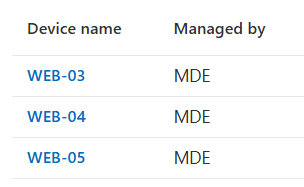
Hello Community, In our Customer i have a strange problem. We onboarded with Azure Arc server and activate a Defender for Cloud servises only for Endpoint protection. Some of this device onboarded into Microsoft Defender portale, but not appears as a device, infact i don't have opportunity to put them into a group to apply policy. I have check sensor of Azure Arc and all works fine (device are in Azure Arc, are in the defender portal and see them on Intune (managed by MDE)). From Intune portal From Defender portal But in difference from other device into entra ID exists only the enterprise application and not device I show the example of device that works correctly (the same onboarding method) Is there anyone who has or has had this problem? Thanks and Regards, Guido655Views0likes3Comments
Defender for servers (P1)
Hey guys, I enabled my Defender for cloud trial licens (P1) for my Windows servers. They are onboarded and i can see them visually in the (security.microsoft.com) EDR Portal. My enforcement scope is set to Intune - so all my AV policies etc are created there. I want to create a AV Policy for my Windows servers but i can't see the objects in Entra. What is best practice. To register them in Entra manually or should it automaticlly create a object in Entra during the onboarding process? Can't create & assign a AV policy etc until i create a group and put all my servers into that group. Any ideas? Also might be worth mentioning i see that they are managed by "unknown" and not Microsoft Sense? Should i point back the scope to the Defender portal? Whilst my endpoints are managed by Intune.291Views0likes1CommentUpdating SDK for Java used by Defender for Server/CSPM in AWS
Hi, I have a customer who is Defender for Cloud/CSPM in AWS. Last week, Cloud AWS Health Dashboard lit up with a recommendation around the use of AWS SDK for Java 1.x in their organization. This version will reach end of support on December 31, 2025. The recommendation is to migrate to AWS SDK for Java 2.x. The issue is present in all of AWS workload accounts. They found that a large amount of these alerts is caused by the Defender CSPM service, running remotely, and using AWS SDK for Java 1.x. Customer attaching a couple of sample events that were gathered from the CloudTrail logs. Please note that in both cases: assumed-role: DefenderForCloud-Ciem sourceIP: 20.237.136.191 (MS Azure range) userAgent: aws-sdk-java/1.12.742 Linux/6.6.112.1-2.azl3 OpenJDK_64-Bit_Server_VM/21.0.9+10-LTS java/21.0.9 kotlin/1.6.20 vendor/Microsoft cfg/retry-mode/legacy cfg/auth-source#unknown Can someone provide guidance about this? How to find out if DfC is going to leverage AWS SDK for Java 2.x after Dec 31, 2025? Thanks, Terru204Views0likes0CommentsFile Integrity Monitoring - Agentless Issues in Detecting Changes to Files
Hello! Looks like there have been some recent updates made to File Integrity Monitoring. After reviewing the MS documentation https://learn.microsoft.com/en-us/azure/defender-for-cloud/file-integrity-monitoring-overview#recommended-items-to-monitor it looks like you can now create custom Rules for Files and for custom Registry keys. From what I can gather from the documentation, agentless scans are used for custom rules that you create and an agentless scan occurs once every 24 hours. I have created several custom rules to detect if a file has been Deleted, Added, Modified or Renamed and Defender for Cloud is still not detecting any changes. I have made changes to these files 3 days ago, and no changes have been reported back. Any ideas why this might not be working. I have already confirmed that the appropriate RBAC Roles have been assigned to my Key Vaults where CMK Disks are being used. I also wanted to know if the Agentless FIM can monitor Folders / Directories as well. I haven't seen anything about this in the documentation. Is this even supported?569Views0likes1Comment
Unable to resolve - A vulnerability assessment solution should be enabled on your virtual machines
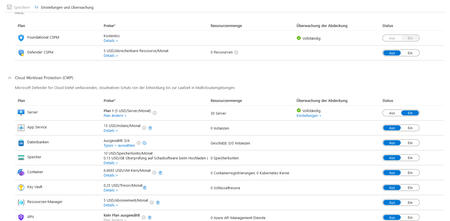
We currently have a mix of approximately 45 Windows / Linux Servers and AVD machines which are not successfully being marked as compliant with the Defender recommendation "A vulnerability assessment solution should be enabled on your virtual machines". On the subscription level we have Defender for Servers Plan 2 enabled and Agentless Scanning CSPM enabled. Within a subscription some of the of these VMs are compliant and others are not. Their compliance state doesn't appear to have any relevance to if the Qualys or MDE extensions are installed. We have servers that are healthy that have Qualys, MDE, or none installed and are healthy. Our VMs are not using the full feature set of Defender Plan 2 as we use CrowdStrike so the Defender for Endpoint functionality of the Defender for Servers Plan 2 has been disabled, but to my knowledge this shouldn't impact Vulnerability assessments. In Security Portal it does seem that generally all the VMs that healthy for this recommendation are visible in the devices section. Whereas these 45 that are not, are either not searchable or have sensor health state "inactive". We have an Azure Policy generated to onboard devices to Vulnerability assessment using MDE.Tvm and it seems to be generally working but not for these 45 devices. The Microsoft Documentation is really unclear, what do we need to make these systems compliant?650Views0likes6CommentsCost Calculator for Defender for Cloud (Public Preview)
Did you know Microsoft Defender for Cloud has a built-in cost calculator to easily calculate the costs of protected resources in your cloud environment? No? Well, I didn’t either until I stumbled upon the button in the MDC portal myself. Apparently, Microsoft announced the preview for the MDC cost calculator last month, on February 19, 2025. With this post, I’m sharing my experience with this new cost calculator for Microsoft Defender for Cloud, providing guidance and comparing available options to calculate the costs. https://myronhelgering.com/cost-calculator-for-defender-for-cloud/684Views0likes0CommentsDefender for Server deployed, integration for DfE checked, but M365 Defender showing "Can be onboard
I'm sure I'm missing something in the slightly complicated way of enabling servers for DfE via Defender for Cloud Server. The licensing is in-place the checkboxes to share data are ticked. The servers are showing as onboarded in Defender for Cloud however, the one portal to rule them all - Microsoft Defender 365 - is still showing the servers as "Can be onboarded" and missing the data of a properly onboarded DfE client. Where should I start my troubleshooting to determine what I've missed or what is going wrong? Paul2.6KViews1like5Comments
No automatic MDE.Windows installation anymore
We have an Azure subscription to which our on-premises servers are connected via Azure Arc. Actually, only Microsoft Defender for Servers Plan 1 should be used. However, ‘Plan 2’ is billed in the cost analyses, which leads to significantly higher costs than planned. I´ve fixed it but it lead to the Problem of not installing MDE.Windows anymore. The servers are connected to Azure by executing a script, after which some plugins are installed(MDE.Windows, MicrosoftMonitoringAgent, and on some servers "WindowsPatchExtension"). In the environment management of Defender for Cloud we have explicitly selected plan 1, despite this plan 2 is activated for each server. There is no Log-Workspace. Here are the Policies, i think they go automaticly created by Azure. I´ve deleted "ASC provisioning LA agent Windows Arc" and the linux one because this is deploying the two Extensions "MicrosoftMonitoringAgent" and "WindowsPatchExtension", which activate Plan 2. After deleting those to Extensions i should not get billed as Plan 2 anymore. My Problem is now that i don´t have the policy to install the MDE Plugin anymore. How do i get this working again, i need to install only the MDE Plugin on the computers to ensure we only use Plan 1. No other extensions, no Log-Workspace... Appreciate the help.460Views0likes0Comments
"Duplicate" alerts in Defender for Cloud from MDE
Hello, I discovered that security alerts generated from Defender for Endpoint are causing "duplicate" security alerts in Defender for Cloud. We have several Azure Arc-enabled servers active with Defender for Server P1 which includes Defender for Endpoint integration. Hence Arc servers are automatically onboarded to Defender for Endpoint. We had a false positive caused by the addition of AV exclusions which generated an alert / incident in Defender XDR which was then synced to Sentinel. Closing the alerts in Defender XDR or Sentinel resulted in synced status between the two. However it seems the same alerts were also created in Defender for Cloud, and their status remained "open" even after being resolved in Defender XDR. The link in the open Defender for Cloud Alert effectively opens up the resolved alert in Defender XDR. So it seems to be the same alert but its status is not being synced. Is this a known issue?355Views0likes1Comment