leadership
1 TopicTech for Good in Action: Accessibility, AI, and Expanding Our Community Impact
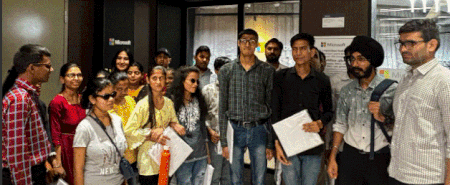
Accessibility is not a niche topic. It is a fundamental aspect of inclusive technology, and a shared responsibility for everyone who builds, teaches, and communicates about tech. This message was at the heart of a recent Global Skills session that brought together Microsoft MVPs and community leaders to explore how technology, AI, and communication can be used as powerful tools for social good. The meeting featured three complementary perspectives: hands-on grassroots initiatives making technology accessible to vulnerable groups, the role of AI in building inclusive systems by design, and the importance of communicating technical knowledge beyond traditional expert audiences. Making Technology Accessible Where It Matters Most Microsoft MVP Navika Chhauda opened the session by sharing her work on making technology and technical education accessible to vulnerable communities in India, focusing on visually impaired students and acid attack survivors. Her community initiatives demonstrated how empathy, persistence, and creativity can bridge gaps that technology alone cannot solve. During the COVID-19 pandemic, Navika began teaching Microsoft Office 365 tools to visually impaired students at a blind school in Delhi through virtual classes. This work came with significant challenges, particularly the limitations of screen readers such as JAWS and the difficulty of conveying visual interfaces in an online environment. To address this, Navika adapted her teaching approach by reading screen content aloud, offering highly personalized guidance, and encouraging peer support among students with partial vision who could assist others during sessions. Beyond foundational digital skills, Navika also mentored visually impaired students in preparing for the Azure AZ-900 certification. Through dedicated guidance and accommodations, two students successfully achieved the certification, becoming among the first visually impaired candidates in India to do so. Her support did not end with certification. Navika continues to mentor these students through ongoing sessions and community events, including visits to Microsoft offices and participation in discussions around AI and disability. Her work also extends to empowering acid attack survivors through various NGOs in India. Recognizing both the lack of resources and the need for practical, job-relevant skills, Navika arranged access to computers and tailored Office 365 training to real-world use cases such as Excel-based billing. She also facilitated interactions between participants and Microsoft professionals, helping to build confidence, exposure, and a sense of belonging within the broader tech ecosystem. Navika openly addressed the challenges of working with vulnerable groups, including limited access to devices, low levels of basic computer literacy, language barriers, and difficulties in outreach. She shared practical strategies to overcome these obstacles, such as collaborating with NGOs, teaching foundational digital skills before moving to advanced tools, and applying for special accommodations for certification exams. Her call to action was clear: more technologists can get involved by volunteering, mentoring, and partnering with organizations that already work closely with underrepresented communities. Building Inclusive Systems with AI Following this grassroots perspective, MVP Abdulrafiu Izuafa shifted the focus to the systemic level, discussing the importance of designing accessible AI systems for persons with disabilities. He emphasized that accessibility is not an edge case, noting that more than 1.3 billion people globally live with disabilities. Exclusion, he explained, is often unintentional, but its impact is profound when accessibility is not considered from the outset. Abdulrafiu highlighted how AI-powered solutions are already transforming accessibility across multiple domains. In visual accessibility, technologies such as image recognition and screen readers enable people with visual impairments to interact more independently with digital content. In hearing accessibility, tools like live captions, sign language avatars, and sound recognition open access to information for people with hearing impairments. In the area of mobility, voice control and eye-tracking technologies provide alternative ways to interact with devices. He shared examples of real-world applications, including his own News Accessibility Platform and Microsoft’s Seeing AI app, to illustrate how AI can translate innovation into tangible impact. Abdulrafiu also outlined Microsoft’s broader investments in accessibility, referencing initiatives such as the AI for Accessibility program, built-in accessibility features across Microsoft 365, and community-focused events like the Ability Summit. The central theme of his talk was advocacy. Abdulrafiu encouraged Microsoft MVPs and technologists to advocate for accessibility as a default requirement, not an afterthought. This includes involving people with disabilities directly in the design process, mentoring others to build inclusive solutions, and normalizing conversations about accessibility within technical communities. The conversation concluded highlighting that inclusive design benefits everyone, not only those with disabilities. Reaching Beyond the Technical Echo Chamber The final part of the session focused on communication and community growth. Micah Heaton explored how Microsoft MVPs can make their technical content more accessible to broader audiences, including non-technical stakeholders such as sellers, customer success managers, and decision-makers who play a critical role in product adoption. Micah observed that MVPs as well as technical experts often create content primarily for other experts, unintentionally excluding what he described as the “forgotten majority.” He argued that improving clarity does not dilute technical expertise. On the contrary, using clear language, reducing jargon, and explaining acronyms can significantly increase the reach and influence of technical content. He also emphasized the importance of supporting real-world adoption by addressing practical questions and trade-offs. This includes being honest about product limitations, discussing realistic implementation scenarios, and helping others explain complex concepts in simple terms. During the discussion, it became clear that MVPs who enable others to learn and succeed play a vital role in building sustainable, inclusive communities. Micah further suggested that more transparent case studies, including imperfect demos and challenges faced during adoption, would help MVPs and customers better understand real-world scenarios. His message aligned closely with the broader theme of the session: accessibility is not only about technology, but also about how knowledge is shared. Moving Forward Together, these conversations highlighted a powerful truth: building accessible and inclusive technology requires action at every level, from grassroots education and AI-driven innovation to thoughtful communication and community advocacy. By combining technical expertise with empathy and openness, the tech community can create solutions that truly work for everyone. Resources Learn more about Microsoft’s approach to inclusive technology: Accessibility Technology & Tools | Microsoft Accessibility