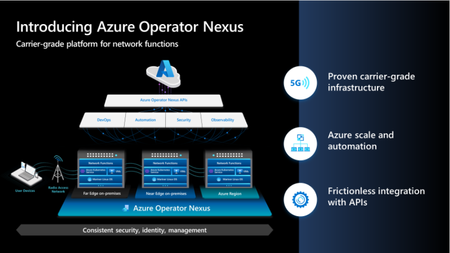
hybrid operator platform
7 TopicsReimagining Network Operations: How Microsoft NetAI Tackles Hyperscale Challenges
The Business Imperative: Why Network Operations Must Change Modern network operators face a perfect storm of challenges: Exponential Growth in Events and Maintenance Network events and maintenance activities are increasing at an unprecedented rate. According to Microsoft’s analysis, weekly network events are projected to grow from hundreds to thousands over the next five years. Maintenance activities are expected to follow a similar trajectory. Without automation, this growth would require a dramatic—and unsustainable—increase in staffing. Rising Operational Costs Dense Wavelength Division Multiplexing (DWDM) operations, which are critical for high-capacity fiber networks, are both costly and labor-intensive. The global spend on Network Operations Center (NOC) services exceeds $5 billion annually, with total network operations costs reaching $250 billion per year. As networks expand, these costs threaten to spiral out of control. Human-Centered Workflow Limitations Manual processes are slow, error-prone, and unable to keep pace with the scale and speed of modern networks. Organizational inertia, fragmented tooling, and siloed systems further impede efficiency. Engineers are often bogged down by device-specific command-line interfaces and isolated management systems, slowing onboarding and cross-functional collaboration. Safety and Reliability Concerns Early attempts to automate network operations with AI revealed critical gaps. Traditional AI models struggled with limited context, leading to unpredictable outcomes and eroding trust. Machine learning models often generated false positives, overwhelming operations teams with unnecessary alerts. The risk of unsafe command execution—where an autonomous agent might inadvertently disrupt service—remained a constant concern. The Talent Crunch As network complexity grows, so does the demand for skilled engineers. Yet, hiring and training enough talent to keep up with operational demands is neither cost-effective nor sustainable. The industry faces a widening gap between operational needs and available expertise. NetAI: A Strategic Shift Toward Autonomous Operations Microsoft NetAI is not just another automation tool—it’s a strategic framework for transforming how networks are managed. By leveraging intelligent agents, curated context, and modular workflows, NetAI enables the Azure Networking team to move from reactive, manual processes to proactive, AI-driven automation. Key Objectives of NetAI Achieve Fully Autonomous Network Operations: NetAI aims to eliminate the need for manual intervention in the majority of network incidents, allowing intelligent agents to detect, diagnose, and resolve issues independently. Minimize Human Involvement in Incident Lifecycle: By automating detection, root cause analysis, and repair, engineers can focus on higher-order tasks like agent enablement and system design. Scale Operations Without Scaling Headcount: As network events grow exponentially, NetAI maintains a flat staffing curve by automating repetitive and time-consuming tasks. Ensure Deterministic and Reliable AI Behavior: NetAI emphasizes deterministic workflows, engineered prompts, and stateful context management to guarantee consistent and safe outcomes. Enable Role-Based Agent Collaboration: Specialized agents operate within defined scopes, enhancing reliability and accountability. Support Organizational Transformation: NetAI redefines the role of network engineers, shifting their focus from manual operations to automation enablement and system governance. How NetAI Addresses Business Challenges NetAI’s architecture is designed to tackle the most pressing operational challenges head-on: Scalability: By automating incident handling, NetAI enables organizations to manage more events without increasing headcount. Cost Efficiency: Automation reduces the need for expensive, labor-intensive operations, delivering significant cost savings. Reliability and Safety: Deterministic workflows, strict guardrails, and role-based access controls ensure that automation is both reliable and safe. Organizational Agility: By freeing engineers from repetitive tasks, NetAI empowers them to focus on innovation and strategic initiatives. A summary table from the whitepaper highlights the breadth of challenges addressed, from exponential event growth and DWDM inefficiency to fragmented tooling and repair delays. The Measurable Benefits of NetAI The impact of NetAI on Microsoft’s global network operations has been transformative. Here are some of the most notable outcomes: 40% More Incidents Handled Per Person AI agents manage detection, diagnosis, and resolution, allowing engineers to handle 40% more incidents per person. This shift enables human operators to focus on higher-value activities such as agent enablement, prompt refinement, and system design. 80% Faster Root Cause Analysis With agents like Pal leveraging topology, telemetry, and historical data, the time required to isolate and understand complex issues has dropped by 80%. This acceleration not only improves service reliability but also reduces the operational burden on Tier 2 support teams. 25% Reduction in Time to Repair (TTR) Autonomous agents like Miles initiate and manage fiber repair workflows without waiting for human coordination, streamlining the resolution process and minimizing service disruption. Flat Staffing Curve Despite 10x Event Growth Perhaps most impressively, NetAI has enabled Microsoft to maintain a flat staffing curve even as the number of incidents and maintenance tasks has increased dramatically. This decoupling of scale and headcount is a critical advantage in hyperscale environments. Improved Consistency and Reliability Deterministic automation reduces false positives and operational noise, improving consistency and reliability across the board. Cultural Transformation Beyond the numbers, NetAI has fostered a cultural shift within Microsoft. Engineers are no longer just responders—they are automation architects, designing and refining the systems that drive autonomous operations. This evolution enhances job satisfaction, reduces burnout, and positions the workforce for long-term success in an AI-driven future. Strategic Collaboration and Industry Impact The success of NetAI is not just a product of internal innovation—it’s also shaped by Microsoft’s active collaboration with network operators around the world. Through joint workshops, pilot deployments, and feedback loops, Microsoft works closely with partners to tailor the agentic framework, workflow orchestration, and safety protocols to real-world conditions. This collaborative approach accelerates the maturity of NetAI while empowering operators to modernize their network operations. To further accelerate adoption, Microsoft has introduced the Network Operations Agent (NOA) Framework—a deployment and enablement toolkit that packages NetAI’s best practices, engineered prompt libraries, architectural blueprints, and modular components into a reusable format for operators. As NetAI continues to evolve, Microsoft is focused on expanding agent roles, enhancing multi-agent coordination, and deepening integration with operational systems. The vision is clear: smarter, safer, and more strategic operations that redefine what’s possible in network management. Download the Full Whitepaper Ready to dive deeper? The full Microsoft NetAI whitepaper explores the strategic vision, technical architecture, and real-world impact of autonomous networking. Download it here to learn how your organization can benefit from the next generation of network operations: ⬇️Download the Microsoft NetAI Whitepaper
AI-Powered RAN and the Intelligent Edge: Microsoft’s Vision for the Future of Telecom
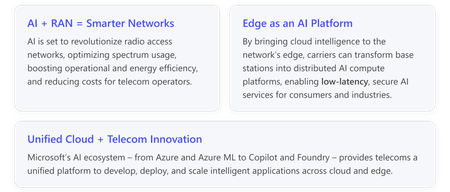
Artificial intelligence (AI) is rapidly converging with telecommunications infrastructure, promising to transform how networks are built, optimized, and monetized. Nowhere is this more evident than in the radio access network (RAN) – the crucial “last mile” that connects our devices to the digital world. At Mobile World Congress, Microsoft is sharing a strategic vision for AI in the RAN (AI-RAN) and intelligent edge computing. This vision centers on harnessing cloud and AI technologies to make telecom networks smarter, more efficient, and ready for new services. With decades of wireless research and a broad AI ecosystem spanning Azure to Copilot and Microsoft Foundry, Microsoft is partnering with the telecom industry to enable a new generation of AI-powered networks. A New Era of AI-RAN: AI Meets the Radio Network The concept of AI-RAN captures a threefold innovation in telecom networks, where AI and RAN technology intersect: AI for RAN: using advanced machine learning and AI algorithms to improve how RANs operate. By leveraging AI-based analytics and control, operators can dynamically optimize spectrum usage, network performance, and energy efficiency, leading to lower operational and capital expenditures. In practice, this means mobile networks that self-optimize – automatically adjusting parameters to reduce interference, enhance coverage, and cut power consumption without human intervention. AI on RAN: turning the RAN itself into a distributed AI computing engine. In this paradigm, the thousands of cell sites and edge data centers in a network can host AI inference workloads closer to end users. This intelligent edge approach allows telecom providers to offer new AI-driven services – from real-time translation to AR/VR and interactive gaming – with the ultra-low latency and data sovereignty that cloud alone cannot achieve. AI and RAN: creating a shared infrastructure where AI platforms and the RAN co-exist and collaborate. By co-locating AI resources with telecom network functions, operators unlock synergies like integrated sensing and communications (for example, using 5G cells as distributed sensors), and they can support “physical AI” use cases such as autonomous robots and smart factories at the edge. This convergence of AI and telecom infrastructure not only improves the network itself but also opens new revenue streams through innovative services delivered over 5G and future 6G networks. Microsoft envisions AI-infused RANs that are more than just communication channels – they become intelligent platforms for innovation. For instance, in recent trials, Microsoft researchers demonstrated AI systems that detect radio interference in real time by turning a 5G base station into a wideband spectrum analyzer. Similarly, an AI-driven anomaly detection system can continuously learn a network’s normal behavior and spot irregularities before they cause outages, helping prevent failures and improve reliability. These examples illustrate how applying AI to RAN data can translate into more resilient networks and better user experiences. Edge AI: Bringing Cloud Intelligence Closer The push for edge AI in telecom is about extending the power of the cloud out to the network’s edge, closer to where data is generated and consumed. This is crucial for applications that demand instantaneous processing and response, or that must keep data local for privacy and security. In a traditional setup, complex AI models live in the cloud, and lightweight AI runs on devices. But many new scenarios – such as unmanned aerial vehicle, autonomous mobile robot, or industrial IoT – require a middle ground. The telecom network’s edge (for example, in 5G base stations or nearby edge data centers) can serve as that ideal “in-between” AI execution layer. Edge AI offers several strategic advantages for operators and enterprises: Ultra-low latency: By processing data on edge servers just one “hop” away from end-users, critical applications (like autonomous driving or remote robotic control) can respond in milliseconds, far faster than sending data to distant cloud servers. Data sovereignty and privacy: Keeping sensitive data (such as video feeds, industrial sensor data, or health information) within local networks or on-premises helps meet regulatory and privacy requirements. AI at the edge can analyze data without that data ever leaving the telecom’s domain. Bandwidth optimization: By processing and filtering data locally, only the most important insights (or lightly compressed data) are sent to the cloud. This reduces backhaul traffic and lowers costs. Resilience and continuity: Edge AI systems can continue to operate even when connectivity to cloud is limited, ensuring critical services remain available. In short, intelligent edge computing transforms telecom networks into platforms for innovation. A prime example is the concept of “physical AI” – where AI-driven services control physical devices in real time via the network. Imagine factory robots or autonomous drones connected to a 5G network: with edge AI, heavy computation (like computer vision or coordination algorithms) can run on nearby servers, leveraging GPUs at the base station or aggregation site. Microsoft’s research has shown that offloading robotics AI workloads from onboard devices to edge GPUs can improve response times dramatically – in one scenario, cutting inference latency from over a second on a device to under 100 milliseconds at the edge. This kind of performance boost can make previously impossible applications feasible, from real-time hazard detection in smart cities to advanced augmented reality experiences. Unifying Cloud and Telecom through Microsoft’s AI Ecosystem Achieving the AI-RAN and edge vision requires more than just ideas – it demands a cohesive platform that brings cloud technology into the heart of telecom networks. This is where Microsoft’s broad AI and cloud ecosystem plays a pivotal role. Azure’s cloud platform provides the robust, scalable foundation. Telecom operators can run key network functions in Azure (such as 4G/5G core networks) and leverage Azure’s global infrastructure for high performance and elasticity. At the same time, Azure’s capabilities extend on-premises and to the edge via Azure Arc, enabling a single pane of glass for managing resources across public cloud, private data centers, and network edge sites. This means operators can deploy and manage AI models or applications on distributed RAN edge servers as easily as in the cloud – achieving “zero-touch” automation and unified operations across their entire network. Microsoft’s AI platforms and tools further empower telecom innovation. With Azure Machine Learning and the new Microsoft Foundry platform, operators and partners can train, fine-tune, and deploy state-of-the-art AI models for their unique needs. In fact, Microsoft’s AI ecosystem includes thousands of advanced models – from the latest OpenAI GPT-5.2 and domain-specific models, to a vast catalog of open-source models from partners like Anthropic, Meta, and Mistral – all available through Foundry for use in custom solutions. Likewise, Microsoft’s growing family of Copilot experiences and AI agent services can be harnessed to improve telecom operations and customer experiences. For example, the Network Operations Agent (NOA) Framework demonstrates how a service desk AI agent might assist network engineers by intelligently parsing through network alerts and suggesting fixes, while different agents could help automate customer support with industry-specific expertise. Under the hood, developers have access to powerful frameworks like the Semantic Kernel and Azure’s AI libraries to build their own telecom-focused AI applications and xApps (RAN applications) that run on cloud or edge infrastructure. Microsoft’s vision is to make developing AI-driven network solutions as seamless as any cloud application development – develop in Azure, deploy to the RAN. Crucially, all these capabilities are grounded in an open, standards-based approach. Microsoft is working closely with the industry to support Open RAN standards and has collaborated with leading operators and vendors on initiatives like Project Janus – an open RAN programmability platform that exposes rich RAN telemetry and control to AI algorithms. By embracing open interfaces and partnering across the telecom ecosystem, Microsoft ensures that AI solutions can plug into existing networks and equipment regardless of vendor, protecting operators’ investments while extending their capabilities. Microsoft is also a founding member of the global AI-RAN Alliance, a cross-industry effort to accelerate AI-native RAN technologies and establish best practices for integrating AI into next-generation networks. From Research to Reality: Innovation with Partners Microsoft’s leadership in AI and cloud is backed by deep research and real-world experimentation. Microsoft Research has been pushing the boundaries of wireless networking for over 20 years. Today, that research is yielding dividends in the form of new telecom technologies: Microsoft’s researchers have constructed a live AI-RAN testbed network across two global innovation hubs. This 24/7 private 5G network – spanning more than 30 cloud-controlled cell sites on Microsoft’s Redmond (USA) and Cambridge (UK) campuses – serves as a blueprint for the future RAN. It is fully software-defined, cloud-managed, and open, allowing internal teams to develop and test advanced 5G/6G capabilities like AI-driven optimization, edge robotics, and healthcare applications in a real-world environment. Insights from these efforts are shared with the industry and academy, helping define 6G-era concepts such as real-time RAN intelligent control and AI-native RAN architectures. Microsoft’s research prototypes (including reference designs and proofs-of-concept) offer operators a head start in understanding how to implement AI in their networks – from intelligent resource allocation to network slicing and beyond. Collaboration is key: Microsoft works hand-in-hand with major communication service providers (CSPs), network equipment manufacturers, and startups to bring these innovations to production. Joint trials and proof-of-concepts have demonstrated use cases like interference detection, energy-efficient RAN automation, and near-real-time network anomaly detection in live networks. By co-innovating with the telecom community, Microsoft ensures that its AI solutions align with real operational needs and can be deployed in multivendor environments. A Strategic Path Forward for the Telecom Industry As the telecom sector looks to the future, the message is clear: AI and the network are no longer separate – they are becoming one and the same. Operators that embrace AI-powered RAN and edge computing stand to benefit from significant gains in efficiency and customer experience. They will be able to optimize network performance in ways not possible before, from squeezing more capacity out of spectrum to slashing energy usage during off-peak hours. At the same time, these intelligent networks can unlock new revenue opportunities by offering differentiated services – think of carriers providing AI-powered insights or automation services to enterprise customers, or delivering rich digital experiences (from cloud gaming to mixed reality) with quality guaranteed by AI-driven network slices. Microsoft’s role is to serve as a platform and partner for this industry-wide transformation. By bringing its unparalleled cloud and AI ecosystem to the telecom domain, Microsoft is helping operators transform into hyperscale tech-driven enterprises. That means Azure infrastructure for carrier-grade reliability and scale, Azure ML and data platforms to train models on telecom data, Copilot and agent technologies to augment both network operations and customer-facing services, and the Foundry catalog of AI models and tools to jumpstart innovation. All of these building blocks are designed to work in a hybrid, open environment – spanning public and private clouds, the network core, and the far edge – so that AI can run wherever it creates the most value, even directly in the RAN. The convergence of AI and telecom infrastructure is poised to define the next decade of networks. Microsoft’s strategic investments in AI-RAN and edge computing, combined with deep partnerships across the telecom ecosystem, position it as a key enabler of this transformation. As the industry gathers at MWC to discuss what’s next, Microsoft reaffirms its commitment to helping telecom operators and partners harness the power of AI, from the cloud to the intelligent edge, and to jointly create a future where networks aren’t just faster or more open – but truly smarter.Introducing Microsoft’s Network Operations Agent – A Telco framework for Autonomous Networks
How NOA Works: Multi-Agent Intelligence with Human Oversight At its core, NOA is a multi-agent system tailored for telecom operations. It hosts a suite of specialized agents, each with a focused domain expertise – for example, one agent might handle network provisioning, another oversees software updates, and another focus on fault management. These agents continuously gather and interpret data from across the network and IT systems and feed their insights to a higher-level coordinating “planner” agent (NOA itself). The planner agent synthesizes inputs from all the specialists and generates real-time recommendations and insights for the operations team throughout the service lifecycle. In practice, this means many routine issues can be anticipated or resolved autonomously, with examples such as: Proactive deployment checks: During a new service rollout, a provisioning agent can automatically scan configuration scripts and flag anomalies or errors before they cause incidents, preventing outages caused by human error and improving overall network reliability. Accelerated incident response: If a network fault occurs, a service assurance agent springs into action to diagnose the issue. It can correlate telemetry and logs to pinpoint the root cause in seconds, then suggest the best remediation steps to engineers – massively reducing time to restore service. This shrinks the mean time to detect and repair issues, improving uptime. Crucially, NOA keeps humans in the loop. All agent-initiated actions operate under strict governance and operator-defined policies. Any automated fix or change recommended by an agent can be gated behind approvals, and every action is logged for audit compliance. This ensures that even as more tasks become automated, network engineers retain control and regulatory requirements are met. In short, NOA’s agents do the heavy lifting, but people set the guardrails. Key Components of the NOA Framework NOA brings together several Microsoft technologies into an integrated solution. Three foundational components make this telco agent framework powerful: Unified Data Access with Microsoft Fabric Effective AI agents require access to all relevant data, wherever it resides. NOA leverages Microsoft Fabric to break down data silos across the telco environment. Fabric acts as a unified data mesh for the network: it connects real-time telemetry streams, operational support system (OSS/BSS) databases, ticketing systems, and more into a single logical data layer. Broad data connectors: Fabric provides prebuilt connectors for Microsoft 365, Graph API, Dynamics 365, as well as telecom OSS/BSS and third-party systems. This means agents can directly tap into data ranging from network device metrics to customer trouble tickets, without custom integration work. Virtualized lakehouse (“OneLake”): Through OneLake, Fabric virtualizes multi-cloud and on-premises data into one scalable data lake. Whether the source is Azure Data Lake Storage, Amazon S3, Google Cloud Storage, or on-prem SQL servers, NOA’s agents can read and reason over it in real time without needing to physically relocate the data. Cross-domain data sharing: Fabric’s data virtualization and mirroring allow agents to combine insights across domains (e.g., correlating network performance data with service desk logs or even sales data) to make more informed decisions. By unifying telemetry and business data, NOA accelerates troubleshooting and decision-making. Agents and human analysts get a full picture of the network’s state and context instantly, improving accuracy of insights and enabling faster root-cause analysis. For the business, this means less downtime and more informed strategy, since decisions are based on comprehensive, up-to-date data. The framework is also aligned with industry standards like the TM Forum’s Autonomous Networks model, providing a common blueprint that fits into existing OSS/BSS processes. Microsoft has made available TM Forum–aligned templates, reference architectures, GitHub assets, and even Azure-hosted sandbox environments so that telcos can prototype and deploy their own agent-based solutions rapidly. Multi-Agent Orchestration with Azure Agent Framework A highlight of NOA is its multi-agent orchestration engine, built on the Azure Agent Framework. This open-source platform (part of Microsoft Foundry) provides the runtime environment and tooling to deploy, manage, and coordinate all the AI agents working in the system. In essence, it’s the “brain” that makes sure the right agent does the right task at the right time, and that they can communicate and work together seamlessly. Key capabilities of the Azure Agent Framework include: Standardized agent communication: Agents can talk to each other and to external services using open protocols. For example, Agent-to-Agent (A2A) messaging and the Model Context Protocol (MCP) allow dynamic tool use and data sharing between agents. This means a fault-management agent can trigger a troubleshooting agent automatically when needed, or an agent can call external APIs via OpenAPI definitions. Agent catalog and SDKs: Azure Agent Framework comes with a catalog of pre-built agent templates for common telco scenarios (provisioning, fault management, repair, etc.). Developers can also create custom agents using its SDK (with support for integration into existing apps), leveraging familiar tools like Visual Studio and GitHub for development and CI/CD. This drastically shortens the time to build new agents and integrate them into the NOA system. Built-in memory and observability: The framework provides long-term memory storage for agents and robust tracing/monitoring capabilities. This means agents “remember” past interactions and learn over time, and operations teams can monitor agent decisions and interactions in detail – crucial for refining agent behavior and troubleshooting any issues. It also includes enterprise-grade logging of agent actions (tying into the governance mentioned earlier). Enterprise security & hybrid readiness: Governance and security are baked in at the platform level. Agents can be deployed in a fully isolated manner (e.g. within Azure Virtual Networks), use managed identities for auth, and respect role-based access controls. The framework supports running agents in Azure or connecting to external/on-prem agent hosts, enabling hybrid and multi-cloud deployments out of the box. By using Azure Agent Framework, NOA ensures that a telco’s autonomous operations are running on a proven, secure, and extensible orchestration layer. (For more detail, see the Azure AI blog post “Introducing Microsoft Agent Framework” and the open-source Agent Framework repository on GitHub which provide deeper dives into these capabilities.) “UI for AI” – Copilot Integration in Teams and Outlook A distinguishing feature of Microsoft’s approach is making AI collaborative and user-friendly. Rather than confining insights to a dashboard, NOA integrates its agents into the tools where humans already work. This creates a “Copilot”-style experience for network operations. Through Microsoft Teams, Outlook, and the Copilot platform, NOA agents interact with engineers and managers in natural language: Conversational interface: An operations engineer can chat with the network AI agents as if they are teammates. For example, in a Teams channel, one could ask, “NOA, what’s causing the latency spike in region X?” and the agent would respond with its analysis, backed by data. Agents can also proactively post alerts or recommendations in chat when certain conditions are detected. Integrated into daily workflow: Within Outlook or Teams, if an incident occurs, an agent might automatically draft an incident summary or recommend next steps via a Copilot card, which the engineer can approve or tweak. This turns everyday collaboration tools into a unified operations cockpit where monitoring, troubleshooting, and decision-making happen collaboratively in real-time. Supervisor visibility and control: Managers can use the same interface to get high-level summaries, see trends (e.g., a weekly digest of recurring issues or network KPIs), and intervene when necessary. For instance, a supervisor could override an automated recommendation directly from within Teams if they see fit, or provide feedback to train the agents. With Microsoft 365 Copilot as the control system for these interactions, the learning curve is low – the AI fits into existing workflows. This “UI for AI” approach has proven to be a “killer app” internally at Microsoft: it dramatically improved productivity and response times in Microsoft’s own network operations by making human-AI collaboration seamless. The bottom line is that NOA’s advanced AI capabilities remain accessible and transparent to the people running the networks, rather than a black box. Open and Secure by Design The Network Operations Framework is built to be open and extensible. It’s not a closed system limited to Microsoft-only tools. Operators can integrate third-party or custom-built agents into NOA’s orchestration layer just as easily as first-party ones. For example, if a telecom has an existing AI solution or an OSS tool they want to include, they can wrap it as an agent and plug it into the framework. Microsoft’s AI Gateway service in Azure helps manage the security and identity of all agents (including third-party agents) via the MCP standard, ensuring consistent authentication, authorization, and compliance policies across the board. This open ecosystem approach means telcos can leverage their current investments and expertise, augmenting them with NOA, rather than starting from scratch. At the same time, NOA is secure by design. As mentioned, every agent action can require approval and is logged. The framework enforces read-only defaults for agents unless explicitly granted permissions. It uses restricted service accounts and integrates with existing access control systems (AAA/TACACS) to ensure agents only do what they’re permitted to do. Built-in guardrails prevent unsafe operations on network devices. This level of governance is critical in telecom environments, which are often highly regulated and sensitive. Automation is controlled – it operates within the bounds set by the network operators. Real-World Impact: Azure Networking’s Success Story Microsoft itself has been a “customer zero” for NOA, applying this framework to manage its vast global Azure network. The results demonstrate the transformative impact of autonomous operations. Microsoft’s Azure Networking team deployed multiple agents using the NOA framework to handle fiber optic incidents worldwide. These agents act as copilots and even fully autonomous responders for network fiber cuts and degradations – a traditionally labor-intensive domain. The outcome has been remarkable: Azure Networking achieved a 60% reduction in time-to-detect fiber issues and a 25% improvement in repair times. In other words, faults that used to take hours to even notice are now identified within minutes, and the restoration of service is significantly faster. Such improvements translate to higher network uptime and better customer experience. This example underscores how NOA’s combination of data-driven agents and automation can drastically improve operational efficiency in practice. Conclusion: A Blueprint for Telecom Autonomy The Microsoft Network Operations Agent Framework (NOA) offers telecom operators a pragmatic path to achieve autonomous networks. It’s modular, open, and built on proven technology – from AI agents and data fabric to collaboration tools – that operators may already use. Whether you are looking to modernize a Network Operations Center (NOC), automate fiber-optic repairs, or build a self-healing, self-optimizing network, NOA provides the foundation and tools to get started. It brings the promise of AI-driven autonomy within reach of network operators – augmenting human teams with intelligent agents to handle complexity at cloud scale. By adopting this framework, telecoms can improve reliability and performance today, while setting the stage for the fully autonomous networks of the future. Learn more: Read the NetAI White Paper https://aka.ms/netai_wpdl Check out the Microsoft Azure Blog announcement on the Agent Framework for the developer side of this technology. Explore the Agent Framework on GitHub to see how multi-agent systems are built. Read Microsoft’s Tech Community blog on Introducing Teams Mode for Microsoft 365 Copilot which illustrates the power of bringing agents into collaborative workflows. Review the Azure API Management AI Gateway documentation details how third-party AI agents can be securely managed in this ecosystem. With NOA, Microsoft is delivering a telco-specific blueprint for autonomous operations – and inviting the industry to build upon it.Unifying Data and AI in Telecom: Inside the Telco Analytics PoC Accelerator
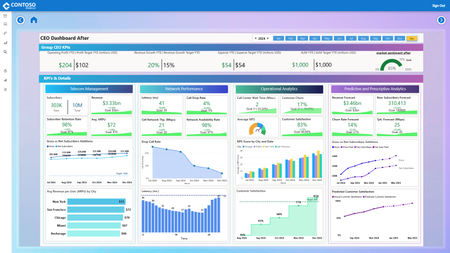
As telecom operators race to modernize their operations and deliver personalized, data-driven services, the need for a unified, intelligent analytics platform has never been greater. The Telco Analytics PoC (TAP) Accelerator is Microsoft’s answer to this challenge: a deployable, open-source solution that brings together the power of Microsoft Fabric, Power BI, Azure AI, and Purview to help telcos unlock the full potential of their data. What Is the TAP Accelerator? The TAP Accelerator is a pre-packaged, cloud-native PoC environment that enables telcos to explore and showcase AI-powered analytics in action. It includes: A demo web app Power BI dashboards for tracking telco specific KPIs and reports Microsoft Fabric Lakehouses with a telco data model Sample telco data ML notebooks Real-time telemetry via Eventhouse Automation scripts and ARM templates for deployment It’s designed to be deployed in a customer’s Azure subscription, allowing hands-on customization and exploration of real-world telecom scenarios. Why It Matters Telcos face a unique set of challenges: Fragmented data across legacy and cloud systems Slow, manual decision-making processes Difficulty demonstrating the ROI of AI and analytics The TAP Accelerator addresses these by offering a unified, governed, and scalable platform that brings together data from across the business—network, finance, customer service, and sales—and applies AI to drive actionable insights. Core Capabilities Unified Data Integration Connects on-prem and cloud data sources via Microsoft Fabric and OneLake Uses a data mesh approach to unify domains without duplication Real-Time and Historical Analytics Eventhouse enables real-time telemetry (e.g., call center, network KPIs) Fabric Lakehouses support historical trend analysis and forecasting AI-Driven Insights Azure AI Foundry powers predictive models (e.g., churn, campaign ROI) Data Agents enable Copilot-style natural language querying Governance and Security Microsoft Purview ensures compliance, access control, and auditing Built-in security best practices for customer deployments Key Components Layer Description Fabric Lakehouses Bronze, Silver, and Gold layers for structured data processing Power BI Reports Dashboards for Call Center, Finance, Network, Sales, CEO views Eventhouse Real-time KQL-based telemetry ingestion and analytics Semantic Models Structured telco semantic models for Power BI and Copilot Data Agents Natural language interface for querying data Azure AI Services Cognitive services and ML models for advanced analytics Telco Data Model The TAP Accelerator uses the Azure Synapse database template for wireless that helps to redefine how data is managed and utilized within the telecommunications sector. This model is designed to streamline operations, foster innovation, and enable a more seamless integration of services across the industry. It's a comprehensive telco data model consisting of more than 20 domains, and thousands of tables. For example, the Network domain alone contains 399 tables defining every entity and attribute commonly used in network use cases. The Accelerator also includes guidance for modeling the required telco data schema in Synapse, and importing it into your Microsoft Fabric environment. Business Value The TAP Accelerator delivers measurable outcomes across the telco value chain: Customer Experience: Personalized engagement and faster issue resolution Operational Efficiency: Streamlined workflows and reduced overhead Financial Control: Real-time visibility into revenue, disputes, and liabilities Strategic Agility: Faster, AI-informed decision-making Security & Compliance: Enterprise-grade governance across all data flows Deployment and Access The solution is open-source and available on GitHub under a Microsoft license. It can be deployed via automation scripts into a customer's Azure and Fabric environment. Get started now!AI beyond Chatbots
Artificial intelligence (AI) has rapidly evolved from narrow automation tools to autonomous, intent‑driven agents that perceive environments, interpret high‑level objectives, and execute complex tasks with minimal human intervention. This shift — known as agentic AI — represents the next frontier of generative AI, empowering telecom operators to transform customer engagement, network management, and operational efficiency. According to McKinsey, the global telecom industry could capture up to $250 billion in value by 2040 through advanced AI and agentic deployments. Microsoft, at the forefront of this revolution, is enabling telcos to leverage GenAI to enhance customer engagement, optimize networks, secure operations, and drive new revenue streams. By leveraging Microsoft’s Copilot Studio and Azure AI capabilities, telecom CTOs can move beyond conversational chatbots to build intelligent, self‑optimizing workflows that drive measurable outcomes across the enterprise. The Agentic AI Advantage Agentic AI goes well beyond today’s conversational chatbots: it comprises autonomous systems that perceive their environment, interpret high‑level goals, plan and execute multi‑step workflows, and continuously learn to improve outcomes. In telecom, agentic AI is rapidly moving from pilot projects to strategic priority. A recent McKinsey survey found that 64% of telco C‑suite executives have made scaling agentic use cases a top priority for 2025, and nearly 75% are targeting customer service first. Early adopters are already seeing material ROI: one North American operator reduced network capital expenditure by 10% by deploying an autonomous optimization agent, and a leading European telco cut cost per call by 35% while increasing first‑contact resolution by 60% with an AI‑powered help‑desk agent. According to a recent IDC white paper, telecom and media companies are seeing nearly four times the return on investment (ROI) on every dollar invested in AI. These results demonstrate that agentic AI isn’t merely a technological upgrade—it’s a transformative capability that automates complex processes, drives significant efficiency gains, and delivers measurable financial impact across the telecom value chain. For Chief Technology Officers (CTOs), the question isn’t whether to integrate AI into their operations but how to best implement these tools to achieve measurable results. In this exploration, we’ll examine Microsoft’s GenAI offerings and their role in reshaping the telecom landscape. Cracking the Code on Fraud: AI’s Role in Network Security Fraud is a persistent and costly issue for telecom operators, with industry losses nearing $39 billion globally in 2023. Traditional fraud detection systems, dependent on static rules, struggle to keep up with the rapidly evolving techniques used by attackers. GenAI and AI agents are proving to be game-changers in combating it. These agents continuously monitor vast volumes of network and transactional data in real-time, using pattern recognition, anomaly detection, and predictive analytics to identify suspicious behavior as it unfolds. Unlike traditional rule-based systems, AI agents can adapt to evolving fraud tactics, flagging irregularities such as sudden call spikes, unusual roaming activity, or identity mismatches. They can also trigger automated responses—like blocking transactions, flagging accounts, or alerting fraud teams—within seconds. This autonomous, always-on defense enables telcos to detect and prevent fraud faster, reduce financial losses, and protect customer trust. At the heart of Microsoft’s fraud prevention strategy is Azure OpenAI Service, integrated into platforms like Nokia’s NetGuard Cybersecurity Dome. These systems leverage GenAI models trained on extensive datasets to detect and neutralize threats more effectively. For example, Microsoft’s Extended Detection and Response (XDR) framework aggregates and enriches data from core, RAN, and transport domains. This telco-specific context enables the system to identify anomalies and threats with greater precision. By reducing the time needed to detect and respond to fraud by up to 50%, these solutions enhance network security and scalability. Additionally, their adaptability ensures that telcos remain ahead of emerging threats without needing constant manual updates. Beyond detection, Microsoft employs Confidential Computing on Azure, which ensures sensitive data remains encrypted during processing. This approach not only aligns with stringent global privacy regulations like GDPR but also builds customer trust in data-intensive applications. Enhanced Use Cases for GenAI in Telecom Security Proactive Risk Mitigation: GenAI models continuously evolve by learning from historical data and real-time events, enabling predictive analysis to preempt potential vulnerabilities. Dynamic Network Behavior Analysis: By analyzing user behavior and device activity, these systems detect deviations that might signal fraud, such as unauthorized access or abnormal data usage patterns. Automated Remediation: Once a threat is identified, GenAI-driven systems and AI agents can automatically initiate countermeasures, such as blocking suspicious transactions or isolating compromised network segments. Voice AI: Redefining Customer Engagement with GenAI For years, voice has been the backbone of customer interactions in telecom. GenAI is now transforming these experiences by integrating advanced voice capabilities that create seamless, personalized, and efficient customer engagements. Microsoft’s collaboration with Norwood Systems and their CogVoice platform highlights how GenAI elevates voice interactions. By integrating Azure OpenAI Service and Azure AI Translator, Norwood’s solutions provide real-time transcription and multilingual support, allowing telcos to serve a diverse customer base with minimal latency. Norwood Systems' CogVoice Agentic Network IVR represents the next generation of interactive voice response (IVR) systems, powered by advanced AI. This solution merges AI with voice technology to enable natural, smart conversations, replacing rigid menus with fluid, context-aware interactions. Key features include an intelligent memory system for continuity across multiple conversations, real-time interruptible conversations, and multilingual support with seamless language switching. AT&T has implemented GenAI-powered voice solutions to reduce spam calls and deliver predictive customer service. Their Visual Voicemail platform not only filters unwanted calls but also uses analytics to anticipate user needs, offering targeted responses. This system operates on a foundation of Azure Speech Service, which processes vast amounts of voice data to provide real-time, context-aware insights. Additional Technical Capabilities Custom Neural Voice, a feature of Azure Cognitive Services enables telcos to create branded AI voices that maintain a consistent tone and identity across all customer interactions. Contextual Integration: GenAI-powered voice systems can integrate with CRM platforms to provide agents with real-time insights during calls, enhancing customer satisfaction. These innovations are not just about efficiency—they represent an opportunity for telcos to redefine their customer engagement strategies, setting themselves apart in a competitive market. Boosting Worker Productivity with AI-Infused Tools Telcos face ongoing challenges with workforce productivity, particularly in roles that involve repetitive or administrative tasks. Microsoft 365 Copilot is revolutionizing how telecom employees work by automating these processes and freeing up time for higher-value activities. Telcos can also build their own agents or enhance Microsoft 365 Copilot with Microsoft Copilot Studio using an intuitive natural language interface that doesn’t require coding expertise. Developers can further extend with Microsoft 365 Agents SDK to publish agents across multiple channels including Microsoft Teams, the web, and more. Additionally, developers can craft scenarios that leverage code-first experiences in Azure AI Foundry, a trusted, integrated platform to design, customize, and manage AI applications and agents Lumen Technologies, for instance, reduced sales proposal preparation time from four hours to just 15 minutes, saving an estimated $50 million annually. This is achieved through Microsoft Graph APIs, which aggregates data from multiple sources like emails, documents, and CRM systems. The result is contextually relevant insights delivered directly to employees, allowing them to focus on strategic objectives. KT Corporation is leveraging Microsoft's advanced AI to drive efficiency and innovation. “The Microsoft AI-driven solutions have enabled KT Corporation to improve its work efficiency and drive significant work innovation. By introducing Microsoft 365 Copilot, KT Corporation empowered over 11,000 employees with the latest AI solutions. Additionally, by developing AI agents built on solutions such as Microsoft Sustainability Manager and Copilot, KT reduced task completion time by 50% and improved infrastructure efficiency by 20%.” Phil Oh, CTO, KT Corporation Vodafone, another Microsoft partner, expanded its use of Copilot to 68,000 employees across departments, including legal teams and customer service. For customer-facing roles, Copilot summarizes previous interactions, equipping representatives with the knowledge they need to resolve issues more effectively. This has driven Net Promoter Scores (NPS) from low single digits to the high 30s, highlighting the impact of AI-driven tools on customer satisfaction. Vodafone has developed AI-powered tools like "SuperAgent" to assist customer care agents in handling complex inquiries. Built using Microsoft Azure AI Foundry, Azure OpenAI Service, and Microsoft Copilot, SuperAgent enables agents to access relevant information swiftly, improving response times and customer satisfaction. NTT DATA is leveraging Microsoft AI to build agentic AI workloads. “NTT DATA leverages Microsoft Copilot Studio to deliver agentic AI advisory, implementation, managed services, and connectivity. By providing industry-specific automation and utilizing our integrated managed services platform, we support clients throughout their agents’ lifecycle. This collaboration is pivotal in achieving our clients’ outcomes, enabling us to deliver tailored, efficient, and innovative solutions that drive business success and enhance decision-making processes.” Aishwarya Sing, SVP, Global Head of Digital Collaboration, NTT T-Mobile is harnessing the power of agentic AI through Microsoft Copilot Studio to empower its customer service representatives (CSRs). A key implementation is the “PromoGenius” app, enhanced by an AI-driven agent that connects to over 20 device manufacturers’ websites. This AI agent enables CSRs to ask natural language questions and receive instant, structured answers — including detailed product specs and side-by-side comparisons — without leaving the customer conversation. Enhancements underway will soon allow CSRs to generate customer-specific PDF reports and automatically email them via Power Automate, while upcoming voice capabilities will make access to data even faster. Remarkably, this powerful AI-powered app — which would typically take nine months to build — was delivered in just one week, underscoring the agility and innovation AI agents bring to telecom operations. Scalability and Integration Microsoft 365 Copilot integrates seamlessly with Azure Entra ID and Power Automate, enabling telcos to scale these solutions across global operations while maintaining security and compliance. Network Optimization Through Azure Programmable Connectivity Telecom networks are increasingly complex, requiring operators to manage integrations across multiple providers and platforms. Microsoft’s Azure Programmable Connectivity (APC) simplifies this process by offering standardized APIs that abstract network-specific complexities. With 5G slicing support, APC enables developers to build applications that leverage low-latency, high-throughput network segments. This is particularly valuable for use cases like autonomous vehicles, remote surgery, and immersive AR/VR experiences. Additionally, APC’s compatibility with Azure Kubernetes Service (AKS) makes it easy for telcos to deploy containerized applications in hybrid cloud environments. Azure Programmable Connectivity (APC), when integrated with AI agents, offers transformative capabilities for network optimization in the telecommunications sector. By providing a unified interface across multiple operator networks, APC enables AI agents to dynamically allocate network resources, predict and mitigate potential issues, and ensure compliance with regulatory standards. This integration facilitates real-time analytics, allowing telecom providers to monitor network performance, detect anomalies, and make data-driven decisions to enhance service reliability and efficiency. A Closer Look at IoT Deployments In the IoT space, APC accelerates deployment timelines by reducing the need for operator-specific customizations. For example, a smart city project can connect thousands of sensors and devices across different telecom networks without disruption, ensuring consistent performance and reliability. AI-Driven Analytics and GenAI for Operational Insights The vast amounts of data generated by telecom operations can overwhelm traditional analytics platforms. AI agents can empower telcos to transform operational insights into intelligent, real-time actions that optimize both network performance and customer experience. By continuously analyzing data from across the network and customer interactions, AI agents enable proactive network monitoring, automatically detecting and resolving issues before they affect users. They support predictive maintenance by identifying early signs of equipment failure and scheduling repairs to avoid outages. Through intelligent resource allocation, agents dynamically manage bandwidth and capacity based on usage trends to ensure consistent service quality. Critically, they also drive customer experience enhancement by using segmentation and behavioral insights to personalize services, proactively resolve customer issues, and tailor offers or interactions. This data-driven personalization improves satisfaction and loyalty while reducing churn. Combined, these agentic AI capabilities allow telecom operators to evolve from reactive operations to an automated, customer-centric, and insight-led model. GenAI-powered solutions like those offered by Microsoft bring clarity to this complexity, transforming raw data into actionable insights. Yobi, a platform built on Azure Machine Learning, demonstrates the power of GenAI analytics. By analyzing millions of data points in real time, Yobi provides telcos with insights into customer behavior, network performance, and operational efficiency. This enables operators to proactively address service issues, predict churn, and optimize marketing strategies. AT&T has also harnessed Microsoft’s AI capabilities to streamline field operations. The Ask AT&T platform uses GenAI to analyze technician routes, reducing fuel consumption and increasing daily service capacity. These optimizations not only improve customer experiences but also contribute to sustainability efforts by minimizing environmental impact. One NZ is using Microsoft Fabric for real-time analytics from unified data sources. With the integration of multiple systems and visualizing insights on a single pane, One NZ has rapidly streamlined processes and proactively addressed growth opportunities. A CTO’s Blueprint for GenAI Integration To capture agentic AI’s full potential, telecom CTOs need a structured, action‑oriented roadmap. Here are five high‑impact steps to guide enterprise‑wide GenAI adoption: Assess and Modernize Infrastructure: Run a cloud readiness audit using tools like Azure Advisor to identify gaps in compute, networking, and security. Prioritize hybrid deployments with Azure Arc for seamless integration of on‑premises systems and public cloud. Start with High-Impact Use Cases: Focus first on customer service, network optimization, and fraud detection — domains where telcos have reported 10–15% capex savings and 35% cost‑per‑call reduction. Develop clear success metrics (e.g., time‑to‑resolution, NPS lift, EBITDA improvement). Build a Modular AI Platform: Centralize reusable components (APIs, models, data pipelines) in Copilot Studio to accelerate new deployments from months to weeks. Implement LLMOps practices for continuous monitoring, retraining, and governance. Build Internal Expertise: Launch role‑based GenAI certification programs via Microsoft Learn, targeting data engineers, AI product owners, and frontline managers. Establish an internal GenAI Center of Excellence to curate best practices and accelerate cross‑functional collaboration. Govern Responsibly, Iterate and Scale: Define guardrails for data privacy, bias mitigation, and model explainability, aligned with GDPR and emerging AI regulations. Adopt agile cycles: deploy pilot → collect usage and performance data → refine workflows → scale gradually. Building the Future of Telecom with GenAI The telecom industry is entering a new era where AI isn’t just a tool - it’s a cornerstone of strategy. Microsoft’s GenAI solutions provide telcos with the technical foundation to innovate, compete, and thrive in a fast-changing landscape. By embedding GenAI across every layer of the business — from customer care and network orchestration to capital planning and new product innovation — telcos can transform cost centers into growth engines. Early adopters are already capturing double‑digit improvements in efficiency, slashing call‑center costs by up to 45%, and boosting capital‑expenditure ROI by 10–15%. More importantly, GenAI unlocks entirely new revenue streams: personalized digital services, on‑demand network slices, and AI‑as‑a‑service offerings that turn connectivity into a strategic asset. Realizing this future demands a holistic approach: modernize infrastructure for AI‑ready compute, build modular platforms that scale reusable AI components, cultivate AI fluency across the workforce, and govern responsibly to earn stakeholder trust. Telco leaders who move decisively today — executing the blueprint outlined earlier — will not merely survive; they will redefine what it means to compete in a 5G and beyond world. For CTOs, the time to act is now. Integrating GenAI isn’t just a technological upgrade; it’s a strategic imperative. By leveraging Microsoft’s robust ecosystem of AI tools, telcos can reimagine operations, delight customers, and unlock new revenue streams. Explore how Microsoft is enabling telecom innovation through agentic and generative AI For a business-centric point of view on this topic, see our blog on this topic on Telecom Industry Blogs.Toward a Distributed AI Platform for 6G RAN
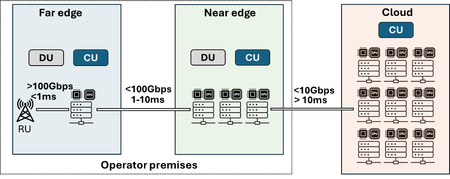
Cellular Radio Access Networks (RANs) are rapidly evolving towards 6G, driven by the need to reduce costs and introduce new revenue streams for operators and enterprises. In this context, AI emerges as a key enabler in solving complex RAN problems spanning both the management and application domains. Unfortunately, and despite the undeniable promise of AI, several practical challenges still remain, hindering the widespread adoption of AI applications in the RAN space. This article attempts to shed light to these challenges and argues that existing approaches in addressing them are inadequate for realizing the vision of a truly AI-native 6G network. Motivated by this lack of solutions, it proposes a generic distributed AI platform architecture, tailored to the needs of an AI-native RAN and discusses its alignment with ongoing standardization efforts.