deployment
38 TopicsSet Up Plaud Note Pro with Microsoft Foundry
Prerequisites Riffado, up and running: follow the setup guide in the official Riffado repository to get it going with Docker Compose. A Microsoft Foundry (formerly Azure AI Foundry) resource, with the models you want deployed; in my case, whisper for transcription and o3-mini for summaries. A Plaud device, or any audio recordings you can import into Riffado. Once Riffado is up, head to the Settings page > Providers > Add Provider, and select Custom. This is where the Azure details will go. Why "OpenAI-compatible" isn’t one thing on Microsoft Foundry Azure AI Foundry exposes two different API surfaces on the same resource, and which one serves your model depends on the model: Surface Path shape Serves OpenAI-compatible? v1 route /openai/v1/… gpt-4o-transcribe, gpt-4o-mini-transcribe, chat models, embeddings Yes: Bearer auth, model in the body, no api-version needed Classic route /openai/deployments/{name}/… Whisper (and other legacy audio) No: deployment name lives in the URL, and ?api-version= is mandatory A generic OpenAI client (Riffado's included) can only speak the first dialect. It has nowhere to put a deployment name in the path and no way to append a query parameter. That single fact drives everything below. Part 1 - Transcription Whisper and the DeploymentNotFound mystery Symptom My very first transcription attempt in Riffado failed with 404 Resource not found. Off to a flying start. Configured provider: base URL https://<resource>.services.ai.azure.com, model whisper. Dead end #1: the missing path The first bug was mine: the base URL had no path. Riffado's OpenAI client appends /audio/transcriptions to whatever you give it, so requests were hitting https://<resource>…/audio/transcriptions, a path that doesn't exist on the resource at all. Fixing the base URL to end in /openai/v1 got us to a more interesting error: POST /openai/v1/audio/transcriptions · model=whisper {"error":{"code":"DeploymentNotFound","message":"The API deployment for this resource does not exist. If you created the deployment within the last 5 minutes, please wait a moment and try again."}} Dead end #2: catalog ≠ deployment Worth checking before anything else: selecting a model in the Foundry catalog is not deploying it. GET /openai/v1/models lists everything you could deploy; only Deployments → Deploy model creates an endpoint that answers. If you get DeploymentNotFound, first confirm a deployment actually exists (the listing below requires only the API key): enumerate real deployments (classic control-plane, key auth) curl -s -H "api-key: $KEY" \ "https://<resource>.openai.azure.com/openai/deployments?api-version=2023-03-15-preview" # → {"data":[{"id":"whisper","model":"whisper","status":"succeeded",…}]} The actual cause Here is the part that nearly drove me mad: the deployment existed and was succeeded, yet the v1 route still said DeploymentNotFound. Because Whisper deployments are not served on the v1 route at all. They only answer on the classic path. Verified side by side with the same tiny WAV file: Request Result POST /openai/v1/audio/transcriptions · model=whisper · Bearer 404 DeploymentNotFound POST /openai/deployments/whisper/audio/transcriptions?api-version=2024-06-01 · Bearer 200 {"text":"you"} Same classic path, without ?api-version= 404 Resource not found Three constraints, then: Whisper needs the classic path; the classic path needs api-version; Riffado can send neither. One piece of good news hiding in the table: the classic route accepts Authorization: Bearer, not just Azure's api-key header, so the shim doesn't have to touch auth at all. The fix: a Caddy shim Drop a stock caddy:2-alpine container into the Compose network. Riffado points at it as if it were OpenAI; the shim rewrites the path, injects api-version, and proxies to Azure. The Bearer header passes through untouched. azure-shim.Caddyfile { admin off auto_https off } :80 { @transcribe path /v1/audio/transcriptions /audio/transcriptions handle @transcribe { rewrite * /openai/deployments/whisper/audio/transcriptions?api-version=2024-06-01 reverse_proxy https://<resource>.services.ai.azure.com { header_up Host <resource>.services.ai.azure.com } } handle { respond "azure-shim ok" 200 } } docker-compose.yml (added service) azure-shim: image: caddy:2-alpine restart: unless-stopped volumes: - ./azure-shim.Caddyfile:/etc/caddy/Caddyfile:ro Riffado's provider settings become: Field Value Base URL http://azure-shim/v1 Model whisper (must equal the deployment name) API key the Azure resource key (forwarded as Bearer) Verified From inside the Riffado container: POST http://azure-shim/v1/audio/transcriptions → 200 {"text":"…"}. Transcription works end-to-end in the UI. Part 2 · Summaries & titles o3-mini and the empty answer Symptom The summary button showed "An unexpected error occurred." The container logs were more honest: riffado-app logs Error generating title: TypeError: undefined is not an object (evaluating 'C.choices[0]') Riffado calls chat/completions and reads choices[0] without checking whether the response was an error. So anything the API refuses becomes "an unexpected error." What was it refusing? Cause 1: reasoning models reject the classic knobs o3-mini belongs to Azure/OpenAI's o-series reasoning models, which hard-reject parameters every classic chat client sends. Riffado sends temperature: 0.7 and max_tokens: 50 for titles (0.5 / 2000 for summaries), and o3-mini answers: POST /openai/v1/chat/completions · model=o3-mini HTTP 400 {"error":{"message":"Unsupported parameter: 'max_tokens' is not supported with this model. Use 'max_completion_tokens' instead.", …}} # and with max_tokens fixed: HTTP 400 {"error":{"message":"Unsupported parameter: 'temperature' is not supported with this model.", …}} Cause 2: reasoning tokens starve the output Stripping the bad params gets you to 200, and then comes a subtler failure, my personal favourite of this whole saga. Reasoning models spend completion tokens on internal "thinking" before emitting a single visible character. Riffado's 50-token title budget is consumed entirely by reasoning, and the reply comes back syntactically valid and empty: max_completion_tokens reasoning_effort finish_reason content 50 not set length "" (all 50 spent reasoning) 2000 not set stop "Q3 Budget Planning Strategy Meeting" 2000 low stop same, less reasoning overhead The fix: a Node shim that rewrites the request body Caddy can rewrite paths but not JSON bodies, so this shim is ~60 lines of dependency-free Node on node:20-alpine. Per request it: converts max_tokens → max_completion_tokens, strips temperature / top_p / penalties, floors the token budget at 4000, sets reasoning_effort: "low", maps /v1/* → /openai/v1/*, and forwards to the Azure resource. o3-shim.js const http = require('http'); const https = require('https'); const UPSTREAM_HOST = '<resource>.services.ai.azure.com'; // Params o-series reasoning models reject on chat/completions. const STRIP = ['temperature','top_p','presence_penalty', 'frequency_penalty','logprobs','top_logprobs']; const server = http.createServer((req, res) => { const chunks = []; req.on('data', c => chunks.push(c)); req.on('end', () => { let body = Buffer.concat(chunks); // Riffado's base_url is http://o3-shim/v1 → map to Azure's /openai/v1 let path = req.url; if (path.startsWith('/v1/')) path = '/openai' + path; const ct = (req.headers['content-type'] || '').toLowerCase(); if (ct.includes('application/json') && body.length) { try { const j = JSON.parse(body.toString('utf8')); if (j && typeof j === 'object' && !Array.isArray(j)) { if ('max_tokens' in j) { if (!('max_completion_tokens' in j)) j.max_completion_tokens = j.max_tokens; delete j.max_tokens; } // Reasoning spends tokens before any visible output; small // budgets (Riffado sends 50 for titles) return empty strings. if (Array.isArray(j.messages)) { j.max_completion_tokens = Math.max(Number(j.max_completion_tokens) || 0, 4000); if (!('reasoning_effort' in j)) j.reasoning_effort = 'low'; } for (const k of STRIP) delete j[k]; body = Buffer.from(JSON.stringify(j)); } } catch (_) { /* not JSON - forward untouched */ } } const headers = { ...req.headers, host: UPSTREAM_HOST, 'content-length': Buffer.byteLength(body) }; const up = https.request( { host: UPSTREAM_HOST, port: 443, method: req.method, path, headers }, upRes => { res.writeHead(upRes.statusCode, upRes.headers); upRes.pipe(res); } ); up.on('error', e => { res.writeHead(502, {'content-type':'application/json'}); res.end(JSON.stringify({error:{message:'o3-shim upstream error: '+e.message}})); }); up.end(body); }); }); server.listen(80, () => console.log('o3-shim listening on :80')); docker-compose.yml (added service) o3-shim: image: node:20-alpine restart: unless-stopped working_dir: /app command: ["node", "/app/o3-shim.js"] volumes: - ./o3-shim.js:/app/o3-shim.js:ro Add a second provider in Riffado (base URL http://o3-shim/v1, model o3-mini, the resource's API key) and set it as the default enhancement provider (summaries/titles), keeping the Whisper one as default for transcription. Riffado's exact title request (temperature: 0.7, max_tokens: 50) through the shim → 200, finish_reason: stop, real title text. A full meeting-transcript summary returns structured key points and action items. The final shape Reading it left to right: Riffado never talks to Azure directly. Transcription requests pass through azure-shim, a stock Caddy container that rewrites each request onto Whisper's classic deployment path and injects the mandatory api-version parameter. Summary and title requests pass through o3-shim, a tiny Node server that rewrites the request body into the shape o3-mini accepts and floors the token budget so the model's internal reasoning cannot starve the actual answer. As far as Riffado is concerned, it is simply talking to two ordinary OpenAI providers. Both shims live on the Compose network only; nothing is exposed publicly. Riffado is unmodified. Verification checklist Each layer, testable in isolation. Run these before blaming the app: smoke tests # 1. Key + resource alive? (v1 models listing, Bearer auth) curl -s -H "Authorization: Bearer $KEY" \ https://<resource>.services.ai.azure.com/openai/v1/models | head -c 200 # 2. Whisper answers on the classic path? curl -s -H "Authorization: Bearer $KEY" -F file=@test.wav \ "https://<resource>.services.ai.azure.com/openai/deployments/whisper/audio/transcriptions?api-version=2024-06-01" # 3. Shim translates correctly? (from inside the compose network) docker exec riffado-app node -e "fetch('http://azure-shim/') .then(r=>r.text()).then(console.log)" # 4. o3-mini via shim, sending the params Riffado sends? # (temperature + max_tokens:50; the shim must absorb both) If you'd rather not run shims Both shims exist because of the specific models chosen. Pick models that live natively on the v1 route and Riffado connects directly, with base URL https://<resource>.services.ai.azure.com/openai/v1 and zero extra containers: Transcription: deploy gpt-4o-mini-transcribe (or gpt-4o-transcribe) instead of Whisper. Summaries: deploy a non-reasoning chat model such as gpt-4o-mini, which happily accepts temperature and max_tokens. The shim approach earns its keep when you're standardized on specific models (Whisper's transcription quality, o3-mini's reasoning), or when you want a control point to add logging, retries, or budget caps later. For reference, this is what the finished setup looks like on Riffado's side. Each shim is registered as a plain Custom provider. Here is the whisper provider pointing at azure-shim, with Use for transcription ticked: And once both are saved, they sit side by side in the providers list, whisper tagged for transcription and o3-mini tagged for enhancement: A quick look at the Foundry portal In the Microsoft Foundry portal, head over to Models > AI Services and you will find a pleasant surprise: fifteen AI service models already deployed and ready to use, covering the Azure Speech family (including Voice Live and Speech to Text), Azure Translator, Azure Language, and Content Understanding: You can of course deploy another model for this, but the pre-deployed ones are a handy cost-saving option. Click on the Azure Speech – Voice Live radio button and you will be shown the Base URL and API Key, which you can then paste into the provider settings on Riffado's Settings page. A quick note on cost: these services are not free. They are billed pay-as-you-go based on usage. Azure Speech transcription is charged per audio hour, and Voice Live pricing is tiered by the model you choose. The free tier does include a monthly allowance, though. Check the Azure Speech pricing page before committing. And if you would rather deploy a dedicated transcription model such as whisper, Foundry gives you the flexibility to do just that. Open the model page in the catalogue, click Deploy, and go with Default settings unless you need custom quotas or guardrails: Let's test the setup On your Plaud device, just tap to start recording. The little LED bars light up to show it is listening: Or skip the device entirely and upload an audio file straight into Riffado using the Upload Audio button. Either way, the recording lands on the Recordings page; hit Transcribe and let the spinner do its thing: As you can see below, whisper, the transcription model we deployed earlier, even managed to transcribe a recording in Malay without a hitch. My 3:32 test clip came back as 186 words of clean Malay, with the language correctly detected and tagged: I have also set o3-mini as the enhancement provider, and it enhanced the transcription with a proper summary, key points, and title as well! The Meeting Notes-style summary came straight out of o3-mini through the shim, with zero manual prompting. Wrapping up What started as a TikTok-fuelled impulse buy nearly killed off by subscription pricing ended up as a fully self-hosted pipeline: Plaud for recording, Riffado as the interface, and Microsoft Foundry serving whisper and o3-mini behind two tiny shims. The total extra infrastructure came to two containers and roughly sixty lines of code, and not a single monthly subscription in sight. If you try this setup and run into a failure mode I have not covered here, do share it in the comments. Half the fun is in the debugging.393Views0likes0CommentsSunderland City Profile: Frontier transformation in practice
Download the SmartCitiesWorld City Profile – Sunderland Cities everywhere are facing the same pressure: modernize infrastructure, grow the economy, and improve quality of life, without widening inequality. Sunderland offers a credible path forward. Once defined by shipbuilding and coal mining, Sunderland has spent the last four decades deliberately reinventing itself. Today, it is positioning itself as the UK’s leading smart city by investing in digital infrastructure, data, and low‑carbon innovation to drive inclusive, long‑term growth. The latest City Profile from SmartCitiesWorld captures how this strategy is being executed and why it matters for city leaders globally. A digital backbone built for outcomes, not optics Sunderland’s progress starts with a clear foundation: connectivity and data designed with purpose. Full‑fibre connectivity across the city Citywide 5G and LoRaWAN coverage A secure, cloud‑based smart city data platform Together, this stack enables real‑time visibility across transport, environment, and public services. More importantly, it shifts the city from reactive decision‑making to proactive, evidence‑led operations. The impact is measurable. Data and analytics now support: Safer, more predictable event planning Smarter traffic and mobility management Earlier environmental interventions More targeted social and health services From digital health hubs that reduce exclusion to intelligent transport pilots that cut emissions and improve safety, Sunderland is applying technology where it delivers the highest public value—not where it looks most impressive on a slide. What comes next: two opportunities to scale impact The City Profile also highlights where cities like Sunderland can go further. Two opportunities stand out. Move from smart services to predictive city operations With real‑time data already in place, the next step is predictive modeling—anticipating demand across social care, transport, energy, and public safety before pressure points emerge. Done right, this enables earlier investment decisions, lower long‑term costs, and better outcomes across services. Turn digital inclusion into a workforce engine Sunderland’s digital health hubs create a foundation for something bigger: linking access and digital skills directly to workforce development. By aligning inclusion efforts with local demand in advanced manufacturing, data, and clean energy, cities can convert access into sustained economic mobility. Why Sunderland’s approach matters Sunderland’s experience reinforces a critical point: smart city transformation is not about technology in isolation. It is about aligning infrastructure, data, governance, and community priorities around a shared vision for inclusive growth. For public‑sector leaders moving from ambition to execution, the full City Profile provides practical insight into the partnerships, operating models, and decisions behind Sunderland’s approach. It’s a useful reference for anyone looking to translate a digital‑first strategy into measurable impact—for people, place, and long‑term resilience.205Views0likes0CommentsThe City Leader's Dilemma: How AI Is turning urban strain into strategic advantage
Ready to transform how your city plans and operates? Download the Trend Report 2025: Planning and operating thriving cities – innovation for smarter urban living to access the complete playbook on AI-powered urban innovation, complete with case studies from Bangkok, Singapore, Barcelona, and Manchester. Urban challenges aren’t slowing down. Populations are growing, climate pressures are intensifying, and residents expect seamless services, while budgets remain flat and workforces stretch thin. Traditional approaches can’t keep pace. The good news? Cities worldwide are showing that AI and digital innovation can drive meaningful improvements. Recent studies indicate that more than half of surveyed cities are already using AI to upgrade operations, and most plan to expand adoption in the next three years. For many leaders, the question is less about whether to act and more about how to act responsibly and effectively. After studying the latest research and real-world deployments, three strategic shifts stand out, each offering a different lens on how forward-thinking city leaders are turning pressure into progress. Shift One: From Fragmented services to unified citizen experiences Residents expect seamless problem-solving, not organizational complexity. Yet many cities operate in silos, transit systems, permitting offices, 311 reporting, and community engagement often run on separate platforms. The result? Multiple apps for residents, duplicated effort for staff, and missed insights locked in departmental databases. Leading cities are breaking this pattern through unified digital platforms powered by AI. Bangkok’s Traffy Fondue: Citizens report issues like broken streetlights or flooding via a mobile interface. AI categorizes each report and routes it to the right department. By mid-2025, the platform handled nearly one million citizen reports, improving engagement and reducing administrative overhead. The outcome? Reduced administrative overhead, and something harder to measure but equally important: residents who believe their government actually listens. Buenos Aires took a similar path with "Boti," a WhatsApp chatbot that evolved from a COVID-era tool into a citywide digital assistant. Citizens report issues, ask questions, and access services through the messaging app they already use daily. Technology that meets residents where they are improves efficiency and strengthens trust, when guided by principles of transparency and fairness. Shift Two: From reactive planning to predictive foresight Traditional urban planning relies on static models: masterplans, zoning maps, historical growth trends. These tools served their purpose. But they cannot capture the complexity of future risks, extreme weather, evolving mobility patterns, or the cascading effects of a single development decision. Digital twins complement human expertise by integrating geospatial data, climate models, and policy scenarios, helping cities make smarter decisions with limited budgets. Singapore's Digital Urban Climate Twin integrates geospatial data with climate models to simulate how different policies would affect temperature and thermal comfort across neighborhoods. These tools support informed decision-making while maintaining human oversight and accountability. The result? Strategic adaptation rather than reactive firefighting. Sydney built an urban digital twin that correlates environmental conditions with traffic accidents, using machine learning to predict crash risk on specific road segments. City planners can now test interventions virtually, what happens if we lower speed limits here? Add a bike lane there? Before committing resources. Even smaller cities are finding value. Imola, Italy uses a microclimate digital twin to model heat distribution street by street, guiding decisions about where to plant trees or specify cool pavement materials. The paradigm shift is profound: instead of planning based on what happened, cities can now plan based on what's likely to happen. This is how you make smart bets with limited budgets. Shift Three: From tech adoption to governance architecture Here's where many cities stumble. They invest in flashy pilots without building the institutional structures to sustain them. The cities getting this right treat governance as a strategic asset, not a compliance burden. Singapore's Model AI Governance Framework provides practical guidelines for transparency, fairness, and human-centric design. Its AI Verify toolkit lets organizations test their systems for resilience, accountability, and bias before deployment. Barcelona takes a different but equally rigorous approach, treating municipal data as a public asset under its Data Commons program. The city's procurement strategy favors open-source solutions, preventing vendor lock-in while supporting local innovation ecosystems. Both models share a common insight: rapid innovation doesn't automatically produce equitable outcomes. Governance creates the guardrails that allow experimentation without derailment. For city leaders, this means building cross-sector governance councils, adopting clear data strategies, creating ethical AI frameworks, and investing in workforce capability. These aren't obstacles to innovation; they're the foundation that makes sustained innovation possible. The Path Forward Cities that thrive in combine strategic vision with disciplined, responsible technology use. They embed digital capabilities into decision-making, supported by robust policies and cross-department collaboration. Learn how Microsoft helps governments build tech-empowered cities and resilient infrastructure at Microsoft for government. The Smart Cities World 2025 Trend Report provides the detailed case studies, governance frameworks, and implementation roadmaps to make this real. Download your copy now and start building the city your residents deserve.309Views0likes0CommentsAI for Personalized Government Services: Building Trust and Inclusivity in Cities
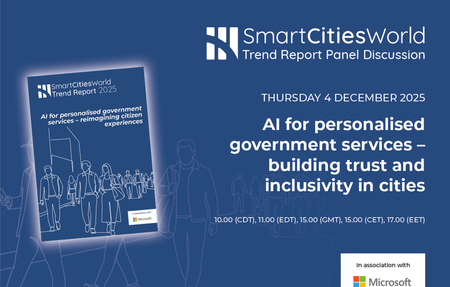
Cities today are under unprecedented pressure. Residents expect services that are fast, accessible, and tailored to their needs, yet many local governments still rely on fragmented systems and manual processes that create long queues and frustration. In a digital-first society, these gaps are no longer acceptable. Artificial intelligence (AI) offers a transformative opportunity to close them, enabling governments to deliver personalized, proactive, and inclusive citizen experiences. On December 4, Smart Cities World Connect will host a Trend Report Panel Discussion bringing together city leaders, technology experts, and public sector innovators to explore how AI can reshape the citizen experience. This virtual event will highlight practical strategies for responsible AI adoption and showcase lessons from pioneering cities worldwide. Register today: Trend Report Panel Discussion (4 Dec) Why AI Matters for Cities Urban populations are growing, budgets remain tight, and climate and social pressures are mounting. Against this backdrop, AI is emerging as a critical enabler for smarter governance. By integrating AI into service delivery, cities can: Support improved wait times through AI-powered assistants and multilingual agents. Deliver proactive services using unified data and predictive analytics. Ensure equity by extending digital access to underserved communities. Build trust through transparent governance and responsible AI deployment. These capabilities are no longer theoretical. Cities from Abu Dhabi to Singapore are already embedding AI into core operations—modernizing citizen portals, automating case management, and using digital twins to plan with foresight. The panel will explore five essential areas for AI-driven transformation: 1. Smarter Citizen Engagement AI-powered virtual assistants and chatbots can handle routine inquiries, guide residents through complex processes, and provide real-time updates—across multiple languages and platforms. This not only reduces queues but also makes services more inclusive for diverse communities. 2. Proactive, Personalized Services Unified data platforms and predictive analytics allow governments to anticipate citizen needs, whether it’s notifying residents about benefit eligibility or streamlining license renewals. By moving from reactive to proactive service delivery, cities can improve satisfaction and reduce backlogs. 3. Equity at the Core Efficiency must never come at the expense of fairness. AI-enabled systems should be designed to reach underserved populations, bridging the digital divide and ensuring that innovation benefits all residents, not just the most connected. 4. Governance and Trust Responsible AI adoption requires robust frameworks for transparency, data protection, and ethical oversight. Cities must implement clear governance models, conduct algorithmic audits, and engage communities in co-design to maintain public trust. 5. Practical Steps for Integration From piloting high-impact use cases to building cross-department governance and investing in workforce training, the discussion will outline actionable steps for scaling AI responsibly. Partnerships with industry and academia will also play a vital role in accelerating adoption. Lessons from Frontier Cities Several global examples illustrate what’s possible: Manchester City Council is advancing smart urban living through AI-driven planning and operations, using integrated data platforms and predictive analytics to optimize city services, improve sustainability, and enhance citizen engagement across transport, housing, and community programs Abu Dhabi’s TAMM platform, powered by Microsoft Azure OpenAI, delivers nearly 950 government services through a single digital hub, simplifying processes and enabling personalized interactions. Singapore’s Virtual Singapore project uses AI and digital twins to simulate urban scenarios, helping planners make evidence-based decisions on mobility, safety, and climate resilience. Bangkok’s Traffy Fondue civic platform leverages AI to categorize citizen reports and route them to the right department, reducing administrative overhead and improving response times. These cases demonstrate that AI is not just a tool for efficiency, it’s a catalyst for inclusion, resilience, and trust. What Attendees Will Gain By joining the December 4 session, city leaders will leave with: A clear understanding of AI’s transformative potential for improving citizen satisfaction and reducing service backlogs. Real-world examples of successful deployments in citizen portals, case management, and service automation. Insights into ethical and regulatory considerations critical to building trust in personalized government services. Guidance on preparing organizations to adopt and scale AI effectively. Looking Ahead Cities that thrive in the coming decade will be those that combine strategic vision with disciplined, trustworthy use of technology. AI can help governments deliver services that are smarter, more inclusive, and more responsive to the needs of every resident, but success depends on strong governance, cross-sector collaboration, and a commitment to equity. To learn more and register for the Trend Report Panel Discussion on December 4.419Views0likes0CommentsTwo MS partners supporting one customer, but only one gets recognition for MAU growth !!
Hi community, I was very surprised to learn that for the given scenario below, a MS partner will get not any recognition for deployment and MAU growth. This was confirmed by MS Partner Support. Do you have similar experiences? Ralf Scenario: 1. Customer C has two MS partners: partner p1 provisions all licences, partner p2 deployed the D365 CE solution and provides ongoing enhancements and BAU support. 2. The license agreement is CSP (not EA!) Recognition of each partner's work: 1. Partner p1 gets recognition for Net Customer Add (CSP) and for MAU growth (that's ok) 2. Partner p2 gets no recognition at all, neither for deployment nor for MAY growth (surprise, surprise) In other words: The work partner p2 is doing to drive adoption and growth is not viable from a partner's membership perspective; partner p2 should consider handing over the work to another partner.1.4KViews0likes6CommentsMicrosoft Ignite session: AI for the Public Sector with Microsoft 365 Copilot GCC available Nov 19
In today's rapidly evolving digital landscape, the public sector stands at the forefront of innovation, driven by the transformative power of AI. Microsoft 365 Copilot GCC (Government Community Cloud) is set to revolutionize how public sector organizations operate, offering new capabilities that will enhance human capabilities, streamline workflows, and support compliance with stringent security standards. AI for the Public Sector with Microsoft 365 Copilot GCC - OD803 Our Ignite On Demand session delves into the myriad ways Microsoft 365 Copilot GCC can empower your public sector organizations, from automating routine tasks to providing actionable insights that drive mission-critical decisions. We invite you to watch this session and discover how you can harness the power of AI to elevate your organization's capabilities. Microsoft Ignite | November 18-22, 2024 | ignite.microsoft.com The '101 on Microsoft Ignite 2024' What: Microsoft Ignite to learn more | Full Session scheduler Where: Hybrid | Chicago, IL (sold out) and Global Digital (online; free to register) When: November 18-22, 2024 Primary X handle & official hashtag: #MSIgnite (join in) AND follow @MicrosoftTeams, @SharePoint, @OneDrive, and @Events_MSFT The Ignite presentation highlights several key areas where Microsoft 365 Copilot GCC can make a significant impact for public sector strategists. We explore the role of AI in the public sector, emphasizing how AI can alleviate the burden of digital debt by automating repetitive tasks and optimizing workflows. The session also showcases the features of Microsoft 365 Copilot GCC such as Microsoft 365 Copilot Business Chat and AI-driven insights in applications embedded in apps you use everyday Word, Excel, PowerPoint, Teams and Outlook. Additionally, the presentation underscores the importance of responsible AI practices and data privacy, detailing Microsoft's commitment to security and compliance within the GCC environment. To start building your AI skills today and prepare your organization for the future, we encourage you to explore the following resources: Microsoft 365 Copilot GCC Blog: aka.ms/M365CopilotGCCBlog Microsoft 365 Copilot GCC High/DOD Blog: aka.ms/MS365CopilotGCCHighBlog Microsoft 365 Copilot – Readiness and Adoption Guide for Public Sector Roadmap ID # 415097 - Microsoft 365 Copilot GCC general availability -- the product referenced in this blog. Service description will be updated prior to general availability here Roadmap ID # 464984 - Microsoft Copilot general availability for GCC -- more information will be shared on this product closer to launch. Current information for WW/Ent environment on differences between these two products can be referenced here. Additionally, you can learn more about the roadmap for government AI adoption and specific Copilot scenarios for the US government. By leveraging these resources, you can ensure your organization is well-equipped to navigate the AI-driven future and deliver exceptional public services. The Roadmap for Government AI Adoption US Gov specific Copilot Scenarios content Other Microsoft 365 Copilot resources (environment agnostic): 3 short explainer videos: Microsoft 365 Copilot data security and privacy commitments Microsoft 365 - How Microsoft 365 Delivers Trustworthy AI (2024-01) Data, Privacy, and Security for Microsoft 365 Copilot Secure by default with Microsoft Purview and protect against oversharing Microsoft Purview data security and compliance protections for Microsoft Copilot Apply principles of Zero Trust to Microsoft 365 Copilot Learn about retention for Microsoft 365 Copilot This blog was written with support from Microsoft 365 Copilot, my AI assistant for work.1.2KViews0likes0Comments