customer story
5 TopicsHow SCBX built AI literacy at scale and made AI part of daily work
Read how SCBX used a structured skilling plan with Trainocate to strengthen AI literacy, support role-based adoption, and help teams reduce time spent on repetitive work. Founded in 2021, SCB X Public Company Limited (SCBX) aimed to modernize its Siam Commercial Bank into a regional fintech conglomerate. By early 2026, SCBX had solidified its role as the core of one of Thailand’s most influential financial groups, leading a high-profile virtual bank consortium, scaling data and technology units, and embedding AI across every business line. But SCBX leadership recognized that meaningful change required an AI-fluent workforce. The organization needed a practical way to help thousands of employees truly adopt AI—not as a side project, but as a meaningful part of their everyday work. What needed to change Two issues stood out: AI literacy and aptitude varied across teams; and employees were spending too much time on repetitive work. The organization needed AI understanding at enterprise scale, along with role-based practices. And because SCBX operates in a highly regulated environment, the training needed to stay within strict governance and control requirements. SCBX needed to do all of this with thousands of employees. This challenge was as much about people as about technology. The approach: Phased skilling built for outcomes SCBX partnered with Trainocate, a global leader in IT training for more than 30 years. Together they crafted a phased, outcome-oriented roadmap designed to drive AI adoption—not just awareness. Microsoft provided vital support through its Organizational skilling program, enabling SCBX to commit to enterprise-wide scale without sacrificing depth, pace, or quality. Phase 1: Shared foundations The first phase focused on building shared language and confidence around AI, and it included: AI for Business Leaders, helping executives and managers lead confidently in an AI-driven world. The AI Tech Podcast series, focusing on building fluency in generative AI and Microsoft 365 Copilot. Prompt Engineering in Practice, sharing practical AI skills and experience. Phase 2: Role-based application The plan then focused on applying these skills to real-world work, offering: AI Bootcamps, an onramp to working with generative AI, including Copilot and Microsoft Power Platform. AI for Business Enablement, role-relevant training for nontechnical users in sales, operations, finance, legal, and marketing. Copilot Prompt Training for Business Users, covering Copilot fluency across roles and functions. Microsoft Power Platform Training, helping low-code and no-code developers streamline routine work with Power Apps, Power Automate, and Microsoft Copilot Studio, reducing dependency on IT. Advanced Technical Training tracks, with upskilling for developers, data pros, and security specialists. Role-based adoption at enterprise scale SCBX chose Trainocate Thailand because it could execute at scale while ensuring consistent quality, align training tightly to Microsoft technologies, and embed security and responsible AI practices suited to regulated financial services. Segmenting engagement-driven learning by audience meant training translated into true role-based adoption. Tying every program to business key performance indicators (KPIs) helped validate the investment. Positive outcomes and measurable impact By focusing on adoption and measurable learning outcomes, SCBX saw results throughout the company, including: 15,170+ total participants across the organization. 10,000+ completions of AI literacy and technical pathways. 700+ advanced learners completing deep technical tracks. 4.5/5 satisfaction rating average among participants, signaling genuine engagement. Productivity impact: Teams reduced time spent on repetitive work, like drafting emails, creating reports, summarizing information, and running routine workflows. This has freed capacity for higher-value thinking and decisions. The result is learning that translates into fluency and adoption—AI is improving how SCBX teams work, not just what they know. For leaders facing similar challenges, SCBX’s experience is a useful reminder that organizations build AI readiness with skill-building and real-world use. A clear, phased roadmap and the right partner helped SCBX grow AI skills, strengthen role-based applications, and build momentum that continues as employees across all roles apply their new abilities to improve the way work gets done. Your learners who want to build their AI skills can get started with AI Skills Navigator, our agentic learning space, bringing together AI-powered skilling experiences and credentials that help individuals build career skills and organizations worldwide accelerate their business.894Views4likes0CommentsCloudThat: How the gamified CloudAttack app is transforming AI skilling
Learn how CloudAttack brings AI skilling to life with interactive modes, adaptive feedback, and community challenges that help learners stay engaged and prepare to earn Microsoft Credentials. AI skills are more essential every day across all industries, but some traditional training approaches don’t keep learners as engaged and motivated as they could be. Microsoft Training Services Partner CloudThat, an award-winning global leader in training and consulting, recognized this challenge and set out to reimagine how people build cloud and AI skills. The result is CloudAttack, a proprietary generative AI–powered gamified learning platform that’s making skill-building more interactive, enjoyable, and measurable. Finding the gaps and defining the goals CloudThat identified two key learner challenges: Low engagement. Some learners completed training but didn’t retain or apply their knowledge. A prompt engineering gap. Some struggled to craft effective prompts. CloudThat wanted to bring AI learning to life, while addressing a wide range of learning styles and all roles, including students, independent learners, professionals, corporate teams, and educators. The company also wanted to align with the Microsoft AI vision and to encourage Microsoft 365 Copilot adoption, overall AI readiness, and preparation for earning Microsoft Credentials. Approaching real-world AI skills with a gamified approach CloudThat’s answer to these challenges is CloudAttack, an app rooted in AI technology and gamification teaching methodology. Game‑like elements, including puzzles, levels, and leaderboards, transform complex topics into engaging experiences. As Marmik jain, a student at B.M.S. Institute of Technology and Management, Bengaluru, observes, “It was indeed a fun and interactive way to prepare for Microsoft Certifications and learn prompt engineering.” OpenAI‑based models evaluate learner inputs with high accuracy, adapting prompts and scenarios to create individualized learning paths. Skilling for every audience Corporate learning and development (L&D) teams use private leagues and leaderboards to drive engagement, while academic institutions rely on the app for interactive and competition-based learning. Learning through a game makes the experience engaging and effective... It’s a great way to upskill in cloud technologies and prompt engineering. Being part of communities like Cloud Attack, CloudThat, and Microsoft encourages continuous learning. Prompt engineering also helps improve our efficiency by enabling us to give precise commands and achieve better outcomes. Heemanshu Hemant Sute, student Rajarambapu Institute of Technology, Uran Ishwarpur, Maharashtra Working professionals can upskill without disrupting their jobs, using daily challenges and tournaments to strengthen prompts and get ready for credential exams or assessments. And independent learners get self‑paced, feedback‑driven practice, while educators and training partners use CloudAttack to make workshops and bootcamps more fun, interactive, and measurable. Teaching AI with AI: The Prompt-A-Thon One of the most impactful demonstrations of CloudAttack’s potential was the Prompt-A-Thon, a nationwide AI-skilling initiative sponsored by Microsoft. Over two months, this “AI teaching AI” approach brought together nearly 1,000 learners from universities, corporations, and startups, all competing to craft effective prompts and use AI tools, like Copilot, more confidently. In this immersive environment, participants received AI-generated feedback on every prompt they submitted, helping them understand where they could improve and seeing real results. As Professor Nanda MB from the Sri Krishna Institute of Technology (SKIT), Bengaluru, points out, "The prompt engineering learning session followed by [the] Prompt-A-Thon for our B-Tech [bachelor of technology] students was helpful. The gamification learning through CloudThat was very interesting, which made our students’ AI learning easy. [After] the contest, we saw 100% increase in use of AI [among] our students." Discovering real impacts The numbers speak volumes. As of this writing, CloudThat reports that more than 2,000 active CloudAttack users, over 10,000 downloads on the Play Store with a 4.4 rating, and a 5.0 rating on the App Store. CloudThat also reports a 100% increase over the last year in Microsoft AI and prompt engineering sessions at universities like Acharya Institutes, REVA University, Dayananda Sagar University, International School of Business & Research (ISBR), B.M.S. College of Engineering, and Shri Vaishnav Vidyapeeth Vishwavidyalaya. User testimonials highlight the transformative experience. Participants express new confidence in using Copilot daily, students feel invested in building fundamentals, and enterprise learners demonstrate stronger retention and meaningful engagement during training. CloudThat notes a 15% increase in Certification exam participation among enterprise learners. AI skilling for the new era CloudAttack isn’t just a learning app—it’s an immersive and personalized way of championing AI and cloud technologies. By blending generative AI technology with a gamified learning approach, CloudThat has created a dynamic learning experience that drives real results and that learners return to repeatedly and enthusiastically. It’s clear that the future of AI skilling is not only instructional but also interactive, competitive, and fun.934Views5likes1CommentLenovo scales AI adoption worldwide with Copilot Chat training
Discover how Lenovo helped 30,000 employees build practical AI skills with scenario‑driven training to streamline daily tasks, strengthen communication, and achieve meaningful, measurable outcomes. Listed by Forbes as the world’s largest PC company, Lenovo is taking AI out of the abstract and delivering its power to people around the world through a full-stack portfolio of AI-enabled devices, infrastructure, and software. Lenovo’s vision of delivering smarter technology for all includes its own employees and processes. This goal informed its decision to deploy and adopt Microsoft 365 Copilot Chat and Microsoft Copilot Studio across the entire company. Empowering innovation and efficiency Lenovo aimed to establish enterprise leadership in AI, using it to enhance productivity and accelerate business processes across key functions, including research and development (R&D), marketing, and human resources (HR). The company did this by deploying Copilot Chat to its global workforce of over 75,000 employees. The initial onboarding target was more manageable but still ambitious: 30,000 employees in China—about 40% of its workforce. The primary challenge was not just the scale of deployment but also the need to ensure adoption. It was vital that employees could move beyond basic usage to effectively integrate these advanced AI tools into their specific, daily work scenarios to drive tangible business value. Lenovo recognized that success hinged on helping employees build confidence, understand real-world applications, and adopt an AI‑first mindset. Copilot Chat has fundamentally changed how we manage our daily workflow. What used to take hours now happens in minutes. It not only saves us time but also enhances the quality of our communication and strategic thinking. —Dan Zhao, Operations Management Professional, Lenovo China Laying the groundwork To achieve such massive upskilling at scale, Lenovo worked with Digital China Cloud Technology Limited, a leading digital transformation partner whose many services include helping enterprise-level clients establish future-oriented core capabilities. Together they created a training strategy to help employees move from casual interaction with AI tools to meaningful, scenario‑driven usage. The two-phased training combined targeted learning pathways, interactive workshops, and department-specific problem-solving. By embedding training into employees’ existing digital workflows, Lenovo helped to ensure minimal friction and maximum relevance. Phase one: Foundation building The first phase focused on delivering broad-based AI literacy across the targeted workforce so that every employee, regardless of technical background, could start implementing AI tools to streamline their work. Lenovo introduced an “Introduction to Prompt Engineering” course designed to teach employees how to interact effectively with AI systems. This core training provided: Essential AI concepts. Practical prompting skills. Confidence-building exercises. Foundational habits for high‑quality AI interaction. Phase two: Role‑based integration The second phase moved beyond generic training to deep, scenario-specific workshops for key departments. It focused on using Copilot Chat for complex querying and analysis and on working with Copilot Studio, a platform for designing and building custom agents to automate and execute specific business processes. “The key innovation,” Digital China Microsoft Certified Trainer (MCT) Yan Yan explains, “was our scenario-first and agent-centric learning methodology. Instead of teaching features, we focused on real-world business problems.” This mapped training directly to real needs rather than abstract hypothetical use cases. Phase two included: Customized agent development workshops tailored to unique departmental challenges, like automating HR inquiries and generating marketing content. Workflow‑embedded scenario training, designed around actual daily tasks, like meeting summaries, data analysis, strategic document drafting, and more. Measurable business impact Lenovo achieved significant results from its program, including: Accelerated core business processes. Teams across R&D, marketing, and HR saw faster project cycles—from accelerated code development and quicker market analysis to more streamlined employee onboarding. Higher productivity and efficiency. Employees showed major gains in handling complex tasks, such as data synthesis and content creation, reducing time spent on routine work. A more engaged workforce. The program boosted employee confidence and helped cultivate a culture of innovation and AI-first thinking. Transformational impact on customer-facing teams. Sales teams experienced dramatic improvements in communication quality, speed, and strategic preparation, reducing timelines from hours to minutes. Realizing significant gains with a practical approach Lenovo’s AI adoption journey demonstrates what’s possible when an organization pairs visionary goals with a practical, scenario‑driven implementation strategy. By empowering employees with foundational skills and then guiding them through real‑world applications, Lenovo achieved widespread adoption, substantial efficiency gains, and a more empowered global workforce. This project not only accelerated Lenovo’s internal transformation but also positioned the company as a leader in enterprise‑wide AI enablement. Explore AI skilling opportunities for all your teams—technical and non-technical alike—on Microsoft Learn for Organizations. For more inspiration, read AI and human potential: Advancing skills, innovation, and outcomes.1.1KViews2likes1CommentAkkodis and Microsoft share field‑tested tips for your AI skilling program
Generative AI technology is creating unprecedented opportunities to improve your business efficiency, fuel innovation, and gain a competitive edge. Given these benefits, equipping your workforce with the skills to effectively use AI-powered tools is a high priority. At the same time, the rapid evolution of AI technology, along with the potential impacts on your established processes, means that matching people with the right skills requires a deliberate approach. Akkodis and Microsoft partner to bring AI skilling to customers Across the Asia-Pacific region, global engineering and digital solutions company Akkodis helps organizations design, build, and operate technology driven solutions. Its Akkodis Academy integrates Microsoft technology and training, including industry-recognized Microsoft Credentials (role-based Microsoft Certifications and scenario-based Microsoft Applied Skills) that cover AI, into its customized learning and consulting programs. These programs help customers build learning cultures that keep up with the increasing pace of technological change. Building an AI skilling strategy that works Based on its extensive experience, Akkodis has found five strategies that can help you build (or sustain) a successful AI skilling program. 1. Start small, learn fast, iterate AI capabilities (and your business needs) evolve quickly. With iterative training cycles, you don’t need a perfect blueprint to get started. Instead, short, focused training sprints let you try ideas, collect feedback, and quickly improve. This lowers the intimidation factor for newcomers and helps build confidence and momentum with staff and stakeholders. 2. Tie skilling directly to your business goals The most successful skilling programs align training with technology and business goals. They also secure sponsorship from company leaders to help establish priorities and reinforce adoption efforts. Anchor training efforts to concrete business outcomes, like productivity, time‑to‑market, operational costs, or other real-world business metrics. 3. Establish a culture of continuous learning The traditional skilling model of “take a course, and you’re done” doesn’t work well for such rapidly evolving technology. Establishing an always‑on learning culture using webinars, tech talks, and collaborative community learning can move your teams from a “know-it-all” to a “learn-it-all” mindset, keeping your teams’ skills fresh and curiosity growing. 4. Combine technical skills with business and governance knowledge Organizations that realistically evaluate the business utility of AI tools tend to adopt this technology more effectively and efficiently. This means AI skills need to be complemented by business and operational knowledge. Alongside technical instruction, your teams should understand and apply your organization’s governance policies related to data privacy, ethical AI use, and other regulatory requirements. 5. Provide practical, applied learning Focus on real-world skills that show tangible application—not only what AI is but also how to effectively use it. Bootcamps, role‑based labs, and an emphasis on practical scenarios can help bridge the gap between theory and real-world use and can directly correlate with productivity gains and other key outcomes. Real-world AI skilling success stories Explore how AI skilling strategies have led to practical business gains: Commonwealth Bank of Australia invested heavily in AI skilling, equipping employees to effectively adopt AI tools. As a result, 84% of its 10,000 Microsoft 365 Copilot users report that they wouldn’t go back to working without it, and developers are adopting ~30% of GitHub Copilot code suggestions. Adecco Group’s AI skilling strategy has increased productivity for recruiters by 63%. Plus, the company’s AI-driven CV Maker generated 200,000 résumés, and 35,000 employees completed responsible AI training, driving better client interactions. Next steps An effective AI skilling program is about more than technology—it requires a workforce that can adapt and thrive as AI reshapes the business world around them. Successfully building AI fluency across your organization can accelerate your organization’s technology adoption, create improved business outcomes, and lead to tangible competitive advantages. Ready to grow your team’s AI skills? Read Create an AI Learning Culture.1.1KViews1like1CommentHealthcare IT Perspectives – Patrick McGill, MD on the CIO Podcast
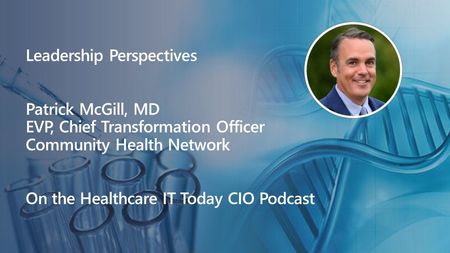
Recently, the Healthcare IT CIO podcast welcomed Patrick McGill, MD EVP, Chief Transformation Officer at Community Health Network for a discussion around their projects, technologies, and where they see themselves going in the future. The interview covered a variety of topics and I've highlighted a few below that our team discusses with many of our provider customers. (the full interview is available following the list)