cloud workload protection
27 Topics
Runtime protection - Microsoft Defender for Cloud DevOps Security (Defender CSPM)
Hi team! The current support status for Microsoft Defender for Cloud DevOps Security (Defender CSPM) and runtime protection across services are this one : Fully Supported for Runtime Protection Azure Kubernetes Service (AKS) Amazon Elastic Kubernetes Service (EKS) are there more runtime in the product roadmap (Azure Container Apps, AWS, Fargate for Amazon ECS, Azure Functions, AWS Lambda)? Thanks859Views0likes0CommentsCost Calculator for Defender for Cloud (Public Preview)
Did you know Microsoft Defender for Cloud has a built-in cost calculator to easily calculate the costs of protected resources in your cloud environment? No? Well, I didn’t either until I stumbled upon the button in the MDC portal myself. Apparently, Microsoft announced the preview for the MDC cost calculator last month, on February 19, 2025. With this post, I’m sharing my experience with this new cost calculator for Microsoft Defender for Cloud, providing guidance and comparing available options to calculate the costs. https://myronhelgering.com/cost-calculator-for-defender-for-cloud/728Views0likes0Comments
Enable Bring Your Own License (BYOL)
A customer uses Bring your own license (BYOL) capability, which is being deprecated, to deploy Qualys extension in their VMs. They are questioning about the deprecation, this deprecation implicates the deploy won't be more available, but what happen with the machines already has deployed the Qualys extension? Will the extension be removed from machines, since it was deployed via BYOL? Or after deprecated the extension continues working for the already deployed machines?
Azure Cloud Defender false positive
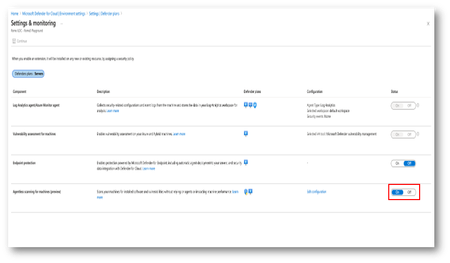
Cloud Defender threw up alert on Trojan:Script/Phonzy.B!ml for a PaloAlto virtual firewall. There are no Defender agents, (detection was agentless). I cannot find any other incidents or similar issues. The affected file is pps_parport.ko which is a library file. Currently unable to get the file off the Palo to upload to VirusTotal or similar website. No other security issues with Azure servers. Is there a way to find if this is a false positive or am is this system a canary in a coalmine?1.2KViews0likes3Comments
New Blog | Agentless scanning for virtual machines in the cloud – technical deep dive
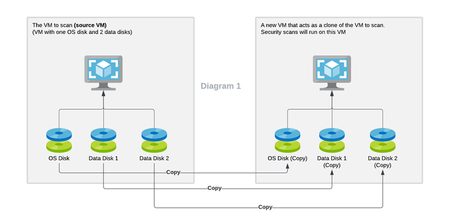
This blog will cover the following topics: What is agentless scanning for cloud native virtual machines? How does agentless scanning for cloud native VMs work? What are the new challenges that security vendors are facing? As a customer, what you should validate when purchasing an agentless scanning security solution? Microsoft Defender for Cloud’s agentless scanning Read the full blog post here: Agentless scanning for virtual machines in the cloud – technical deep dive - Microsoft Community Hub511Views0likes0CommentsBlog | Defender for cloud's Agentless secret scanning for virtual machines now generally available
Cloud cybersecurity is of paramount importance in today's digital landscape, as organizations increasingly rely on cloud services to store and manage sensitive data, applications, and infrastructure. Attacks on cloud infrastructure pose severe risks to organizations such as data theft, ransomware attacks, crypto mining attacks, and service disruption. During a cyber-attack, after gaining initial access to the target network, the attacker begins to move deeper into the network in search of sensitive data and other high-value assets. This stage, called lateral movement, is critical, as it enables threat actors to explore and expand their presence within a target network, increasing the potential for further compromise of critical systems. One of the most common techniques used by hackers to move laterally in a network is credential theft. This technique involves the exploitation of exposed secrets such as passwords, keys, tokens, and connection strings to gain access to additional assets in the network. Secrets are often found on files, stored on the disks of virtual machines (VMs) or containers running on various cloud platforms. Read the full blog post here: Defender for cloud's Agentless secret scanning for virtual machines is now generally available! - Microsoft Community Hub541Views0likes0CommentsNew Blog | Effective novelty detection in cloud security domain
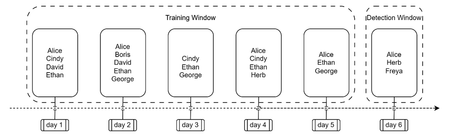
In cloud security domain, we often need to monitor entities – such as users, IP addresses, applications, or access tokens – and their patterns of behavior. We might want to detect ‘novelties’ – unexpected and previously unseen values of these entities - which can indicate security issues. Some examples of such scenarios are: IP address belonging to a previously unseen ASN range accesses cloud storage. Previously unseen application logs to SQL database. A new user logs to an administration portal. Read the full blog post: Effective novelty detection in cloud security domain - Microsoft Community Hub502Views0likes0CommentsNew Blog | Announcing new CNAPP capabilities in Defender for Cloud
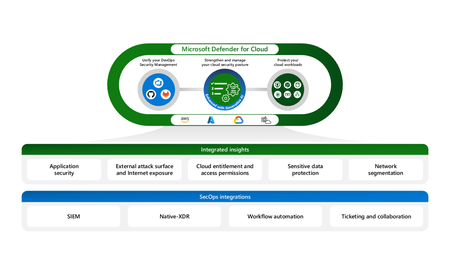
In the fast-paced world of cloud computing, security teams are facing unprecedented challenges. As organizations increasingly adopt multicloud environments and prioritize the development of cloud-native applications, the complexity of ensuring robust security has grown exponentially. To tackle these evolving cloud security needs, a powerful solution has emerged – Cloud-Native Application Protection Platforms (CNAPP). Read the full blog here: Announcing new CNAPP capabilities in Defender for Cloud - Microsoft Community Hub747Views0likes0CommentsNew Blog | Microsoft Defender for Cloud latest protection against abuse of Azure VM Extensions
Throughout recent years, the IT world has shifted its workloads, management layers, and machines to the cloud, thus introducing a new attack surface, accompanied by new attack vectors. The following introduced a tactic for threat actors to deploy their cyber-attacks against organizations’ cloud environments, gaining strong permissions, operating for financial gain, and more. Upon succeeding in compromising an identity with sufficient permissions in Azure, threat actors often try to abuse existing features within the environment that allow them to deploy their malicious activity stealthily, efficiently, and easily, and one special feature is: Azure VM extensions. Read the full blog here: Microsoft Defender for Cloud latest protection against sophisticated abuse of Azure VM Extensions - Microsoft Community Hub672Views1like0Comments