cloud ai
3 TopicsWhere the Road Leads, Community Grows: The Caravana Cloud Story
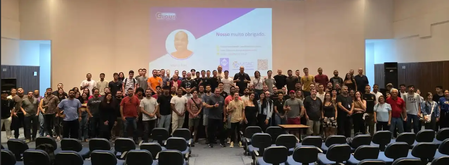
Sometimes, creating change starts simply: by bringing people together and giving them a place to learn, connect, and imagine new possibilities. This is the spirit behind Caravana Cloud, an event series organised by Maycon Alves in collaboration with Microsoft MVPs and community friends. Across Brazil, the initiative brings cloud knowledge closer to local communities while creating connections, encouraging new opportunities, and helping technology ecosystems grow from within. MVP Francisco Ferreira and community expert Ivanildo Gonçalves are part of the organization team led by the former MVP and community leader Maycon Alves and embody the community spirit that makes a positive change in society. The newest Caravana Cloud cycle is the sixth edition of the initiative and is planned from December 2025 through October 2026. The route includes: December 2025: Fortaleza, Ceara March 2026: Campina Grande, Paraiba July 2026: Natal, Rio Grande do Norte Upcoming stops: Jundiai, Sao Paulo; Rio de Janeiro, Rio de Janeiro; and Porto Alegre, Rio Grande do Sul For Maycon and the other community leaders involved, the goal is bigger than a single event. Caravana Cloud is about taking knowledge to different regions, opening doors for people who may not otherwise have access to in-person technical events, and planting the seed of community wherever the road takes them. More than a technical event Caravana Cloud has already reached more than 19 cities over the course of its journey. Each stop creates an opportunity for attendees to meet speakers, ask questions, learn from real-world experience, and connect with others who are building careers around Microsoft technologies. The format is community-led by design. MVPs and experienced professionals share what they know, but the value also comes from the conversations around the sessions: students meeting mentors, professionals discovering new possibilities, and local organizers seeing that they can continue the momentum after the caravan leaves. That is one of the strongest outcomes of community events. A session may introduce a product, a platform, or a new technical approach, but the lasting impact often comes from the confidence people gain when they realize they are not learning alone. A social project behind the scenes Caravana Cloud also includes a social impact effort. At event stops, the organizers collect non-perishable food and donate it to local institutions. Maycon has intentionally kept that part of the project low profile. The point is not promotion, photos, or marketing. It is a quiet commitment to make each event useful beyond the technical agenda. That choice says a lot about the values behind the initiative. Sharing knowledge already creates opportunity; combining that with local giving turns a technology event into something broader: a contribution to the community hosting it. The personal commitment behind community work Community leadership often looks simple from the outside: a venue, an agenda, a few speakers, and a group photo at the end. In reality, much of the work happens before anyone enters the room. Maycon describes organizing Caravana Cloud as difficult but deeply rewarding. Like many community organizers, he has invested time, energy, travel, and personal resources to make events happen because he believes in the value of sharing knowledge. He continues writing, speaking, organizing, and helping others because community contribution is something he loves. That commitment reflects what many Microsoft MVP communities around the world know well: the most meaningful impact often comes from people who keep showing up, even when it requires personal sacrifice. Why regional events matter Brazil's technology community is large, diverse, and geographically distributed. Bringing cloud learning to different cities helps expand access beyond the largest technology centers and gives local communities a chance to build their own networks. Events like Caravana Cloud help Microsoft technologies become more tangible for people who want practical guidance, local language conversations, and examples from professionals working in similar contexts. They also create a path for new speakers and organizers to emerge. Each city adds something different to the story. Fortaleza, Campina Grande, Natal, Jundiai, Rio de Janeiro, and Porto Alegre are not only stops on a schedule; they are communities with their own audiences, challenges, and opportunities. Continuing the journey As Caravana Cloud moves through its 2025-2026 edition, the series continues to show how community can connect technical learning with local impact. The project is a reminder that MVP-led and community-led initiatives do more than share product knowledge. They build confidence, create relationships, support local ecosystems, and sometimes quietly help families and institutions through social action. More information and evidence from the Caravana Cloud journey are available on Maycon's blog. Want to Learn More About the MVP Program? To find an MVP and learn more about the Microsoft MVP Program, visit the MVP Communities website and follow program updates on LinkedIn or through #MVPBuzz. Join us for a future live session through the Microsoft Reactor where we walk through what the MVP program is about, what we look for, and how nominations work. These sessions are designed to help you connect the dots between the work you’re already doing and the impact the MVP Program recognizes - with time for questions, examples, and real conversations.The AI job boom is here. Are you ready to showcase your skills?
AI isn’t just changing jobs descriptions, it’s redefining how work gets done across every industry, role, and skill level. From marketing to manufacturing, AI is reshaping workflows, speeding up decisions, and opening entirely new career paths. And the impact is massive. According to the World Economic Forum The Future of Jobs Report 2025, advances in AI and tech could create 78 million new jobs by 2030. “We’re in the middle of a once‑in‑a‑generation shift in how work gets done,” says Elisa Graceffo, General Manager of Global Skilling at Microsoft. “For over 30 years, Microsoft Certifications have set the benchmark for skills validation. We’re evolving them as fast as roles are changing so you can prove your skills for the future of work.” To keep pace with this shift, we’re launching a new wave of Certifications designed for AI‑powered roles, from entry level to advanced, from developers and data pros to business professionals. These new Certifications reflect the major industry drivers shaping today’s workplace, including the rise of generative AI and autonomous agents and the emergence of integrated cloud and AI systems. They also highlight how business professionals are evolving into orchestrators of AI‑powered workflows and innovation. And because AI is ultimately a force that amplifies human capability, these Certifications can help ensure that your skills stay relevant, practical, and aligned with the real‑world work of 2026 and beyond. What’s new in cloud, AI, and security Certifications The new Certification exams roll out in beta beginning this month, with additional releases following over the next few months and are expected to go live later this year. The Microsoft Certified: Machine Learning Operations Engineer Associate Certification is ideal for professionals who deploy, operationalize, and maintain machine learning and generative AI solutions in production to automate, govern, deploy, monitor, and optimize performance. Exam AI-300 beta and training available in March 2026; exam expected to go live in May 2026. The Microsoft Certified: Azure Databricks Data Engineer Associate Certification covers designing and implementing scalable, secure data pipelines by using Azure Databricks. It’s intended for data professionals who want to build real-time analytics and AI-ready data foundations in the cloud. Exam DP-750 beta and training available in March 2026; exam expected to go live in May 2026. The Microsoft Certified: SQL AI Developer Associate Certification validates your ability to integrate AI into modern database solutions with governance and DevOps practices. It’s designed for developers who want to build intelligent, AI-augmented database applications. Exam DP-800 beta and training available in March 2026; exam expected to go live in May 2026. The Microsoft Certified: Azure AI Fundamentals Certification explores how you can build modern AI apps and agents by using Microsoft Foundry. It’s ideal for beginners who want to build AI applications on Microsoft platforms. Exam AI-901 beta available in April 2026; training expected to be available in March 2026; exam expected to go live in June 2026. The Microsoft Certified: Azure AI Apps and Agents Developer Associate Certification aligns with today’s generative and agentic architectures for planning and managing AI resources in Microsoft Foundry, building generative apps and multistep reasoning workflows, and developing production‑ready agents with multi‑agent orchestration capabilities. Exam AI-103 beta available in April 2026; training expected to be available in March 2026; exam expected to go live in June 2026. The Microsoft Certified: Cybersecurity Business Professional Certification validates your ability to recognize security risks, apply secure practices, and make informed business decisions that reduce organizational exposure while enabling productivity and AI adoption. Exam SC-730 beta available in May 2026; training expected to be available in May 2026; exam expected to go live in July 2026. The Microsoft Certified: Azure AI Cloud Developer Associate Certification is designed for developers who want to validate their ability to build, integrate, and monitor AI solutions on Azure by using containerized compute, vector-enabled databases, event-driven AI pipelines, serverless functions, secret management, and distributed observability. Exam AI-200 beta and training expected to be available in May 2026; exam expected to go live in July 2026. The Microsoft Certified: Cloud and AI Security Engineer Associate Certification expands the security role to include cloud and AI model protection. Prove that you can design and implement secure environments for building and running AI solutions by using current security patterns and controls in enterprise deployments. Exam SC-500 beta available in May 2026; training and exam expected to be available in July 2026. The Microsoft Certified: Windows Server Administrator Associate Certification combines previous hybrid infrastructure tracks to validate skills across Azure and on-premises environments. Exam AZ-802 beta available in July 2026; training and exam expected to be available in August 2026. Retiring Certifications: What you need to know As we introduce new Certifications aligned to evolving AI roles, we’re also retiring several existing ones. The following table itemizes what’s changing and provides key dates for Certification and training retirements in 2026. If your Certification is eligible for renewal, please renew it before the retirement date. Retiring Microsoft Certification Certification retirement date Training retirement date* Replacement Certification Azure Data Scientist Associate (Exam DP-100) June 1, 2026 April 2026 Machine Learning Operations Engineer Associate (Exam AI-300) Azure AI Fundamentals (Exam AI-900) June 30, 2026 April 2026 Azure AI Fundamentals (Exam AI-901) Azure AI Engineer Associate (Exam AI-102) June 30, 2026 April 2026 Azure AI Apps and Agents Developer Associate (Exam AI-103) Azure Developer Associate (Exam AZ-204) July 31, 2026 May 2026 Azure AI Cloud Developer Associate (Exam AI-200) Azure Security Engineer Associate (Exam AZ-500) August 31, 2026 August 2026 Cloud and AI Security Engineer Associate (Exam SC-500) Windows Server Hybrid Administrator (Exam AZ-800 and Exam AZ-801) September 2026* September 2026 Windows Server Administrator Associate (Exam AZ-802) * Planned dates Navigating the transition: FAQs The following questions and answers can help you determine how these retirements and expanded portfolio could impact your learning journey: Q. I’ve already earned one of the retiring Certifications. What happens now? A. If you’ve already earned any of the retiring Certifications, your credential remains valid and, on your transcript, until it expires. Retirement does not revoke or invalidate Certifications that were earned. Q. Can I still renew a soon-to-retire Certification? A. Yes, as long as it’s eligible for renewal and you renew it before the Certification officially retires. Fundamentals Certifications don’t expire. Q. I’m preparing for an exam that’s retiring. What should I do? If you’re actively preparing for an exam that’s retiring: If you’ve already registered for the exam, you may continue preparing for it and take it while it’s still available. Keep in mind that after the exam retires, you won’t be able to retake it if you don’t pass, and you won’t be able to renew it. If you haven’t registered for the exam, we strongly recommend that you prepare for and take the new exam instead, as noted in the following table. If you’re not close to testing for this exam Prepare for and take this exam instead Learning path and instructor-led training expected to be available in Exam DP-100 Exam AI-300 March 2026 Exam AI-900 Exam AI-901 March 2026 Exam AI-102 Exam AI-103 March 2026 Exam AZ-204 Exam AI-200 May 2026 Exam AZ-500 Exam SC-500 July 2026 Exam AZ-800 and Exam AZ-801 Exam AZ-802 August 2026 Take the next step: Build your AI-ready skill set Technology is changing fast, and AI is accelerating that change. Our Certifications are built to help you and your organization stay ahead with job‑ready skills. Earning one isn’t just a milestone, it’s a signal that you’re ready to grow with the future of work. We’ll share updates for each new Certification, including beta exams and go live dates, on The Skills Hub Blog. Stay tuned for an announcement of new Certifications focused on AI business solutions in the coming month. Explore more Microsoft Credentials on AI Skills Navigator.599KViews51likes270CommentsEvaluating Generative AI Models with Azure Machine Learning
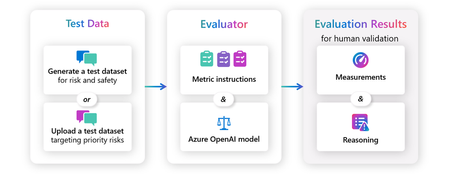
LLM evaluation assesses the performance of a large language model on a set of tasks, such as text classification, sentiment analysis, question answering, and text generation. The goal is to measure the model's ability to understand and generate human-like language.5KViews3likes0Comments