city government
2 TopicsFrom AI pilots to public decisions: what it really takes to close the intelligence gap
Across the public sector, the conversation about AI has shifted. The question is no longer whether AI can generate insight—most leaders have already seen impressive pilots. The harder question is whether those insights survive the realities of government: public scrutiny, auditability, cross‑department delivery, and the need to explain decisions in plain language. That challenge was recently articulated by Sadaf Mozaffarian, writing in Smart Cities World, in the context of city‑scale AI deployments. Governments don’t need more experiments. They need decision‑ready intelligence—intelligence that can be acted on safely, governed consistently, and defended when outcomes are questioned. What’s emerging now is a more operational lens on AI adoption, one that exposes two issues many pilots quietly avoid. Decision latency is the real enemy In government, decision latency is not about slow analytics, it’s the time lost between having a signal and being able to act on it with confidence. Much of the focus in AI discussions is on accuracy, bias, or model performance. But in cities, the more damaging problem is often this latency. When data is fragmented across departments, policies live in PDFs, and institutional knowledge walks out the door at 5pm, leaders may have insight but still can’t decide fast enough. AI pilots often demonstrate answers in isolation, but they don’t reduce the friction between insight, approval, and execution. Decision‑ready intelligence directly attacks this problem. It brings together: Operational data already trusted by the organization Policy and regulatory context that constrains decisions Human checkpoints that reflect how accountability actually works The result isn’t faster answers—it’s faster decisions that stick, because they align with how governments are structured to operate. Institutional memory is infrastructure Cities invest heavily in physical infrastructure—roads, pipes, facilities—but far less deliberately in institutional memory. Yet planning rationales, inspection notes, precedent cases, and prior decisions are often what make or break today’s choices. Consider a routine enforcement or permitting decision that looks reasonable on current data, but quietly contradicts a prior settlement, a regulator’s interpretation, or a lesson learned during a past inquiry. AI systems that don’t account for this history don’t just miss context, they create risk. Decision‑ready intelligence treats institutional memory as a first‑class asset. It ensures that when AI supports a decision, it does so with: Access to relevant historical records and prior outcomes Clear lineage back to source documents and policies Logging that preserves not just what was decided, but why This is what allows governments to move faster without relearning the same lessons under audit pressure. Why this matters now Public sector AI initiatives rarely fail because of a lack of ambition. They stall because trust questions—governance, records, explainability—arrive too late. By the time leaders ask, “Can we stand behind this decision?” the system was never designed to answer. Decision‑ready intelligence flips that sequence. Governance is not bolted on after the pilot; it’s built into the operating model from the start. That’s what allows agencies to scale from a single use case to repeatable patterns across departments. A practical starting point The cities making progress aren’t trying to transform everything at once. They start small but visible: Identify one cross‑department “moment of truth” Define what must be logged, retained, and explainable Connect just enough data, policy, and work context to support that decision From there, they reuse the same patterns—governed data products, policy knowledge bases, and human‑in‑the‑loop workflows—to scale responsibly. AI in government will ultimately be judged the same way every public investment is judged: by outcomes, fairness, and public confidence. Closing the intelligence gap isn’t about smarter models. It’s about designing decision systems that reflect how governments actually work—and are held accountable. Learn more by reading Sadaf's full article: Closing the intelligence gap: how cities turn AI experiments into operational impact183Views0likes0CommentsThe City Leader's Dilemma: How AI Is turning urban strain into strategic advantage
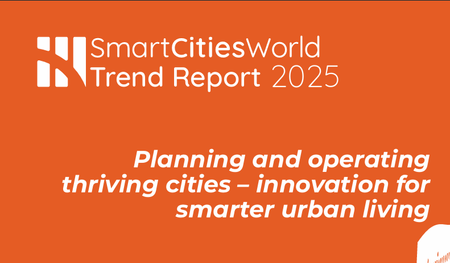
Ready to transform how your city plans and operates? Download the Trend Report 2025: Planning and operating thriving cities – innovation for smarter urban living to access the complete playbook on AI-powered urban innovation, complete with case studies from Bangkok, Singapore, Barcelona, and Manchester. Urban challenges aren’t slowing down. Populations are growing, climate pressures are intensifying, and residents expect seamless services, while budgets remain flat and workforces stretch thin. Traditional approaches can’t keep pace. The good news? Cities worldwide are showing that AI and digital innovation can drive meaningful improvements. Recent studies indicate that more than half of surveyed cities are already using AI to upgrade operations, and most plan to expand adoption in the next three years. For many leaders, the question is less about whether to act and more about how to act responsibly and effectively. After studying the latest research and real-world deployments, three strategic shifts stand out, each offering a different lens on how forward-thinking city leaders are turning pressure into progress. Shift One: From Fragmented services to unified citizen experiences Residents expect seamless problem-solving, not organizational complexity. Yet many cities operate in silos, transit systems, permitting offices, 311 reporting, and community engagement often run on separate platforms. The result? Multiple apps for residents, duplicated effort for staff, and missed insights locked in departmental databases. Leading cities are breaking this pattern through unified digital platforms powered by AI. Bangkok’s Traffy Fondue: Citizens report issues like broken streetlights or flooding via a mobile interface. AI categorizes each report and routes it to the right department. By mid-2025, the platform handled nearly one million citizen reports, improving engagement and reducing administrative overhead. The outcome? Reduced administrative overhead, and something harder to measure but equally important: residents who believe their government actually listens. Buenos Aires took a similar path with "Boti," a WhatsApp chatbot that evolved from a COVID-era tool into a citywide digital assistant. Citizens report issues, ask questions, and access services through the messaging app they already use daily. Technology that meets residents where they are improves efficiency and strengthens trust, when guided by principles of transparency and fairness. Shift Two: From reactive planning to predictive foresight Traditional urban planning relies on static models: masterplans, zoning maps, historical growth trends. These tools served their purpose. But they cannot capture the complexity of future risks, extreme weather, evolving mobility patterns, or the cascading effects of a single development decision. Digital twins complement human expertise by integrating geospatial data, climate models, and policy scenarios, helping cities make smarter decisions with limited budgets. Singapore's Digital Urban Climate Twin integrates geospatial data with climate models to simulate how different policies would affect temperature and thermal comfort across neighborhoods. These tools support informed decision-making while maintaining human oversight and accountability. The result? Strategic adaptation rather than reactive firefighting. Sydney built an urban digital twin that correlates environmental conditions with traffic accidents, using machine learning to predict crash risk on specific road segments. City planners can now test interventions virtually, what happens if we lower speed limits here? Add a bike lane there? Before committing resources. Even smaller cities are finding value. Imola, Italy uses a microclimate digital twin to model heat distribution street by street, guiding decisions about where to plant trees or specify cool pavement materials. The paradigm shift is profound: instead of planning based on what happened, cities can now plan based on what's likely to happen. This is how you make smart bets with limited budgets. Shift Three: From tech adoption to governance architecture Here's where many cities stumble. They invest in flashy pilots without building the institutional structures to sustain them. The cities getting this right treat governance as a strategic asset, not a compliance burden. Singapore's Model AI Governance Framework provides practical guidelines for transparency, fairness, and human-centric design. Its AI Verify toolkit lets organizations test their systems for resilience, accountability, and bias before deployment. Barcelona takes a different but equally rigorous approach, treating municipal data as a public asset under its Data Commons program. The city's procurement strategy favors open-source solutions, preventing vendor lock-in while supporting local innovation ecosystems. Both models share a common insight: rapid innovation doesn't automatically produce equitable outcomes. Governance creates the guardrails that allow experimentation without derailment. For city leaders, this means building cross-sector governance councils, adopting clear data strategies, creating ethical AI frameworks, and investing in workforce capability. These aren't obstacles to innovation; they're the foundation that makes sustained innovation possible. The Path Forward Cities that thrive in combine strategic vision with disciplined, responsible technology use. They embed digital capabilities into decision-making, supported by robust policies and cross-department collaboration. Learn how Microsoft helps governments build tech-empowered cities and resilient infrastructure at Microsoft for government. The Smart Cities World 2025 Trend Report provides the detailed case studies, governance frameworks, and implementation roadmaps to make this real. Download your copy now and start building the city your residents deserve.193Views0likes0Comments